
80 Percent Window Tint

80 percent window tint is a very light shade that allows 80% of visible light to pass through your car’s glass. For BMW owners, it’s often the lightest legal tint available in many states, offering subtle glare reduction and UV protection without significantly darkening the cabin. It’s crucial to understand your state’s specific VLT laws, as what’s legal for a BMW in one state may be illegal in another. While it provides some heat rejection, its primary benefits are UV protection and minor aesthetic enhancement over completely clear glass.
So, you’re driving a beautiful BMW. The precision engineering, the sporty handling, the premium interior—it’s all there. But that glaring sun? It’s a constant companion, beating down on your dashboard, warming the cabin, and exposing you and your passengers to harmful UV rays. You know you want window tint, but you also want to stay legal and maintain that sophisticated, factory-fresh look. Enter the world of 80 percent window tint. It’s a term you see everywhere, but what does it really mean for your Bimmer? Is it just a fancy way of saying “barely tinted”? Let’s pop the hood and take a deep dive into everything 80% VLT, specifically for the BMW driver.
First, let’s demystify the number. VLT stands for Visible Light Transmission. It’s a percentage that tells you how much visible light gets through your window. An 80% VLT film allows 80% of outside light to enter your car. It blocks 20%. That’s it. It’s a very light film. To put it in perspective, most factory automotive glass, without any tint, has a VLT of about 70-80% on its own, depending on the glass type. So, applying an 80% film to that glass might result in a combined VLT of roughly 65-70%, depending on the glass. This is why many new BMWs have a “tinted” look from the factory—their glass often has a slight inherent tint, and sometimes a light factory-applied film. When you hear “80% tint,” think “subtle, legal, and protective,” not “dark and mysterious.”
For the BMW community, this specific shade is a powerhouse of practicality. It’s the sweet spot where you gain significant benefits—primarily UV protection—while almost entirely avoiding the legal headaches and potential safety concerns (like reduced night visibility) that come with darker films. It respects the car’s original design language while adding a layer of modern protection. Whether you own a sporty 3 Series, a luxurious 7 Series, or a versatile X5, understanding 80% tint is your first step toward a smarter, more comfortable driving experience. Let’s break it down.
Key Takeaways
- 80% VLT means very light tint: It blocks only 20% of visible light, appearing nearly clear to the casual observer but providing measurable UV and slight heat rejection.
- BMW factory tint is often around 80%: Many BMWs come from the factory with a light tint on rear and side windows, typically in the 70-80% VLT range, making 80% a common “stock” look.
- Legal compliance is state-dependent: 80% tint is legal for front side windows in most states, but you must verify your specific state’s VLT limits for each window position.
- Prioritize UV over heat: The main benefit of 80% tint is blocking 99%+ of harmful UV rays, protecting interior trim and skin, with moderate heat reduction compared to darker tints.
- Professional installation is recommended: Even for a light tint, professional application ensures no bubbles, perfect edges, and adherence to legal standards, protecting your BMW’s resale value.
- Maintenance is simple: Use ammonia-free cleaners and soft cloths. The light tint is less prone to showing scratches or cleaning swirls than darker films.
- It’s about subtle enhancement: Don’t expect a dramatic “limo” look. The goal is a clean, protected, and slightly refined appearance that looks OEM+.
📑 Table of Contents
- What Exactly is 80% VLT? Beyond the Number
- BMW-Specific Considerations: Factory Tint, Models, and Compliance
- The Tangible Benefits of 80% Tint for Your BMW
- Navigating the Legal Landscape: State-by-State for 80% Tint
- Installation Guide: DIY vs. Professional for Your BMW
- Maintenance, Longevity, and Warranty: Keeping Your Tint Perfect
- Conclusion: Is 80% Window Tint the Right Choice for Your BMW?
What Exactly is 80% VLT? Beyond the Number
We throw around the “80 percent” figure, but it’s not just a random number. It’s a precise measurement with real-world implications. Let’s get technical for a moment, then bring it back to your daily drive.
The Science of VLT and How It’s Measured
VLT is measured using a device called a spectrophotometer. It shines a calibrated light through the tinted glass and measures the amount of light that passes through to the other side. The result is a percentage. A higher number means more light transmission (lighter tint). A lower number means less light transmission (darker tint). Simple, right? The complexity comes from the fact that most cars don’t have just one pane of glass. You have the factory glass, which already has its own VLT, and then you add the aftermarket film on top of it. The final, combined VLT is what the law cares about, and it’s rarely a simple addition. A high-quality 80% film on slightly tinted factory glass will yield a different result than the same film on completely clear glass. This is why professional measurement is key.
Visualizing 80%: How It Looks and Compares
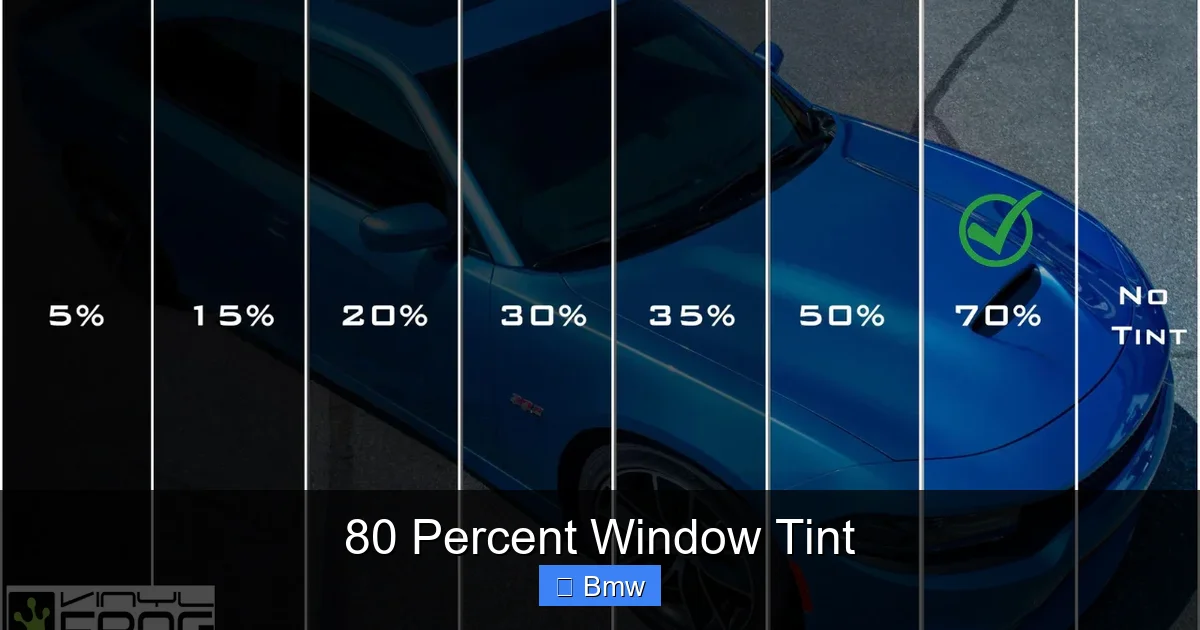
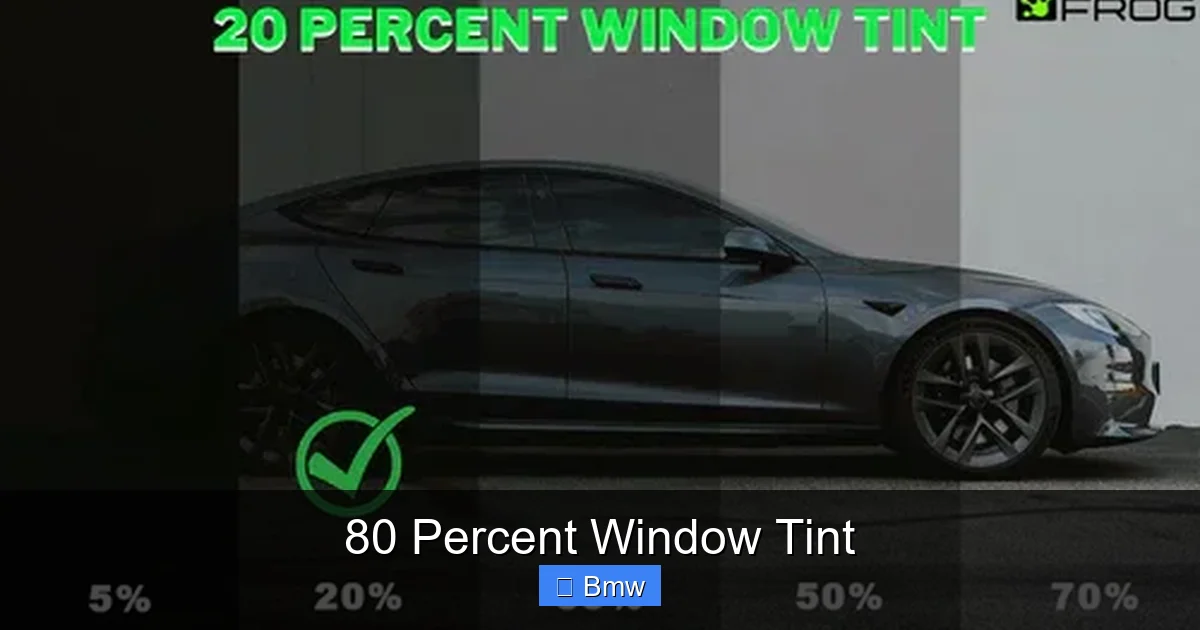
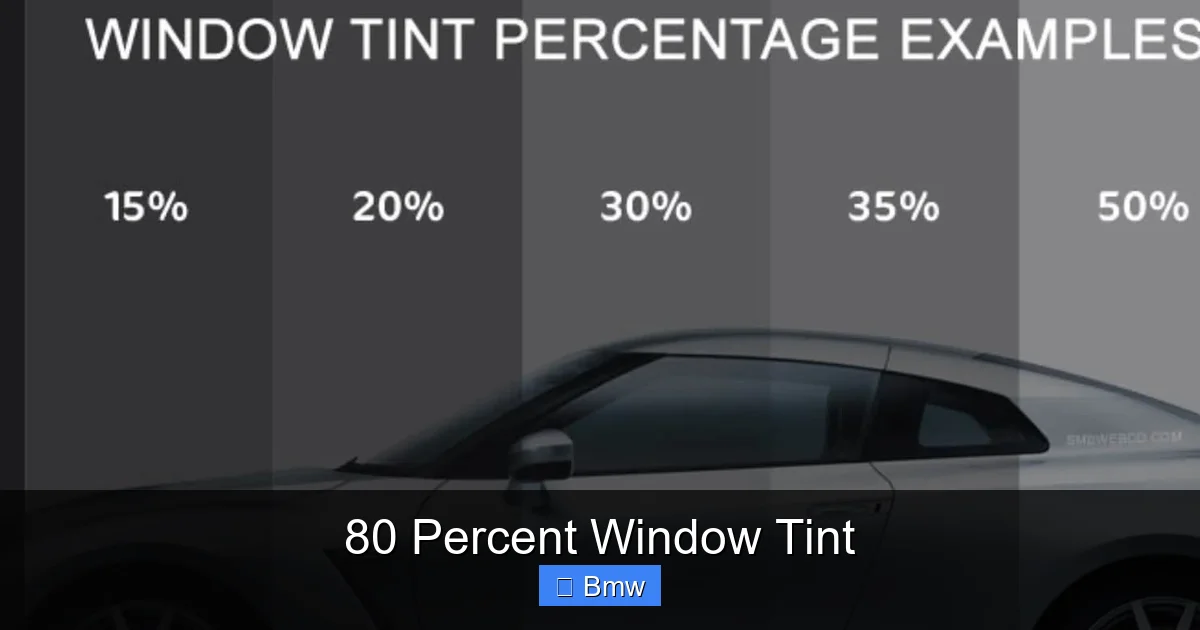
Imagine holding two identical pairs of sunglasses. One is a typical light “driving” lens, and the other is a standard “fashion” lens with a slight grey wash. The 80% tint is akin to that very light driving lens. From the outside, your BMW’s windows will look almost clear. You might notice a very faint, uniform darkness if you look closely, especially when compared side-by-side with an untinted window. The interior will look slightly darker from the outside, but you’ll have no problem seeing inside the car. It’s a world away from a 35% or 20% tint, which creates a much more pronounced, reflective, and private look. If your goal is a noticeable, dramatic change, 80% is not it. If your goal is a “clean factory look with benefits,” it’s perfect. For a visual comparison, tools like the Window Tint Percentage Examples Advanced Visualization Tool can be incredibly helpful to see the spectrum from 5% to 70%.
Common Misconceptions: “It Does Nothing”
The biggest myth about light tints like 80% is that they’re pointless. “Why bother if it’s barely dark?” This couldn’t be further from the truth. The benefit of window film isn’t solely about darkness. The most critical function is UV (Ultraviolet) radiation rejection. High-quality films, even at 80% VLT, block 99%+ of UV-A and UV-B rays. This protects your skin from sunburn and long-term damage, and it prevents your BMW’s beautiful leather, dashboard, and trim from cracking, fading, and becoming brittle. That’s a huge win. The second function is heat rejection. While a 80% film won’t keep your cabin as cool as a 20% film, it still rejects a significant portion of infrared (IR) heat—often 40-60% depending on the film’s technology (dyed vs. metallic vs. ceramic). This translates to a more comfortable cabin on hot days and less strain on your A/C system. Finally, there’s glare reduction. It takes the sharp, blinding edge off direct sunlight and headlights at night, reducing eye fatigue. So, it absolutely does something—it does the most important things.
BMW-Specific Considerations: Factory Tint, Models, and Compliance
Now, let’s talk about your BMW specifically. The brand has its own quirks when it comes to glass and tint, and ignoring them can lead to a poor result or legal trouble.
Visual guide about 80 Percent Window Tint
Image source: cdn.shopify.com
Decoding BMW Factory Glass and Tint
Many modern BMWs come from the factory with what’s called “privacy glass” or “tinted glass” on the rear and side windows. This is not an applied film; it’s the glass itself that is manufactured with a slight grey or greenish tint. The VLT of this factory glass typically falls in the 70-80% range. If you add an 80% aftermarket film to this already-tinted glass, your combined VLT could drop to 60% or lower, potentially putting you over the legal limit in states with strict VLT rules. This is the single most important reason to know your starting point. Before you even shop for film, check your BMW’s window sticker (the Monroney label) or consult your dealer. It may list the glass VLT. If not, a professional tint shop can measure your existing glass with a meter. This step is non-negotiable for a compliant and informed purchase.
Model Variations: 3 Series vs. X5 vs. Z4
Your specific BMW model matters. A 3 Series sedan has a different window layout and glass size than an X5 SUV or a Z4 roadster. The curvature of the glass, the presence of antenna lines, and the shape of the window frames all impact how a film is applied. For example, the large, curved rear window of an X5 requires more skill and often more heat-shrinking to get a perfect, bubble-free fit than the mostly flat rear window of a 3 Series. The small, steeply angled windows of a 2 Series Gran Coupe present their own challenges. A reputable tint shop with BMW experience will have patterns and know-how for your specific model. They’ll know that the tiny triangular quarter-windows in the front of a 4 Series need special attention to avoid cutting into defroster lines. Don’t assume a “one size fits all” approach works for BMW glass.
The Legal Compliance Checklist for BMW Owners
This is the part where you do your homework. Window tint laws are set by state, and sometimes even by county or city. They dictate the minimum VLT (so, the maximum darkness) allowed for each window: front sides, rear sides, and rear. For a BMW, the most common regulation is that front side windows must allow at least 70% or more light (i.e., a maximum tint of 30% darkness). Many states are 70% VLT for front sides. Some, like California and New York, are 70%. Others, like Arizona and Nevada, are 33% and 35% respectively, allowing darker front tints. The rear windows often have no restrictions or much darker allowances. Your 80% tint plan is almost always safe for front sides in any state, but you must confirm. You can find a complete, updated guide at our Window Tint Laws By State Updated 2026 page. Bookmark it. Also, be aware of other rules: some states require a sticker certifying legal tint, some have reflectivity limits (mirror-like finishes), and some prohibit certain colors. When in doubt, call your local DMV or police non-emergency line.
The Tangible Benefits of 80% Tint for Your BMW
Okay, so it’s legal and it’s light. But what’s in it for you and your prized Bimmer? The benefits are surprisingly substantial, especially when you consider the long-term health of your car and yourself.
Visual guide about 80 Percent Window Tint
Image source: cdn.shopify.com
UV Protection: Your Interior’s Best Friend
This is the headline act. The sun’s ultraviolet rays are the number one cause of interior fading, cracking, and deterioration. BMWs are famous for their high-quality leather and soft-touch plastics. These materials are not immune to sun damage. Over years of exposure, black leather turns grey and cracked, vinyl dashboards warp, and trim pieces become brittle and discolored. An 80% ceramic or high-performance film blocks over 99% of UV rays, acting as an invisible sunscreen for your entire cabin. It preserves the luxurious feel and look of your interior, which is a direct contributor to your car’s resale value. A well-preserved interior on a used BMW is a massive selling point. Furthermore, it protects you and your passengers. Getting sunburned through car windows is a real phenomenon, as standard automotive glass only blocks UV-B but lets most UV-A through. Tint solves this.
Heat Rejection and Cabin Comfort
While not as potent as a 15% limo tint, a good 80% film still makes a noticeable difference in cabin temperature. It works by rejecting infrared (IR) radiation, the part of sunlight we feel as heat. High-quality ceramic films at this VLT can reject 40-50% of solar heat. What does this mean for you? On a scorching summer day, your BMW’s interior won’t become an oven the moment you park it. The seats and steering wheel will be more comfortable to touch. Your air conditioning won’t have to work as hard to cool the cabin down, which can slightly improve fuel efficiency (or range in a plug-in hybrid/EV) and reduce wear on the A/C system. For a car you enjoy driving, this added comfort is huge. It transforms the experience from “I need to blast the A/C” to “ahh, pleasant.”
Glare Reduction for Safer Driving
Glare from the sun, especially during sunrise and sunset, or from the headlights of oncoming traffic at night, is a major source of driver fatigue and distraction. That blinding white light forces your eyes to constantly adjust and can cause momentary blindness. An 80% tint acts like a mild, constant pair of sunglasses for your side and rear windows. It takes the sharp, painful edge off direct sunlight, making it easier to see the road, your mirrors, and traffic signals. At night, it can reduce the blinding effect of high beams in your rearview mirror. The key is that it does this without the severe reduction in overall light transmission that darker tints cause, which can make it harder to see in low-light conditions like rain or fog. It’s a safety feature that enhances visibility rather than compromises it.
Aesthetic Enhancement and Privacy
Let’s be honest, part of this is about looks. An 80% tint gives your BMW a more cohesive, “finished” appearance. It eliminates the stark contrast between a clear windshield and very dark rear windows that can sometimes look aftermarket or uneven. It gives all the side glass a uniform, subtle depth. From the outside, it provides a modicum of privacy. People can still see in, especially if they’re close and looking directly, but it obscures the interior details from a casual glance from a distance. It makes the interior look darker and more sleek. For a car like a BMW, where aesthetics are paramount, this subtle enhancement is often exactly what owners want—a look that suggests thoughtful, premium modification rather than a heavy, illegal chop-shop job. It complements the car’s lines without overpowering them.
You cannot skip this section. Ignorance of the law is not an excuse, and a ticket for illegal tint can be costly and inconvenient. Let’s map out the terrain.
Visual guide about 80 Percent Window Tint
Image source: psychoautos.com
Understanding the “70% Front Side Window” Rule
The most common regulation across the United States is that the front side windows (the driver and front passenger windows) must allow a minimum of 70% of light to pass through. This means the film you apply cannot have a VLT lower than 70%. Since you’re applying film on top of glass that already has some VLT, the combined result must be 70% or higher. An 80% film on standard clear glass (about 80% VLT) would yield a combined VLT of roughly 64% (0.8 * 0.8 = 0.64), which would be illegal in a 70% state for front windows. However, if your BMW’s factory glass is already 80% tinted, adding an 80% film would yield about 64% again—still illegal. But if your factory glass is 88% VLT, an 80% film might get you to 70.4%—just legal. This math is why professional measurement is critical. In states with a 70% front-side rule, using an 80% film on standard clear glass is a guaranteed ticket for front windows. You would need a 90%+ film (often called “clear” or “UV-only” film) to stay compliant on the fronts. The good news? For the rear side windows and rear window, 80% is almost always legal, as most states have no limit or a much darker limit (like 35% or 15%) for the rear.
States with Different Front Side Limits
Not all states follow the 70% rule. Here are key variations:
- California, Delaware, Hawaii, New York, Rhode Island, Vermont: 70% minimum VLT for front sides. (80% film on clear glass = illegal for fronts).
- Alaska, Arizona, Arkansas, Colorado, Idaho, Indiana, Iowa, Kansas, Maine, Michigan, Minnesota, Missouri, Montana, Nebraska, Nevada, New Hampshire, New Mexico, North Dakota, Ohio, Oregon, South Carolina, South Dakota, Tennessee, Texas, Utah, Washington, Wisconsin, Wyoming: Typically 35% or higher (often 35% or 33%) for front sides. An 80% film is well within these limits for fronts. For example, in Texas (25% min for front sides), 80% is far from the limit.
- Florida, Louisiana, Mississippi: 28% or lower minimum for front sides. Again, 80% is no issue.
- Virginia: 50% minimum for front sides. 80% is fine.
- Special Cases: Some states like Illinois have complex rules (70% for front sides, but special rules for multipurpose vehicles). Always check the latest for your specific state and vehicle type. Our comprehensive Illinois Window Tinting Laws Updated 2025 guide breaks it down.
The Importance of Certification and Stickers
Many states that allow tint require the installer to provide a certificate or affix a sticker to the window stating the VLT of the installed film. This is your proof of compliance if you’re pulled over. Reputable shops will handle this. Keep the certificate in your glove compartment. Some states, like New York, require a specific medical exemption for any tint darker than 70% on front windows. There is no medical exemption for 80%, as it’s generally compliant. The key takeaway: Know your state’s rule, get your glass measured, and use a film that guarantees a combined VLT above the minimum. When in doubt, consult a professional BMW tint specialist.
Installation Guide: DIY vs. Professional for Your BMW
You’ve chosen your film. Now, how do you get it on? This is where many BMW owners hesitate. The process is finicky, and on a car with complex curves and expensive glass, mistakes are costly.
The Case for Professional Installation (Strongly Recommended)
For a BMW, professional installation is almost always the wise choice. Here’s why:
- Pattern Making: Pros use computer-cut patterns or trace your exact windows. This ensures perfect coverage and avoids cutting into important elements like antenna lines, defroster tabs, or the BMW logo on the rear window.
- Glass Preparation: They use specialized tools and chemicals to meticulously clean the glass, removing every speck of dust and oil. Any contamination leads to bubbles or adhesion failure.
- Heat Shrinking: The complex curves of a BMW’s rear window or the rakish front windows require skilled heat-shrinking with a heat gun. This is an art form. Too little heat, and the film won’t conform. Too much, and you can damage the film or, in extreme cases, the glass’s tempered edge.
- Warranty: Reputable installers offer a warranty on their workmanship (usually 5-10 years) and the film itself. A DIY job comes with no such guarantee. If it bubbles or peels, you’re on your own.
- Legal Peace of Mind: A pro will know the local laws and ensure the film you buy meets the combined VLT requirement when applied to your specific glass. They measure before they sell.
The cost of professional installation on a BMW is typically $200-$500+ depending on the car and film quality. For the guarantee of a flawless, legal, and long-lasting result, it’s money well spent.
The DIY Path: Risks and Realities
If you’re handy, patient, and own a BMW with relatively simple windows (like an older E90 3 Series), DIY is possible with a Car Window Tint Kit. You must buy a precut kit for your exact year, make, and model. The process involves a spray bottle of soapy water, a squeegee, and a heat gun. Expect a 3-5 hour learning curve for your first window. The risks are high: trapped dust/bubbles, torn film, uneven edges, and creases from improper shrinking. One mistake can ruin a $100+ sheet of film. On a new BMW with complex glass, the likelihood of a professional-looking result is low. If you DIY and fail, you may need to pay a pro to remove the botched film and start over, costing you more in the end. Consider it only if you’re on a very tight budget, have a simple car, and accept the risk of a subpar finish.
Essential Tools and Prep for the Pros (What to Look For)
If you hire a pro, you can still be an informed customer. Ask them about their process. They should:
- Thoroughly clean the exterior of the glass with a professional-grade cleaner and a razor blade to remove all old adhesive and contaminants.
- Use a heat gun to soften and shape the film to the glass’s contours, ensuring no gaps.
- Employ a series of squeegees (with soft, felt-edged blades) to push out all water and air bubbles from the center outward.
- Trim the film with a sharp blade (often a surgical scalpel) to create a perfect, precise edge, usually leaving a 1/16th to 1/8th inch gap from the window frame to prevent peeling.
- Use a heat gun on a low setting to “post-heat” the installed film, ensuring full adhesion to the glass surface.
A shop that cuts corners on cleaning or shrinking will produce a tint that will fail prematurely. Look for reviews that mention “clean installation” and “no bubbles.”
Maintenance, Longevity, and Warranty: Keeping Your Tint Perfect
Your 80% tint is installed and looks fantastic. Now, how do you keep it that way for years to come?
Cleaning Do’s and Don’ts
The first week after installation is critical. The film is curing and bonding to the glass. Avoid rolling down windows (if tinted) for at least 3-5 days. Don’t clean the tinted glass for at least a week. When you do clean it:
- DO: Use a soft, lint-free microfiber cloth. Use an ammonia-free window cleaner (like those made for tint or baby shampoo diluted in water) or just plain soapy water. Spray the cleaner on the cloth, not directly on the glass, to prevent seeping into the edges. Wipe gently.
- DON’T: Use Windex, ammonia-based cleaners, or any abrasive chemicals. They can degrade the film’s adhesive and surface over time, causing it to turn purple, bubble, or peel. Don’t use rough paper towels or stiff brushes. Don’t use a razor blade or any sharp object to scrape off debris—use a fingernail or a plastic ice scraper.
Because 80% tint is light, it’s less prone to showing fine scratches from cleaning than a dark, reflective film, but proper care is still essential.
Expected Lifespan and What Affects It
High-quality window film, when properly installed and maintained, can last 10-20 years or the life of the car. The main enemies of tint longevity are:
- UV Exposure ( ironically): While the film blocks UV, prolonged, intense sun can still degrade the film’s dyes and adhesives over very long periods. High-quality ceramic films are much more resistant to this than basic dyed films.
- Heat Cycling: Extreme temperature swings (scorching hot days, freezing nights) cause the glass and film to expand and contract, stressing the adhesive.
- Improper Installation: This is the #1 cause of premature failure. Poor edge sealing, contamination during install, or inadequate shrinking leads to peeling, bubbling, and lifting.
- Harsh Chemicals: As mentioned, ammonia and abrasives will break down the film.
- Check Your State Law: Confirm the minimum VLT for front side windows. If it’s 70%, you likely need a 90%+ “clear” film for fronts. For rears, 80% is almost always fine.
- Measure Your Factory Glass: Know your starting VLT. A pro can do this. This determines your final combined VLT.
- Choose Quality: Opt for a reputable brand (ceramic for best heat/UV/color stability). The price difference is worth it for longevity and performance.
- Hire a Pro (Especially for BMWs): Get quotes from 2-3 installers with BMW experience. Check reviews. Ask about their warranty. A bad install on a good film is worse than no tint at all.
- Enjoy the Benefits: Once installed, enjoy the cooler cabin, reduced glare, and peace of mind knowing your interior is protected and you’re driving legally.
For a BMW that you plan to keep, investing in a top-tier film (like a ceramic from 3M, Llumar, or SunTek) from a reputable installer is the best way to ensure your 80% tint remains perfect for the long haul. It’s a one-time cost for a decade-plus of benefit.
Warranty: What to Expect and How to Validate It
Legitimate film manufacturers offer warranties against defects like bubbling, peeling, discoloration (purpling), and adhesive failure. These warranties are typically transferable to subsequent owners, which is a huge plus for a BMW’s resale value. A standard warranty might be 5 years for basic films and a lifetime warranty for premium ceramics. However, the warranty is only valid if the film is installed by an authorized, certified dealer. This is another reason to choose your installer carefully. They should provide you with a warranty certificate that includes the film’s batch number and your vehicle’s VIN. Keep this document safe with your other car paperwork. If an issue arises years later, you have proof. Before you buy, ask: “Is your shop an authorized dealer for this film brand? Can you provide a transferable warranty?”
Conclusion: Is 80% Window Tint the Right Choice for Your BMW?
After this deep dive, the picture should be clear. 80 percent window tint is not a “dark” tint; it’s a “light, protective, and legal” tint. For the BMW owner, it represents a pragmatic and sophisticated choice. It’s the choice that says, “I care about preserving my car’s luxurious interior from UV damage, I want a more comfortable drive on sunny days, and I want to do it all without attracting police attention or compromising my night vision.” It respects the car’s original, clean design while adding a layer of modern, functional enhancement.
Your decision path is straightforward:
In the world of automotive customization, where more is often assumed to be better, the elegance of 80% tint is in its subtlety and intelligence. It’s a modification that serves a primary function—preservation and comfort—before aesthetics. For a BMW, a car defined by its balance of performance, luxury, and engineering integrity, that makes perfect sense. It’s not about hiding; it’s about protecting and refining. So, do your research, find a great installer, and give your BMW the thoughtful upgrade it deserves.
Frequently Asked Questions
Is 80% window tint legal on the front windows of my BMW in all states?
No. While 80% is legal for front side windows in states with a 35% or lower minimum VLT requirement (like Arizona or Texas), it is illegal in the many states that enforce a 70% minimum VLT rule (like California, New York, and Florida). In those states, you would need a 90%+ “clear” or “UV-only” film on the front windows to stay compliant. Always check your specific state’s law before purchasing.
Can I actually see through 80% window tint at night?
Yes, absolutely. 80% VLT is a very light tint that allows 80% of light to pass through. It will not significantly impair your nighttime visibility, which is one of its primary safety advantages over darker tints. You will have a clear, unobstructed view out of your side and rear windows, similar to having very lightly smoked glass.
Does 80% tint actually keep my BMW cool?
It provides moderate heat rejection, not dramatic cooling. High-quality 80% ceramic film can block 40-60% of infrared (IR) heat energy. This means your cabin will heat up less quickly in the sun and will be more comfortable than with completely clear glass, but it will not feel as cool as a car with a 20% or 5% limo tint. Its main thermal benefit is reducing the workload on your A/C system over time.
How long does it take to install 80% tint on a BMW?
For a professional installer, a full set of windows (front two, rear two, and rear glass) on a typical BMW sedan like a 3 Series usually takes 2-4 hours. More complex SUVs with large, curved rear windows (like an X5) or cars with many small windows (like a 4 Series Gran Coupe) can take 3-5 hours. The installer must carefully remove door panels or trim in some cases to get a perfect finish.
Can I install 80% window tint myself on my BMW?
While DIY is possible with a precise precut kit, it is not recommended for most BMW owners. The glass is often complexly curved, and mistakes are easy to make and expensive to fix. A poor DIY job will look bad (bubbles, edges) and may fail prematurely. For a premium car, the risk to your vehicle’s aesthetics and the potential need for professional removal makes hiring a certified installer the smarter investment.
How do I clean and maintain my 80% window tint?
Use a soft microfiber cloth and an ammonia-free window cleaner or a mild soapy water solution. Never use Windex, paper towels, or abrasive scrubbers. Spray the cleaner onto the cloth first, not directly on the glass, to avoid liquid seeping into the film edges. Be gentle. The light tint is less prone to showing fine scratches than dark film, but proper care ensures decades of clarity and adhesion.
