
Window Tint Percentage Guide

Choosing the right window tint percentage for your BMW is crucial for balancing style, privacy, and legal compliance. The percentage refers to Visible Light Transmission (VLT), with lower numbers meaning darker tint. Understanding your state’s specific laws is non-negotiable to avoid fines and ensure safety. For BMW owners, the right tint enhances the vehicle’s sleek lines while providing essential UV protection and heat rejection, making it a key upgrade for both aesthetics and comfort.
So, you’re looking at your BMW. That sleek silhouette, those iconic kidney grilles, that powerful stance. You want to elevate its presence, make it truly yours. Window tint is one of the first and most impactful modifications many owners consider. It can transform the car’s aesthetic from a beautiful luxury vehicle to a commanding, stealthy presence on the road. But here’s the critical first step that trips up everyone: understanding what that mysterious “tint percentage” actually means. It’s not about how “dark” the tint looks to your eye; it’s a precise scientific measurement that dictates everything from your car’s legality to your daily driving comfort. This guide will demystify window tint percentages, specifically through the lens of a BMW owner, helping you make a smart, legal, and stylish choice.
Key Takeaways
- VLT is the Key Metric: Window tint percentage is the Visible Light Transmission (VLT) rating—the lower the percentage, the darker the tint and less light that passes through.
- Legality Varies by State: Each state has its own VLT limits for front, rear, and side windows. Always check your local laws before choosing a tint to stay legal and avoid costly tickets.
- BMW-Specific Considerations: Consider factory tint, sensor placement (for rain/light), and the car’s design lines. A professional install is highly recommended to preserve your BMW’s premium feel and warranty.
- Trade-Offs Exist: Darker tints (low % like 20%) offer more privacy and heat rejection but can reduce visibility at night. Lighter tints (high % like 70%) are safer for night driving but offer less privacy and cooling.
- Quality Matters: Invest in high-quality ceramic or metallic films from reputable brands. Cheap tints can bubble, fade, and interfere with your BMW’s advanced electronics and sensors.
- Professional Installation is Worth It: For a luxury car like a BMW, a certified installer ensures a flawless, bubble-free application that lasts for years and maintains your vehicle’s value.
- It’s More Than Just Looks: Tint blocks up to 99% of harmful UV rays, protects your interior from cracking and fading, and significantly reduces cabin heat, making your BMW more comfortable and efficient.
📑 Table of Contents
- What Exactly is Window Tint Percentage? Decoding VLT
- Why Tint Percentage is a Big Deal for BMW Owners
- Navigating the Legal Maze: State-by-State Tint Laws
- Choosing the Perfect Percentage for Your Specific BMW
- The Installation Imperative: Why “Where” Matters As Much As “What”
- Long-Term Care and Maintenance for Your Tinted BMW
- Conclusion: Your BMW, Your Rules (Within the Law)
What Exactly is Window Tint Percentage? Decoding VLT
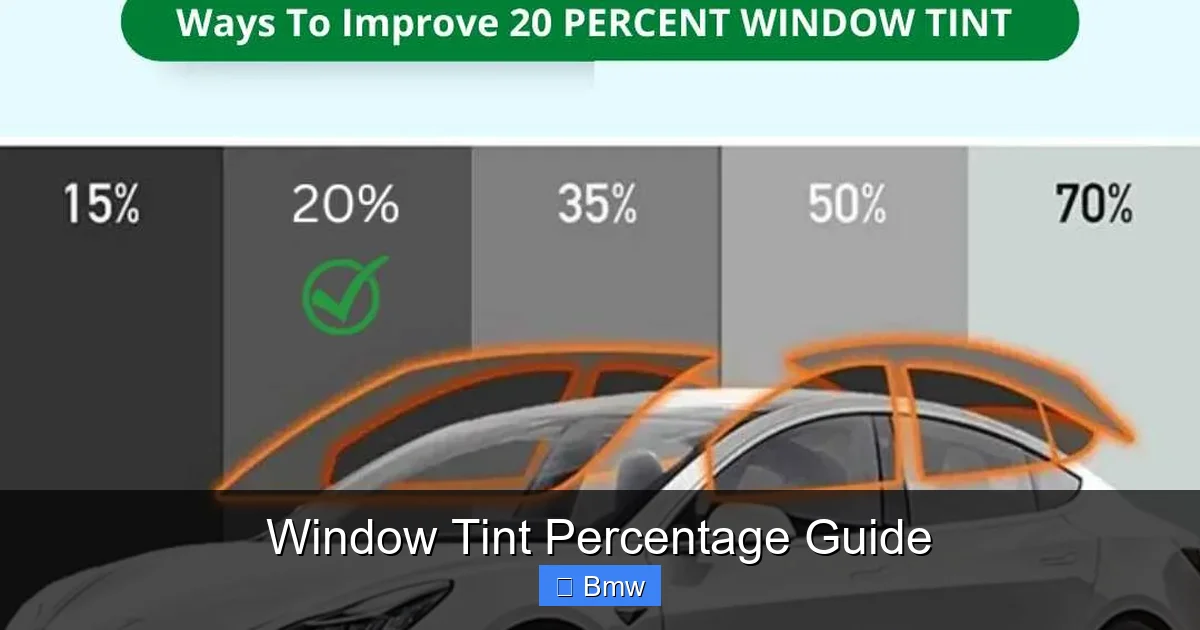
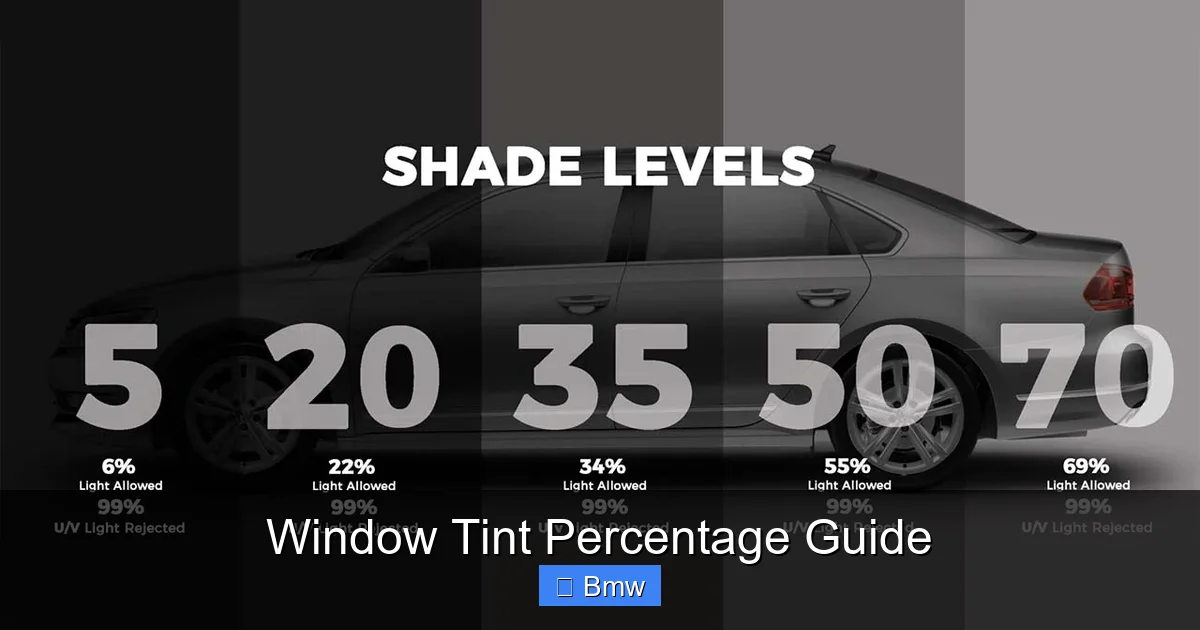
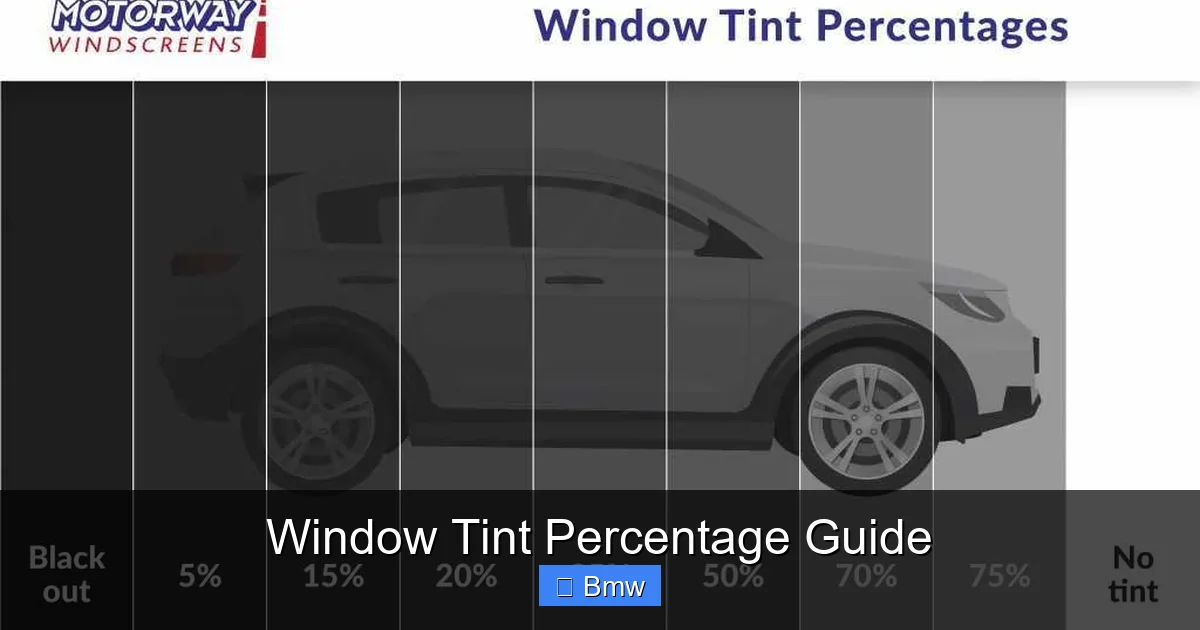
When you see a tint advertised as “35%” or “20%,” that number refers to the film’s Visible Light Transmission (VLT) rating. Think of it as a window’s sunglasses factor. A VLT of 35% means 35% of visible light from the outside is allowed to pass through the glass and film combination. The remaining 65% is blocked and either absorbed or reflected. Therefore, a 70% tint is very light (70% of light gets through), while a 5% tint is extremely dark, often called “limo tint” (only 5% of light penetrates).
The Glass Matters: Factory Tint vs. Aftermarket Tint
This is a crucial BMW detail. Many modern BMWs, especially from the F30 3 Series generation onward and in models like the G05 X5 or i4, come with a light factory tint from the manufacturer, typically around 70-80% VLT on the rear and rear side windows. This is often a dyed or very light integrated tint in the glass itself. When you apply aftermarket film, you are adding a layer *on top* of that existing glass. The final VLT is a combination of both. For example, if your BMW’s rear glass has a factory 75% VLT and you add a 35% film, the resulting VLT is not 35%—it’s darker. You must multiply the percentages: 0.75 x 0.35 = 0.2625, so the final VLT is roughly 26%. This calculation is vital for staying legal. Always know your starting factory VLT, which you can find in your owner’s manual or by checking with your dealer.
Why Tint Percentage is a Big Deal for BMW Owners
For a BMW, window tint isn’t just an accessory; it’s a strategic upgrade that complements the brand’s engineering. The right percentage directly impacts three core pillars of the BMW ownership experience: protection, comfort, and aesthetics.
Visual guide about Window Tint Percentage Guide
Image source: windowtintlaws.us
1. Guardian of Your Interior: UV and Heat Protection
BMW interiors are masterpieces of materials—from supple leather to sophisticated SensaTec and fine wood veneers. The sun is their silent enemy. High-quality ceramic films, regardless of VLT percentage, block up to 99% of harmful UV-A and UV-B rays. This prevents catastrophic fading, cracking, and drying of leather seats and dashboards. A darker tint (lower VLT) will also have higher Total Solar Energy Rejected (TSER), meaning it keeps more heat out of the cabin. On a scorching summer day, this can lower interior temperatures by up to 40°F, protecting your electronics and making the air conditioning’s job far easier, which can even improve fuel efficiency or electric range in a BMW i-series. If you live in a sunny state like Arizona or Florida, prioritizing a lower VLT for maximum heat rejection is a smart move. You can learn more about the specific performance benefits of different films in our detailed guide on window tint percentage examples.
2. Privacy and Security: The Stealth Factor
A BMW is a statement. Many owners value the sense of privacy and security that comes with a darker rear window. A 20% or 30% VLT on the rear sides and back window makes it very difficult for passersby to see into your back seat or trunk, securing your belongings and adding an air of mystique to the car’s profile. However, this must be balanced with safety. Front-side window tint that is too dark (often limited to 35% or 50% in many states) can impair your visibility, especially at night or in poor weather. The BMW’s excellent headlights and clear sightlines are an asset you don’t want to compromise. The key is finding the darkest legal percentage for your front sides that still allows for confident, safe driving.
3. Aesthetic Harmony: Complementing the Design
The right tint percentage can make or break your BMW’s look. A very light 70% tint is nearly invisible and simply adds a layer of UV protection—it’s a conservative, OEM-plus look. A medium 35% tint offers a noticeable, elegant darkness that contrasts beautifully with a black, white, or silver BMW, deepening the car’s visual profile without looking extreme. A darker 20% tint gives a serious, performance-oriented, almost “stealth” appearance that suits M models or dark-colored SUVs like the X5 M or X6 M perfectly. The goal is cohesion. You want the tint to look like it was designed by the engineers in Munich, not an afterthought. This is where a professional installer who understands luxury vehicles is worth their weight in gold; they can advise on which shade will best suit your specific BMW’s color and trim.
This is the most critical section. You can have the most beautiful, high-performance tint on your BMW, but if it doesn’t comply with your state’s laws, it’s a target for a ticket, a forced removal, and a potential failed inspection. Laws are not uniform; they are a patchwork of regulations that change frequently. As of 2025, many states have updated their statutes.
Visual guide about Window Tint Percentage Guide
Image source: divineshinedetailing.com
Understanding the Standard Legal Format
State laws typically regulate three areas:
- Front Side Windows: The most common restriction. Many states mandate a minimum VLT of 70% or 75% (meaning very light tint only). States like California, New York, and Illinois are strict here.
- Rear Side Windows & Back Window: These are often less restrictive, allowing darker tints like 35%, 20%, or even 5%. However, some states (e.g., New York, Michigan) have specific rules if your rear window is the only window for seeing behind you.
- Windshield: Almost universally, non-reflective tint is only allowed on the top 5-6 inches (the AS-1 line). Full windshield tint is illegal in most states.
Additionally, many states have laws about the tint’s reflectivity (how much light it mirrors) and require a sticker certifying the film’s compliance.
Key State Examples for the BMW Driver
Let’s look at a few examples to illustrate the variance. If you own a BMW and frequently travel or live in different regions, this is essential knowledge.
- Georgia: Allows 32% VLT on front sides and 32% on rear sides/back. However, if the rear window is tinted, the vehicle must have side mirrors on both sides. Georgia’s 2025 window tint laws are considered moderately permissive.
- New Jersey: Front sides must allow 70% of light in (very light). Rear sides and back can be any darkness. This is a common “front-light, rear-dark” law. Always verify the latest New Jersey window tint regulations for 2025.
- Arizona: Front sides must be 33% or lighter. Rear sides and back can be any darkness. Arizona’s intense sun makes these laws popular among owners of dark-tinted vehicles. Check the complete 2025 Arizona guide for full details.
- Illinois: Front and rear sides must allow more than 35% of light in. The back window has no restriction if the vehicle has outside mirrors on both sides. Review the updated Illinois window tinting laws before proceeding.
The takeaway? You cannot assume what’s legal. You must look up the specific VLT percentages for your state. A reputable tint shop should know the local laws, but it’s ultimately your responsibility as the vehicle owner. For a comprehensive overview of all regulations, refer to our master list of window tint laws by state.
Choosing the Perfect Percentage for Your Specific BMW
Now, let’s get practical. You know the law, you understand VLT. What percentage is right for *your* BMW? It depends on your model, your location, and your personal goals.
Visual guide about Window Tint Percentage Guide
Image source: windowtintlaws.us
By Model & Use Case
- BMW 3 Series, 5 Series, X3, X5 (Daily Drivers): For a balanced, sophisticated look that’s legal in most places, a 35% VLT on all side and rear windows is a classic choice. It offers good privacy, significant heat rejection, and maintains excellent visibility. If your state allows darker front sides (like 32% in GA or AZ), you can match the fronts for a uniform appearance. This is a safe, stylish bet for a daily-driven luxury sedan or SUV.
- BMW M Models (M3, M5, X5 M): The M badge calls for a more aggressive stance. Many owners opt for a darker 20% VLT on the rear sides and back window, paired with the darkest legal front side tint (often 35% or the state minimum). This creates a dramatic “blacked-out” look from the back that still meets legal standards. Pair this with a high-ceramic film for maximum heat rejection during spirited driving.
- BMW i-Series (i4, iX, i7): Electric vehicles benefit immensely from heat rejection to preserve battery range and cabin comfort without constant AC drain. A medium-dark tint like 30-35% is popular. Crucially, ensure your installer uses a non-metallic, ceramic-based film. Metallic films can interfere with the advanced driver-assistance systems (ADAS), radio signals (including SiriusXM), and keyless entry systems that are integral to BMW’s technology. Always specify “non-reflective, ceramic film for BMWs with ADAS.”
- BMW Convertibles (4 Series Convertible, Z4): Here, the priority shifts. When the top is up, you want maximum UV and heat protection. A darker 20-30% tint is common. However, when the top is down, the rear window and side windows are the only barriers. You must consider how the tint looks with the top down—a very dark rear window can make the interior feel closed in. Also, ensure the film is flexible and rated for convertible tops to prevent cracking.
Climate and Geography
If your BMW lives in the desert Southwest or a sunny coastal state, prioritize the lowest legal VLT you can get for all windows (within the law) to combat intense solar heat. In northern or cloudier states, a higher VLT (50-70%) might suffice for UV protection while maximizing visibility during long, dark winter commutes. The meaning of a 70 percent window tint is essentially a very light, almost clear film that focuses purely on UV rejection without altering the car’s appearance much.
The Installation Imperative: Why “Where” Matters As Much As “What”
You’ve selected the perfect 35% ceramic film for your Alpine White BMW 5 Series. The product is only 50% of the equation. The other 50% is who installs it. For a premium car, a premium installation is non-negotiable.
The Pitfalls of a Bad Install
A poor installation will ruin your investment. Common issues include:
- Bubbles and Creases: From improper squeegeeing or contamination. These are permanent and unsightly.
- Fading and Discoloration: Cheap dyed films will turn purple or brown over time, especially on a light-colored car.
- Peeling Edges: Improper trimming or adhesion causes film to lift at the corners.
- Damage to Sensors/Cameras: Careless cutting or application over the rain/light sensor (usually near the rearview mirror) or camera lenses can render them inoperable.
- Scratched Glass: Using the wrong tools or abrasive materials during installation can scratch the glass, an expensive fix.
The Professional BMW Tint Process
A true professional shop follows a meticulous process:
- In-Depth Consultation: They discuss your goals, show you VLT samples on your actual car, and clearly explain state laws.
- Precision Pattern Cutting: Modern shops use computer-cut patterns specific to your BMW’s exact year, make, and model. This ensures a perfect fit without trimming on your car.
- Flawless Glass Preparation: The glass is cleaned with specialized tools and solutions multiple times to remove every speck of dust and debris.
- Expert Application: Using professional-grade tools (tint knives, squeegees, heat guns), the film is applied with extreme care, especially around the complex curves of a BMW’s door frames and rear window defroster lines.
- Final Inspection & Curing: They inspect for imperfections, then explain the curing process (the film needs 3-7 days to fully adhere, during which you shouldn’t roll windows down).
Ask potential installers: Do they have experience with BMWs? Can they show you examples of their work on similar vehicles? Do they use computer-cut patterns? Do they offer a warranty on both the film and the labor? A good shop will have no problem answering these questions. For more on the process and what to expect, read about how long car window tint lasts and the factors that influence its longevity.
Long-Term Care and Maintenance for Your Tinted BMW
You’ve got your perfect, legal, professionally installed tint. Now, keep it looking pristine for years to come.
The First Week: The Critical Curing Period
The adhesive behind the film is curing and bonding to the glass. Do not roll down your windows for at least 3-5 days (follow your installer’s specific advice). Avoid washing the windows during this time. Small bubbles or a hazy appearance are normal and will disappear as the moisture evaporates.
Cleaning Do’s and Don’ts
Once cured, clean your tinted windows with care:
- DO: Use a soft, lint-free microfiber cloth. Use ammonia-free (ammonia can degrade film) glass cleaners specifically designed for tinted windows, or a mild soapy water solution. Spray the cleaner on the cloth, not directly on the glass.
- DON’T: Use abrasive scrubbers, paper towels, or harsh chemicals like Windex (which contains ammonia). Don’t use sharp objects or fingernails to scrape off stickers or debris.
For the interior side of the glass, be extra gentle. You are cleaning the film’s surface, not the glass itself.
Warranty and Longevity
High-quality films from brands like 3M, Llumar, or SunTek come with multi-year warranties against bubbling, fading, and delamination. A good installer will register the warranty for you. With proper care, a good ceramic tint can last 10+ years on your BMW. Factors that shorten life include constant extreme heat (parking in direct desert sun for decades), improper cleaning, and low-quality film. Remember, the film is on the *inside* of the glass. This protects it from direct weather, but the interior of your car still gets hot. Parking in shade or using a sunshade will extend the life of both your tint and your expensive BMW interior.
Conclusion: Your BMW, Your Rules (Within the Law)
Window tint percentage is far more than a style choice for a BMW owner; it’s a calculated decision that blends personal expression with legal responsibility and technical awareness. Start with your state’s VLT laws—this is your boundary. Then, consider your BMW’s specific role: a daily-driven 5 Series needs a different approach than a weekend M4. Prioritize high-quality, non-metallic ceramic film to protect your investment in the car’s interior and its sensitive technology. Finally, and perhaps most importantly, invest in a professional, experienced installer who treats your BMW with the reverence it deserves. The result will be a stunning, functional, and legal enhancement that you’ll enjoy every time you slide behind the wheel, protecting your cabin and amplifying the unique character of your Ultimate Driving Machine. Take your time, ask questions, and make a choice that serves both your style and your peace of mind.
Frequently Asked Questions
What is the most common legal tint percentage for front side windows in the US?
The most common minimum VLT (light allowed) for front side windows is 70% or 75%, meaning the tint must be very light. However, states like Arizona, Georgia, and some others allow darker, often around 32-35%. Always verify your specific state’s law.
Can I put a dark tint on my BMW’s front windows if I have a sunroof?
No. The presence of a sunroof does not change the legal VLT requirements for the front side windows. The law applies to the glass itself, regardless of other openings. You must still meet the front-side VLT limit for your state.
Will window tint affect my BMW’s GPS or keyless entry?
High-quality ceramic films are virtually non-conductive and will not interfere with radio-frequency signals like GPS, keyless entry, or SiriusXM. However, cheaper metallic or “dyed” films can sometimes cause signal disruption, especially in BMWs with sophisticated keyless systems. Always specify a ceramic film for modern BMWs.
What tint percentage do you recommend for a BMW X5 in Florida?
For a sunny, hot climate like Florida, prioritize heat rejection. Florida law allows 28% VLT on front sides and any darkness on rear sides/back. A common and legal recommendation is a 28% ceramic film on all sides for maximum uniform heat and UV protection, or a 28% front / 20% rear combination for a darker, more private rear.
How much does a professional window tint job cost for a BMW?
For a full set (front, rear, and back window) on a typical BMW sedan or SUV using high-quality ceramic film, expect to pay between $400 and $800+. The price varies by film brand, vehicle model complexity (a 4 Series Gran Coupe has more glass than a 3 Series sedan), and your region. Cheap “$99 tint” offers often use inferior film that will fail quickly. See our full breakdown on how much auto window tint costs.
My BMW has a factory tint. Do I need to remove it before adding aftermarket tint?
No, you do not remove factory tint. Aftermarket film is applied directly over the factory-tinted glass. However, you must account for the factory VLT in your calculations to achieve your desired final VLT and stay legal. Your installer can measure your factory tint and recommend the correct aftermarket film percentage to achieve your target. For example, to get a final 35% VLT on a window with 75% factory tint, you’d need to apply a film with a VLT of about 47% (0.75 x 0.47 = 0.3525).