Window Tint Percentage Explained

Contents
- 1 Key Takeaways
- 2 📑 Table of Contents
- 3 What Does Window Tint Percentage Actually Mean?
- 4 Legal Landscape: Why BMW Owners Must Pay Extra Attention
- 5 Choosing the Right Percentage for Your BMW: A Practical Guide
- 6 Installation: The Make-or-Break Factor
- 7 Maintenance and Care for Your Tinted BMW Windows
- 8 Cost vs. Value: How Much Should You Budget?
- 9 Frequently Asked Questions


Window tint percentage refers to the Visible Light Transmission (VLT), which measures how much light passes through the film. A lower number means darker tint (less light in), while a higher number means lighter tint (more light in). For BMW owners, choosing the right percentage involves balancing aesthetics, privacy, heat rejection, and critical state-specific legal limits. Understanding these numbers is essential to avoid tickets and get the performance you want.
Key Takeaways
- VLT is the Key Metric: The percentage (e.g., 20%, 35%) represents Visible Light Transmission—the exact amount of outside light that passes through the tinted window. It’s a direct inverse measure of darkness.
- Laws Vary by State: Every U.S. state has different legal VLT limits for front, rear, and side windows. You must know your local regulations to avoid fines and failed inspections, especially with a BMW that may have complex sensor packages.
- BMW Factory Tint is Typically ~70%: Most new BMWs come with a very light factory tint (around 70% VLT) on the rear and side windows, offering minimal privacy or heat rejection.
- Heat Rejection ≠ Darkness: A high-quality ceramic film at 50% can reject more heat than a poor-quality dyed film at 20%. Don’t judge performance by color alone; look at the film’s specifications.
- Installation Quality is Paramount: On a BMW with curved glass (like the G20 3 Series or Z4), poor installation leads to bubbles, peeling, and damage. Always use a certified professional experienced with European vehicles.
- Consider Sensor & Camera Interference: Some aftermarket metallic films can interfere with BMW’s advanced driver-assistance systems (ADAS) like parking sensors and cameras. Opt for non-metallic ceramic or nano-ceramic films.
📑 Table of Contents
What Does Window Tint Percentage Actually Mean?
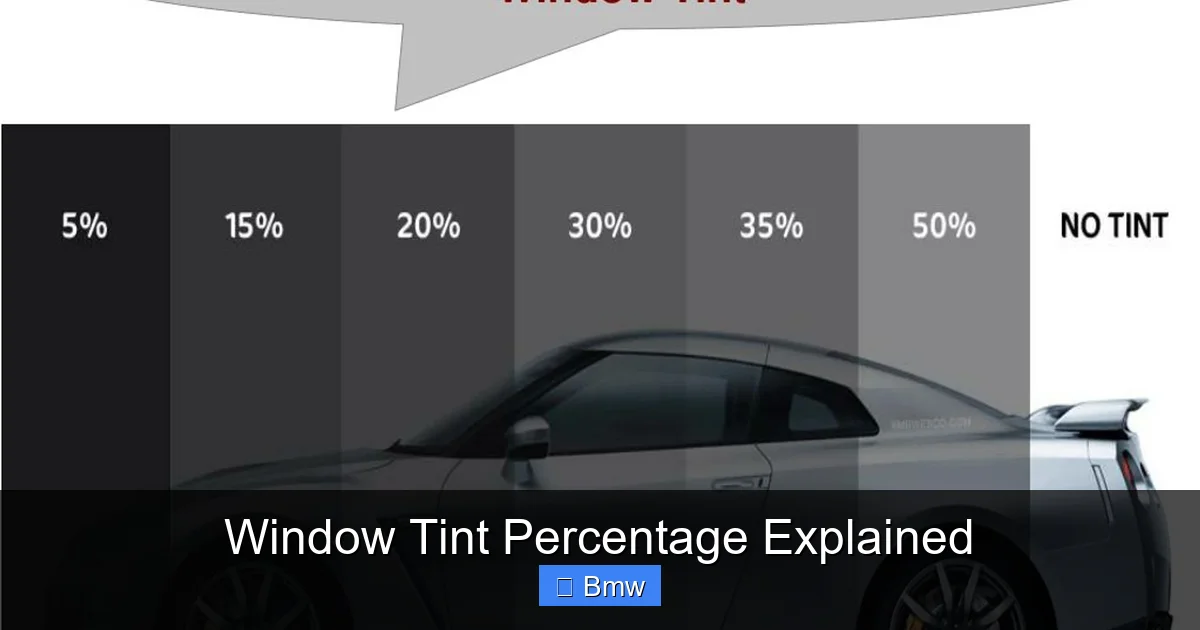
Let’s cut through the confusion right now. When you see “35% window tint” or “20% tint,” that number is not about how dark the film looks to your eye. It is a precise scientific measurement called Visible Light Transmission (VLT). Think of it as a window’s “openness score.” A 70% VLT tint allows 70% of visible light to pass through the glass and into your car. It only blocks 30%. Conversely, a 20% VLT tint blocks 80% of visible light, allowing only 20% to enter. This is why 20% looks much darker than 70%. It’s a simple, powerful equation: Lower Percentage = Darker Tint = Less Light Inside.
This measurement is taken with a specialized device called a spectrophotometer on the completed installation—glass plus film. This is crucial because the factory glass on your BMW already has a slight tint. Most modern automotive glass, including BMW’s, has a VLT between 70% and 80% from the factory. If you put a 35% film on that glass, the final, combined VLT will be darker than 35%. Reputable shops use a formula to calculate the “final VLT” to ensure you stay legal. For a deep dive with visual examples of how different percentages look on actual vehicles, check out this advanced Window Tint Percentage Examples tool.
The Critical Difference Between VLT and “Tint Shade”
You might hear shops talk about “shade” or see color samples like “limo black” or “deep black.” This is marketing language for the film’s appearance, not its technical specification. Two different films, both sold as “20%,” can look slightly different due to dye colors or metallic particles. Always, always ask for and get in writing the certified VLT rating of the film being installed. The legal limit is based on VLT, not shade. A shady (pun intended) shop might install a 15% film and call it 20% to give you a darker look, putting you at risk of a ticket.
Legal Landscape: Why BMW Owners Must Pay Extra Attention
This is the non-negotiable part. Window tint laws are not federal; they are set by each state, and sometimes even by local municipalities. For a BMW owner, this is a triple threat. First, you risk a fix-it ticket or fine. Second, your BMW’s factory safety and sensor systems can be affected by improper film. Third, many states have specific rules about the percentage of tint allowed on the front side windows and front windshield (if any).
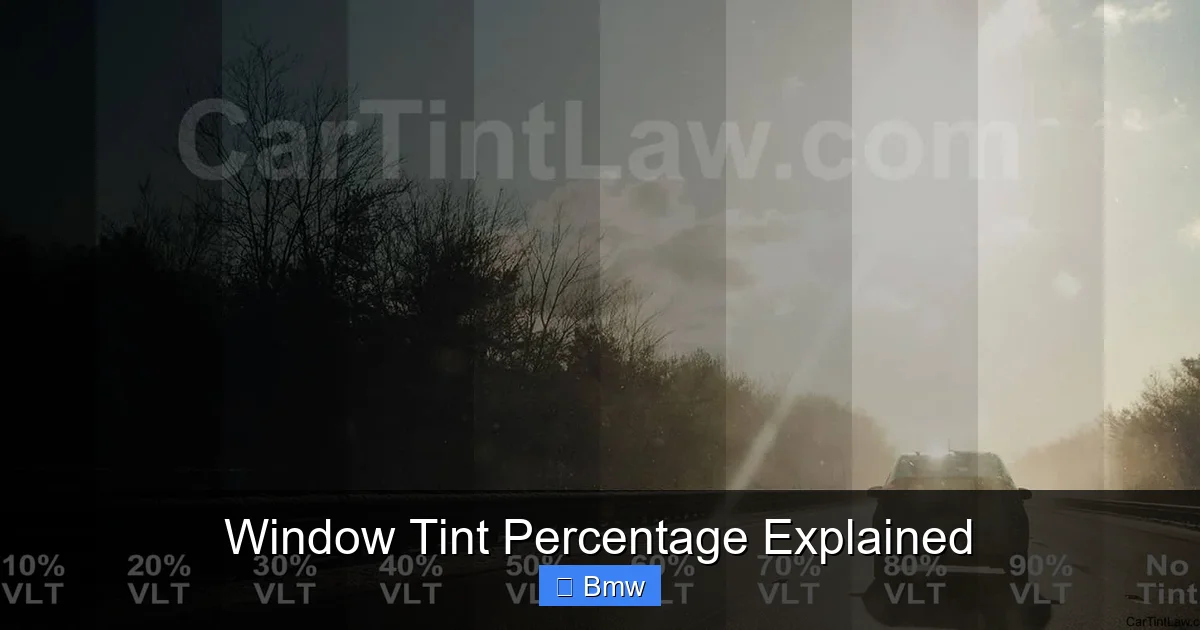
Visual guide about Window Tint Percentage Explained
Image source: cartintlaw.com
For example, states like California and New York are very strict, often requiring front side windows to allow over 70% light (essentially, no aftermarket tint). States like Florida or Arizona are more relaxed, allowing much darker rear and side tints. But here’s the BMW twist: many states have regulations about the reflectivity of the tint (how much it mirrors like a mirror). Some metallic films, while great for heat rejection, can exceed legal reflectivity limits and appear as a shiny mirror from the outside. This is a common reason for a traffic stop. Always check your state’s specific code before you tint. You can find a comprehensive, updated guide for all 50 states here.
State-Specific Examples You Need to Know
Let’s look at a few key states with large BMW populations. In Illinois, the law states that front and rear side windows must allow more than 35% of light in. The rear window and back side windows can be any darkness. However, the front windshield can only have a non-reflective tint on the top 6 inches. In Georgia, the rules are similar but with a 32% minimum for front sides. In Arizona, it’s 33% for front sides, but the rear can be as dark as you want. If you live in Massachusetts, the law is strict: 35% minimum for all side and rear windows, with no aftermarket tint allowed on the front windshield except a 6-inch visor strip. If you’re in a state like New Jersey, front sides must be 70%+ (no aftermarket tint), but rear sides and the rear window can be any darkness. This patchwork means your perfect 20% tint for your BMW M4 in Texas would be illegal in New York. Always verify the latest laws for your specific state and county.
Choosing the Right Percentage for Your BMW: A Practical Guide
So, what percentage should you actually choose for your BMW? It depends entirely on your goals: aesthetics, privacy, heat rejection, and legality. Let’s break down the most common percentages and what they deliver.
Visual guide about Window Tint Percentage Explained
Image source: californiatintcrew.com
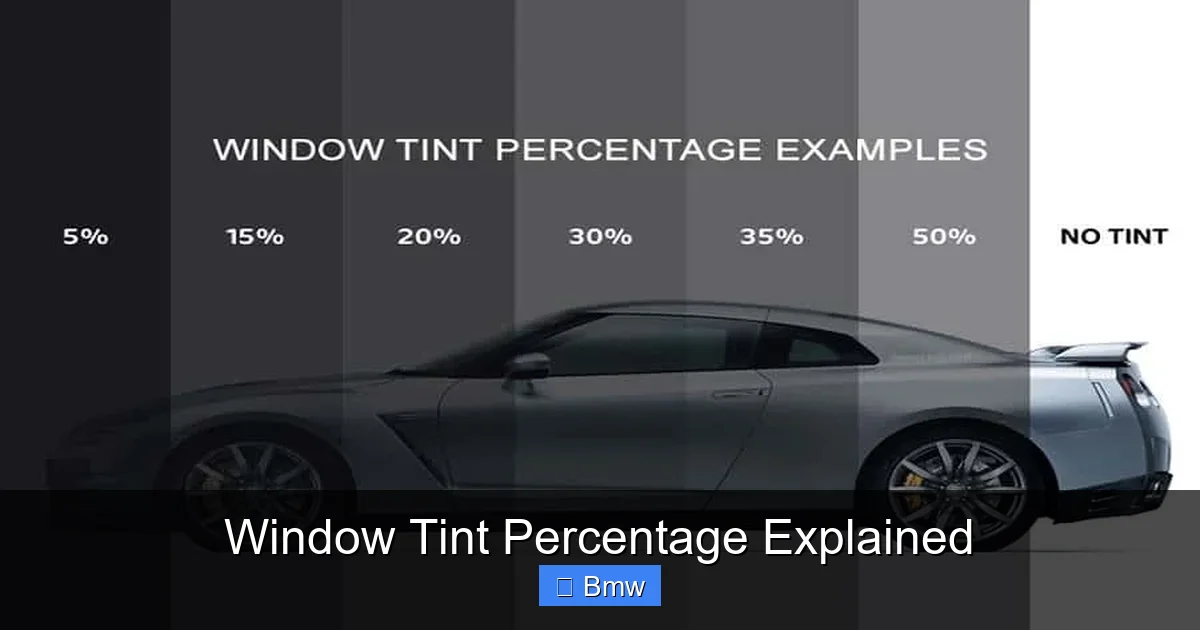
- 70% – 80% (Light Tint): This is essentially a “factory plus” tint. It offers a very subtle, clean look. It provides a minor boost in UV protection (most good films block 99%+ UV regardless of VLT) and a negligible reduction in interior heat. It’s the safest legal choice for front windows in most states. Perfect for the BMW owner who wants to protect their interior from sun-fading but doesn’t want a dark, noticeable look. Many BMWs come from the factory around 70%.
- 50% – 60% (Medium-Light): This is where you start to notice a difference. It provides good visibility from the inside out, decent privacy (people can’t see in easily during the day), and a moderate reduction in glare and heat. It’s a popular, balanced choice for rear windows on family-oriented BMWs like the X5 or X3, offering a touch of style without going too dark.
- 35% – 40% (Medium): This is the classic “sporty” look. It offers strong privacy, significant glare reduction, and excellent heat rejection when paired with a quality ceramic film. Visibility from the inside remains very good at night. This is a top choice for the rear of sport sedans like the 3 Series or 5 Series, giving a sleek, integrated appearance. In many states, this is the darkest you can legally go on the front side windows (like in Illinois).
- 20% – 30% (Dark): This is the “limo” tint. It provides maximum privacy and the highest level of heat and glare rejection. Visibility from the inside is reduced, especially at night or in dark parking garages. It gives an aggressive, custom look. This is typically only legal for the rear windows and rear windshield in permissive states. It’s a common choice for the rear of SUVs like the X6 or coupes like the 4 Series.
- 5% (Limousine): Practically opaque from the outside during the day. You can’t see out well at all. Almost exclusively used for rear windows in states that allow any darkness. Rarely recommended for daily drivers due to severe visibility issues and high likelihood of being illegal for front use.
The BMW-Specific Consideration: Curved Glass & ADAS
Your BMW’s windows aren’t flat. Models like the G20 3 Series, G11 7 Series, and the Z4 have significant curvature in the glass. Installing a dark, thick film on curved glass is an art. It requires precise heat-shrinking with a heat gun to avoid bubbles, wrinkles, and lifting at the edges. An inexperienced installer will fail here. This is why you must see examples of their work on similar European vehicles. Furthermore, many modern BMWs are equipped with cameras in the rearview mirror, side mirror indicators, and parking sensors in the bumpers. While most modern ceramic films are non-metallic and safe, some older or cheaper metallic films can create a “fog” or static on these signals. Always confirm the film is ADAS-compatible and non-metallic if your BMW has a suite of driver-assistance features.
Installation: The Make-or-Break Factor
You can buy the most expensive, perfectly-rated 35% ceramic film in the world, and it will look terrible and fail if installed poorly. Installation is 50% of the final result. The process involves meticulously cleaning the glass, precisely cutting the film to shape, applying it with a slip solution, squeegeeing out all water and air, and then heat-shrinking it to the glass’s contours.
Visual guide about Window Tint Percentage Explained
Image source: calgarypaintprotectionfilm.ca
For your BMW, look for a shop that uses a plotter cutter (not a razor knife on the glass) for a perfect, computer-precise cut that doesn’t stress the glass. They should use a low-pressure, wet installation method to avoid scratching the glass or creating contaminant spots. The technicians should be experts in heat-shrinking complex curves. Ask to see their portfolio specifically on BMWs, Audis, or Mercedes. A good installer will also discuss the “final VLT” with you, accounting for your factory glass. If you’re considering a DIY kit to save money, be warned: the risk of ruining your BMW’s costly glass with scratches or bubbles is extremely high, and the lack of a warranty is a major downside. For a professional result on a premium car, professional installation is not a luxury—it’s a necessity. If you’re curious about the tools of the trade, you can see what professionals use here.
Warranty: What to Expect and Demand
A reputable installer and film manufacturer will stand behind their product. Look for a warranty that covers bubbling, discoloration (purpling), peeling, and crazing (fine cracks) for at least 10 years on the rear windows and 5 years on the front. The warranty should be transferable if you sell your BMW. Read the fine print: some warranties are “lifetime” but only for 3 years on the front due to higher UV exposure and temperature swings from the windshield. Ensure the warranty is from the film manufacturer (like LLumar, 3M, SunTek) and not just the shop. The shop should provide you with the manufacturer’s warranty documentation and a signed installation guarantee.
Maintenance and Care for Your Tinted BMW Windows
Once your beautiful new tint is installed, proper care ensures it lasts 10+ years. The first week is critical. You must not roll down the windows or touch the film. The adhesive needs time to cure fully. After that, use only ammonia-free and abrasive-free cleaners. Ammonia (found in many Windex-style cleaners) will degrade the film’s adhesives and dyes, causing it to turn purple or bubble. Use a dedicated automotive glass cleaner or a simple solution of water and a drop of baby shampoo. Use a soft, clean microfiber cloth. Never use paper towels or rough scrubbers. For the interior side, be extra gentle. When defrosting or defogging in winter, use your BMW’s climate system. Do not scrape ice from the inside with a sharp tool. If you have a BMW with a soft-top (like a Z4), you must use cleaners specifically designed for convertible tops to avoid damaging the vinyl. You can find excellent options for soft tops in this guide, which are also suitable for BMW convertibles.
Dealing with Common Issues
Small bubbles or “fog” immediately after installation are usually just residual water trapped during installation. They should disappear within 1-2 weeks as the film cures and the water evaporates. If they persist, contact your installer. Edges lifting is usually due to poor installation (insufficient squeegeeing, contamination) or damage from window regulators. A good installer can often re-seat the edge. Discoloration or “purpling” is a sign of a low-quality dyed film breaking down. This is not fixable and is covered under a quality film’s warranty. Scratches on the glass are almost always from improper cleaning (using a dirty cloth or abrasive) and are not a film defect.
Cost vs. Value: How Much Should You Budget?
For a BMW, you are paying for a premium service on a premium car. National averages for a full car tint range from $150 for a basic dyed film on a compact car to over $600 for a premium ceramic film on a large SUV. For a typical BMW 3 Series or 5 Series sedan, expect to pay between $300 and $700 for a full car tint using a quality ceramic film from a reputable shop. The price varies by: 1) Film Quality: Dyed film is cheapest but fades. Metalized film is mid-grade but can interfere with signals. Ceramic/nano-ceramic is top-tier for heat rejection, clarity, and longevity. 2) Vehicle Size & Complexity: An X5 has more glass area than a 2 Series. The complex curvature of a BMW i8 or Z4 adds labor time. 3) Shop Reputation: A certified, high-end shop with a stellar warranty will charge more than a mobile “tint guy” working out of his truck. 4) Number of Windows: Some shops price per window. Get a full-car quote. For a specific estimate on a popular model like the BMW 3 Series, you can see a detailed cost breakdown here. Remember, the cheapest quote is almost always the most expensive in the long run when you consider removal, re-tinting, and potential damage.
Is It Worth the Investment on a BMW?
Absolutely. Beyond the obvious aesthetic upgrade, a high-quality tint provides tangible benefits that protect your investment. It blocks over 99% of harmful UV rays, preventing the severe sun-fading and cracking of your BMW’s leather, dashboard, and trim—a costly repair down the line. It dramatically reduces interior heat buildup, meaning your AC works less hard, preserving its life and improving comfort in the summer. It increases privacy and security, deterring opportunistic theft of valuables left visible. It reduces glare, improving driving comfort and safety. For a car that represents a significant financial and emotional investment, professional window tinting is one of the most cost-effective upgrades you can make.
Frequently Asked Questions
Is 20% window tint legal on my BMW’s front windows?
Almost certainly not. Only a handful of states (like Florida for sedans) allow front side windows as dark as 20%. Most states require 35% or higher (lighter) on the front driver and passenger windows. You must check your specific state’s law. Installing 20% on the front in a restrictive state will result in a ticket and a requirement to remove it.
Will window tint affect my BMW’s GPS, radio, or keyless entry?
It depends on the film. Metallic or “metalized” films contain tiny metal particles that can create a Faraday cage effect, blocking or weakening radio frequency signals. This can interfere with keyless entry fobs, GPS, SiriusXM, and cell phone reception. Ceramic and non-metallic films do not contain metal and are completely safe for all electronic signals. Always specify a non-metallic, ADAS-compatible ceramic film for your BMW.
How long does it take to tint a BMW?
A professional shop will typically take 2 to 4 hours for a full car tint on a standard BMW sedan or SUV. This includes meticulous cleaning, precise cutting, application, and heat-shrinking. More complex vehicles with many small windows (like a BMW i8) or problematic glass (deeply curved rear windows) can take longer. Do not trust a shop that promises a 30-minute tint job—quality takes time.
Can I roll my windows down right after tinting?
No. You must wait at least 3-5 days in ideal weather (warm, dry) and up to a week in cold or humid conditions before rolling down any windows. The film’s adhesive needs this time to fully cure and bond to the glass. Rolling it down too early will almost certainly cause the film to peel or lift at the edges, ruining the installation.
Does the factory tint on my BMW count toward the legal percentage?
Yes, absolutely. The law measures the final, combined VLT of the glass and any aftermarket film. Your BMW’s factory glass typically has a VLT of 70-80%. If you add a 35% film, the final VLT will be darker than 35%. A professional shop will calculate this “layover” effect to ensure your final result is legal. Installing a 35% film on 70% factory glass will likely result in a final VLT around 25-30%.
How long will a professional tint last on my BMW?
A high-quality ceramic film installed by a professional on a BMW should last 10-15 years or the lifetime of the car, provided it is properly maintained. The film will not bubble, crack, or peel if installed correctly. The color will not fade significantly (ceramic films use inorganic pigments). The adhesive will remain bonded. The warranty from a top manufacturer like 3M or SunTek is often transferable and covers this lifespan. You can read more about the longevity of car window tint in this detailed article.