
Will Nissan 6-lug Wheels Fit a Chevy?

Contents
- 1 Key Takeaways
- 2 📑 Table of Contents
- 3 Will Nissan 6-Lug Wheels Fit a Chevy? A Complete Guide
- 4 Understanding Bolt Patterns: The Foundation of Fitment
- 5 Hub Bore and Centering: The Hidden Challenge
- 6 Offset and Backspacing: How Wheels Sit on Your Chevy
- 7 Year, Model, and Trim: Not All Chevys Are the Same
- 8 Tire Size and Suspension: The Final Piece of the Puzzle
- 9 Safety and Professional Installation
- 10 Conclusion: Yes, But Proceed with Caution
- 11 Frequently Asked Questions


Yes, Nissan 6-lug wheels can fit many Chevrolet trucks and SUVs—but only if the bolt pattern, offset, and hub bore match your Chevy’s specs. While both brands often use a 6×5.5″ (6×139.7mm) bolt pattern, differences in center bore size, wheel offset, and suspension setup can affect fitment. Always double-check measurements before installing.
Key Takeaways
- Bolt pattern compatibility: Most Nissan and Chevrolet trucks share a 6×5.5″ (6×139.7mm) bolt pattern, making them potentially interchangeable.
- Hub bore matters: Nissan wheels often have a larger center bore (103mm–110mm) than Chevy hubs (78.1mm), requiring hub-centric rings for a secure fit.
- Offset and backspacing: Chevy wheels typically have more positive offset; Nissan wheels may sit further outward, affecting handling and clearance.
- Year and model matter: Not all Nissan or Chevy models use the same specs—always verify your specific vehicle’s requirements.
- Suspension and tire size impact fitment: Larger tires or lifted suspensions may cause rubbing even with correct bolt patterns.
- Use quality adapters if needed: In rare cases, bolt pattern adapters can bridge differences, but they add complexity and should be used cautiously.
- Professional installation recommended: A qualified mechanic or tire shop can ensure safe, proper fitment and alignment.
📑 Table of Contents
- Will Nissan 6-Lug Wheels Fit a Chevy? A Complete Guide
- Understanding Bolt Patterns: The Foundation of Fitment
- Hub Bore and Centering: The Hidden Challenge
- Offset and Backspacing: How Wheels Sit on Your Chevy
- Year, Model, and Trim: Not All Chevys Are the Same
- Tire Size and Suspension: The Final Piece of the Puzzle
- Safety and Professional Installation
- Conclusion: Yes, But Proceed with Caution
Will Nissan 6-Lug Wheels Fit a Chevy? A Complete Guide
So, you’ve got a set of stylish Nissan 6-lug wheels lying around—or maybe you found a killer deal on a used set online—and you’re wondering: *Can I put these on my Chevy?* It’s a great question, and one that pops up often among truck and SUV owners looking to customize their ride without breaking the bank.
The short answer? **It depends—but often, yes.** Many Nissan and Chevrolet trucks and SUVs share the same 6-lug bolt pattern, which opens the door for cross-brand wheel swaps. However, bolt pattern alone isn’t the whole story. Things like hub bore size, wheel offset, backspacing, and even tire size play crucial roles in whether those Nissan rims will actually fit your Chevy safely and properly.
In this guide, we’ll walk you through everything you need to know about fitting Nissan 6-lug wheels on a Chevrolet vehicle. Whether you drive a Silverado, Tahoe, Suburban, or Colorado, we’ll break down the technical details, highlight common pitfalls, and give you practical tips to make the swap work—or help you decide if it’s even worth trying.
Understanding Bolt Patterns: The Foundation of Fitment
Visual guide about Will Nissan 6-lug Wheels Fit a Chevy?
Image source: theautoinsiderblog.com
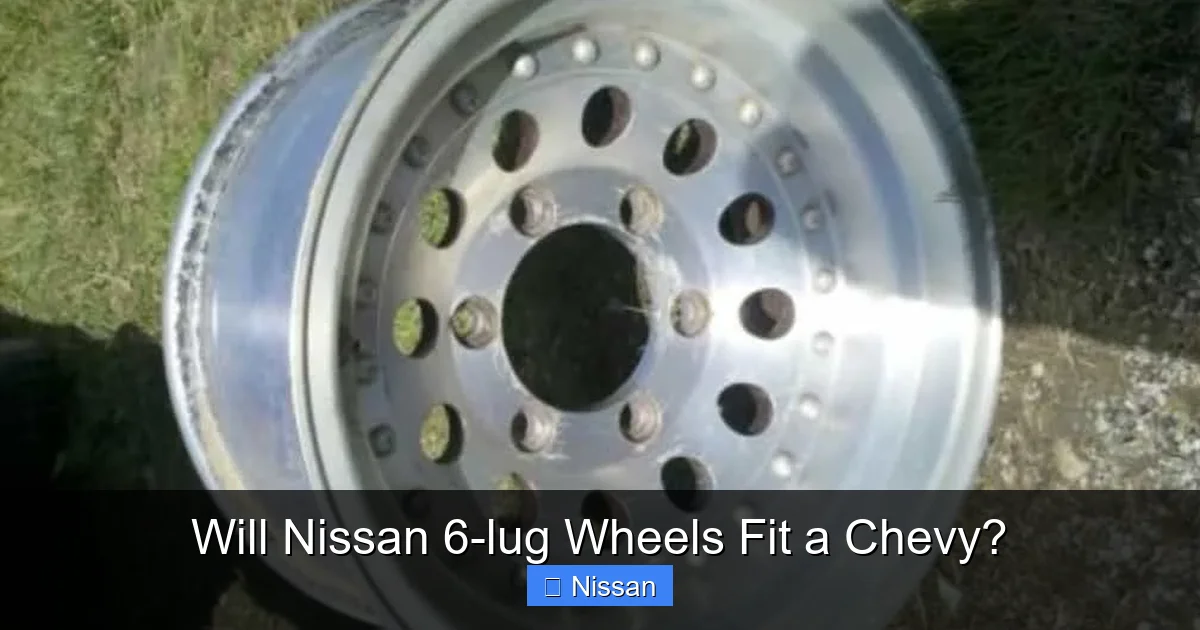
Before we dive into Nissan and Chevy compatibility, let’s get back to basics. The **bolt pattern**—also called lug pattern or PCD (pitch circle diameter)—is the first thing you need to check when considering a wheel swap. It tells you how many lug nuts a wheel has and the diameter of the circle they form.
For 6-lug wheels, the bolt pattern is written as **6x[number]**, where the number is the diameter in inches or millimeters. Most full-size Nissan trucks—like the Titan, Frontier, and older Pathfinder models—use a **6×5.5-inch** bolt pattern. That’s the same as **6×139.7mm** in metric.
Now, here’s the good news: **many Chevrolet trucks and SUVs also use a 6×5.5″ bolt pattern.** This includes popular models like:
– Chevrolet Silverado 1500 (1999–present, with some exceptions)
– Chevrolet Tahoe and Suburban (2000–present)
– Chevrolet Avalanche (2002–2013)
– Chevrolet Colorado (2004–2012, first generation)
So, on paper, a Nissan 6×5.5″ wheel *should* bolt onto a Chevy with the same pattern. But—and this is a big but—there’s more to fitment than just bolt count and diameter.
Why Bolt Pattern Alone Isn’t Enough
Imagine two wheels with identical bolt patterns but different center holes. One might fit snugly over your Chevy’s hub, while the other wobbles like a loose tooth. That’s why **hub bore size** is just as important.
The hub bore is the center hole in the wheel that fits over the vehicle’s hub. If it’s too small, the wheel won’t fit at all. If it’s too large, the wheel may bolt on but won’t be centered properly, leading to vibration, uneven wear, and even safety risks.
Chevy trucks typically have a **hub bore of 78.1mm**. Nissan wheels, on the other hand, often have larger hub bores—ranging from **103mm to 110mm**, depending on the model and year. This means that while the lugs may line up, the wheel won’t sit centered on the Chevy’s hub without an adapter.
That’s where **hub-centric rings** come in. These are plastic or metal rings that fill the gap between the Chevy’s smaller hub and the Nissan wheel’s larger bore. They ensure the wheel is centered correctly, reducing vibration and improving safety.
Hub Bore and Centering: The Hidden Challenge
Visual guide about Will Nissan 6-lug Wheels Fit a Chevy?
Image source: m.media-amazon.com
Let’s talk more about hub bore—because it’s one of the most overlooked factors in wheel swaps.
When a wheel is **hub-centric**, it’s designed to be centered by the hub, not just the lug nuts. This is important because lug nuts only clamp the wheel in place; they don’t center it. If the hub bore is too large, the wheel can shift slightly, causing imbalance and steering wobble—especially at highway speeds.
Nissan wheels are often **lug-centric**, meaning they rely more on the lug nuts to hold the wheel in place. This works fine on a Nissan, but when you move them to a Chevy with a smaller hub, you lose that centering support.
For example, a 2005 Nissan Titan wheel has a hub bore of about **103mm**, while a 2010 Chevy Silverado 1500 has a hub bore of **78.1mm**. That’s a 25mm difference—too big to ignore.
Without hub-centric rings, you risk:
– Steering wheel shake
– Premature tire wear
– Increased stress on wheel bearings
– Potential wheel detachment in extreme cases
How to Fix the Hub Bore Mismatch
The solution? **Hub-centric rings**. These are inexpensive, easy-to-install adapters that snap into the back of the Nissan wheel, reducing the bore size to match your Chevy’s hub.
You can find hub-centric rings made of:
– **Plastic (nylon or polycarbonate):** Lightweight and affordable, but may wear over time.
– **Aluminum:** More durable and better for high-performance or off-road use.
When buying, make sure to get rings with an **inner diameter of 78.1mm** (to fit your Chevy hub) and an **outer diameter that matches your Nissan wheel’s bore** (e.g., 103mm or 110mm).
Installation is simple: just clean the wheel and hub, snap the ring in place, and bolt the wheel on. But remember—hub-centric rings are a fix, not a perfect solution. They work well, but they don’t change the fact that the wheel wasn’t originally designed for your vehicle.
Offset and Backspacing: How Wheels Sit on Your Chevy

Visual guide about Will Nissan 6-lug Wheels Fit a Chevy?
Image source: carscoops.com
Even if the bolt pattern and hub bore match, **wheel offset** can make or break the fit.
Offset is the distance between the wheel’s mounting surface and its centerline. It’s measured in millimeters and can be:
– **Positive offset:** The mounting surface is toward the front (outside) of the wheel. Common on modern trucks.
– **Negative offset:** The mounting surface is toward the back (inside) of the wheel. Makes the wheel stick out more.
– **Zero offset:** The mounting surface is exactly in the center.
Chevy wheels typically have a **positive offset**, often between +15mm and +30mm. This keeps the wheel tucked under the fender, improving stability and reducing stress on suspension components.
Nissan wheels, especially on trucks like the Titan, often have a **lower or even negative offset**, sometimes ranging from +10mm to -10mm. This means they sit further outward when installed on a Chevy.
What Happens If Offset Is Too Low?
If you install Nissan wheels with a much lower offset on your Chevy, you might run into:
– **Rubbing on fenders or suspension parts**, especially when turning or going over bumps.
– **Increased scrub radius**, which can make steering feel vague or unstable.
– **Excessive wear on wheel bearings and ball joints** due to added leverage.
For example, putting a Nissan Titan wheel with -10mm offset on a Chevy Silverado with +20mm stock offset shifts the wheel outward by 30mm per side—that’s over an inch and a quarter. On a lifted truck, this might be fine. On a stock suspension, it could cause serious clearance issues.
How to Check for Clearance
Before driving, always do a **full-turn test**:
1. Install the wheel and tire.
2. Turn the steering wheel all the way left and right.
3. Check for contact between the tire and fender, bumper, or suspension components.
4. Drive slowly over bumps to simulate real-world conditions.
If you see rubbing, you may need:
– **Wheel spacers** (to push the wheel out further—but use cautiously)
– **Larger fender flares**
– **Suspension modifications**
– Or simply a different set of wheels
Year, Model, and Trim: Not All Chevys Are the Same
Here’s a critical point: **not all Chevy trucks are created equal.** Even within the same model line, bolt patterns and hub sizes can vary by year, trim, and drivetrain.
For example:
– **Chevy Silverado 1500 (1999–2006):** 6×5.5″ bolt pattern, 78.1mm hub bore.
– **Chevy Silverado 1500 (2007–2013):** Still 6×5.5″, but some trims (like the Hybrid) may have different specs.
– **Chevy Colorado (2004–2012):** 6×5.5″, but smaller overall size—may not clear larger Nissan wheels.
– **Chevy Tahoe (2000–2006):** 6×5.5″, but check for brake caliper clearance with larger wheels.
Similarly, Nissan models vary:
– **Nissan Titan (2004–2015):** 6×5.5″, 103mm hub bore, +15mm to +20mm offset.
– **Nissan Frontier (2005–2021):** 6×5.5″, 103mm hub bore, +15mm offset.
– **Nissan Pathfinder (2005–2012):** 6×5.5″, but smaller wheels—may not fit larger Chevy trucks.
Always check your **owner’s manual** or use a **wheel fitment guide** from a reputable source like Tire Rack, Summit Racing, or your local tire shop.
Using Online Fitment Tools
Websites like **Tire Rack**, **Discounted Wheel Warehouse**, and **4WheelParts** have fitment tools where you can enter your Chevy’s year, make, and model to see compatible wheels. You can also input Nissan wheel specs to see if they’ll work.
These tools consider:
– Bolt pattern
– Hub bore
– Offset range
– Tire size
– Suspension type (stock, lifted, leveled)
They’re not 100% foolproof, but they’re a great starting point.
Tire Size and Suspension: The Final Piece of the Puzzle
Even with the right wheels, **tire size** can cause fitment issues.
Nissan wheels are often designed for specific tire sizes. If you mount a larger tire on a Nissan wheel and install it on your Chevy, you might run into:
– **Fender rubbing** at full turn or over bumps
– **Speedometer inaccuracy** due to changed overall diameter
– **ABS or traction control errors** if the tire size is too different
For example, a 2008 Nissan Titan might come with 275/65R18 tires. If you put those same tires on a 2012 Chevy Silverado, they might fit fine. But if you upgrade to 285/70R17s, you could hit the upper control arm or inner fender.
Suspension Modifications Matter
If your Chevy has a **lift kit**, **leveling kit**, or **larger tires**, you have more flexibility with wheel fitment. Lifted trucks often have more clearance, so lower-offset Nissan wheels may fit without issues.
But if your Chevy is **stock**, be extra cautious. Even a small change in offset or tire size can cause problems.
Example: Swapping Titan Wheels onto a Silverado
Let’s walk through a real-world example:
– **Chevy:** 2010 Silverado 1500, stock suspension, 265/70R17 tires.
– **Nissan wheels:** 2007 Titan, 18×8, 6×5.5″, +15mm offset, 103mm hub bore.
**Step 1:** Bolt pattern matches—good.
**Step 2:** Hub bore is 103mm vs. Chevy’s 78.1mm—need hub-centric rings.
**Step 3:** Offset is +15mm, close to stock Chevy (+20mm)—should fit with minor outward shift.
**Step 4:** Install 265/70R17 tires (same size)—no change in diameter.
**Result:** With hub-centric rings and a full-turn test, these wheels should fit safely.
But if you try to put 33-inch tires on those same wheels, you might rub—even with the correct bolt pattern.
Safety and Professional Installation
We can’t stress this enough: **wheel fitment is a safety issue.** A poorly fitted wheel can lead to vibration, loss of control, or even wheel separation.
That’s why we recommend:
– **Getting a professional fitment check** at a tire shop or alignment center.
– **Torquing lug nuts properly** (usually 140 ft-lbs for Chevy trucks) in a star pattern.
– **Rechecking torque after 50–100 miles** of driving.
– **Avoiding cheap or unknown-brand hub-centric rings.**
Also, consider **wheel balancing** after installation. Even with correct specs, a Nissan wheel may not be perfectly balanced for your Chevy’s hub, leading to vibration.
When to Avoid the Swap
There are times when it’s better to skip the Nissan wheels:
– If the hub bore is more than 30mm larger than your Chevy’s (e.g., 110mm vs. 78.1mm), even with rings, centering may be unreliable.
– If the offset difference is more than 20mm—this can stress suspension components.
– If the wheels are damaged, corroded, or from an unknown source.
– If you’re running a high-performance or off-road setup where precision matters.
In those cases, it’s worth investing in wheels specifically designed for your Chevy.
Conclusion: Yes, But Proceed with Caution
So, will Nissan 6-lug wheels fit a Chevy? **Often, yes—but only if you do your homework.**
The shared 6×5.5″ bolt pattern between many Nissan and Chevrolet trucks makes cross-brand swaps possible. But success depends on matching hub bore (with hub-centric rings), checking offset and backspacing, verifying tire size, and ensuring suspension compatibility.
Don’t just bolt them on and hope for the best. Measure twice, test once, and when in doubt, consult a professional.
With the right preparation, you can give your Chevy a fresh, custom look using Nissan wheels—safely and stylishly.
Frequently Asked Questions
Can I put Nissan Titan wheels on a Chevy Silverado?
Yes, in most cases. The Titan uses a 6×5.5″ bolt pattern, which matches many Silverado 1500 models. However, you’ll likely need hub-centric rings due to the larger hub bore on Titan wheels (103mm vs. Chevy’s 78.1mm).
Do I need wheel spacers for Nissan wheels on a Chevy?
Not usually—unless you’re dealing with extreme offset differences or clearance issues. Spacers can help, but they add stress to wheel bearings and should be used sparingly and with quality parts.
Will Nissan Frontier wheels fit a Chevy Colorado?
Possibly, but check the year and specs. First-gen Colorados (2004–2012) share the 6×5.5″ pattern, but wheel size and offset may differ. Always verify hub bore and clearance.
Can I use hub-centric rings on any wheel swap?
Only if the outer diameter matches the wheel’s hub bore and the inner diameter matches your vehicle’s hub. They’re essential for safety when there’s a mismatch.
Why is my steering wheel shaking after installing Nissan wheels?
This is likely due to improper centering from a hub bore mismatch. Without hub-centric rings, the wheel isn’t seated correctly, causing imbalance and vibration.
Are all 6-lug Chevy and Nissan wheels interchangeable?
No. While many share the 6×5.5″ pattern, differences in hub bore, offset, and wheel design mean not all combinations will fit safely. Always verify specs for your specific vehicles.