
Why Won’t My Key Turn in the Ignition on a Toyota Corolla?

A key that won’t turn in a Toyota Corolla’s ignition is almost always a mechanical or security lock issue, not an engine problem. The most frequent culprits are a engaged steering lock, a worn-out key or ignition cylinder, or a faulty ignition switch. Simple fixes like jiggling the steering wheel, gently wiggling the key, or using graphite lubricant often resolve the issue. If these fail, the ignition lock cylinder or switch likely needs professional replacement.
You’re standing by your trusty Toyota Corolla, ready to go. You insert the key into the ignition, but it won’t budge. You try again, applying a little more pressure. Nothing. A knot of frustration and worry forms in your stomach. “Why won’t my key turn?” you ask yourself. Before panic sets in, take a deep breath. This is an incredibly common issue, especially with reliable, long-lived cars like the Corolla, and it’s almost always a mechanical problem you can diagnose and often fix yourself. This guide will walk you through every possible cause, from the simplest fix to more complex repairs, so you can understand exactly what’s happening and get back behind the wheel.
Key Takeaways
- The steering wheel lock is the #1 suspect: Pressure on the steering wheel from the lock mechanism is the most common reason a Toyota Corolla key won’t turn. Gently rocking the wheel while turning the key usually releases it.
- Your key is likely worn: After years of use, the teeth on a metal key wear down and can no longer properly engage the pins inside the ignition lock cylinder, causing it to jam.
- The ignition lock cylinder itself can fail: The internal mechanics of the cylinder, including springs and pins, can break or wear out, preventing rotation regardless of the key’s condition.
- It’s rarely the engine or battery: If the engine doesn’t crank, the problem is in the ignition circuit or starter. If the key simply won’t *turn* to the “Start” position, the issue is purely mechanical in the steering column/ignition.
- Forced turning damages the system: Never use pliers or excessive force to turn a stuck key. This will shear the key inside the lock or break internal components, creating a much costlier repair.
- Modern keys have transponder chips: While a faulty transponder chip will prevent the engine from starting *after* the key is turned, it does not typically stop the physical key from turning in the cylinder.
- Diagnosis is a step-by-step process: Always start with the simplest solution (steering wheel pressure) before moving to key inspection, lubrication, and finally, professional diagnosis of the lock cylinder or switch.
📑 Table of Contents
The Usual Suspects: Why Your Toyota Corolla Key Won’t Turn
When a key refuses to turn, the failure point is almost always between your hand and the ignition switch. The engine itself is fine. The battery is likely fine. The problem lies in the physical locking mechanism that connects your key to the steering wheel and the car’s starting circuit. For Toyota Corollas, especially models from the late 90s through the 2010s, a few specific issues are overwhelmingly common. Understanding these will help you troubleshoot logically.
The Infamous Steering Wheel Lock
This is, by far, the number one reason. Your Corolla has a powerful anti-theft steering lock that engages when you remove the key. If the steering wheel is turned even slightly when you park and remove the key, the lock mechanism binds against the steering column. When you return and try to insert/turn the key, the lock’s tension prevents the cylinder from rotating. The fix is deceptively simple: you must relieve that tension.
How to fix it: Place your hands on the steering wheel (firmly, but not violently). While firmly attempting to turn the key to the “ON” or “Start” position, gently but firmly rock the steering wheel back and forth, left and right. You will feel a slight “clunk” or release of tension. The key should then turn freely. Sometimes you need to apply slight pressure on the wheel in the direction it naturally wants to move (the direction it’s locked). Don’t force the key; force the wheel. This is the first thing you should always try.
Worn Out Keys and Ignition Cylinders
Metal keys are not eternal. After 10, 15, or even 20 years of being inserted, twisted, and jiggled, the precise cuts on the key blade become rounded and smooth. The intricate pins inside your Corolla’s ignition lock cylinder are designed to rise to the exact height of these key cuts. A worn key can no longer lift the pins to their correct shear line, causing the cylinder to jam. Similarly, the springs and pins inside the cylinder itself can wear out, break, or become clogged with metal shavings and dirt over decades of use.
How to diagnose/fix: Try your spare key. If the spare (which is likely less worn) turns easily, your primary key is the problem. You can often get a new key cut from your dealer or a locksmith using your vehicle’s VIN, even without the original working. If both keys struggle, the ignition cylinder is the worn component. A temporary fix is a dry lubricant like graphite powder (NOT WD-40, which attracts dirt) blown into the keyhole. Gently work the key in and out to distribute it. This can clear minor debris but won’t fix severely worn components.
Ignition Switch and Electrical Issues
While less common for a key that physically won’t turn, the ignition switch—the electrical component the lock cylinder turns—can sometimes bind mechanically. More often, an electrical issue will let you turn the key to “ON” but not to “Start,” or the key will turn but the engine won’t crank. However, a severely damaged or broken switch mechanism can create enough internal drag to stop the key from turning at all.
Visual guide about Why Won’t My Key Turn in the Ignition on a Toyota Corolla?
Image source: knowmyauto.b-cdn.net
Additionally, some Toyota models have a safety interlock that connects the key lock cylinder to the shift lever (the “Neutral Safety Switch”). If your Corolla is an automatic and the shifter is not firmly in “Park” (or “Neutral” for some models), the key physically cannot turn to “Start.” Always ensure your foot is on the brake and the shifter is clicked firmly into “P.”
The Key Won’t Turn to Start, But Turns to ON
If your key turns easily to the first click (“ON” or “ACC” position) where the dashboard lights come on, but then refuses to turn further to the “Start” position, the problem is likely one of two things: 1) A faulty ignition switch (the electrical part) that has mechanically jammed in the “ON” position, or 2) A worn key that works for the initial, low-torque position but can’t handle the higher torque needed to engage the starter circuit. In this scenario, the steering wheel lock is less likely to be the issue, as that usually prevents any turning at all.
Debris, Damage, and Environmental Factors
Ignition cylinders are exposed to the elements at the base of the steering column. Dirt, dust, pocket lint, and even small debris can work its way into the keyhole. Over time, this can create a paste of grime and metal shavings that gums up the works. Extreme cold can also cause minor contraction of metal parts, increasing friction.
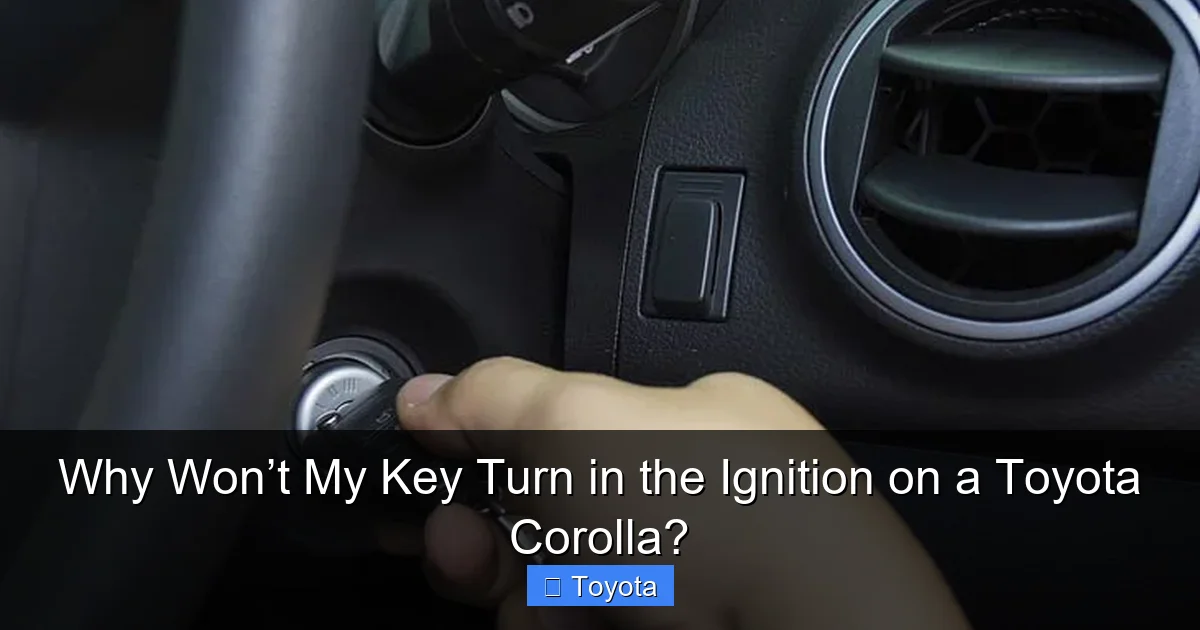
Visual guide about Why Won’t My Key Turn in the Ignition on a Toyota Corolla?
Image source: bryansgarage.com
Physical damage is another cause. Has the key been forced? Has something been jammed into the ignition? Has the steering column been impacted in a minor fender-bender? Even a slight misalignment can put the lock mechanism under abnormal stress.
What to do: A blast of compressed air can sometimes blow out loose debris. Follow with a small amount of graphite lubricant. If you suspect damage, or if the problem appeared after an incident, the lock cylinder or steering column may need inspection and realignment or replacement.
Diagnostic Steps: A Systematic Approach
Don’t just start pulling parts. Work through this checklist in order, from simplest to most complex.
Visual guide about Why Won’t My Key Turn in the Ignition on a Toyota Corolla?
Image source: carstrucksroads.com
- Step 1: The Steering Wheel Rock. Apply gentle, firm pressure on the wheel in both directions while attempting to turn the key. This solves 70% of cases.
- Step 2: Check the Shifter. For automatics, press the brake firmly and ensure the shifter is locked solidly in “P.” Try gently wiggling the shifter while turning the key.
- Step 3: Try the Spare Key. This instantly tells you if the problem is the key or the lock.
- Step 4: Lubricate. Use a *dry* lubricant like graphite. Insert the key, gently rock it back and forth, and turn it. Do not use oil-based products.
- Step 5: Check for Dashboard Lights. Does turning the key to “ON” illuminate the dash? If yes, the electrical circuit to the switch is working. If no, the problem might be deeper in the switch or a main fuse/relay, but the key still turning is a separate issue.
- Step 6: Gently Tap. Sometimes, lightly tapping the bottom of the ignition lock cylinder (the part the key goes into) with a small hammer or the handle of a screwdriver while trying to turn the key can dislodge a stuck pin. Be very gentle.
Solutions and Repairs: From DIY to Professional
If the diagnostic steps fail, it’s time for a repair. The cost and complexity vary wildly.
Replacing the Key
If the spare works, get a new key made. For older Corollas with simple metal keys, any locksmith or hardware store can cut a new one from your existing. For models with transponder chips (most post-2000), you need a dealer or a specialized locksmith who can program the chip to your car’s immobilizer system. This is crucial—a cut key won’t start the car without proper programming, though it may still turn the cylinder.
Ignition Lock Cylinder Replacement
This is the most common permanent fix for a worn or damaged cylinder. The entire lock cylinder assembly is replaced. On many Toyota Corollas, this is a straightforward job that can be done at home with basic tools (screwdrivers, socket set) if you’re mechanically inclined. You typically need to remove the steering column covers and disconnect the cylinder from the steering lock and electrical connectors. Important: If your car has an airbag in the steering wheel, you MUST disconnect the battery and follow specific safety procedures to avoid accidental deployment. If you’re not 100% comfortable, this is a job for a professional. The part itself is relatively inexpensive, but labor can add up.
Steering Column or Ignition Switch Assembly
On some newer models, the ignition switch is integrated into a larger assembly that may require replacing more than just the lock cylinder. A dealer or independent mechanic can perform a definitive diagnosis. They can also test the electrical switch independently of the mechanical lock.
When dealing with any ignition issue, it’s helpful to understand other Toyota systems. For example, if you’re troubleshooting electrical gremlins after fixing the ignition, you might need to learn how to turn on the heater in a Toyota Corolla, as both systems draw from the same “ON” power source. Similarly, general ignition lockout problems are covered in depth in articles like Why Won’t My Key Turn In My Car, which provides a broader perspective applicable to all makes.
When to Call a Professional: Avoiding Costly Mistakes
There are clear times to stop DIY and call a locksmith or mechanic:
- The key is broken off in the ignition. This requires special extraction tools and skill to remove without damaging the cylinder.
- You’ve tried everything and the key still won’t turn. Forcing it will cause catastrophic damage.
- Your Corolla has a steering wheel airbag. The risk of accidental deployment is real. Disconnecting the battery is mandatory, but the process is delicate.
- You suspect an electrical fault in the ignition switch itself. Diagnosing this requires testing live circuits.
- The entire steering column feels loose or damaged. This points to a larger issue from a past impact.
A professional mobile locksmith can often come to you, diagnose the issue, and replace the lock cylinder on-site. A dealership will ensure all electronic components (like the transponder system) are perfectly synchronized but will be the most expensive option.
Frequently Asked Questions
Can a dead car battery cause the key to not turn?
No. A dead battery will prevent the engine from cranking and may cause dashboard lights not to come on when you turn the key, but it will not physically stop the key from rotating in the ignition cylinder. The key turning is a purely mechanical action.
My Toyota Corolla key turns but the engine won’t start. Is that the same problem?
Not exactly. If the key turns fully to the “Start” position but the engine doesn’t crank, the issue is likely electrical—a faulty starter motor, a bad ignition switch (the electrical component), a dead battery, or a failed neutral safety switch. The key turning freely indicates the mechanical lock cylinder is functioning.
Is it safe to use lubricants like WD-40 in my ignition?
It’s not recommended. WD-40 is a water-displacing solvent and light lubricant that attracts dirt and dust. Over time, it can create a grinding paste inside the delicate lock mechanism. Always use a dry lubricant like powdered graphite, which doesn’t attract debris and is specifically designed for locks.
How much does it cost to fix a key that won’t turn in a Corolla?
Costs vary dramatically. A simple steering wheel release costs $0. A new cut key is $50-$150 (more if a transponder chip needs programming). A replacement ignition lock cylinder part is $50-$150. With professional installation, total labor can be $150-$400. At a dealership, with all electronic syncing, it can be $400-$800+.
My key is stuck in the ignition and won’t come out. What now?
First, ensure the car is in “Park” and the parking brake is set. Try the steering wheel rock method again. Sometimes the lock is engaged in a way that prevents key removal. If the key is stuck and won’t turn or come out, the cylinder is likely severely damaged or broken internally. Do not force it. You will need a professional to either repair the cylinder or remove it with the key still inside.
Will a locksmith damage my Toyota Corolla’s steering column?
A reputable automotive locksmith is trained to work on these systems without damage. They have specific tools to remove and replace lock cylinders. The risk of damage is far higher if you attempt to force the key or use incorrect tools yourself. Always verify the locksmith is experienced with modern vehicles, especially if your Corolla has an airbag in the steering wheel.
