
Why Is My Kia Optima Not Starting?

If your Kia Optima won’t start, it’s often due to a dead battery, faulty starter, or fuel system problem. This guide walks you through the most common causes and practical solutions to diagnose and fix the issue quickly.
Key Takeaways
- Dead or weak battery: The most common reason your Kia Optima won’t start—check for dim lights or clicking sounds.
- Faulty starter motor: A worn-out starter may cause a clicking noise but no engine turnover.
- Fuel delivery issues: Clogged fuel filters or a failing fuel pump can prevent fuel from reaching the engine.
- Ignition switch problems: A malfunctioning switch may not send power to the starter when you turn the key.
- Bad alternator: Even with a new battery, a failing alternator won’t recharge it, leading to repeated no-starts.
- Security system glitches: The immobilizer or anti-theft system might mistakenly block engine start-up.
- Corroded or loose battery terminals: Poor connections can disrupt power flow, even if the battery is fully charged.
📑 Table of Contents
- Why Is My Kia Optima Not Starting? A Complete Troubleshooting Guide
- 1. Dead or Weak Battery: The #1 Culprit
- 2. Faulty Starter Motor: When the Click Means Trouble
- 3. Fuel System Problems: No Gas, No Go
- 4. Ignition Switch and Key Fob Problems
- 5. Alternator Failure: The Silent Battery Killer
- 6. Security System and Immobilizer Glitches
- When to Call a Mechanic
- Preventing Future No-Start Issues
- Conclusion
Why Is My Kia Optima Not Starting? A Complete Troubleshooting Guide
You’re running late for work, you hop into your Kia Optima, turn the key—and nothing happens. Or worse, you hear a faint click, but the engine refuses to turn over. It’s frustrating, stressful, and leaves you wondering, “Why is my Kia Optima not starting?” You’re not alone. This is one of the most common issues Kia owners face, and while it can be alarming, the good news is that most causes are fixable—and often preventable.
The Kia Optima is known for its reliability, comfort, and fuel efficiency, but like any vehicle, it’s not immune to mechanical hiccups. When your car won’t start, it’s usually a sign that something in the starting system, electrical system, or fuel delivery chain has gone wrong. The key is to stay calm, avoid panic, and methodically work through the most likely culprits. Whether you’re a DIY enthusiast or someone who prefers to leave repairs to the pros, understanding the root causes can save you time, money, and a lot of stress.
In this guide, we’ll walk you through the most common reasons your Kia Optima might not start, how to identify them, and what you can do about it. From simple fixes like jump-starting a dead battery to more complex issues like a failing fuel pump, we’ve got you covered. By the end, you’ll know exactly what to check—and when it’s time to call in a mechanic.
1. Dead or Weak Battery: The #1 Culprit
Visual guide about Why Is My Kia Optima Not Starting?
Image source: bryansgarage.com
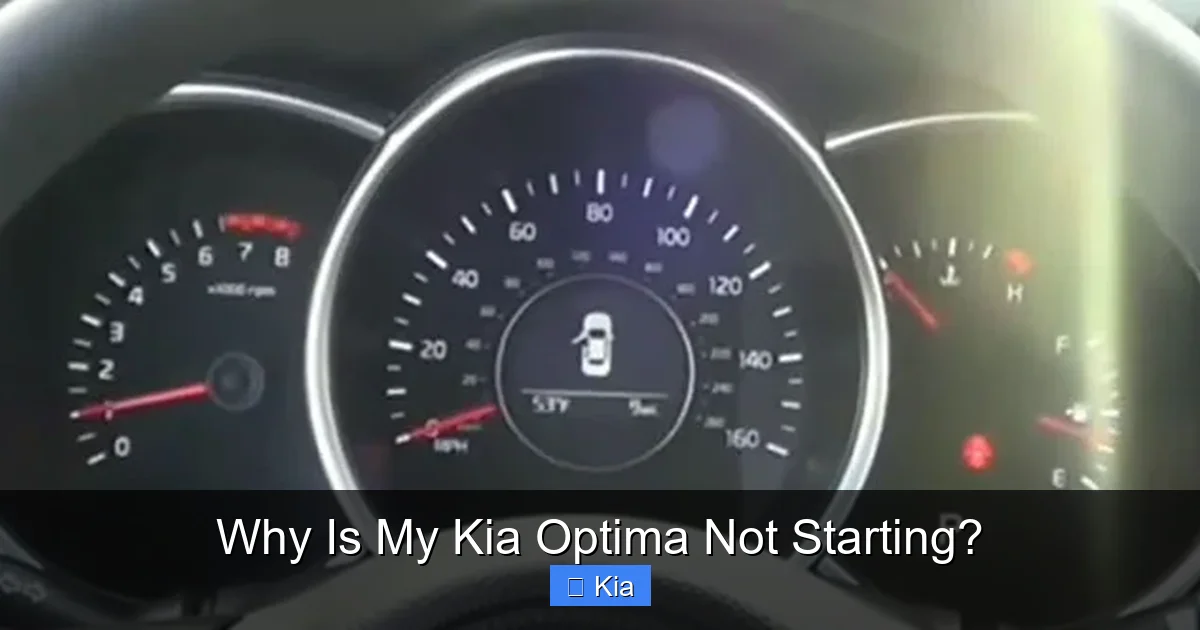
If your Kia Optima won’t start, the first thing you should suspect is the battery. In fact, a dead or weak battery is the single most common reason cars fail to start—and the Optima is no exception. Batteries don’t last forever. Most last between 3 to 5 years, depending on climate, driving habits, and maintenance. If your Optima is older or you live in a region with extreme temperatures, your battery may be nearing the end of its life.
Signs of a Dead Battery
How can you tell if the battery is the problem? Look for these telltale signs:
– The dashboard lights are dim or flicker when you turn the key.
– You hear a rapid clicking sound when trying to start the engine.
– The engine cranks slowly or not at all.
– Interior lights, radio, or power windows don’t work properly.
For example, imagine you get in your car on a cold winter morning. You turn the key, and instead of the engine roaring to life, you hear a weak “click… click… click.” That’s a classic sign of a dead battery. The starter is trying to engage, but there’s not enough power to turn the engine over.
How to Test and Fix a Dead Battery
Testing your battery is easier than you think. You can use a multimeter to check the voltage. A healthy battery should read around 12.6 volts when the car is off. If it’s below 12.4 volts, it’s likely weak. When the engine is running, the voltage should be between 13.7 and 14.7 volts—this shows the alternator is charging the battery.
If your battery is dead, try jump-starting your Optima using jumper cables and another vehicle. Connect the red (positive) clamp to the positive terminal on your battery, then to the donor car’s positive terminal. Do the same with the black (negative) clamp, attaching it to the donor’s negative terminal and grounding the other end to an unpainted metal surface on your Optima (not the battery). Start the donor car, let it run for a few minutes, then try starting yours.
If the jump works and your car starts, drive it for at least 20–30 minutes to allow the alternator to recharge the battery. But if the car dies again shortly after, or if jump-starting doesn’t work at all, the battery may need to be replaced.
Preventing Battery Issues
To avoid future no-starts, keep your battery terminals clean and free of corrosion. Use a wire brush to scrub off any white or green buildup. Also, avoid leaving lights, the radio, or accessories on when the engine is off—these can drain the battery over time. If you don’t drive your Optima often, consider using a battery maintainer or trickle charger to keep it topped up.
2. Faulty Starter Motor: When the Click Means Trouble
Visual guide about Why Is My Kia Optima Not Starting?
Image source: autoowa.com
If your battery is fine but your Kia Optima still won’t start, the next suspect is the starter motor. The starter is a small electric motor that turns the engine over when you turn the key. If it fails, you might hear a loud click when you try to start the car, but the engine won’t crank.
How the Starter Works
When you turn the ignition key, a signal is sent to the starter solenoid, which engages the starter motor. The motor then spins the engine’s flywheel, allowing the combustion process to begin. If the starter is faulty, this process stops before it even starts.
Symptoms of a Bad Starter
Here’s how to recognize a failing starter:
– A single loud click when you turn the key, but no engine cranking.
– The engine cranks very slowly, even with a fully charged battery.
– Intermittent starting—sometimes it works, sometimes it doesn’t.
– Grinding or whining noises when attempting to start.
For instance, you might turn the key and hear a sharp “click” from under the hood, but the engine remains silent. This is different from the rapid clicking of a dead battery. A single, solid click often points to a starter that’s receiving power but can’t engage the flywheel.
Testing the Starter
Testing a starter isn’t something most people can do at home without tools, but you can try a simple diagnostic. First, make sure the battery is fully charged. Then, have someone turn the key while you listen near the starter (usually located near the transmission). If you hear a click but no motor spin, the starter may be bad.
Another test: gently tap the starter with a hammer or wrench while someone tries to start the car. If the car starts after the tap, the starter is likely failing and needs replacement. (Note: This is a temporary fix and not a long-term solution.)
Replacing the Starter
Starter replacement is a job best left to professionals, as it involves removing parts of the exhaust or intake system and working near the transmission. Labor costs can vary, but expect to pay between $300 and $600 for parts and installation, depending on your Optima’s year and model.
3. Fuel System Problems: No Gas, No Go
Visual guide about Why Is My Kia Optima Not Starting?
Image source: i.ytimg.com
Even with a good battery and working starter, your Kia Optima won’t start if fuel isn’t reaching the engine. The fuel system includes the fuel pump, fuel filter, fuel injectors, and fuel lines. If any of these components fail, your engine won’t get the fuel it needs to run.
The Role of the Fuel Pump
The fuel pump is the heart of the fuel system. It’s usually located inside the fuel tank and pumps gasoline from the tank to the engine at high pressure. Most modern Optimas use an electric fuel pump that runs when you turn the key to the “on” position.
Signs of a Failing Fuel Pump
How do you know if the fuel pump is the problem? Look for these clues:
– The engine cranks but doesn’t start.
– You hear a whining or buzzing noise from the fuel tank area.
– The car starts but stalls shortly after.
– Poor acceleration or loss of power while driving.
For example, you might turn the key and hear the engine crank normally, but it never catches. After a few tries, you notice a faint humming sound from the rear of the car—that’s the fuel pump trying (and failing) to build pressure.
Checking Fuel Pressure
To confirm a fuel pump issue, a mechanic can use a fuel pressure gauge to test the system. Normal fuel pressure for a Kia Optima ranges from 45 to 65 psi, depending on the model year. If pressure is low or zero, the pump may be failing.
You can also try listening for the fuel pump. Turn the key to the “on” position (but don’t start the engine). You should hear a brief hum from the rear of the car for 2–3 seconds. If you don’t hear anything, the pump may not be working.
Clogged Fuel Filter
Another common fuel system issue is a clogged fuel filter. The filter traps dirt and debris before they reach the engine. Over time, it can become blocked, restricting fuel flow. Symptoms include hard starting, engine hesitation, and stalling.
Most Kia Optima models have a fuel filter that should be replaced every 30,000 to 60,000 miles. If you haven’t replaced it in a while, this could be the culprit.
Fuel Injector Issues
Faulty fuel injectors can also prevent your Optima from starting. Injectors spray fuel into the combustion chamber. If they’re clogged or malfunctioning, the engine may not get the right fuel mixture. This can cause rough idling, misfires, or no start at all.
Cleaning or replacing injectors is a job for a professional, but using a quality fuel system cleaner every 5,000 miles can help prevent buildup.
4. Ignition Switch and Key Fob Problems
Modern Kia Optimas use electronic ignition systems, including key fobs and push-button start in newer models. If the ignition switch or key fob is malfunctioning, your car may not recognize the key or send the signal to start the engine.
How the Ignition System Works
In older Optimas with traditional keys, turning the key sends a signal to the ignition switch, which activates the starter and fuel system. In newer models with keyless entry, the key fob communicates with the car via radio signals. The car must detect the fob inside the cabin to allow starting.
Symptoms of Ignition Issues
Here’s what to watch for:
– The key turns, but nothing happens—no lights, no cranking.
– The dashboard lights up, but the engine won’t start.
– The key fob doesn’t unlock the doors or start the car.
– The “Key Not Detected” message appears on the dashboard.
For example, you might press the start button, but the car doesn’t respond. The dashboard lights up, but there’s no engine turnover. This could mean the key fob battery is dead or the ignition switch is faulty.
Fixing Ignition Problems
Start by checking the key fob battery. Most fobs use a small coin-cell battery (like a CR2032). Replace it if it’s weak. You can usually do this by prying open the fob with a flathead screwdriver.
If the fob battery is fine, try using the physical key (if your Optima has one) to unlock the door and start the car. Some models allow you to insert the key into a hidden slot near the steering column to start the engine manually.
If the problem persists, the ignition switch or immobilizer system may need repair. This is a complex job that requires diagnostic tools and should be handled by a certified Kia technician.
5. Alternator Failure: The Silent Battery Killer
You might think your battery is the problem—but what if it’s actually the alternator? The alternator charges the battery while the engine runs. If it fails, the battery will drain, even if it’s new.
How the Alternator Works
The alternator converts mechanical energy from the engine into electrical energy to power the car’s systems and recharge the battery. Without it, your car can’t sustain electrical power for long.
Signs of a Bad Alternator
Look for these warning signs:
– The battery keeps dying, even after being replaced.
– Dim or flickering headlights.
– Electrical issues like power windows or radio cutting out.
– A warning light on the dashboard (often labeled “ALT” or “CHARGE”).
For example, you might jump-start your Optima and drive it fine for a day—then it won’t start again the next morning. This cycle suggests the alternator isn’t charging the battery.
Testing the Alternator
Use a multimeter to test the alternator. With the engine running, check the voltage at the battery terminals. It should read between 13.7 and 14.7 volts. If it’s below 13 volts, the alternator may not be charging properly.
You can also listen for unusual noises—a whining or grinding sound from the alternator area can indicate worn bearings or internal damage.
Replacing the Alternator
Alternator replacement is moderately complex and usually requires removing the serpentine belt and electrical connections. Expect to pay $400 to $800 for parts and labor, depending on your Optima’s model year.
6. Security System and Immobilizer Glitches
Modern Kia Optimas come equipped with anti-theft systems, including immobilizers that prevent the engine from starting unless the correct key is present. Sometimes, these systems malfunction and mistakenly block the engine from starting.
How the Immobilizer Works
The immobilizer uses a chip in the key fob to communicate with the car’s computer. If the system doesn’t recognize the key, it won’t allow the engine to start—even if you turn the key or press the start button.
Symptoms of Immobilizer Issues
Common signs include:
– The engine cranks but won’t start.
– A flashing security light on the dashboard.
– The “Immobilizer” or “Key Not Detected” message appears.
– The car starts intermittently.
For example, you might turn the key and hear the engine crank, but it never catches. The security light on the dashboard flashes rapidly—this is a clear sign the immobilizer is active.
Fixing Immobilizer Problems
First, try using a spare key fob. If the spare works, the original fob may have a dead battery or damaged chip.
If you only have one key, try reprogramming it. Some Kia models allow you to reset the immobilizer by turning the key to “on” and “off” several times in a specific sequence. Check your owner’s manual for instructions.
If that doesn’t work, you may need to visit a Kia dealership. They have the tools to reprogram the immobilizer or replace the key fob.
When to Call a Mechanic
While many no-start issues can be diagnosed at home, some require professional help. If you’ve checked the battery, starter, fuel system, and ignition and still can’t find the problem, it’s time to call a mechanic.
Also, if you notice unusual smells (like gasoline or burning), smoke, or fluid leaks, stop trying to start the car immediately. These could indicate serious problems like fuel leaks or electrical fires.
A certified Kia technician can run a full diagnostic scan using specialized tools to pinpoint the issue. They’ll check the engine control module (ECM), sensors, and wiring for faults that aren’t obvious to the average driver.
Preventing Future No-Start Issues
The best way to avoid a no-start situation is regular maintenance. Here are some tips:
– Replace your battery every 3–5 years.
– Keep battery terminals clean and tight.
– Replace the fuel filter as recommended.
– Use quality fuel and add a fuel system cleaner periodically.
– Don’t leave accessories on when the engine is off.
– Address warning lights promptly.
By staying proactive, you can keep your Kia Optima running smoothly for years to come.
Conclusion
So, why is your Kia Optima not starting? The answer could be as simple as a dead battery or as complex as a failing fuel pump. But with the right knowledge, you can diagnose the problem and take action—whether that means jump-starting the car, replacing a part, or calling a mechanic.
Remember, most no-start issues are preventable with regular maintenance and attention to warning signs. Don’t ignore dim lights, strange noises, or intermittent problems. Address them early, and you’ll save yourself from being stranded.
Your Kia Optima is a reliable vehicle, and with a little care, it will continue to serve you well. The next time you turn the key and nothing happens, don’t panic. Use this guide to work through the possibilities, and you’ll be back on the road in no time.
Frequently Asked Questions
Why won’t my Kia Optima start even with a new battery?
Even with a new battery, your Optima might not start if the alternator isn’t charging it, the starter is faulty, or there’s a fuel delivery issue. Check the alternator output and listen for fuel pump sounds.
What does it mean if my Optima clicks but won’t start?
A single loud click usually points to a faulty starter motor, while rapid clicking often indicates a weak or dead battery. Test the battery voltage and try jump-starting to confirm.
Can a bad fuel pump prevent my Kia Optima from starting?
Yes. If the fuel pump isn’t delivering fuel to the engine, your Optima will crank but not start. Listen for a humming sound from the fuel tank when you turn the key to “on.”
Why does my Kia Optima start sometimes but not others?
Intermittent starting can be caused by a failing ignition switch, bad key fob battery, or loose wiring. It could also indicate a weak fuel pump or electrical connection issue.
How often should I replace the battery in my Kia Optima?
Most Kia Optima batteries last 3 to 5 years. Replace it sooner if you notice slow cranking, dim lights, or frequent jump-starts.
Can the immobilizer cause my Optima not to start?
Yes. If the immobilizer doesn’t recognize your key fob, it will block the engine from starting. Try using a spare key or reprogramming the fob to fix the issue.