
Why Is My Jeep Not Starting but Has Power?

If your Jeep has power (lights, radio work) but won’t start, the problem is likely not the battery. Instead, it’s often a fuel delivery issue, a faulty ignition component, a triggered security system, or a bad sensor preventing startup. Diagnosing involves checking for fuel pump operation, spark, and any security warning lights.
Key Takeaways
- Power vs. Crank: Having power means your battery is good. If the engine doesn’t crank at all, it’s a starter/circuit issue. If it cranks but won’t fire, the issue is fuel, spark, or security.
- Fuel is Prime Suspect: A failed fuel pump, clogged filter, or bad relay is a top cause. Listen for the hum from the rear when you turn the key to “ON.”
- Security System Lockout: Modern Jeeps have immobilizers. A faulty key fob, weak key battery, or failed SKIM module can prevent starting, often indicated by a flashing key icon.
- No Spark, No Start: Faulty crankshaft/camshaft sensors, a bad ignition coil, or worn spark plugs can stop the engine from firing even while cranking normally.
- Check Engine Light is Your Friend: Always scan for stored diagnostic trouble codes (P-codes). They point directly to the failing component or system.
- Start Simple: Always check the easiest things first: fuel level, fuel pump fuse/relay, and ensure the parking brake is fully disengaged (some Jeeps won’t start if it’s slightly on).
📑 Table of Contents
- The Frustration of a Silent Engine: Power On, But No Go
- Understanding the Starting Sequence: What “Has Power” Really Means
- Fuel System Failures: The Most Common Culprit
- Ignition System: The Need for a Strong Spark
- Security and Immobilizer System Lockouts
- Other Electronic and Mechanical Possibilities
- A Practical Diagnostic Roadmap: Step-by-Step
- Conclusion: Patience and Process are Key
The Frustration of a Silent Engine: Power On, But No Go
You slide into the driver’s seat of your trusty Jeep. You turn the key, and the dashboard lights illuminate brightly. The radio comes on. The climate control fan blows. Everything seems perfectly powered. But when you turn the key to “START,” nothing happens. Or maybe the engine turns over vigorously, cranking and cranking, yet it refuses to catch and run. That familiar, gut-dropping sound of a starter motor spinning a dead engine. You’re left with a vehicle that has all the accessories working but is completely immobilized. This specific scenario—Jeep not starting but has power—is a classic automotive puzzle. The good news? Because you have power, you can immediately rule out a dead or disconnected battery as the primary culprit. The bad news? The list of potential culprits is still long, but it’s a much more focused investigation. This guide will walk you through the most common reasons your Jeep might exhibit this behavior, giving you the knowledge to diagnose it yourself or have a more informed conversation with a mechanic.
Understanding the Starting Sequence: What “Has Power” Really Means
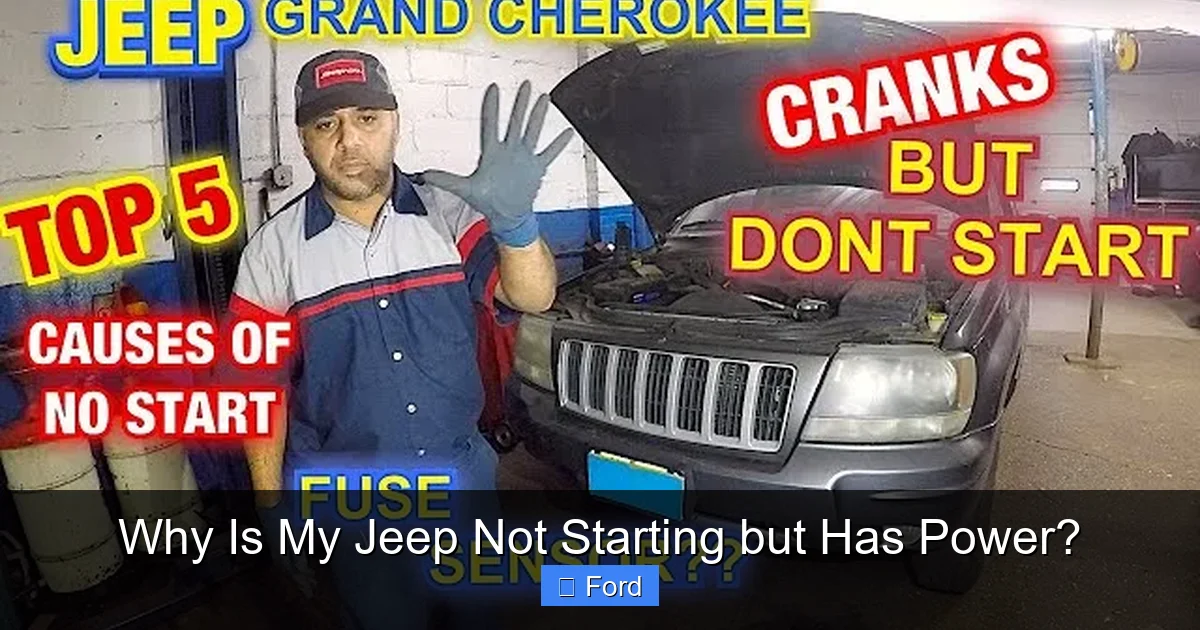
Before we dive into parts, let’s clarify what “has power” means in this context. When you turn your Jeep’s key to the “ON” or “RUN” position (before the “START” position), you’re activating the accessory and ignition circuits. This powers the dashboard, fuel pump (usually for a couple of seconds to prime), radio, and other electronics. If all these things work, your battery has sufficient charge and the main battery cables and fuses are intact. The problem lies in the specific start circuit or one of the engine’s three critical systems: fuel, spark, or air (with air being a rare sole failure point). The starting sequence is a chain reaction: key turn → starter solenoid engages → starter motor cranks the engine → while cranking, the engine needs fuel injection and a spark plug ignition to combust and run. A break anywhere in that chain after the initial cranking begins will cause a no-start.
Visual guide about Why Is My Jeep Not Starting but Has Power?
Image source: adventurejeep.com
The Two Main Symptoms: No-Crank vs. crank-but-no-start
It’s crucial to distinguish between the two primary symptoms of a Jeep that won’t start but has power:
- No-Crank (Silent Starter): You turn the key to start and hear absolutely nothing—no clicking, no whirring. The engine doesn’t move. This points to the starter motor itself, the starter solenoid, a faulty neutral safety switch (automatic transmissions), or a clutch pedal switch (manual transmissions). The starter circuit isn’t completing.
- Crank-but-No-Start: This is the more common scenario for this article. You hear the engine turn over normally (the familiar “ruh-ruh-ruh” sound), but it never fires up. This means the starter and its circuit are working fine. The failure is in fuel delivery, spark ignition, or engine management/security systems that control them.
From here on, we’ll focus primarily on the “crank-but-no-start” diagnosis, as it’s the most frequent interpretation of the problem.
Fuel System Failures: The Most Common Culprit
If your Jeep’s engine is cranking but not starting, the first thing to suspect is that it’s not getting any fuel. An internal combustion engine needs three things: air, fuel, and spark. Without fuel, it simply cannot ignite. For Jeeps, especially those with electric fuel pumps mounted inside the gas tank (nearly all modern models), fuel delivery issues are the leading cause of this specific problem.
Visual guide about Why Is My Jeep Not Starting but Has Power?
Image source: koala.sh
Diagnosing a Bad Fuel Pump
The fuel pump is an electric motor that lives inside your fuel tank. Its job is to pressurize the fuel system and send gasoline to the injectors. When it fails, you get zero fuel at the engine. The classic test is the “listen test”. Have a helper turn the key to the “ON” position (do not start) while you stand near the rear of the vehicle. You should hear a faint, two-second hum or whirring sound from the rear cargo area or under the vehicle near the fuel tank. That’s the fuel pump priming the system. If you hear nothing, the pump may be dead. However, don’t jump to conclusions yet—it could also be a fuse, relay, or wiring issue powering the pump.
Checking Fuses, Relays, and Pressure
Your Jeep’s fuel pump is controlled by a dedicated fuse and a fuel pump relay, usually located in the Power Distribution Center (PDC) under the hood. Consult your owner’s manual for the exact location. Pull the fuel pump fuse and inspect it. A blown fuse is a clear sign of a short circuit somewhere. If the fuse is good, locate the fuel pump relay. You can often swap it with an identical, non-critical relay (like the horn relay) to see if that solves the problem. A failing relay is a common and inexpensive fix. For a more definitive diagnosis, a mechanic will use a fuel pressure gauge to check if the system is holding the correct pressure (specs vary by model/year). Low or zero pressure confirms a pump, filter, or regulator failure. A clogged fuel filter can also restrict flow and cause this issue, especially on higher-mileage Jeeps.
Ignition System: The Need for a Strong Spark
Even with perfect fuel pressure, the engine won’t start without a powerful, well-timed spark from the spark plugs. The ignition system on modern Jeeps is computer-controlled. The Engine Control Unit (ECU) tells the ignition coil(s) when to fire based on input from crankshaft and camshaft position sensors. A failure in any of these components will kill the spark.
Visual guide about Why Is My Jeep Not Starting but Has Power?
Image source: vehiclers.com
Crankshaft and Camshaft Position Sensors
These are arguably the most common ignition-related causes for a Jeep not starting but has power. The crankshaft position sensor (CKP) tells the ECU the exact position and rotational speed of the engine. Without this signal, the ECU doesn’t know when to inject fuel or fire the spark plugs. It simply shuts down. The symptoms are exactly what you’re experiencing: the engine cranks normally but won’t start. These sensors can fail intermittently due to heat or internal damage. Diagnosing them requires a scan tool to check for live data from the sensor or a noid light to see if the ECU is sending injector pulses. A common test is to check for a voltage signal from the sensor while cranking.
Ignition Coils and Spark Plugs
While a total failure of all coils simultaneously is rare, a single coil failure on a coil-on-plug (COP) system will cause a misfire but usually still allow starting. However, a complete loss of primary power to the coil pack (from a fuse or wiring issue) will prevent any spark. Visually inspect your spark plugs. If they are fouled (covered in black soot, oil, or fuel), they may be shorting out and not creating a spark. Worn-out plugs with excessive electrode gap can also weaken the spark enough to prevent ignition. While less common than sensors or fuel issues, checking for spark is a fundamental diagnostic step. This is done by removing a plug, grounding it to the engine block, and having someone crank the engine to watch for a blue spark. No spark means the problem is upstream—coils, sensors, or ECU.
Security and Immobilizer System Lockouts
This is a very Jeep-specific and increasingly common cause, especially on models from the late 1990s onward. Your Jeep has an advanced theft-deterrent system called an immobilizer. The system uses a transponder chip embedded in your key fob. When you insert the key and turn it, the computer reads the chip’s code. If it doesn’t match the code stored in the Sentry Key Immobilizer Module (SKIM), the system will allow cranking but will immediately shut off the fuel supply after a second or two, preventing the engine from starting. You might hear it crank for a second and then stop.
Signs of a Security Lockout
The most obvious sign is a flashing key icon or a “Security” light on your dashboard. This light should illuminate for a few seconds during startup and then go out. If it stays on or flashes rapidly, the system is in a lockout state. Causes include:
- A dead battery in your key fob. The transponder needs a tiny amount of power. Replace the coin cell battery in your fob.
- A damaged or non-original key. Keys not programmed to your vehicle’s SKIM will not work.
- A faulty SKIM module. The module itself can fail.
- Interference. A strong radio signal near the vehicle or a metal key holder next to the fob can block the signal.
The fix often involves having a dealer or locksmith with a special programmer reprogram your key fob to the vehicle. In some cases, the SKIM module needs replacement and reprogramming. If you see that security light, this is your prime suspect. For older Jeeps with the “Sentra Key” system, there’s a specific 10-minute “learn” procedure using the original key to reset it.
Other Electronic and Mechanical Possibilities
While fuel, spark, and security are the big three, other issues can also cause a crank-but-no-start condition.
Faulty Engine Sensors
Beyond the crankshaft sensor, other sensors can send bad data to the ECU, causing it to disable fueling. The camshaft position sensor is critical for knowing which cylinder is on its intake stroke. A failed one can prevent starting. Less commonly, a failed mass airflow sensor (MAF) or a severely clogged one can cause the ECU to go into a default “limp” mode that might prevent starting if the data is deemed unreliable. Disconnecting the MAF sensor can sometimes allow a start if it’s the culprit, as the ECU will use a default value.
Idle Air Control Valve (IAC) Throttle Body Issues
If the IAC valve is stuck completely closed, the engine may not get enough air to start, though it often will start and then stall immediately. A severely dirty or failed throttle body can have a similar effect. This is more common on older, high-mileage Jeeps.
Mechanical Timing Failure
This is a serious and less common issue. If the timing chain or belt has jumped or broken, the engine’s valves and pistons will be out of sync. The engine may crank with an unusual, faster-than-normal sound because it has no compression. This usually happens after a major neglect of maintenance (e.g., not replacing a timing belt at its service interval) and is often accompanied by other symptoms like poor running beforehand. Diagnosis requires checking compression or timing marks.
A Practical Diagnostic Roadmap: Step-by-Step
So where do you start when faced with a Jeep that won’t start but has power? Follow this logical flow to narrow it down without spending money on parts.
Step 1: The Free and Quick Checks
- Fuel Level: Seems obvious, but check the gauge. A bad fuel sender can lie.
- Park/Neutral Safety: Ensure the transmission is fully in “Park” (automatic) or “Neutral” (manual). Try starting in Neutral if Park fails. Some Jeeps are picky.
- Security Light: Is it on or flashing? This is your first big clue.
- Listen for Fuel Pump: Turn key to ON, listen for 2-second hum from rear.
Step 2: Check for Spark and Fuel
If the free checks don’t reveal anything, you need to verify two things:
- Spark: Pull a spark plug wire (or coil), ground it, and have someone crank. See a strong blue spark? Good. No spark? Problem is in ignition system (coils, sensors, ECU).
- Fuel: If you have spark, the issue is likely fuel. You can spray a small amount of starting fluid (ether) into the throttle body while cranking. If the engine fires and runs briefly on the starting fluid, you have confirmed a fuel delivery problem (pump, filter, relay, injectors). Do not use excessive starting fluid.
Step 3: Scan for Codes
This is non-negotiable. Even if the Check Engine Light is off, there are almost certainly stored “pending” codes. Use an OBD-II scanner (any basic one will do) and look for any P-codes. Codes like P0320 (CKP sensor), P0335 (CKP sensor), P0200 (injector circuit), or P1688 (no SKIM code) are direct hits. Codes will guide your diagnosis precisely.
Step 4: Test Components
Based on your findings:
- No fuel pump hum? Check fuse/relay. Test for power at the pump connector (requires a helper and a test light/multimeter).
- No spark? Check fuses for ignition coils. Test resistance on CKP/CMP sensors. Check for power at the coil.
- Security light on? Try a new key fob battery. Research the specific reset procedure for your Jeep’s year/model.
At this stage, if you’re not comfortable with electrical testing, it’s time to call a professional. Describe your findings (“I have spark, but no fuel pressure” or “I have no spark and a P0335 code”) to save them (and you) diagnostic time.
Conclusion: Patience and Process are Key
A Jeep not starting but has power is a diagnostic exercise in elimination. The power tells you the battery and major distribution are good, zeroing in on the engine’s vital signs. By systematically checking for the three essentials—fuel, spark, and air—and paying close attention to security system warnings, you can usually pinpoint the issue. Start with the free and easy checks: fuel pump sound, security light, and a quick OBD-II scan. Use the starting fluid test to separate fuel problems from ignition problems. Remember, the most common culprits are the fuel pump (or its control circuit), the crankshaft position sensor, and the security immobilizer system. Armed with this knowledge, you can approach the problem with confidence, potentially save money on unnecessary repairs, and get your Jeep back on the road where it belongs. For model-specific quirks, forums for your specific Jeep (like a Wrangler, Grand Cherokee, or Cherokee) are invaluable resources where thousands of owners have documented the exact same problem and its solution.
Frequently Asked Questions
Could a bad battery cause my Jeep to have power but not crank?
No, if your Jeep has power for lights and radio, the battery is sufficiently charged. A bad battery would cause a slow crank or no-crank with no power. Your symptom points to issues after the starter circuit engages.
My Jeep cranks normally but won’t start, and the security light is flashing. What do I do?
The flashing security light indicates an immobilizer lockout. First, replace the battery in your key fob. Then, consult your owner’s manual for a specific “key learn” or reset procedure, which often involves turning the key in the ignition for a set time. If that fails, you’ll need a dealer or locksmith to reprogram the key to the vehicle’s SKIM module.
I hear the fuel pump hum for two seconds when I turn the key on, but it still won’t start. Is the pump okay?
The hum means the pump is initially priming, which is good. However, it doesn’t guarantee the pump is maintaining proper pressure while cranking. The pump could be weak and can’t build enough pressure, or the fuel filter could be clogged. The next step is to check for fuel pressure with a gauge or perform the starting fluid test to confirm if it’s a fuel issue.
Can a dirty air filter cause a no-start condition?
An extremely clogged air filter can restrict airflow enough to prevent starting, but it’s rare. More commonly, a dirty filter causes poor running, stalling, or reduced power after the engine starts. It’s an easy item to check and replace anyway.
What does it mean if my Jeep cranks very fast and sounds “free”?
A very fast, almost whirring crank with no resistance usually indicates a severe lack of compression. This points to a major mechanical failure, most likely a broken or jumped timing chain/belt. This requires immediate professional diagnosis and repair.
Is it safe to keep trying to start my Jeep if it won’t fire?
Moderate cranking (15-20 seconds at a time) is fine for diagnosis. However, prolonged cranking (over 30-45 seconds) can overheat and damage the starter motor and drain the battery. If you’ve tried several times, let the engine cool for a few minutes before trying again. If you’re using starting fluid, use it very sparingly (one or two short sprays).
