
Why Is My Bmw Overheating?

BMW overheating is almost always a cooling system problem. Common culprits include failing water pumps, thermostat issues, coolant leaks, or a clogged radiator. Because BMW engines are precision-tuned, they are particularly sensitive to temperature spikes. Driving an overheating BMW can cause severe engine damage in minutes. Always pull over safely, shut off the engine, and call for professional diagnosis. This guide breaks down the why and what to do.
That sinking feeling when the temperature gauge needle climbs past the normal zone is universal, but in a BMW, it’s a five-alarm fire. Your BMW’s engine is a high-performance masterpiece of engineering, operating at precise temperatures and tolerances. When the cooling system falters, it doesn’t just overheat—it can suffer catastrophic, expensive damage in a very short time. This guide is your roadmap to understanding why your Bimmer is running hot, what the symptoms mean, and what steps you must take to protect your investment.
First, a critical rule: If your BMW’s temperature warning light comes on or the gauge enters the red zone, pull over safely and shut off the engine immediately. Do not “make it to the next exit” or “see if it settles down.” Letting a modern BMW overheat for even 5-10 minutes can warp the aluminum cylinder head, destroy the head gasket, or cause internal engine components to seize. The cost of a tow is always less than the cost of an engine replacement. Now, let’s dive into the “why.”
Key Takeaways
- Coolant Leaks Are Prime Suspects: BMWs use extensive plastic (polymer) components in the cooling system that become brittle and crack over time, leading to leaks.
- The Electric Water Pump Often Fails: Unlike traditional belts, BMW’s electronically controlled water pump can simply stop working without warning, especially on models from the mid-2000s onward.
- Thermostat Housing Cracks: The plastic thermostat housing is another common failure point that causes rapid coolant loss and overheating.
- Radiator Blockage Happens: External debris (leaves, bugs) or internal scale/rust can block airflow or coolant flow, crippling the system’s ability to shed heat.
- Low Coolant Level Is Critical: BMWs have very little coolant margin for error. A slightly low level will trigger overheating quickly, especially in traffic.
- Never Ignore the Warning: The red temperature gauge or “Check Engine” light means stop driving immediately. Continued operation risks a warped head, blown head gasket, or seized engine.
- Diagnosis Requires Expertise: Due to complex, tightly-packed engine bays, proper diagnosis often requires a specialist with BMW-specific scan tools and knowledge.
📑 Table of Contents
The Heart of the Matter: Understanding Your BMW’s Cooling System
Before we list problems, you need a basic mental model. Your BMW’s cooling system is a closed-loop circuit designed to absorb extreme heat from the combustion chambers and transfer it to the atmosphere. Its key components are:
- The Engine Block & Cylinder Head: Contain coolant passages where hot engine coolant circulates.
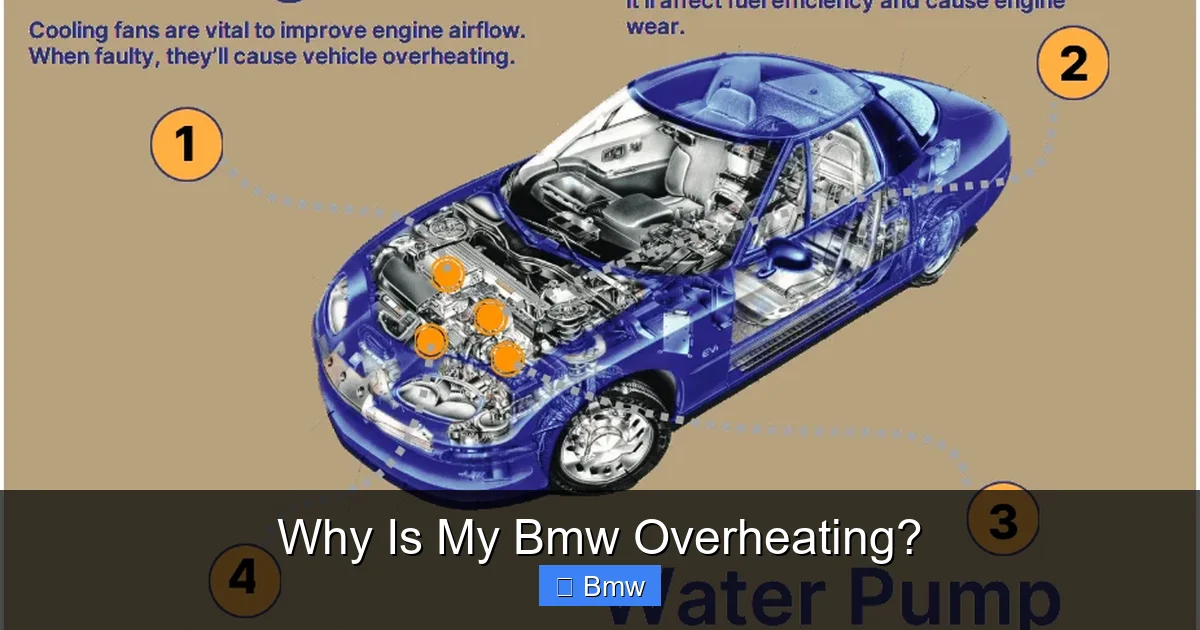
- The Water Pump: The heart of the system. It pushes coolant through the engine, heater core, and radiator. BMWs famously use electric water pumps, not belt-driven ones, on many models.
- The Thermostat: A temperature-sensitive valve. It stays closed when the engine is cold to help it warm up quickly, then opens at a specific temperature to allow hot coolant to flow to the radiator.
- The Radiator: A network of thin tubes with fins. Hot coolant enters, air flows over the fins (from vehicle movement or the fan), and heat is dissipated.
- The Cooling Fan(s): Electric fans (often multiple) that pull air through the radiator when the car is stopped or moving slowly. They are controlled by engine temperature and air conditioning demand.
- The Expansion (Coolant) Tank: Allows coolant to expand as it heats and provides a place to check/refill coolant.
- Hoses, Sensors, and Housing: The plumbing, temperature sensors, and plastic housings that hold it all together.
BMW’s design philosophy often prioritizes weight savings and packaging efficiency. This has led to the extensive use of plastic and composite materials for the thermostat housing, water pump impeller, and even some radiator end tanks. While innovative, these parts have a finite lifespan and are a primary source of cooling system failures.
Top 6 Reasons Your BMW Is Overheating
With that system overview, let’s identify the usual suspects. These are listed from most to least common for modern BMWs (E36, E46, E60, F30, G20, etc.).
Visual guide about Why Is My Bmw Overheating?
Image source: alwaysnetworks.co.uk
1. Coolant Leaks (The Silent Killer)
This is the #1 cause of BMW overheating. Low coolant means the system can’t carry heat away. Because of the plastic components, leaks can develop slowly and invisibly until it’s too late.
- Where to Look: Check for puddles of green, blue, or orange fluid under the car (especially after it’s been parked). Inspect the thermostat housing (usually at the engine front/ top), water pump, radiator (especially seams and corners), heater core hoses (inside the cabin footwell may have fog or wetness), and all coolant hoses. The plastic expansion tank itself often cracks at the cap or mounting points.
- BMW-Specific Weakness: The thermostat housing is a classic failure point. The plastic becomes brittle with age and heat cycles, and the housing itself can crack. Replacing it with an aluminum aftermarket unit is a common permanent fix.
2. Failing Electric Water Pump
Unlike older cars with belt-driven pumps, your BMW likely has an electric water pump controlled by the engine computer (DME). This is great for efficiency but creates a single point of failure.
- Symptoms: Overheating, especially in stop-and-go traffic where the pump might not be spinning fast enough. You might hear a whining or grinding noise from the pump area (front of engine). Often, there is no warning—it just stops working. Scan tools can sometimes read a fault code for pump speed vs. requested speed.
- BMW-Specific Weakness: The impeller inside the pump is often made of plastic that can disintegrate over time, or the motor brushes wear out. Failure rates increase significantly after 80,000-100,000 miles. This is a known maintenance item on high-mileage BMWs.
3. Faulty Thermostat
If the thermostat fails stuck closed, coolant cannot circulate to the radiator, causing rapid overheating. If it fails stuck open, the engine will run too cold (poor heat in winter, poor fuel economy) but won’t usually overheat.
- Symptoms: Overheating, but the upper radiator hose may not get hot (if stuck closed). The car may take an abnormally long time to warm up (if stuck open). Often accompanied by a thermostat housing leak.
- BMW-Specific Note: Like the water pump, the thermostat is often integrated into a plastic housing. It’s usually replaced as a unit with the housing.
4. Radiator Issues: Blockage or Damage
The radiator must be clear to work.
- External Blockage: Leaves, bugs, and road debris packed between the radiator and the AC condenser block airflow. This is common in autumn or after long highway drives. A quick visual check from the front of the car (with the engine off and cool) will reveal this.
- Internal Blockage: Rust, scale, or sediment can build up inside the tiny radiator tubes, restricting flow. This is more common in neglected systems or if the wrong coolant/mix was used.
- Physical Damage: A bent fin or a minor impact can damage the core. Leaks at the tank seams are also common.
5. Cooling Fan Failure
Your BMW’s electric cooling fans are crucial for low-speed heat dissipation. They are usually controlled by multiple temperature sensors and the AC system.
- Symptoms: Overheating only in traffic or when idling with the AC on, but fine on the highway. The fan(s) may not come on when they should. Listen for fan engagement when the engine gets hot.
- Causes: Failed fan motor, broken fan clutch (on mechanical fans on older models), blown fuses/relays, or faulty temperature sensors (like the one in the thermostat housing).
6. Other Culprits: Sensors, Belts, and Air in the System
- Faulty Temperature Sensor/Gauge: Rare, but possible. A bad sensor might give a false reading. However, you should always assume the warning is real until proven otherwise.
- Serpentine Belt (on belt-driven pumps): On older BMWs with a mechanical water pump, a slipping or broken serpentine belt stops the pump instantly. Check belt tension and condition.
- Airlock (Improper Bleeding): If the cooling system was recently serviced and not bled correctly, large air pockets can form. Air pockets block coolant flow and cause localized overheating and steam. This is a very common post-service issue.
- Head Gasket Failure: This is usually a result of overheating, not the initial cause. However, a failing head gasket can also cause overheating by allowing combustion pressure into the cooling system or leaking coolant into cylinders. Symptoms include white exhaust smoke, milky oil, and bubbling in the expansion tank.
Diagnosing the Problem: A Step-by-Step Approach
Do not just throw parts at the problem. A methodical diagnosis saves money. Always ensure the engine is completely cool before opening any coolant system components.
Visual guide about Why Is My Bmw Overheating?
Image source: cdn.prod.website-files.com
Step 1: Visual Inspection & Coolant Level Check
With the engine cold, open the expansion tank. Is the coolant level at the “MAX” mark? Is the coolant itself clean and bright (green, blue, or orange) or rusty, muddy, or oily? Low, dirty, or oily coolant points to leaks or internal problems. Inspect the engine bay for any obvious signs of fresh leaks—stains, wet spots, or dried crusty residue around the components listed above.
Step 2: Look for External Leaks
Start the engine (only if coolant level is adequate!) and let it reach operating temperature. Carefully observe the thermostat housing, water pump area, radiator, and all hoses for any seeping or spraying. Use a flashlight. Have a helper gently rev the engine to increase pressure and system load, which can make leaks more apparent. Place a piece of cardboard under the car to trace leak location.
Step 3: Check for Blockages & Fan Operation
With the engine at full temperature, turn the AC on max. You should hear the cooling fans kick in loudly. If they don’t, that’s a major problem. Visually inspect the radiator face for debris. From behind the car, look through the radiator to see if the fins are clean or clogged.
Step 4: Scan for Codes & Monitor Data
This is where a BMW-specific scan tool (like ISTA, BMW Scanner 1.0.0, or a high-quality OBD2 adapter with BMW software) is invaluable. It can read:
- Coolant Temperature Sensor Data: Compare the sensor reading to ambient air temperature. A sensor reading significantly lower than expected can indicate a faulty sensor or air pocket. A reading that spikes erratically is also a sign.
- Water Pump Request vs. Actual Speed: On models with electric pumps, the DME commands a pump speed. The scan tool can show if the pump is responding correctly.
- Fan Control Signals: See if the computer is telling the fans to run.
- Fault Codes: Look for codes related to coolant temperature, fan motors, pump control circuits, or thermostat performance.
While this diagnostic approach applies to any car, understanding BMW’s specific electronic control of these systems is key. For complex issues, consulting a shop with BMW expertise is the smart move. They can also perform a pressure test on the cooling system to find tiny leaks and a block test to check for exhaust gases in the coolant (a sign of head gasket failure).
Immediate Actions: What to Do When Your BMW Overheats
Your actions in the first 60 seconds are critical.
Visual guide about Why Is My Bmw Overheating?
Image source: i.ytimg.com
- Pull Over Safely & Shut Off: As soon as the warning illuminates, find a safe spot and turn the engine off. Do not open the hood immediately—the scalding coolant and steam can cause severe burns. Wait at least 30-45 minutes for pressure and temperature to drop.
- Do NOT Open the Radiator Cap: A pressurized cooling system is dangerous. Wait until it’s stone cold.
- Check Coolant Level (When Cold): Once cool, check the expansion tank. If it’s low, you can carefully add a 50/50 mix of BMW-approved coolant and distilled water to the “MAX” line. Never add coolant to a hot, pressurized system.
- Look for Obvious Leaks: See if you can spot where the fluid went.
- Call for Help: If the level was very low or you see a major leak, the car needs to be towed. Driving it, even a short distance, risks total engine destruction. If the level was only slightly low and you topped it up, you might cautiously drive to a trusted mechanic only if the temperature stays normal. But a tow is the only 100% safe option.
If you must move the car a very short distance to clear traffic, drive gently, keep RPMs low, and watch the gauge like a hawk. Be prepared to stop again at the first sign of rising temperature.
Preventative Maintenance: The BMW Owner’s Best Defense
For BMWs, cooling system maintenance is not optional—it’s a scheduled, critical service.
- Follow the “Inspection II” or Equivalent: BMW’s own maintenance schedules (often called “Inspection I & II”) include cooling system checks. Adhere to them. At minimum, inspect hoses, belts, and the expansion tank annually.
- Replace Preemptively: Given the known failure points, many BMW specialists recommend replacing the thermostat housing and water pump as preventative maintenance around 80,000-100,000 miles, even if they haven’t failed yet. Use high-quality, metal-reinforced or aluminum aftermarket parts for the housing.
- Use the Correct Coolant: BMW specifies a particular type (often G48, HT-12, or similar). Using generic green coolant can cause corrosion and poor performance. Mix it with distilled water only, never tap water. A coolant flush every 4-5 years is advisable.
- Keep the Radiator Clean: Periodically clean bugs and debris from the front of the radiator and AC condenser. A gentle spray with a garden hose from the inside out (engine off, cool) can help.
- Address Small Leaks Immediately: That occasional puddle or slowly dropping coolant level is a warning. Find and fix it before it becomes a strand-you-on-the-side-of-the-road problem.
By being proactive, you transform the cooling system from a potential budget-busting failure into a manageable series of scheduled replacements. The cost of a water pump, thermostat, and hoses is a fraction of a rebuilt engine.
Conclusion: Cool Heads Must Prevail
Your BMW overheating is a serious, non-negotiable emergency. The brand’s engineering brilliance is built on tight tolerances and high operating temperatures. When the cooling system—the unsung hero that manages that heat—fails, the consequences are swift and severe. The most common reasons are predictable: aging plastic components (thermostat housing, water pump impeller), leaks, and fan failures. Your immediate response must be to stop driving. Your long-term strategy must be diligent, preventative maintenance based on known failure points. Don’t wait for the temperature warning. Inspect your coolant level monthly. Listen for changes in fan noise or new sounds from the engine bay. And when the time comes, address the thermostat, water pump, and hoses not as a repair, but as a scheduled upgrade to more durable components. Your engine’s longevity depends on it. Treat the cooling system with the respect it demands, and your BMW will reward you with years of thrilling, cool-running performance.
Frequently Asked Questions
Can I drive my BMW a short distance if it’s overheating?
No. Even a short drive can cause irreversible engine damage like a warped cylinder head or blown head gasket. The only safe distance is to the side of the road and then a tow truck. The risk of destroying a $5,000+ engine far outweighs the cost of a tow.
Why does my BMW overheat only when the AC is on?
This strongly points to a failing cooling fan or fan control circuit. The AC condenser adds heat load in front of the radiator, and the system relies on the electric fans to pull extra air through at idle or low speeds. If the fan(s) don’t engage when the AC is on, overheating in traffic is the classic symptom.
My BMW’s temperature gauge is normal, but I get an overheating warning light. Is it a false alarm?
Never assume it’s a false alarm. The warning light is triggered by an electronic sensor, not the gauge itself. A faulty sensor can give a bad reading, but a real overheating condition can also exist if the gauge is slow to respond. Have the coolant temperature sensor data read with a scan tool immediately. Treat the warning as real until proven otherwise.
How much does it typically cost to fix an overheating BMW?
Costs vary wildly by model and cause. A simple coolant leak from a hose might cost $200-$400. Replacing the electric water pump and thermostat housing (a common combo job) typically ranges from $800 to $1,500 at an independent shop. A radiator replacement can be $600-$1,200. If you’ve driven it while overheating and need a head gasket or worse, costs can exceed $3,000.
What coolant should I put in my BMW?
You must use only BMW-approved long-life coolant, typically specified as G48, HT-12, or a similar phosphate-free, silicate-free formula. It is usually blue or turquoise. Mix it 50/50 with distilled water only. Using the wrong coolant can cause corrosion, gel formation, and poor heat transfer. Check your owner’s manual for the exact specification.
My BMW is overheating but there are no visible leaks. What could it be?
With no external leaks, the internal system is losing coolant or failing to circulate. First, check the cold level in the expansion tank to confirm it’s full. Next, suspect an internal leak: a cracked coolant passage inside the engine (from a previous overheat), a leaking heater core (you’d smell sweet odor or see fog inside), or a blown head gasket (white smoke, milky oil, bubbles in tank). Also, a severely clogged radiator internally can restrict flow without leaking. A professional pressure test is needed to diagnose.