
Why Is My Bmw Leaking Coolant?

Coolant leaks in BMWs are a serious issue that can lead to engine overheating and costly damage. The most common culprits are failing water pumps, brittle plastic coolant system components, and leaking thermostat housings. Diagnosing the source requires a systematic check of common failure points. Prompt repair is essential to maintain your BMW’s performance and longevity.
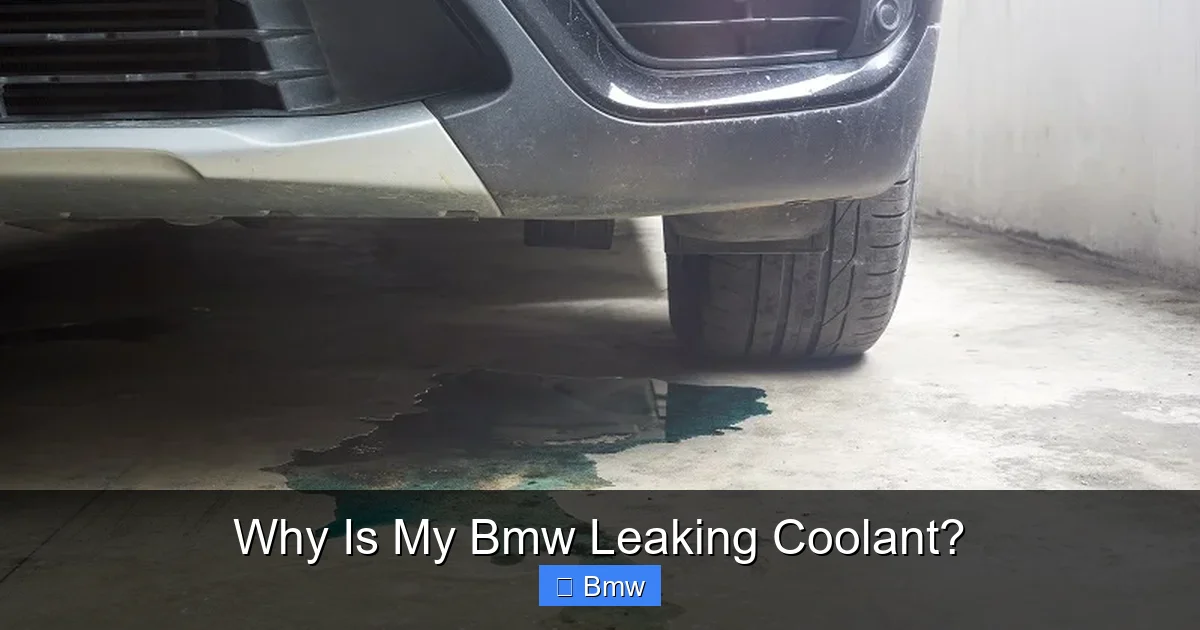
You pop the hood after a long drive and spot a puddle. It’s not the usual oily drip. This liquid is slick, maybe green, blue, or orange, and has a distinctly sweet smell. Your heart sinks. Your BMW, the Ultimate Driving Machine, is leaking coolant. It’s a common but serious problem. Coolant (or antifreeze) is the lifeblood of your engine’s temperature management. A leak means your cooling system can’t maintain the perfect, narrow operating temperature. Left unchecked, this leads to overheating, which is one of the fastest routes to a destroyed engine. But why is this happening to your BMW specifically? The answers lie in some specific engineering choices and common failure points. Let’s pop the hood together and diagnose this.
Key Takeaways
- Plastic is the Problem: BMW heavily uses plastic (polyamide) for coolant system parts like thermostat housings and water pump impellers. These become brittle and crack with age and heat cycles.
- Water Pump Failure is Prime: The electric water pump is a known wear item. Seal failure or impeller damage causes leaks and loss of coolant circulation.
- Hoses and Connections: Upper and lower radiator hoses, as well as smaller bleed hoses and hose connectors, are frequent leak points, especially at the clamps.
- Thermostat Housing Cracks: The plastic thermostat housing is notorious for developing hairline cracks, leading to slow, steady leaks that are hard to spot.
- Not All Puddles are Coolant: Properly identify the fluid (sweet smell, green/blue/orange color) and its location (front of engine, under radiator) to pinpoint the leak source.
- Pressure Test is Key: A cooling system pressure test is the most effective diagnostic tool to find hidden leaks without the engine running.
- Address Immediately: Ignoring a coolant leak risks catastrophic engine overheating, warped cylinder heads, and a blown head gasket.
📑 Table of Contents
The BMW Coolant System: A Primer on Vulnerability
Before we find the leak, understand the system. Your BMW’s cooling system is a pressurized network of hoses, a radiator, a water pump, a thermostat, a thermostat housing, an expansion tank, and an engine block and head full of intricate passages. Its job is to absorb heat from the combustion process, move it to the radiator, and dissipate it into the air. A leak anywhere in this sealed loop compromises the entire operation.
BMW has, for decades, favored the use of lightweight, cost-effective plastics—specifically a reinforced polyamide—for many critical, heat-cycled components. While innovative and light, this material has a major drawback: it degrades. It becomes brittle over time, especially under the constant thermal stress of a high-performance engine. This design philosophy is the root cause of most BMW coolant leaks. The components most affected are the ones that see the highest temperatures and pressures.
The Electric Water Pump: The Heart of the Issue
Since the early 2000s, BMW has moved away from traditional, mechanically-driven water pumps to electric water pumps on most models. An electric pump offers precise, demand-based control of coolant flow, improving efficiency and allowing for better thermal management during engine warm-up and under load. However, it’s an electrical motor with a seal and a plastic impeller submerged in hot coolant. The seal is a wear item. When it fails, coolant leaks past it directly into the engine bay, often from the pump’s mating surface on the engine block or from a weep hole in the pump body itself. The plastic impeller can also crack or become detached from its shaft, reducing flow and causing the pump to fail catastrophically. If your BMW is a 2006 or newer 3 Series, 5 Series, X5, or similar, the electric water pump is the number one suspect.
Thermostat Housing: The Brittle Bottleneck
The thermostat itself is often housed in a plastic unit that bolts directly to the engine. This thermostat housing is directly in the path of hot coolant exiting the engine. It’s under constant pressure and thermal cycling. Over 8-12 years, the plastic develops microscopic cracks. These cracks are often too small to see with the naked eye but large enough for pressurized coolant to seep or spray out. The leak might appear as a slow, steady drip from the front-center of the engine, or as a mist that coats everything under the hood in a sweet-smelling film. Replacing just the thermostat is rarely the fix; the entire plastic housing assembly must be replaced, and it’s a job that requires careful torqueing of the new unit to prevent future cracking.
Other Common Leak Points on Your BMW
While the water pump and thermostat housing are the MVPs of coolant leaks, they’re not the only players. The entire system is interconnected, and any weak link will fail.
Visual guide about Why Is My Bmw Leaking Coolant?
Image source: autorivet.com
Radiator and Hoses
The radiator itself, particularly the plastic end tanks on many BMW models, can crack at the welds or where the tank meets the aluminum core. The upper and lower radiator hoses are subject to constant heating, cooling, and vibration. Their plastic or metal clamps can loosen, or the rubber can harden and split. Don’t forget the smaller “bleeder” or “vent” hoses that run between the thermostat housing, the expansion tank, and the heater core. These tiny, often poorly-routed hoses are made of the same brittle plastic and are a classic source of mysterious, slow leaks that evaporate before you see a puddle.
The Expansion (Coolant) Tank
That white or translucent plastic reservoir with the “MAX” and “MIN” marks is another failure point. It’s exposed to engine bay heat and constant pressure changes as the coolant expands and contracts. Cracks appear around the mounting tabs, at the cap, or along the seams. A failing cap that can’t hold system pressure will also cause coolant to boil over and appear as a leak.
Heater Core and Piping
Inside the cabin, behind the dashboard, lies the heater core—a small radiator that uses hot coolant to warm your cabin. Its plastic inlet and outlet pipes run through the firewall. These pipes, or the seals where they enter the core, can rot and leak. The symptom isn’t a puddle under the car, but a constant fogging of your windshield (from the sweet vapor), a wet passenger footwell, or the smell of coolant inside the car. This is a major, invasive repair.
How to Diagnose: Finding the Source of the Drip
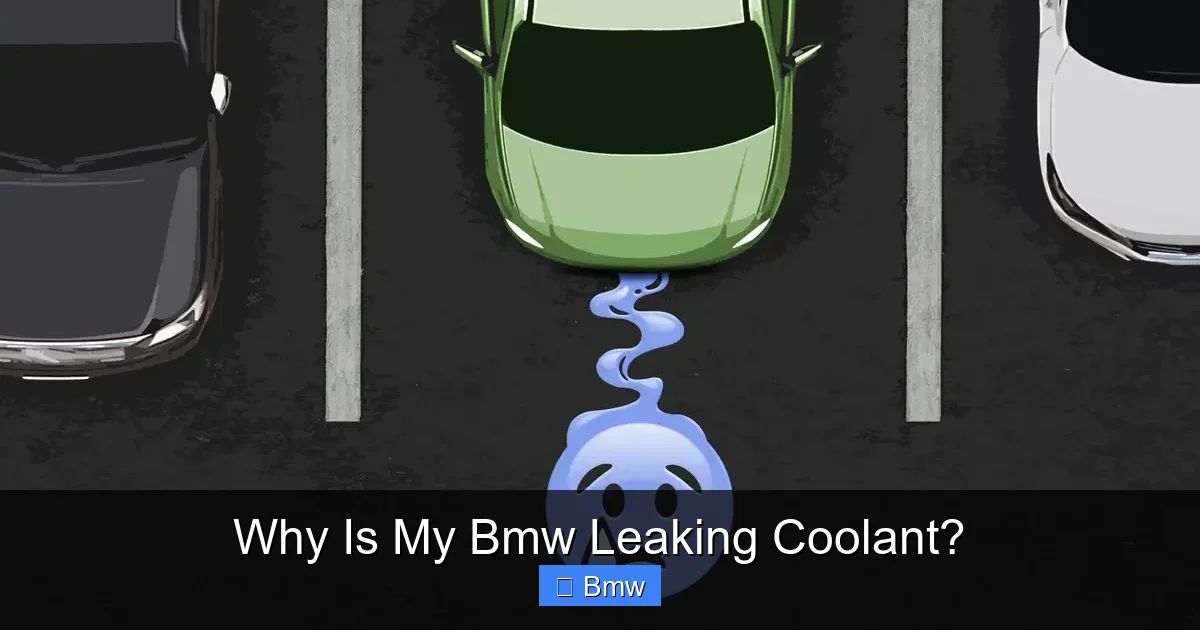
“My BMW is leaking coolant” is the symptom. You need the cause. Start simple and get your hands dirty (wear gloves—coolant is toxic).
Visual guide about Why Is My Bmw Leaking Coolant?
Image source: images.cars.com
Visual Inspection is Your First Tool
Park on a clean surface (cardboard or a large sheet of paper under the car overnight can help locate the general area). With the engine cold, open the hood and trace the entire cooling system. Look for:
- Wetness, Stains, or Crust: Follow any wet trail. Is it coming from the front of the engine (water pump/thermostat)? The radiator corners? The hoses?
- White/Chalky Residue: This is dried coolant, a sure sign of a slow leak that has been evaporating.
- Low Coolant Level: Check the expansion tank when the engine is cold. Is it below the “MIN” line? How quickly does it drop? Top it up with the correct BMW-approved coolant (usually G48 or G12) and watch.
If you see coolant actively dripping from the water pump area (usually on the front/side of the engine block), or from the thermostat housing (front-center), you’ve likely found your culprit.
The Pressure Test: The Professional’s Secret Weapon
This is the most reliable method. A mechanic attaches a special tool to the radiator neck, pressurizing the system to its operating pressure (typically 15-22 PSI) with the engine off. They then watch for a pressure drop and visually inspect every component for the telltale drip or spray. This test finds leaks that are too small to see during normal operation. If you’re doing your own work, you can buy a hand pump pressure tester for BMWs. It’s a worthwhile investment for any DIY enthusiast.
UV Dye: Making the Invisible Visible
For elusive leaks, add a non-toxic fluorescent UV dye to the coolant. Run the engine and cycle the heater. Then, with a UV/blacklight, inspect the entire system. The dye will glow brightly at the exact source of the leak, even if it’s a tiny pinhole in a heater core pipe.
Why Does This Happen? The “BMW Factor”
It’s not just bad luck. There are specific reasons BMWs are prone to these issues.
Visual guide about Why Is My Bmw Leaking Coolant?
Image source: carx-media-prod.s3.amazonaws.com
Design Philosophy: The push for weight savings, efficiency, and tight packaging led to the widespread use of plastic in the cooling system. It worked great for the warranty period. The problem is, many of these cars are now well beyond their original warranty and are hitting the 10-15 year mark, which is the typical lifespan of these plastic components before they become brittle.
Performance Heat: BMW engines are tuned for performance. They run hotter and generate more heat than a standard economy car’s engine. This accelerates the thermal aging of plastic parts.
Electric Water Pump Dependency: The shift to electric pumps introduced a new, complex, and expensive wear item that doesn’t exist on older vehicles. Its failure mode is often a leak.
It’s important to note that this isn’t a “fault” in the sense of a recall-eligible defect for most models; it’s a known wear characteristic of the design. Being aware of it is half the battle.
Repair: What to Do When You Find the Leak
Once you’ve identified the source, the repair path is clear, but it’s not always simple.
Parts Replacement is Non-Negotiable
You cannot patch a cracked plastic thermostat housing or a failing water pump seal. The entire faulty component must be replaced with a new, high-quality part. For the water pump, consider an aftermarket upgrade or a revised OEM part if one exists. For the thermostat housing, always replace the housing itself, not just the thermostat. Use a genuine or reputable OEM-spec thermostat to ensure proper temperature regulation.
The Importance of a Complete Coolant Flush
Whenever you open the cooling system for a major repair like a water pump or thermostat, you must perform a complete coolant flush. Old coolant loses its anti-corrosion and anti-cavitation properties. It can become acidic and actually eat away at the very metal components (like the aluminum engine block) you’re trying to protect. Flushing removes this contaminated fluid and any debris from a failing component (like plastic shavings from a disintegrated impeller). Refill with the exact coolant specification your BMW requires (check your owner’s manual or under-hood sticker). Mixing coolants or using the wrong type can cause gelling and blockage.
Bleeding the System: The Critical Final Step
BMW cooling systems are designed to be fully bled of air. Air pockets are the enemy—they cause hot spots, erratic temperature gauge readings, and can lead to overheating even with a full system. The bleeding procedure is specific. It often involves a special bleeder valve on the thermostat housing or expansion tank, and sometimes requires the use of a diagnostic tool to activate the electric water pump at specific RPMs to push air out. If you don’t do this correctly, you will have problems. If you’re not comfortable with this step, a professional bleed is worth the cost.
Prevention and Long-Term Care
You can’t make plastic last forever, but you can maximize its life and catch problems early.
- Regular Inspections: At every oil change, have your mechanic do a quick visual once-over of the cooling system. Look for signs of wetness, crust, or aging hoses.
- Watch Your Coolant Level: Make a habit of checking the expansion tank level (when cold) once a month. A slow, steady drop is your earliest warning sign.
- Inspect Hoses Annually: Squeeze the upper and lower radiator hoses. They should be pliable, not rock-hard or spongy. Look for cracks or bulges. Replace them preemptively every 5-7 years as a maintenance item.
- Address Overheating Immediately: If your temperature gauge climbs into the red or you get a coolant warning light, pull over and shut off the engine immediately. Driving an overheated BMW even for a minute can cause warped heads and a blown head gasket, turning a $1,000 water pump job into a $5,000+ engine rebuild.
Conclusion: Don’t Ignore the Sweet Smell
A BMW leaking coolant is a cry for help from your cooling system. It’s a direct result of the brand’s engineering choices, particularly the use of plastic components and the electric water pump. These aren’t “if” failures for high-mileage examples; they’re “when” failures. The key is proactive awareness. Understand the common failure points—the water pump, the thermostat housing, the hoses. Perform regular checks. Use a pressure test if you suspect a slow leak. And when you find it, repair it correctly with quality parts, a full flush, and a proper bleed. Your BMW’s engine is a precision instrument. Keeping its cooling system sealed and full is the single most important thing you can do to ensure it delivers the driving experience you expect for years to come. A small investment in maintenance now prevents a catastrophic and expensive failure later.
Frequently Asked Questions
Can I drive my BMW with a small coolant leak?
No. Even a small leak will lower the coolant level over time. The system needs a full charge to operate correctly. Driving with low coolant risks sudden, severe overheating and engine damage. Top it up and get the leak fixed immediately.
Why is my BMW’s coolant level dropping but I see no puddle?
This is a classic sign of a very small, slow leak that evaporates before forming a visible puddle. Common causes include a leaking thermostat housing, a small hose crack, or a failing heater core. A UV dye test or a professional pressure test is needed to find it.
How much does it cost to fix a coolant leak on a BMW?
Cost varies wildly by model and source. A simple hose or clamp might be $150-$300 in parts and labor. A thermostat housing replacement is often $400-$800. An electric water pump replacement typically runs $800-$1,500 at an independent shop, and can be $1,200-$2,500 at a dealership. A heater core is a major job, often $1,000-$2,000+.
What coolant should I put in my BMW?
Always use the exact specification listed in your owner’s manual or under-hood sticker. For most post-2000 BMWs, this is either “G48” (phosphate-free, silicate-free) or “G12” (often G12+ or G12++). Using the wrong type can cause corrosion or gelling. Mix with only distilled water if not using a pre-mixed 50/50 solution.
Is a coolant leak related to an oil leak?
They are separate systems, but both are common fluid leaks on aging vehicles. The causes are different (coolant leaks from plastic/water pump; oil leaks from seals/gaskets). However, a failed head gasket can cause both coolant and oil to mix or leak. If you see a milky, frothy substance under the oil cap or on the dipstick, that’s a severe head gasket issue requiring immediate attention. You can learn more about diagnosing oil leaks in general from guides like Why Is Oil Leaking From My Car.
My BMW is overheating and leaking coolant. Is it the head gasket?
It could be, but it’s not the first guess. Overheating is a symptom of the coolant leak, not necessarily the cause. The leak (from a water pump, hose, etc.) causes the system to lose fluid, which then causes overheating. A blown head gasket is usually the result of prolonged overheating. First, find and fix the original coolant leak, then monitor. If the overheating persists after the repair, then investigate the head gasket.