
Why Is a Nissan Maxima So Expensive to Insure?

Insuring a Nissan Maxima often costs more than average due to its powerful engine, luxury features, and higher repair expenses. Factors like driver profile, location, and safety ratings also play a major role in premium pricing.
If you’ve ever shopped for car insurance for a Nissan Maxima, you might have been surprised—maybe even shocked—by the quotes you received. It’s not uncommon for Maxima owners to pay significantly more for coverage than drivers of more modest sedans like the Honda Accord or Toyota Camry. So why is a Nissan Maxima so expensive to insure? The answer isn’t just one thing. It’s a combination of performance, design, repair costs, and how insurance companies assess risk.
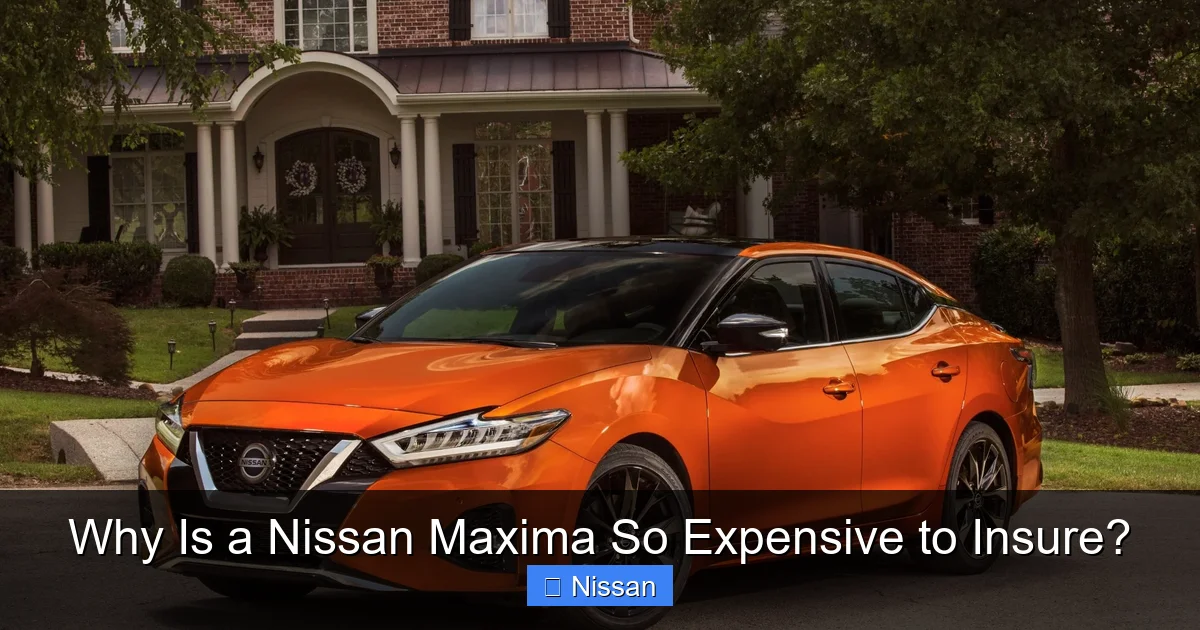
At first glance, the Maxima looks like a sleek, powerful sedan with a bold grille, aggressive stance, and a luxurious interior. But beneath that stylish exterior lies a 3.5-liter V6 engine pumping out 300 horsepower—more than many sports cars from just a decade ago. That kind of power attracts attention, not just from car enthusiasts, but also from insurance underwriters who know that high horsepower often correlates with higher speeds, riskier driving behavior, and more severe accidents. Add in the fact that the Maxima is positioned as a premium midsize sedan with upscale features, and you’ve got a vehicle that ticks several boxes insurers associate with higher claims and costs.
But it’s not just about speed. The cost to repair a Maxima after an accident tends to be higher than average. From advanced infotainment systems to premium interior materials and sophisticated safety tech, every component adds up. And while the Maxima has earned solid safety ratings over the years, older models lack some of the advanced driver-assistance features that can qualify for insurance discounts. On top of that, where you live, your age, driving history, and even your credit score can influence how much you pay. So while the Maxima is an impressive car, insuring it comes with a price tag that reflects its performance pedigree and premium status.
Key Takeaways
- High-performance engine increases risk: The Maxima’s 3.5L V6 engine delivers over 300 horsepower, which insurers view as a higher accident and speeding risk.
- Luxury classification affects premiums: As a near-luxury sedan, the Maxima is grouped with higher-end vehicles that typically cost more to insure.
- Expensive repair and replacement parts: Advanced tech and premium materials mean higher repair bills after accidents, driving up insurance costs.
- Safety ratings influence rates: While the Maxima scores well in crash tests, its lack of standard advanced driver-assistance systems (ADAS) in older models can limit discounts.
- Geographic location matters: Urban drivers and those in high-theft areas pay more due to increased risk of accidents and vehicle theft.
- Driver demographics play a role: Younger or high-risk drivers face steeper premiums, especially with a performance-oriented vehicle like the Maxima.
- Insurance discounts can help: Bundling policies, maintaining a clean record, and installing safety features can reduce monthly costs.
📑 Table of Contents
- Performance and Engine Power Drive Up Insurance Costs
- Luxury Classification and Premium Features Increase Costs
- Safety Ratings and Technology Impact Insurance Rates
- Geographic Location and Theft Rates Influence Premiums
- Driver Profile and Demographics Affect Insurance Costs
- How to Lower Your Nissan Maxima Insurance Costs
- Conclusion
Performance and Engine Power Drive Up Insurance Costs
One of the biggest reasons why a Nissan Maxima is so expensive to insure is its powerful engine. The Maxima comes standard with a 3.5-liter V6 engine that produces 300 horsepower and 261 lb-ft of torque. That’s more than enough to launch the car from 0 to 60 mph in under six seconds—performance that rivals some entry-level sports cars. While that kind of power is thrilling for drivers, it raises red flags for insurance companies.
Insurers use engine size and horsepower as key indicators of risk. Vehicles with high horsepower are statistically more likely to be involved in speeding incidents, aggressive driving, and high-speed collisions. According to data from the Insurance Institute for Highway Safety (IIHS), cars with engines over 250 horsepower have a higher likelihood of being in fatal crashes. The Maxima’s 300-horsepower output places it squarely in that higher-risk category.
For example, compare the Maxima to a similarly sized sedan like the Toyota Camry. The base Camry comes with a 2.5-liter four-cylinder engine producing around 203 horsepower. Even the V6 version tops out at about 301 horsepower, but it’s often driven more conservatively and is less associated with performance driving. Because of this, Camry insurance rates are typically lower—sometimes by $200 to $400 per year, depending on the driver and location.
Insurance companies also consider the type of driver attracted to high-performance vehicles. Younger drivers, especially men under 25, are more likely to purchase sporty sedans like the Maxima. This demographic already faces higher insurance premiums due to inexperience and higher accident rates. When you combine a young driver with a powerful car, the risk multiplier effect kicks in, leading to even steeper quotes.
Moreover, the Maxima’s performance isn’t just about straight-line speed. It features a sport-tuned suspension, responsive steering, and available paddle shifters—features that encourage spirited driving. While these enhancements improve the driving experience, they also suggest a higher likelihood of aggressive maneuvers, which insurers view as a liability.
How Horsepower Affects Premiums
Insurance algorithms often include a “performance factor” that increases premiums based on engine output. For every 50 horsepower above a certain threshold—usually around 200 hp—premiums can rise by 5% to 10%. The Maxima’s 300 hp means it’s well above that baseline, resulting in a noticeable bump in insurance costs.
Some insurers even categorize vehicles into risk tiers. The Maxima typically falls into a “high-performance” or “sport sedan” tier, which comes with higher base rates. This classification isn’t just about speed—it’s also about how the car is marketed and perceived. Nissan promotes the Maxima as “4DSC” (4-Door Sports Car), a tagline that reinforces its performance image and signals to insurers that it’s not your average family sedan.
Real-World Example: Maxima vs. Competitors
Let’s say you’re a 35-year-old male with a clean driving record living in suburban Chicago. You’re comparing insurance quotes for a 2023 Nissan Maxima SV, a 2023 Honda Accord EX-L, and a 2023 Toyota Camry XSE V6.
– Nissan Maxima SV: $2,100 per year
– Honda Accord EX-L: $1,650 per year
– Toyota Camry XSE V6: $1,750 per year
The Maxima costs about $350 to $450 more annually, even though all three cars are similarly equipped. The difference? The Maxima’s higher horsepower, sportier image, and classification as a performance-oriented vehicle.
Luxury Classification and Premium Features Increase Costs

Visual guide about Why Is a Nissan Maxima So Expensive to Insure?
Image source: autozonic.com
Another major factor in why a Nissan Maxima is so expensive to insure is its positioning as a near-luxury vehicle. While it’s not a full luxury brand like Lexus or Acura, the Maxima competes directly with entry-level luxury sedans such as the Acura TLX, Lexus ES, and even the BMW 3 Series. This classification affects insurance rates because luxury vehicles typically cost more to repair, replace, and insure.
The Maxima comes loaded with premium features that add to its appeal—and its insurance cost. Standard equipment on higher trims includes leather upholstery, heated and ventilated front seats, a premium Bose audio system, dual-zone automatic climate control, and a large touchscreen infotainment system with Apple CarPlay and Android Auto. Optional features include a panoramic sunroof, adaptive cruise control, and a 360-degree camera system.
While these features enhance comfort and convenience, they also increase the vehicle’s value and repair complexity. For instance, a damaged Bose audio system or a cracked panoramic sunroof can cost hundreds—or even thousands—of dollars to replace. Insurance companies know this and adjust premiums accordingly to cover potential claims.
Higher Replacement and Repair Costs
Luxury and near-luxury vehicles often use specialized parts and materials that are more expensive to manufacture and install. The Maxima’s interior, for example, features soft-touch plastics, real aluminum trim, and premium stitching—details that cost more to replicate after damage.
Additionally, the Maxima’s advanced technology systems require specialized diagnostics and calibration. If the car is involved in a collision, even a minor one, the sensors for blind-spot monitoring, lane departure warning, and automatic emergency braking may need recalibration. This process often requires dealership-level tools and expertise, which drives up labor costs.
According to repair cost data from Mitchell International, the average repair bill for a Nissan Maxima after a moderate collision is about 15% higher than for a comparable Honda Accord. That difference may seem small, but over thousands of claims, it adds up—and insurers pass those costs on to consumers through higher premiums.
Depreciation and Total Loss Thresholds
Another factor is how quickly the Maxima depreciates. While it holds its value better than some competitors, it still loses a significant portion of its worth in the first few years. When a car is declared a total loss—meaning repair costs exceed a certain percentage of its value—insurance companies must pay out the vehicle’s actual cash value. Because the Maxima starts at a higher price point (typically $38,000 to $45,000 for a new model), even a small percentage of that value can result in a large payout.
For example, if a 3-year-old Maxima is worth $25,000 and is totaled in an accident, the insurer may have to pay the full amount. In contrast, a similarly aged Accord might be worth $20,000, resulting in a smaller claim. Over time, these higher payouts contribute to increased insurance rates across the board for Maxima owners.
Safety Ratings and Technology Impact Insurance Rates

Visual guide about Why Is a Nissan Maxima So Expensive to Insure?
Image source: nissankaengine.com
Safety is a double-edged sword when it comes to insurance costs. On one hand, vehicles with strong safety ratings and advanced safety features can qualify for discounts. On the other hand, if a car lacks certain technologies or has mixed safety performance, it may not earn those discounts—keeping premiums higher.
The Nissan Maxima has generally earned good safety ratings from the IIHS and the National Highway Traffic Safety Administration (NHTSA). In recent model years, it has received “Top Safety Pick” or “Top Safety Pick+” honors from the IIHS, thanks to strong crash test performance and available safety tech.
However, the availability of advanced driver-assistance systems (ADAS) varies by trim and model year. Features like automatic emergency braking, blind-spot monitoring, and lane-keeping assist are standard on higher trims but may be optional or unavailable on base models. This inconsistency can affect insurance rates, as many insurers offer discounts only when these features are standard.
The Role of ADAS in Premium Calculations
Insurance companies increasingly use ADAS adoption as a factor in pricing. Vehicles equipped with features like forward collision warning, adaptive cruise control, and automatic high beams are statistically less likely to be involved in accidents. As a result, drivers with these features may qualify for discounts of 5% to 15%, depending on the insurer.
For example, GEICO, State Farm, and Progressive all offer discounts for vehicles with factory-installed safety technology. But if your Maxima is a base S trim from 2020 or earlier, it may not have these features—meaning you miss out on potential savings.
Moreover, even when ADAS is present, it must be properly maintained. If a Maxima’s forward-facing camera gets dirty or misaligned, the system may not function correctly. Insurers assume that drivers with advanced safety tech are more likely to maintain their vehicles properly, which reduces risk. But if the tech isn’t working, that assumption falls apart.
Crash Test Performance and Real-World Safety
While the Maxima performs well in controlled crash tests, real-world safety data tells a more nuanced story. According to IIHS data, the Maxima has a slightly higher rate of driver injury claims compared to some competitors, particularly in side-impact and rollover scenarios. This could be due to its sporty suspension, which may not absorb impact as effectively as softer setups in more comfort-oriented sedans.
Additionally, the Maxima’s high horsepower can lead to overconfidence behind the wheel. Drivers may be more likely to speed or take risks, increasing the chance of severe accidents. Even with good safety ratings, behavior plays a huge role in insurance risk assessment.
Geographic Location and Theft Rates Influence Premiums
Visual guide about Why Is a Nissan Maxima So Expensive to Insure?
Image source: s1.cdn.autoevolution.com
Where you live has a massive impact on how much you pay to insure a Nissan Maxima. Insurance companies use geographic data to assess risk based on accident rates, theft statistics, traffic density, and weather patterns. If you live in a high-risk area, your premiums will reflect that—regardless of your driving record.
Urban areas, especially major cities like Los Angeles, New York, Chicago, and Atlanta, tend to have higher insurance rates. These cities have more traffic, higher accident frequencies, and greater opportunities for vehicle theft and vandalism. The Maxima, with its sleek design and performance appeal, can be a target for thieves—particularly in neighborhoods with high rates of car break-ins.
Theft Risk and Vehicle Popularity
The National Insurance Crime Bureau (NICB) tracks vehicle theft rates, and while the Maxima isn’t among the most stolen cars, it does appear on regional theft lists, especially in the Midwest and Northeast. Its popularity among younger drivers and its sporty image make it attractive to car thieves looking for quick resale or parts.
In cities like Detroit or Philadelphia, where theft rates are higher, insuring a Maxima can cost 20% to 30% more than in rural areas. Insurers adjust rates based on ZIP code-level data, so two Maxima owners with identical profiles could pay vastly different premiums depending on where they live.
Weather and Natural Disasters
Location also affects risk from natural disasters. If you live in a region prone to hurricanes, floods, or hailstorms, your comprehensive coverage costs will be higher. The Maxima’s low ground clearance and sleek body make it vulnerable to flood damage and hail dents, which can lead to expensive claims.
For example, in Florida, where hurricanes are common, comprehensive coverage for a Maxima can cost $300 to $500 more per year than in a state like Arizona, where weather-related damage is less frequent.
Driver Profile and Demographics Affect Insurance Costs
Your personal profile—age, gender, driving history, credit score, and even marital status—plays a significant role in determining your insurance premium. And when you drive a car like the Nissan Maxima, these factors become even more important.
Young drivers, especially males under 25, face the highest insurance rates. This is due to statistical data showing that younger drivers are more likely to be involved in accidents, speed, and drive under the influence. When you combine a young driver with a high-performance vehicle like the Maxima, insurers see a perfect storm of risk.
For example, a 22-year-old male with a clean record might pay $3,500 per year to insure a Maxima, while a 45-year-old female with the same record might pay only $1,800. That’s nearly double the cost, purely based on demographics.
The Role of Driving History
A clean driving record can help offset some of the Maxima’s inherent insurance costs, but even one speeding ticket or at-fault accident can spike your premium. Because the Maxima is already classified as a higher-risk vehicle, any additional risk factors are amplified.
For instance, a single at-fault accident could increase your annual premium by $500 to $1,000. A DUI could double it. Insurers view drivers of performance cars as more likely to engage in risky behavior, so any infraction is taken seriously.
Credit Score and Insurance Risk
In most states, insurers use credit-based insurance scores to help determine premiums. Studies have shown a correlation between credit history and claim frequency—drivers with lower credit scores tend to file more claims. Because the Maxima is a higher-value vehicle, insurers may place extra weight on creditworthiness when calculating rates.
If you have poor credit, you could pay hundreds more per year to insure your Maxima, even if you’ve never had an accident. Improving your credit score by paying bills on time and reducing debt can lead to noticeable savings over time.
How to Lower Your Nissan Maxima Insurance Costs
While insuring a Nissan Maxima may be more expensive than average, there are several strategies you can use to reduce your premiums without sacrificing coverage.
Shop Around and Compare Quotes
One of the most effective ways to save is to get quotes from multiple insurers. Rates can vary significantly between companies, even for the same driver and vehicle. Use online comparison tools or work with an independent agent to find the best deal.
For example, you might find that GEICO offers a lower rate for your Maxima than State Farm, or that Progressive has a special discount for safe drivers. Don’t assume your current insurer is giving you the best rate—always check.
Take Advantage of Discounts
Many insurers offer discounts that can significantly lower your premium. Common ones include:
– **Safe driver discount:** For maintaining a clean record
– **Multi-policy discount:** For bundling auto and home insurance
– **Good student discount:** For young drivers with good grades
– **Low mileage discount:** If you drive fewer than 7,500 miles per year
– **Safety feature discount:** For vehicles with ADAS
– **Defensive driving course discount:** For completing an approved course
Ask your insurer about all available discounts—you might be surprised by how much you can save.
Consider a Higher Deductible
Raising your deductible—the amount you pay out of pocket before insurance kicks in—can lower your monthly premium. For example, increasing your deductible from $500 to $1,000 could save you 10% to 20% on your collision and comprehensive coverage.
Just make sure you can afford the higher deductible if you ever need to file a claim.
Maintain a Good Driving Record
The best long-term strategy for lowering insurance costs is to drive safely. Avoid speeding, distracted driving, and aggressive maneuvers. Over time, a clean record will lead to lower premiums and eligibility for safe driver discounts.
Install Anti-Theft Devices
Adding a GPS tracker, steering wheel lock, or alarm system can reduce your risk of theft and may qualify you for a discount. Some insurers offer up to 10% off for vehicles with approved anti-theft devices.
Reassess Your Coverage Annually
As your Maxima ages, its value decreases. Once the car is more than five years old, you may want to drop collision and comprehensive coverage if the cost exceeds the car’s worth. This can save you hundreds per year, though it means you’ll pay out of pocket for any damage.
Conclusion
So, why is a Nissan Maxima so expensive to insure? The answer lies in a combination of factors: its powerful 300-horsepower engine, near-luxury classification, higher repair costs, mixed safety technology availability, geographic risks, and driver demographics. While the Maxima is an impressive sedan with strong performance and upscale features, these very qualities make it a higher-risk vehicle in the eyes of insurers.
However, that doesn’t mean you’re stuck with sky-high premiums. By understanding the factors that influence your rate—and taking proactive steps like shopping around, maintaining a clean record, and using discounts—you can reduce your insurance costs significantly. The Maxima may cost more to insure than a typical family sedan, but with smart choices, you can enjoy its performance and style without breaking the bank.
Frequently Asked Questions
Why is a Nissan Maxima more expensive to insure than a Honda Accord?
The Maxima has a more powerful engine (300 hp vs. 252 hp in the Accord V6), is classified as a near-luxury vehicle, and has higher repair costs. These factors lead to higher insurance premiums compared to the more conservative Accord.
Can I lower my Maxima insurance by switching insurers?
Yes, rates vary widely between companies. Shopping around and comparing quotes from at least three insurers can help you find a better deal, potentially saving hundreds per year.
Do safety features on the Maxima reduce insurance costs?
Yes, if your Maxima has standard advanced safety features like automatic emergency braking and blind-spot monitoring, you may qualify for discounts. However, these features are often only available on higher trims.
Does where I live affect my Maxima insurance rate?
Absolutely. Urban areas with high traffic, theft, and accident rates typically have higher premiums. Even within the same state, rates can vary significantly by ZIP code.
Is it worth keeping full coverage on an older Maxima?
It depends on the car’s value. If the annual cost of collision and comprehensive coverage exceeds 10% of the car’s value, it may be more economical to drop those coverages.
Do young drivers pay more to insure a Maxima?
Yes, young drivers—especially males under 25—face much higher rates due to inexperience and higher accident statistics. Adding a high-performance car like the Maxima increases the risk further.