
Why Bugatti Veyron’s Acceleration Symbolizes Engineering Prowess

The Bugatti Veyron’s mind-bending acceleration is not just a number on a spec sheet; it is the ultimate testament to automotive engineering prowess. Achieving 0-60 mph in under 2.5 seconds required a symphony of groundbreaking solutions, from its unprecedented quad-turbocharged W16 engine to its carbon-fiber monocoque and complex all-wheel-drive system. This vehicle represents a “no-compromise” philosophy where every component was engineered from scratch to defy physics, making its acceleration a moving monument to human ingenuity and technical audacity.
Imagine a car that doesn’t just move fast, but teleports you from a standstill. The sensation of being shoved back into your seat with the force of a jetliner’s takeoff roll is the domain of the Bugatti Veyron. Its 0-60 mph time of 2.4 seconds isn’t merely quick; it’s a visceral, physical declaration of engineering prowess. But this number is the final, glorious sentence in a novel written in titanium, carbon fiber, and computational fluid dynamics. To understand why the Veyron’s acceleration symbolizes the peak of automotive engineering, we must look past the headline figure and into the labyrinth of problems its creators had to solve—problems most manufacturers wouldn’t even attempt.
Key Takeaways
- The W16 “Heart”: The Veyron’s 8.0-liter quad-turbocharged W16 engine is a masterpiece of compact power, producing 1,001 horsepower (later 1,200) through four turbochargers and intricate intercooling, a direct display of engineering prowess.
- Materials Over Might: To handle immense forces, the Veyron uses an aircraft-grade carbon-fiber monocoque, making it both incredibly strong and lightweight—a fundamental requirement for its stratospheric acceleration figures.
- Transmission as a Weak Link: The Veyron’s seven-speed dual-clutch gearbox had to be completely re-engineered from a standard unit to withstand the engine’s 1,180 lb-ft of torque, a critical and often overlooked engineering hurdle.
- Thermal Management is Key: Managing the heat from two massive turbochargers and a 16-cylinder engine required over 10 radiators and sophisticated airflow channels, proving that cooling is as vital as power for sustained performance.
- All-Wheel-Drive for Traction: To put its colossal power down, Bugatti developed an intelligent all-wheel-drive system with a viscous coupling that could distribute torque dynamically, a necessary innovation for achieving its 0-60 mph time.
- Legacy of “No-Compromise”: The Veyron’s acceleration symbolizes an era where budget and practicality were secondary to achieving a seemingly impossible goal, setting a new benchmark for what is technically feasible in a production car.
- Proof in the Pudding: Its verified top speed of 253.81 mph and relentless acceleration were not marketing claims but the result of exhaustive testing on Ehra-Lessien, proving the tangible outcome of its engineering prowess.
📑 Table of Contents
- The Unthinkable Heart: The Quad-Turbo W16 Engine
- The Carbon-Fiber Cocoon: A Monocoque for a Rocket Ship
- The Transmission Torment: A Gearbox Built for War
- Thermal Management: The Invisible Battle
- The Traction Triumph: All-Wheel Drive for 1,000+ HP
- Testing the Limits: The Ehra-Lessien Proving Ground
- Legacy: The “No-Compromise” Benchmark
- Conclusion: More Than a Number
The Unthinkable Heart: The Quad-Turbo W16 Engine
At the core of the Veyron’s legend is an engine that sounds like a fantasy on paper: an 8.0-liter, 16-cylinder, quad-turbocharged masterpiece. The concept itself was a staggering act of engineering bravery. Most high-performance cars use a V8 or V12. A W16—essentially two VR8 engines mated on a single crankshaft—is a densely packed, complex architecture. Its purpose was singular: create immense power in a package that could still fit within the car’s design constraints.
The Turbocharger Ballet
Four turbochargers don’t just bolt on and work. They are a system of immense complexity. Each pair of cylinders has its own turbo, but managing them to eliminate turbo lag—that delay between pressing the throttle and feeling the power—was a monumental task. The Veyron uses a sequential boost system where smaller turbos spool up quickly at low RPMs for immediate response, and larger turbos join in as RPMs rise. This orchestration is controlled by a web of sensors and actuators, ensuring seamless power delivery. The wastegate control, intercooler efficiency, and exhaust scavenging had to be perfect. This is precisely why Bugatti’s quad-turbo technology set new speed standards; it was about intelligent, responsive boost, not just raw pressure.
Power to Weight and the Materials Challenge
Generating over 1,000 horsepower is one thing; surviving it is another. The forces inside a Veyron’s engine are insane. Pistons, connecting rods, and the crankshaft experience stresses that would shred a normal engine block. The solution? Forged steel, titanium alloys, and meticulous machining to micron-level tolerances. Every component had to be over-engineered, adding weight, which then required more power to overcome—a vicious cycle only solvable through massive budget and R&D. This relentless pursuit of strength without prohibitive weight is a hallmark of its engineering prowess.
The Carbon-Fiber Cocoon: A Monocoque for a Rocket Ship
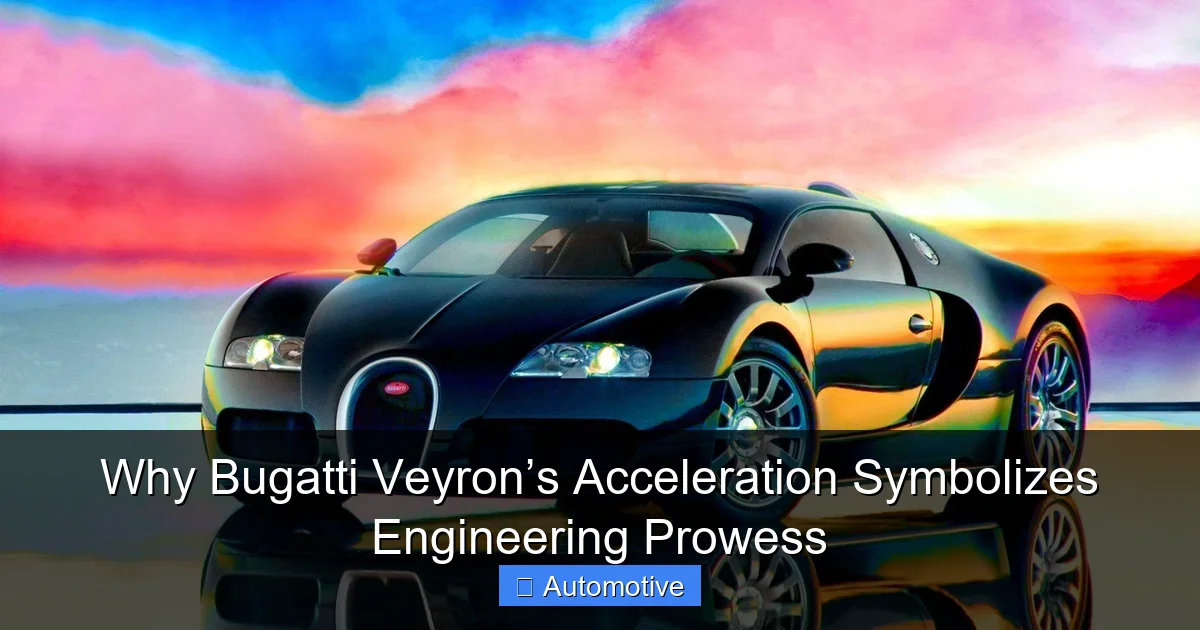
With a missile for an engine, you need a spaceship for a chassis. The Veyron’s carbon-fiber monocoque is arguably more revolutionary than its engine for achieving its acceleration goals. A traditional steel or aluminum chassis would have been far too heavy. Carbon fiber offered the strength of steel at a fraction of the weight, but applying it to a full-size, road-going hypercar at the time was bleeding-edge.
Visual guide about Why Bugatti Veyron’s Acceleration Symbolizes Engineering Prowess
Image source: wallpaperaccess.com
Building an Aircraft-Grade Cabin
The monocoque is a single, rigid structure that the body panels attach to. It had to withstand not just crashes, but the immense torsional rigidity (twisting force) generated by the acceleration and cornering loads. Bugatti partnered with aerospace experts to develop a pre-preg carbon fiber process, layering the material in specific orientations to optimize strength. The result was a chassis so stiff it defied the laws of typical car construction. This rigidity is crucial for acceleration; any flex in the chassis absorbs energy that should go into propelling the car forward.
Integrating Safety with Speed
This monocoque also had to incorporate a survival cell worthy of Formula 1 standards, including rollover protection. Integrating this with the complex fuel tank positioning, cooling ducting, and attachment points for the suspension made it one of the most complex carbon-fiber structures ever built for a production car. The weight savings—hundreds of pounds—were directly reinvested into better brakes, a more robust transmission, and ultimately, a higher power-to-weight ratio, shaving crucial tenths off the 0-60 time.
The Transmission Torment: A Gearbox Built for War
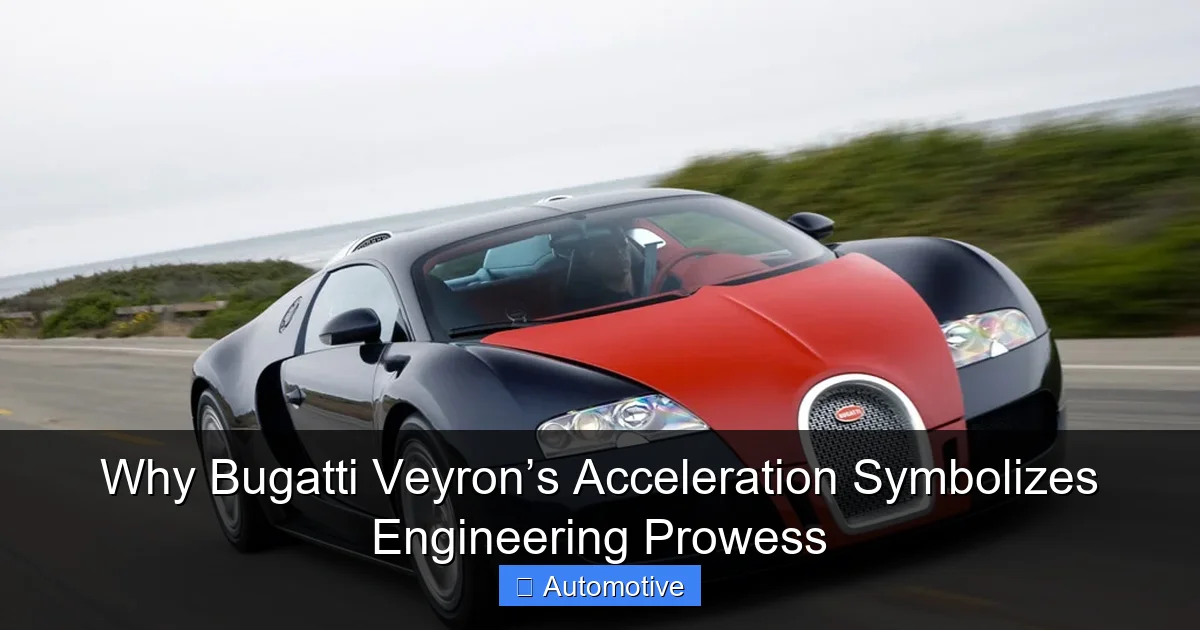
Here lies one of the most underrated stories of the Veyron’s engineering prowess. No off-the-shelf transmission could handle the Veyron’s 1,180 lb-ft of torque. The initial concept used a 7-speed dual-clutch transmission (DCT), a relatively new technology at the time. But the torque was so immense that the first prototypes literally shredded their gears.
Visual guide about Why Bugatti Veyron’s Acceleration Symbolizes Engineering Prowess
Image source: thesupercars.org
Reinventing the Wheel (Gear)
Engineers had to go back to the drawing board. They strengthened every single component: the gears themselves were machined from special alloys, the synchronizers were massively upgraded, and the entire casing was reinforced. The shifting logic also had to be reprogrammed to manage the brutal power delivery without shocking the drivetrain. This wasn’t just an upgrade; it was a complete redesign of a DCT to meet “hypercar” standards. The transmission’s ability to shift in under 150 milliseconds while handling that torque is a silent hero of the Veyron’s acceleration story. Without it, the engine’s power would be useless, or worse, destructive.
Thermal Management: The Invisible Battle
Physics dictates that power creates heat. The Veyron’s engine, with 16 cylinders and four turbochargers screaming, is a furnace. Its two large radiators for engine coolant, two for the intercoolers, and separate coolers for the transmission, differential, and turbocharger oil means the Veyron has over 10 radiators. Managing this heat is critical not just for performance, but for survival.
Airflow as a Design Dictator
The Veyron’s iconic, wide-body design is not just for aesthetics. Those massive side intakes aren’t just for show; they are engineered airways dedicated to feeding cool air to the front-mounted intercoolers and brakes. The complex channels behind the wheels and under the car are a testament to computational fluid dynamics (CFD) analysis. At top speed, the air pressure and heat soak are immense. The cooling system had to be effective at low speeds (when airflow is minimal) and not create excessive drag at high speeds. This balancing act is a perfect example of engineering prowess where thermodynamics, aerodynamics, and packaging collide.
The Traction Triumph: All-Wheel Drive for 1,000+ HP
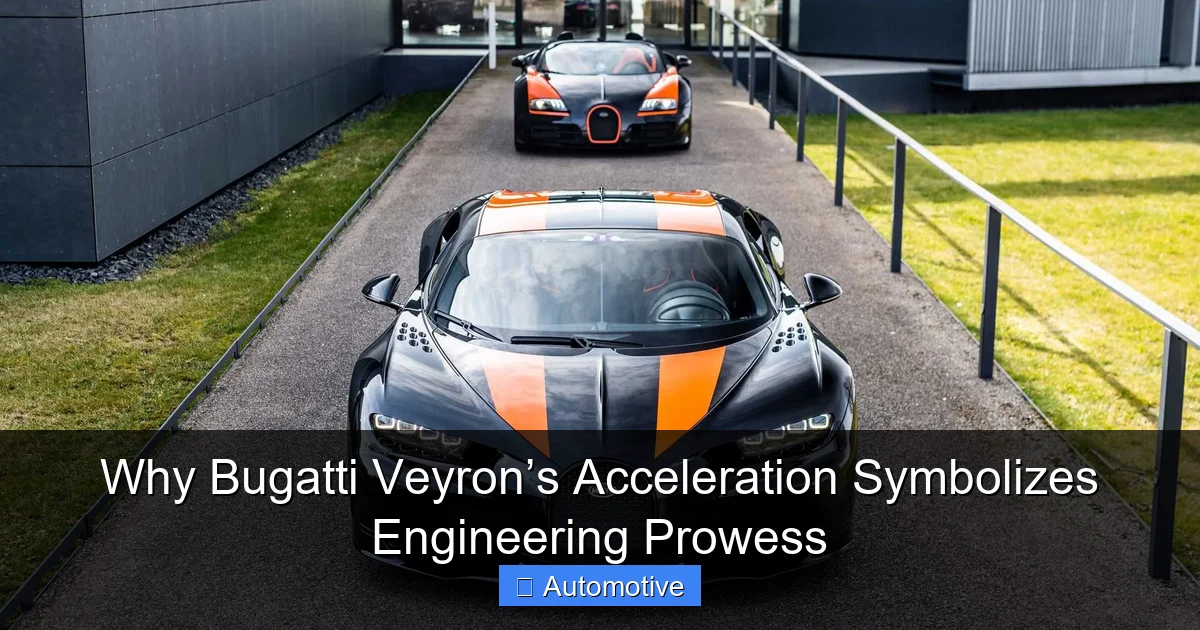
Putting 1,000 horsepower down on a patch of tarmac is like trying to empty a firehose into a teacup. Wheelspin is inevitable without a brilliant traction system. The Veyron’s all-wheel-drive system is a masterclass in mechanical and electronic integration.
Visual guide about Why Bugatti Veyron’s Acceleration Symbolizes Engineering Prowess
Image source: cdn.motor1.com
Intelligent Torque Vectoring
The system is rear-biased but can send up to 100% of the engine’s torque to the front wheels if rear slip is detected. This is managed by a viscous coupling and a suite of electronic stability controls. The calibration is key: it must intervene seamlessly without feeling intrusive, allowing the driver to exploit the massive power while keeping the car pointed straight. The Michelin Pilot Sport 2 tires, developed specifically for the Veyron, are another critical piece of this puzzle. Their unique construction and compound were designed to handle the shear forces of a 250+ mph run and the brutal torque of a standing start. This synergy between drivetrain and tire is a non-negotiable element of its acceleration prowess.
Testing the Limits: The Ehra-Lessien Proving Ground
All this engineering would be theoretical without the ultimate validation: the test track. Bugatti used the 21-mile oval at Ehra-Lessien, a secretive Volkswagen Group facility. This is where the Veyron’s acceleration and top speed claims were not just simulated, but physically proven, lap after punishing lap.
The Ritual of a Speed Run
A top-speed run is a ritual. The car is stripped of all non-essential weight, fitted with special tires inflated to extreme pressures, and driven by a factory test pilot. The acceleration phase is just as critical as the top speed. The car must accelerate from a standstill to 200+ mph without overheating components or running out of runway. The Veyron’s ability to do this repeatedly, to be a “fragile thoroughbred” that can also be a “durable workhorse” during testing, is the final proof of its robust engineering prowess. It wasn’t built for one magic number; it was built to be a usable, reliable (by hypercar standards) machine that could perform its magic on demand.
Legacy: The “No-Compromise” Benchmark
The Veyron’s acceleration symbolizes an era of automotive history where cost was no object and the primary goal was to achieve the seemingly impossible. It forced suppliers to invent new materials and processes. It redefined what a transmission could handle. It made carbon fiber mainstream in the highest echelons of performance. Its legacy is not just in the numbers it posted, but in the blueprint it provided. Every subsequent hypercar chasing the 0-60 and top speed crown must first contend with the engineering solutions pioneered by the Veyron. It established that true engineering prowess means solving every problem—from turbo lag to tire deformation—with equal, obsessive intensity. It is the ultimate proof that with unlimited resources and unwavering vision, automotive engineering can create something that feels less like a machine and more like a miracle of physics.
Conclusion: More Than a Number
The Bugatti Veyron’s 2.4-second sprint to 60 mph is the headline, but the story is in the footnotes. It’s in the 16 cylinders arranged in a W, the four turbochargers breathing in unison, the carbon-fiber shell holding it all together, and the gearbox that refused to break. It’s in the 10 radiators quietly managing a furnace, and the all-wheel-drive system harnessing a lightning bolt. This acceleration is the visible result of thousands of engineers asking, “What if?” and then refusing to accept “can’t.” It symbolizes the absolute peak of what is possible when engineering constraints are not merely challenges, but invitations to innovate. The Veyron is not just a fast car; it is a rolling museum of solutions, a testament to the fact that in the pursuit of perfection, every detail matters. Its acceleration is the roar of that triumph.
Frequently Asked Questions
Is the Bugatti Veyron’s acceleration purely due to its high horsepower?
No, horsepower is just one part. Its acceleration is a system-wide effort. The advanced all-wheel-drive system for traction, the ultra-rigid carbon-fiber chassis to prevent power loss through flex, and the lightning-fast dual-clutch transmission to put that power down seamlessly are all equally critical components of its engineering prowess.
How does the Veyron’s quad-turbo system prevent lag for such quick launches?
It uses a sequential turbo system. Smaller turbochargers provide immediate boost at low RPMs for instant throttle response off the line. As engine speed rises, larger turbochargers spool up to provide massive top-end power. This staged approach, managed by complex engine electronics, virtually eliminates traditional turbo lag, contributing directly to its brutal acceleration.
Was the Veyron’s carbon-fiber body just for weight savings?
Weight savings was a primary goal, but the carbon-fiber monocoque was also about creating an incredibly stiff structure. This torsional rigidity ensures the car’s energy goes into acceleration and handling, not into flexing the chassis. It also provided a safe, strong survival cell, meeting racing-grade standards.
What was the biggest engineering challenge in achieving the Veyron’s acceleration?
Many engineers point to the transmission. No existing gearbox could handle the Veyron’s 1,180 lb-ft of torque. The team had to completely redesign a 7-speed dual-clutch unit, strengthening every gear, bearing, and casing. Creating a transmission that could shift quickly and survive that torque was a monumental hurdle.
How does the Veyron’s acceleration compare to modern electric hypercars?
Modern electric hypercars often have quicker 0-60 times due to instant electric torque and all-wheel drive. However, the Veyron’s achievement is different. It accomplished its acceleration with a complex, high-revving, internal combustion engine and a mechanical system, all while also achieving an unprecedented top speed over 250 mph. It mastered a much broader performance envelope.
Is the Veyron’s acceleration usable in real-world driving?
In theory, yes, but in practice, it’s a rare event. The immense grip and acceleration require perfect conditions and a long, clear stretch of road. The car’s systems (traction control, stability control) are highly sophisticated to make it manageable, but unleashing its full potential is a skill and requires a safe environment. Its true engineering prowess is in making such an extreme machine drivable at all.
