
How Many Miles per Gallon Does a Volkswagen Jetta Get?

The Volkswagen Jetta is renowned for its impressive fuel efficiency, consistently ranking among the top compact sedans. Its miles per gallon (MPG) vary by model year, engine type, and transmission, with recent turbocharged models achieving up to 34 MPG combined. Real-world mileage can differ from EPA estimates based on driving habits and conditions. Proper maintenance and mindful driving are key to achieving or even exceeding the Jetta’s rated fuel economy.
Key Takeaways
- EPA ratings for the modern Jetta (2019+) range from 30-34 MPG combined, with highway figures often reaching 40+ MPG.
- Model year and engine choice are the biggest factors; the 1.4L turbo is the efficiency champion, while the older 2.0L naturally aspirated engine is less efficient.
- Manual transmissions typically offer a slight MPG advantage over automatics, but modern automatics (especially DSG) are extremely close and often preferred.
- Real-world MPG is heavily influenced by driving style, with aggressive acceleration and high speeds being the biggest drains on fuel economy.
- Consistent maintenance—especially oil changes, air filter replacements, and tire pressure checks—is critical for sustaining optimal MPG.
- The Jetta’s efficiency makes it a strong competitor against rivals like the Honda Civic and Toyota Corolla, often matching or beating them in highway cruising.
📑 Table of Contents
- Understanding MPG: What the Numbers Really Mean for Your Jetta
- A Model Year Breakdown: How Jetta MPG Has Evolved
- Engine and Transmission: The Heart of Efficiency
- Real-World MPG vs. EPA Estimates: The Honest Truth
- Practical Tips to Maximize Your Jetta’s Fuel Economy
- How Does the Jetta Stack Up Against the Competition?
- The Big Picture: Total Cost of Ownership and Value
Understanding MPG: What the Numbers Really Mean for Your Jetta
When you see a sticker that says “34 MPG combined,” what does that actually mean for your daily drive? It’s a great starting point, but it’s not the full story. The Environmental Protection Agency (EPA) tests vehicles on a controlled dynamometer using specific driving cycles that simulate city and highway conditions. For the Volkswagen Jetta, these lab tests provide a standardized benchmark. However, your personal “miles per gallon” is a living number, influenced by everything from the weather to your commute’s stop-and-go nature. Think of the EPA number as the car’s potential under ideal, average conditions. Your job—and our goal here—is to understand how to tap into as much of that potential as possible.
City vs. Highway MPG: The Great Divide
You’ll always see two numbers: city and highway. City MPG is lower because it accounts for frequent stops, idling, and lower average speeds—all of which keep the engine in a less efficient RPM range. Highway MPG is higher because the engine can settle into a steady, efficient cruise at a consistent speed. For a typical Jetta driver, the combined number is a weighted average of these two. If your commute is 90% highway, you’ll likely see numbers closer to the highway rating. If you’re in stop-and-go traffic all day, expect to dip toward the city figure. This is why knowing your own driving mix is the first step to realistically predicting your fuel costs.
A Model Year Breakdown: How Jetta MPG Has Evolved
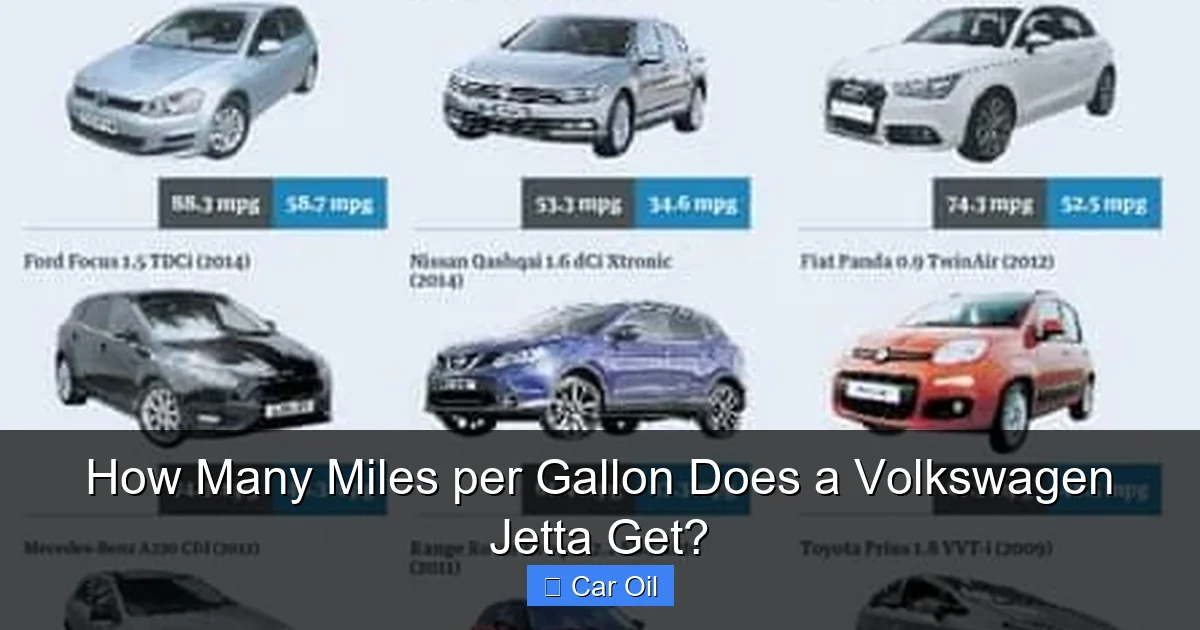
The Jetta has been in production for decades, and its engine technology has changed dramatically. A 2010 Jetta and a 2023 Jetta are fundamentally different machines under the hood, which is reflected directly in their fuel economy. Let’s walk through the major generational shifts that impacted MPG.
Visual guide about How Many Miles per Gallon Does a Volkswagen Jetta Get?
Image source: autozonic.com
The Efficient Turbo Era (2019-Present)
The current seventh-generation Jetta (launched for 2019 in North America) marked a significant leap. It standardizes on one highly efficient engine: the 1.4-liter turbocharged four-cylinder (TSI). Paired with either a 6-speed manual or an 8-speed automatic, this powertrain is a masterpiece of downsizing and forced induction. For the 2023 model, the EPA ratings are an impressive 30 MPG city / 40 MPG highway / 34 MPG combined. This consistency across the entire trim line—from the base S to the sporty GLI—is a key selling point. The turbocharger allows the small engine to produce adequate power (158 horsepower) without the fuel consumption penalty of a larger, naturally aspirated engine. If you’re shopping for a used Jetta from 2019 onward, this is the generation to target for maximum efficiency.
The Transition Years (2015-2018)
The previous generation (Mk6) offered a confusing array of engines. You could find the efficient 1.4L TSI (similar to the current car), the older 1.8L TSI, and the thirsty 2.0L naturally aspirated inline-5. The 1.4L models from this period are excellent, often rated at 28/39/32 MPG. However, many base-model Jettas from these years came with the 2.0L five-cylinder engine, which struggled to break 25 MPG combined. This makes it crucial to check the specific engine code (found on a sticker under the hood or in the owner’s manual) when buying used. The 1.4L TSI is the one you want for fuel savings.
The Older, Simpler Days (Pre-2015)
Going further back, the Jetta was simpler but less efficient. The ubiquitous 2.0L eight-valve engine (found in millions of Jettas from the late 90s through the early 2010s) is reliable but gas-guzzling by today’s standards, often real-worlding in the low-to-mid 20s MPG. The 2.5L five-cylinder, introduced around 2006, was a bit peppier but only marginally better on fuel. If you’re looking at a Jetta older than 2010 for budget reasons, manage your expectations: you’re buying a reliable, spacious sedan, not a hybrid contender. For context on how other brands approached efficiency in this era, you can look at the Nissan Versa, which prioritized efficiency with a smaller engine in a lighter car.
Engine and Transmission: The Heart of Efficiency
Two components dictate your Jetta’s fundamental efficiency ceiling: the engine and the transmission. Understanding their roles helps you choose the right model and drive it optimally.
Visual guide about How Many Miles per Gallon Does a Volkswagen Jetta Get?
Image source: tffn.net
The 1.4L TSI: Small Turbo, Big Smiles (and Savings)
Volkswagen’s 1.4-liter turbocharged engine is a star. Its small displacement means less friction and less fuel used during light cruising. The turbocharger kicks in only when you demand more power (like passing or climbing a hill), forcing more air into the cylinders for a power boost without the permanent fuel penalty of a larger engine. This “right-sized” approach is why it achieves stellar EPA numbers while still feeling adequately responsive in daily driving. It runs on regular 87-octane gasoline, which is a nice bonus. This engine is the reason the modern Jetta can compete with hybrids for highway MPG without the hybrid cost or complexity.
The DSG vs. The Traditional Automatic
Volkswagen’s Direct Shift Gearbox (DSG) is a dual-clutch automated manual. It shifts with lightning speed and, in theory, should be more efficient than a traditional torque-converter automatic because it’s essentially two manual transmissions working in tandem. In practice, for the Jetta, the difference between the 6-speed manual and the 8-speed automatic (in newer models) is negligible—often just 1 MPG. The 8-speed is exceptionally smooth and smart. The key takeaway: don’t choose a transmission based on a tiny MPG spec sheet. Choose based on your driving preference. The automatic is vastly more convenient for traffic, and its efficiency is so close you won’t notice a difference at the pump. The manual is for enthusiasts who want the engagement, and it might save you a cup of coffee per month.
The (Now Rare) 2.0L Engine: A Cautionary Tale
If you encounter a Jetta with a 2.0L engine (often an “MPI” or “N/A” designation), know that it’s an older, less efficient design. It’s a larger, heavier engine with fewer modern efficiency tricks like direct injection and variable valve timing on both cams. It will get you where you need to go, but your fuel bills will be significantly higher. It’s also worth noting that this engine was often paired with a less sophisticated 5-speed automatic, compounding the efficiency loss. Always verify the engine size before purchasing if MPG is a top priority.
Real-World MPG vs. EPA Estimates: The Honest Truth
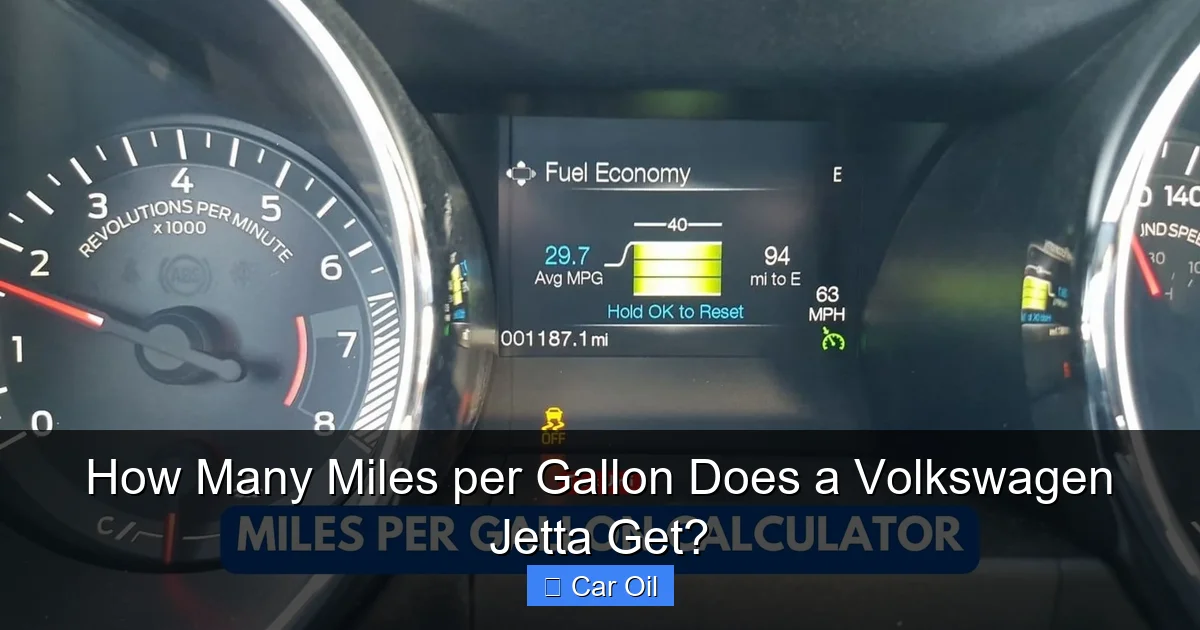
So you bought a Jetta rated for 34 MPG combined, but your dashboard is showing 28. Is something wrong? Probably not. The gap between EPA lab numbers and real-world results is a tale as old as the EPA test itself. Several factors conspire against your perfect score.
Visual guide about How Many Miles per Gallon Does a Volkswagen Jetta Get?
Image source: taxuni.com
Driving Style: The #1 MPG Killer
Your right foot is the most powerful fuel-saving (or wasting) tool. The EPA tests use gentle, predictable acceleration. In the real world, we jackrabbit from stoplights, fly up on-ramps, and ride the brakes into every corner. This aggressive driving can slash your MPG by 15-30% instantly. The single best thing you can do for fuel economy is to accelerate smoothly and gradually, anticipate traffic flow to avoid unnecessary braking, and use cruise control on flat highways. It feels slower, but you’ll arrive at the same destination with far more fuel in the tank.
Environment and Terrain
Cold weather is a hidden MPG vampire. Engines run less efficiently when cold, taking longer to reach optimal operating temperature. Winter fuel blends are also slightly less energy-dense. Using the heater and defroster puts an extra load on the engine. Hilly terrain is another challenge. The EPA cycle uses a mostly flat course. Driving in mountains means constant uphill battles (high RPM, high load) and regenerative braking on the downs, which wastes the energy you used to climb. If you live in a hilly area, your real-world MPG will be lower than the flat-land EPA estimate.
Vehicle Load and Maintenance
A fully loaded Jetta with four adults and a roof carrier is not the same as a solo driver. Every 100 pounds of extra weight can reduce MPG by about 1-2%. Roof racks create significant aerodynamic drag even when empty. Under-inflated tires are a major efficiency drain, increasing rolling resistance. A dirty air filter chokes the engine, forcing it to work harder. Neglected oil changes increase internal friction. These are all easy fixes. Keep your tires at the recommended PSI (found on the driver’s door jamb sticker), change your oil on schedule, and remove unnecessary cargo and roof racks. These small habits can recover 2-4 MPG easily. If you’re meticulous about this, you might even beat the EPA estimate, which is a great feeling.
Practical Tips to Maximize Your Jetta’s Fuel Economy
Armed with the knowledge of what affects MPG, let’s talk actionable strategies. You don’t need to buy a new car or drive painfully slow to see meaningful improvements.
Driving Techniques That Cost Nothing
Practice “hyper-mileing” basics without going to extremes. Use the “pulse and glide” method in heavy traffic: accelerate smoothly to a steady speed, then coast in gear (with your foot off the throttle) as long as safely possible before needing to accelerate again. This uses the engine’s idle fuel cut-off feature. Plan your routes to avoid rush hour stop-and-go. Combine errands into one trip; a warm engine is more efficient than multiple cold starts. Turn off the engine if you’re idling for more than 60 seconds (modern cars use negligible extra fuel on restart). These habits require awareness but become second nature.
Smart Maintenance is Non-Negotiable
Stick to the factory maintenance schedule religiously. Beyond oil changes, pay special attention to:
- Spark Plugs: Worn plugs cause misfires, wasting fuel.
- Fuel Filter: A clogged filter strains the fuel pump and can hurt efficiency.
- Air Filter: A simple, cheap replacement that ensures optimal airflow.
- Oxygen Sensors: A faulty O2 sensor can kill MPG; the check engine light will usually come on.
- Tire Pressure: Check monthly. A 5 PSI underfill can cost 2-3% in MPG.
Consider using synthetic oil, which reduces internal friction more than conventional oil, especially beneficial in cold starts. For specific maintenance intervals for your Honda Civic (as a comparative example of another efficient sedan), resources like how many quarts of oil a Honda Civic needs highlight the importance of using the correct fluid type and capacity for peak efficiency.
Accessory Awareness
That sunroof, while nice, adds weight and aerodynamic drag when open at highway speeds. The air conditioner is a huge parasitic load on the engine. At low speeds, rolling down windows is more efficient; at high speeds, using AC with windows up is better due to drag. Heated seats and a heated steering wheel use less energy than the cabin heater, which blows hot air from the engine. Use them when you can. These are small choices, but they add up on long trips.
How Does the Jetta Stack Up Against the Competition?
Words are cheap. Let’s compare numbers. The compact sedan segment is a battlefield of efficiency. How does the Jetta’s 34 MPG combined hold up?
Head-to-Head with Japanese Sedan Kings
The perennial rivals are the Honda Civic and Toyota Corolla. The current Corolla Hybrid is in a different league (52 MPG combined), but the gas-only Corolla is rated at 33 MPG combined (2.0L) or 35 MPG (1.8L hybrid-like strategy but non-hybrid). The Civic’s 1.5L turbo is rated at 33 MPG combined. So, the Jetta’s 34 MPG combined with the 1.4L TSI is at least competitive, often edging out its Japanese rivals on the highway (40 MPG vs. high-30s). The Jetta’s advantage is often in its refined, quiet ride and spacious interior for the MPG it delivers. For a direct look at the Civic’s specs, a resource detailing how many gallons of gas a Honda Civic holds provides context on range, which is the practical application of MPG.
The Korean and American Contenders
Don’t forget the Hyundai Elantra and Kia Forte, which also offer excellent 33-34 MPG combined ratings with their 2.0L MPI engines. They are strong value players. From Detroit, the Ford Fusion (now discontinued) and Chevrolet Malibu offered decent efficiency but couldn’t match the Jetta’s combined numbers consistently. The Jetta’s strength is its balance: it doesn’t feel like a penalty-box economy car to drive. The engine is quiet, the transmission is smooth, and the interior feels substantial. You get excellent fuel economy without sacrificing driving enjoyment or comfort—a combination that keeps it a top recommendation.
The Big Picture: Total Cost of Ownership and Value
Fuel economy is just one piece of the car ownership puzzle. It’s a huge piece, but it must be weighed against purchase price, maintenance costs, reliability, and depreciation. The Jetta shines here too. Its purchase price is typically very competitive, especially for a German-engineered car. Maintenance costs are reasonable for a non-luxury brand; basic services are affordable, and parts are plentiful. Its predicted reliability is above average for the segment. This means your dollar goes further: you’re not just saving at the pump, but also on the long-term upkeep. When you calculate the 5-year cost of ownership, the Jetta’s efficiency becomes a powerful financial argument. For those considering leasing, understanding the residual value (which is helped by good fuel economy) is key. Articles on how much it costs to lease a Volkswagen Jetta break down how MPG influences that monthly payment through depreciation projections.
Ultimately, a Volkswagen Jetta gets between approximately 24 MPG (old 2.0L) and 40 MPG (new 1.4L on the highway). The modern, turbocharged version is a fuel-sipping champion that delivers real-world numbers very close to its EPA ratings when driven conscientiously. It’s a smart, practical, and efficient choice that stands tall against any competitor in the compact sedan arena.
Frequently Asked Questions
What is the best year Volkswagen Jetta for gas mileage?
The model years from 2019 to the present, equipped with the 1.4-liter turbocharged engine, offer the best combined fuel economy, rated at 30 city / 40 highway / 34 combined MPG. Earlier models with the 2.0L engine have significantly lower MPG.
Does a manual or automatic Jetta get better MPG?
Technically, the 6-speed manual transmission in modern Jettas has a slight EPA advantage (often 1 MPG) over the 8-speed automatic. However, in real-world driving, the difference is negligible. The 8-speed automatic is exceptionally efficient and smooth, and most drivers will not see a meaningful fuel penalty for choosing it for convenience.
How does driving style affect my Jetta’s MPG?
Driving style is the single biggest factor affecting real-world MPG, often more than weather or terrain. Aggressive acceleration, speeding, and frequent braking can reduce fuel economy by 15-30% compared to gentle, steady driving with cruise control on the highway.
Is premium gas required for a Volkswagen Jetta?
No. All current Volkswagen Jetta models with the 1.4L TSI engine are designed to run on regular unleaded 87-octane gasoline. Using premium fuel will not improve performance or fuel economy and is an unnecessary expense.
How does the Jetta’s MPG compare to a Honda Civic?
They are very close competitors. A current Jetta with the 1.4L turbo is EPA-rated at 34 MPG combined. A comparable Honda Civic with the 1.5L turbo is rated at 33 MPG combined. The Jetta often has a higher highway rating (40 MPG vs. Civic’s high-30s), giving it a slight edge for road trips.
What maintenance is most important for good Jetta fuel economy?
The most critical maintenance items are: keeping tires inflated to the correct PSI, changing the engine oil and filter on schedule with the recommended viscosity, replacing the engine air filter when dirty, and ensuring spark plugs and oxygen sensors are in good working order. These directly impact engine efficiency.