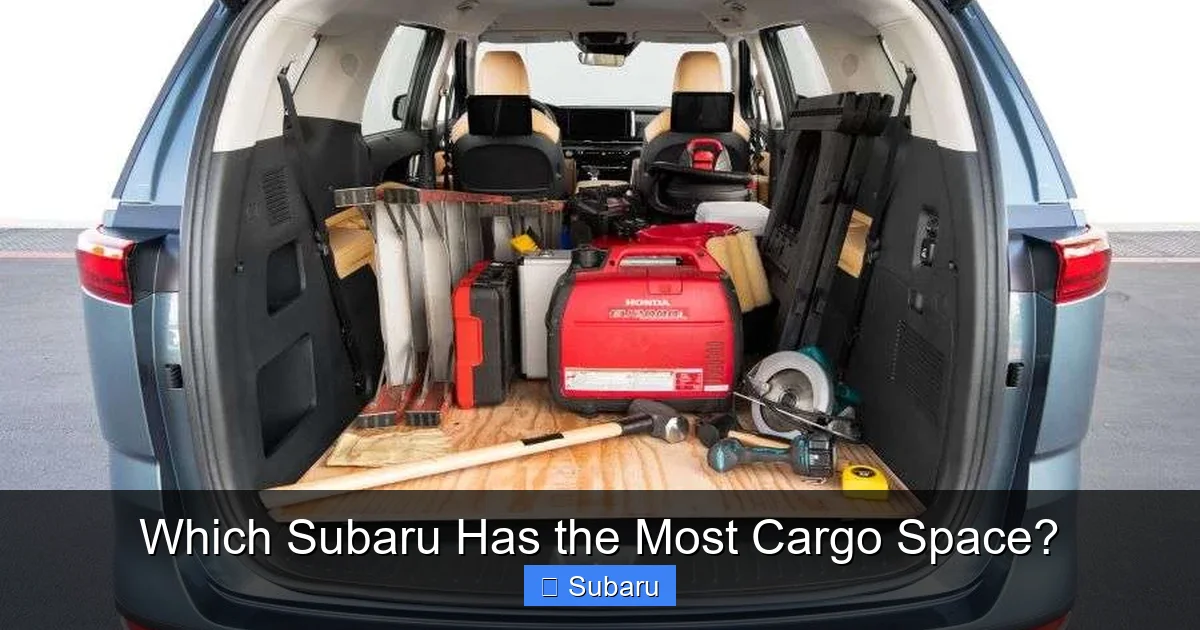
Which Subaru Has the Most Cargo Space?

Contents
- 1 Key Takeaways
- 2 📑 Table of Contents
- 3 Which Subaru Has the Most Cargo Space? A Complete Guide for 2024
- 4 Subaru Ascent: The Cargo King of the Lineup
- 5 Subaru Outback: The Rugged Wagon with Surprising Space
- 6 Subaru Forester: Compact Size, Big Utility
- 7 Subaru Crosstrek: The Compact Contender
- 8 Subaru WRX: The Sporty Surprise
- 9 How to Choose the Right Subaru for Your Cargo Needs
- 10 Conclusion: The Ascent Wins for Cargo, But There’s a Subaru for Everyone
- 11 Frequently Asked Questions



If you’re searching for a Subaru with the most cargo space, the 2024 Subaru Ascent is the clear winner, offering up to 86.5 cubic feet with seats folded. This three-row SUV combines rugged capability with family-friendly practicality, making it ideal for road trips, gear hauling, and daily errands.
Key Takeaways
- Subaru Ascent leads in cargo capacity: With up to 86.5 cubic feet of space, it’s the roomiest Subaru for hauling gear, luggage, or equipment.
- Three-row seating for up to eight: The Ascent offers flexible seating configurations, balancing passenger comfort with cargo needs.
- Standard all-wheel drive enhances utility: Every Subaru comes with AWD, making the Ascent capable in snow, rain, and off-road conditions.
- Forester and Outback are strong alternatives: The Forester (76.1 cu ft) and Outback (75.7 cu ft) offer impressive space in more compact packages.
- Roof rails and cargo management systems: Most Subaru models include roof rails and optional cargo organizers for added storage flexibility.
- Fuel efficiency vs. space trade-off: Larger models like the Ascent use more fuel, so consider your driving habits and needs.
- Perfect for families and adventurers: Whether you’re camping, moving, or carpooling, Subaru’s cargo-focused designs support active lifestyles.
📑 Table of Contents
- Which Subaru Has the Most Cargo Space? A Complete Guide for 2024
- Subaru Ascent: The Cargo King of the Lineup
- Subaru Outback: The Rugged Wagon with Surprising Space
- Subaru Forester: Compact Size, Big Utility
- Subaru Crosstrek: The Compact Contender
- Subaru WRX: The Sporty Surprise
- How to Choose the Right Subaru for Your Cargo Needs
- Conclusion: The Ascent Wins for Cargo, But There’s a Subaru for Everyone
Which Subaru Has the Most Cargo Space? A Complete Guide for 2024
When it comes to choosing a vehicle that blends reliability, safety, and practicality, few brands come close to Subaru. Known for their standard all-wheel drive, rugged build, and family-friendly designs, Subaru vehicles are favorites among outdoor enthusiasts, growing families, and daily commuters alike. But if you’re hauling gear, packing for a weekend getaway, or simply need room for groceries, sports equipment, or luggage, one question rises to the top: Which Subaru has the most cargo space?
The answer isn’t always straightforward. Subaru offers a range of models—from compact crossovers to full-size SUVs—each designed with different priorities. Some emphasize fuel efficiency, others focus on off-road capability, and a few are built specifically for maximum interior volume. But when cargo space is your top concern, one model stands head and shoulders above the rest.
In this comprehensive guide, we’ll dive deep into Subaru’s 2024 lineup to determine which model offers the most cargo space. We’ll compare the Ascent, Outback, Forester, Crosstrek, and even the sporty WRX (yes, it has a trunk!) to help you make an informed decision. Along the way, we’ll explore real-world usability, seating flexibility, roof storage options, and how each vehicle performs under everyday conditions. Whether you’re a weekend warrior loading up camping gear or a parent shuttling kids and their stuff, this guide will help you find the Subaru that fits your life.
Subaru Ascent: The Cargo King of the Lineup
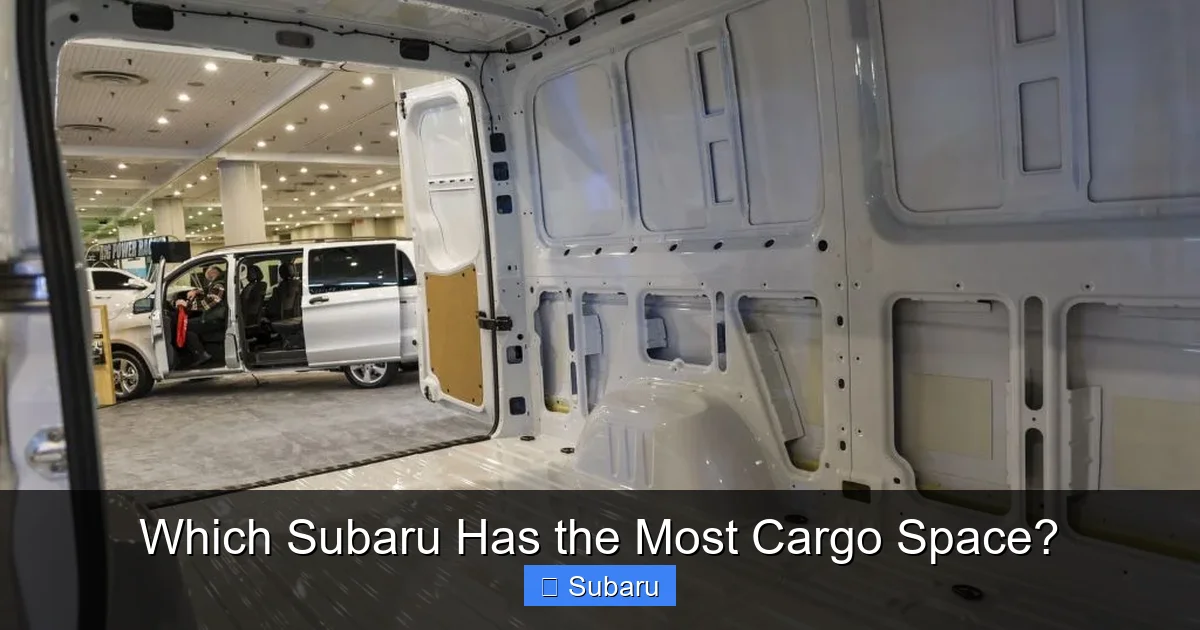
Visual guide about Which Subaru Has the Most Cargo Space?
Image source: vandimensions.com
If you’re looking for the Subaru with the most cargo space, the 2024 Subaru Ascent is the undisputed champion. As Subaru’s largest SUV, the Ascent is designed from the ground up to prioritize interior volume, passenger comfort, and hauling capability. With up to 86.5 cubic feet of cargo space when the second and third rows are folded flat, the Ascent outperforms every other model in the brand’s current lineup.
Breaking Down the Numbers
Let’s put that number into perspective. The average sedan offers around 15 cubic feet of trunk space. Even many midsize SUVs top out around 70 cubic feet. The Ascent’s 86.5 cubic feet is more than enough to fit a full set of golf clubs, several large suitcases, a stroller, and still have room for coolers or backpacks. It’s the kind of space you’d expect in a minivan—but with the rugged styling and standard AWD that Subaru is known for.
Behind the third row, you still get a respectable 17.8 cubic feet of space—enough for a few grocery bags or a small duffel. Fold down the third row, and that jumps to 47.5 cubic feet. Then, when you fold both the second and third rows, you unlock the full 86.5 cubic feet. That’s enough to lay down a full-size air mattress, transport furniture, or even move small appliances.
Seating Flexibility and Real-World Use
One of the Ascent’s biggest strengths is its flexible seating. You can choose between a seven- or eight-passenger configuration. The standard setup includes a second-row bench seat for three, plus two captain’s chairs in the third row. Opt for the Premium trim or higher, and you can swap the bench for dual captain’s chairs, making it easier to access the third row and giving passengers a more premium feel.
This flexibility means you can adjust your cargo and passenger balance on the fly. Need to carry six people and still have room for luggage? No problem. Loading up for a camping trip with just two passengers? Fold the seats and you’ve got a cavernous cargo hold.
The second and third rows fold flat with a simple pull of a lever, and the process is intuitive—no wrestling with heavy seats or complicated mechanisms. The flat load floor makes it easy to slide in large items, and the low liftover height reduces strain when loading heavy gear.
Roof Rails and Cargo Accessories
The Ascent also comes standard with roof rails, which add even more storage potential. You can install a roof box, cargo basket, or kayak carrier to free up interior space for passengers or fragile items. Subaru offers a range of OEM accessories, including a low-profile cargo box that adds up to 15 cubic feet of weatherproof storage.
For families, this means you can pack the car with kids, pets, and all their gear—without feeling cramped. For adventurers, it’s the perfect setup for weekend trips to the mountains or beach.
Subaru Outback: The Rugged Wagon with Surprising Space

Visual guide about Which Subaru Has the Most Cargo Space?
Image source: vandimensions.com
While the Ascent takes the crown for total cargo volume, the Subaru Outback deserves serious consideration—especially if you want a more car-like driving experience with SUV utility. The Outback is essentially a lifted, all-wheel-drive wagon based on the Legacy sedan, and it’s been a favorite among outdoor enthusiasts for decades.
Cargo Capacity and Practical Design
The 2024 Outback offers up to 75.7 cubic feet of cargo space with the rear seats folded. That’s a significant amount—especially for a vehicle that looks and drives like a tall wagon. Behind the second row, you still get 32.5 cubic feet, which is more than enough for a week’s worth of groceries, a suitcase, or a couple of backpacks.
What makes the Outback special is how usable that space is. The wide, flat cargo floor and low load height make it easy to slide in heavy items. The rear hatch opens high, giving you plenty of headroom when loading. And with standard roof rails, you can add a cargo box or bike rack for extra capacity.
Turbocharged Power and Off-Road Capability
One advantage the Outback has over the Ascent is its available turbocharged engine. The 2.4-liter turbocharged four-cylinder delivers 260 horsepower, giving the Outback strong acceleration and towing capacity—up to 3,500 pounds when properly equipped. That’s enough to tow a small trailer, a jet ski, or a pop-up camper.
The Outback also features Subaru’s X-Mode with Hill Descent Control, which enhances traction on slippery or uneven terrain. Whether you’re driving on snowy mountain roads or muddy trails, the Outback handles it with confidence.
Who Should Choose the Outback?
The Outback is ideal for buyers who want maximum cargo space without stepping up to a full-size SUV. It’s perfect for couples, small families, or solo adventurers who need room for gear but prefer a more agile, fuel-efficient vehicle. With up to 29 mpg on the highway (for the non-turbo model), it’s also one of the most efficient options in Subaru’s lineup.
Subaru Forester: Compact Size, Big Utility

Visual guide about Which Subaru Has the Most Cargo Space?
Image source: images.cars.com
Don’t let its compact size fool you—the Subaru Forester is a cargo-space powerhouse in its class. With up to 76.1 cubic feet of cargo volume, it actually beats the Outback by a slim margin, despite being smaller overall.
Maximizing Space in a Smaller Package
The Forester’s secret? Smart design. It has a tall roofline, a boxy shape, and a surprisingly roomy interior. The rear seats fold nearly flat, and the cargo area is wide and unobstructed. Behind the second row, you get 35.4 cubic feet—more than many compact SUVs offer with their seats down.
The Forester also features a low, flat load floor and wide-opening rear doors, making it easy to load bulky items like strollers, coolers, or pet carriers. The rear hatch is power-operated on higher trims, adding convenience when your hands are full.
Standard Features and Safety
Like all Subarus, the Forester comes standard with all-wheel drive and the EyeSight driver-assist suite, which includes adaptive cruise control, lane-keeping assist, and pre-collision braking. These features add peace of mind, especially when driving with a car full of gear or passengers.
The Forester also offers excellent visibility, thanks to its large windows and upright seating position. This makes parking and maneuvering in tight spaces easier—something that’s helpful when you’re loading up at a crowded trailhead or campsite.
Fuel Efficiency and Daily Driving
With up to 33 mpg on the highway, the Forester is one of the most fuel-efficient SUVs in its class. It’s a great choice for city dwellers who need cargo space but don’t want to sacrifice fuel economy. The ride is smooth and comfortable, and the handling is nimble—perfect for daily commutes and weekend errands.
Subaru Crosstrek: The Compact Contender
The Subaru Crosstrek is the smallest SUV in the lineup, but it still offers impressive cargo space for its size. With the rear seats folded, you get up to 55.3 cubic feet of cargo volume—more than many subcompact SUVs and even some midsize sedans.
Urban-Friendly with Off-Road Chops
The Crosstrek is built on the Impreza platform, so it shares its car-like handling and fuel efficiency. But with 8.7 inches of ground clearance and standard AWD, it’s more capable off-road than most competitors. It’s the perfect vehicle for city dwellers who want to escape to the mountains on weekends.
Behind the rear seats, you get 20.8 cubic feet—enough for a few bags of groceries or a weekend’s worth of gear. Fold the seats, and you can easily fit a mountain bike, camping equipment, or a small piece of furniture.
Hybrid Option for Extra Efficiency
For 2024, the Crosstrek offers a hybrid version that combines a 2.0-liter engine with an electric motor for improved fuel economy—up to 35 mpg combined. While the hybrid slightly reduces cargo space due to the battery pack, it’s still a great option for eco-conscious buyers who need versatility.
Subaru WRX: The Sporty Surprise
You might not think of the Subaru WRX as a cargo hauler, but this sporty sedan actually offers a decent-sized trunk. With 12.7 cubic feet of space, it’s not going to compete with SUVs, but it’s more than enough for daily use.
Performance Meets Practicality
The WRX is all about driving excitement, with a turbocharged engine, sharp handling, and rally-inspired styling. But it’s not just a weekend toy—it’s a practical daily driver with enough space for groceries, gym bags, or a small suitcase.
The trunk opening is wide, and the rear seats fold down (60/40 split) to extend cargo space for longer items like skis or surfboards. It’s a great choice for performance enthusiasts who still need some utility.
How to Choose the Right Subaru for Your Cargo Needs
With so many options, how do you decide which Subaru is right for you? Here are a few tips to help you choose:
- Assess your typical cargo load: Do you regularly carry large items like furniture, bikes, or camping gear? If so, the Ascent or Outback may be best. For lighter loads, the Forester or Crosstrek could suffice.
- Consider passenger needs: If you frequently transport more than five people, the Ascent’s three-row seating is a major advantage.
- Think about fuel efficiency: Larger vehicles like the Ascent use more fuel. If you drive mostly in the city or on highways, a smaller model like the Forester or Crosstrek might save you money at the pump.
- Evaluate towing needs: The Outback and Ascent can tow up to 3,500 and 5,000 pounds, respectively. If you plan to tow a trailer or boat, these are your best bets.
- Test drive with cargo: Whenever possible, load your typical gear into the vehicle during a test drive. This will give you a real sense of space, ease of loading, and overall comfort.
Conclusion: The Ascent Wins for Cargo, But There’s a Subaru for Everyone
So, which Subaru has the most cargo space? The answer is clear: the 2024 Subaru Ascent, with up to 86.5 cubic feet of cargo volume, is the roomiest model in the lineup. It’s the ideal choice for large families, frequent travelers, or anyone who needs maximum hauling capability without sacrificing Subaru’s signature safety and all-weather performance.
But that doesn’t mean the Ascent is the right choice for everyone. The Outback offers a great balance of space, efficiency, and ruggedness. The Forester delivers surprising cargo room in a compact, fuel-efficient package. The Crosstrek is perfect for city living with weekend adventure potential. And the WRX proves that even sporty cars can be practical.
Ultimately, the best Subaru for you depends on your lifestyle, driving habits, and cargo needs. But one thing is certain: no matter which model you choose, you’re getting a vehicle built to handle whatever life throws your way—whether that’s a mountain trail, a cross-country road trip, or just a busy week of errands.
Frequently Asked Questions
Which Subaru has the most cargo space?
The 2024 Subaru Ascent has the most cargo space in the lineup, offering up to 86.5 cubic feet with the rear seats folded. It’s the largest and most spacious Subaru SUV, ideal for families and heavy haulers.
How much cargo space does the Subaru Outback have?
The Subaru Outback provides up to 75.7 cubic feet of cargo space with the rear seats folded. Behind the second row, it offers 32.5 cubic feet, making it a versatile wagon for gear and groceries.
Can the Subaru Forester fit a mountain bike?
Yes, the Subaru Forester can easily fit a mountain bike with the rear seats folded. Its 76.1 cubic feet of cargo space and wide rear opening make it a great choice for outdoor enthusiasts.
Does the Subaru Ascent have roof rails?
Yes, all 2024 Subaru Ascent models come standard with roof rails. You can add a cargo box, bike rack, or kayak carrier to increase storage capacity for long trips or outdoor adventures.
Is the Subaru Crosstrek good for camping?
Absolutely. The Crosstrek offers 55.3 cubic feet of cargo space with the seats down, plus standard AWD and high ground clearance. It’s a compact but capable choice for weekend camping trips.
Which Subaru is the most fuel-efficient with good cargo space?
The Subaru Forester is the most fuel-efficient SUV in the lineup with strong cargo capacity. It delivers up to 33 mpg on the highway and offers 76.1 cubic feet of storage, making it ideal for eco-conscious adventurers.