
How to Turn Off Pre-collision Braking on a Subaru Forester

Turning off pre-collision braking on a Subaru Forester is simple but should be done with caution. This advanced safety feature helps prevent accidents, but there are rare situations—like off-road driving or tight parking—where disabling it temporarily makes sense. Always re-enable it afterward for maximum safety.
Key Takeaways
- Pre-collision braking is a vital safety feature: It uses sensors and cameras to detect potential collisions and can automatically apply the brakes to reduce impact or avoid crashes entirely.
- Disabling it is temporary and reversible: You can turn off pre-collision braking from the vehicle settings, but it will automatically reactivate the next time you start the car.
- Only disable it when absolutely necessary: Situations like off-roading, driving through deep snow, or navigating tight spaces may trigger false alerts—making temporary deactivation helpful.
- The process varies slightly by model year: Newer Forester models (2019 and later) use the touchscreen menu, while older models may rely on physical buttons or the multi-function display.
- Always re-enable the system after use: For your safety and that of others, make sure pre-collision braking is active during normal driving conditions.
- Consult your owner’s manual: Subaru provides detailed instructions specific to your Forester’s year and trim level—always refer to it for accurate guidance.
- Consider professional advice if unsure: If you’re uncertain about disabling safety systems, speak with a Subaru technician or dealer for personalized help.
📑 Table of Contents
- Understanding Pre-Collision Braking in the Subaru Forester
- Why You Might Want to Turn Off Pre-Collision Braking
- How to Turn Off Pre-Collision Braking: Step-by-Step Guide
- Safety Considerations and Best Practices
- Common Misconceptions About Disabling Pre-Collision Braking
- Final Thoughts: Balancing Safety and Practicality
Understanding Pre-Collision Braking in the Subaru Forester
When you’re behind the wheel of a Subaru Forester, you’re driving one of the safest compact SUVs on the road—and a big reason for that is Subaru’s EyeSight driver-assist technology. At the heart of this system lies the pre-collision braking feature, a smart safety tool designed to help prevent accidents before they happen.
So, what exactly is pre-collision braking? In simple terms, it’s an advanced system that uses a combination of stereo cameras mounted near the rearview mirror to monitor the road ahead. These cameras constantly scan for vehicles, pedestrians, and obstacles in your path. If the system detects a potential collision and you haven’t responded in time—say, by braking or steering away—it can automatically apply the brakes to either reduce the severity of the impact or stop the car entirely.
This isn’t just a gimmick. Real-world data shows that vehicles equipped with pre-collision braking systems experience significantly fewer rear-end collisions. Subaru’s EyeSight, which includes this feature, has been proven to reduce frontal crash rates by up to 80% in some studies. That’s a huge win for safety.
But here’s the thing: while pre-collision braking is incredibly helpful in most driving situations, there are rare moments when it might not be ideal. Maybe you’re crawling through a muddy trail on a weekend adventure, and the system keeps misreading tree branches as obstacles. Or perhaps you’re in a tight parking garage where the sensors get confused by low ceilings or reflective surfaces. In these edge cases, you might want to temporarily turn off the feature.
That’s why Subaru gives you the option to disable pre-collision braking—but only temporarily. It’s not meant to be turned off permanently. The system is designed to reset every time you restart the vehicle, ensuring that you’re always protected during normal driving.
Why You Might Want to Turn Off Pre-Collision Braking
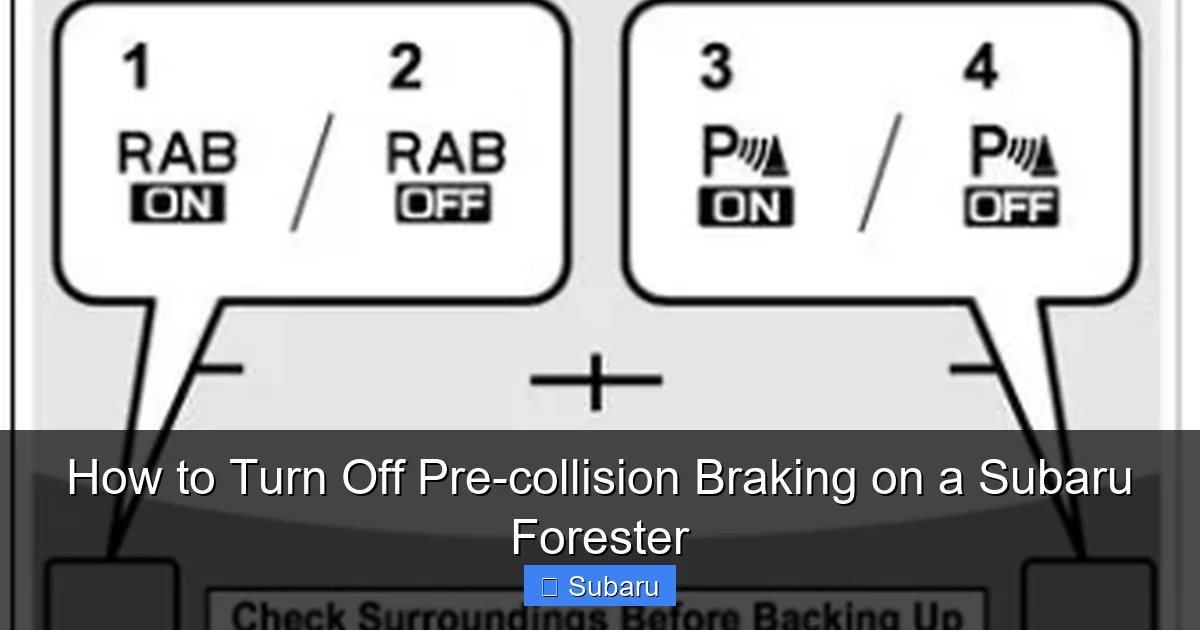
Visual guide about How to Turn Off Pre-collision Braking on a Subaru Forester
Image source: suforester5.com
Let’s be clear: pre-collision braking is one of the best safety features your Forester has. It’s there to protect you, your passengers, and others on the road. So why would anyone want to turn it off?
The answer lies in specific, unusual driving conditions where the system might react in ways that are more annoying than helpful. Think of it like this: your car is trying to help, but sometimes it overhelps.
One common scenario is off-roading. If you take your Forester on dirt trails, forest roads, or rocky terrain, the pre-collision system might误interpret natural obstacles—like low-hanging branches, steep inclines, or even dust clouds—as imminent collision risks. This can cause the car to suddenly brake or jerk, which is not only startling but could actually be dangerous if you’re navigating a tricky section of trail.
Another situation is driving in deep snow or heavy rain. Snow buildup on the windshield or sensor area can interfere with the cameras, leading to false alerts or unintended braking. Similarly, heavy rain or fog can reduce visibility and cause the system to behave unpredictably.
Tight parking situations are another example. Imagine you’re in a crowded parking garage with low ceilings, narrow spaces, or reflective walls. The sensors might detect these surfaces as obstacles and trigger the braking system, making it difficult to maneuver smoothly. While this is rare, it can happen—especially in older models with less refined sensor algorithms.
Some drivers also report that the system can be overly sensitive in stop-and-go traffic. If you’re creeping forward in a line of cars and the vehicle ahead slows slightly, the Forester might interpret that as a potential collision and apply the brakes more aggressively than needed. This can be frustrating, especially if you’re trying to maintain a smooth flow.
It’s also worth noting that certain maintenance or repair scenarios might require temporarily disabling the system. For example, if you’re replacing the windshield (where the cameras are mounted), a technician may need to turn off pre-collision braking to avoid interference during calibration.
In all these cases, the key word is *temporary*. Subaru doesn’t expect you to drive around with this safety feature off all the time. Instead, they’ve designed the system so you can disable it when needed—and it will automatically turn back on the next time you start the car.
How to Turn Off Pre-Collision Braking: Step-by-Step Guide
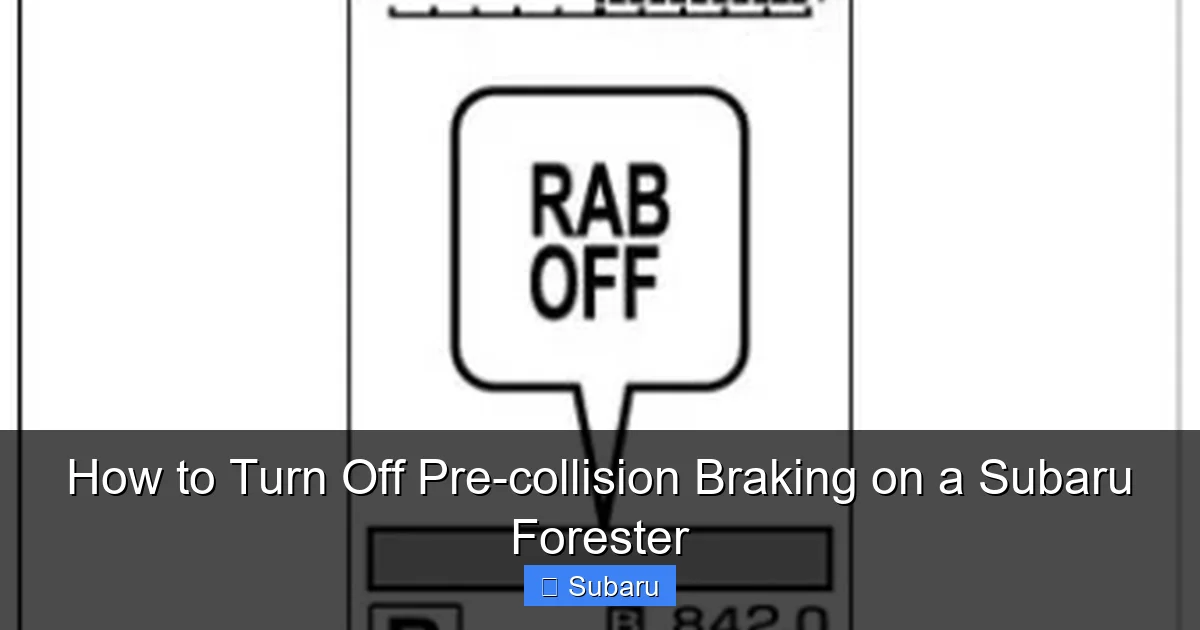
Visual guide about How to Turn Off Pre-collision Braking on a Subaru Forester
Image source: suforester5.com
Now that we’ve covered why you might want to disable pre-collision braking, let’s get into the how. The process is straightforward, but it varies slightly depending on your Forester’s model year and trim level. Most modern Foresters (2019 and newer) use the touchscreen infotainment system, while older models may rely on physical buttons or the multi-function display.
Let’s walk through the steps for the most common scenarios.
For 2019–2024 Subaru Forester Models (Touchscreen Interface)
If you have a newer Forester with the 6.5-inch or 8-inch touchscreen, here’s how to turn off pre-collision braking:
1. **Start the vehicle.** Make sure the engine is running or the ignition is in the “on” position. The system won’t allow changes while the car is off.
2. **Access the Home Menu.** Tap the “Home” button on the touchscreen. This usually brings up a grid of icons for navigation, audio, phone, and vehicle settings.
3. **Open Vehicle Settings.** Look for an icon labeled “Settings” or “Vehicle Settings.” It often looks like a gear or wrench. Tap it to enter the menu.
4. **Navigate to Driver Assistance.** Scroll through the options until you find “Driver Assistance” or “Safety Systems.” This section controls features like pre-collision braking, lane departure warning, and adaptive cruise control.
5. **Select Pre-Collision Braking.** Tap on “Pre-Collision Braking” or “EyeSight Settings.” You’ll see options to adjust sensitivity or turn the feature on or off.
6. **Toggle the Feature Off.** Switch the toggle to “Off.” A confirmation message may appear, reminding you that this reduces safety. Confirm your choice.
7. **Exit the Menu.** Once disabled, you can exit the settings. The change takes effect immediately.
Remember: the system will automatically re-enable pre-collision braking the next time you start the car. So if you turned it off for off-roading, it will be back on when you return to the highway.
For 2014–2018 Subaru Forester Models (Multi-Function Display)
Older Forester models don’t have a touchscreen for vehicle settings. Instead, they use the multi-function display located between the speedometer and tachometer. Here’s how to disable pre-collision braking on these vehicles:
1. **Turn on the ignition.** The car doesn’t need to be running, but the ignition must be in the “on” position.
2. **Press the “INFO” button.** This button is usually located on the steering wheel or dashboard. It cycles through different display modes.
3. **Navigate to Vehicle Settings.** Use the arrow buttons to scroll through the menu until you find “Vehicle Settings” or “Driver Assist.”
4. **Select EyeSight Settings.** Look for an option labeled “EyeSight” or “Pre-Collision Braking.”
5. **Turn Off the Feature.** Use the arrow buttons to highlight “Off” and press “Enter” or “Set” to confirm.
6. **Exit the Menu.** Press the “INFO” button again to return to the main display.
As with newer models, the system will reset to “On” the next time you start the car.
Important Notes and Warnings
– **Temporary Only:** Disabling pre-collision braking is not permanent. It’s designed to be a temporary override for specific situations.
– **No Physical Switch:** There is no physical button or fuse you can pull to disable the system. It must be done through the menu.
– **System Resets on Restart:** Every time you turn off the car and restart it, pre-collision braking will be reactivated.
– **Check Your Owner’s Manual:** The exact menu labels and steps may vary slightly depending on your Forester’s trim and software version. Always refer to your owner’s manual for model-specific instructions.
Safety Considerations and Best Practices
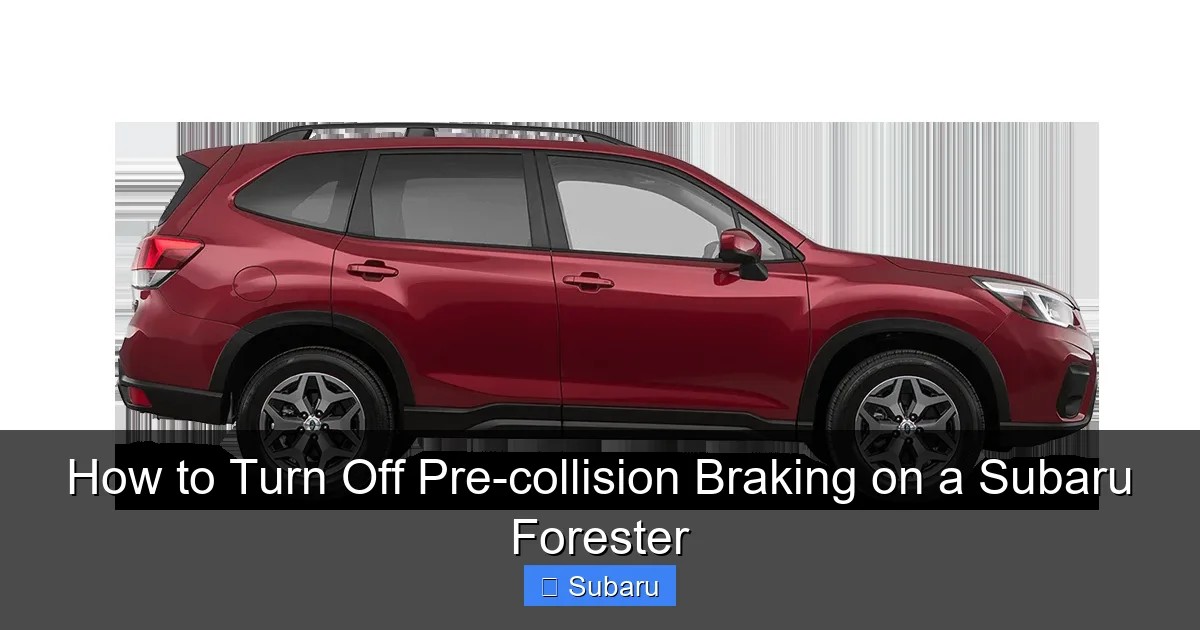
Visual guide about How to Turn Off Pre-collision Braking on a Subaru Forester
Image source: subaruhawaii.com
Now that you know how to turn off pre-collision braking, it’s crucial to understand when and how to use this feature responsibly. Disabling a safety system—even temporarily—comes with risks. Here are some best practices to keep in mind.
Only Disable When Necessary
The first rule is simple: don’t turn off pre-collision braking unless you have a good reason. This isn’t like turning off traction control for a little fun on a snowy road. Pre-collision braking is there to protect you in life-threatening situations. Disabling it unnecessarily increases your risk of a collision.
Ask yourself: *Do I really need to turn this off?* If you’re just annoyed by a few false alerts, it might be better to adjust your driving or clean the sensors instead. But if you’re in a situation where the system is actively interfering with safe operation—like off-roading or navigating a tight space—then temporary deactivation is justified.
Clean the Sensors First
Before disabling the system, check the camera lenses near the rearview mirror. Dirt, snow, ice, or even bug splatter can block the view and cause false alerts. A quick wipe with a microfiber cloth can often resolve the issue without needing to turn off the feature.
Also, make sure the windshield is clean and free of cracks or chips near the camera area. Even small damage can distort the camera’s view and affect performance.
Re-Enable Immediately After Use
Once you’re back on regular roads, turn the system back on—or better yet, let it reactivate automatically when you restart the car. Don’t assume you’ll remember to do it later. Make it a habit to check that pre-collision braking is active before driving in traffic.
You can usually confirm the status by looking at the instrument cluster. A green “EyeSight” or “Pre-Collision” icon means the system is on. If it’s off or amber, the feature is disabled.
Be Extra Cautious When Disabled
When pre-collision braking is off, you’re relying entirely on your own reflexes and judgment. That means you need to be more alert, maintain a safe following distance, and anticipate potential hazards.
For example, if you’re driving in heavy traffic with the system off, you should leave more space between you and the car ahead. You won’t have that automatic backup if you’re distracted or slow to react.
Educate Passengers and Family Members
If other people drive your Forester—like a spouse, teen driver, or friend—make sure they understand how and why to disable pre-collision braking. Leave a note in the glove box or share this article with them. The last thing you want is for someone to turn off the system and forget to turn it back on.
Consider a Professional Check
If you find yourself frequently needing to disable pre-collision braking, it might be a sign that the system isn’t working properly. Maybe the sensors are misaligned, the software needs an update, or there’s a hardware issue. In that case, visit a Subaru dealership for a diagnostic check. It’s better to fix the root cause than to disable a safety feature long-term.
Common Misconceptions About Disabling Pre-Collision Braking
There’s a lot of misinformation out there about turning off safety features like pre-collision braking. Let’s clear up some of the most common myths.
Myth: You Can Permanently Disable It
False. Subaru does not allow permanent disabling of pre-collision braking. The system is designed to reset every time you start the car. This ensures that you’re always protected during normal driving. If you’re looking for a way to “permanently” turn it off, you’re out of luck—and that’s a good thing for your safety.
Myth: Turning It Off Improves Performance
Not really. Some drivers believe that disabling pre-collision braking makes the car more responsive or “sportier.” But in reality, the system only intervenes when it detects a real threat. Under normal driving, it doesn’t affect acceleration, braking feel, or handling. Turning it off won’t make your Forester faster or more fun to drive.
Myth: It Drains the Battery
No. Pre-collision braking uses the car’s existing electrical system and doesn’t draw significant power. Disabling it won’t improve fuel economy or extend battery life. The energy used by the cameras and processors is minimal compared to systems like air conditioning or headlights.
Myth: It’s Easy to Forget It’s Off
Actually, Subaru has built-in reminders. When you disable pre-collision braking, the system often displays a warning message on the dashboard. Additionally, the feature reactivates automatically on restart, so you’re unlikely to drive around with it off by accident.
Myth: All Subaru Models Have the Same Process
Not quite. While the general idea is similar, the exact steps vary by model year and trim. A 2015 Forester won’t have the same menu layout as a 2023 model. Always check your owner’s manual or consult a Subaru dealer if you’re unsure.
Final Thoughts: Balancing Safety and Practicality
At the end of the day, the Subaru Forester’s pre-collision braking system is one of the reasons it earns top safety ratings year after year. It’s a smart, reliable feature that has saved countless lives and prevented countless accidents.
But like any technology, it’s not perfect. There are rare situations where it might interfere with your driving—especially in off-road, extreme weather, or tight-space scenarios. That’s why Subaru gives you the option to disable it temporarily.
The key is to use this feature wisely. Turn it off only when necessary, clean your sensors regularly, and always re-enable it for everyday driving. Think of it like wearing a seatbelt: you wouldn’t drive without one, even if it’s uncomfortable sometimes. Pre-collision braking is the same—it’s there to protect you, even when you don’t realize you need it.
So the next time you’re crawling through a muddy trail or squeezing into a tight parking spot, feel free to disable pre-collision braking. Just remember to turn it back on when you’re back on the road. Your safety—and the safety of others—depends on it.
Frequently Asked Questions
Can I permanently turn off pre-collision braking on my Subaru Forester?
No, you cannot permanently disable pre-collision braking. Subaru designed the system to reset to “on” every time you restart the vehicle. This ensures the safety feature is active during normal driving conditions.
Will turning off pre-collision braking improve my car’s performance?
No, disabling the system won’t improve acceleration, handling, or fuel economy. Pre-collision braking only activates during potential collisions and doesn’t affect normal driving performance.
How do I know if pre-collision braking is active?
Check the instrument cluster for a green “EyeSight” or “Pre-Collision” icon. If the light is off or amber, the feature is disabled. You can also check the status in the vehicle settings menu.
What should I do if pre-collision braking activates unexpectedly?
First, check if the camera lenses near the rearview mirror are dirty or obstructed. Clean them with a microfiber cloth. If the issue persists, visit a Subaru dealer for a system diagnostic.
Is it safe to drive with pre-collision braking turned off?
It’s safe only in specific situations like off-roading or tight parking. For everyday driving, always keep the system enabled to maximize safety and collision prevention.
Does disabling pre-collision braking void my warranty?
No, temporarily turning off the feature does not void your warranty. However, intentionally damaging or tampering with the system could affect coverage. Always follow Subaru’s guidelines.