
Where Is the Tpms Reset Button on a 2011 Toyota Corolla?

Finding the TPMS reset button on a 2011 Toyota Corolla is straightforward once you know where to look. It’s located inside the driver’s side footwell, near the center console. However, you can only reset it manually after addressing the underlying tire pressure issue and following a specific ignition sequence. This guide provides the exact location, step-by-step reset instructions, and crucial context about when a reset is actually required versus when the system will auto-relearn.
Key Takeaways
- The TPMS reset button is not on the dashboard or door pillar. It’s hidden inside the driver’s footwell area, typically behind a small plastic cover or near the center console trim.
- You must correct tire pressures first. The reset button only tells the system to start learning new pressures; it does not fix a leak or low tire. Inflate all tires to the placard PSI before proceeding.
- A manual reset is only needed after tire rotation or sensor replacement. For most pressure adjustments due to temperature, the 2011 Corolla’s direct TPMS will automatically re-learn after 30 minutes of driving.
- The reset process requires a specific key-on/engine-off sequence. You must turn the key to “ON” (not start), press and hold the button until the TPMS light blinks three times, then release and drive.
- If the light persists after a correct reset, there is a problem. A continuous or returning TPMS warning light indicates a faulty sensor, dead sensor battery, or a damaged tire that needs professional diagnosis.
- Location can vary slightly by trim. While the general area is consistent, the exact button placement might differ between a base LE and a fully loaded XRS. Always consult your owner’s manual for your specific VIN’s definitive guide.
- Safety is the priority. A functioning TPMS is a critical safety system. Never ignore its warnings, and ensure your spare tire (if equipped with a sensor) is also at the correct pressure.
[FEATURED_IMAGE_PLACEHOLDER]
📑 Table of Contents
- Understanding Your 2011 Toyota Corolla’s TPMS
- The Exact Location: A Step-by-Step Visual Guide
- When and Why You Actually Need to Press It
- The Step-by-Step Reset Procedure for a 2011 Corolla
- Troubleshooting: When the Reset “Doesn’t Work”
- Important Safety Considerations and Best Practices
- Conclusion: Knowledge is Power (and Safety)
Understanding Your 2011 Toyota Corolla’s TPMS
Let’s start with the basics. The Tire Pressure Monitoring System (TPMS) in your 2011 Toyota Corolla is a federally mandated safety feature designed to warn you when one or more tires fall significantly below their recommended pressure. It’s not a luxury; it’s a critical tool for maintaining optimal handling, tire wear, fuel economy, and safety. The system uses small radio transmitters (sensors) mounted inside each valve stem (on the wheels, not the spare) that broadcast pressure and temperature data to your car’s computer. When a sensor reads a pressure 25% or more below the recommended level, the iconic yellow tire symbol with an exclamation point on your dashboard will illuminate steadily. If it starts blinking, that’s a separate, more urgent signal often indicating a system fault or sensor failure.
Now, here’s the key point that confuses most Corolla owners: the TPMS is designed to automatically re-learn new pressure values after you’ve corrected a low tire. However, there are two specific scenarios where you, the driver, must manually initiate a “reset” or “re-learn” procedure: 1) After you have rotated the tires (since the sensors have moved to new wheel positions), and 2) After replacing one or more TPMS sensors. For everyday temperature-related pressure fluctuations, simply adding air should cause the light to turn off on its own after 20-30 minutes of driving at speeds above 25 mph. The confusion around “where is the reset button?” stems from people experiencing a persistent light after a rotation or sensor replacement and needing to trigger this manual re-learn process.
The Exact Location: A Step-by-Step Visual Guide
Alright, let’s get to the heart of the matter. Forget looking on the dash, the steering wheel column, or the door jambs. On the 2011 Toyota Corolla, the TPMS reset button is located in the driver’s footwell area. It’s part of the Interior Electrical Center, often sharing space with the OBD-II port connector. Here’s how to find it with surgical precision.
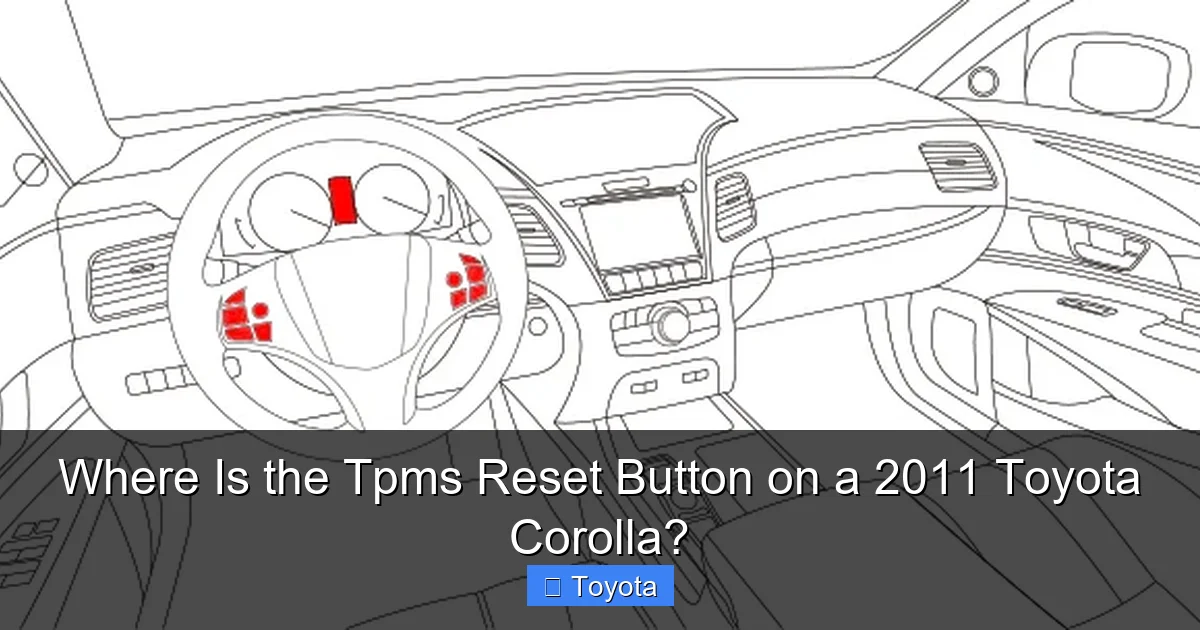
Visual guide about Where Is the Tpms Reset Button on a 2011 Toyota Corolla?
Image source: tiregrades.com
Finding the Button: The “Kneel and Look” Method
1. Sit in the driver’s seat and open the driver’s side door. This gives you better light and access.
2. Look down at the area just to the left of the brake and clutch pedals (right under the dashboard edge). This is the driver’s footwell.
3. Scan the plastic trim panel that covers the lower part of the dashboard and the area behind it. You are not looking for a large, obvious button.
4. Search for a small, usually black or dark gray, button. It’s typically about the size of a pencil eraser or a small pea. It may be recessed. On many 2011 Corollas, it’s located behind a small, rectangular plastic cover or flap that you can pry open gently with a flat-head screwdriver or even a fingernail. The cover might have a tiny symbol that looks like an exclamation point inside a tire or simply be unmarked.
5. The button is often positioned near the top of this cavity, closest to the main dashboard structure, not the floor. It’s wired to a harness that connects to the main body electronics.
Pro Tip: If you have the factory owner’s manual (a physical book, not the quick guide), it will have a diagram on the page about the TPMS. That diagram is your ultimate authority. If you don’t have it, a quick online search for “2011 Toyota Corolla TPMS reset button location” will yield dozens of photos and videos from fellow owners showing the exact spot. This is one of those “once you see it, you’ll never unsee it” moments. For comparison, the location on a Toyota Camry from the same era is remarkably similar, following Toyota’s general interior layout philosophy for compact and midsize cars of that generation.
When and Why You Actually Need to Press It
This is the most important section. Pressing that little button at the wrong time is useless and can cause confusion. You only need to perform a manual reset in two specific circumstances:
Visual guide about Where Is the Tpms Reset Button on a 2011 Toyota Corolla?
Image source: turbochaos.com
Scenario 1: After a Tire Rotation
This is the #1 reason. Your Corolla’s TPMS is “direct” and “identified.” This means each sensor has a unique ID code, and the car’s computer remembers which sensor is on which wheel (e.g., Sensor ID #A is for Front Left). When you rotate the tires, the physical sensors move to new wheel positions. The car still thinks Sensor #A is at Front Left, but it’s now at Rear Right. The system gets confused because the pressure signal from the “new” Front Left (which is actually Sensor #B) doesn’t match the stored ID for that position. The TPMS warning light will illuminate. By performing the reset procedure, you are telling the car: “Okay, start a new learning cycle. Pay attention to the four sensor signals you’re receiving right now, and assign them to the four wheel positions as the car is currently sitting.” You must do this immediately after the rotation is complete and all tires are inflated to the correct pressure.
Scenario 2: After Replacing a TPMS Sensor or Sensor Battery
TPMS sensor batteries last about 7-10 years. If a sensor dies or is physically damaged and needs replacement, the new sensor has a different ID code. The car’s computer won’t recognize it until you initiate the re-learn procedure. Similarly, if you have a sensor replaced at a tire shop and they don’t reset the system (many don’t, as it’s a separate service), you’ll get a light. You must reset it to teach the car about the new sensor’s ID.
What you DON’T need to reset for: Seasonal temperature changes. If it gets colder and your tire pressure drops, simply add air to the recommended PSI (found on the driver’s door jamb sticker). The system should automatically turn the light off within 20-30 minutes of driving. If it doesn’t, you likely have a slow leak that needs fixing, not a reset. Also, you do not need to reset after just adding air to a single low tire if no rotation or sensor work was done.
The Step-by-Step Reset Procedure for a 2011 Corolla
Now that you’ve found the button and confirmed you have a valid reason to reset (rotation or sensor replacement), follow these steps exactly. Timing is everything.
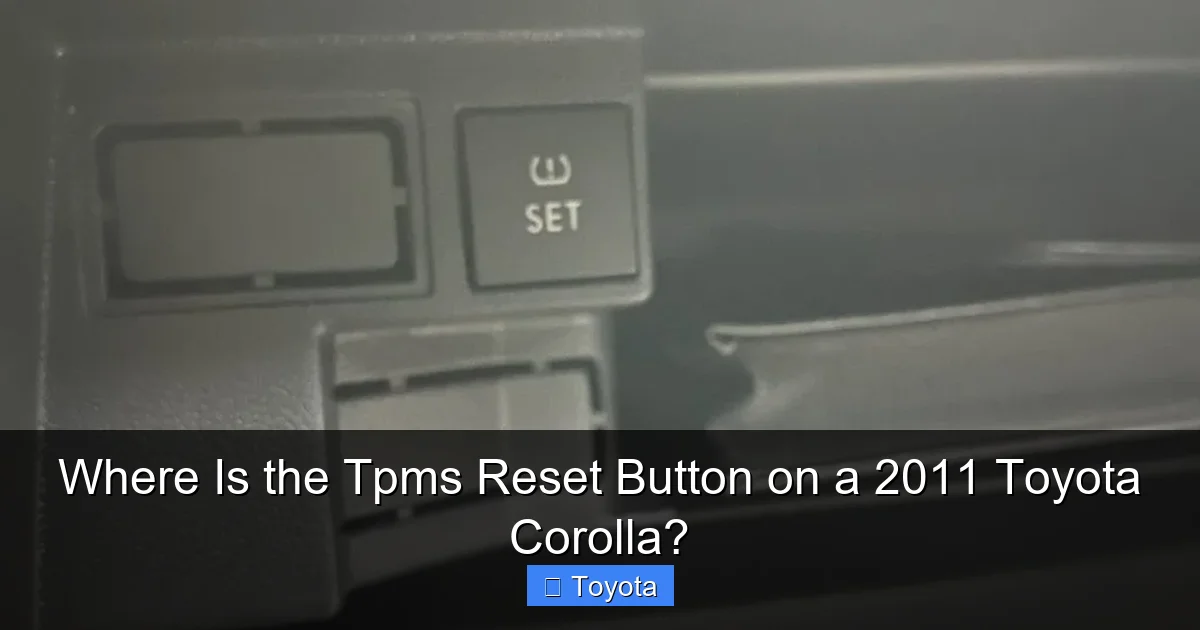
Visual guide about Where Is the Tpms Reset Button on a 2011 Toyota Corolla?
Image source: tpmsreset.com
- Prepare the Vehicle: Ensure all four tires are inflated to the exact pressure specified on the driver’s door jamb sticker (typically around 32 PSI for the LE and XRS, but always check your sticker). This includes the spare if it’s a full-size spare with a sensor (many Corolla spares are temporary and don’t have sensors). The vehicle must be parked, with the ignition OFF.
- Turn the Ignition to the “ON” Position: Insert your key and turn it to the “ON” or “RUN” position (the position right before you start the engine, where all dashboard lights come on). Do not start the engine. The engine should be off.
- Locate and Press the Reset Button: With the ignition on, firmly press and hold the TPMS reset button. You should feel a definite click.
- Watch the TPMS Light: Continue holding the button. After about 2-3 seconds, the TPMS warning light on the dashboard will begin to blink. Keep holding the button until the light blinks three times. Once it blinks the third time, release the button. This blink pattern confirms the reset command has been accepted and the re-learn mode is active.
- Turn the Ignition OFF: After releasing the button, turn the key to the OFF position.
- Drive the Vehicle: Start the engine and drive normally. The system needs time to communicate with all four sensors and confirm their new positions. You must drive at a speed above 25 mph for at least 20-30 minutes. During this time, the TPMS light may remain on. This is normal. After the re-learn is complete, the light should turn off on its own. If it continues to blink or stays solid after 30 minutes of driving, there is a problem with one of the sensors or the system.
Important Note: Some later-model vehicles require you to cycle the ignition on/off multiple times or use a scan tool. The 2011 Corolla’s procedure is purely manual via the button and is relatively simple. If your light returns immediately after a reset, you likely have a damaged sensor or a tire with a slow leak that you didn’t detect. In this case, you need to visit a tire shop for a diagnostic scan tool that can read individual sensor IDs and pressures. This is a common issue, and many owners find that a shop like Discount Tire or Tire Kingdom will perform this diagnostic for free or a small fee.
Troubleshooting: When the Reset “Doesn’t Work”
You followed all the steps, drove for 30 minutes, and the light is still on. Now what? Don’t panic. Let’s diagnose logically.
The Light is Still Solid After Driving
This means the re-learn failed. The most common causes are:
- A Dead or Weak Sensor Battery: TPMS sensor batteries are not serviceable; they are sealed inside the sensor. If a battery is at the end of its life (7-10 years), it will transmit a weak or intermittent signal, causing the system to fail the re-learn. The sensor must be replaced.
- Physical Sensor Damage: Did you hit a curb or pothole? A sensor can be damaged from the inside (antenna broken) or the valve stem can be bent. A visual inspection might not reveal this; a professional scan tool is needed.
- A Tire with a Slow Leak: You corrected the pressure, but the tire is slowly losing air again (a nail, bead leak, etc.). The system sees the pressure dropping during the re-learn cycle and aborts. You must fix the leak first.
- Incorrect Reset Procedure: Did you turn the key to ON (not start)? Did you hold the button until the light blinked three times? Did you drive for a full 30 minutes above 25 mph? Double-check your steps.
The Light is Blinking Rapidly
A rapidly blinking TPMS light (after the initial startup bulb check) is almost always a system fault, not a low-pressure warning. This could indicate:
- One or more sensors are completely non-responsive (dead battery or major damage).
- There is interference from a nearby device (rare).
- The vehicle’s TPMS control module has failed (very rare).
Solution: You need a professional scan tool. A tire shop will connect a tool that can “wake up” each sensor individually, read its ID code, battery life, and pressure. This tells them exactly which wheel is the problem. They can then replace the faulty sensor and perform the re-learn properly. For broader context on reset procedures, the process for a Subaru Legacy is different, often requiring a button press while the car is in a specific “learn mode,” highlighting how procedures vary by manufacturer.
Important Safety Considerations and Best Practices
Your TPMS is a backup system, not a substitute for proper tire maintenance. Here’s how to treat it right.
Don’t Ignore the Light, But Don’t Panic Either
A solid TPMS light means one tire is 25% or more underinflated. This is a safety issue. Reduced pressure increases rolling resistance (hurting fuel economy), causes excessive and uneven tire wear (ruining your tires prematurely), and, most importantly, degrades handling and braking performance, especially in wet conditions. Pull over safely as soon as you can and check your pressures with a handheld gauge. The dashboard light is an estimate; your manual gauge is the truth. Inflate to the door jamb placard pressure, not the number on the tire sidewall (that’s the max pressure).
Know Your Spare
Check your owner’s manual. If your Corolla has a temporary “donut” spare tire, it likely does not have a TPMS sensor. Installing it will cause the TPMS light to come on and stay on because the system expects four signals. This is normal. When you put your regular tire back on, the system should automatically re-learn within 30 minutes of driving. If you have a full-size spare that matches your other four wheels and has a sensor, you must include it in the rotation and pressure checks. If you ever need to use the spare, you may need to perform a reset when the regular tire is remounted.
Regular Maintenance is Key
Get in the habit of checking your tire pressures (including the spare) at least once a month and before long trips. Use a good-quality digital or dial gauge. This simple habit prevents TPMS warnings, extends tire life, and maximizes fuel efficiency. When you get your oil changed, ask the technician to check and adjust your tire pressures. Many shops will reset the TPMS for you after a rotation as part of the service—always confirm this. If you’re doing it yourself, the process we’ve detailed is all you need. For other common Toyota maintenance questions, like resetting the maintenance light on a Highlander, the principles of accessing the interior electrical components are similar.
Conclusion: Knowledge is Power (and Safety)
So, where is the TPMS reset button on a 2011 Toyota Corolla? It’s tucked away in the driver’s footwell, behind a small access panel, waiting to be pressed. But more importantly, you now understand why you would press it, when it’s necessary, and what to do if the process doesn’t go smoothly. Remember this hierarchy: 1) Always correct the underlying tire pressure issue first. 2) Only manually reset after a tire rotation or sensor replacement. 3) For everyday pressure changes, let the car’s automatic system do its job over 30 minutes of driving. 4) If the light persists after a correct reset, seek professional help with a scan tool. Treating your TPMS with respect isn’t just about turning off a dashboard light; it’s about ensuring your most critical contact points with the road—your tires—are always in their safest, most efficient state. Keep this guide bookmarked, find that button, and drive with confidence.
Frequently Asked Questions
Can I reset the TPMS on a 2011 Corolla without driving afterward?
No. The reset procedure initiates a re-learn mode, but the system must actually communicate with all four moving sensors to confirm their IDs and pressures. This requires driving at speeds above 25 mph for 20-30 minutes. The light will typically stay on during this learning period and should turn off once complete.
What if I can’t find the reset button at all?
First, consult your physical owner’s manual—it has the definitive diagram. If that’s unavailable, search online for “2011 Toyota Corolla TPMS reset button location photo” to see dozens of real-world images. It’s a small black button in the driver’s footwell, often behind a removable plastic cover near the center console. If you still cannot find it, a dealership or tire shop can quickly point it out or perform the reset for you using their scan tool.
Will disconnecting the battery reset the TPMS?
No. Disconnecting the battery will reset the car’s clock and radio presets, but it will not clear or reset the TPMS system on a 2011 Corolla. The TPMS control module has its own memory that retains sensor IDs even when the main battery is disconnected. You must use the dedicated reset button procedure.
My TPMS light is blinking, not solid. What does that mean?
A blinking TPMS light (after the initial startup check) indicates a system fault, not a low-pressure warning. This usually means one of the sensors is not communicating at all—often due to a dead internal battery or severe physical damage. It requires a professional scan tool to diagnose which sensor is faulty and needs replacement.
Do I need to reset the TPMS after changing a flat tire and putting on the spare?
It depends on your spare. If you have a temporary “donut” spare, it almost certainly does not have a TPMS sensor. Installing it will cause the TPMS light to come on and stay on because the system expects four signals. This is normal. When you remount your regular, sensor-equipped tire, drive for 30 minutes and the system should automatically re-learn and turn the light off. If you have a full-size, sensor-equipped spare, you should treat it as a regular wheel and ensure it’s at the correct pressure; the system should continue working without a reset.
Is the reset button the same on all 2011 Corolla trims (LE, S, XRS)?
Yes, the location and function of the TPMS reset button are identical across all 2011 Corolla trims. The button is part of the standard interior electrical package. The only minor variation might be the exact shape or color of the plastic access cover, but the button itself and its procedure are the same for every model.
