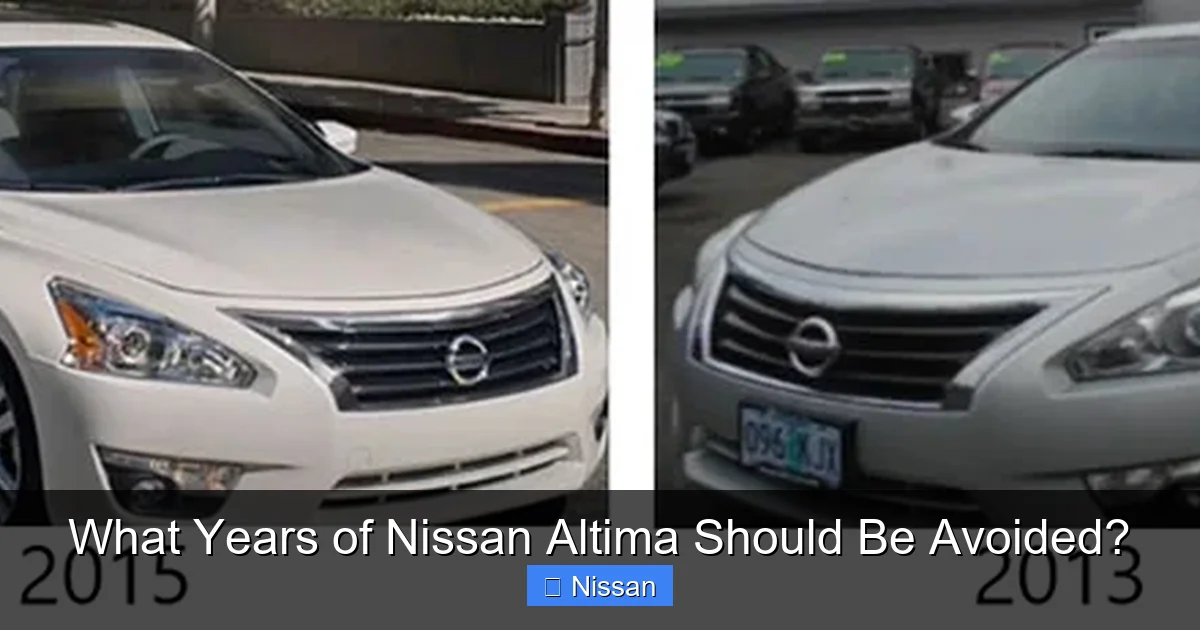
What Years of Nissan Altima Should Be Avoided?

Contents
- 1 Key Takeaways
- 2 📑 Table of Contents
- 3 What Years of Nissan Altima Should Be Avoided?
- 4 Why Some Nissan Altima Years Are Problematic
- 5 The Worst Nissan Altima Years: 2002–2006
- 6 CVT Nightmare: 2007–2012 Nissan Altima
- 7 Partial Recovery: 2013–2015 Nissan Altima
- 8 Better but Not Perfect: 2016–2018 Nissan Altima
- 9 Modern Altima: 2019–2020 and Beyond
- 10 How to Avoid a Lemon: Tips for Buying a Used Altima
- 11 Conclusion
- 12 Frequently Asked Questions


Buying a used Nissan Altima? Some model years are best avoided due to transmission failures, engine problems, and safety recalls. This guide highlights the worst years and what to watch for.
Key Takeaways
- 2002–2006 Nissan Altima: Known for CVT transmission failures and engine oil consumption issues, especially in V6 models.
- 2007–2012 Nissan Altima: Prone to CVT overheating, jerking, and sudden loss of power; high repair costs common.
- 2013–2015 Nissan Altima: Improved reliability but still faces CVT concerns and premature brake wear.
- 2016–2018 Nissan Altima: Better overall, but some models suffer from infotainment glitches and suspension noise.
- 2019–2020 Nissan Altima: Strong safety ratings and fuel economy, but early reports of transmission hesitation exist.
- Always check vehicle history: Use VIN reports to uncover accidents, recalls, and maintenance records before buying.
- Test drive and inspect: Listen for transmission whine, check for dashboard warning lights, and verify service history.
📑 Table of Contents
- What Years of Nissan Altima Should Be Avoided?
- Why Some Nissan Altima Years Are Problematic
- The Worst Nissan Altima Years: 2002–2006
- CVT Nightmare: 2007–2012 Nissan Altima
- Partial Recovery: 2013–2015 Nissan Altima
- Better but Not Perfect: 2016–2018 Nissan Altima
- Modern Altima: 2019–2020 and Beyond
- How to Avoid a Lemon: Tips for Buying a Used Altima
- Conclusion
What Years of Nissan Altima Should Be Avoided?
If you’re in the market for a used Nissan Altima, you’re likely drawn to its reputation for comfort, fuel efficiency, and affordability. The Altima has been a staple in the midsize sedan segment for over two decades, offering a smooth ride and modern features at a competitive price. But not every model year lives up to the hype. Some years of the Nissan Altima have earned a reputation for mechanical headaches, costly repairs, and frustrating reliability issues.
While Nissan has made significant improvements over the years, certain generations of the Altima stand out as problematic. From transmission failures to engine oil leaks and safety recalls, these flaws can turn what seems like a great deal into a money pit. Whether you’re shopping at a dealership or browsing private listings, knowing which years to avoid can save you thousands in repairs and countless hours of frustration.
This guide dives deep into the Nissan Altima’s history, spotlighting the model years that are best skipped. We’ll explore the most common problems, explain why they happen, and offer practical tips to help you make a smart, informed decision. By the end, you’ll know exactly which Altima years to steer clear of—and which ones might still be worth considering.
Why Some Nissan Altima Years Are Problematic
Visual guide about What Years of Nissan Altima Should Be Avoided?
Image source: bryansgarage.com
Not all cars are created equal—even within the same model line. The Nissan Altima, like many vehicles, has seen its share of ups and downs across different generations. Some years are praised for their reliability and innovation, while others are remembered for chronic mechanical issues. Understanding why certain model years are problematic starts with looking at design changes, manufacturing decisions, and real-world owner experiences.
One of the biggest culprits behind the Altima’s reliability woes is the Continuously Variable Transmission (CVT). Introduced widely in the mid-2000s, the CVT was marketed as a fuel-efficient alternative to traditional automatics. It promised smoother acceleration and better gas mileage. But in practice, many early CVTs in the Altima were prone to overheating, jerking, and complete failure—often before 100,000 miles. These issues were especially common in the 2007–2012 models, where the transmission could fail without warning, leaving drivers stranded.
Another recurring issue across several model years is excessive oil consumption. Some Altima engines, particularly the V6 versions from the early 2000s, were known to burn through oil at an alarming rate. This wasn’t just a minor inconvenience—it could lead to engine damage if not monitored closely. Drivers reported needing to add a quart of oil every few thousand miles, and in severe cases, the engine would seize due to low oil levels.
Additionally, Nissan faced several safety recalls over the years, some of which affected large numbers of Altima vehicles. These included problems with airbags, braking systems, and electrical components. While recalls are meant to fix issues, they often indicate underlying design flaws that may not be fully resolved—even after repairs.
So, while the Altima has evolved into a more refined and reliable sedan in recent years, its past is littered with cautionary tales. Knowing which years to avoid isn’t about bashing the brand—it’s about protecting your investment and ensuring you get a car that won’t leave you stranded or buried in repair bills.
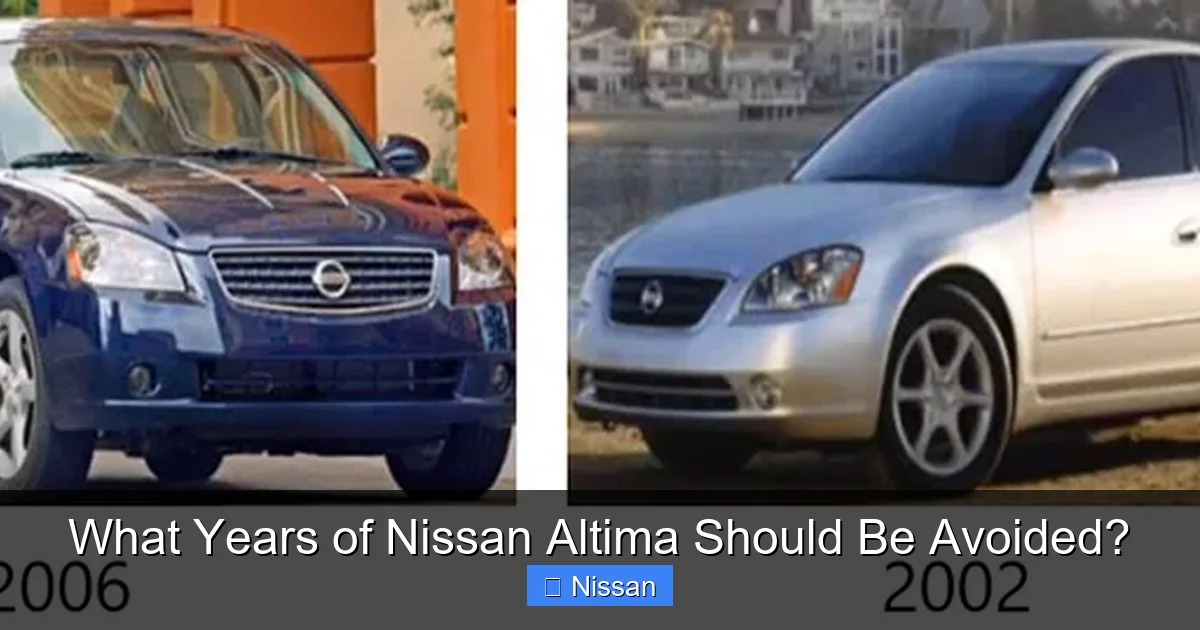
The Worst Nissan Altima Years: 2002–2006
Visual guide about What Years of Nissan Altima Should Be Avoided?
Image source: bryansgarage.com
If you’re considering a used Nissan Altima from the early 2000s, proceed with caution. The 2002–2006 model years are widely regarded as some of the most problematic in the Altima’s history. While these cars offered a spacious interior, decent fuel economy, and a comfortable ride, they were plagued by mechanical issues that often outweighed their benefits.
Transmission Troubles in Early Models
One of the biggest red flags for the 2002–2006 Altima is the automatic transmission. While these models didn’t yet use the CVT (that came later), they were equipped with traditional 4-speed and 5-speed automatics that still had their share of problems. Many owners reported harsh shifting, slipping gears, and eventual transmission failure—often before hitting 100,000 miles.
The issue was particularly common in higher-mileage vehicles, where wear and tear took a toll on internal components. Replacing a transmission can cost upwards of $3,000, making it a deal-breaker for many used car buyers. Even if the car seems to run fine during a test drive, underlying transmission wear may not be immediately apparent.
Engine Oil Consumption Issues
Another major concern during this period was excessive oil consumption, especially in the 3.5L V6 engine. This engine, while powerful and smooth, was notorious for burning oil at a rapid rate. Some drivers found themselves adding a quart of oil every 1,000 to 2,000 miles. Over time, this could lead to low oil levels, increased engine wear, and even catastrophic failure if left unchecked.
Nissan eventually acknowledged the issue and extended warranties for some affected vehicles, but many owners were left dealing with the problem out of pocket. The root cause was often traced to faulty piston rings or valve seals, which allowed oil to seep into the combustion chamber and burn off.
Safety and Build Quality Concerns
In addition to mechanical flaws, the early 2000s Altima had some build quality issues. Complaints about interior trim pieces coming loose, electrical glitches, and premature wear on suspension components were not uncommon. While these problems weren’t as severe as transmission or engine failures, they added to the overall sense that these cars weren’t built to last.
Safety ratings were decent for the time, but the Altima didn’t stand out as a top performer in crash tests. The lack of advanced safety features—like electronic stability control or side airbags—was also a drawback compared to competitors.
Should You Avoid These Years?
In short, yes—most experts recommend avoiding the 2002–2006 Nissan Altima unless you’re getting it for parts or as a project car. The risk of major repairs is simply too high, especially if the vehicle has over 100,000 miles. If you do consider one, make sure to have a trusted mechanic perform a thorough inspection and check the vehicle’s maintenance history. Look for signs of oil leaks, transmission slipping, and consistent oil top-offs.
Even then, the peace of mind you’ll gain from choosing a more reliable model year is often worth the extra cost. The Altima improved significantly in later years, so skipping these early models is usually the smart move.
CVT Nightmare: 2007–2012 Nissan Altima

Visual guide about What Years of Nissan Altima Should Be Avoided?
Image source: autocareaids.com
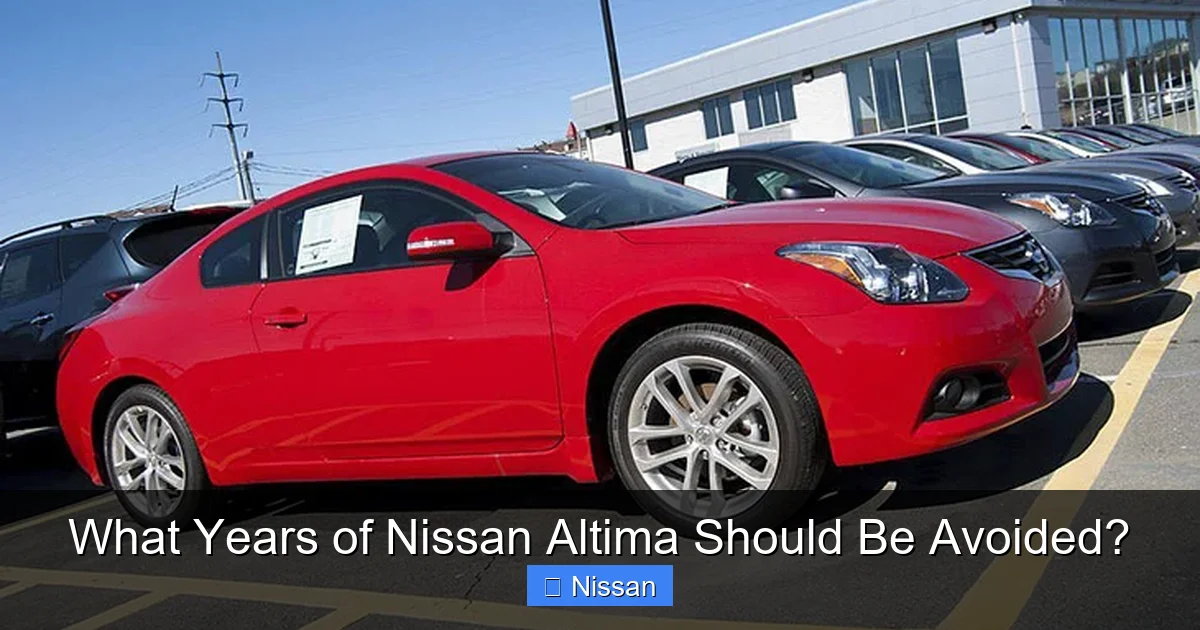
The 2007–2012 Nissan Altima marked a major shift for the model, introducing a sleeker design, improved fuel economy, and—most notably—the widespread use of the Continuously Variable Transmission (CVT). While these changes sounded great on paper, the reality was far from perfect. This period is now infamous among Altima owners for one reason: CVT failures.
The Rise and Fall of the CVT
Nissan rolled out the CVT across its lineup during this time, promising smoother acceleration and better gas mileage. In theory, it was a win-win. But in practice, the CVT in the 2007–2012 Altima was anything but reliable. Owners reported a range of issues, including jerking during acceleration, delayed response when shifting from park to drive, and a constant whining noise from under the hood.
The biggest problem, however, was overheating. The CVT was prone to overheating under normal driving conditions—especially in hot climates or during stop-and-go traffic. When the transmission overheated, it would often go into “limp mode,” limiting speed and power to protect itself. In many cases, this happened repeatedly, and eventually, the transmission would fail completely.
Real-World Examples of CVT Failures
Take the case of a 2010 Altima owner in Phoenix, Arizona. After just 85,000 miles, her car began jerking violently when accelerating from a stop. The check engine light came on, and a diagnostic revealed transmission overheating. The repair shop recommended a full CVT replacement—costing over $4,000. She later learned that her VIN was part of a class-action lawsuit against Nissan for CVT defects.
Stories like this were common. Many owners found that their transmissions failed between 80,000 and 120,000 miles, often with little warning. Even after repairs, some experienced recurring issues, suggesting that the underlying design flaws weren’t fully addressed.
Class-Action Lawsuits and Recalls
The widespread nature of these problems led to multiple class-action lawsuits against Nissan. Plaintiffs argued that the company knew about the CVT defects but failed to disclose them to consumers. In some cases, settlements offered partial reimbursement for repairs or buybacks, but many owners still ended up paying out of pocket.
Nissan did issue technical service bulletins (TSBs) and extended warranties for some affected vehicles, but these measures didn’t solve the core issue. The CVT remained a weak point in the Altima’s design throughout this generation.
Other Issues in the 2007–2012 Models
Beyond the transmission, these Altima years also faced other reliability concerns. Some models experienced premature brake wear, with rotors and pads needing replacement far sooner than expected. Electrical issues, such as malfunctioning dashboard lights and faulty window switches, were also reported.
Despite these flaws, the 2007–2012 Altima wasn’t all bad. The interior was more refined than earlier models, and the ride quality was praised for its comfort. Fuel economy was also competitive, especially with the 4-cylinder engine. But the transmission problems overshadowed these positives for many buyers.
Verdict: Avoid Unless You’re Prepared for Risk
Given the high rate of CVT failures and the cost of repairs, most experts recommend avoiding the 2007–2012 Nissan Altima. If you’re set on this generation, look for a well-maintained example with a documented service history and consider purchasing an extended warranty. But even then, the risk remains significant.
For most buyers, it’s smarter to look at newer models where Nissan has made improvements to the CVT and overall reliability.
Partial Recovery: 2013–2015 Nissan Altima
The 2013–2015 Nissan Altima represents a turning point for the model. After the disastrous CVT issues of the previous generation, Nissan made significant updates to improve reliability and performance. While these years are far from perfect, they’re a noticeable step up from the 2007–2012 models and are generally considered safer bets for used car buyers.
Improved CVT and Engine Performance
One of the biggest changes in the 2013 redesign was a revised CVT. Nissan claimed to have strengthened the transmission and improved its cooling system to prevent overheating. In practice, many owners reported fewer issues compared to earlier models. While CVT problems didn’t disappear entirely, they became less frequent and less severe.
The 2.5L 4-cylinder engine also saw refinements, offering better fuel economy and smoother operation. The 3.5L V6 remained available but was less common, and its oil consumption issues were somewhat reduced—though not eliminated.
Common Problems in 2013–2015 Models
Despite improvements, these Altima years still had their share of issues. The most common complaint was premature brake wear. Many owners found that their brake pads and rotors needed replacement by 30,000 to 40,000 miles—far earlier than expected. This was often attributed to aggressive brake pad compounds and lightweight rotors that wore down quickly.
Another issue was the infotainment system. Early versions of Nissan’s touchscreen interface were slow to respond and prone to freezing. Bluetooth connectivity problems and glitchy navigation were also reported. While not mechanical failures, these issues could be frustrating and costly to fix.
Safety and Reliability Ratings
On the positive side, the 2013–2015 Altima earned strong safety ratings from the IIHS and NHTSA. It received top marks in crash tests and came standard with features like electronic stability control and multiple airbags. Reliability scores from Consumer Reports and J.D. Power were also improved, placing the Altima above average for its class.
Should You Consider These Years?
The 2013–2015 Nissan Altima is a mixed bag. It’s a significant improvement over the previous generation, but it’s not without flaws. If you’re considering one, focus on well-maintained examples with low mileage and a clean service history. Pay special attention to brake condition and infotainment functionality.
For buyers who want a balance of affordability and reliability, these years can be a decent choice—especially if you avoid high-mileage examples and budget for potential brake repairs.
Better but Not Perfect: 2016–2018 Nissan Altima
By the 2016 model year, Nissan had made further strides in refining the Altima. The 2016–2018 models are generally more reliable than their predecessors, with fewer reports of major mechanical failures. However, they’re not without their own set of issues.
Refined CVT and Smoother Ride
The CVT continued to improve, with better software calibration and enhanced durability. Most owners reported smooth, quiet operation with minimal jerking or overheating. Fuel economy remained a strong point, with the 2.5L engine achieving up to 38 mpg on the highway.
Common Complaints
The most frequent issues in these years were related to the infotainment system and suspension. Some drivers experienced glitches with the touchscreen, including slow response times and unresponsive buttons. Others reported a knocking or clunking noise from the rear suspension, especially over bumps.
Safety and Technology Upgrades
These models introduced advanced safety features like forward collision warning, automatic emergency braking, and blind-spot monitoring—especially on higher trims. These additions made the Altima more competitive in the safety-conscious midsize sedan market.
Verdict
The 2016–2018 Altima is a solid choice for used car buyers. While not flawless, it offers a good balance of reliability, features, and value. Just be sure to test the infotainment system and listen for suspension noise during your test drive.
Modern Altima: 2019–2020 and Beyond
The 2019 redesign brought a complete overhaul to the Altima, with a more aggressive design, improved handling, and advanced safety tech. The 2019–2020 models are among the best in the Altima’s history, with strong reliability ratings and few major recalls.
What’s Improved?
The new platform offered better ride quality, reduced road noise, and a more upscale interior. The CVT was further refined, and a new turbocharged 2.0L variable-compression engine became available, offering both power and efficiency.
Minor Issues
Some early reports mentioned transmission hesitation during light acceleration, but these were isolated and not widespread. Overall, these years are considered safe and reliable.
Final Recommendation
If you’re buying used, the 2019–2020 Altima is one of the best choices. It combines modern features, strong safety ratings, and improved reliability. Just be sure to check for any open recalls and verify the vehicle’s maintenance history.
How to Avoid a Lemon: Tips for Buying a Used Altima
No matter which year you choose, follow these tips to avoid a bad buy:
- Get a pre-purchase inspection: Have a trusted mechanic check the car before you buy.
- Check the VIN: Use services like Carfax or AutoCheck to uncover accidents, recalls, and service records.
- Test drive thoroughly: Listen for transmission noise, feel for jerking, and test all electronics.
- Review maintenance history: Look for regular oil changes, transmission fluid changes, and brake service.
- Consider an extended warranty: Especially for models with known issues.
Conclusion
The Nissan Altima has come a long way since its early days. While some model years are best avoided due to transmission failures, engine problems, and safety concerns, newer generations offer a much better ownership experience. By steering clear of the 2002–2006 and 2007–2012 models—and being cautious with the 2013–2015 years—you can find a reliable, fuel-efficient sedan that meets your needs.
Always do your research, inspect the vehicle carefully, and prioritize models with a clean history. With the right approach, you can enjoy all the benefits of a Nissan Altima without the headaches.
Frequently Asked Questions
What is the most unreliable Nissan Altima year?
The 2007–2012 Nissan Altima is widely considered the most unreliable due to widespread CVT transmission failures, overheating, and costly repairs. Many owners reported issues before 100,000 miles.
Are 2013–2015 Nissan Altimas reliable?
The 2013–2015 models are more reliable than earlier years but still face issues like premature brake wear and infotainment glitches. They’re a better choice if well-maintained.
Can a Nissan Altima last 200,000 miles?
Yes, but only with proper maintenance and if you avoid the problematic model years. Later models (2016 and newer) have a better chance of reaching high mileage.
What problems do 2016–2018 Nissan Altimas have?
Common issues include infotainment system glitches and rear suspension noise. These are generally minor and don’t affect drivability.
Is the 2019 Nissan Altima a good car?
Yes, the 2019 model is one of the best in the Altima’s history, with strong safety ratings, improved reliability, and modern features.
How can I check if a used Altima has transmission problems?
Listen for whining or jerking during acceleration, check for transmission fluid leaks, and review the service history for fluid changes. A pre-purchase inspection is highly recommended.