
What Years of Dodge Grand Caravan to Avoid

Not all Dodge Grand Caravan models are created equal. Some years are plagued by transmission failures, electrical problems, and poor build quality. This guide reveals the specific model years to steer clear of and why—so you can make a smarter, safer minivan purchase.
If you’re in the market for a used minivan, the Dodge Grand Caravan has long been a popular choice. It’s affordable, spacious, and packed with family-friendly features. But here’s the catch: not every model year is worth your hard-earned money. While the Grand Caravan has served millions of families well over the years, certain generations are riddled with mechanical flaws, safety recalls, and reliability nightmares.
Choosing the right year can mean the difference between a smooth, stress-free ride and a money pit on wheels. That’s why it’s crucial to know what years of Dodge Grand Caravan to avoid. In this guide, we’ll break down the worst model years, explain the most common problems, and help you identify which versions are safer bets. Whether you’re buying from a dealership or a private seller, this information could save you thousands in repairs and headaches down the road.
We’ll dive deep into transmission troubles, electrical gremlins, safety recalls, and real owner experiences. By the end, you’ll have a clear picture of which Grand Caravan years to skip—and which ones might actually be worth considering. Let’s get started.
Key Takeaways
- 2008–2010 models suffer from chronic transmission failures: These years are notorious for early transmission breakdowns, often before 100,000 miles, leading to expensive repairs.
- 2011–2013 models have recurring electrical and brake issues: Faulty wiring, malfunctioning sensors, and premature brake wear are common complaints among owners.
- 2014 model had significant airbag and safety recall problems: The 2014 Grand Caravan was involved in a major Takata airbag recall, raising serious safety concerns.
- 2017–2018 models face engine stalling and fuel system defects: Reports of sudden engine shutdowns and fuel pump failures make these years risky for daily drivers.
- High repair frequency lowers resale value: Models with known defects depreciate faster and cost more in long-term maintenance.
- Always check vehicle history and get a pre-purchase inspection: Even in “good” years, individual vehicles may have hidden problems—due diligence is essential.
- Consider 2015–2016 or 2019–2020 models as safer alternatives: These years generally offer better reliability, fewer recalls, and stronger owner satisfaction.
📑 Table of Contents
- The Most Problematic Years: A Breakdown of What to Avoid
- Transmission Troubles: The Achilles’ Heel of 2008–2010 Models
- Electrical and Brake Issues in 2011–2013 Models
- Safety Recalls and the 2014 Model Year
- Engine and Fuel System Problems in 2017–2018 Models
- Safer Alternatives: Which Years Are Worth Considering?
- Final Thoughts: Making a Smart Choice
The Most Problematic Years: A Breakdown of What to Avoid
When it comes to the Dodge Grand Caravan, some years stand out—not for their excellence, but for their flaws. Based on consumer reports, repair frequency, recall data, and expert reviews, several model years consistently rank as the worst. These are the ones you should think twice about, especially if you’re looking for a reliable, long-term family vehicle.
The 2008–2010 models are perhaps the most infamous. They’re plagued by transmission issues that often strike early and hard. Owners report jerking, slipping, and complete transmission failure—sometimes before hitting 80,000 miles. Repair costs can exceed $3,000, which is a huge hit for a used minivan. Then there’s the 2011–2013 range, which brings its own set of headaches: faulty wiring, malfunctioning sensors, and brake system defects. These problems don’t just affect performance—they can compromise safety.
The 2014 model year had its moment in the spotlight for all the wrong reasons. It was part of the massive Takata airbag recall, one of the largest safety recalls in automotive history. Millions of vehicles were affected, and the Grand Caravan was no exception. If you’re looking at a 2014, you must verify that the airbag recall repair has been completed—otherwise, you’re driving with a potentially dangerous defect.
Even more recent years aren’t immune. The 2017–2018 models have reported issues with engine stalling, fuel pump failures, and electrical shorts. These aren’t minor inconveniences—they can leave you stranded or, worse, cause accidents. While Dodge made improvements in later years, these mid-2010s models still carry significant risk.
So, what’s the takeaway? Not all Grand Caravans are equal. Some years are far more trouble than they’re worth. By avoiding these problematic models, you increase your chances of getting a dependable, safe, and cost-effective minivan.
Transmission Troubles: The Achilles’ Heel of 2008–2010 Models
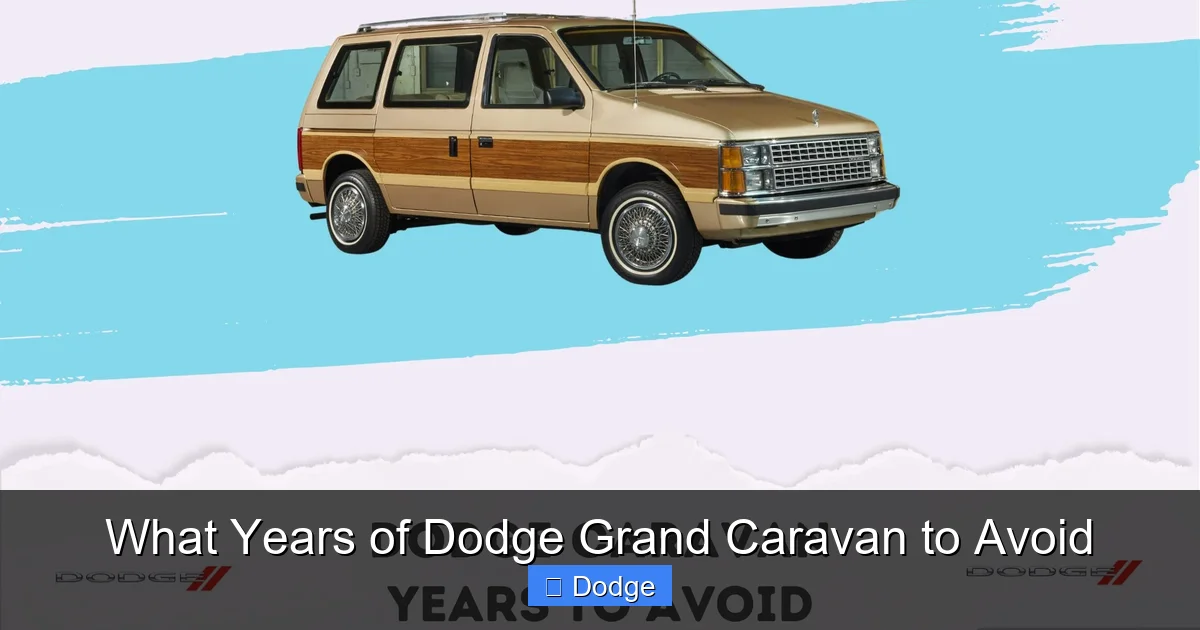
Visual guide about What Years of Dodge Grand Caravan to Avoid
Image source: carscounsel.com
If there’s one thing that haunts the 2008–2010 Dodge Grand Caravan, it’s the transmission. These years are infamous for early and frequent transmission failures, making them some of the worst in the lineup. The 62TE automatic transmission used during this period was prone to overheating, slipping, and complete breakdown—often with little warning.
Owners frequently report symptoms like harsh shifting, delayed engagement when shifting from park to drive, and a noticeable “jerk” when accelerating. In many cases, the transmission would fail entirely before reaching 100,000 miles. One owner from Ohio shared that her 2009 Grand Caravan’s transmission gave out at just 78,000 miles, leaving her with a $3,200 repair bill. “I loved the space and the stow-and-go seats,” she said, “but the transmission ruined it.”
The root of the problem lies in the transmission’s design and cooling system. The 62TE wasn’t built to handle the stress of frequent stop-and-go driving or heavy loads—common scenarios for minivan owners. Additionally, the transmission cooler lines were prone to cracking, leading to fluid leaks and overheating. Even with regular maintenance, many owners found that the transmission simply couldn’t keep up.
Dodge did issue Technical Service Bulletins (TSBs) addressing some of these issues, but no widespread recall was ever issued. That means many vehicles on the road today still have the original, flawed transmission. If you’re considering a 2008–2010 Grand Caravan, be prepared for potential repair costs—or better yet, avoid these years altogether.
Signs of Transmission Trouble to Watch For
Even if you’re looking at a low-mileage 2008–2010 model, don’t assume it’s safe. Transmission issues can develop over time, and early signs are often subtle. Here’s what to watch for:
- Delayed shifting: If the van hesitates when you shift from park to drive or reverse, it could indicate low fluid or internal wear.
- Slipping gears: You might feel the engine revving without a corresponding increase in speed—this is a classic sign of transmission slippage.
- Burning smell: Overheated transmission fluid often gives off a burnt odor. Check under the hood and under the vehicle for leaks.
- Check engine light: While this can mean many things, it’s often triggered by transmission-related sensors in these models.
- Rough or jerky acceleration: If the van lurches or shudders when speeding up, the transmission may be struggling.
If you notice any of these symptoms, have the vehicle inspected by a trusted mechanic before buying. A transmission flush or fluid change might help in mild cases, but severe wear usually requires a full rebuild or replacement.
Electrical and Brake Issues in 2011–2013 Models
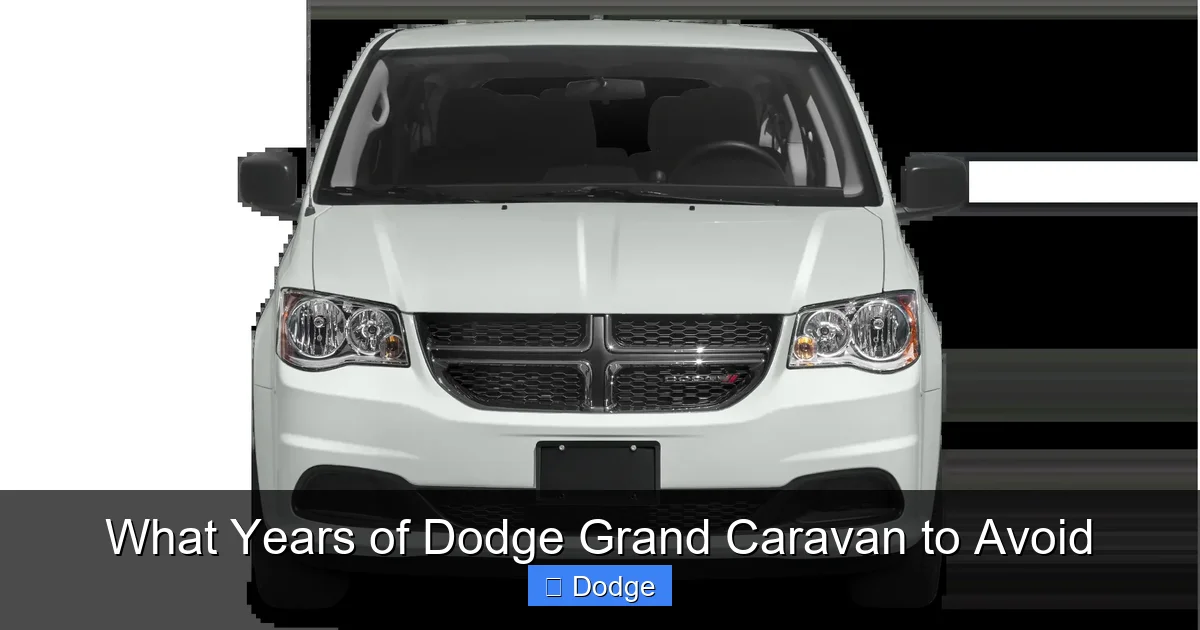
Visual guide about What Years of Dodge Grand Caravan to Avoid
Image source: platform.cstatic-images.com
While the 2008–2010 models struggle with transmissions, the 2011–2013 Dodge Grand Caravan has its own set of problems—mainly in the electrical and braking systems. These years introduced a new generation of the Grand Caravan, but with it came a wave of reliability concerns that left many owners frustrated.
One of the most common complaints is faulty wiring and sensor malfunctions. Owners report issues with the instrument cluster, where warning lights flicker or stay on incorrectly. The speedometer might stop working, or the gas gauge might show empty when the tank is full. These aren’t just annoyances—they can lead to dangerous situations, like running out of gas unexpectedly.
The brake system is another weak point. Many 2011–2013 models experience premature brake wear, with pads and rotors needing replacement far sooner than expected. Some owners also report a spongy brake pedal or reduced stopping power, which could indicate air in the lines or a failing master cylinder. In extreme cases, the electronic brake-force distribution (EBD) system has been known to malfunction, causing uneven braking and increasing the risk of skidding.
Electrical gremlins don’t stop at the dashboard. Power windows, door locks, and even the entertainment system can behave erratically. One Florida driver recalled how her 2012 Grand Caravan’s rear doors would randomly unlock while driving. “It was terrifying with kids in the back,” she said. “I had to manually lock them every time.”
These issues are often difficult and expensive to diagnose. Because they’re intermittent and not always covered under warranty, many owners end up paying out of pocket for repairs. If you’re considering a 2011–2013 model, be sure to test all electrical components thoroughly and check the brake system for wear.
Common Electrical Problems to Test Before Buying
Before purchasing a 2011–2013 Grand Caravan, take it for a thorough test drive and inspect these key areas:
- Instrument cluster: Turn the key to “on” and watch for warning lights. Do they illuminate and then turn off? Are any staying on?
- Power windows and locks: Test all windows and door locks from both the driver’s side and individual switches.
- Infotainment system: Check the radio, Bluetooth, USB ports, and navigation (if equipped) for proper function.
- Headlights and taillights: Turn on all lights and walk around the vehicle to ensure they’re working.
- Brake pedal feel: Press the brake pedal—it should feel firm, not spongy. Listen for unusual noises when braking.
A pre-purchase inspection by a certified mechanic is highly recommended. They can scan the vehicle’s computer for stored error codes and assess the overall health of the electrical and brake systems.
Safety Recalls and the 2014 Model Year
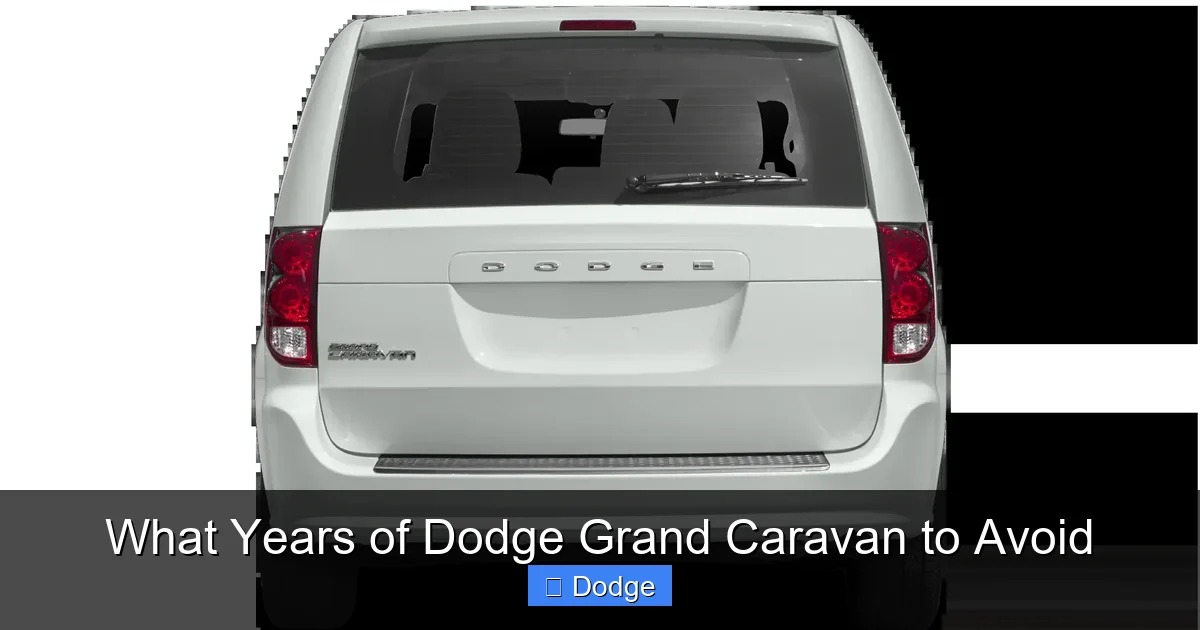
Visual guide about What Years of Dodge Grand Caravan to Avoid
Image source: platform.cstatic-images.com
The 2014 Dodge Grand Caravan didn’t have the transmission or electrical problems of earlier years, but it had something far more serious: a major safety recall. This model was part of the massive Takata airbag recall, which affected over 60 million vehicles worldwide. The defective airbags could explode upon deployment, sending metal shrapnel into the cabin and causing serious injury or death.
In the Grand Caravan, the driver-side airbag inflator was at risk. If the airbag deployed during a crash, the inflator could rupture, turning the airbag into a dangerous projectile. Dodge issued a recall in 2015, urging owners to bring their vehicles in for a free repair. However, as of 2023, thousands of 2014 models may still be on the road with unrepaired airbags.
This isn’t a minor issue—it’s a life-or-death concern. The National Highway Traffic Safety Administration (NHTSA) has classified these airbags as “do not drive” in some cases, especially in high-humidity areas. If you’re considering a 2014 Grand Caravan, you must verify that the airbag recall repair has been completed. You can check this for free using the NHTSA’s VIN lookup tool.
Beyond the airbag recall, the 2014 model also had some reports of steering issues and power steering failures. While not as widespread as the airbag problem, these defects could make the vehicle difficult to control, especially at low speeds.
How to Check for Open Recalls
Before buying any used vehicle—especially a 2014 Grand Caravan—always check for open recalls. Here’s how:
- Locate the Vehicle Identification Number (VIN) on the driver’s side dashboard or door jamb.
- Visit the NHTSA website at nhtsa.gov/recalls.
- Enter the VIN and search for any open recalls.
- If a recall is listed, contact a Dodge dealership to confirm whether the repair has been completed.
If the repair hasn’t been done, you can usually have it performed for free at any authorized Dodge service center. But if the seller refuses to address it, walk away—no minivan is worth the risk.
Engine and Fuel System Problems in 2017–2018 Models
Just when you thought the worst was behind it, the 2017–2018 Dodge Grand Caravan introduced new problems—this time under the hood. These models, part of the final generation before the Grand Caravan’s discontinuation in 2020, were marketed as updated and improved. But behind the refreshed exterior lurked engine and fuel system defects that left many owners stranded.
One of the most alarming issues is sudden engine stalling. Drivers report that their Grand Caravan would shut off without warning, even while driving at highway speeds. In some cases, the vehicle wouldn’t restart for several minutes. This isn’t just inconvenient—it’s dangerous, especially if it happens in traffic or on a busy road.
The root cause appears to be a faulty fuel pump or fuel pump control module. The 3.6L Pentastar V6 engine used in these models is generally reliable, but the fuel delivery system has proven problematic. When the fuel pump fails, it can’t maintain proper pressure, causing the engine to cut out. Replacing the fuel pump isn’t cheap—typically costing between $800 and $1,200, including labor.
Electrical issues also persist in these years. Some owners report that the engine stalls due to a failing crankshaft position sensor or a glitch in the engine control unit (ECU). These problems are often intermittent, making them hard to diagnose. One owner from Texas said her 2017 Grand Caravan stalled three times in one week. “The dealership couldn’t replicate the issue,” she said. “They told me it was ‘intermittent.’ But I didn’t feel safe driving it.”
Additionally, the 2017–2018 models have had recalls related to the fuel pump and engine stalling. Dodge issued a recall in 2019 for certain vehicles equipped with the problematic fuel pump. If you’re looking at one of these models, make sure the recall repair has been completed.
What to Look for During a Test Drive
If you’re test-driving a 2017–2018 Grand Caravan, pay close attention to engine behavior:
- Listen for unusual noises: Knocking, ticking, or whining from the engine could indicate fuel or timing issues.
- Monitor the tachometer: If the RPMs drop suddenly or the engine cuts out, it’s a red flag.
- Check the fuel gauge: Inaccurate readings could point to a failing fuel pump or sensor.
- Test the restart: After turning off the engine, see how quickly and smoothly it restarts.
- Ask about service history: Has the fuel pump ever been replaced? Were there any stalling incidents?
Again, a professional inspection is your best defense. A mechanic can perform a fuel pressure test and scan the ECU for trouble codes that might not yet trigger a warning light.
Safer Alternatives: Which Years Are Worth Considering?
Now that we’ve covered the worst years, you might be wondering: are there any Dodge Grand Caravan models that are actually reliable? The good news is, yes—some years stand out for their improved build quality, fewer recalls, and stronger owner satisfaction.
The 2015–2016 models are often considered the sweet spot. These years benefited from Dodge’s efforts to address earlier flaws. The transmission was more robust, electrical systems were more stable, and there were fewer major recalls. Owners report better reliability, with many vehicles lasting well beyond 150,000 miles with proper maintenance.
The 2019–2020 models are also solid choices. As the final years of production, they received the most refinements. The infotainment system was updated, safety features were enhanced, and the overall fit and finish improved. While they’re harder to find and slightly more expensive, they offer the best blend of features and reliability.
That said, even in these “good” years, individual vehicles can have issues. Always check the vehicle history report (using services like Carfax or AutoCheck), look for signs of poor maintenance, and get a pre-purchase inspection. A clean title and low mileage don’t guarantee a trouble-free ride.
Tips for Buying a Used Grand Caravan
Whether you’re looking at a 2015 or a 2020 model, follow these tips to avoid hidden problems:
- Get a vehicle history report: Look for accidents, flood damage, or multiple owners.
- Check maintenance records: Regular oil changes and scheduled service are signs of a well-cared-for vehicle.
- Test drive in real-world conditions: Drive on highways, hills, and stop-and-go traffic to test performance.
- Inspect the interior and exterior: Look for wear, stains, rust, or signs of repairs.
- Negotiate based on known issues: If the van needs new brakes or tires, use that to lower the price.
By doing your homework, you can find a Grand Caravan that serves your family well for years to come.
Final Thoughts: Making a Smart Choice
The Dodge Grand Caravan has been a staple of American family travel for decades. It’s practical, affordable, and packed with features that make life easier. But like any vehicle, it has its ups and downs—especially when it comes to model years.
Knowing what years of Dodge Grand Caravan to avoid is the first step toward a smarter purchase. The 2008–2010 models are transmission time bombs. The 2011–2013 years are riddled with electrical and brake issues. The 2014 model carries a serious airbag recall. And the 2017–2018 versions suffer from engine stalling and fuel system defects.
But don’t let that scare you away entirely. The 2015–2016 and 2019–2020 models offer a much better balance of reliability, safety, and value. With proper research and inspection, you can find a Grand Caravan that’s both dependable and affordable.
Remember: the cheapest van isn’t always the best deal. A few hundred dollars more for a well-maintained, problem-free model can save you thousands in repairs down the road. Take your time, ask questions, and trust your instincts. Your family deserves a vehicle that’s safe, reliable, and built to last.
Frequently Asked Questions
What is the most unreliable year for the Dodge Grand Caravan?
The 2008–2010 models are widely considered the most unreliable due to chronic transmission failures. Many owners report complete transmission breakdowns before 100,000 miles, often requiring costly replacements.
Is the 2014 Dodge Grand Caravan safe to drive?
The 2014 model is safe only if the Takata airbag recall repair has been completed. Check the VIN on the NHTSA website to confirm. If the repair hasn’t been done, do not drive the vehicle until it’s fixed.
Are 2017–2018 Grand Caravans reliable?
These years have reported issues with engine stalling and fuel pump failures. While some units are trouble-free, the risk is higher than in 2015–2016 or 2019–2020 models. A pre-purchase inspection is strongly recommended.
What are common problems with the 2011–2013 Grand Caravan?
Common issues include faulty wiring, malfunctioning sensors, premature brake wear, and electrical gremlins like erratic power windows and door locks. These problems can be expensive and difficult to diagnose.
Which Grand Caravan years are the best to buy used?
The 2015–2016 and 2019–2020 models are generally the best choices. They have fewer recalls, better reliability, and stronger owner satisfaction compared to earlier years.
How can I avoid buying a problematic Grand Caravan?
Always check the vehicle history report, verify recall repairs, and get a pre-purchase inspection by a trusted mechanic. Test drive the van in various conditions and ask for maintenance records.
