
What Year Subaru Wrx to Avoid?

Not every Subaru WRX model year is created equal—some have serious reliability issues that can cost you big time. This guide reveals the specific years to steer clear of, common problems to watch for, and tips to help you pick a dependable WRX that delivers performance without the headaches.
Key Takeaways
- 2015–2017 Subaru WRX: Proceed with caution: These model years are notorious for excessive oil consumption, head gasket failures, and turbocharger issues due to design flaws and rushed production.
- 2004–2005 WRX (First Gen): Avoid if possible: Known for weak automatic transmissions, head gasket leaks, and premature turbo wear—especially in higher-mileage examples.
- 2008–2010 WRX: Mixed reliability: While more refined, these models still suffer from head gasket problems and CVT transmission concerns in later years.
- 2022–2023 WRX: Early teething issues: New platform introduced in 2022 brought improved tech but also reports of rough idle, transmission clunking, and infotainment glitches.
- Always check maintenance history: A well-documented service record can offset risks, even in problematic years—look for timely oil changes and turbo inspections.
- Pre-purchase inspection is non-negotiable: Have a trusted mechanic inspect any used WRX, especially for signs of oil leaks, turbo wear, or transmission slippage.
- Consider certified pre-owned (CPO) or low-mileage examples: These often come with extended warranties and have been vetted by Subaru dealers.
📑 Table of Contents
What Year Subaru WRX to Avoid? A Buyer’s Guide to Making the Right Choice
So, you’re thinking about buying a used Subaru WRX. You’ve seen the rally-inspired looks, heard the turbocharged growl, and maybe even watched a few YouTube videos of people drifting through mountain passes. The WRX has long been a favorite among driving enthusiasts—offering all-wheel drive, turbo power, and everyday usability in one aggressive package. But here’s the thing: not every WRX is built the same. Some model years are far more reliable than others, and picking the wrong one could land you with expensive repairs, constant trips to the shop, and a whole lot of frustration.
That’s why knowing *what year Subaru WRX to avoid* is just as important as knowing which ones to buy. The WRX has evolved significantly since its debut in the late 1990s, but along the way, Subaru has had its share of missteps—especially with engine design, turbocharging systems, and transmissions. Whether you’re a first-time buyer or a seasoned gearhead, this guide will walk you through the model years that are best left on the lot, the red flags to watch for, and how to find a WRX that’s both fun and dependable.
The Most Problematic Years: What Year Subaru WRX to Avoid

Visual guide about What Year Subaru Wrx to Avoid?
Image source: i.pinimg.com
When it comes to reliability, a few specific model years stand out as particularly risky. These aren’t just minor annoyances—they’re full-blown mechanical nightmares that can cost thousands to fix. Let’s dive into the worst offenders.
2015–2017 Subaru WRX: The Oil-Guzzling Turbo Trap
If there’s one range of years you should approach with extreme caution, it’s the 2015–2017 Subaru WRX. These models were part of the fourth-generation FA20DIT engine lineup—a 2.0-liter turbocharged boxer engine that replaced the beloved EJ25. While the FA20 brought modern tech and improved fuel efficiency on paper, it also introduced a host of reliability issues that have plagued owners for years.
The biggest problem? Excessive oil consumption. Many 2015–2017 WRX owners report burning through a quart of oil every 1,000 to 1,500 miles—even with regular maintenance. This isn’t just a minor inconvenience; it can lead to low oil levels, which in turn cause premature engine wear, turbo damage, and even catastrophic engine failure if ignored.
Why does this happen? The FA20 engine uses a high-pressure direct injection system and a turbocharger that runs hotter than previous designs. Combined with tighter piston ring tolerances and insufficient oil control rings, oil sneaks past the rings and burns in the combustion chamber. Subaru eventually issued Technical Service Bulletins (TSBs) acknowledging the issue, but no widespread recall was issued. Some dealers offered oil consumption tests and engine replacements under warranty, but only if the problem was caught early.
Another major concern with these years is head gasket failure. While not as common as in older EJ engines, the FA20 is still prone to head gasket leaks—especially in high-mileage or poorly maintained examples. Symptoms include white smoke from the exhaust, coolant loss, and overheating. Replacing a head gasket on a turbocharged engine is no small job—expect to pay $2,000 to $4,000 at a reputable shop.
Turbocharger issues are also common. The turbo on the FA20 is smaller and more efficient than the EJ25’s, but it’s also more sensitive to oil quality and maintenance. If the oil isn’t changed every 3,000 to 5,000 miles with high-quality synthetic oil, carbon buildup can clog the turbo’s oil feed lines, leading to premature wear or failure. Replacing a turbo can cost upwards of $2,500, not including labor.
2004–2005 Subaru WRX: The First-Gen Flaws
The early 2000s WRX models—particularly the 2004 and 2005 years—hold a special place in rally fan hearts. These were the cars that brought the WRX to the U.S. market, and they’re still sought after for their raw, analog driving feel. But if you’re looking for reliability, these years are best avoided unless you’re prepared for frequent repairs.
The main issue? The EJ205 engine, while tunable and fun, is notorious for head gasket failures. The EJ series engines have a well-documented history of head gasket leaks due to poor gasket design and uneven cylinder head mating surfaces. In the 2004–2005 WRX, this problem is exacerbated by the turbocharger’s heat and the engine’s high compression ratio. Symptoms include coolant loss, overheating, and white smoke from the exhaust. Replacing the head gaskets is a major job—often costing $1,500 to $2,500—and if done improperly, the problem can return.
Another weak point is the automatic transmission. While most WRX buyers opt for the 5-speed manual, the 4-speed automatic (found in the 2004–2005 models) is notoriously weak. It wasn’t designed to handle the torque of a turbocharged engine, and many have failed prematurely—especially if the car has been driven hard or modified. Rebuilding or replacing the automatic transmission can cost $3,000 or more.
Turbocharger wear is also common in these early models. The turbo on the EJ205 is durable, but it’s not immune to failure—especially if the car has been driven hard, poorly maintained, or tuned aggressively. Signs of turbo wear include reduced boost pressure, loud whining noises, and excessive exhaust smoke. A replacement turbo can cost $1,500 to $2,000, plus labor.
2008–2010 Subaru WRX: A Step Forward, But Not Perfect
The 2008–2010 WRX models marked a significant improvement over the earlier years. Subaru introduced a more refined version of the EJ255 engine, better suspension tuning, and improved interior materials. These cars are often seen as a sweet spot for enthusiasts—offering strong performance and better reliability than the 2004–2005 models.
However, they’re not without their issues. Head gasket problems still persist, though they’re less common than in the 2004–2005 models. The EJ255 is more robust than the EJ205, but it’s still an EJ engine—and that means it’s prone to the same design flaws. If you’re looking at a high-mileage example (over 100,000 miles), be sure to check for signs of head gasket leaks.
Another concern is the CVT (Continuously Variable Transmission) introduced in later 2008 models and standard in 2009–2010. While the CVT offers smoother acceleration and better fuel economy, it’s not popular with driving enthusiasts—and it’s also less durable than the 5-speed manual. Many CVT-equipped WRXs have experienced transmission shuddering, delayed engagement, and premature failure. Replacing a CVT can cost $4,000 or more.
Turbocharger reliability is better in these years, but still not perfect. The turbo is more robust than in the 2004–2005 models, but it’s still sensitive to oil changes and driving habits. Regular maintenance is key—especially if the car has been modified.
2022–2023 Subaru WRX: New Platform, New Problems
The 2022 model year marked a major redesign for the WRX. Subaru introduced a new platform, a revised 2.4-liter FA24 turbo engine, and a host of modern tech features. On paper, it’s a huge step forward—more power, better handling, and improved safety. But as with any new model, there have been some early teething issues.
One of the most common complaints is rough idle and engine vibration. Many 2022–2023 WRX owners report a shaky idle, especially when the engine is cold. This is often due to the engine’s direct injection system and the way it manages fuel delivery at low RPMs. Subaru has released software updates to address the issue, but some owners still experience problems.
Transmission clunking is another issue—particularly with the 6-speed manual. Some drivers report a noticeable “clunk” when shifting gears or when the car is put into gear from neutral. This is often due to worn engine or transmission mounts, but it can also indicate issues with the clutch or drivetrain. While not a deal-breaker, it’s something to be aware of.
Infotainment glitches are also common. The new 11.6-inch touchscreen is sleek and modern, but it’s prone to freezing, lagging, and losing connection to smartphones. Subaru has issued software updates, but some owners still report problems.
Despite these issues, the 2022–2023 WRX is generally more reliable than the 2015–2017 models. The FA24 engine is more robust than the FA20, and Subaru has addressed many of the oil consumption problems. However, it’s still early days—long-term reliability data is limited, and only time will tell how these cars hold up.
Common Problems Across All WRX Models

Visual guide about What Year Subaru Wrx to Avoid?
Image source: s1.cdn.autoevolution.com
While certain years are more problematic than others, there are some issues that can affect any WRX—regardless of model year. Knowing what to look for can save you from a bad purchase.
Head Gasket Failures: The EJ Engine Curse
The EJ series engines (used from 1992 to 2019) are infamous for head gasket failures. While Subaru improved the design over the years, the problem never fully went away. The head gaskets are made of multi-layer steel and can fail due to overheating, poor maintenance, or age. Symptoms include coolant loss, overheating, white smoke from the exhaust, and milky oil.
The FA20 and FA24 engines (used from 2015 onward) are less prone to head gasket issues, but they’re not immune. The FA20, in particular, can suffer from head gasket leaks due to oil consumption and turbo heat.
Turbocharger Wear and Failure
The turbocharger is the heart of the WRX’s performance, but it’s also a wear item. Turbo failure can be caused by poor oil changes, aggressive driving, or lack of warm-up and cool-down periods. Signs of turbo wear include reduced boost pressure, loud whining or grinding noises, and excessive blue or gray smoke from the exhaust.
Regular maintenance is key. Always use high-quality synthetic oil and change it every 3,000 to 5,000 miles. Let the engine warm up before driving hard, and let it idle for 30 seconds to a minute after hard driving to allow the turbo to cool.
Transmission Issues: Manual vs. Automatic
The 5-speed and 6-speed manual transmissions in the WRX are generally robust, but they can suffer from clutch wear, synchro issues, and input shaft bearing failure—especially in modified or high-mileage examples.
Automatic and CVT transmissions are less reliable. The 4-speed automatic in early models is weak, and the CVT in 2009–2010 models is prone to shuddering and failure. The 2022–2023 models use a new 8-speed automatic, which is more durable but still untested over the long term.
Suspension and Drivetrain Wear
The WRX’s sport-tuned suspension is great for handling, but it’s also harder on components. Struts, bushings, and control arms can wear out faster than in a regular sedan. Look for signs of uneven tire wear, knocking noises over bumps, or a loose-feeling steering wheel.
The all-wheel-drive system is durable, but the center differential and rear differential can wear out if not serviced regularly. Subaru recommends changing the front and rear differential fluid every 30,000 miles.
How to Spot a Healthy WRX: Tips for Buyers
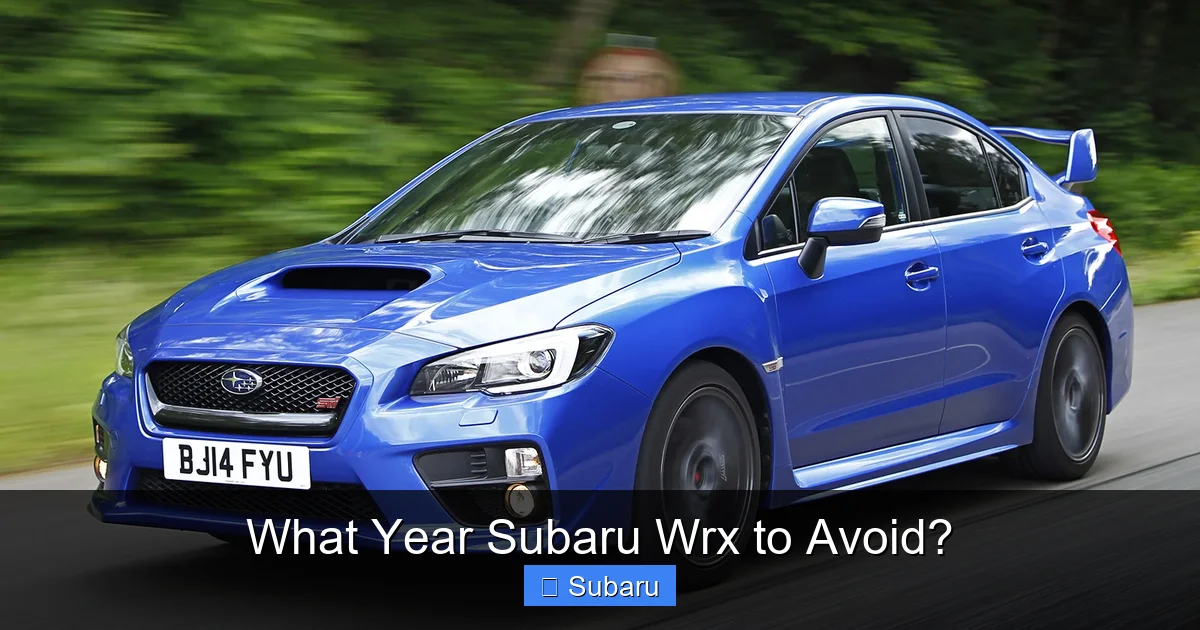
Visual guide about What Year Subaru Wrx to Avoid?
Image source: images.cdn.autocar.co.uk
So, how do you avoid the lemon and find a WRX that’s built to last? Here are some practical tips to help you make a smart purchase.
Check the Maintenance History
A well-documented service history is your best friend. Look for records of regular oil changes, timing belt replacements (if applicable), and differential fluid changes. A car with a clean history is far more likely to be reliable.
Get a Pre-Purchase Inspection (PPI)
Never buy a used WRX without a pre-purchase inspection. Have a trusted mechanic—preferably one familiar with Subarus—inspect the car for signs of leaks, turbo wear, transmission issues, and suspension problems. A PPI can cost $100 to $200, but it could save you thousands.
Look for Signs of Modifications
Many WRXs are modified for performance—turbo upgrades, exhaust systems, and engine tuning. While modifications can be fun, they can also shorten the engine’s lifespan. Be wary of cars with aftermarket parts unless you’re prepared for higher maintenance costs.
Test Drive the Car
Pay attention to how the car feels. Does the engine idle smoothly? Does the transmission shift cleanly? Are there any unusual noises or vibrations? A test drive can reveal a lot about a car’s condition.
Check for Recalls and TSBs
Subaru has issued several recalls and Technical Service Bulletins (TSBs) for the WRX over the years. Check the NHTSA website or contact a Subaru dealer to see if the car you’re looking at has any open recalls or known issues.
Conclusion: Make an Informed Decision
The Subaru WRX is an iconic performance car with a passionate following. But like any used vehicle, it comes with risks—especially if you don’t know what to look for. By understanding *what year Subaru WRX to avoid*, you can steer clear of the most problematic models and focus on finding a car that’s both fun and reliable.
The 2015–2017 models are the biggest red flag, thanks to oil consumption and turbo issues. The 2004–2005 models are charming but flawed, with weak automatics and head gasket problems. The 2022–2023 models are promising but still unproven over the long term.
Ultimately, the best WRX for you is one that’s been well-maintained, driven responsibly, and inspected by a professional. Don’t let the excitement of owning a turbocharged rally car cloud your judgment. Take your time, do your research, and choose wisely. Your dream WRX is out there—just make sure it’s the right one.
Frequently Asked Questions
What year Subaru WRX has the most problems?
The 2015–2017 Subaru WRX models are widely considered the most problematic due to excessive oil consumption, head gasket failures, and turbocharger issues. These problems stem from design flaws in the FA20 engine and rushed production timelines.
Is the 2008 Subaru WRX reliable?
The 2008 WRX is more reliable than earlier models but still suffers from head gasket issues and CVT transmission concerns. It’s a decent choice if well-maintained, but high-mileage examples should be inspected carefully.
Should I avoid the 2022 Subaru WRX?
The 2022 WRX has some early issues like rough idle and infotainment glitches, but it’s generally more reliable than the 2015–2017 models. It’s not a bad choice, but be aware of potential teething problems and check for software updates.
How often should I change the oil in a used WRX?
For any WRX, especially turbocharged models, change the oil every 3,000 to 5,000 miles using high-quality synthetic oil. This helps prevent turbo wear and engine damage, particularly in oil-hungry engines like the FA20.
Can a modified WRX be reliable?
Yes, but only if the modifications are done properly and the car is maintained rigorously. Aggressive tuning or poor-quality parts can shorten engine life, so always check the modification history and maintenance records.
What should I look for during a test drive?
Listen for unusual noises, check for smooth shifting, monitor oil and coolant levels, and pay attention to how the car idles and accelerates. Any hesitation, smoke, or vibrations could indicate underlying issues.
