
What Year Bmw X3 Is the Most Reliable?

Finding the most reliable BMW X3 requires looking at specific model years within each generation. The 2007 E83 and the 2017 F25 are frequently cited as the most dependable, but long-term reliability heavily depends on meticulous maintenance history and the specific engine. Avoid the first-model-year 2018 G01 and early N47 diesel engines. A thorough pre-purchase inspection is non-negotiable for any used X3.
Key Takeaways
- The 2007 E83 (first gen) is often the “sweet spot” for reliability: It benefits from the proven M54/N52 engines and simpler technology, making parts more affordable and issues better understood.
- The 2017 F25 (second gen) is the most reliable of its generation: This was the final model year before a major redesign, allowing BMW to iron out early kinks in the N20 turbocharged engines and electronics.
- Avoid first-year models of any generation: The 2004 E83, 2011 F25, and 2018 G01 all suffered from teething problems that were typically resolved in subsequent years.
- Engine choice is critical: The naturally aspirated 6-cylinder (M54/N52) and later B48 4-cylinder are robust. The early N47 diesel and first-generation N20 turbo have known expensive issues.
- Maintenance history trumps model year: A well-documented, consistently serviced 2012 X3 will outlast a neglected 2017. Look for records of oil changes, coolant flushes, and timing chain inspections.
- Expect higher running costs than Japanese rivals: Even the most reliable X3 will cost more to maintain than a comparable Nissan Rogue or Lexus, but offers superior driving dynamics.
📑 Table of Contents
- Introduction: The Eternal Search for a Reliable BMW X3
- First Generation (E83): 2003-2010 – The Analog Era
- Second Generation (F25): 2011-2017 – The Turbocharged Maturity
- Third Generation (G01): 2018-Present – The Tech-Heavy Newcomer
- Year-by-Year Breakdown & Final Recommendation
- The Non-Negotiable Pre-Purchase Inspection (PPI)
- Conclusion: Your Most Reliable BMW X3 Awaits
Introduction: The Eternal Search for a Reliable BMW X3
So, you’re eyeing a BMW X3. You want the iconic driving enjoyment, the premium badge, and the practical SUV space. But that little voice in your head is whispering the classic BMW question: “Is this one going to break the bank with repairs?” You’re not alone. The quest for the most reliable BMW X3 year is one of the most common—and crucial—searches for any used luxury SUV buyer. BMW’s reputation for engineering brilliance is sometimes matched by a reputation for costly upkeep. But here’s the secret: within the X3’s lineage, there are clear winners and clear losers when it comes to long-term dependability.
This isn’t about finding a perfect, trouble-free SUV—that doesn’t exist in the luxury segment. This is about finding the most reasonable compromise. It’s about identifying the model years where BMW’s engineering was most mature, where common expensive weaknesses were addressed, and where the cost of entry still provides a reasonable ownership experience. We’re going to slice through the marketing and forum hysteria to give you a generation-by-generation, engine-by-engine breakdown of BMW X3 reliability. By the end, you’ll know exactly which years to target, which to avoid, and what questions you must ask before buying.
First Generation (E83): 2003-2010 – The Analog Era
The first-generation BMW X3, internally coded E83, is a fascinating study in contrasts. It was BMW’s first foray into the compact luxury SUV market, a direct response to the Mercedes-Benz ML-Class and the Acura MDX. Mechanically, it’s closely related to the 3 Series of the era, which is both its greatest strength and a source of its weaknesses. This is the generation where the “most reliable” title often goes to the 2007 model year, but the story is more nuanced.
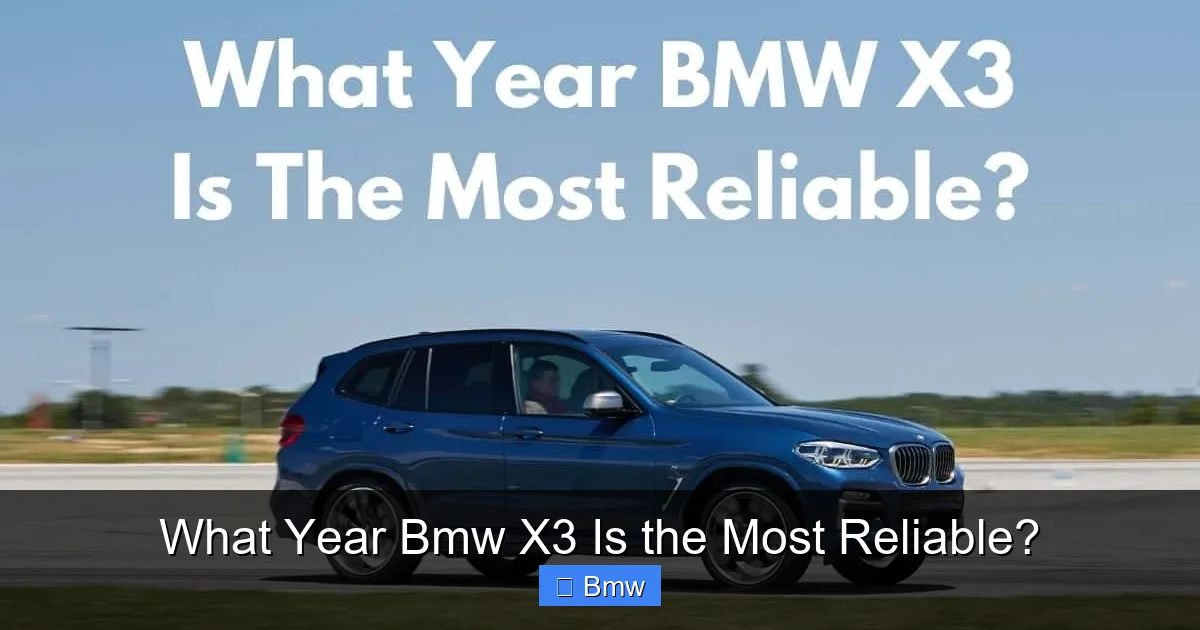
Visual guide about What Year Bmw X3 Is the Most Reliable?
Image source: fourwheeltrends.com
Engine Families and Their Personalities
Understanding the E83 means understanding its engines. There were three primary families:
- M54 Inline-6 (2.5L & 3.0L): This is the legendary, naturally aspirated straight-six. Found in the 2.5i and 3.0i models (2003-2006). It is widely considered one of BMW’s most robust, durable, and simple engines ever made. No direct injection, no complex turbochargers. It’s a workhorse that can easily surpass 300,000 miles with basic care. This is your top choice for ultimate reliability and lower repair costs.
- N52 Inline-6 (3.0L): Replaced the M54 in 2006.5/2007. It added Valvetronic electronic valve control, which improved efficiency but introduced a new set of potential issues (like eccentric shaft sensor failures). Still a very strong engine, but slightly more complex than the M54.
- M47 Diesel Inline-6: The 2.0L and 3.0L diesel engines (xDrive18d, xDrive20d, xDrive30d) are a separate topic. They are torquey and efficient, but the high-pressure fuel injection system (CP3/CP4 pumps, injectors) and turbochargers are expensive failure points. A well-maintained diesel can be okay, but they carry significantly higher risk and repair cost than the gas six-cylinders.
The 2007 Model Year: The E83 Sweet Spot
Why is the 2007 BMW X3 so often crowned the most reliable of the first generation? It sits at a unique crossroads:
- It’s post-“first model year”: The 2003-2006 E83 had various minor recalls and issues (like certain cooling system components and electrical gremlins) that were largely ironed out by the 2007 model year.
- It has the refined N52 engine: While the M54 is simpler, the N52 in the 2007 model benefited from initial production bugs being worked out. It’s a significant power and efficiency upgrade over the M54 with still-respectable durability.
- It’s pre-facelift (LCI) complexity: The 2009-2010 Life Cycle Impulse (LCI) update brought revised headlights, taillights, and interior iDrive system. While generally positive, it added more electronic modules that can fail. The 2007-2008 models are the “pure” pre-LCI design.
The Caveat: The absolute most reliable E83 is likely a 2004-2006 model with the M54 engine, simply due to its mechanical simplicity. However, the 2007 model offers a better balance of updated features (like a more modern iDrive) and proven reliability, making it the more popular and often recommended choice.
Common E83 Issues to Budget For
Even the best E83 isn’t perfect. Here’s what to expect:
- Cooling System: The water pump, thermostat, and radiator are wear items. Plan for replacement every 80,000-100,000 miles.
- Oil Filter Housing Gasket: A classic BMW leak. It drips oil onto the exhaust manifold, causing smell and potential fire risk. Relatively inexpensive fix.
- Valve Cover & Gasket (M54/N52): The plastic covers can warp and leak. The N52’s valve cover also houses the variable valve timing (VVT) system, making it a more involved job.
- Rear Subframe Bushings: Hard polyurethane bushings in the rear subframe can crack and wear, leading to clunks. Replacement is a moderate repair.
- Electronics & iDrive: Early iDrive systems (iDrive Professional) can be slow and buggy. Screen failures and control module issues are possible.
Second Generation (F25): 2011-2017 – The Turbocharged Maturity
The F25 generation was a massive leap forward. It was larger, more luxurious, and fully embraced turbocharging across the lineup. This is the generation that brought the X3 into the modern era of performance and efficiency, but it also introduced a whole new set of reliability considerations. The consensus among mechanics and long-term owners points to the 2017 model year as the most reliable F25.
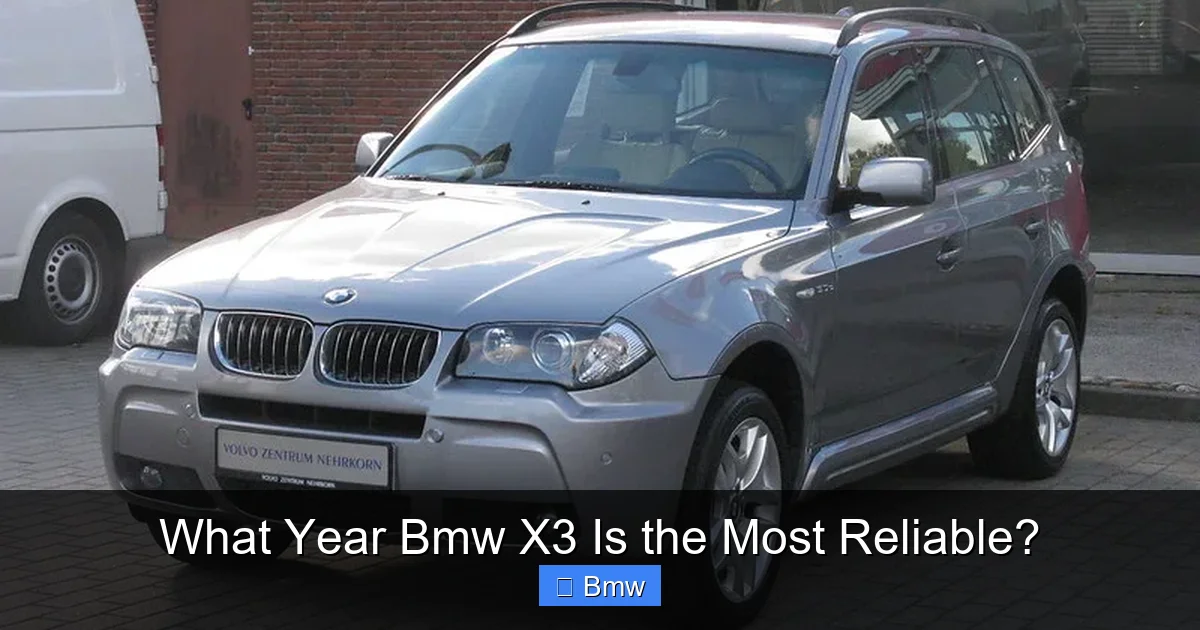
Visual guide about What Year Bmw X3 Is the Most Reliable?
Image source: copilotsearch.com
The All-Important N20 Engine
Forget the old six-cylinders. The F25 was powered almost exclusively by BMW’s new 4-cylinder turbo engines: the N20 (gas) and N47 (diesel). This was a paradigm shift.
- N20 (20i, 28i models): A 2.0L turbocharged four-cylinder producing impressive power. Its Achilles’ heel is the timing chain system. Early N20 engines (roughly 2011-2014) are notorious for timing chain tensioner and guide wear, which can lead to chain stretch, rattling noises, and catastrophic engine failure if not addressed. BMW issued extended warranties and service campaigns, but it remains a major red flag.
- N47 Diesel: As in the E83, the diesel option (xDrive20d, xDrive35d) is a high-risk, high-reward proposition. The timing chain is also a critical component here, along with the high-pressure fuel pump and EGR cooler. These are not cheap fixes.
The key improvement in the N20 came in 2015. BMW revised the timing chain tensioner and guides, significantly mitigating the problem. Therefore, any F25 from mid-2015 onward (2015.5, 2016, 2017) has a much more robust engine.
Why 2017 is the F25 Champion
The 2017 BMW X3 stands atop the F25 hierarchy for several reasons:
- Final Model Year Refinement: As the last year before the G01 redesign, BMW had five full years to address early F25 quirks. Interior trim fit, electronic module bugs, and minor suspension tweaks were all finalized.
- Mature N20 Engine: It has the fully revised, post-2015 timing chain components. You’re getting the most reliable version of this engine before it was replaced by the B48.
- Best Value in the Cycle: Prices for 2017 models are often very close to 2015-2016 models, but you’re getting a vehicle with one less year of wear and the absolute latest updates for that generation.
- Facelift Aesthetics: The 2017 received a subtle but welcomed facelift (LCI) with updated LED lighting and minor styling tweaks, keeping it looking contemporary.
In short, the 2017 F25 gives you the power and efficiency of the turbo era with the lowest risk of the generation’s most infamous engine problem.
Other F25 Issues & The xDrive System
Beyond the engine, F25 owners report:
- Transfer Case & xDrive: The multi-plate clutch transfer case can wear out, leading to vibrations or binding. This is a costly repair ($3k+). It’s more common in vehicles that see a lot of hard cornering or towing.
- Oil Consumption: Some N20 engines burn oil between changes. Monitor levels closely.
- Electronics: The iDrive system (now iDrive 6.0) is much improved but still has glitches. Backup camera failures and sensor errors (parking sensors, blind spot) are common.
- Leather & Interior: The seats can wear, and the “Espresso” wood trim is prone to cracking and peeling.
Third Generation (G01): 2018-Present – The Tech-Heavy Newcomer
The current G01 generation is the most advanced, efficient, and driver-focused X3 yet. It’s a fantastic SUV, but “most reliable” is a title it hasn’t earned. As a brand-new design in 2018, it is inherently the riskiest for long-term reliability. We simply don’t have 10-15 years of data on its core components. However, we can analyze early reports and known issues to guide you toward the safer years within this generation.
Visual guide about What Year Bmw X3 Is the Most Reliable?
Image source: s1.cdn.autoevolution.com
The Brilliant B48 Engine & The 48-Volt Mild Hybrid
BMW replaced the problematic N20 with the magnificent B48 2.0L turbo engine. This is a huge step forward. The B48 uses a more robust timing chain design (though still a chain, not a belt) and generally improved internals. Early reports suggest it’s a very durable and strong engine. This is a major win for the G01.
The complication comes from the 48-volt mild-hybrid system introduced in 2020 (in some markets). This system adds a belt-driven starter-generator and a 48-volt battery to improve efficiency. While clever, it’s an entirely new electrical architecture. Early adopters of this tech (2020-2021 models) are the guinea pigs. Potential issues with the 48V components, while rare so far, represent an unknown repair cost down the line.
Transmission & Drivetrain
The ZF 8-speed automatic is used across the lineup. It is, by all accounts, one of the best and most reliable transmissions in the industry. This is a major positive. The xDrive system is also a more robust, electronically-controlled version compared to some earlier hydraulic systems, reducing the risk of transfer case failure seen in the F25.
Known G01 Issues & The “Wait” Verdict
The G01’s problems are largely electronic and trim-related:
- iDrive 7.0 & Curved Display Glitches: Software bugs, screen freezes, and system crashes are reported, especially in the first few model years. Updates often fix these.
- Build Quality & Trim: Some early reports of inconsistent panel gaps, rattles, and premature wear on soft-touch materials.
- Water Ingress: A few reports of water leaking into the cabin from the sunroof drains or windshield seals.
- AdBlue System: Diesel models (if sold in your market) have complex emissions systems that can be problematic and expensive.
The Verdict: If you want a G01, your best bet is a 2022 or 2023 model. This allows BMW at least 4-5 model years to identify and fix the most common early-production bugs. The 2018-2020 models are the highest risk for unexpected electronic gremlins. For ultimate peace of mind, wait until the G01 is older and its long-term reliability is proven.
Year-by-Year Breakdown & Final Recommendation
Let’s cut to the chase. Here is your definitive ranking, from most to least recommended for a used BMW X3 purchase.
Tier 1: The Safest Bets (Highest Reliability)
- 2007 E83 (3.0i with N52 or 2.5i with M54): The classic reliable choice. Simple, proven mechanics. Parts are available and relatively affordable. The driving experience is raw and engaging. This is the purest, most dependable X3 you can buy.
- 2017 F25 (xDrive28i with N20 post-2015): The modern, powerful, and refined choice. You get a fantastic turbo engine (with the updated timing chain), a comfortable ride, and a well-appointed interior. It’s the most reliable of the turbo era.
Tier 2: Good Options with Caveats
- 2008-2010 E83 (N52 models): Very similar to the 2007. Slightly more updated features. Still excellent reliability. Just ensure the timing chain was inspected/replaced if over 150k miles.
- 2015-2016 F25 (xDrive28i): These have the revised N20 timing chain components. They are excellent values on the used market. Just be vigilant for oil consumption and transfer case wear.
- 2022-2023 G01 (xDrive30i with B48, non-mild-hybrid): The newest, safest bet in the current generation. They have the best software, the most robust B48, and none of the early G01 bugs. They will be more expensive but offer a near-new experience.
Tier 3: Proceed with Extreme Caution (Highest Risk)
- 2003-2006 E83 (M54 models are okay, but watch for age): While the engine is bulletproof, these are now 20-year-old cars. Expect to replace every rubber bushing, coolant hose, and suspension component. Rust can be an issue in snowy climates. Only buy if exceptionally well-preserved.
- 2011-2014 F25 (N20 engines): The “time bomb” years for the timing chain. Unless the previous owner has documented proof of a timing chain job (a $3,000+ repair), walk away. The risk is too high.
- 2018-2020 G01: The guinea pigs. You are buying the first iteration of a new platform with new tech. Be prepared for software updates, potential electronic failures, and unknown long-term costs. Only consider with a strong factory warranty or certified pre-owned (CPO) status.
- Any Diesel Model (E83 or F25): Unless you are a diesel enthusiast with a dedicated mechanic and a large repair budget, avoid. The potential for $5,000+ fuel system or turbo repairs is very real.
The Non-Negotiable Pre-Purchase Inspection (PPI)
I don’t care if you’re buying a 2007 with 50,000 miles or a 2017 with 80,000. You must get a pre-purchase inspection from a specialist—ideally an independent BMW mechanic or a very reputable shop that knows these platforms. A general mechanic might miss X3-specific issues.
Here’s your PPI checklist:
- Engine & Transmission: Compression test, leak-down test. Scan for any stored codes, even inactive ones. Check for oil leaks, condition of belts, and evidence of oil consumption (check the dipstick and fill cap for sludge). For N20/N47 engines, the mechanic must inspect the timing chain area, listen for rattles on cold start, and check service history.
- Drivetrain: Check transfer case fluid condition (should be clean, not burnt). Test all xDrive modes if possible. Check for differential leaks.
- Suspension & Bushings: The E83 rear subframe bushings and F25/G01 control arm bushings are wear items. Have them pushed and pulled to check for play.
- Electronics: Test every single button, screen, heater vent, and sensor. Pair your phone via Bluetooth. Test the backup camera, surround view (if equipped), and all lighting. Glitches here are common and expensive to fix.
- Body & Interior: Check for rust in wheel arches and under the car. Inspect the sunroof for proper operation and drainage. Look for water stains in the trunk or footwells (sign of a leak). Check all leather for excessive wear or cracks.
- Maintenance History: This is the most important document. You want a complete, consistent history from a reputable BMW shop or dealer. Gaps in service are a major red flag. Look for timing chain service, coolant flushes, and brake fluid changes.
Spending $200-$300 on a PPI could save you $5,000 in unexpected repairs. It’s the single smartest move you can make.
Conclusion: Your Most Reliable BMW X3 Awaits
The answer to “What year BMW X3 is the most reliable?” is not a single year, but a strategic choice based on your budget and risk tolerance. For the purist seeking maximum simplicity and lower running costs, the 2007 E83 with the M54 or N52 engine is the undisputed champion. It represents the last of the analog, over-engineered BMW era. For the buyer wanting modern turbo performance, efficiency, and luxury without the highest risk, the 2017 F25 is your model. It’s the culmination of the second generation, free from the N20’s early flaws and the G01’s unknown future.
Whatever you choose, remember this: a BMW X3 is a performance-oriented luxury SUV. It will never be as cheap to maintain as a Nissan Rogue. The key is to manage that cost by selecting a mechanically mature model and, above all, verifying its history with a professional inspection. Buy a well-maintained example from our recommended years, and you’ll be rewarded with one of the most engaging and satisfying driving machines in the compact SUV segment for years to come. Now, go find your red tag—the 2007 or 2017 is calling.
Frequently Asked Questions
Is a BMW X3 more reliable than an Audi Q5 or Mercedes GLK?
Generally, yes, for specific model years. The 2007 X3 (E83) with the M54 engine is notably more robust than comparable early GLK or Q5 models. The 2017 X3 (F25) also holds up well against its German rivals. However, a poorly maintained X3 of any year will be less reliable than a well-cared-for competitor. For a direct comparison with Audi’s offering, you can read about Audi Q7 reliability, which follows similar generational patterns.
What is the biggest financial risk when buying a used BMW X3?
The single largest financial risk is an unaddressed timing chain issue on any N20 (F25) or N47 (diesel) engine. This failure will destroy the engine and cost $5,000-$10,000 to fix. The second major risk is a failed transfer case in the F25, which is a $3,000+ repair. Always verify timing chain service history and have a mechanic check the transfer case fluid and condition during a PPI.
Should I buy a diesel BMW X3?
For most private buyers in the US, the answer is no. While diesels like the xDrive35d offer fantastic torque and fuel economy, the long-term cost of maintaining the high-pressure fuel system, turbochargers, and complex emissions equipment (like the AdBlue system) is very high. They are also more difficult to find mechanics for and have lower resale value. Stick with the proven gasoline engines (M54, N52, B48) for the best reliability picture.
How much does it typically cost to maintain a BMW X3 per year?
For a well-maintained example from our recommended years (2007 E83 or 2017 F25), budget $1,000 – $1,500 annually for routine maintenance (oil changes, brakes, tires, fluid flushes). This is significantly higher than a Japanese SUV. For an older E83, that number can jump to $2,000+ as wear items accumulate. For an early G01 with potential electronic issues, it’s an unknown variable. Always have an emergency repair fund.
What is the best BMW X3 engine for reliability and performance?
The winner is a tie between two very different engines:
- For Ultimate Reliability: The M54 3.0L (2003-2006 E83). It’s a simple, naturally aspirated masterpiece with no major weaknesses.
- For Modern Performance & Strong Reliability: The B48 2.0L (2022+ G01) or the post-2015 N20 2.0L (2015.5+ F25). These are powerful, efficient, and with the timing chain fixes, are much more robust than their early N20 counterparts.
Avoid the early N20 (2011-early 2015) and all N47 diesel engines for the best peace of mind.
Does the BMW X3 hold its value well?
Relative to other luxury SUVs, the X3 depreciates at an average rate. The most reliable years (2007, 2017) tend to hold their value slightly better on the used market because informed buyers seek them out. However, a neglected or high-mileage example of any year will depreciate rapidly. The newest G01 models will see steeper initial depreciation but should stabilize. You can research specific model values, like the 2007 BMW X3 worth, to see how a well-known reliable year is priced.
