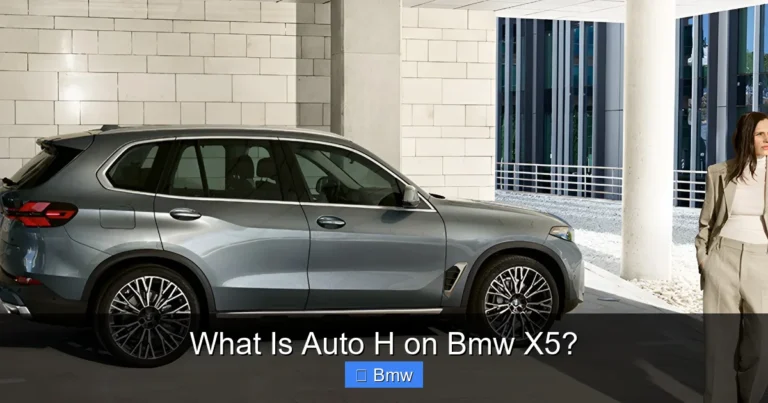
What Suv Is Comparable to the Bmw X5?

Contents
- 1 Key Takeaways
- 2 📑 Table of Contents
- 3 The German Trio: Direct Engineering Rivals
- 4 The Performance Powerhouse: Porsche Cayenne
- 5 The Value-Driven Luxury Alternatives
- 6 The Wild Card: The SUV That Does It All
- 7 Making Your Choice: The Practical Comparison Checklist
- 8 The Verdict: No Single “Best,” Only Your “Best”
- 9 Frequently Asked Questions


The BMW X5 is a benchmark luxury midsize SUV, praised for its driving dynamics, premium interior, and powerful engine options. Its most direct competitors are the Audi Q7, Mercedes-Benz GLE, and Porsche Cayenne, each offering a distinct take on luxury and performance. For buyers prioritizing supreme comfort and tech, the Genesis GV80 and Lexus TX present compelling, value-rich alternatives. Ultimately, the “best” comparable SUV depends entirely on whether you prioritize driver engagement, rear-seat space, off-road prowess, or overall value in your daily drive.
So, you’ve got your eye on the BMW X5. Excellent choice. For years, it has stood as a pillar of the luxury SUV world—the vehicle that proved a family hauler could also be a genuine joy to drive. Its sharp steering, robust engine lineup, and that signature BMW驾驶座-centric cockpit make it a standout. But in a segment bursting with talent, the natural question arises: What SUV is comparable to the BMW X5? The answer isn’t a single car; it’s a fascinating look at how different brands interpret the phrase “sports activity vehicle.”
Finding a true peer means looking at vehicles that match the X5 in key areas: a midsize footprint, a premium (often three-row) interior, powerful and efficient powertrains, cutting-edge technology, and a price tag starting in the $60,000s and climbing rapidly. We’re not looking at smaller crossovers or ultra-luxury behemoths. We’re hunting in the same competitive corral where the X5 has ruled for two decades. Let’s break down the finest contenders, section by section, to help you find your perfect counterpart.
Key Takeaways
- The X5’s Core Identity: It uniquely blends sporty, car-like handling with genuine three-row spaciousness and a high-tech cabin, setting a high bar for the segment.
- German Rivalry is Closest: The Audi Q7 and Mercedes-Benz GLE are its most similar competitors, matching it in price, size, and luxury, but differing in driving feel and design philosophy.
- Porsche Prioritizes Performance: The Porsche Cayenne shares the X5’s athleticism but typically pushes further into high-performance and driving excitement territory, often at a higher cost.
- New Challengers Offer Value: The Genesis GV80 and Lexus TX provide near-luxury levels of comfort, tech, and reliability at a more accessible price point than the German trio.
- Define Your Priority: Choosing a comparable SUV means deciding if you value driver engagement (X5/Cayenne), tech & comfort (GLE/Q7), or supreme value & reliability (GV80/Lexus TX) most.
- Powertrain Diversity: Like the X5’s range from efficient six-cylinders to V8s and plug-in hybrids, its competitors offer similarly broad engine lineups, including electrified options.
- Consider Total Cost: Compare not just sticker price, but long-term ownership costs, predicted reliability, and warranty coverage, which can vary significantly between brands.
📑 Table of Contents
The German Trio: Direct Engineering Rivals
When you think “BMW competitor,” your mind immediately goes to its fellow German engineering powerhouses. The rivalry here is fierce, deeply ingrained, and defines the luxury SUV segment. These are the most direct, apples-to-apples comparisons for the X5.
Audi Q7: The Tech-Forward, Composed Cruiser
The Audi Q7 is the X5’s most consistent and perhaps most philosophical rival. Where the BMW emphasizes driver engagement and a connected road feel, the Audi prioritizes unflappable composure, sublime interior quality, and arguably the best infotainment interface in the business—the brilliant MMI system with its dual touchscreens. The Q7’s ride is exceptionally smooth and quiet, trading some of the X5’s sharp turn-in for legendary Audi stability. Its design is more avant-garde and muscular than the X5’s conservative elegance. Under the hood, you’ll find a familiar suite of turbocharged V6 and V8 engines, with a potent SQ7 performance variant. The Q7’s virtual cockpit digital gauge cluster is a masterpiece of clarity and customization. If your priority is a serene, tech-laden cabin with stunning build quality and all-weather confidence (thanks to Quattro all-wheel drive), the Q7 is a supremely logical and comparable choice. For a deeper dive into Audi’s engineering philosophy, you can explore our comparison of what makes a crossover truly comparable across brands.
Mercedes-Benz GLE: The Opulent and Comfort-Focused Contender
Enter the Mercedes-Benz GLE, the benchmark for cushioned, luxurious comfort in this class. Mercedes strips away more of the sporty pretense and doubles down on what its buyers often crave: a serene, spacious, and impossibly plush ride. The GLE’s interior is a showcase of premium materials, with available features like the energizing comfort system and a massive central screen running the latest MBUX infotainment. Its air suspension (standard on many models) delivers a magic-carpet ride that soaks up imperfections better than almost anything else. While the AMG GLE 53 and 63 models bring serious muscle, the core GLE experience is about relaxed, effortless travel. Its third row is more adult-friendly than the X5’s, and its cargo space is class-leading. If your idea of luxury is silent, sumptuous comfort with a focus on rear-seat passenger pampering, the GLE is the X5’s most direct rival in the luxury equation.
The Performance Powerhouse: Porsche Cayenne
Here’s where things get exciting. The Porsche Cayenne shares the VW Group MLB platform with the Audi Q7 and Bentley Bentayga, but Porsche’s engineers perform a magic trick: they make this large, heavy SUV feel like a sports car. The steering is more communicative, the chassis is tauter, and the powertrain options—from the base turbo V6 to the thunderous twin-turbo V8 in the Cayenne Turbo GT—are savagely quick. The driving position is lower and more cockpit-focused. The interior is driver-oriented, with a centrally mounted tachometer (a Porsche signature) and impeccable fit and finish. The Cayenne’s standard adaptive air suspension and rear-axle steering make it Agile in ways that defy its size. It is, without question, the most performance-oriented comparable to the X5, especially in M Competition or Turbo guise. You pay for that pedigree—the Cayenne starts higher and option costs climb steeply—but for the enthusiast who needs a three-row SUV, it’s the ultimate expression of the formula the X5 pioneered.

Visual guide about What Suv Is Comparable to the Bmw X5?
Image source: premium-suv.com
The Value-Driven Luxury Alternatives
Not everyone’s budget can stretch to the German premium. For the savvy shopper who refuses to compromise on space, comfort, or technology but wants more for their money, two outstanding Korean and Japanese options have stormed the scene.

Visual guide about What Suv Is Comparable to the Bmw X5?
Image source: i.ytimg.com
Genesis GV80: The Disruptive All-Rounder
Genesis, Hyundai’s luxury arm, has arrived with a statement vehicle in the GV80. It directly targets the X5, Q7, and GLE with a lower starting price, a stunning design, and a warranty that’s simply unbeatable (5-year/60,000-mile bumper-to-bumper, 5-year/unlimited-mile roadside assist). The interior is a wow moment—swathed in quilted leather, soft-touch materials, and a minimalist aesthetic that feels both futuristic and warm. The ride is plush and isolated, leaning more GLE than X5 in comfort. Its 3.5-liter twin-turbo V6 is strong and smooth, though not as explosively tuned as a BMW M engine. The GV80’s value proposition is its superpower: you get 90% of the luxury, tech (including a fantastic 14.5-inch screen), and space for significantly less money. It’s the smart, compelling alternative for those who see the X5’s price premium as hard to justify.
Lexus TX: The Reliable, Spacious Family Fortress
For the ultimate in worry-free, spacious family luxury, the Lexus TX is a formidable new player. Designed specifically for the North American market, it prioritizes third-row space and comfort over sporting pretense. The cabin is impeccably built with top-grade materials, and the standard safety suite (Lexus Safety System+ 3.0) is comprehensive. Powertrain choices include a fuel-efficient hybrid and a potent turbo V6. The TX’s strength is its singular focus on being a supremely comfortable, quiet, and reliable three-row machine. It lacks the X5’s driving verve, trading it for a supremely comfortable, isolated ride and legendary Lexus long-term reliability. If your daily drive is a school run and grocery haul, and “driving fun” is a low priority behind “space, comfort, and zero drama,” the TX is a brilliantly comparable and rational choice.
The Wild Card: The SUV That Does It All
There’s one more vehicle that consistently enters this conversation, not because it’s a direct size match, but because it offers a breathtakingly broad skill set that overlaps the X5’s mission.

Visual guide about What Suv Is Comparable to the Bmw X5?
Image source: cdn.bmwblog.com
Jeep Grand Cherokee: The Rugged, Capable Everyman
The Jeep Grand Cherokee, especially in its range-topping Grand Cherokee L (three-row) and high-performance Grand Cherokee Trackhawk or 4xe hybrid forms, is a dark horse competitor. Its pricing can reach into X5 territory when fully loaded. The interior in the top Summit or Overland trims is genuinely luxurious, with premium leather and tech. The available 5.7L Hemi V8 or supercharged 6.2L V8 in the Trackhawk offer power that shames most X5 variants. Crucially, the Grand Cherokee offers authentic off-road capability with its Quadra-Drive II system and selectable terrain modes—something the X5 and most of its competitors only simulate. It’s the choice for the buyer who wants a luxury SUV’s comfort and tech but also wants to genuinely adventure off the pavement, tow a boat, or feel a tangible connection to the outdoors. It’s less refined on-road than a German rival but more capable everywhere else.
Making Your Choice: The Practical Comparison Checklist
Now that we’ve met the contenders, how do you decide? It comes down to a few key questions. First, consider your primary use case. Is this a daily commuter, a family shuttle, an adventure vehicle, or a status symbol? The X5 and Cayenne excel as engaging daily drivers. The GLE and GV80 are sublime for long-distance cruising. The TX is the ultimate family shuttle. The Grand Cherokee is the adventure partner.
Second, rank your driving dynamics. On a scale of 1-10, how important is steering feel, road feedback, and acceleration excitement? If it’s an 8 or above, the X5 (especially M50i or M Competition) and Cayenne are your top picks. If it’s a 5 or less, the GLE, GV80, and TX will satisfy with their comfortable, effortless manners.
Third, evaluate your interior priorities. Do you want a driver-focused cockpit (X5, Cayenne), a front-row tech showcase (Q7), a rear-seat passenger palace (GLE, TX), or a minimalist lounge (GV80)? Sit in them all. The feel of the materials, the ease of the infotainment, and the visibility are intensely personal.
Finally, think about total cost of ownership. The X5, Q7, GLE, and Cayenne will have higher maintenance and repair costs out of warranty. The Genesis GV80’s warranty is a game-changer for peace of mind. The Lexus TX’s predicted reliability is class-leading. Factor in fuel economy—the hybrid versions of the TX and Grand Cherokee 4xe offer significant savings. And always, always research the best time to buy; end-of-model-year sales and holiday promotions can save thousands. Speaking of savings, understanding how your credit score impacts your financing is a crucial step before stepping onto a dealer lot.
Don’t forget the practical stuff. Towing capacity varies—the X5 and Grand Cherokee can pull up to 7,000+ lbs, while most others are in the 5,000-6,000 lb range. Cargo space behind the third row is notoriously tight in all these vehicles; the GLE and TX are best-in-class here. Third-row access and comfort should be tested with your actual family members.
The Verdict: No Single “Best,” Only Your “Best”
So, what SUV is truly comparable to the BMW X5? The list is elite: Audi Q7, Mercedes-Benz GLE, Porsche Cayenne, Genesis GV80, Lexus TX, and even the Jeep Grand Cherokee. Each one is a fantastic luxury SUV that can fulfill the X5’s mission of being a versatile, premium family hauler.
The X5 remains the benchmark because it doesn’t force a major compromise. It’s fast, spacious, high-tech, and luxurious. But its competitors each make a different, compelling argument. The Q7 wins on tech and quiet competence. The GLE wins on pillowy comfort and space. The Cayenne wins on sheer driving thrill. The GV80 wins on value and design. The TX wins on space and predicted reliability. The Grand Cherokee wins on capability and character.
Your job is to decide which of those winning arguments matters most to you. Test drive them back-to-back. Bring your family, your cargo, your questions. The comparable SUV isn’t the one with the most badges or the fastest 0-60 time. It’s the one that best fits your life, your driving style, and your budget. The BMW X5 defined the class, but now the class is full of brilliant alternatives ready to challenge your expectations. Choose the one that speaks to you.
Frequently Asked Questions
Is the BMW X5 more reliable than its German rivals?
Generally, Consumer Reports and J.D. Power data suggest the X5 has average to below-average long-term reliability compared to segment leaders like the Lexus TX and Genesis GV80. The Audi Q7 and Mercedes GLE also have mixed reliability records. For maximum peace of mind, the Korean and Japanese options often have an edge.
Which comparable SUV has the best infotainment system?
This is highly subjective. Many praise Audi’s MMI system (in the Q7) for its dual-touchscreen layout and intuitive menu structure. BMW’s iDrive is also a leader, now with a large curved display. Mercedes’ MBUX in the GLE is incredibly advanced with voice control. Genesis’s system in the GV80 is lauded for its simplicity and graphics. Test them all to see which interface feels most natural to you.
Do any of these SUVs have a third row suitable for adults?
Yes, but with caveats. The Mercedes-Benz GLE and Lexus TX have the most spacious and comfortable third rows, suitable for average-sized adults on shorter trips. The BMW X5’s third row is best for children or very occasional adult use. The Audi Q7 and Genesis GV80 offer similar, cramped-but-usable third rows. The Porsche Cayenne does not offer a third row.
What is the most fuel-efficient comparable to the X5?
The plug-in hybrid models are the efficiency champions. The BMW X5 xDrive45e, Audi Q7 55 TFSI e, and Mercedes GLE 350e 4MATIC all offer significant electric-only range (20-30 miles) and excellent combined mpg. The Lexus TX Hybrid and Jeep Grand Cherokee 4xe are also exceptional, with the TX Hybrid leading in pure highway efficiency.
Which SUV holds its value best?
Historically, the Porsche Cayenne holds its value exceptionally well due to its performance prestige. The Lexus TX, being a new model, is unproven but the Lexus brand has strong residuals. The BMW X5 and Mercedes GLE have average depreciation for the luxury segment. The Genesis GV80, while offering great value new, may depreciate slightly faster as the brand continues to build its used-car reputation.
Should I buy a comparable SUV used to save money?
Absolutely. A 2-3 year old certified pre-owned BMW X5, Audi Q7, or Mercedes GLE can offer tremendous value, having absorbed the steepest part of depreciation. You’ll still get a substantial factory warranty. For even greater savings, consider a used Genesis GV80 or Lexus TX, though the latter may have less used inventory due to its newness. Always get a pre-purchase inspection. You might also explore maintenance specifics for German models to understand potential long-term costs.