
What Size Tire Is 33

Understanding what size tire is 33 means knowing it refers to a 33-inch overall diameter, not a single standardized size. This popular tire measurement is commonly found on trucks, SUVs, and off-road vehicles, and comes in various width and rim combinations like 285/75R16 or 305/70R17.
So, you’ve heard people talking about “33-inch tires” and you’re wondering—what exactly does that mean? Is it the width? The height? The rim size? Let’s clear up the confusion right away: when someone says “33-inch tire,” they’re almost always referring to the tire’s overall diameter—the total height from the ground to the top of the tire when properly inflated. It’s not a single, standardized size like “P265/70R16,” but rather a general category of tires that measure approximately 33 inches tall.
This measurement is especially popular among truck and SUV owners, particularly those who enjoy off-roading, overlanding, or just want a more aggressive look for their vehicle. Whether you’re driving a Ford F-150, a Toyota Tacoma, a Jeep Wrangler, or a Ram 1500, upgrading to 33-inch tires can dramatically change both the appearance and performance of your ride. But before you rush out to buy a set, it’s important to understand what “33-inch” really means, how it translates into actual tire dimensions, and whether your vehicle can handle it safely and legally.
In this guide, we’ll break down everything you need to know about 33-inch tires—from how they’re measured and what sizes fall under this category, to how they affect your vehicle’s performance, fuel economy, and even your speedometer. We’ll also cover installation tips, common mistakes to avoid, and how to choose the right tire for your needs. By the end, you’ll have a clear understanding of what size tire is 33 and whether it’s the right upgrade for your vehicle.
Key Takeaways
- 33-inch tires refer to overall diameter: The number “33” indicates the tire’s total height from ground to top, measured in inches.
- Multiple size combinations can equal 33 inches: Common sizes include 285/75R16, 305/70R17, and 255/80R17—all with roughly a 33-inch diameter.
- Popular on trucks and SUVs: These tires are ideal for lifted vehicles, off-roading, and improved ground clearance.
- Check vehicle compatibility: Not all vehicles can safely accommodate 33-inch tires without modifications like a lift kit or fender trimming.
- Impact on speedometer and performance: Installing 33-inch tires may require recalibration to maintain accurate speed readings and optimal performance.
- Consider load rating and terrain: Choose a tire with the right load index and tread pattern based on your driving needs—highway, mud, snow, or all-terrain.
- Proper inflation is crucial: Maintaining correct PSI ensures longevity, fuel efficiency, and safe handling.
📑 Table of Contents
- Understanding Tire Sizing: What Does “33 Inch” Really Mean?
- Common 33-Inch Tire Sizes and Their Applications
- Can Your Vehicle Handle 33-Inch Tires?
- Performance Benefits and Trade-Offs of 33-Inch Tires
- How to Choose the Right 33-Inch Tire for Your Needs
- Installation and Maintenance Tips for 33-Inch Tires
- Conclusion
Understanding Tire Sizing: What Does “33 Inch” Really Mean?
When you see a tire labeled as “33-inch,” it’s easy to assume it’s a simple, universal size. But in reality, tire sizing is more complex than that. The “33” refers to the tire’s overall diameter—the total height from the bottom of the tire (where it touches the ground) to the top. This measurement is calculated when the tire is mounted on the correct rim and inflated to the recommended pressure.
To understand how this works, let’s look at a standard tire size like 285/75R16. This code tells us three key things:
– 285 = the tire’s width in millimeters (about 11.2 inches)
– 75 = the aspect ratio, meaning the sidewall height is 75% of the width
– R = radial construction
– 16 = the rim diameter in inches
Using this info, we can calculate the overall diameter. First, convert the width to inches (285 mm ÷ 25.4 ≈ 11.2 inches). Then, calculate the sidewall height: 11.2 × 0.75 = 8.4 inches. Since there are two sidewalls (top and bottom), multiply by 2: 8.4 × 2 = 16.8 inches. Add the rim diameter: 16.8 + 16 = 32.8 inches. That’s close enough to 33 inches to be considered a 33-inch tire.
Other common sizes that result in a 33-inch diameter include:
– 305/70R17
– 255/80R17
– 295/70R17
– 275/70R18
Each of these has a slightly different width and rim size, but they all end up with an overall diameter of roughly 33 inches. This flexibility allows drivers to choose a tire that fits their specific rim size and vehicle setup.
Why Overall Diameter Matters
The overall diameter of a tire affects several aspects of your vehicle’s performance. A larger diameter means:
– Increased ground clearance
– Better approach and departure angles for off-roading
– A more aggressive, rugged look
– Potentially improved traction in mud, snow, or sand
However, it also means your speedometer may read slower than you’re actually going. For example, if your vehicle was calibrated for 31-inch tires and you switch to 33-inch ones, your speedometer might show 60 mph when you’re actually traveling closer to 63 mph. This can lead to unintentional speeding and inaccurate odometer readings.
That’s why it’s crucial to recalibrate your vehicle’s computer after installing larger tires. Many modern trucks and SUVs allow you to adjust the tire size setting in the onboard computer, or you can use a handheld tuner to make the change.
How to Measure a 33-Inch Tire
If you’re unsure whether a tire is truly 33 inches, you can measure it yourself. Here’s how:
1. Park your vehicle on a flat, level surface.
2. Use a tape measure to measure from the ground to the center of the wheel hub. This gives you the radius.
3. Multiply that number by 2 to get the diameter.
4. Make sure the tire is properly inflated—underinflated tires will measure smaller.
Alternatively, you can use an online tire size calculator. Just input the tire’s width, aspect ratio, and rim diameter, and it will calculate the overall diameter for you.
Common 33-Inch Tire Sizes and Their Applications
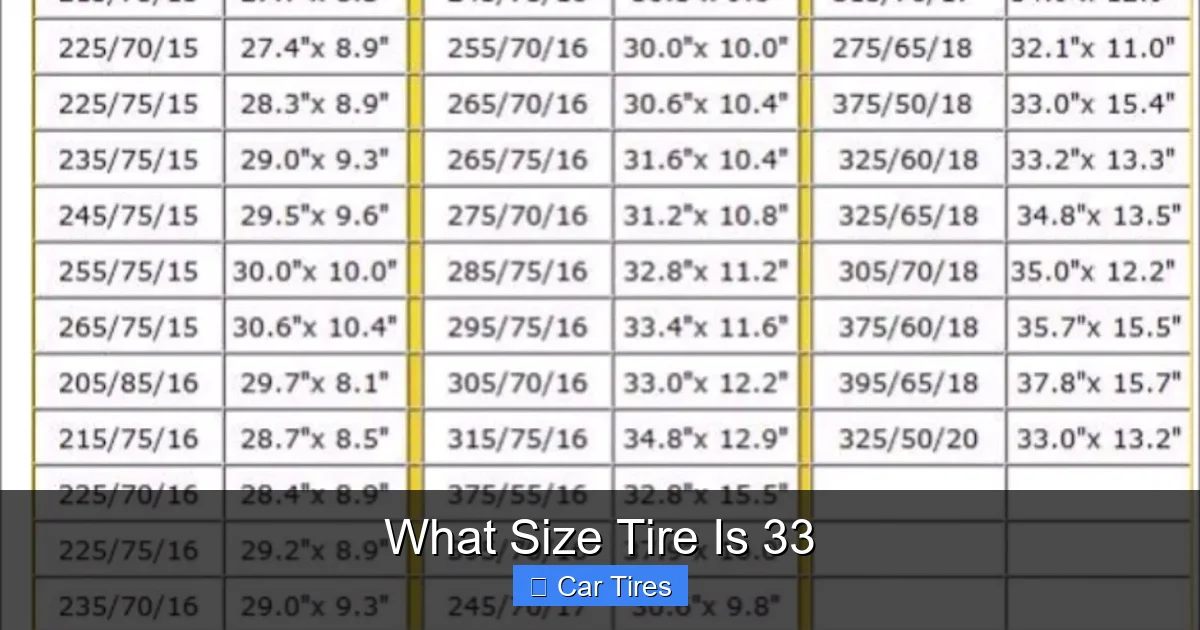
Visual guide about What Size Tire Is 33
Image source: i.ytimg.com
Now that you know what “33-inch” means, let’s look at the most common tire sizes that fall into this category. Each has its own pros and cons depending on your vehicle, driving style, and terrain.
285/75R16 – The Classic Choice
This is one of the most popular 33-inch tire sizes, especially for older trucks and Jeeps. It fits 16-inch rims and offers a good balance of width, sidewall height, and availability. The 285 mm width (about 11.2 inches) provides solid traction without being too wide for most stock fenders.
This size is commonly used on:
– Jeep Wrangler TJ and JK
– Ford F-150 (with minor modifications)
– Toyota Tacoma (with a 2–3 inch lift)
It’s a great all-around choice for off-roading, daily driving, and light towing.
305/70R17 – Wider and More Aggressive
If you want a wider footprint and a more aggressive look, the 305/70R17 is a top pick. At 305 mm wide (about 12 inches), it offers excellent grip and stability, especially on loose terrain like sand or mud.
This size fits 17-inch rims and is popular on:
– Ram 1500
– Ford F-150 (with a leveling kit or lift)
– Toyota Tundra
– Nissan Titan
The wider tread also means better handling on highways, though it may slightly reduce fuel economy due to increased rolling resistance.
255/80R17 – Tall and Narrow
This size is less common but useful for drivers who want maximum sidewall height without going too wide. The 255 mm width (about 10 inches) is narrower than most 33-inch options, making it ideal for vehicles with tight wheel wells or those who prioritize ride comfort over extreme traction.
It’s often used on:
– Subaru Ascent (with modifications)
– Some lifted SUVs with limited clearance
– Vehicles where fuel efficiency is a concern
The tall sidewall (80% aspect ratio) provides a smoother ride and better absorption of bumps, but may feel less responsive in sharp turns.
295/70R17 – The Balanced Option
Sitting between the 285 and 305 widths, the 295/70R17 offers a great middle ground. It’s wide enough for good off-road performance but not so wide that it causes rubbing on stock setups.
This size works well on:
– Chevrolet Silverado 1500
– GMC Sierra
– Lifted SUVs like the Ford Expedition
It’s a versatile choice for drivers who want a blend of on-road comfort and off-road capability.
275/70R18 – Modern Fit for Larger Rims
As more trucks come with 18-inch or larger rims, the 275/70R18 has become a popular 33-inch option. It fits 18-inch wheels and offers a slightly narrower width than the 305, making it a good fit for vehicles with limited fender clearance.
Common applications include:
– Ford F-150 with factory 18-inch wheels
– Ram 1500 with upgraded wheels
– Modern SUVs with larger rims
This size is ideal if you want to keep your factory wheels but still upgrade to a 33-inch tire.
Can Your Vehicle Handle 33-Inch Tires?
Visual guide about What Size Tire Is 33
Image source: tiresglobe.com
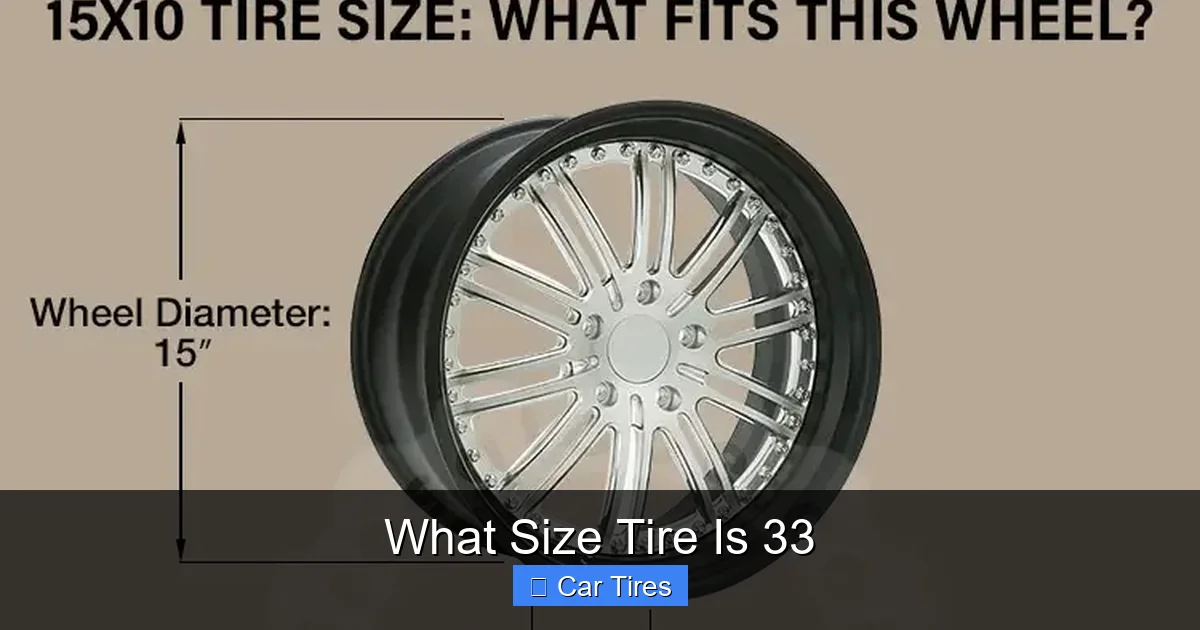
Before you buy a set of 33-inch tires, you need to make sure your vehicle can actually accommodate them. Not all trucks and SUVs are built to handle such large tires without modifications.
Check for Clearance Issues
The biggest concern with 33-inch tires is clearance. Even if your vehicle has enough space at rest, the tires may rub against the fenders, suspension components, or frame when turning, going over bumps, or carrying a load.
Common areas where rubbing occurs:
– Front fenders during sharp turns
– Rear wheel wells when the suspension compresses
– Control arms or sway bars during articulation
To avoid this, many drivers install a lift kit or leveling kit. A 2-inch leveling kit (which raises the front to match the rear) is often enough for 33-inch tires on full-size trucks. For more extreme setups or lifted Jeeps, a 4-inch or higher lift may be needed.
Speedometer and Drivetrain Considerations
As mentioned earlier, larger tires change the effective gear ratio of your vehicle. This can lead to:
– Inaccurate speedometer readings
– Harsh shifting in automatic transmissions
– Reduced engine performance and fuel economy
To fix this, you’ll need to recalibrate your vehicle’s computer. Most modern trucks allow you to adjust the tire size in the settings menu. If yours doesn’t, a performance tuner like a Bully Dog, Superchips, or DiabloSport can do the job.
Legal and Safety Concernments
In some states, there are laws limiting how much you can modify your vehicle’s tire size. For example, California requires that tires not extend beyond the fenders. Always check local regulations before making modifications.
Additionally, larger tires put more stress on your vehicle’s suspension, steering, and drivetrain. Make sure your axles, ball joints, and CV joints are in good condition before upgrading.
Performance Benefits and Trade-Offs of 33-Inch Tires
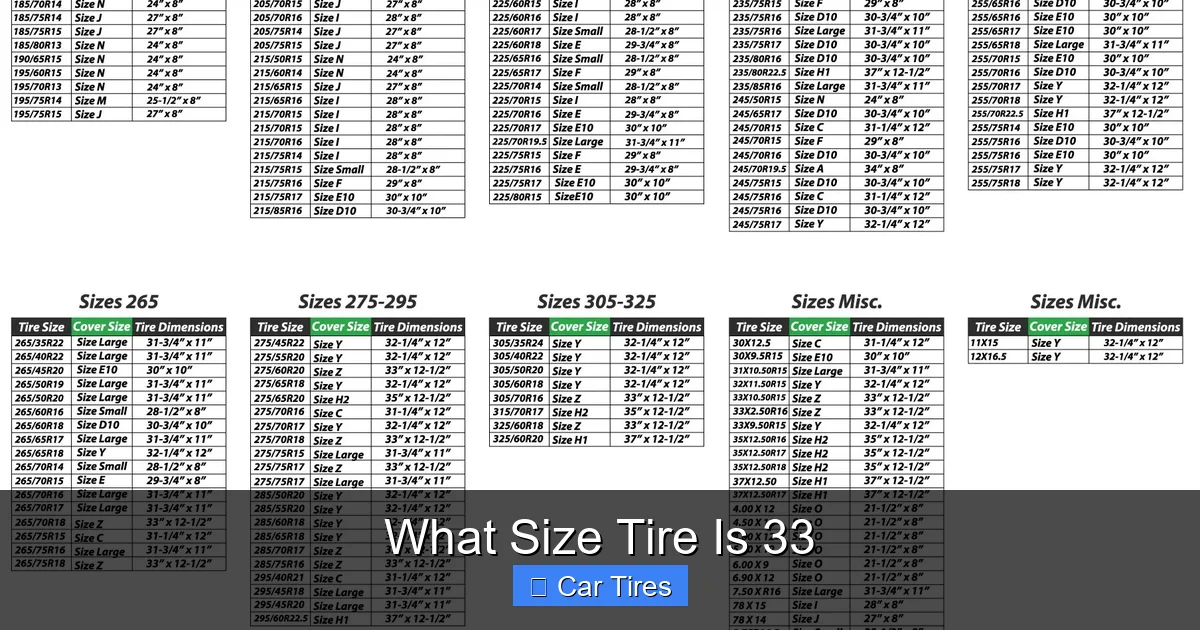
Visual guide about What Size Tire Is 33
Image source: i.pinimg.com
Upgrading to 33-inch tires isn’t just about looks—it can significantly impact your vehicle’s performance. But like any modification, there are pros and cons to consider.
Advantages
- Improved Off-Road Capability: The larger diameter and taller sidewalls provide better traction in mud, snow, and rocky terrain. The increased ground clearance helps you clear obstacles without damaging the undercarriage.
- Enhanced Appearance: Let’s be honest—33-inch tires make your vehicle look tough. They fill out the wheel wells and give your truck or SUV a commanding presence on the road.
- Better Ride Comfort: Taller sidewalls absorb bumps and potholes more effectively than low-profile tires, resulting in a smoother ride—especially on rough roads.
- Increased Load Capacity: Many 33-inch tires have higher load ratings, making them suitable for towing and hauling heavy loads.
Disadvantages
- Reduced Fuel Economy: Larger, heavier tires increase rolling resistance and require more power to rotate, which can lower your MPG by 1–3 miles per gallon.
- Harsher Braking and Acceleration: The added weight and larger diameter can make your vehicle feel slower to accelerate and take longer to stop.
- Potential for Rubbing: Without proper modifications, 33-inch tires can rub against the body or suspension, leading to wear and damage.
- Higher Cost: 33-inch tires, especially high-performance or all-terrain models, can be expensive—often $200–$400 per tire or more.
- Speedometer Inaccuracy: As discussed, your speedometer will likely read low unless recalibrated.
Who Should Consider 33-Inch Tires?
33-inch tires are ideal for:
– Off-road enthusiasts
– Overlanders and campers
– Truck owners who want a rugged look
– Drivers with lifted or modified vehicles
They’re less ideal for:
– Daily commuters focused on fuel efficiency
– Drivers with unmodified, stock vehicles
– Those who primarily drive on smooth highways
How to Choose the Right 33-Inch Tire for Your Needs
With so many options available, choosing the right 33-inch tire can feel overwhelming. Here’s a step-by-step guide to help you make the best decision.
Step 1: Determine Your Rim Size
Your tire must match your rim diameter. If you have 16-inch wheels, look for sizes like 285/75R16. If you have 17-inch or 18-inch wheels, choose accordingly. Never mix rim and tire sizes—it’s unsafe and can damage your vehicle.
Step 2: Consider Your Driving Conditions
– Highway Driving: Choose all-season or highway-terrain tires with low rolling resistance for better fuel economy and quiet operation.
– Off-Roading: Look for mud-terrain or all-terrain tires with aggressive tread patterns and reinforced sidewalls.
– Snow and Ice: Opt for winter-rated or all-weather tires with the Three-Peak Mountain Snowflake symbol.
Step 3: Check Load and Speed Ratings
Make sure the tire’s load index meets or exceeds your vehicle’s requirements. For example, a light truck may need a load range E tire (10-ply rated) for heavy towing. Also, check the speed rating—most 33-inch tires are rated for 110 mph or higher, which is more than sufficient for normal driving.
Step 4: Read Reviews and Compare Brands
Popular brands for 33-inch tires include:
– BFGoodrich (KO2, All-Terrain T/A)
– Goodyear (Wrangler Duratrac, SilentArmor)
– Nitto (Ridge Grappler, Terra Grappler)
– Toyo (Open Country, M/T)
Read customer reviews on sites like Tire Rack, Discount Tire, or Amazon to see real-world performance and durability.
Step 5: Factor in Cost and Warranty
33-inch tires can be a significant investment. Compare prices, but don’t sacrifice quality for savings. Look for tires with good warranties—many offer 40,000–60,000 mile tread life warranties or even free replacement for defects.
Installation and Maintenance Tips for 33-Inch Tires
Once you’ve chosen your tires, proper installation and maintenance are key to getting the most out of them.
Professional Installation is Recommended
Mounting and balancing large tires requires specialized equipment. Take your vehicle to a reputable tire shop that has experience with lifted trucks and oversized tires. They’ll ensure the tires are balanced correctly and mounted safely.
Check Tire Pressure Regularly
Underinflated tires wear unevenly, reduce fuel economy, and can overheat. Overinflated tires reduce traction and make the ride harsh. Use a quality tire pressure gauge and check pressure at least once a month, or before long trips.
The correct PSI is usually listed on the driver’s side door jamb or in the owner’s manual. Don’t rely on the number printed on the tire sidewall—that’s the maximum pressure, not the recommended pressure.
Rotate Tires Every 5,000–7,000 Miles
Regular rotation helps ensure even wear and extends tire life. Follow the rotation pattern recommended by the manufacturer (usually front-to-back or cross-pattern for 4WD vehicles).
Inspect for Damage
After off-roading or driving on rough roads, inspect your tires for cuts, punctures, or sidewall bulges. These can lead to blowouts if left unchecked.
Recalibrate Your Speedometer
Don’t forget this crucial step! Use a tuner or visit a shop that can adjust your vehicle’s computer to match the new tire size. This ensures accurate speed readings and prevents transmission issues.
Conclusion
So, what size tire is 33? It’s not a single size, but a category of tires with an overall diameter of approximately 33 inches. These tires are popular among truck and SUV owners who want improved off-road performance, better ground clearance, and a bold, rugged look. Common sizes include 285/75R16, 305/70R17, and 255/80R17—each offering a different balance of width, height, and performance.
While 33-inch tires come with many benefits, they also require careful consideration. You’ll need to check for clearance issues, recalibrate your speedometer, and possibly modify your vehicle with a lift kit. But for the right driver—especially one who enjoys off-roading or wants to enhance their vehicle’s appearance—the upgrade is well worth it.
By understanding tire sizing, choosing the right size for your rim and driving needs, and maintaining your tires properly, you can enjoy the full advantages of 33-inch tires for years to come. Whether you’re tackling mountain trails or cruising down the highway, the right tire makes all the difference.
Frequently Asked Questions
What does “33-inch tire” mean?
A “33-inch tire” refers to a tire with an overall diameter of approximately 33 inches from the ground to the top. It’s not a single standardized size but a general category that includes various width and rim combinations like 285/75R16 or 305/70R17.
Can I put 33-inch tires on my stock truck?
It depends on your vehicle. Some trucks can fit 33-inch tires with minor modifications like a leveling kit, while others may require a full lift. Always check for clearance and consult a professional before installing.
Will 33-inch tires affect my speedometer?
Yes, larger tires can cause your speedometer to read slower than your actual speed. You’ll need to recalibrate your vehicle’s computer using a tuner or dealership service to fix this.
Are 33-inch tires good for daily driving?
They can be, but they may reduce fuel economy and make the ride slightly harsher. All-terrain tires are a good compromise for daily use, offering a balance of comfort and off-road capability.
How much do 33-inch tires cost?
Prices vary by brand and type, but expect to pay between $200 and $400 per tire. High-performance or mud-terrain models can cost even more, especially when factoring in installation and balancing.
Do I need a lift kit for 33-inch tires?
Not always, but most vehicles will need at least a 2-inch leveling kit to prevent rubbing. Lifted trucks and Jeeps often require 3–4 inches of lift for proper clearance and performance.