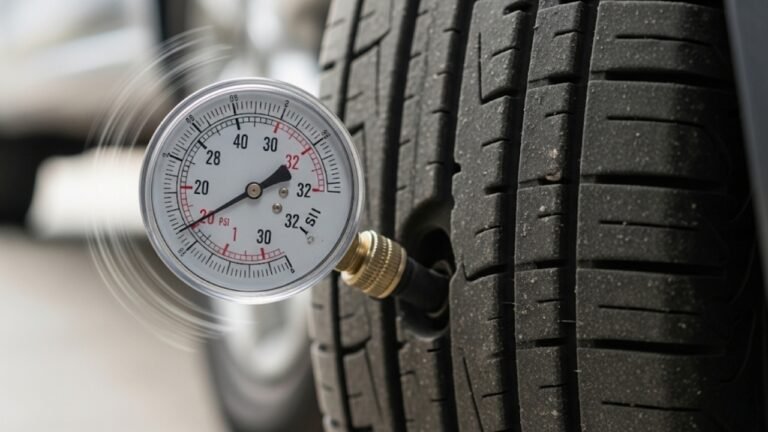
What Should My Bike Tire Pressure Be
Setting the right bike tire pressure is crucial for performance, safety, and comfort. Whether you’re riding on pavement, gravel, or trails, the correct PSI depends on your bike type, tire size, rider weight, and terrain. This guide breaks down everything you need to know to find your perfect tire pressure.
In This Article
- 1 Key Takeaways
- 2 📑 Table of Contents
- 3 What Should My Bike Tire Pressure Be? A Complete Guide
- 4 Why Tire Pressure Matters
- 5 How to Find Your Ideal Tire Pressure
- 6 Tire Pressure by Bike Type
- 7 Factors That Affect Tire Pressure
- 8 Common Mistakes to Avoid
- 9 Tools and Tips for Maintaining Proper Pressure
- 10 Conclusion
- 11 Frequently Asked Questions
- 11.1 How often should I check my bike tire pressure?
- 11.2 Can I use a car tire pressure gauge for my bike?
- 11.3 What happens if I ride with underinflated tires?
- 11.4 Is it okay to exceed the maximum PSI on my tire?
- 11.5 Do I need different pressures for front and rear tires?
- 11.6 Can I run tubeless tires at lower pressures?
Key Takeaways
- Check the sidewall of your tire: The recommended PSI range is printed there—this is your starting point.
- Rider weight matters: Heavier riders need higher pressure; lighter riders can go lower for better grip and comfort.
- Terrain affects pressure: Lower pressure improves traction on rough or wet surfaces; higher pressure reduces rolling resistance on smooth roads.
- Use a quality gauge: Relying on a hand pump’s built-in gauge can be inaccurate—invest in a separate digital or analog tire pressure gauge.
- Adjust seasonally: Tire pressure drops in cold weather, so check it more often in winter.
- Don’t overinflate: Too much pressure increases the risk of blowouts and reduces shock absorption.
- Test and fine-tune: Ride at different pressures to find what feels best for your style and conditions.
📑 Table of Contents
What Should My Bike Tire Pressure Be? A Complete Guide
You’ve probably heard that keeping your bike tires properly inflated is important—but what does that really mean? Is there a magic number you should always follow? The truth is, there’s no one-size-fits-all answer to “what should my bike tire pressure be.” It depends on a mix of factors: your bike type, tire size, how much you weigh, the kind of riding you do, and even the weather.
Getting your tire pressure right can make a huge difference. Too little pressure and you’ll feel sluggish, risk pinch flats, and lose control on corners. Too much pressure and your ride becomes harsh, bouncy, and more prone to blowouts. The sweet spot gives you better speed, comfort, and grip—whether you’re cruising city streets, climbing mountain trails, or racing down a country road. In this guide, we’ll walk you through everything you need to know to find the perfect tire pressure for your bike.
Why Tire Pressure Matters
Think of your bike tires as the only point of contact between you and the ground. That’s a big responsibility! The air inside your tires supports your weight, absorbs shocks, and helps you roll efficiently. When the pressure is off, even slightly, it can affect your ride in noticeable ways.
Visual guide about What Should My Bike Tire Pressure Be
Image source: biketoworkday.us
Performance and Efficiency
Properly inflated tires reduce rolling resistance—the energy it takes to keep moving. On smooth pavement, higher pressure means less tire surface touching the ground, so you roll faster with less effort. This is why road cyclists often run their tires at the upper end of the PSI range. But if you go too high, you lose traction and comfort, especially on uneven surfaces.
Safety and Control
Underinflated tires are more likely to get pinch flats—when the inner tube gets pinched between the rim and an obstacle like a pothole. They also make your bike feel sluggish and harder to steer. Overinflated tires, on the other hand, can burst under stress or lose grip during sharp turns, increasing the risk of skidding.
Comfort and Ride Quality
Lower pressure allows the tire to flex and absorb bumps, giving you a smoother ride. This is especially helpful on gravel, dirt, or rough city roads. Mountain bikers often run lower pressures to improve grip and control on technical terrain. But again, too low and you risk damaging your rims or getting flats.
In short, tire pressure affects how your bike handles, how fast you go, and how comfortable you feel. It’s not just about avoiding flats—it’s about optimizing your entire riding experience.
How to Find Your Ideal Tire Pressure
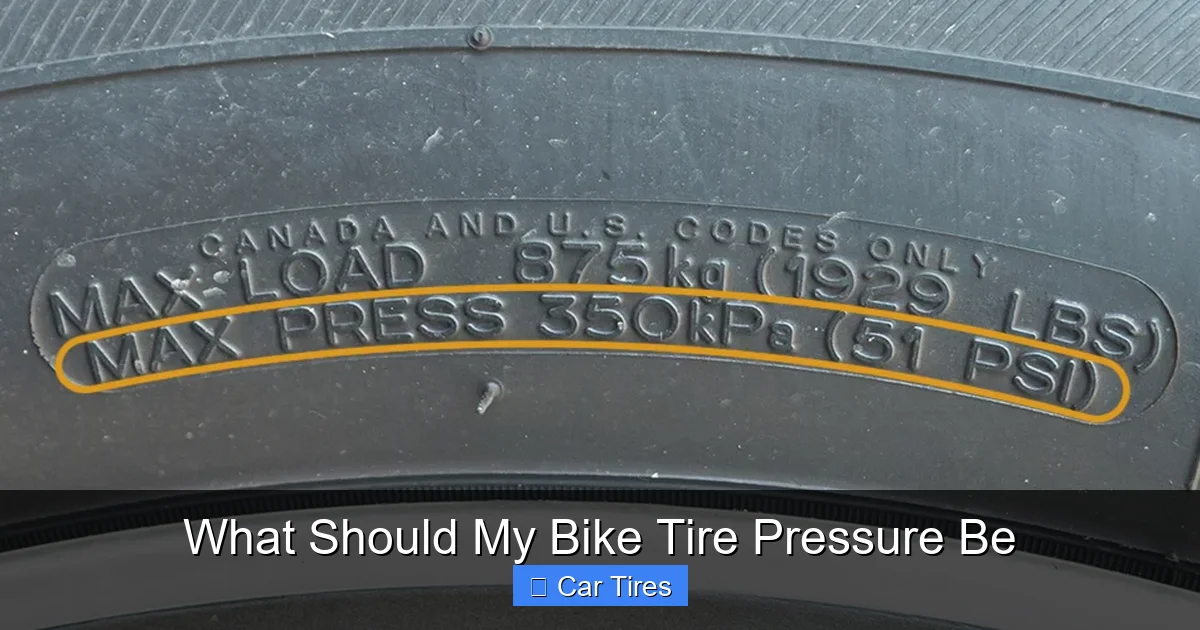
So how do you figure out what your bike tire pressure should be? Start with the basics: check the sidewall of your tire. You’ll see a range like “50–80 PSI” or “30–50 PSI.” This is the manufacturer’s recommended range, and it’s your starting point. But don’t stop there—this range is broad for a reason. You’ll need to narrow it down based on your specific situation.
Visual guide about What Should My Bike Tire Pressure Be
Image source: prioritytire.com
Step 1: Know Your Tire Size
The size of your tire affects how much air it can hold and how it performs. Common sizes include 700c for road bikes, 26”, 27.5”, and 29” for mountain bikes, and 20” for folding or BMX bikes. Wider tires generally run at lower pressures than narrow ones. For example, a 23mm road tire might need 100 PSI, while a 2.3” mountain bike tire could run at just 25 PSI.
Step 2: Consider Your Weight
Your body weight plays a big role in determining the right pressure. Heavier riders compress the tire more, so they need higher pressure to avoid bottoming out. Lighter riders can go lower for better comfort and grip. A good rule of thumb: add 1 PSI for every 10 pounds (4.5 kg) over 150 pounds (68 kg). So if you weigh 180 pounds, you might add 3 PSI to the baseline.
Step 3: Think About Your Riding Style and Terrain
Are you racing on smooth pavement? Commuting through pothole-ridden streets? Hitting rocky singletrack? Each scenario calls for a different pressure. Road riders prioritize speed and efficiency, so they lean toward higher pressures. Mountain bikers want traction and control, so they go lower. Commuters and gravel riders often find a middle ground that balances comfort and durability.
Step 4: Use a Reliable Pressure Gauge
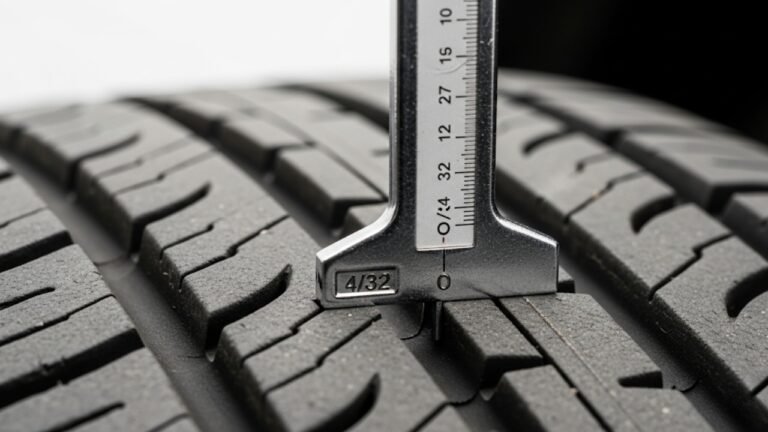
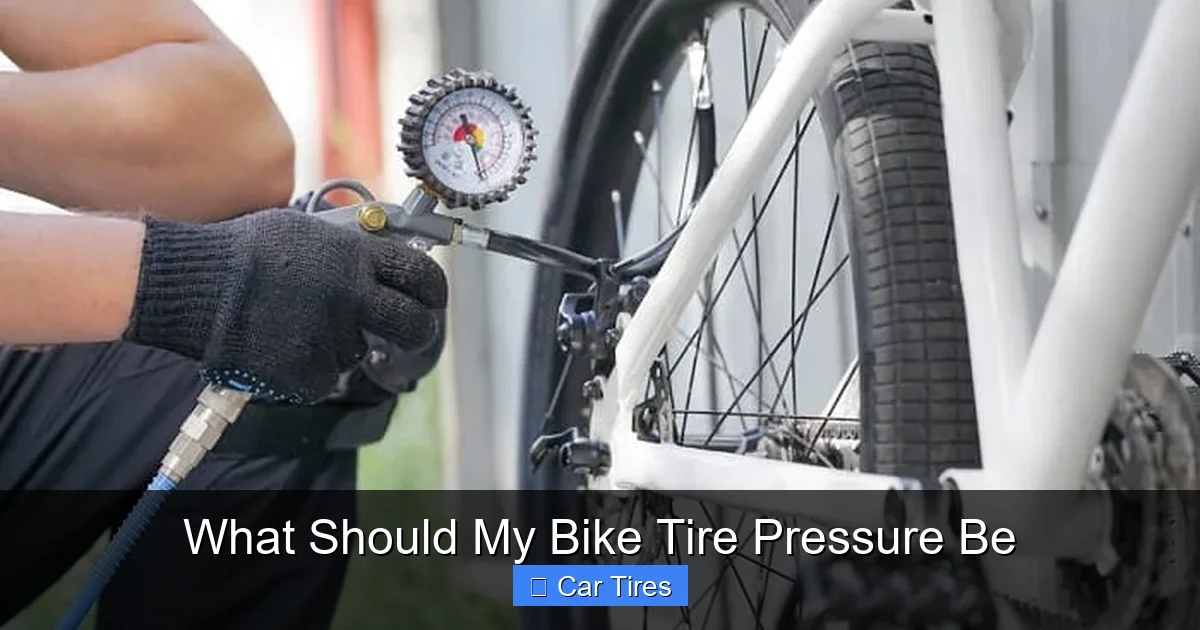
Don’t trust the gauge on your pump—especially if it’s a cheap hand pump. Many built-in gauges are inaccurate. Invest in a standalone digital or analog gauge (they cost $10–$20) for precise readings. Check your pressure when the tires are cold (not after riding), as heat from friction can increase PSI.
Step 5: Test and Adjust
The best way to find your ideal pressure is to experiment. Start in the middle of the recommended range, then ride. If the bike feels harsh or bouncy, try lowering the pressure by 5 PSI. If it feels sluggish or you notice sidewall flex, increase it slightly. Keep notes and adjust until you find the sweet spot.
Tire Pressure by Bike Type
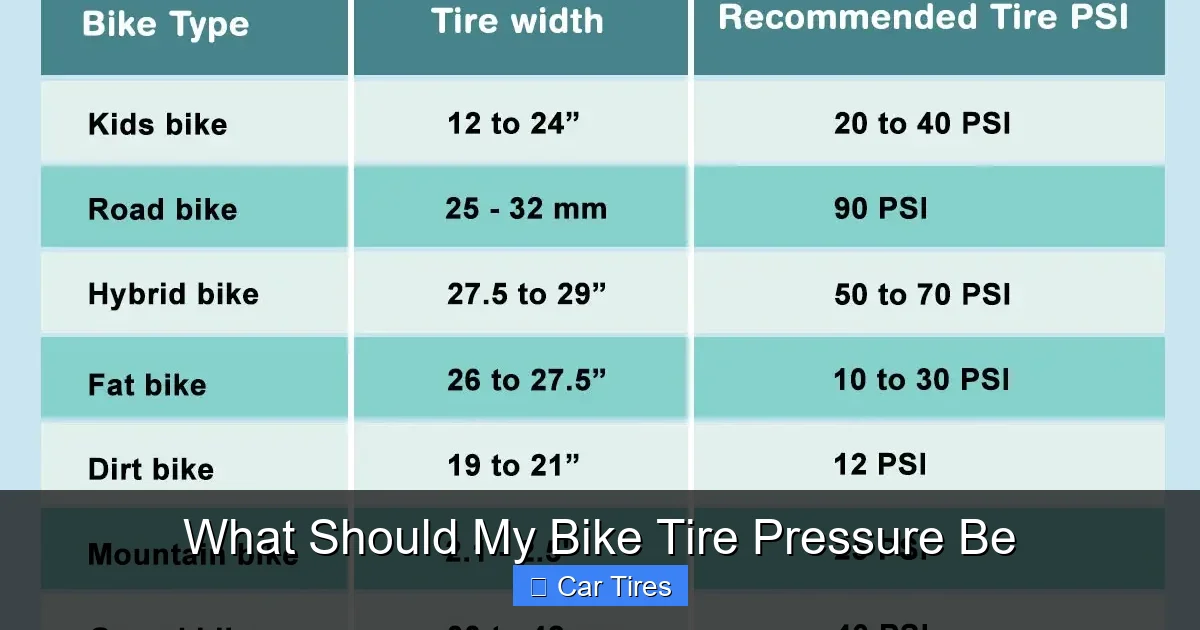
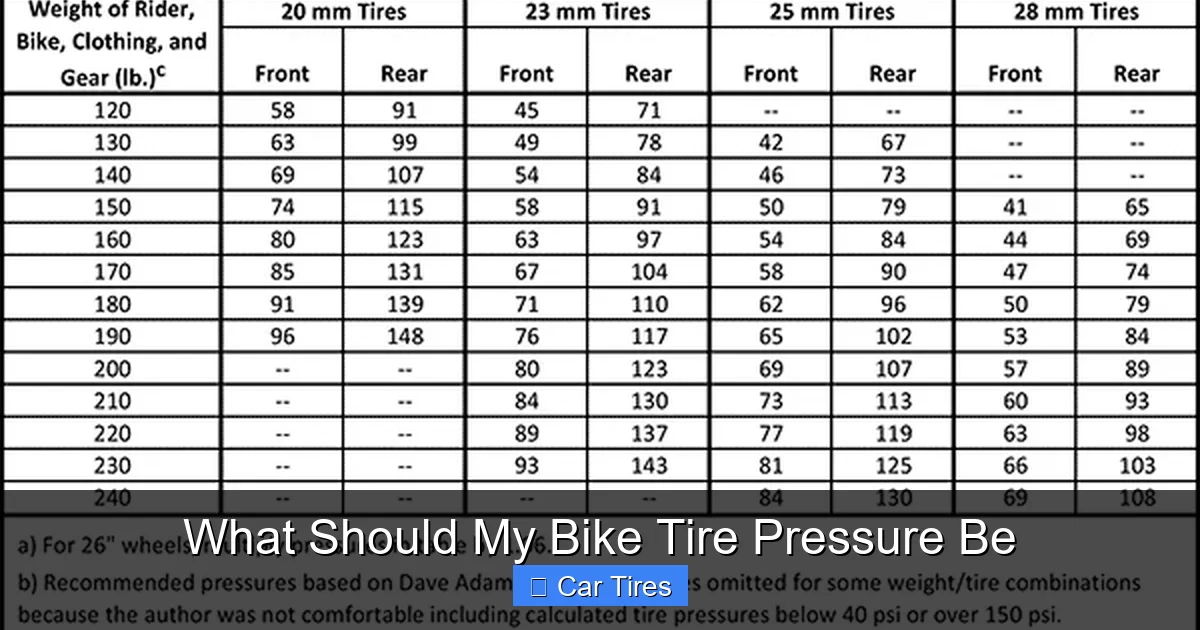
Different bikes are designed for different purposes, and that means different tire pressure needs. Let’s break it down by category.
Visual guide about What Should My Bike Tire Pressure Be
Image source: i2.wp.com
Road Bikes
Road bikes are built for speed and efficiency on smooth surfaces. They typically use narrow, high-pressure tires (23–28mm wide) to minimize rolling resistance. Most road riders run their tires between 80 and 130 PSI, depending on weight and tire size.
For example, a 150-pound rider on 25mm tires might start at 90 PSI. A 200-pound rider on the same tires might go up to 110 PSI. But remember—modern road bikes are increasingly using wider tires (28–32mm), which can be run at lower pressures for better comfort without sacrificing speed. In fact, many experts now recommend dropping pressure by 10–15% compared to older, narrower setups.
Pro tip: If you’re riding on rough pavement or chip seal, consider lowering your pressure slightly to absorb vibrations and reduce fatigue.
Mountain Bikes
Mountain bikes are all about grip, control, and shock absorption. They use wide, knobby tires (2.0” to 2.6” or more) that perform best at lower pressures—typically between 20 and 35 PSI.
Front and rear pressures often differ. The front tire handles steering and absorbs impacts, so it can run a bit lower (20–28 PSI). The rear tire supports more weight and handles acceleration, so it usually needs a bit more (25–35 PSI). Heavier riders or those riding aggressive terrain may go up to 30–40 PSI in the rear.
On technical trails with roots and rocks, lower pressure helps the tire conform to the terrain, improving traction. But go too low and you risk “burping” air during hard cornering or damaging your rims on sharp hits. Tubeless setups allow for even lower pressures since there’s no inner tube to pinch.
Hybrid and City Bikes
Hybrid bikes blend features of road and mountain bikes, often with 700c or 26” wheels and tires 32–42mm wide. They’re designed for comfort and versatility on paved roads, bike paths, and light gravel.
Recommended pressure usually falls between 50 and 70 PSI. Lighter riders can go toward the lower end for a cushier ride; heavier riders or those carrying loads (like panniers) should increase pressure to avoid pinch flats.
City commuters should also consider road conditions. If you’re dodging potholes and debris, a slightly lower pressure (within the safe range) can help absorb impacts and reduce the chance of flats.
Gravel and Adventure Bikes
Gravel bikes are built for mixed terrain—pavement, dirt roads, and light trails. They use wider tires (35–50mm) that can be run at lower pressures than road tires but higher than mountain bike tires.
Typical pressure ranges from 35 to 60 PSI. On smooth gravel, you might go higher for speed. On rough or muddy sections, drop the pressure for better grip. Many gravel riders use tubeless setups to run even lower pressures (down to 25–30 PSI) without fear of flats.
BMX and Folding Bikes
BMX bikes use small, strong 20” tires that handle high stress during jumps and tricks. They’re usually inflated to 60–80 PSI to maintain shape and responsiveness.
Folding bikes, like Brompton or Dahon, often have narrow tires and may require 80–100 PSI. Because they’re lightweight and used on paved surfaces, higher pressure helps with efficiency.
Factors That Affect Tire Pressure
Even if you’ve found your ideal pressure, it’s not set in stone. Several factors can change how your tires perform, so you’ll need to adjust accordingly.
Weather and Temperature
Air contracts in cold weather and expands in heat. For every 10°F (5.5°C) drop in temperature, tire pressure can decrease by about 2 PSI. That means your perfectly inflated tires in the morning could be underinflated by afternoon if it warms up—or dangerously low if you ride in winter.
Check your pressure more often in cold months. If you store your bike indoors and ride outside in winter, let the tires cool down before checking—don’t measure them right after bringing the bike in from the cold.
Altitude and Air Density
If you ride at high altitudes, the air is thinner, but this doesn’t directly affect tire pressure. However, temperature swings are often more extreme, so monitor your PSI closely.
Tire Age and Condition
Older tires lose air more quickly due to microscopic cracks in the rubber. If you notice you’re constantly topping off your tires, it might be time for a replacement. Also, check for cuts, bulges, or worn tread—these can affect how pressure impacts performance.
Load and Cargo
Carrying a backpack, panniers, or a child seat adds weight. Increase your tire pressure by 5–10 PSI to compensate. For long tours with heavy loads, consider using wider tires that can handle lower pressures without risking damage.
Tubeless vs. Tubed Tires
Tubeless tires can often run at lower pressures because there’s no inner tube to pinch. They also allow you to use sealant, which can plug small punctures. However, they require proper setup and maintenance. If you’re switching to tubeless, start at the lower end of the pressure range and adjust based on feel.
Common Mistakes to Avoid
Even experienced riders make tire pressure mistakes. Here are some common pitfalls and how to avoid them.
Overinflating Because “More Is Better”
Some riders think higher pressure always means faster riding. While it’s true that overinflated tires reduce rolling resistance on smooth surfaces, they also make the ride harsh and reduce grip. On rough roads, you’ll actually slow down because you’re bouncing instead of rolling.
Don’t max out your tires just because you can. Use the recommended range as a guide and adjust based on feel.
Ignoring the Sidewall Recommendations
The PSI range printed on your tire isn’t a suggestion—it’s a safety limit. Going below the minimum can cause pinch flats or rim damage. Going above the maximum risks blowouts, especially if the tire heats up during long rides.
Checking Pressure After Riding
Heat from riding increases tire pressure. If you check your PSI right after a ride, you’ll get a falsely high reading. Always check when the tires are cold—ideally before your first ride of the day.
Using the Wrong Gauge
Cheap or worn-out gauges can give inaccurate readings. A digital gauge is more precise than most analog ones. Calibrate your gauge occasionally by comparing it to a known accurate one.
Not Adjusting for Conditions
Don’t use the same pressure for a smooth bike path and a rocky trail. Be flexible. Carry a small pump or CO2 inflator so you can adjust on the go.
Tools and Tips for Maintaining Proper Pressure
Keeping your tires at the right pressure doesn’t have to be a chore. With the right tools and habits, it becomes second nature.
Invest in a Good Pump
A floor pump with a built-in gauge is essential for home use. Look for one with a large, easy-to-read dial and a pressure release valve. For on-the-go adjustments, a compact hand pump or CO2 inflator is handy.
Use a Digital Gauge
As mentioned earlier, a standalone digital gauge is more accurate than most pump gauges. Keep it in your bike bag or garage for regular checks.
Check Weekly
Make it a habit to check your tire pressure once a week—or before long rides. Even if you don’t ride often, tires naturally lose air over time (about 1–2 PSI per week).
Mark Your Valves
Use a piece of tape or a marker to note your preferred pressure on the valve stem. This makes it easy to see at a glance if you’re close to your target.
Consider a Tire Pressure Monitoring System (TPMS)
For tech-savvy riders, wireless TPMS sensors attach to your valve stems and send real-time pressure data to your phone or bike computer. They’re especially useful for long-distance or off-road riding.
Conclusion
So, what should your bike tire pressure be? The answer isn’t a single number—it’s a range you personalize based on your bike, your body, and your ride. Start with the manufacturer’s recommendation, adjust for weight and terrain, and fine-tune through testing. Remember, the goal isn’t just to avoid flats—it’s to ride faster, safer, and more comfortably.
Don’t let tire pressure be an afterthought. A few minutes of checking and adjusting can transform your ride. Whether you’re a weekend warrior, a daily commuter, or a trail explorer, the right pressure makes all the difference. So grab your pump, check those PSI numbers, and hit the road—or trail—with confidence.
Frequently Asked Questions
How often should I check my bike tire pressure?
Check your tire pressure at least once a week, or before long rides. Tires naturally lose air over time, and pressure can drop significantly in cold weather.
Can I use a car tire pressure gauge for my bike?
No—car gauges aren’t designed for the higher PSI ranges of bike tires and may not be accurate. Use a dedicated bike tire gauge for best results.
What happens if I ride with underinflated tires?
Underinflated tires increase rolling resistance, reduce control, and raise the risk of pinch flats and rim damage. They also wear out faster.
Is it okay to exceed the maximum PSI on my tire?
No. Exceeding the maximum pressure can cause blowouts, especially when tires heat up during riding. Always stay within the recommended range.
Do I need different pressures for front and rear tires?
Sometimes. On mountain bikes, the rear tire often needs slightly higher pressure due to more weight. On road bikes, pressures are usually similar unless you’re carrying a load.
Can I run tubeless tires at lower pressures?
Yes—tubeless tires can often run 5–10 PSI lower than tubed ones because there’s no inner tube to pinch. This improves grip and comfort on rough terrain.