
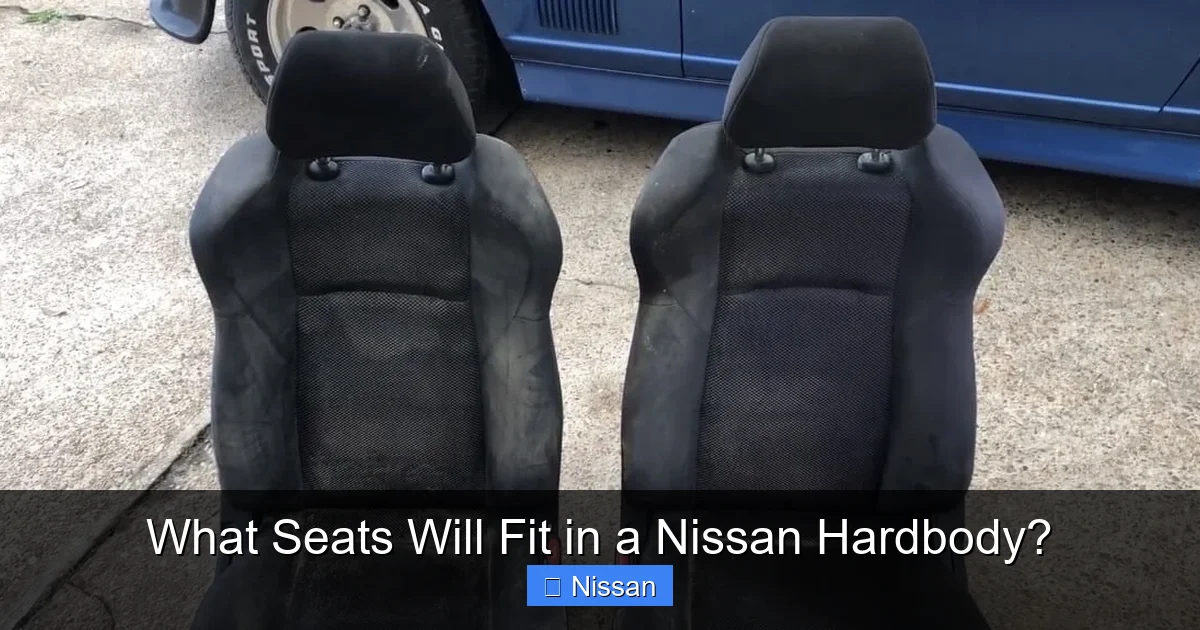
What Seats Will Fit in a Nissan Hardbody?

If you’re restoring or upgrading your Nissan Hardbody, knowing what seats will fit is crucial. This guide covers factory replacements, aftermarket options, and custom installations to help you find the perfect seat for comfort and style.
Key Takeaways
- Factory seats from other Nissan models often fit: Many seats from D21, D40, and Frontier models bolt directly into the Hardbody with little to no modification.
- Aftermarket seats are a popular upgrade: Brands like Corbeau, Recaro, and Sparco offer performance and comfort seats that can be adapted to fit the Hardbody.
- Seat brackets and adapters are essential: Universal or model-specific brackets help secure non-OEM seats safely and properly.
- Consider seat height and floor clearance: Low-profile or racing seats may require floor modifications or risers for proper fit and safety.
- Airbag and wiring compatibility matters: Swapping modern seats with airbags requires careful integration with the truck’s electrical system.
- Custom upholstery enhances comfort and style: Replacing worn factory seats with custom covers or foam can refresh your interior without a full seat swap.
- Always prioritize safety and legality: Ensure any seat installation meets crash safety standards and local regulations.
📑 Table of Contents
- What Seats Will Fit in a Nissan Hardbody? A Complete Guide
- Understanding the Nissan Hardbody Seat Mounting System
- Factory Seat Swaps: Best OEM Options
- Aftermarket Seats: Performance and Comfort Upgrades
- Custom Upholstery and Interior Refresh
- Safety, Wiring, and Legal Considerations
- Installation Tips and Best Practices
- Conclusion: Finding the Perfect Seat for Your Hardbody
What Seats Will Fit in a Nissan Hardbody? A Complete Guide
If you’re a proud owner of a Nissan Hardbody—whether it’s a D21 from the ’80s or early ’90s or the slightly updated D40—you know these trucks are built tough. But over time, the original seats can wear out, lose support, or just feel outdated. Maybe you’re restoring a classic, upgrading for off-road comfort, or simply want a more modern look. Whatever your reason, one of the most common questions is: *What seats will fit in a Nissan Hardbody?*
The good news is, there are plenty of options. From factory replacements to high-performance aftermarket seats, the Nissan Hardbody’s seating setup is surprisingly adaptable. But it’s not just about dropping in a new seat and hoping it works. You need to consider mounting points, seat height, wiring, safety, and comfort. This guide will walk you through everything you need to know to choose and install the right seats for your Hardbody.
We’ll cover factory seat swaps, popular aftermarket brands, custom upholstery, and even some creative DIY solutions. Whether you’re aiming for a stock restoration or a full custom interior, this guide will help you make an informed decision. Let’s dive in.
Understanding the Nissan Hardbody Seat Mounting System
Visual guide about What Seats Will Fit in a Nissan Hardbody?
Image source: psychoautos.com
Before you start shopping for new seats, it’s important to understand how the original seats are mounted in your Nissan Hardbody. The Hardbody uses a simple but effective four-bolt floor mounting system. Each seat—driver and passenger—is secured to the floor with four bolts, typically 12mm or 14mm in size, spaced in a rectangular pattern.
This mounting pattern is one of the reasons the Hardbody is so popular among swappers. It’s relatively standard across many Nissan trucks from the same era. The bolt holes are located near the front and rear of the seat rails, and the rails themselves are bolted directly to the floor pans. There are no complex sliding mechanisms or electronic adjustments in most factory setups, which makes swapping easier.
Bolt Pattern and Rail Compatibility
The standard bolt pattern for Nissan Hardbody seats is approximately 13.5 inches front to back and 11 inches side to side. This pattern is shared with several other Nissan models, including the D21, D40, and early Frontier (1998–2004). That means seats from these trucks often bolt right in with little or no modification.
However, not all seats are created equal. Some aftermarket or non-Nissan seats may have different rail spacing or mounting points. In those cases, you’ll need adapter brackets or custom fabrication to make them fit. We’ll cover those solutions later.
Floor Pan Condition Matters
Another thing to consider is the condition of your truck’s floor pans. Over time, rust and corrosion can weaken the mounting points, especially in older Hardbodies. Before installing new seats, inspect the floor where the bolts go. If the metal is thin or rusted through, you may need to patch or reinforce the area. Welding in new mounting plates or using oversized washers can help distribute the load and prevent future damage.
Also, keep in mind that some aftermarket seats sit lower or higher than factory units. If you’re installing low-profile racing seats, you might need to modify the floor to avoid interference with the transmission tunnel or frame rails. Always measure twice and plan your installation carefully.
Factory Seat Swaps: Best OEM Options

Visual guide about What Seats Will Fit in a Nissan Hardbody?
Image source: psychoautos.com
One of the easiest and most cost-effective ways to upgrade your Hardbody’s seats is by swapping in factory seats from another Nissan model. Because of shared platforms and mounting systems, several OEM seats bolt right in with minimal hassle.
Nissan D21 and D40 Seats
The most straightforward swap is using seats from another D21 or D40 Hardbody. These trucks share nearly identical interior dimensions and mounting points. Whether you’re replacing a torn driver’s seat or upgrading both front seats, OEM replacements are widely available through junkyards, online auctions, or Nissan parts dealers.
Look for seats in good condition—minimal cracking, intact foam, and functional recliners. Black or gray cloth seats are common, but some later models came with vinyl or even leather options. If you’re going for a period-correct restoration, sticking with factory seats is the way to go.
Early Nissan Frontier Seats (1998–2004)
The first-generation Nissan Frontier (1998–2004) used a very similar chassis and interior layout to the Hardbody. In fact, many consider the Frontier the spiritual successor to the D21/D40 line. As a result, Frontier seats are a popular upgrade for Hardbody owners.
Frontier seats often feature better cushioning, improved lumbar support, and more modern styling. They also tend to have more adjustment options, including tilt and height adjustments on some models. The bolt pattern is nearly identical, so installation is usually a direct bolt-in with minor trimming or bracket adjustments.
One thing to note: Frontier seats may sit slightly higher due to thicker padding. This could affect headroom, especially if you’re running a low roof or have a lifted suspension. Measure your clearance before committing to the swap.
Other Nissan Truck and SUV Seats
Believe it or not, seats from other Nissan vehicles can also work—with some creativity. For example, seats from the Nissan Pathfinder (WD21 or D21 chassis) or even the Xterra (first generation) have been successfully installed in Hardbodies. These seats often offer more comfort and modern features like side bolsters and better side support.
However, these swaps usually require custom brackets or modifications to the seat rails. The floor mounting points may not align perfectly, and the seat width or depth might differ. But for enthusiasts willing to put in the effort, the results can be worth it.
Aftermarket Seats: Performance and Comfort Upgrades

Visual guide about What Seats Will Fit in a Nissan Hardbody?
Image source: psychoautos.com
If you’re looking for more than just a replacement—maybe better support for off-roading, racing, or daily driving comfort—aftermarket seats are the way to go. Brands like Corbeau, Recaro, Sparco, and Bride offer high-quality seats designed for performance, durability, and style.
Popular Aftermarket Seat Brands
Corbeau is one of the most popular choices for truck and off-road enthusiasts. Their seats are known for excellent build quality, aggressive styling, and a wide range of options. The Corbeau GFX or Baja RS seats, for example, are bolt-in friendly and come with universal brackets that can be adapted to the Hardbody.
Recaro seats are legendary in the performance world. While expensive, they offer unmatched comfort, support, and adjustability. Recaro Sportster or Pole Position seats are often used in custom builds. However, they may require significant modification due to their unique mounting systems.
Sparco and Bride are other top-tier brands, especially popular in drifting and rally circles. Their seats are lightweight, rigid, and designed for high-G environments. But again, installation in a Hardbody will likely need custom brackets.
Universal vs. Model-Specific Brackets
Most aftermarket seats don’t come with vehicle-specific brackets. Instead, they use universal mounting rails that must be adapted to your truck. This is where seat brackets or adapter plates come in.
Companies like Seat Brackets USA or Custom Auto Interiors offer universal brackets designed to fit the Nissan Hardbody floor pattern. These brackets bolt to the floor and provide a secure base for the aftermarket seat rails. Some are adjustable, allowing you to fine-tune seat height and angle.
Alternatively, you can fabricate your own brackets using steel plate and welding. This is a common approach in custom builds, especially for racing or show trucks. Just make sure the welds are strong and the bolts are Grade 8 or higher for safety.
Seat Height and Clearance Considerations
One of the biggest challenges with aftermarket seats is seat height. Racing seats are often lower and more reclined, which can improve center of gravity and driver positioning. But in a Hardbody, this might cause issues with headroom, especially if you’re tall or have a lifted suspension.
Conversely, some aftermarket seats are taller and more upright, which could interfere with the dashboard or steering wheel. Always test-fit the seat before final installation. You may need to use seat risers or modify the floor to achieve the right height and angle.
Custom Upholstery and Interior Refresh
Not everyone wants to swap out their entire seat. Sometimes, a fresh set of upholstery is all you need to breathe new life into your Hardbody’s interior. Custom upholstery can improve comfort, style, and resale value—all without the hassle of a full seat swap.
Reupholstering Factory Seats
Reupholstering your existing seats is a cost-effective way to upgrade. You can choose from a wide range of materials: premium cloth, vinyl, leather, or even Alcantara. Many upholstery shops offer custom stitching, color matching, and foam replacement to restore worn cushions.
For example, you could have your factory seats re-covered in black leather with red stitching for a sporty look. Or go for a rugged, off-road vibe with marine-grade vinyl that’s easy to clean. The possibilities are endless.
DIY Upholstery Kits
If you’re handy with tools, DIY upholstery kits are available online. These kits include pre-cut fabric, foam, and instructions for re-covering your seats. Brands like Seat Cover Solutions or Coverking offer custom-fit covers designed specifically for Nissan Hardbody seats.
While not as durable as professional reupholstering, these kits are affordable and can dramatically improve the look of your interior. Just make sure to clean and inspect the seat frames before installation to avoid trapping moisture or debris.
Adding Seat Heaters and Cooling
Another upgrade to consider is adding seat heaters or cooling fans. Many modern cars come with heated and ventilated seats, and you can replicate that in your Hardbody. Universal seat heater kits are easy to install and plug into your truck’s 12V system.
For cooling, some aftermarket seats come with built-in fans, or you can add aftermarket ventilation kits. This is especially useful if you live in a hot climate or do a lot of off-roading where AC might not be enough.
Safety, Wiring, and Legal Considerations
When swapping seats—especially modern ones with airbags or electronic adjustments—safety and legality become major concerns. You can’t just bolt in a seat and hope for the best. Proper installation is critical.
Airbag and SRS Compatibility
Many newer seats come with side airbags or seatbelt pretensioners. If you install one of these seats, you’ll need to integrate it with your truck’s Supplemental Restraint System (SRS). This means wiring the airbag to the SRS module and ensuring the system recognizes the new seat.
In most Hardbodies, the factory SRS is basic or nonexistent. Swapping in a modern seat with airbags may require installing a full SRS harness, crash sensors, and a compatible control module. This is complex and should only be attempted by experienced mechanics or electricians.
Alternatively, you can disable the airbag (not recommended) or use seats without airbags to avoid complications.
Seatbelt Integration
The seatbelt must always be properly anchored. In the Hardbody, the seatbelt retracts from the B-pillar, not the seat itself. So even if you swap seats, the belt path remains the same. Make sure the new seat doesn’t interfere with the belt’s movement or locking mechanism.
Some aftermarket seats come with integrated seatbelts, but these are rare and may not meet safety standards. Stick with the factory belt system unless you’re building a dedicated race vehicle with harness bars and racing harnesses.
Legal and Inspection Requirements
In some states or countries, modifying seats can affect vehicle inspections or insurance. Make sure your seat swap complies with local laws. For example, some jurisdictions require seats to be securely bolted and meet crash test standards.
If you’re unsure, consult a certified mechanic or your local DMV. It’s better to be safe than sorry—especially when it comes to occupant safety.
Installation Tips and Best Practices
Now that you know what seats will fit in a Nissan Hardbody, let’s talk about how to install them properly. A good installation isn’t just about bolting things down—it’s about safety, comfort, and longevity.
Tools You’ll Need
Before you start, gather these tools:
– Socket wrench set (12mm, 14mm)
– Torque wrench
– Drill and bits (for custom brackets)
– Measuring tape
– Level
– Safety glasses and gloves
Step-by-Step Installation Guide
1. Remove the old seats: Disconnect the battery, then unbolt the four mounting bolts. Carefully lift the seat out, noting any wiring for power seats or airbags.
2. Test-fit the new seat: Place the new seat in position and check for clearance with the steering wheel, dashboard, and doors. Adjust height or angle as needed.
3. Install brackets or adapters: If using aftermarket seats, bolt the adapter brackets to the floor first. Make sure they’re level and secure.
4. Bolt in the new seat: Attach the seat to the brackets using high-strength bolts. Torque them to the manufacturer’s specifications—usually around 40–50 ft-lbs.
5. Reconnect wiring (if applicable): If your seat has heaters, airbags, or power adjustments, connect the harnesses carefully. Use dielectric grease on connectors to prevent corrosion.
6. Test everything: Reconnect the battery and test seat movement, heating, and airbag lights (if equipped). Make sure the seatbelt functions properly.
Common Mistakes to Avoid
– Over-tightening bolts: This can strip threads or warp seat rails.
– Ignoring wiring: Even if you don’t plan to use power features, disconnected wires can trigger warning lights.
– Skipping the test drive: Always take a short drive to check for rattles, movement, or discomfort.
Conclusion: Finding the Perfect Seat for Your Hardbody
So, what seats will fit in a Nissan Hardbody? The answer is: *a lot more than you might think.* From factory swaps to high-end aftermarket units, the Hardbody’s simple mounting system makes it one of the most seat-friendly trucks out there.
Whether you’re restoring a classic, building an off-road beast, or just want a more comfortable daily driver, there’s a seat option for you. Factory seats from D21, D40, or Frontier models offer a direct bolt-in solution. Aftermarket brands like Corbeau and Recaro provide performance and style. And custom upholstery can refresh your interior without breaking the bank.
Just remember: safety first. Always use proper brackets, secure bolts, and follow wiring guidelines. And don’t forget to check local laws if you’re making major modifications.
With the right seat, your Nissan Hardbody won’t just look better—it’ll feel better too. So go ahead, upgrade that interior, and enjoy the ride.
Frequently Asked Questions
Can I put Nissan Frontier seats in a Hardbody?
Yes, seats from the first-generation Nissan Frontier (1998–2004) often fit in a Hardbody with little to no modification. The bolt pattern is nearly identical, making it a popular and straightforward swap.
Do aftermarket seats require custom brackets?
Most aftermarket seats require universal or custom brackets to fit the Hardbody’s floor mounting points. Adapter plates from companies like Seat Brackets USA can simplify the process.
Will racing seats lower my seating position too much?
Racing seats are often lower and more reclined, which can reduce headroom. Measure your clearance and consider using seat risers or floor modifications if needed.
Can I install heated seats in my Hardbody?
Yes, universal seat heater kits are available and can be installed in factory or aftermarket seats. They plug into the 12V system and provide warmth in cold weather.
Are airbag seats safe to install in an older Hardbody?
Installing seats with airbags requires integrating them with an SRS system, which can be complex. It’s recommended only for experienced builders or professionals.
What’s the best material for off-road seat upholstery?
Marine-grade vinyl or durable cloth are ideal for off-roading. They resist moisture, dirt, and UV damage, and are easy to clean after muddy adventures.