
What Kind of Coolant for Dodge Ram 2500 Diesel?

Choosing the correct coolant for your Dodge Ram 2500 diesel is critical for engine longevity and performance. Using the wrong type can lead to corrosion, overheating, and costly repairs. This guide breaks down everything you need to know about selecting, maintaining, and replacing coolant in your heavy-duty Ram.
If you own a Dodge Ram 2500 with a diesel engine—whether it’s the legendary 5.9L Cummins or the newer 6.7L—you already know this truck is built for power, towing, and durability. But even the toughest engines need proper care, and one of the most overlooked yet vital aspects of maintenance is the coolant. Getting the right kind of coolant for your Dodge Ram 2500 diesel isn’t just a suggestion—it’s essential for protecting your engine, radiator, water pump, and other cooling components from extreme temperatures and internal corrosion.
Coolant, also known as antifreeze, does more than just prevent your engine from freezing in winter. It also raises the boiling point of the cooling system, prevents rust and scale buildup, and lubricates the water pump. In a high-performance diesel engine like the one in your Ram 2500, the cooling system works harder than in a standard gasoline engine. Diesel engines generate more heat due to higher compression ratios and turbocharging, so using the wrong coolant can quickly lead to overheating, corrosion, or even catastrophic engine failure.
Many truck owners make the mistake of assuming all coolants are the same. After all, they’re all brightly colored liquids that go into the radiator, right? Wrong. Coolants are formulated with different chemical additives designed for specific engine materials and operating conditions. Using the incorrect type—like pouring green conventional coolant into a system designed for HOAT—can cause chemical reactions that damage seals, hoses, and the radiator. That’s why it’s crucial to understand exactly what kind of coolant your Dodge Ram 2500 diesel requires and how to maintain it properly.
In this comprehensive guide, we’ll walk you through everything you need to know about coolant for your Ram 2500 diesel. From understanding the different types of coolant and why HOAT is the only safe choice, to learning how to check levels, perform a coolant flush, and recognize warning signs of trouble. Whether you’re a DIY mechanic or just want to stay informed before visiting the service center, this article will give you the knowledge to keep your truck running cool, clean, and reliable for years to come.
Key Takeaways
- Use only OEM-approved coolant: Dodge specifies HOAT (Hybrid Organic Acid Technology) coolant for the Ram 2500 diesel, typically Mopar HOAT or equivalent meeting Chrysler MS-12106.
- Avoid mixing coolant types: Mixing conventional green coolant with HOAT or OAT formulas can cause gel formation, clogging the cooling system and reducing efficiency.
- Stick to a 50/50 mix: Always use a 50/50 ratio of coolant to distilled water unless using pre-mixed coolant to ensure optimal freeze protection and heat transfer.
- Change coolant every 100,000 miles: The factory-recommended interval for coolant replacement in the Ram 2500 diesel is every 100,000 miles or 10 years, whichever comes first.
- Check coolant level monthly: Regular inspections help catch leaks or low levels early, preventing overheating and engine damage.
- Use distilled water only: Tap water contains minerals that can cause scale buildup and corrosion inside the radiator and engine block.
- Watch for signs of contamination: Milky coolant, sweet smell from the cabin, or overheating may indicate a blown head gasket or coolant system failure.
📑 Table of Contents
Understanding Coolant Types and Why It Matters
Coolant isn’t just a one-size-fits-all solution. Over the years, automotive manufacturers have developed several types of coolant, each with unique chemical formulations to meet the needs of different engines. For your Dodge Ram 2500 diesel, the stakes are especially high—this isn’t a commuter car; it’s a heavy-duty workhorse designed to tow trailers, haul loads, and endure extreme conditions. That means the cooling system must be robust, and the coolant must be up to the task.
The three main types of coolant you’ll encounter are Inorganic Additive Technology (IAT), Organic Acid Technology (OAT), and Hybrid Organic Acid Technology (HOAT). Each has its own strengths and weaknesses, and using the wrong one in your Ram 2500 can lead to serious problems.
IAT coolants are the oldest type, typically bright green in color. They were standard in vehicles from the 1950s through the 1990s and contain silicates and phosphates to prevent corrosion. While effective, these additives deplete quickly, requiring coolant changes every 2–3 years or 30,000 miles. More importantly, IAT coolants are not compatible with modern aluminum engines and cooling systems. The Ram 2500 diesel uses aluminum components in the radiator, water pump, and cylinder heads, and IAT coolants can cause excessive silicate dropout, leading to sludge and reduced heat transfer.
OAT coolants, often orange or red, use organic acids to provide long-lasting corrosion protection. They’re designed for extended service intervals—up to 100,000 miles or 5 years—and are commonly used in GM and Ford vehicles. However, OAT coolants lack the silicate content needed to protect aluminum parts under high heat and pressure. Since the Cummins diesel engine in your Ram 2500 operates at higher temperatures and uses aluminum extensively, OAT alone isn’t sufficient.
That’s where HOAT coolant comes in. HOAT stands for Hybrid Organic Acid Technology, and it’s the only type approved for use in Dodge Ram 2500 diesel trucks. HOAT combines the long-life benefits of OAT with the aluminum protection of silicates, making it ideal for modern diesel engines. Mopar, Dodge’s OEM parts division, specifies HOAT coolant meeting Chrysler specification MS-12106 for all Ram 2500 diesel models. This coolant is typically yellow or orange in color and is formulated to protect against corrosion, cavitation, and electrolysis in aluminum and ferrous metals.
Using the wrong coolant—like mixing green IAT with HOAT—can cause a chemical reaction that forms a gel-like substance. This gel can clog the radiator, heater core, and thermostat, leading to poor heat transfer and overheating. In extreme cases, it can even damage the water pump or cause head gasket failure. That’s why it’s critical to use only HOAT coolant in your Ram 2500 diesel and avoid any shortcuts or “universal” coolants that claim compatibility with all systems.
OEM Specifications for Dodge Ram 2500 Diesel Coolant
Visual guide about What Kind of Coolant for Dodge Ram 2500 Diesel?
Image source: i.ytimg.com
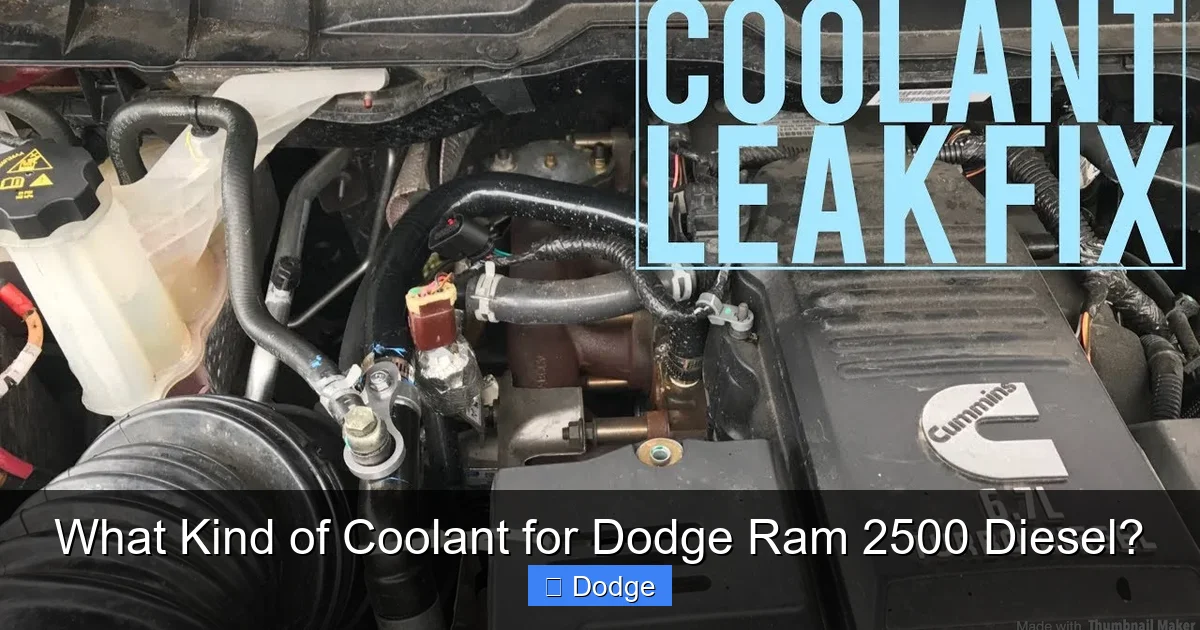
When it comes to coolant, Dodge doesn’t leave much room for interpretation. The manufacturer has clear specifications for the Ram 2500 diesel, and following them is the best way to ensure your engine stays protected. The official recommendation is to use Mopar HOAT Coolant (MS-12106) or an equivalent that meets the same standard. This coolant is specifically formulated for Chrysler, Dodge, and Ram vehicles with aluminum engines and extended service intervals.
The MS-12106 specification ensures the coolant contains the right balance of organic acids, silicates, and other additives to protect against corrosion, cavitation erosion, and electrolysis. Cavitation erosion is a particular concern in diesel engines, where tiny bubbles form and collapse in the coolant near the cylinder walls, potentially pitting and damaging metal surfaces over time. HOAT coolant with the correct silicate content helps prevent this by forming a protective barrier on metal surfaces.
Mopar HOAT Coolant is available in both concentrate and pre-mixed 50/50 formulations. The concentrate must be mixed with distilled water before use, while the pre-mixed version is ready to pour directly into the cooling system. Either way, the final mixture should be 50% coolant and 50% distilled water. This ratio provides optimal freeze protection down to -34°F (-37°C) and boil-over protection up to 265°F (129°C) under normal operating conditions.
It’s important to note that not all “HOAT” coolants are created equal. Some aftermarket brands may claim to meet Chrysler specifications, but they might not undergo the same rigorous testing as Mopar. To be safe, always look for coolant that explicitly states it meets or exceeds MS-12106. You can find this information on the product label or the manufacturer’s website. Popular equivalents include Zerex G-05 HOAT, Peak Final Charge Global, and Prestone Max HOAT, but always double-check compatibility before use.
Another key point is the service interval. Dodge recommends changing the coolant in your Ram 2500 diesel every 100,000 miles or 10 years, whichever comes first. This is significantly longer than older coolant types, thanks to the advanced additives in HOAT formulations. However, if you frequently operate your truck in extreme conditions—such as heavy towing, off-roading, or driving in hot climates—you may want to consider changing the coolant earlier, around 75,000 to 90,000 miles, to ensure maximum protection.
Always use distilled water when mixing coolant or topping off the system. Tap water contains minerals like calcium and magnesium that can form scale inside the radiator and engine, reducing heat transfer and potentially causing overheating. Even small amounts of tap water can compromise the coolant’s effectiveness over time.
How to Check and Maintain Coolant Levels
Visual guide about What Kind of Coolant for Dodge Ram 2500 Diesel?
Image source: cdn.shopify.com
Regular coolant maintenance is one of the simplest yet most effective ways to protect your Dodge Ram 2500 diesel engine. Checking the coolant level should be part of your monthly routine, especially if you use your truck for towing or heavy-duty work. Low coolant levels can lead to overheating, which in a diesel engine can cause warped cylinder heads, blown head gaskets, or even engine seizure.
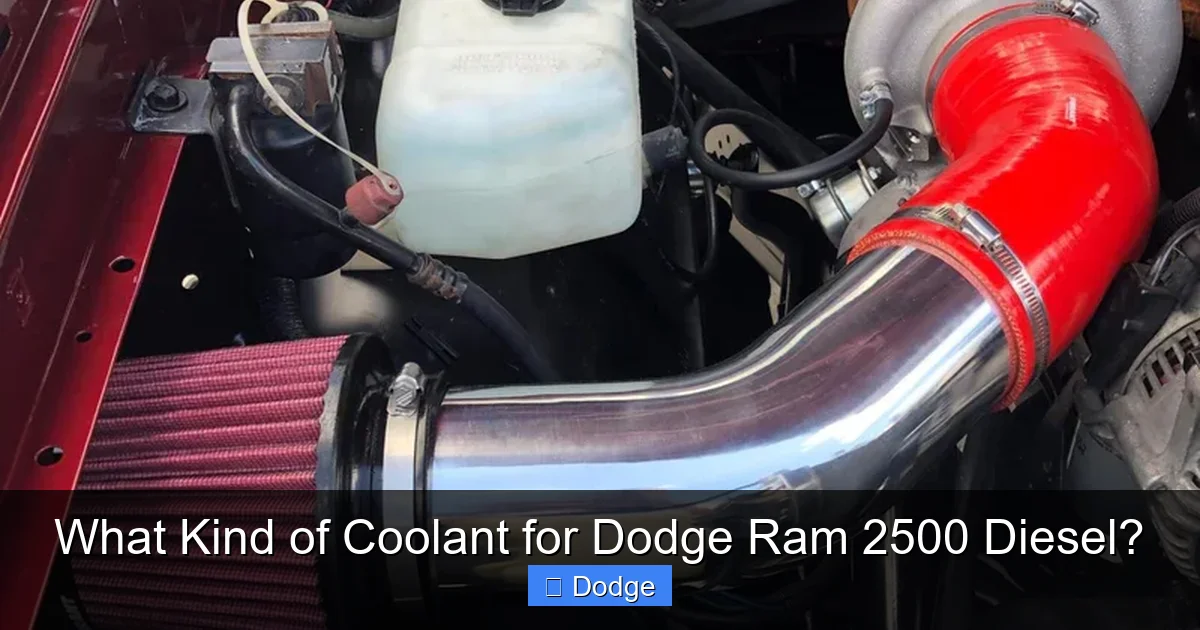
To check the coolant level, start by ensuring the engine is cool. Never open the radiator cap or coolant reservoir when the engine is hot—pressurized steam can cause severe burns. Locate the coolant overflow reservoir, usually a translucent plastic tank near the radiator. The reservoir has “MIN” and “MAX” markings on the side. The coolant level should be between these two lines when the engine is cold.
If the level is below the “MIN” mark, you’ll need to add coolant. Use only Mopar HOAT coolant or an approved equivalent mixed 50/50 with distilled water. Never top off with straight coolant or water alone, as this throws off the balance and reduces protection. If you’re using pre-mixed coolant, you can pour it directly into the reservoir until it reaches the “MAX” line.
While checking the level, also inspect the condition of the coolant. It should be clean and brightly colored—yellow or orange for HOAT. If the coolant looks cloudy, milky, or has a brownish tint, it may be contaminated with oil or rust. A sweet smell coming from the cabin vents could indicate a leaking heater core or head gasket issue. In either case, have your truck inspected by a qualified mechanic immediately.
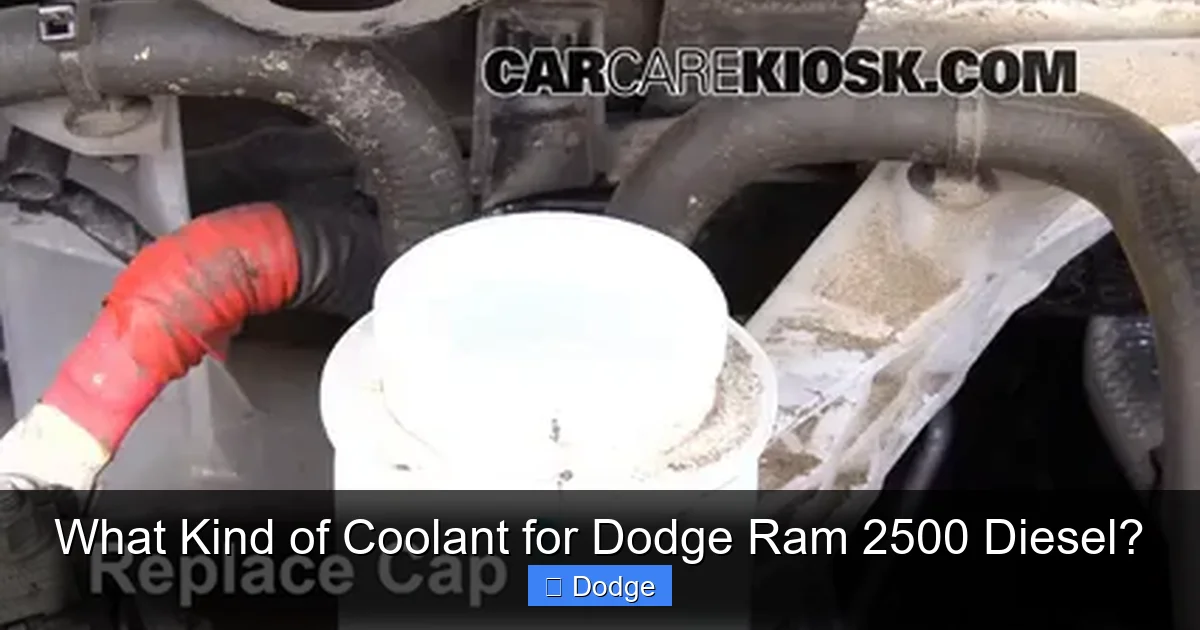
Another important maintenance task is inspecting the radiator cap. The cap maintains pressure in the cooling system, which raises the boiling point of the coolant. A faulty cap can cause coolant to boil over or leak from the reservoir. Check the cap for cracks, worn seals, or corrosion, and replace it if necessary. Mopar recommends replacing the radiator cap every 5 years or 60,000 miles.
Hoses and clamps should also be inspected regularly. Look for cracks, bulges, or soft spots in the upper and lower radiator hoses, as well as the heater hoses. Tighten any loose clamps and replace hoses that show signs of wear. A leaking hose can quickly lead to coolant loss and overheating.
Finally, keep an eye on the temperature gauge while driving. If the needle consistently runs hotter than normal—especially under load—it could indicate a coolant flow issue, a failing water pump, or a clogged radiator. Don’t ignore warning lights or temperature spikes. Pull over safely and let the engine cool before investigating.
Performing a Coolant Flush and Replacement
Visual guide about What Kind of Coolant for Dodge Ram 2500 Diesel?
Image source: d2n97g4vasjwsk.cloudfront.net
Even with proper maintenance, coolant eventually breaks down and loses its effectiveness. Over time, additives deplete, and contaminants can accumulate in the system. That’s why Dodge recommends a full coolant flush and replacement every 100,000 miles or 10 years for the Ram 2500 diesel. Performing this service yourself can save you hundreds of dollars compared to a dealership, and it’s well within the capabilities of most DIY mechanics.
Before starting, gather your tools and supplies: a drain pan, funnel, new HOAT coolant (50/50 pre-mixed or concentrate with distilled water), a new radiator cap (optional but recommended), and safety gear like gloves and eye protection. Make sure the engine is completely cool before beginning.
Start by locating the radiator drain plug, usually at the bottom of the radiator. Place the drain pan underneath and slowly open the plug to allow the old coolant to drain. You may also need to open the coolant reservoir cap to allow air to enter the system and improve drainage. Let the coolant drain completely—this may take 10–15 minutes.
Next, locate the engine block drain plugs. On the Cummins diesel, there are typically two—one on each side of the engine block. These allow coolant trapped in the block to drain out. Remove the plugs and let the coolant flow into the pan. Be prepared for a significant amount of coolant to come out.
Once all the old coolant has drained, close the drain plugs and radiator cap. Now it’s time to refill the system. Use a funnel to pour the new 50/50 HOAT coolant mixture into the radiator until it’s full. Then fill the overflow reservoir to the “MAX” line. Start the engine and let it run with the radiator cap off. This allows air bubbles to escape as the coolant circulates. You may need to rev the engine slightly or squeeze the upper radiator hose to help purge air.
As the coolant level drops, add more until it stabilizes and the radiator is full. Replace the radiator cap and continue running the engine until the thermostat opens and the coolant circulates fully. Check the reservoir level again after the engine has cooled and top off if necessary.
After the flush, it’s a good idea to test the coolant with a refractometer or coolant test strips to ensure the mixture is correct and the freeze/boil protection is adequate. This is especially important if you mixed the coolant yourself.
Common Coolant Problems and How to Avoid Them
Even with the right coolant and proper maintenance, issues can still arise in the cooling system of your Ram 2500 diesel. Being aware of common problems and their warning signs can help you catch them early and avoid expensive repairs.
One of the most serious issues is a blown head gasket. In diesel engines, the high compression can cause the head gasket to fail, allowing coolant to mix with engine oil. This results in milky, frothy oil on the dipstick and white smoke from the exhaust. If you notice these symptoms, stop driving immediately and have the truck towed to a repair shop.
Another common problem is electrolysis, where stray electrical currents cause corrosion inside the cooling system. This can eat away at aluminum components like the radiator and water pump. Signs include pitting on metal surfaces, green or white deposits around hose connections, and frequent coolant loss. To prevent electrolysis, ensure the engine and chassis are properly grounded and avoid using non-conductive coolant additives.
Cavitation erosion, as mentioned earlier, is a risk in diesel engines. It occurs when vapor bubbles collapse near cylinder walls, causing pitting and damage. Using the correct HOAT coolant with silicates helps prevent this, but if you notice coolant loss without visible leaks, have the engine inspected for internal damage.
Finally, never ignore overheating. If your temperature gauge climbs into the red zone, pull over safely and turn off the engine. Continuing to drive can cause warped heads, cracked blocks, or seized pistons. Common causes of overheating include low coolant, a faulty thermostat, a clogged radiator, or a failing water pump.
Conclusion
Choosing the right coolant for your Dodge Ram 2500 diesel isn’t just about following the manual—it’s about protecting your investment. The Cummins diesel engine is a marvel of engineering, but it demands the right care to perform at its best. By using only Mopar HOAT coolant or an approved equivalent, maintaining proper levels, and performing regular flushes, you’ll ensure your truck stays cool, reliable, and ready for any job.
Remember, coolant is more than just antifreeze. It’s a critical part of your engine’s defense system against heat, corrosion, and wear. Don’t cut corners or assume all coolants are the same. Stick to the OEM specifications, avoid mixing types, and stay vigilant with inspections. Your Ram 2500 diesel will thank you with years of dependable service.
Whether you’re towing a trailer across the country or just driving to work, peace of mind comes from knowing your truck is properly maintained. So the next time you pop the hood, take a moment to check that coolant level—and make sure it’s the right kind.
Frequently Asked Questions
Can I use regular green coolant in my Dodge Ram 2500 diesel?
No, you should never use conventional green IAT coolant in a Dodge Ram 2500 diesel. It’s not compatible with the aluminum components and can cause corrosion, sludge, and cooling system failure. Always use HOAT coolant meeting Chrysler MS-12106.
How often should I change the coolant in my Ram 2500 diesel?
Dodge recommends changing the coolant every 100,000 miles or 10 years, whichever comes first. If you frequently tow or drive in extreme conditions, consider changing it earlier, around 75,000 to 90,000 miles.
Can I mix different brands of HOAT coolant?
Yes, as long as both coolants meet the Chrysler MS-12106 specification. However, it’s best to use the same brand and type throughout the system to avoid any potential chemical interactions.
What happens if I use tap water instead of distilled water?
Tap water contains minerals that can cause scale buildup and corrosion inside the radiator and engine. Always use distilled water when mixing coolant or topping off the system.
Why is my coolant milky or foamy?
Milky or foamy coolant usually indicates oil mixing with the coolant, often due to a blown head gasket. This is a serious issue that requires immediate professional attention.
Can I top off with straight coolant?
No, always maintain a 50/50 mix of coolant and distilled water. Adding straight coolant throws off the balance and reduces freeze and boil-over protection. Use pre-mixed coolant or mix concentrate with distilled water.
