What Is the Major Problem with the Toyota Highlander?

Contents
- 1 Key Takeaways
- 2 📑 Table of Contents
- 3 The Elephant in the Engine Bay: The Internal Water Pump Design
- 4 Which Highlanders Are at Risk? Model Years and Engines Explained
- 5 Symptoms and Diagnosis: Catching It Before It’s Too Late
- 6 The Staggering Cost of Repair: Why It’s a “Major Problem”
- 7 What About Other Highlander Issues? Putting It in Perspective
- 8 Advice for Buyers and Current Owners
- 9 Frequently Asked Questions


The single most significant and costly problem plaguing certain Toyota Highlander models, particularly those with the 3.5L V6 engine from 2014 to 2019, is a design flaw in the internal water pump. This component is driven by the timing chain and, when it fails, it can shower the engine with coolant and lead to catastrophic engine failure. The repair is exceptionally expensive, often exceeding $5,000, making it a critical reliability concern for potential buyers and current owners.
When you think of a Toyota Highlander, you likely picture a reliable, no-nonsense family SUV that just works. For years, that reputation was well-earned. However, lurking beneath the hood of a specific generation is a design flaw so severe that it has become the single most notorious and expensive problem in the model’s history. It’s not a minor electrical gremlin or a wear-and-tear item. It’s a fundamental engineering choice that has led to premature, catastrophic engine failures for thousands of owners. This article dives deep into the major problem with the Toyota Highlander, separating the facts from the fear, and providing crucial advice for buyers and current owners.
Key Takeaways
- The Core Issue: An internally-mounted, timing-chain-driven water pump that is prone to premature seal failure, leaking coolant directly into the engine crankcase and oil pan.
- Affected Models: Primarily 2014-2019 Toyota Highlanders (and 2014-2017 Siennas) equipped with the 3.5-liter V6 (2GR-FKS engine).
- Catastrophic Consequence: A failed water pump doesn’t just cause overheating; it dilutes engine oil with coolant (“milkshake” oil), leading to rapid internal engine bearing and bearing failure if not caught immediately.
- Extreme Repair Cost: Fixing this issue requires a full engine teardown or replacement, with bills commonly ranging from $4,000 to $8,000+, as the water pump is not a serviceable external part.
- Warning Signs: Look for unexplained coolant loss (without visible leaks), white smoke from the exhaust, sweet-smelling smoke, or a “milkshake” consistency under the oil cap. An illuminated check engine light may also store codes for coolant temperature or mixture issues.
- Prevention is Key: There is no scheduled maintenance interval for this internal part. Proactive owners of affected models should consider an oil analysis annually to check for coolant contamination and inspect for any subtle coolant loss between services.
- Not All Models: The 4-cylinder and hybrid Highlander models use a different, externally-mounted water pump and are not susceptible to this specific, devastating failure.
[FEATURED_IMAGE_PLACEHOLDER]
📑 Table of Contents
- The Elephant in the Engine Bay: The Internal Water Pump Design
- Which Highlanders Are at Risk? Model Years and Engines Explained
- Symptoms and Diagnosis: Catching It Before It’s Too Late
- The Staggering Cost of Repair: Why It’s a “Major Problem”
- What About Other Highlander Issues? Putting It in Perspective
- Advice for Buyers and Current Owners
The Elephant in the Engine Bay: The Internal Water Pump Design
To understand the problem, you first need to understand a key difference in engine design. Traditionally, a water pump is an external component, bolted to the front of the engine and driven by the serpentine belt. If it fails, it leaks coolant onto the ground. It’s an annoying, but usually manageable, repair. For the 2014-2019 Toyota Highlander’s popular 3.5-liter V6 engine (code: 2GR-FKS), Toyota made a different decision. They mounted the water pump inside the engine block, driven directly by the timing chain. The stated reason was to reduce parasitic belt-driven loads and improve efficiency, a common trend in modern engine design.
This internal placement, however, meant the water pump’s seals and bearings were submerged in the engine’s own oil system for lubrication and cooling. The critical flaw lies in these seals. Over time, they can and do fail. When an internal water pump seal fails, it doesn’t drip coolant onto your driveway. It leaks coolant directly into the engine’s crankcase, mixing it with the engine oil. This creates a viscous, milkshake-like substance that is terrible at lubricating the engine’s internal metal parts.
Why This Is a “Catastrophic” Failure, Not Just a Leak
Most car problems give you warning. A rattling noise, a check engine light, a slow leak. The Highlander’s water pump issue is a silent assassin. By the time you notice obvious symptoms like white smoke from the exhaust (steam from burning coolant) or a sweet smell, significant damage has likely already occurred. The diluted oil loses its lubricating properties almost instantly. The result is accelerated wear on main bearings, rod bearings, and camshaft bearings. An engine in this state is often described as “spun a bearing.” The metal parts, starved of proper lubrication, weld themselves to the crankshaft or other components, seizing the engine completely. This is not a “fix the water pump” problem. This is a “replace the entire engine” problem.
Which Highlanders Are at Risk? Model Years and Engines Explained
It is absolutely critical to know if your vehicle or a used car you’re considering is in the affected pool. The problem is not universal to all Highlanders.
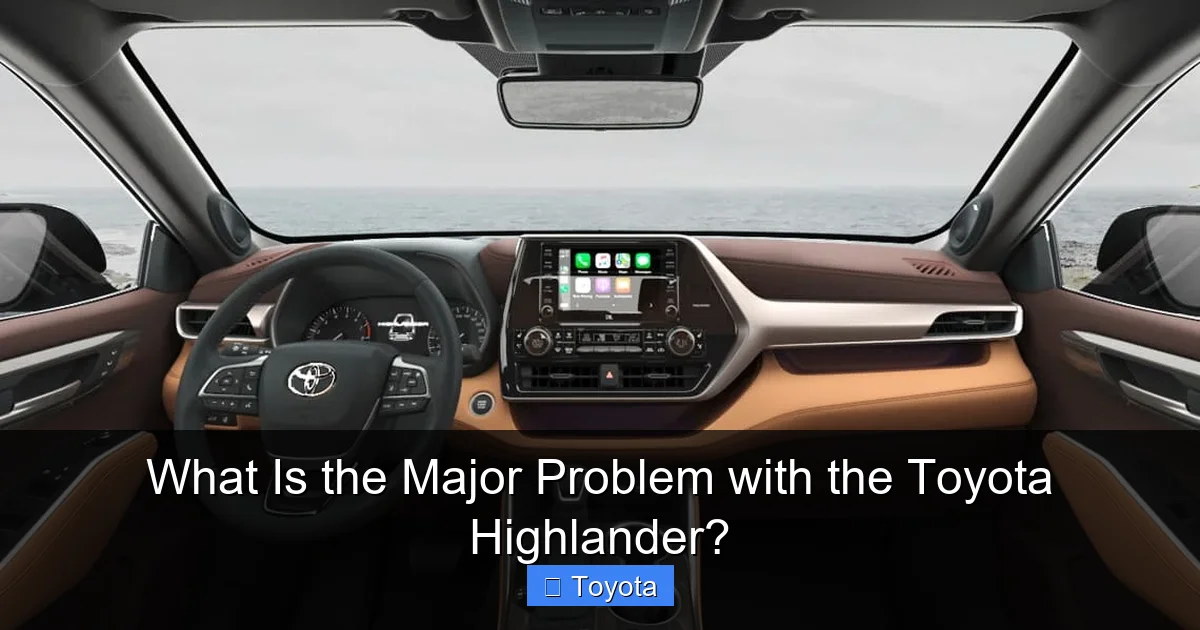
Visual guide about What Is the Major Problem with the Toyota Highlander?
Image source: major-toyota.ru
- Affected Models: The 2014, 2015, 2016, 2017, 2018, and 2019 model year Toyota Highlanders.
- Required Engine: The issue is confined to models equipped with the 3.5-liter V6 engine (2GR-FKS). This includes the vast majority of non-hybrid, non-base-model Highlanders. If you look under the hood and see a large V6 engine with two banks of cylinders, you have this engine.
- Not Affected: All 4-cylinder (2GR-FE) models and all Hybrid models (which use a different, more reliable Atkinson-cycle V6). These engines use a conventional, external water pump. If you’re shopping for a Highlander and want to avoid this risk entirely, a 4-cylinder or Hybrid from these years is a safe bet.
It’s also important to note that this same engine and water pump design is used in the 2014-2019 Toyota Sienna minivan, which suffers from the identical, widespread problem. The issue is so well-documented that it has spawned multiple class-action lawsuits and is a constant topic on owner forums.
The “Known Issue” Status and Toyota’s Response
For years, Toyota’s official stance was that this was not a widespread defect. However, the sheer volume of failed engines, costly repairs, and technical service bulletins (TSBs) from dealers told a different story. In 2020, Toyota extended the warranty for the water pump and related components to 10 years or 150,000 miles (whichever comes first) for certain model years and states. This was a tacit admission of a chronic problem. However, this warranty extension does not cover the engine damage that occurs after the pump fails. It only covers the pump itself and maybe some gaskets. If your engine is destroyed because the internal pump leaked, you are almost certainly on the hook for the massive engine replacement bill, unless you can prove you reported the very first sign of trouble (a minor coolant loss) immediately and Toyota failed to address it.
Symptoms and Diagnosis: Catching It Before It’s Too Late
Because the failure mode is internal and gradual, early detection is your only hope of avoiding a $6,000+ bill. You must be proactive and vigilant.
Visual guide about What Is the Major Problem with the Toyota Highlander?
Image source: autoblog.com
The Primary Red Flags
- Unexplained, Slow Coolant Loss: This is the #1 early sign. You find yourself adding a quart of coolant every few months with no visible leaks on the ground, no dripping hoses, and no overheating warnings. The coolant is simply disappearing into the oil. Never ignore this.
- Milkshake Oil: Periodically check your engine oil. Remove the dipstick and the oil fill cap. If you see a creamy, tan, or frothy substance on the dipstick or cap, that is coolant mixing with oil. This is a definitive, catastrophic sign that the failure is already in progress and engine damage is imminent.
- White Smoke from Exhaust: Thick, sweet-smelling white smoke (not just on a cold start) indicates coolant is being burned in the combustion chambers, a later-stage symptom.
- Overheating: Eventually, the loss of coolant will cause the engine to overheat, but by then, the internal damage from the oil contamination is already done.
- Check Engine Light: Codes related to coolant temperature sensors, fuel trim (from the bad coolant mixture), or even misfires can appear.
Proactive Detection Methods
For owners of affected Highlanders, passive waiting is a gamble. Take action:
- Oil Analysis: Send a sample of your engine oil to a lab (like Blackstone Labs) once a year. For about $30, they can test for the presence of glycol (a key component of antifreeze). This is the single best way to detect a minor leak before it destroys the engine.
- Strict Monitoring: Check your coolant level in the reservoir (when the engine is cold) at every oil change. Note the exact level. Any drop over 3,000 miles is a major red flag for this issue.
- Professional Inspection: During any service, ask the mechanic to specifically look for any signs of coolant in the oil or any unexplained moisture in the crankcase ventilation system.
The Staggering Cost of Repair: Why It’s a “Major Problem”
Let’s be clear: a water pump replacement on most cars is a $500-$1,000 job. On the affected Highlanders, it is a $6,000+ job if caught after failure. Why? Because the pump is inside the engine.
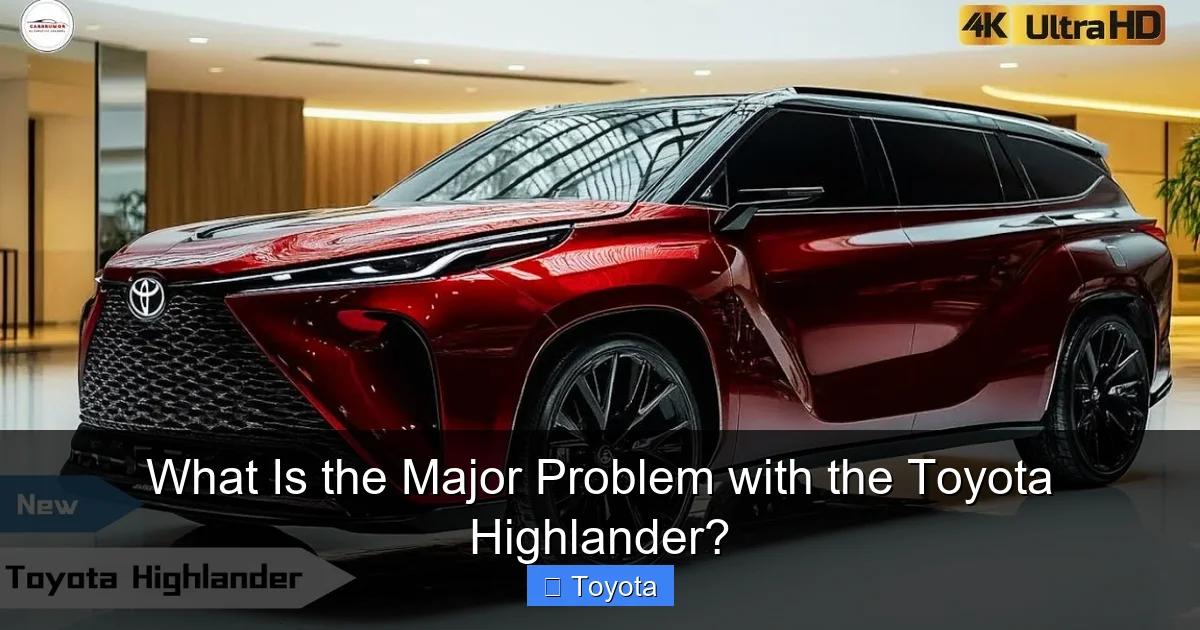
Visual guide about What Is the Major Problem with the Toyota Highlander?
Image source: i.ytimg.com
The repair procedure requires:
- Removing the entire engine from the vehicle.
- Disassembling the engine to access the timing chain cover where the pump is located.
- Replacing the water pump, all associated seals, gaskets, and the timing chain (which is now exposed and recommended to replace at the same time).
- Reassembling and reinstalling the engine.
This is a 15-20 hour job for a master technician. At $150-$200 per hour in labor, plus $1,000+ in parts, the bill easily exceeds $5,000. If the pump failure has already contaminated the oil and caused bearing wear, you are looking at a full long-block or short-block engine replacement, pushing the total to $7,000, $8,000, or more.
This cost is the definition of a “major problem.” It transforms a reliable, economical family hauler into a potential financial disaster. For a vehicle that might have a private-party value of $15,000-$20,000, a $6,000 engine repair is a devastating percentage of the car’s worth. It often leads owners to simply trade the car in, absorbing a huge financial loss, rather than repair it.
What About Other Highlander Issues? Putting It in Perspective
No vehicle is perfect. The Highlander has other reported issues, but none rise to the level of systemic, costly, and engine-ending like the internal water pump. We must put this major problem in context.
Common, But Minor, Annoyances
- Infotainment Glitches: The older touchscreen systems can be slow, buggy, or have connectivity issues. These are frustrating but cheap to fix (reboot, software update) or live with.
- Brake Rotor Warping: Some owners report premature brake rotor wear, leading to pedal pulsation. This is a wear item, not a design defect, and a pad/rotor swap costs a few hundred dollars.
- Minor Electrical Gremlins: Issues with key fobs, door locks, or dashboard displays. Usually simple and inexpensive to diagnose and repair.
- Air Conditioning Problems: Like any complex system, AC compressors or blend doors can fail. Again, costly for an AC repair ($1,000-$2,000) but not engine-threatening.
These are the kinds of problems you expect in a 5-10 year old family vehicle. They are nuisances, not show-stoppers. The water pump issue is in a completely different league. It is a fundamental flaw in a critical, non-serviceable component that can total the engine. When evaluating a used Highlander from 2014-2019, this single issue should dominate your research and inspection process, dwarfing all other concerns.
Advice for Buyers and Current Owners
So, what do you do with this information? Should you avoid all V6 Highlanders from this era? Not necessarily, but you must proceed with extreme caution and a clear strategy.
For the Used Car Buyer
If you are shopping for a used 2014-2019 Highlander:
- Verify the Engine: Confirm it is NOT the 3.5L V6 if you want zero risk. A 4-cylinder or Hybrid is the safe path.
- If considering a V6, demand full service records. Look for any history of coolant system work, thermostat replacements, or—most critically—any mention of the water pump. A repair invoice for an internal water pump replacement (likely a $6,000+ job) means the car has already had its “big one” and is theoretically fixed, though you must ensure the repair was done correctly and all contaminated parts were replaced.
- Inspect meticulously. Pull the oil dipstick and oil cap. Look for any sign of milky residue. Check the coolant level in the reservoir (cold engine). Start the car and check for sweet-smelling exhaust smoke. Ask the seller point-blank if they have ever had to add coolant without a visible leak.
- Get a pre-purchase inspection (PPI) from a specialist. Not just any mechanic. Take it to a Toyota dealer or an independent shop known for working on Toyotas. Specifically instruct them: “This car has a known internal water pump issue. Please check the oil for coolant contamination and ask if they have any history of unexplained coolant loss.” Pay extra for this focused inspection.
For the Current Owner of an Affected Highlander
If you own a 2014-2019 Highlander V6:
- Implement a strict monitoring routine immediately. Check oil and coolant levels every 1,000 miles. Get an annual oil analysis.
- If you see ANY sign of coolant in the oil or have to add coolant, stop driving the car. Do not start it again. Have it towed to a reputable shop. Explain your suspicion of the internal water pump. The goal is to replace the pump before it contaminates the oil and destroys the bearings.
- Know your warranty status. Check if your vehicle is covered by the 10-year/150,000-mile extension for the water pump. This will cover the pump part and labor if it fails, but again, likely not the collateral engine damage. Have this conversation with your dealer service advisor now, not when the car is broken.
- Consider an extended warranty. If your factory warranty is expired, a third-party extended service contract that specifically covers the engine and water pump might be a wise, albeit costly, peace-of-mind investment. Read the fine print meticulously to ensure this specific component is covered without fight.
- Plan for the worst. If you love the car and plan to keep it for years, budget for a potential engine replacement. It may be more financially prudent to trade it in on a newer or different model before a failure occurs, as a car with a known, unaddressed flaw will have plummeted resale value.
For those researching specific Highlander features, understanding this major mechanical flaw is more critical than knowing about the snow button function or the intricacies of the hold button (though those are useful features!). A car’s fundamental reliability must come first. Similarly, if you’re comparing SUVs, you might look at towing capacity specs, but the Highlander’s V6 towing capability is negated if the engine is at risk of self-destruction.
Frequently Asked Questions
Is the Toyota Highlander a reliable SUV overall?
Yes, the Highlander has a strong reputation for overall reliability, especially the 4-cylinder and hybrid models. However, the 3.5L V6 models from 2014-2019 have this specific, severe, and widely-documented water pump flaw that overshadows all other general reliability metrics for those specific vehicles.
How much does it cost to fix the water pump on a Highlander?
If the internal water pump fails and has not yet contaminated the oil, the repair involves removing and disassembling the engine and costs between $4,000 and $6,000. If the failure has already caused internal engine damage from coolant in the oil, a full engine replacement is required, with total costs typically ranging from $6,000 to $9,000 or more.
Can I prevent the water pump from failing?
There is no scheduled maintenance to prevent this seal failure, as the pump is internal and non-serviceable. The only prevention is early detection through vigilant monitoring (checking oil for milky residue, tracking coolant loss) and annual oil analysis to catch coolant contamination before it causes engine damage.
Does Toyota have a recall or full warranty for this problem?
There is no full recall. In 2020, Toyota issued a warranty extension for the water pump itself to 10 years/150,000 miles for certain model years and states. However, this extension does not cover the resulting engine damage if the pump leaks and ruins the oil. Many owners have had to fight for coverage or pay out-of-pocket for the engine.
Should I buy a used Highlander with the 3.5L V6 engine?
You can, but only with extreme caution and a significant price discount to reflect the risk. You must verify the engine has no history of coolant loss or oil contamination through a specialized pre-purchase inspection and full service records. A 4-cylinder or Hybrid Highlander from the same years is a much safer, long-term reliable choice.
What other SUVs have similar problems?
This specific internal water pump design flaw is most famously associated with Toyota’s own 3.5L V6 (2GR series) engines, also found in the 2014-2019 Toyota Sienna and some Lexus models. Some other manufacturers have also faced issues with internal water pumps, but Toyota’s scale with this particular engine makes it one of the most widespread and costly modern SUV failures.