
What Is the Hold Button on a Toyota Camry?

The HOLD button on a Toyota Camry is a smart transmission feature designed to improve control and comfort in specific driving conditions. It prevents automatic upshifting, keeps the transmission in a lower gear, and helps with smoother starts—especially useful in stop-and-go traffic, steep hills, or cold weather.
Have you ever noticed a small button labeled “HOLD” near the gear shifter in your Toyota Camry and wondered what it’s for? You’re not alone. Many Camry owners see it every day but rarely use it—or worse, avoid it because they’re unsure what it does. It’s one of those subtle features that seems minor but can actually make a big difference in how your car performs under certain conditions.
The HOLD button is more than just a mysterious switch—it’s a smart transmission control feature designed to give you better command over your vehicle. Whether you’re navigating heavy city traffic, climbing a steep hill, or driving in cold weather, this button can help your Camry respond more smoothly and safely. It’s not flashy or high-tech like some modern car features, but it’s incredibly practical once you understand how and when to use it.
In this guide, we’ll break down everything you need to know about the HOLD button on a Toyota Camry. From how it works to real-life driving scenarios where it shines, we’ll cover the essentials so you can drive with more confidence and control. Whether you’re a new Camry owner or have been driving one for years, this feature is worth understanding. Let’s dive in.
Key Takeaways
- What It Does: The HOLD button locks the transmission in a lower gear, preventing automatic upshifts for better control.
- When to Use It: Ideal for city driving, steep inclines, icy roads, or when you need more engine braking.
- How It Works: Pressing the button activates a mode that delays upshifting, keeping RPMs higher and power more responsive.
- Safety Benefits: Helps prevent wheel spin on slippery surfaces and improves traction during acceleration.
- Fuel Efficiency: Not designed for highway use—using it unnecessarily can reduce fuel economy.
- Easy to Use: Simply press the button on the gear shifter; a light on the dashboard confirms it’s active.
- Not a Parking Brake: The HOLD button does not replace the parking brake and should not be used to hold the car stationary on hills.
📑 Table of Contents
- What Is the HOLD Button on a Toyota Camry?
- How Does the HOLD Button Work?
- When Should You Use the HOLD Button?
- When Should You Avoid Using the HOLD Button?
- How to Use the HOLD Button: Step-by-Step
- Common Misconceptions About the HOLD Button
- Tips for Getting the Most Out of the HOLD Button
- Conclusion
What Is the HOLD Button on a Toyota Camry?
The HOLD button on a Toyota Camry is a transmission control feature that allows the driver to manually limit the automatic transmission’s gear-shifting behavior. When activated, it prevents the transmission from automatically upshifting to higher gears, keeping the car in a lower gear range. This gives the driver more control over acceleration, engine braking, and overall responsiveness.
Unlike manual transmissions, where you physically shift gears, the Camry’s automatic transmission usually decides when to shift based on speed, throttle input, and driving conditions. The HOLD button overrides this automatic logic in a controlled way. It doesn’t lock the car into a single gear like a manual mode might—instead, it restricts upshifting beyond a certain point, typically keeping the transmission in second or third gear depending on speed and load.
This feature is especially useful in situations where you want more engine power at lower speeds or need to reduce reliance on the brakes. For example, if you’re driving in heavy traffic and constantly accelerating and slowing down, the HOLD mode can help prevent the transmission from “hunting” between gears, which can cause jerky movements and wear on the transmission.
It’s important to note that the HOLD button is not the same as the parking brake or hill-assist systems. It doesn’t physically hold the car in place. Instead, it modifies how the transmission behaves while the car is in motion. Think of it as a way to tell your Camry, “Stay in a lower gear for now—I need more control.”
How Does the HOLD Button Work?
Visual guide about What Is the Hold Button on a Toyota Camry?
Image source: i.ytimg.com
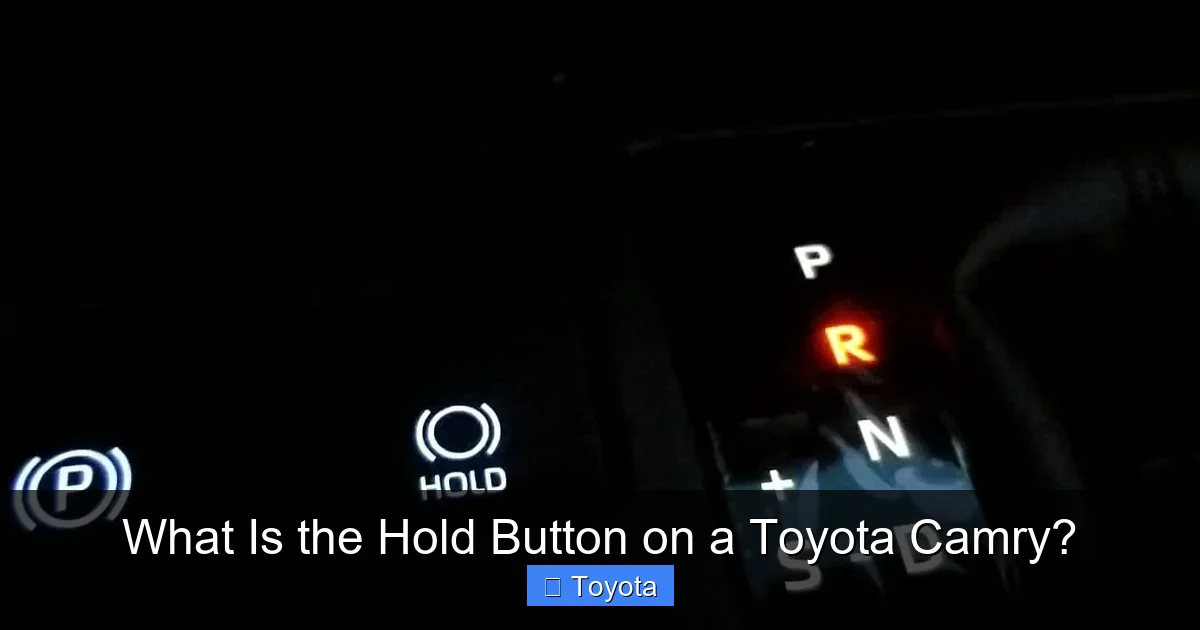
The HOLD button works by sending a signal to the Camry’s transmission control module (TCM), which then adjusts the shift pattern to delay upshifting. When you press the button, a light labeled “HOLD” appears on your instrument panel, confirming the mode is active. The transmission will then stay in lower gears longer than it normally would, maintaining higher engine RPMs and delivering more immediate power when you press the accelerator.
For example, under normal driving conditions, your Camry might shift into third gear at around 20 mph and fourth gear by 30 mph. But with HOLD activated, it might stay in second gear up to 25 mph and delay shifting into third until you reach 35 mph or more. This keeps the engine in a more responsive range, which is helpful when you need quick acceleration—like merging into traffic or climbing a hill.
The system is smart enough to disengage HOLD mode automatically under certain conditions. If you accelerate aggressively or reach a speed where higher gears are more efficient (usually above 40–50 mph), the transmission may override HOLD and shift up to protect the engine and improve fuel economy. You can also deactivate HOLD at any time by pressing the button again or turning off the ignition.
One key thing to understand is that HOLD mode doesn’t lock the transmission into a fixed gear. It simply sets an upper limit on how high the transmission will shift. The car can still downshift when slowing down, and it will eventually shift up if you maintain a steady speed for a while. This makes it safer and more practical than a full manual lockout.
When Should You Use the HOLD Button?
Visual guide about What Is the Hold Button on a Toyota Camry?
Image source: dz310nzuyimx0.cloudfront.net
Knowing when to use the HOLD button is just as important as understanding how it works. Using it at the right time can improve safety, comfort, and vehicle performance. Using it unnecessarily, however, can reduce fuel efficiency and increase engine wear. Here are the most common and effective situations to activate HOLD mode.
Driving in Heavy Traffic
If you’re stuck in stop-and-go city traffic, the HOLD button can make your drive smoother. Without it, the transmission may constantly shift between second and third gear as you accelerate and brake, causing a “hunting” effect that feels jerky and uncomfortable. By activating HOLD, you keep the transmission in a lower gear, reducing the number of shifts and making acceleration more predictable.
For example, imagine you’re driving downtown during rush hour. You go from 0 to 15 mph, then stop again. Without HOLD, the car might shift into third gear briefly, then downshift when you brake. With HOLD on, it stays in second gear, so when you press the gas again, there’s no delay from a gear change. This makes your driving feel more responsive and less fatiguing.
Climbing or Descending Steep Hills
The HOLD button is especially useful on steep inclines or declines. When going uphill, keeping the transmission in a lower gear provides more torque and prevents the engine from straining. This is safer and more efficient than letting the transmission shift up and then struggle to maintain speed.
On downhill slopes, HOLD mode helps with engine braking. Instead of riding the brakes the whole way down, which can overheat them and reduce stopping power, you can use the engine to slow the car. The lower gear increases engine resistance, helping you maintain a safe, controlled speed without constant braking.
For instance, if you’re driving down a mountain road with sharp curves, activating HOLD keeps the car in second or third gear. This reduces your reliance on the brake pedal and gives you better control through turns. It’s a safer, smoother way to descend.
Driving in Snow, Ice, or Slippery Conditions
In winter weather, the HOLD button can improve traction and reduce the risk of wheel spin. When you start from a stop on ice or snow, a higher gear (like third or fourth) can cause the wheels to slip because there’s not enough torque. By keeping the transmission in a lower gear, you get smoother, more controlled acceleration.
For example, if you’re pulling out of a snowy driveway, activating HOLD ensures the car starts in second gear instead of third. This reduces the chance of spinning tires and helps you gain traction gradually. It’s a simple but effective way to drive more safely in winter.
Cold Weather Starts
In very cold temperatures, engine oil and transmission fluid thicken, making the engine less responsive. Using HOLD during the first few minutes of driving can help the engine warm up faster by keeping RPMs higher. This improves performance and reduces strain on the engine.
Just remember to deactivate HOLD once the engine reaches normal operating temperature—usually after 5 to 10 minutes of driving. Running in HOLD mode for too long when the engine is warm can reduce fuel efficiency.
Towing or Carrying Heavy Loads
If you’re towing a trailer or carrying a full load of passengers and cargo, the HOLD button can help maintain power and control. Heavier loads require more torque, and the transmission may struggle to find the right gear. Activating HOLD keeps the car in a lower gear, providing consistent power and reducing the risk of overheating the transmission.
For example, if you’re driving up a hill with a full trunk and three passengers, HOLD mode ensures the engine doesn’t lug in a high gear. It keeps the power delivery smooth and responsive, making the drive safer and more comfortable.
When Should You Avoid Using the HOLD Button?
Visual guide about What Is the Hold Button on a Toyota Camry?
Image source: dz310nzuyimx0.cloudfront.net
While the HOLD button is useful in specific situations, it’s not meant for everyday highway driving. Using it at the wrong time can hurt fuel economy, increase engine wear, and even cause unnecessary strain on the transmission. Here’s when you should avoid it.
Highway Driving
On the highway, your Camry is designed to operate efficiently in higher gears (fourth, fifth, or sixth, depending on the model). These gears reduce engine RPMs, which saves fuel and reduces noise. If you activate HOLD on the highway, the transmission will stay in lower gears, causing the engine to rev higher than necessary.
For example, at 65 mph, your Camry might normally run at 2,000 RPM in sixth gear. With HOLD on, it could stay in fourth gear at 3,000 RPM. This increases fuel consumption and engine wear over time. It also makes the car louder and less comfortable.
Normal City Driving
If you’re driving in light traffic on flat roads, there’s usually no need for HOLD mode. The transmission is smart enough to shift smoothly on its own. Using HOLD in these conditions just adds unnecessary engine stress and reduces fuel efficiency.
Only activate HOLD when you notice the transmission shifting too frequently or when you need more control—like in heavy traffic or on hills.
When the Engine Is Already Warm
As mentioned earlier, HOLD can help warm up the engine in cold weather. But once the engine reaches normal temperature, there’s no benefit to keeping it on. In fact, it can reduce fuel economy by 5–10% depending on driving conditions.
Make it a habit to check your dashboard temperature gauge. Once it’s in the normal range, deactivate HOLD unless you’re in a situation that calls for it.
Parking or Idling
The HOLD button does not function when the car is in Park or Neutral. It only works when the car is in Drive (D) or Reverse (R). Also, it does not hold the car stationary—so don’t rely on it to keep your Camry from rolling on a hill. Always use the parking brake when stopped on an incline.
How to Use the HOLD Button: Step-by-Step
Using the HOLD button is simple, but it helps to know the correct steps to get the most out of it. Here’s how to activate and deactivate it safely.
Step 1: Start Your Camry
Turn on the ignition and allow the engine to idle for a few seconds. Make sure the transmission is in Drive (D) or Reverse (R). The HOLD button will not work in Park or Neutral.
Step 2: Press the HOLD Button
Locate the HOLD button near the gear shifter. It’s usually a small, rectangular button with the word “HOLD” on it. Press it once. You should see a “HOLD” indicator light appear on your instrument panel. This confirms the mode is active.
Step 3: Drive Normally
Continue driving as usual. The transmission will now delay upshifting, keeping the car in lower gears. You’ll notice the engine sounds a bit louder and RPMs stay higher than normal. This is expected and indicates the system is working.
Step 4: Deactivate When No Longer Needed
Press the HOLD button again to turn it off. The indicator light will disappear, and the transmission will return to normal shifting behavior. You can also deactivate it by turning off the ignition.
Step 5: Use the Parking Brake on Hills
Remember, HOLD does not hold the car in place. If you’re stopped on a hill, always engage the parking brake to prevent rolling.
Common Misconceptions About the HOLD Button
There are several myths and misunderstandings about the HOLD button that can lead to confusion or misuse. Let’s clear them up.
Myth 1: HOLD Is a Parking Brake
No, the HOLD button does not act as a parking brake. It only affects transmission shifting. Always use the parking brake when stopped, especially on inclines.
Myth 2: HOLD Locks the Transmission in One Gear
HOLD doesn’t lock the transmission into a single gear. It sets an upper limit on shifting, but the car can still downshift when slowing down and may shift up under certain conditions.
Myth 3: HOLD Is Only for Manual Drivers
Even if you’ve never driven a manual car, HOLD can be useful. It’s designed for automatic transmissions and helps with control in specific driving conditions.
Myth 4: HOLD Improves Fuel Economy
Actually, HOLD usually reduces fuel economy because it keeps the engine in lower, less efficient gears. Use it only when needed for safety or control.
Myth 5: HOLD Is the Same as Sport Mode
While both affect shifting, they’re different. Sport mode changes throttle response and shift points for a sportier feel. HOLD only delays upshifting and doesn’t alter throttle behavior.
Tips for Getting the Most Out of the HOLD Button
To use the HOLD button effectively, keep these practical tips in mind.
- Use It Sparingly: Only activate HOLD when you need more control—don’t leave it on all the time.
- Check the Dashboard Light: Always confirm the HOLD light is on before assuming the mode is active.
- Combine with Engine Braking: On downhill drives, use HOLD to reduce brake wear and improve safety.
- Deactivate After Warm-Up: Turn off HOLD once the engine is warm to save fuel.
- Practice in Safe Conditions: Try using HOLD in an empty parking lot or quiet road to get comfortable with how it feels.
- Read Your Owner’s Manual: Your Camry’s manual has model-specific details about HOLD functionality.
Conclusion
The HOLD button on a Toyota Camry is a simple yet powerful feature that gives you more control over your vehicle’s transmission. While it may seem minor, it can make a real difference in challenging driving conditions like heavy traffic, steep hills, snow, or cold weather. By preventing unnecessary upshifts, it keeps the engine in a more responsive range, improving acceleration, traction, and safety.
However, it’s not a feature to use all the time. On highways or during normal driving, it can reduce fuel efficiency and increase engine wear. The key is knowing when to use it—and when to turn it off.
With this guide, you now have a clear understanding of what the HOLD button does, how it works, and how to use it effectively. Whether you’re a daily commuter, a weekend road tripper, or someone who drives in tough weather, mastering this feature can enhance your driving experience.
So next time you’re behind the wheel of your Camry, don’t ignore that little button. Give it a try when the situation calls for it—you might be surprised how helpful it can be.
Frequently Asked Questions
What does the HOLD button do on a Toyota Camry?
The HOLD button prevents the automatic transmission from upshifting, keeping the car in lower gears for better control and responsiveness. It’s useful in traffic, on hills, or in slippery conditions.
Can I use the HOLD button on the highway?
No, it’s not recommended. Using HOLD on the highway keeps the engine in lower gears, which increases RPMs, reduces fuel efficiency, and can cause unnecessary engine strain.
Does the HOLD button work in Reverse?
Yes, the HOLD button works in both Drive (D) and Reverse (R). It can help with smoother backing up on inclines or in tight spaces.
Will the HOLD button damage my transmission?
No, when used properly, the HOLD button does not damage the transmission. However, using it unnecessarily or for long periods can reduce fuel economy and increase engine wear.
How do I know if HOLD mode is active?
A light labeled “HOLD” will appear on your instrument panel when the mode is active. If the light is off, the feature is not engaged.
Can I use the HOLD button instead of the parking brake?
No, the HOLD button does not hold the car stationary. Always use the parking brake when stopped, especially on hills, to prevent rolling.