What Is the Maintenance Schedule for a 2017 Toyota Camry?

Contents
- 1 Key Takeaways
- 2 📑 Table of Contents
- 3 Understanding the Factory Maintenance Schedule
- 4 The 5,000-Mile / 6-Month Service: The Foundation
- 5 The 30,000-Mile Service: A Major Milestone
- 6 The 60,000-Mile Service: The Mid-Life Checkup
- 7 The 90,000-Mile Service: The Comprehensive Overhaul
- 8 Beyond the Schedule: The Art of Proactive Ownership
- 9 Conclusion: A Commitment to Reliability
- 10 Frequently Asked Questions

Car Storage Net

Portable Air Pump

Car Body Cover

Windshield Cleaning Tool
Adhering to the 2017 Toyota Camry maintenance schedule is non-negotiable for preserving its legendary reliability and performance. Toyota categorizes driving into “Normal” and “Severe” conditions, with the latter requiring more frequent service—most drivers fall into this category. Key services occur at 5,000-mile (oil change, tire rotation), 30,000-mile (spark plugs, filters), 60,000-mile (transmission fluid, coolant), and 90,000-mile (comprehensive inspection) intervals. Always consult your owner’s manual and reset the maintenance light after service.
Your 2017 Toyota Camry isn’t just a car; it’s a trusted companion built on a reputation for bulletproof reliability. But that reputation doesn’t happen by accident. It’s earned through consistent, proper maintenance. Understanding and following the precise 2017 Toyota Camry maintenance schedule is the single most important thing you can do to protect your investment, ensure safety, and keep your sedan performing like new for years—even decades—to come. This guide will walk you through every milestone, explain the critical “severe vs. normal” driving distinction, and give you actionable tips to master your Camry’s care.
Key Takeaways
- Driving conditions dictate your schedule: “Severe” driving (short trips, extreme temps, dusty roads) requires more frequent service than “Normal” conditions. Most real-world driving is severe.
- Your owner’s manual is the ultimate authority: It contains the official factory maintenance schedule and specifications for your specific 2017 Camry model and engine.
- Oil changes are the cornerstone: For severe driving, change the oil and filter every 5,000 miles (or 6 months). For normal conditions, it extends to 7,500-10,000 miles.
- Tire rotation is mandatory with every oil change: This promotes even tire wear and is required to maintain your tire warranty. Proper rotation patterns depend on your tire size and type.
- Major milestone services at 30k, 60k, 90k miles: These involve multi-point inspections, fluid changes, and component replacements (spark plugs, filters, coolant, transmission fluid) to prevent major failures.
- Always reset the maintenance light: After completing any service that triggers the “MAINTENANCE REQUIRED” light, it must be reset to ensure the system accurately tracks the next interval.
- Use genuine Toyota parts and fluids: For optimal performance and longevity, especially for critical components like filters, spark plugs, and fluids, OEM specifications are designed specifically for your Camry.
📑 Table of Contents
- Understanding the Factory Maintenance Schedule
- The 5,000-Mile / 6-Month Service: The Foundation
- The 30,000-Mile Service: A Major Milestone
- The 60,000-Mile Service: The Mid-Life Checkup
- The 90,000-Mile Service: The Comprehensive Overhaul
- Beyond the Schedule: The Art of Proactive Ownership
- Conclusion: A Commitment to Reliability
Understanding the Factory Maintenance Schedule
Toyota doesn’t create its maintenance schedules arbitrarily. Engineers spend countless hours testing components under extreme conditions to determine optimal service intervals. The result is a detailed, mileage-based timetable found in your owner’s manual’s “Maintenance and Care” section. This schedule is your roadmap. It’s divided into two primary categories: Normal and Severe driving conditions. Choosing the wrong one can lead to either unnecessary expense or, worse, premature component wear.
The Critical Difference: Normal vs. Severe Driving
Many owners mistakenly believe they are “normal” drivers. In reality, Toyota’s definition of “Normal” is quite restrictive: primarily highway driving with consistent speeds, moderate temperatures, and minimal environmental contaminants. Think long, open-road road trips with little traffic. Severe driving encompasses the vast majority of daily use. This includes:
- Frequent short trips (less than 5 miles in normal temperatures or 10 miles in freezing temps), where the engine and fluids don’t fully warm up, leading to excessive fuel dilution and moisture buildup.
- Extremely hot or cold climates, which stress cooling systems, batteries, and fluids.
- Consistent stop-and-go traffic (city driving), causing excessive engine, transmission, and brake wear.
- Dusty, sandy, or muddy conditions, which contaminate air filters and engine internals.
- Towing a trailer or carrying heavy cargo, which increases load on the engine, transmission, and brakes.
- Extensive idling or operating in high humidity.
If even one of these applies to your regular driving, you must follow the “Severe” service intervals. For the 2017 Camry, this typically means an oil change every 5,000 miles instead of 7,500-10,000. The cost of more frequent service is dwarfed by the cost of repairing a neglected engine or transmission.
The Maintenance Minder System: Your Digital Assistant
Your 2017 Camry is equipped with an onboard Maintenance Minder system. This isn’t just a simple mileage counter; it’s an algorithm that monitors engine revolutions, temperature, and driving patterns to calculate when specific services are due. When it’s time, a “MAINTENANCE REQUIRED” message will illuminate on your multi-information display. While incredibly useful, this system is a supplement to—not a replacement for—understanding the factory schedule. It can sometimes extend or shorten intervals based on your exact driving, but you should still be familiar with the major milestones. Always cross-reference the Minder code (e.g., “A1”, “B2”) with your owner’s manual to understand exactly what is requested.
The 5,000-Mile / 6-Month Service: The Foundation
This is the most frequent and critical service on the schedule, especially under severe conditions. It’s the bedrock of your engine’s health. Skipping this is like skipping breakfast every day—eventually, your performance and health will suffer.

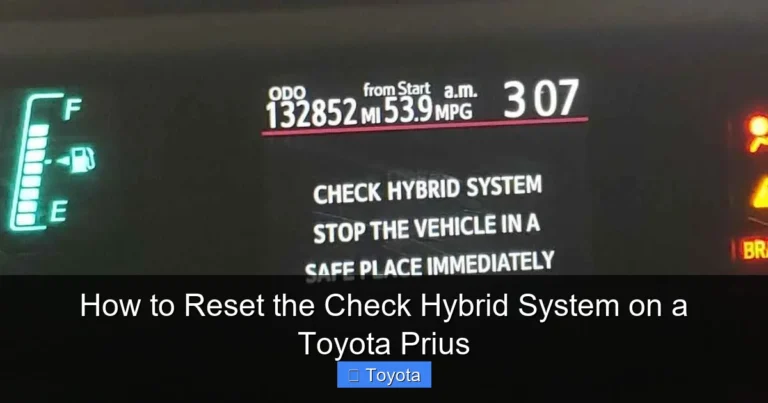
Visual guide about What Is the Maintenance Schedule for a 2017 Toyota Camry?
Image source: d1l9oib0dboqqi.cloudfront.net
Oil and Filter Change: The #1 Priority
The engine oil is the lifeblood of your Camry’s 2.5L 4-cylinder or 3.5L V6. Its job is to lubricate, clean, cool, and seal internal components. Over time, oil breaks down, becomes contaminated with combustion byproducts, and loses its viscosity. For severe driving, Toyota recommends a 5,000-mile oil change using genuine Toyota 0W-20 synthetic oil (the standard for 2017 models). Using the correct weight is essential for fuel economy and cold-start protection. The oil filter must also be replaced to remove trapped particles. Pro Tip: Consider using an aftermarket oil drain plug with a magnetic tip to catch metal shavings, giving you an early warning of internal engine wear.
Tire Rotation: Even Wear for Longevity
Tires are your only contact with the road. Uneven wear leads to poor handling, reduced fuel economy, and premature replacement. Toyota mandates a tire rotation with every oil change. The typical pattern for a front-wheel-drive Camry is a “forward cross”: move the front tires straight to the rear, and move the rear tires to the front, crossing them (rear left to front right, rear right to front left). However, if you have staggered tire sizes (different widths front/rear, common on some trims), a side-to-side rotation on the same axle is required. Consult our detailed guide on correct 2017 Camry tire sizes and rotation patterns to ensure you’re doing it right. Always check and adjust tire pressure to the placard (usually 32-35 PSI) after rotation.
Comprehensive Multi-Point Inspection
A good technician will perform a thorough visual and physical check during this service. This includes:
- Checking all fluid levels (engine oil, coolant, brake fluid, windshield washer fluid, power steering if applicable).
- Inspecting the battery and cleaning terminals if corroded.
- Checking the condition of belts and hoses for cracks or wear.
- Inspecting the entire exhaust system for leaks or damage.
- Checking the condition of the wiper blades and topping off washer fluid.
- Inspecting the brake pads, rotors, and calipers for wear and condition.
- Checking the steering and suspension components (ball joints, tie rods, shocks/struts).
Ask for a written inspection report. Catching a slightly worn brake pad or a small coolant leak at 5,000 miles is far cheaper than at 30,000 miles.
The 30,000-Mile Service: A Major Milestone
The 30,000-mile mark is a significant service point where several key components reach their first recommended replacement interval. This service is more comprehensive and costly than the 5k but is essential for preventing system-wide degradation.

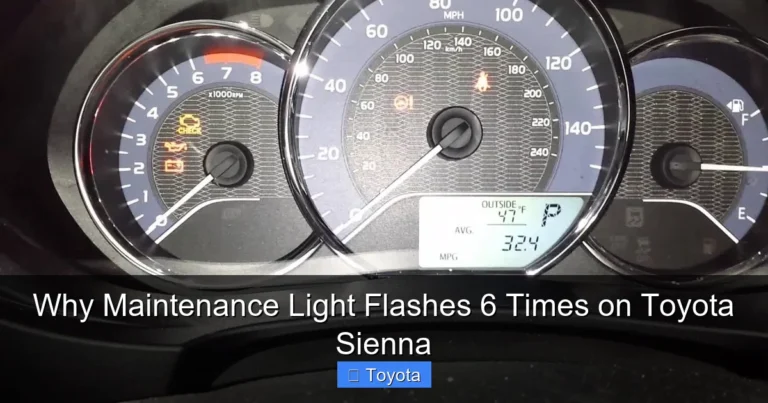
Visual guide about What Is the Maintenance Schedule for a 2017 Toyota Camry?
Image source: contentservice.mc.reyrey.net
Spark Plugs: Ignition Performance
For the 2017 Camry’s 2.5L 4-cylinder engine, Toyota recommends replacing the iridium spark plugs every 30,000 miles. The 3.5L V6 has a longer interval (120,000 miles), but always verify in your manual. Worn spark plugs cause misfires, reduced fuel economy, rough idling, and can eventually damage the catalytic converter. While DIY-able for the 4-cylinder, the V6’s rear bank is notoriously difficult to access, making professional service worthwhile.
Air and Cabin Air Filters: Breathing Easy
The engine air filter should be inspected at every oil change and replaced at 30,000 miles under severe conditions. A clogged filter chokes your engine, reducing power and fuel efficiency. The cabin air filter (often called a pollen filter) is equally important. It filters the air you and your passengers breathe. Located behind the glovebox, it traps pollen, dust, and pollutants. A dirty cabin filter makes your HVAC system work harder and reduces airflow. Replacing it is a simple, inexpensive DIY task that dramatically improves in-cabin air quality.
Fluid Checks and Potential Changes
At 30,000 miles, several fluids should be evaluated:
- Engine Coolant (Antifreeze): Toyota’s pink “Super Long Life Coolant” (SLLC) is rated for 150,000 miles/10 years. It should be inspected for level, condition, and contamination. Unless it’s low or dirty, it likely won’t need a full flush yet.
- Brake Fluid: Brake fluid is hygroscopic—it absorbs moisture from the air over time, lowering its boiling point and compromising braking performance. Toyota recommends inspecting it at every service and replacing it every 2 years regardless of mileage. At 30,000 miles, it’s likely due if it’s been two years.
- Automatic Transmission Fluid: For the 2017 Camry’s 6-speed automatic, Toyota states the fluid is “lifetime” on some models, but many mechanics and severe driving schedules recommend an inspection and possible change at 60,000 miles for optimal longevity. Check your manual’s specific wording.
- Differential Fluid: If you have an AWD Camry (available on SE and XLE V6 trims), the rear differential fluid should be inspected and replaced at 30,000 miles under the severe schedule.
The 60,000-Mile Service: The Mid-Life Checkup
Reaching 60,000 miles means your Camry is solidly into its mid-life. This service builds upon the 30k tasks and addresses longer-term wear items. It’s a comprehensive overhaul designed to keep all major systems in sync.

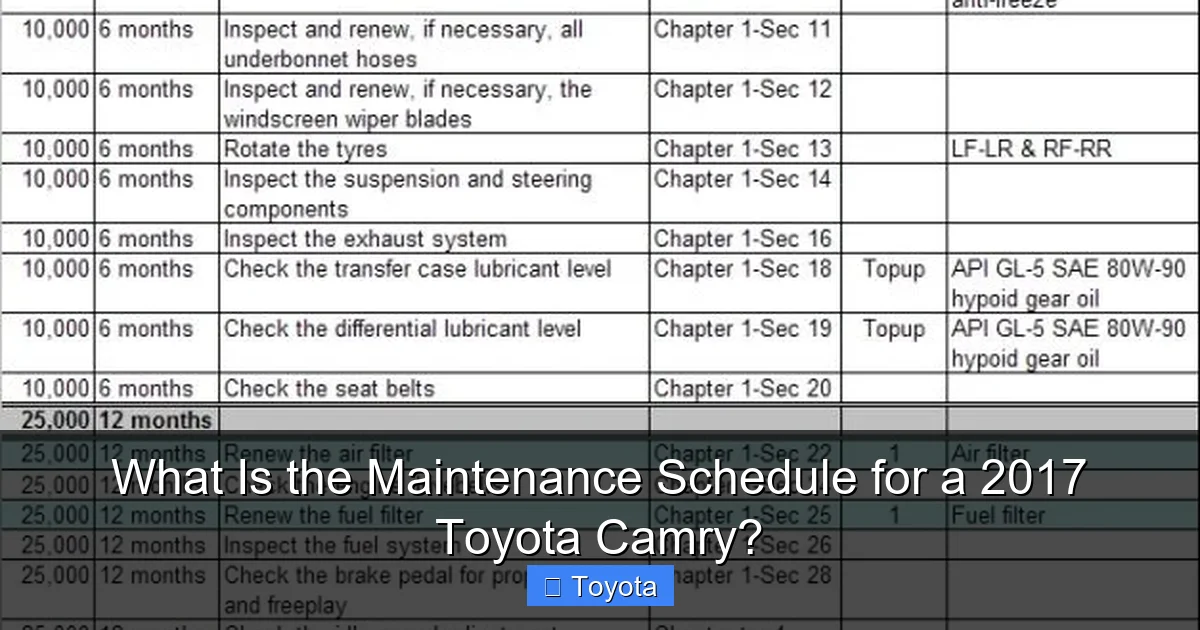
Visual guide about What Is the Maintenance Schedule for a 2017 Toyota Camry?
Image source: maintenanceschedule.com
Revisiting the Essentials
All items from the 5k and 30k services are repeated: another oil change, tire rotation, spark plug replacement (for the 4-cylinder), and filter changes. The engine air filter and cabin filter are almost certainly due again. This repetition underscores their importance.
Transmission Fluid Service
This is a hotly debated topic. While Toyota’s “lifetime” fluid claim suggests no service is needed, independent mechanics and the severe driving schedule strongly recommend a transmission fluid drain and refill (not a full flush) at 60,000 miles. Automatic transmission fluid degrades, losing its frictional properties and ability to cool. A simple drain and refill, which replaces about 40-50% of the fluid, can dramatically extend transmission life, especially for city-driven cars. If you have a CVT (not in 2017 Camry), the interval is typically more frequent.
Coolant System and Fuel System
At 60,000 miles, the engine coolant should be completely flushed and replaced, even if it still looks clean. Its corrosion inhibitors deplete over time. A professional flush is recommended. Additionally, a fuel system inspection is due. This includes checking the throttle body for carbon buildup (common on direct-injection engines like the 2.5L) and inspecting fuel lines. A throttle body cleaning may be recommended if you’re experiencing rough idle or hesitation.
Brake System Deep Dive
Beyond the fluid change, the entire brake system gets a thorough inspection. This includes:
- Measuring brake pad thickness (front and rear).
- Inspecting rotors for runout, scoring, and minimum thickness.
- Checking brake lines and hoses for cracks, bulges, or leaks.
- Lubricating caliper slide pins and parking brake mechanisms.
- Bleeding the brake system to remove any air or old fluid.
Front brakes typically wear faster on a front-heavy FWD car like the Camry. Rear brakes may last longer but are prone to seizing if not serviced.
The 90,000-Mile Service: The Comprehensive Overhaul
Ninety thousand miles is a true milestone. By now, your Camry has seen extensive service and this visit is about proactively addressing long-term wear items across all major vehicle systems. It’s the most expensive single service but pays dividends in preventing catastrophic failures.
All Fluids, All Filters
This is the service where you replace every single fluid in the car, assuming they haven’t been done more frequently:
- Engine oil and filter.
- Engine coolant (second flush).
- Brake fluid (second change).
- Transmission fluid (second drain/refill).
- Differential fluid (AWD models).
- Windshield washer fluid.
All filters are replaced again: engine air, cabin air, and (if equipped) the oil filter (which is done at every oil change).
Timing Chain and Belts: The Critical Inspection
The 2017 Camry’s 2.5L and 3.5L engines use a timing chain, not a belt. Timing chains are designed to last the life of the engine but are not indestructible. They are lubricated by engine oil, so consistent oil changes are paramount. At 90,000 miles, a mechanic should visually inspect the timing chain area for any signs of wear, tensioner issues, or oil leaks. The accessory drive belts (serpentine belt) should be inspected for cracks, glazing, or fraying and replaced if necessary. A failed serpentine belt can leave you stranded with no alternator, power steering, or A/C.
Suspension, Steering, and Driveline
This is a full chassis inspection:
- Shocks/Struts: Inspect for leaks, damage, and effectiveness. These typically last 50,000-100,000 miles.
- Ball Joints, Tie Rods, Control Arm Bushings: Check for play, wear, and torn boots. Worn components lead to clunking noises, uneven tire wear, and poor handling.
- Drive Axles (CV Axles): Inspect CV boots for tears and grease leakage. A torn boot leads to CV joint failure.
- Wheel Bearings: Listen for humming or grinding that changes with speed. Worn bearings can cause wheel lock-up.
Addressing worn suspension parts at 90k prevents uneven tire wear and maintains safe handling.
Beyond the Schedule: The Art of Proactive Ownership
Following the mileage schedule is your baseline. True automotive zen comes from combining it with vigilant observation and good habits.
Listen, Feel, and Observe
Your car communicates. A new squeal when braking? A vibration at certain speeds? A slight pull to one side? A change in fuel economy? Don’t ignore these signs. They are often the first warnings of a failing brake pad, unbalanced tire, misalignment, or clogged fuel injector. Address small issues immediately before they become big, expensive ones.
The Importance of the Maintenance Light Reset
After any service that triggers the maintenance minder, the “MAINTENANCE REQUIRED” light must be manually reset. This is a simple procedure (usually involving turning the key to “On” and pressing the odometer button while cranking) but is often forgotten. An illuminated light does not mean your car is broken; it means the system has counted down to the next service interval. If it’s not reset, you’ll lose track of your next due date. While the exact steps vary slightly by model year, the process for your Camry is very similar to the procedure for a 2017 Toyota Highlander. Consult your owner’s manual for the precise steps for your Camry.
Documentation is Your Best Friend
Keep a meticulous record of every service, no matter how small. Use a notebook or a digital app. Record the date, mileage, service performed, shop name, and part numbers (if major components). This history is invaluable when you sell the car (it proves attentive ownership) and is essential for warranty claims. It also helps you track long-term trends, like how often you’re replacing tires or brakes.
Conclusion: A Commitment to Reliability
The 2017 Toyota Camry maintenance schedule is more than a list of chores; it’s a proven strategy for achieving 200,000, 300,000, and even 500,000 miles of reliable service. By understanding the severe driving conditions that likely apply to you, committing to the 5k/30k/60k/90k milestones, and pairing the schedule with proactive observation, you transform your Camry from a mere appliance into a lifelong, dependable partner. Remember, the cost of consistent maintenance is a fraction of the cost of major repairs. It’s the ultimate form of “pay me now or pay me much more later.” Invest in your Camry’s schedule, and it will reward you with years of stress-free, economical, and safe driving. Your owner’s manual is your bible—keep it in your glovebox and refer to it often.
Frequently Asked Questions
How often should I change the oil in my 2017 Toyota Camry?
For most drivers under severe conditions (city driving, short trips, extreme temps), change the oil and filter every 5,000 miles or 6 months. Under true normal, consistent highway driving, the interval extends to 7,500-10,000 miles. Always use 0W-20 synthetic oil as specified.
Do I really need to rotate my tires with every oil change?
Yes. Toyota’s schedule calls for tire rotation with every oil change (5,000-7,500 miles). This is critical for even tread wear, maximizing tire life, and maintaining safe handling. Failing to rotate tires will void your tire’s treadwear warranty and cause premature, uneven wear.
How do I reset the “MAINTENANCE REQUIRED” light on my 2017 Camry?
After completing the required service, turn the ignition to the “ON” position (do not start). Press and hold the trip meter reset button until the display shows “000000” and the light blinks, then turns off. The exact steps can vary slightly; your owner’s manual has the definitive procedure. The process is nearly identical to resetting the light on a 2017 Toyota Highlander.
What exactly counts as “severe” driving for the maintenance schedule?
Severe driving includes frequent trips under 5 miles, extensive idling, driving in very hot or cold weather, towing, driving on dusty/salty roads, or consistent stop-and-go traffic. If your daily commute involves any of these, you must use the more frequent severe driving intervals.
Can I perform the 2017 Camry maintenance myself to save money?
Absolutely. Basic tasks like oil changes, tire rotations, air/cabin filter replacement, and wiper blade changes are very DIY-friendly and can save significant labor costs. However, complex services like transmission fluid changes, timing chain inspections, or brake system work are best left to professionals unless you have significant experience.
What happens if I ignore the maintenance schedule?
Ignoring the schedule leads to accelerated wear. Skipping oil changes causes engine sludge and failure. Neglecting fluid changes destroys transmissions and cooling systems. Avoiding inspections means small problems (like a leaking seal or worn bushing) become major, costly repairs. You also risk voiding your warranty and drastically reducing your car’s resale value.