
What Is the Hold Button on Toyota Vehicles?

The HOLD button on Toyota vehicles is a smart feature designed to improve driving comfort and safety by temporarily holding the transmission in a lower gear or preventing automatic upshifts. It’s especially useful in stop-and-go traffic, on steep hills, or when towing—giving drivers more control without constant braking or shifting.
Have you ever been driving your Toyota and noticed a mysterious “HOLD” button near the gear shifter? Maybe you’ve pressed it by accident, wondering what it does—or maybe you’ve seen the “HOLD” light flicker on your dashboard and felt a little confused. You’re not alone. Many Toyota owners aren’t fully aware of what this button does, when to use it, or why it even exists.
The HOLD button is one of those underappreciated features that can make a big difference in how your vehicle performs under certain driving conditions. It’s not flashy like adaptive cruise control or as obvious as the parking brake, but it’s incredibly useful once you understand its purpose. Whether you’re navigating steep mountain roads, stuck in bumper-to-bumper traffic, or hauling a heavy trailer, the HOLD button can help you drive more smoothly, safely, and efficiently.
In this article, we’ll dive deep into what the HOLD button is, how it works, and when—and when not—to use it. We’ll also explore which Toyota models have it, how it interacts with other vehicle systems, and answer some of the most common questions drivers have about this handy feature. By the end, you’ll know exactly when to press that button and how it can improve your driving experience.
Key Takeaways
- Controls Gear Shifting: The HOLD button prevents the transmission from automatically shifting to higher gears, keeping the vehicle in a lower gear for better engine braking and control.
- Ideal for Hills and Towing: Use it when driving downhill or towing heavy loads to reduce brake wear and maintain steady speed.
- Improves Stop-and-Go Driving: Helps reduce jerky movements in heavy traffic by limiting unnecessary gear changes.
- Not a Parking Brake: The HOLD button does not replace the parking brake and should not be used to keep the car stationary on inclines.
- Works with Automatic Transmissions: Found on most modern Toyota models with automatic or continuously variable transmissions (CVT).
- Easy to Activate: Simply press the button on the gear shifter or center console—look for the “HOLD” or “S” indicator on the dashboard.
- Deactivates Automatically: Turning off the ignition or pressing the button again turns off the HOLD function.
📑 Table of Contents
What Is the HOLD Button and How Does It Work?
At its core, the HOLD button is a transmission control feature designed to give drivers more command over gear selection in automatic vehicles. When activated, it temporarily locks the transmission into a lower gear or prevents it from upshifting automatically. This means the car won’t shift into higher gears even if the engine speed and vehicle speed would normally trigger an upshift.
For example, let’s say you’re driving at 30 mph in city traffic. Normally, your Toyota’s transmission might shift into 4th or 5th gear to improve fuel efficiency. But if you press the HOLD button, the transmission may stay in 2nd or 3rd gear, keeping the engine in a more responsive range. This gives you better acceleration when you need it and more engine braking when you let off the gas.
The HOLD function is especially useful in situations where frequent gear changes can be annoying or even dangerous. It doesn’t disable the transmission entirely—your car still shifts automatically within the allowed range—but it sets a limit on how high the gears can go. Think of it like putting a cap on your transmission’s behavior.
Most Toyota models with automatic or CVT transmissions include the HOLD button, though its exact behavior can vary slightly depending on the model and year. You’ll typically find the button near the gear shifter, often labeled “HOLD” or sometimes marked with an “S” (for Sport or Shift). When activated, a light on the instrument panel—usually labeled “HOLD” or “S”—will illuminate to confirm the function is on.
How the Transmission Responds
When you press the HOLD button, the vehicle’s transmission control module (TCM) receives a signal to limit upshifting. The exact gear range depends on your speed and driving conditions. For instance, at low speeds (under 25 mph), HOLD might keep the car in 1st or 2nd gear. At higher speeds, it might prevent shifting beyond 3rd or 4th gear.
This doesn’t mean the car will stay in first gear forever. The system is smart enough to allow downshifts when needed—like when you slow down for a turn or stop sign. But it won’t let the transmission “run away” into higher gears unless you manually override it or deactivate HOLD.
It’s also worth noting that HOLD doesn’t affect reverse or park. It only works while the car is in drive (D) or sport (S) mode. And if you turn the ignition off and back on, the HOLD function will reset to off—so you’ll need to press the button again if you want to use it.
HOLD vs. Manual Mode: What’s the Difference?
Some Toyota models also offer a manual or “tiptronic” mode, where you can shift gears using paddles behind the steering wheel or by moving the gear lever. This might make you wonder: how is HOLD different from manual mode?
The key difference is control. In manual mode, you decide exactly which gear to use. You can shift up or down at will, giving you full command over the transmission. HOLD, on the other hand, is more of a semi-automatic restriction. It doesn’t let you choose gears directly—instead, it sets a limit on how high the transmission can go.
For example, if you’re in manual mode and select 2nd gear, the car will stay in 2nd until you change it. But with HOLD, the car might start in 1st, shift to 2nd, and then stay there—even if you accelerate. It’s a simpler, more automated way to limit gear changes without needing to monitor the shifter constantly.
In short: manual mode = full control. HOLD mode = limited automatic control with a gear cap.
When Should You Use the HOLD Button?
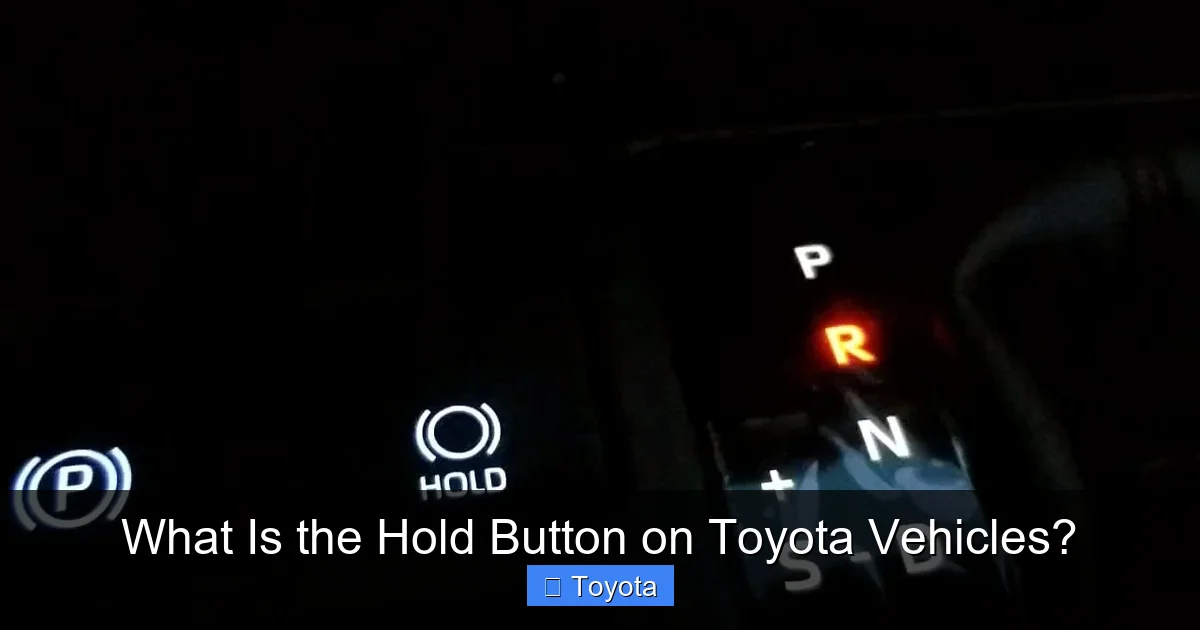
Visual guide about What Is the Hold Button on Toyota Vehicles?
Image source: i.ytimg.com
Now that you know what the HOLD button does, the next question is: when should you actually use it? While it’s not something you’ll need every day, there are several driving scenarios where HOLD can make a real difference.
Driving in Stop-and-Go Traffic
One of the most common uses for the HOLD button is in heavy city traffic. If you’re constantly stopping and starting—like during a long commute or rush hour—the transmission may shift up and down frequently. This can cause jerky movements, especially in CVT-equipped Toyotas, which can feel “rubbery” or unresponsive during slow driving.
By pressing HOLD, you limit the transmission’s tendency to upshift too early. This keeps the engine in a lower, more responsive gear, reducing the lag between pressing the accelerator and feeling the car move. The result? Smoother acceleration and less frustration at red lights and intersections.
For example, imagine you’re in a traffic jam on the highway. Without HOLD, your Toyota might shift into 4th gear at 25 mph, then drop back to 2nd when you slow down. This constant shifting can feel jerky and wear on the transmission over time. With HOLD engaged, the car stays in a lower gear range, making your drive feel more controlled and less erratic.
Driving Downhill or on Steep Inclines
Another great time to use the HOLD button is when driving downhill. On steep grades, especially in mountainous areas, it’s tempting to ride the brakes to control your speed. But this can overheat your brake pads and reduce their lifespan.
The HOLD button helps by using engine braking—letting the engine slow the car down instead of relying solely on the brakes. When the transmission is held in a lower gear, the engine’s resistance increases, naturally slowing the vehicle. This is especially helpful on long descents, like when driving through mountain passes or down winding rural roads.
For instance, if you’re driving down a 6% grade in a Toyota RAV4, activating HOLD can keep the transmission in 2nd or 3rd gear. This reduces your speed without constant braking, giving your brakes a break and improving safety.
Just remember: HOLD is not a substitute for proper braking. Always use your foot brake when needed, and never rely solely on engine braking in emergency situations.
Towing or Carrying Heavy Loads
If you’re towing a trailer, hauling a heavy load, or driving with several passengers and luggage, the HOLD button can help maintain better control. Heavy loads put extra strain on the transmission and brakes, and the car may struggle to accelerate or maintain speed on hills.
By using HOLD, you keep the transmission in a lower gear, which provides more torque and power to the wheels. This makes it easier to accelerate from a stop and climb hills without overworking the engine. It also reduces the risk of the transmission “hunting” between gears, which can happen when the vehicle is under load.
For example, if you’re towing a small camper with your Toyota Tacoma, activating HOLD before starting your journey can help the truck stay in a lower gear range. This improves pulling power and reduces wear on the transmission and brakes.
Driving in Snow, Ice, or Slippery Conditions
In winter weather, the HOLD button can also be useful. On snowy or icy roads, sudden acceleration can cause wheel spin and loss of traction. By keeping the transmission in a lower gear, HOLD reduces the amount of power sent to the wheels at once, helping maintain grip.
This is especially helpful when starting from a stop on a slippery surface. Instead of the transmission shifting into a higher gear too quickly—which can cause the wheels to spin—HOLD keeps the car in 1st or 2nd gear, delivering power more gradually.
Many drivers also use HOLD in conjunction with Toyota’s traction control system for added stability. Just be sure to drive slowly and avoid sudden movements, even with HOLD engaged.
Avoiding Unwanted Upshifts During Performance Driving
While most Toyota drivers aren’t track racers, some enjoy a more spirited driving style—especially in sportier models like the Toyota GR86 or Supra. In these cases, the HOLD button can prevent the transmission from upshifting at inopportune moments, like when exiting a corner or accelerating on a backroad.
By keeping the car in a lower gear, you maintain higher engine RPMs, which can improve throttle response and make the car feel more engaging to drive. It’s not quite the same as manual mode, but it’s a quick and easy way to add a bit of sportiness to your drive.
Which Toyota Models Have the HOLD Button?
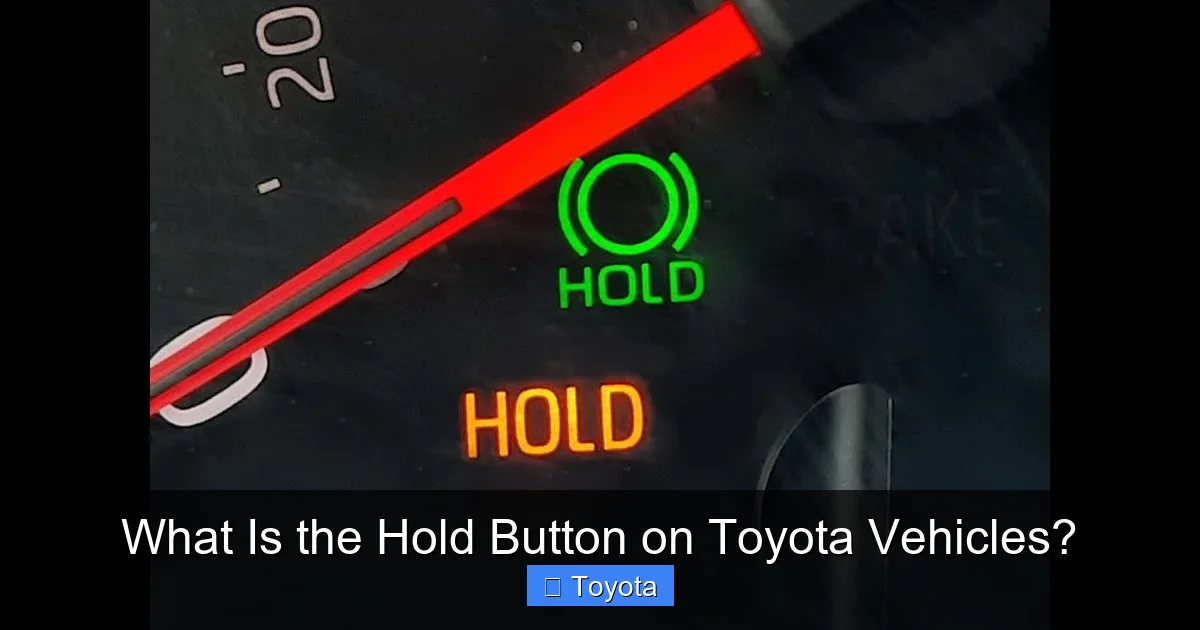
Visual guide about What Is the Hold Button on Toyota Vehicles?
Image source: driverlessrevolutions.com
The HOLD button is available on a wide range of Toyota vehicles, particularly those with automatic or CVT transmissions. While it’s not on every model, it’s common in many popular SUVs, trucks, and sedans.
SUVs and Crossovers
Models like the Toyota RAV4, Highlander, 4Runner, and Sequoia typically include the HOLD button. These vehicles are often used for family trips, off-roading, or towing, making HOLD a practical feature for real-world driving.
For example, the RAV4 has the HOLD button located near the gear shifter. When pressed, it limits upshifting and is especially useful in hilly areas or when driving with a full load of passengers and gear.
Trucks and Vans
Toyota trucks like the Tacoma and Tundra also feature the HOLD button, often labeled as “S” on the gear shifter. These vehicles are frequently used for towing and hauling, so the ability to control gear shifts is a big advantage.
The Sienna minivan also includes HOLD, which can be helpful when driving with a full car of passengers or in stop-and-go traffic.
Sedans and Hatchbacks
Even some Toyota sedans, like the Camry and Corolla, include the HOLD function—especially in higher trims or hybrid versions. While these cars are more focused on fuel efficiency, the HOLD button can still be useful in city driving or during winter weather.
Hybrid and Electric Models
Toyota hybrids, such as the Prius, RAV4 Hybrid, and Highlander Hybrid, also use the HOLD button. In these vehicles, the function works with the electric motor and CVT to manage power delivery more effectively.
It’s worth noting that the exact placement and labeling of the HOLD button can vary. On some models, it’s a standalone button. On others, it’s integrated into the gear shifter or labeled as “S” for Sport mode. Always check your owner’s manual if you’re unsure.
Common Misconceptions About the HOLD Button
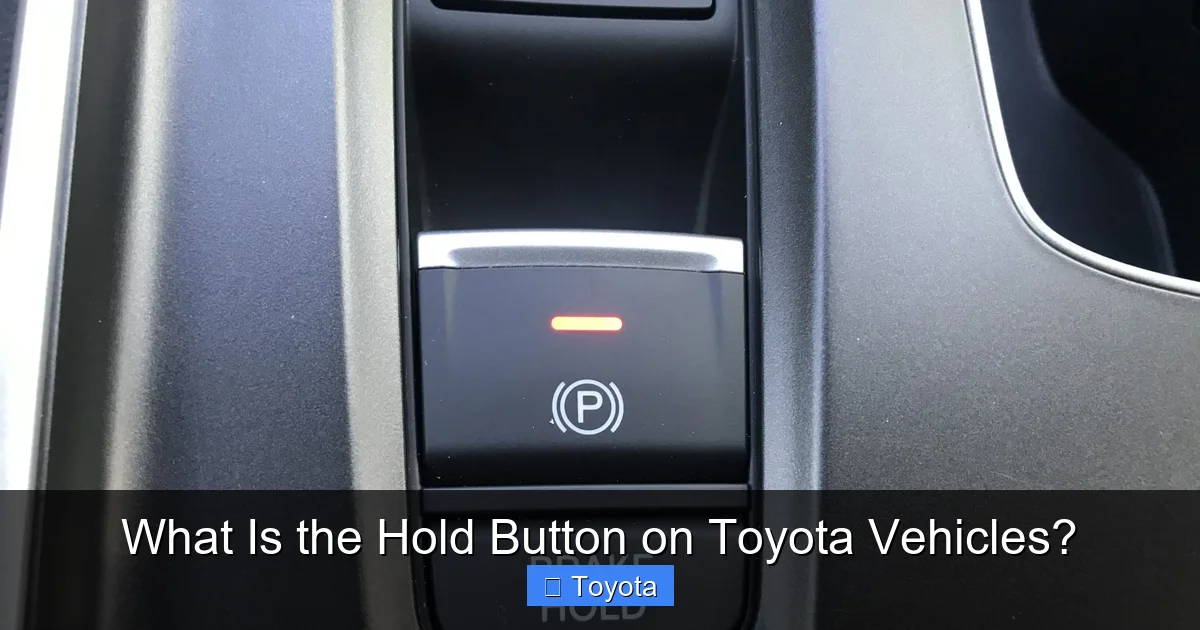
Visual guide about What Is the Hold Button on Toyota Vehicles?
Image source: motorbiscuit.com
Despite its usefulness, the HOLD button is often misunderstood. Let’s clear up some of the most common myths and misconceptions.
Myth: HOLD Is a Parking Brake
One of the biggest misunderstandings is that the HOLD button can keep the car stationary, like a parking brake. This is not true. The HOLD button only affects the transmission—it does not apply the brakes or prevent the car from rolling.
If you’re parked on a hill, always use the parking brake. Relying on HOLD to keep the car in place can lead to rolling, especially on steep inclines.
Myth: HOLD Improves Fuel Economy
Some drivers think that using HOLD saves gas by reducing engine strain. In reality, keeping the transmission in lower gears usually increases fuel consumption because the engine runs at higher RPMs.
HOLD is designed for control and safety, not efficiency. Use it when needed, but don’t expect better mileage.
Myth: HOLD Should Be Used All the Time
Another mistake is leaving HOLD on during normal highway driving. At high speeds, the transmission needs to shift into higher gears to maintain efficiency and reduce engine wear. Keeping HOLD engaged can cause the engine to rev unnecessarily, leading to louder operation and increased fuel use.
Only use HOLD when it provides a clear benefit—like in traffic, on hills, or when towing.
Myth: HOLD Works in Reverse
The HOLD button only functions when the vehicle is in drive (D) or sport (S) mode. It has no effect in reverse (R) or park (P). If you’re backing up a trailer or maneuvering in tight spaces, HOLD won’t help.
Tips for Using the HOLD Button Effectively
To get the most out of the HOLD button, keep these practical tips in mind:
- Press and Release: The HOLD button is a toggle—press once to activate, press again to deactivate. There’s no need to hold it down.
- Watch the Dashboard: Look for the “HOLD” or “S” light on your instrument panel to confirm the function is active.
- Use It Proactively: Don’t wait until you’re already struggling on a hill or in traffic. Activate HOLD before you need it.
- Combine with Other Features: Use HOLD with traction control, downhill assist, or cruise control for maximum safety and comfort.
- Know When to Turn It Off: Once you’re back on flat roads or in normal driving conditions, deactivate HOLD to restore normal transmission behavior.
Conclusion
The HOLD button on Toyota vehicles is a simple yet powerful feature that gives drivers more control over their transmission. Whether you’re navigating city traffic, descending a steep hill, towing a trailer, or driving in snow, HOLD can improve safety, comfort, and performance.
It’s not a magic button that solves every driving challenge, but when used correctly, it’s a valuable tool in your Toyota’s arsenal. By understanding what it does—and when to use it—you can make your drives smoother, safer, and more enjoyable.
So the next time you see that “HOLD” button, don’t ignore it. Give it a try. You might just discover a feature that makes a real difference in how you drive.
Frequently Asked Questions
What does the HOLD button do on a Toyota?
The HOLD button limits the transmission from automatically shifting into higher gears, keeping the vehicle in a lower gear for better control, engine braking, and smoother acceleration in certain driving conditions.
Can I use the HOLD button while driving on the highway?
It’s not recommended. HOLD is best used in low-speed situations like traffic, hills, or towing. On highways, it can cause the engine to run at higher RPMs, reducing fuel efficiency and increasing noise.
Does the HOLD button work in reverse?
No, the HOLD button only functions when the vehicle is in drive (D) or sport (S) mode. It has no effect in reverse or park.
Will using the HOLD button damage my transmission?
No, when used appropriately, the HOLD button is safe and designed for regular use. However, avoid using it unnecessarily at high speeds, as it can increase engine strain and fuel consumption.
How do I know if the HOLD button is active?
When the HOLD function is on, a light labeled “HOLD” or “S” will appear on your dashboard instrument panel. This confirms the transmission is limiting upshifts.
Can I use the HOLD button instead of the parking brake?
No, the HOLD button does not apply the brakes or prevent the car from rolling. Always use the parking brake when stopped, especially on inclines.