What Is Bmw Steptronic?

Contents
- 1 Key Takeaways
- 2 📑 Table of Contents
- 3 What Is BMW Steptronic?
- 4 The Core Definition: More Than Just an Automatic
- 5 How Does Steptronic Technology Actually Work?
- 6 Steptronic vs. Traditional Automatic: What’s the Real Difference?
- 7 The Tangible Benefits: Why Drivers Love Steptronic
- 8 Which BMW Models Feature Steptronic Transmissions?
- 9 Driving Tips, Common Questions, and Misconceptions
- 10 The Verdict: Is Steptronic Worth the Hype?
- 11 Frequently Asked Questions
Side Window Sunshade

Car Cup Holder Expander

Parking Sensor Kit

Multipurpose Lubricant Spray
BMW Steptronic is the brand’s name for its advanced automatic transmission that offers drivers the option for manual control via paddle shifters or a sequential shifter. It seamlessly blends the convenience of an automatic with the engaging, sporty feel of a manual gearbox, allowing for precise gear changes to enhance both efficiency and driving dynamics. This intelligent system provides a more interactive and responsive driving experience without sacrificing the smoothness of an automatic.
Key Takeaways
- Master Steptronic: It’s BMW’s branded automatic transmission with manual shifting capability.
- Engage Manual Mode: Use the console lever or steering wheel paddles for full control.
- Gain Precise Control: Hold gears for acceleration or engine braking on descents.
- Boost Performance: Manual shifts allow you to stay in the optimal power band.
- Enjoy Automatic Convenience: The system reverts to automatic if you stop shifting.
- Find It Widely: Steptronic is available on most BMW automatic models.
- Improve Efficiency: Skilled manual use can sometimes enhance fuel economy.
📑 Table of Contents
- What Is BMW Steptronic?
- The Core Definition: More Than Just an Automatic
- How Does Steptronic Technology Actually Work?
- Steptronic vs. Traditional Automatic: What’s the Real Difference?
- The Tangible Benefits: Why Drivers Love Steptronic
- Which BMW Models Feature Steptronic Transmissions?
- Driving Tips, Common Questions, and Misconceptions
- The Verdict: Is Steptronic Worth the Hype?
What Is BMW Steptronic?
Have you ever been behind the wheel of a BMW and felt like the car was anticipating your every move? You press the accelerator, and it downshifts with a crisp, confident kick. You ease off, and it glides into a higher gear for silent cruising. That seamless, intelligent dance between you and the machine? That’s the magic of BMW Steptronic. It’s not just an automatic transmission; it’s the heart of BMW’s driving philosophy, blending the convenience of an automatic with the engagement of a manual. Whether you’re navigating city traffic or carving through mountain roads, Steptronic is the invisible co-pilot that makes every journey feel tailor-made.
If you’re new to BMW or just curious about what sets its driving experience apart, you’ve probably heard the term “Steptronic.” It’s a badge of pride for the brand, but what does it actually mean? In this deep dive, we’ll strip away the marketing gloss and explain exactly what BMW Steptronic is, how it works, why it matters, and which models feature it. We’ll share practical tips on how to use it to its full potential and even touch on common questions owners have. By the end, you’ll understand why Steptronic isn’t just a transmission—it’s a key part of what makes a BMW a BMW.
The Core Definition: More Than Just an Automatic
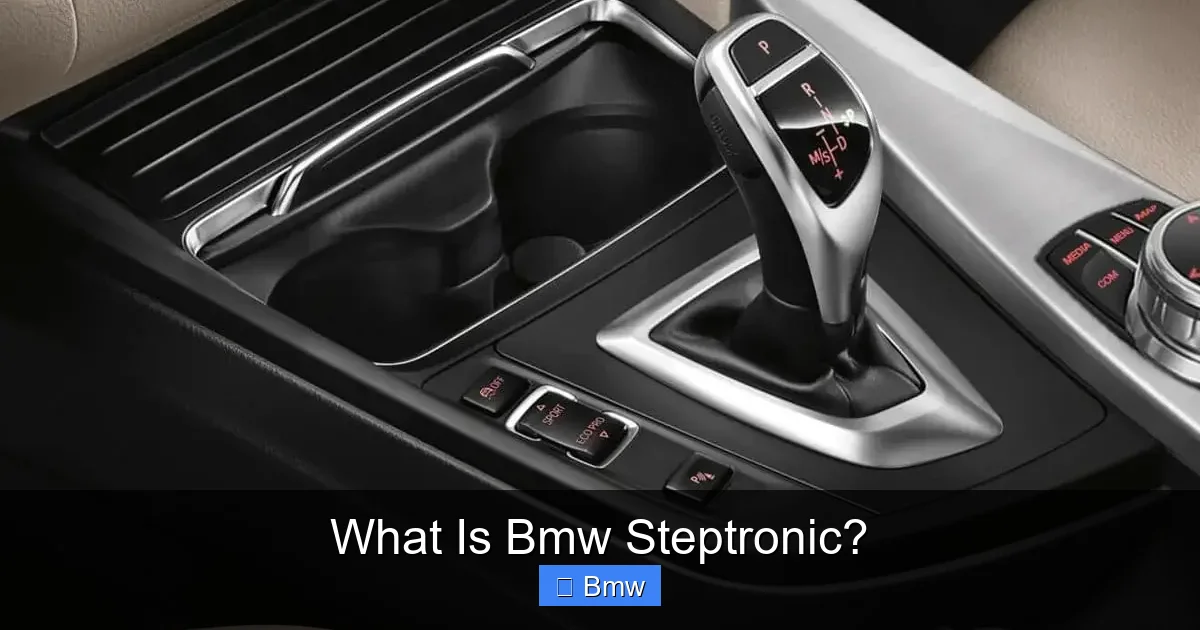
At its simplest, BMW Steptronic is the name given to the brand’s advanced automatic transmission systems. But calling it “just an automatic” is like calling a symphony just noise. Steptronic is a sophisticated, electronically controlled transmission that uses a torque converter (in most traditional setups) or a dual-clutch system (in newer, high-performance models) to seamlessly change gears without any input from the driver. The “Steptronic” name itself is a portmanteau of “step” (as in shifting) and “electronic,” highlighting its computer-controlled nature.
Visual guide about What Is Bmw Steptronic?
Image source: yourbmwblog.com
What truly sets Steptronic apart is its ability to offer both fully automatic operation and manual control. Through steering wheel paddle shifters or a traditional gear lever, you can take command, telling the transmission exactly when to shift. The system’s software is incredibly advanced, learning driving patterns and adapting shift points for sporty responsiveness or maximum efficiency. It’s this duality—effortless convenience on your daily commute and engaging control on a spirited drive—that defines the Steptronic experience.
A Brief History of Steptronic
BMW introduced the Steptronic name in the late 1990s, debuting on the 1997 E39 5 Series with the 5-speed automatic transmission. Before that, BMW used conventional automatics, but Steptronic marked a shift toward a more driver-interactive philosophy. The early systems allowed for a “manual” mode where the driver could select gears, but the real evolution came with improved electronics, faster shift times, and the integration with BMW’s driving modes (like Sport and Eco Pro).
Over the years, Steptronic has evolved from 5-speed to 6-speed, 8-speed, and even 7-speed dual-clutch transmissions (DCT) in M models. Each generation brought quicker shifts, better fuel economy, and smoother operation. The modern 8-speed Steptronic, co-developed with ZF, is a benchmark in the industry, known for its lightning-fast shifts and intelligent programming that can anticipate upcoming road conditions when paired with navigation data.
How Does Steptronic Technology Actually Work?
To appreciate Steptronic, it helps to understand what’s happening under the hood. While the exact mechanics vary between traditional torque converter automatics and dual-clutch systems (DCT), the core principle is the same: sophisticated electronics manage gear changes for optimal performance and efficiency.

Visual guide about What Is Bmw Steptronic?
Image source: cdn.bmwblog.com
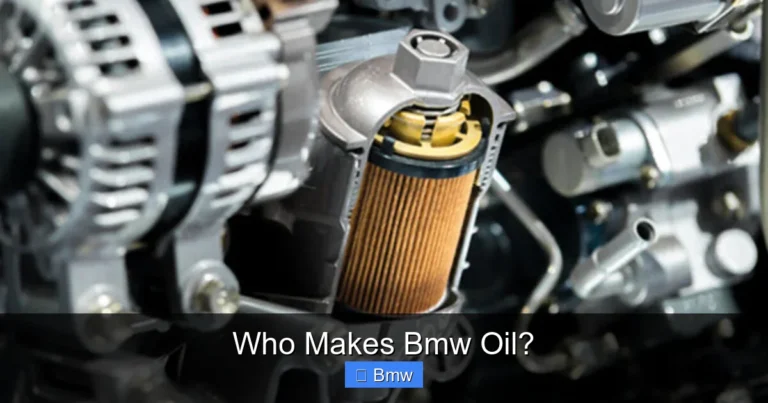
In a traditional Steptronic automatic (like the common 8-speed), a torque converter connects the engine to the transmission. Inside, a complex set of planetary gearsets and clutch packs are controlled by a transmission control unit (TCU). This TCU receives data from dozens of sensors—engine speed, vehicle speed, throttle position, brake application, and even GPS data from the navigation system. Based on this flood of information, it calculates the perfect moment to shift, often in milliseconds.
The Role of the Transmission Control Unit (TCU)
The TCU is the brain of the operation. It’s not just following a preset shift pattern; it’s constantly adapting. If you’re accelerating aggressively, it holds gears longer for maximum power. If you’re cruising gently, it upshifts early to save fuel. In Sport mode, shift points are raised dramatically, and the transmission responds more aggressively to paddle shift inputs. The TCU also learns your driving style over time, personalizing the shift behavior to match how you drive.
Paddle Shifters: Your Direct Line to Control
Those little paddles behind the steering wheel are your gateway to manual control. When you pull the right paddle (+), the transmission upshifts. Pull the left (-), and it downshifts. The system is designed to be intuitive and fast—shifts happen almost instantly, without the need for a clutch pedal. Even better, Steptronic won’t let you do something that would damage the engine, like downshifting into a gear that would over-rev the engine. It’s a safe, engaging way to take control without the hassle of a traditional manual.
Steptronic vs. Traditional Automatic: What’s the Real Difference?
If you’ve driven an older car with a clunky, slow-shifting automatic, Steptronic will feel like a revelation. The differences are stark and come down to three key areas: shift speed, intelligence, and driver involvement.

Visual guide about What Is Bmw Steptronic?
Image source: forumbmw.net
Shift Speed and Smoothness: Traditional automatics of the past could be sluggish, with a noticeable “shift shock” as gears changed. Modern Steptronic transmissions are engineered for near-seamless shifts. The 8-speed Steptronic, for example, can complete a gear change in a fraction of a second, often using overlapping gear ratios (where the next gear is pre-selected) to maintain continuous power delivery. The result is acceleration that’s both smooth and urgent.
Intelligence and Adaptability: Older automatics followed rigid, pre-programmed shift maps. Steptronic’s TCU is a learning computer. It considers not just how hard you’re pressing the throttle, but also the road gradient, vehicle load, and even your recent driving history. This means the transmission behaves differently in stop-and-go traffic versus on an open highway, all without you noticing the complex calculations happening in the background.
Driver Involvement: This is the biggest differentiator. A traditional automatic isolates you from the driving process. Steptronic invites you in. With paddle shifters, you can control the gears, hold a gear for a corner, or manually downshift for engine braking on a descent. It bridges the gap between the convenience of an automatic and the fun of a manual, giving you the best of both worlds.
Steptronic vs. Dual-Clutch (DCT): Clearing Up Confusion
Some BMW models, particularly the high-performance M cars, use a 7-speed dual-clutch transmission (DCT) instead of a traditional torque converter automatic. While both are marketed under the Steptronic umbrella, they work differently. A DCT uses two separate clutches for odd and even gears, allowing for incredibly fast, rifle-bolt shifts with no torque converter interruption. It’s more common in sports cars and offers an even more direct, racy feel. However, it can be slightly less smooth at very low speeds compared to a torque converter automatic. For most drivers, the difference in daily driving is subtle, but enthusiasts often prefer the DCT’s lightning-fast shifts and immediate response.
The Tangible Benefits: Why Drivers Love Steptronic
So why is Steptronic such a celebrated feature? The benefits translate directly to real-world driving pleasure and practicality.
Enhanced Performance: In Sport mode, Steptronic holds gears longer, responds instantly to paddle shifts, and delivers power exactly when you want it. This makes acceleration more responsive and driving on twisty roads more engaging. You’re not fighting the transmission; you’re working with it.
Improved Fuel Efficiency: In Eco Pro mode (which you can learn more about here), Steptronic shifts as early as possible to keep the engine in its most efficient RPM range. The smooth, rapid shifts also minimize power loss. This is why modern BMWs with Steptronic often achieve impressive EPA ratings without sacrificing performance.
Unmatched Convenience: In daily traffic, you can just put it in “D” and forget it. The transmission handles creeping forward at a stoplight and smooth launches effortlessly. It’s one less thing to worry about when you’re stuck in a commute.
Increased Driver Engagement: The ability to manually select gears via paddles transforms a mundane drive into an interactive experience. You can pre-select a lower gear before a passing maneuver, use engine braking on long descents, or simply enjoy the rhythmic shift pattern on a backcountry road. It connects you to the car in a way a traditional automatic simply cannot.
Practical Example: Using Steptronic on a Mountain Drive
Imagine you’re descending a steep, winding mountain road. In a regular automatic, you’d ride the brakes constantly. With Steptronic, you can tap the left paddle to downshift, using the engine to help slow the car. This reduces brake wear and gives you more precise control. The transmission will blip the throttle on the downshift to match revs, making it smooth. It’s a technique every BMW driver should master.
Which BMW Models Feature Steptronic Transmissions?
The great news is that Steptronic is not a rare, optional extra—it’s a core part of the BMW driving experience across nearly the entire lineup. For decades, BMW has equipped its models with Steptronic automatics as the standard transmission in most markets, phasing out traditional manuals in many regions.
Here’s a breakdown of where you’ll find Steptronic:
- 3 Series (G20/G21): Standard with an 8-speed Steptronic automatic across all engine variants.
- 5 Series (G30/G31): Also standard with the 8-speed Steptronic.
- 7 Series (G70): Features an 8-speed Steptronic, with optional 8-speed Sport Steptronic for more dynamic shifts.
- X3 (G01) & X4 (G02): Both come standard with 8-speed Steptronic. If you’re looking at an X3, you’ll also be thinking about aesthetics—our guide to the best color for a BMW X3 might help complete your decision.
- X5 (G05) & X6 (G06): Standard 8-speed Steptronic, with the M50i and Alpina models getting a specially tuned version.
- X7 (G07): The flagship SUV uses the robust 8-speed Steptronic to manage its size and power.
- Z4 (G29): The roadster comes with an 8-speed Steptronic, though a manual is available in some markets.
- M Models (M3, M5, X5 M, etc.): These use a high-performance version, often a 7-speed dual-clutch Steptronic (DCT) or a specially tuned 8-speed automatic, depending on the model and year.
Essentially, if you’re looking at a new BMW from the last 15 years, it almost certainly has a Steptronic transmission. The only exceptions are a few select entry-level models in specific markets or classic cars that retain their original manuals.
Data Table: Steptronic Across Recent BMW Models
| Model | Generation | Steptronic Type | Gears | Notes |
|---|---|---|---|---|
| 3 Series | G20 (2019-Present) | 8-Speed Automatic | 8 | Standard on all trims |
| 5 Series | G30 (2017-Present) | 8-Speed Automatic | 8 | Standard; Sport Steptronic optional |
| X3 | G01 (2018-Present) | 8-Speed Automatic | 8 | Standard on all models |
| X5 | G05 (2019-Present) | 8-Speed Automatic | 8 | M50i uses tuned version |
| M3 | G80 (2021-Present) | 8-Speed M Steptronic | 8 | With M xDrive, also manual available |
| M5 | F90 (2018-Present) | 8-Speed M Steptronic | 8 | Competition model |
| i4 | G26 (2022-Present) | Single-Speed Reduction | 1 | Electric; not traditional Steptronic |
Note: This table shows a snapshot. Always verify specifications for a specific model year.
Driving Tips, Common Questions, and Misconceptions
Owning a BMW with Steptronic is one thing; mastering it is another. Here are some practical tips and clarifications to help you get the most out of your driving experience.
How to Use Paddle Shifters Effectively
The paddles are your best friend for engaging driving. Here’s how to use them like a pro:
- For Passing: Need a quick burst of power? Pull the right paddle to downshift. The transmission will kick down a gear or two, giving you immediate acceleration.
- For Cornering: Before entering a tight corner, use the left paddle to downshift to a lower gear. This puts the engine in its power band, so you can accelerate smoothly out of the turn.
- For Engine Braking: On a long downhill, manually downshift to use the engine to help slow the car. This saves your brakes from overheating.
- Don’t Redline Unnecessarily: While the system protects the engine, constantly holding a gear until the redline isn’t necessary and can be inefficient. Shift when you feel the power taper off.
Remember: In automatic mode (“D”), the transmission will override your paddle inputs after a few seconds of steady driving, returning to its automatic program. To hold a gear, you often need to switch to manual mode (usually by moving the lever to the “S” gate or pressing a mode button). Check your owner’s manual for the exact procedure for your model.
Common Misconceptions Debunked
“Steptronic is just a normal automatic with paddles.” False. The software, shift logic, and integration with driving modes make it a fundamentally different experience. It’s more responsive and adaptive.
“Manual mode is slow and unresponsive.” In older systems, this was sometimes true. Modern Steptronic reacts to paddle pulls almost instantly, often faster than a human can operate a manual clutch and gear lever.
“It’s less reliable than a manual.” Modern automatics, including Steptronic, are incredibly reliable when maintained properly. They are often more durable than manuals in heavy city driving because there’s no clutch wear. However, like any complex system, they require proper fluid changes and can be costly to repair if neglected. For diagnostic help, a tool like BMW INPA can be invaluable for identifying issues early.
“You can’t use paddle shifters in Eco Pro mode.” You absolutely can. Eco Pro mode mainly adjusts shift points for efficiency, but you can still take manual control with the paddles, allowing you to be efficient or sporty on demand.
Maintenance and Longevity
Steptronic transmissions are robust, but they do require care. The most critical maintenance is regular transmission fluid and filter changes. BMW typically recommends a service interval (e.g., every 60,000-80,000 miles, but check your manual). Using the correct fluid is non-negotiable. Aggressive driving, especially frequent high-RPM shifts in very hot conditions, can accelerate wear. The good news? With proper maintenance, a Steptronic transmission can easily last 200,000 miles or more.
The Verdict: Is Steptronic Worth the Hype?
After years of development and millions of units on the road, the answer is a resounding yes. BMW Steptronic represents a masterclass in balancing competing demands: convenience vs. engagement, efficiency vs. performance, smoothness vs. responsiveness. It’s a transmission that doesn’t force you to choose. You can commute in comfort and then, at the drop of a hat, tap a paddle and transform your drive into something visceral and exciting.
For the daily driver, it’s the hassle-free automatic that gets you where you’re going with minimal fuss. For the enthusiast, it’s a tool that puts you in command, offering a level of interaction that’s rare in today’s increasingly isolated driving environments. It’s a key reason why BMWs are so consistently praised for their driving dynamics. The car feels connected, alive, and responsive—and a huge part of that feeling flows through the Steptronic transmission.
If you’re considering a BMW, experiencing the Steptronic is a must. Take a test drive, switch between Comfort, Sport, and Eco Pro modes, and play with the paddle shifters on a twisty road. You’ll quickly understand why this technology is such a cornerstone of the brand. It’s not just about getting from A to B; it’s about enjoying every second of the journey. And that, in a nutshell, is what BMW Steptronic is all about.
Frequently Asked Questions
What is BMW Steptronic?
BMW Steptronic is the name for BMW’s proprietary automatic transmission system that offers both fully automatic and manual shifting modes. It allows drivers to manually select gears using paddle shifters or the gear lever, providing more control than a traditional automatic while retaining the convenience of an automatic.
How does the BMW Steptronic transmission work?
The Steptronic transmission is a torque converter automatic with advanced electronics. In automatic mode, it shifts smoothly on its own, but the driver can manually override it by moving the lever into the manual gate or using steering wheel paddles to upshift or downshift, often with faster shift times for a sportier feel.
What are the benefits of a BMW with Steptronic?
The main benefit is versatility; it combines the ease of an automatic for daily driving with the engaging, driver-controlled experience of a manual. This can improve performance during spirited driving, aid in engine braking on descents, and often contributes to better fuel efficiency when driven judiciously in manual mode.
Is a Steptronic transmission the same as a manual?
No, a Steptronic is an advanced automatic transmission, not a true manual with a clutch pedal. While it mimics manual gear selection, it uses a torque converter or dual-clutch system (in newer models) to change gears automatically without requiring the driver to operate a clutch, making it easier to use in stop-and-go traffic.
Which BMW models come with Steptronic?
Steptronic is available on the vast majority of BMW’s current lineup with automatic transmissions, from the 1 Series and 3 Series sedans to the X5 and X7 SUVs. It is typically the standard or optional automatic transmission choice, replacing the older traditional automatics in most markets.
Is BMW Steptronic better than a traditional automatic?
For most drivers, yes, as it offers greater driver involvement and often quicker, more responsive shifts than older conventional automatics. It provides the best of both worlds: automatic convenience for everyday use and manual control for performance driving, making it a preferred feature for enthusiasts who don’t want a clutch pedal.