What Happens If You Put the Wrong Battery in Your Car
Putting the wrong car battery can lead to severe electrical problems, component damage, and even safety hazards. Using a battery with incorrect voltage, size, or terminal placement can prevent your car from starting, fry sensitive electronics, or cause a dangerous short circuit. Always consult your owner’s manual or a professional to ensure a perfect fit for your vehicle’s needs.
We’ve all been there. Your car won’t start. The lights are dim. It’s time for a new battery. You head to the store, see a sea of black boxes, and grab one that looks about right. Or maybe you find a great deal online. It fits in the tray, you hook it up, and… problems start.
What happens if you put the wrong battery in your car? The answer isn’t simple. Sometimes, the car might work fine for a while. Other times, you might hear a sickening pop and see smoke. The results range from a minor headache to a total electrical meltdown.
Think of your car’s battery as its heart. It doesn’t just start the engine. It provides stable power for dozens of computers, sensors, and luxury features. Putting in the wrong “heart” can make the whole system sick. Let’s walk through exactly what can go wrong and how to avoid turning a simple swap into a nightmare.
In This Article
- 1 Key Takeaways
- 2 📑 Table of Contents
- 3 1. The Immediate Dangers: What Can Go Wrong Instantly
- 4 2. The Slow-Burn Problems: Damage That Creeps Up
- 5 3. The Fit and Form Issues: Why Size Isn’t Just About the Tray
- 6 4. The Impact on Your Car’s Expensive Electronics
- 7 5. How to Absolutely Avoid Putting in the Wrong Battery
- 8 6. What to Do If You’ve Already Installed the Wrong Battery
- 9 Frequently Asked Questions
- 9.1 Can the wrong battery size damage my alternator?
- 9.2 My car starts with the wrong battery, so is it okay?
- 9.3 How do I know if I bought an AGM or lead-acid battery?
- 9.4 What’s more important, CCA or CA (Cranking Amps)?
- 9.5 I have a start-stop system. Do I need a special battery?
- 9.6 Can I put a higher CCA battery in my car than recommended?
Key Takeaways
- Mismatched Voltage is Critical: Using a battery with the wrong voltage (e.g., 24V in a 12V system) will instantly overload and destroy your car’s electrical components.
- Size and Fit Matter: An incorrectly sized battery can cause dangerous physical damage, short circuits from loose terminals, or simply not fit in the battery tray.
- CCA and RC Must Match Needs: A battery with insufficient Cold Cranking Amps (CCA) may fail to start your engine in cold weather, while low Reserve Capacity (RC) strains the alternator.
- Terminal Placement is Key: Reversed positive and negative terminals can cause catastrophic damage to the vehicle’s computer and wiring, leading to expensive repairs.
- Modern Cars Are More Vulnerable: Newer vehicles with complex infotainment systems, ADAS, and computers are far more susceptible to damage from power irregularities than older models.
- Prevention is Simple: Always check your owner’s manual, the old battery’s label, or use a retailer’s fitment guide to find the exact battery specification for your car.
- When in Doubt, Ask a Pro: If you’re unsure about the correct battery, consulting a mechanic or parts specialist is a small investment that prevents major repair bills.
📑 Table of Contents
- 1. The Immediate Dangers: What Can Go Wrong Instantly
- 2. The Slow-Burn Problems: Damage That Creeps Up
- 3. The Fit and Form Issues: Why Size Isn’t Just About the Tray
- 4. The Impact on Your Car’s Expensive Electronics
- 5. How to Absolutely Avoid Putting in the Wrong Battery
- 6. What to Do If You’ve Already Installed the Wrong Battery
1. The Immediate Dangers: What Can Go Wrong Instantly
Some mistakes cause problems the moment you connect the cables. These are the scary scenarios that can leave you stranded or cause irreversible damage.
Wrong Voltage: A Guaranteed Catastrophe
This is the most severe error. Most cars use a 12-volt system. Some large trucks or specialty vehicles might use 24-volt. Putting a 24-volt battery in a 12-volt car is like hooking a fire hose to a garden sprinkler.
The excess voltage will surge through your electrical system. It will instantly fry delicate components. Your engine control unit (ECU), infotainment screen, and lighting modules can be destroyed in seconds. You’ll likely see smoke, smell burning plastic, and be left with a very expensive repair bill. The reverse—using a 12V in a 24V system—will simply not provide enough power to start the vehicle, but it’s less likely to cause instant damage.
Terminal Reversal: The Polarity Problem
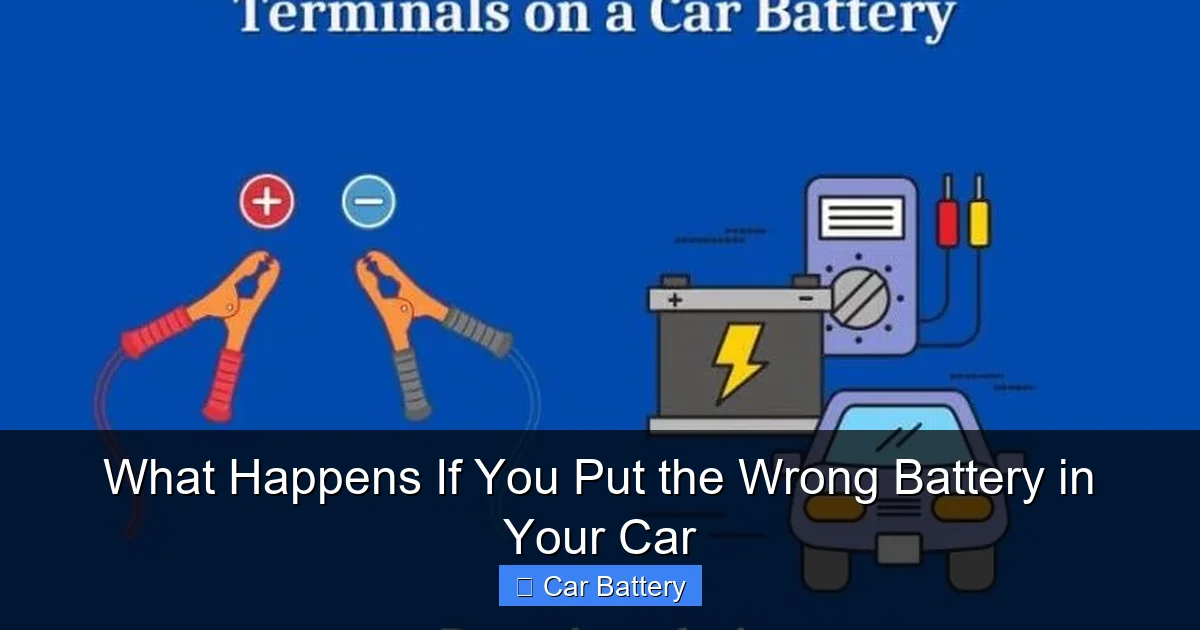
Car batteries have a positive (+) and a negative (-) terminal. The cables are color-coded: red for positive, black for negative. The battery itself has the terminals on specific corners (top-left vs. top-right).
If you force a battery into the tray where the terminals are on the opposite sides, you might be tempted to swap the cables. Never do this. Connecting positive to negative and negative to positive creates a “reverse polarity” situation. This sends current backward through the system. It can blow the main fuse, destroy the alternator’s diodes, and obliterate your car’s computer modules. The damage is often extensive and immediate.
Physical Short Circuit
A battery that’s too tall or wide can be a hidden danger. If the battery’s positive terminal post touches the metal hood or a bracket when you close it, it creates a direct short to ground. This can cause sparks, melt metal, ignite battery gases, or even cause the battery to explode. Always ensure there’s adequate clearance (usually about an inch) above the battery posts.
2. The Slow-Burn Problems: Damage That Creeps Up
Not all wrong-battery symptoms show up right away. Some issues slowly degrade your car’s health, leading to mysterious failures weeks or months later.
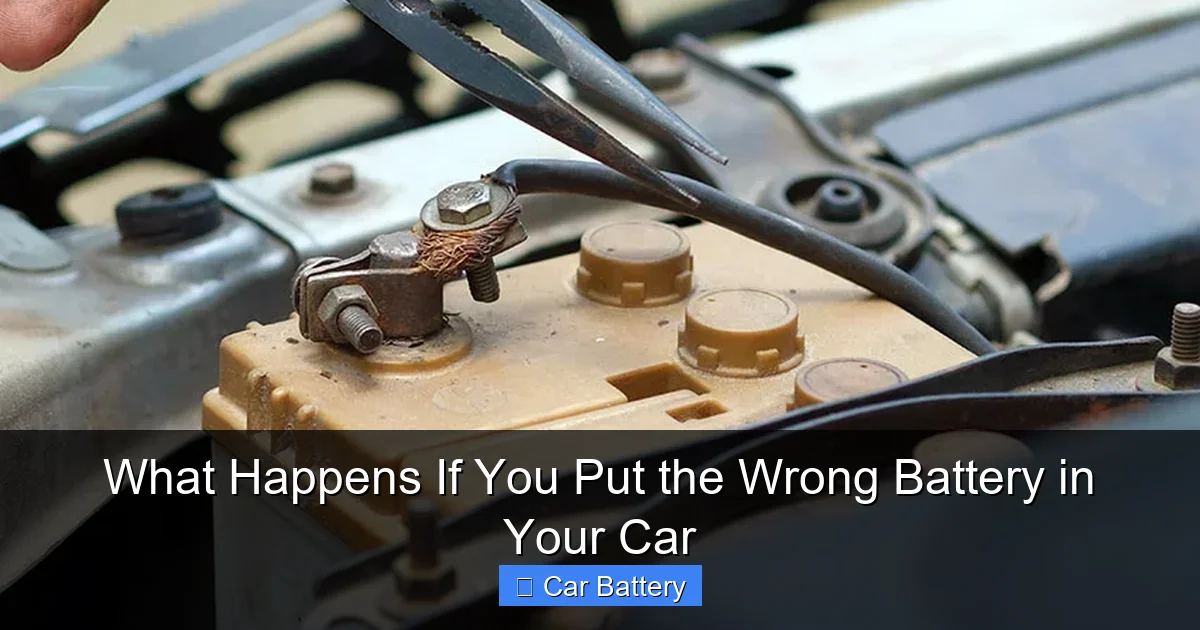
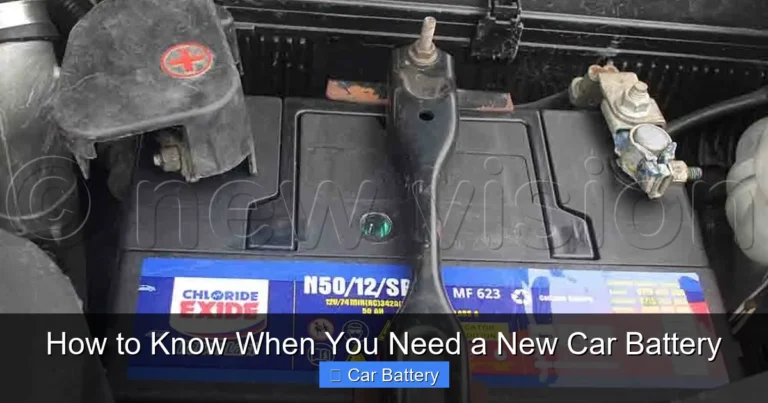
Visual guide about What Happens If You Put the Wrong Battery in Your Car
Image source: autotoride.com
Insufficient Cold Cranking Amps (CCA)
CCA measures a battery’s ability to start an engine in cold weather (0°F). If your new battery has a CCA rating lower than your car requires, it might struggle on cold mornings. The starter motor will turn slowly or click repeatedly. This “deep cycling” (draining the battery heavily) wears it out incredibly fast. You’ll be replacing it again soon, and the constant strain isn’t good for the starter motor either.
Low Reserve Capacity (RC)
Reserve Capacity is how long the battery can run essential electronics if the alternator fails. Modern cars with many “parasitic drains” (like security systems, onboard computers, and presets) need a healthy RC. A battery with low RC will drain quickly if you listen to the radio with the engine off. More critically, it forces the alternator to work harder to keep it charged, potentially shortening the alternator’s life.
Chronic Undercharging and Overcharging
Battery technology matters. Most cars have charging systems designed for standard lead-acid or AGM (Absorbent Glass Mat) batteries. If you install an AGM battery in a car designed for a flooded battery (or vice versa), the charging voltage may be incorrect. The battery will never reach a full charge, or it will be overcharged and “cooked.” Both lead to premature battery death and can cause damaging voltage fluctuations in the electrical system.
3. The Fit and Form Issues: Why Size Isn’t Just About the Tray
It might seem like a battery that “fits” in the metal tray is good enough. That’s not true. The fit has three key aspects: group size, terminal type, and hold-down security.
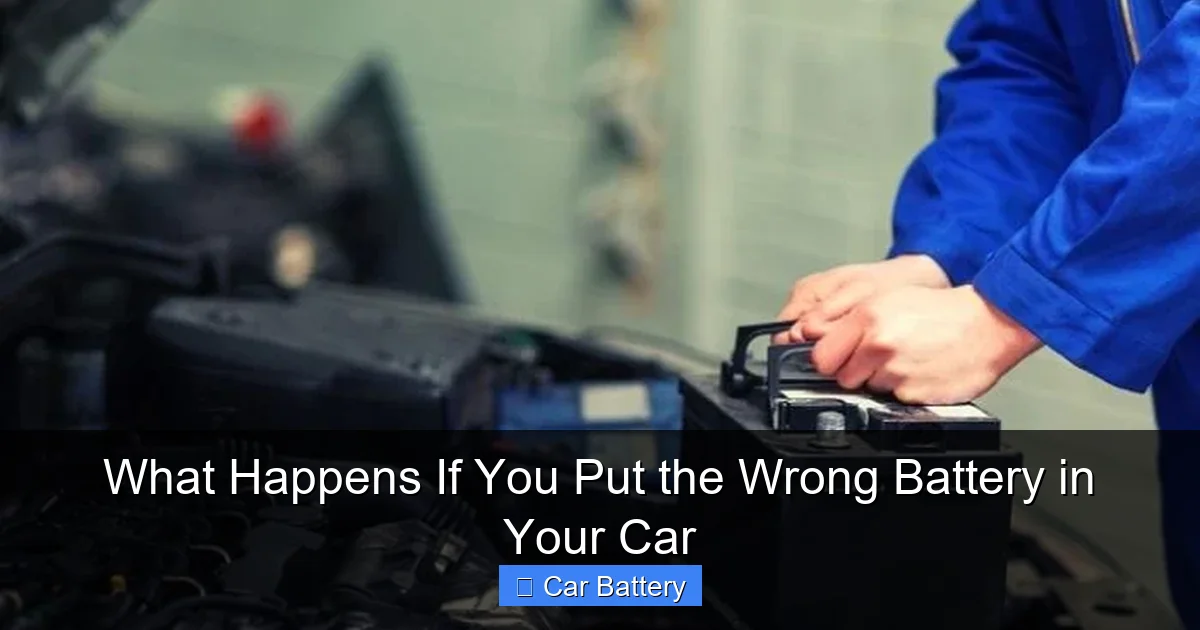
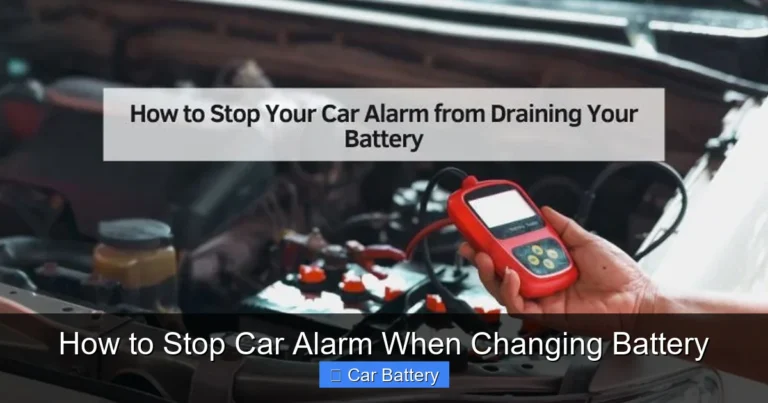
Visual guide about What Happens If You Put the Wrong Battery in Your Car
Image source: automotivegearz.com
Group Size: The Blueprint
The Battery Council International (BCI) assigns a “Group Size” number (e.g., 24F, 35, H6, 48). This code defines the battery’s exact physical dimensions: length, width, and height. Using the wrong group size can mean the battery clamp won’t secure it. A loose battery is a hazard. It can shift during driving, causing terminal damage, short circuits, or cracks in the battery case that leak acid.
Terminal Type and Location
Terminals come as top-post (the classic style) or side-post. Their location (left-front, right-front, etc.) is crucial. Even with the correct group size, a battery with terminals on the opposite side might mean your cables won’t reach without dangerous stretching or pinching against the hood.
The Hold-Down Bracket is a Safety Device
That metal bar or strap that goes over the battery isn’t optional. It prevents movement. A battery that’s even a half-inch too small will not be held securely. Over bumps, it can bounce, leading to internal damage and connection issues. Always use the hold-down bracket correctly.
4. The Impact on Your Car’s Expensive Electronics
Modern vehicles are rolling computers. A wrong battery doesn’t just affect starting; it threatens the entire digital network.
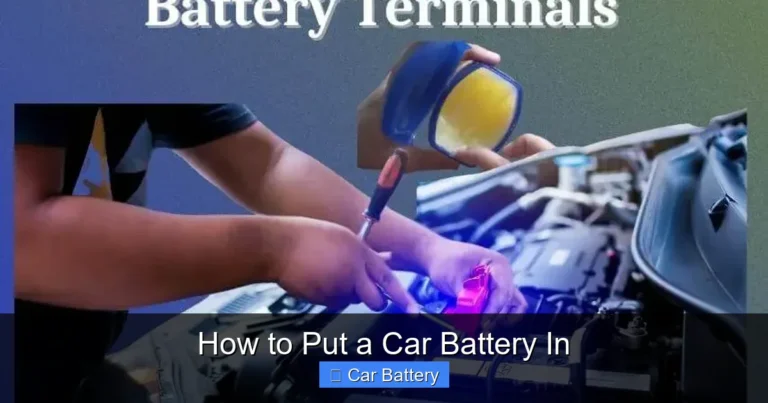
Visual guide about What Happens If You Put the Wrong Battery in Your Car
Image source: poweringsolution.com
Voltage Spikes and Drops
A weak or mismatched battery provides unstable voltage. Computers and sensors need clean, steady power. Voltage spikes can fry circuit boards. Low voltage can cause modules to reset or behave erratically. You might experience glitches like false warning lights, unresponsive touchscreens, or malfunctioning power windows.
Loss of Computer Memory and Adaptations
When you disconnect a battery, the car’s ECU loses its “adaptive memory.” This is the data it learns about your driving habits and engine performance. A professional scan tool is needed to recalibrate some systems. More importantly, a constantly undercharged battery can cause this memory to reset repeatedly, preventing the car from running smoothly.
Damage to Advanced Driver-Assistance Systems (ADAS)
Features like automatic emergency braking, lane-keep assist, and adaptive cruise control rely on precise sensors and cameras. These are highly sensitive to electrical noise and voltage irregularities caused by a failing or incorrect battery. A battery issue can cause these safety systems to deactivate or provide false alerts.
5. How to Absolutely Avoid Putting in the Wrong Battery
Prevention is straightforward. Follow these steps to ensure a perfect, safe match.
Consult Your Owner’s Manual
This is the single best source of truth. Look in the index for “Battery Specifications.” It will list the required BCI Group Size, CCA, RC, and sometimes the specific technology (e.g., AGM).
Read the Label on Your Old Battery
Before you remove the old battery, take a picture of the label. It will have all the key specs printed on it. Bring this photo to the store. This is especially helpful if you don’t have the manual.
Use Retailer Fitment Guides
Auto parts store websites and in-store computers have fitment guides. You enter your vehicle’s year, make, model, and engine size. It will show you every compatible battery. This is a very reliable method.
Understand Your Driving Needs
Do you live in a very hot or cold climate? Do you take many short trips that don’t allow the battery to recharge fully? Discuss this with the parts specialist. You might benefit from a battery with higher CCA or RC than the minimum requirement.
The Professional Installation Option
If you’re unsure, spending $20-$50 on professional installation is brilliant insurance. The technician will ensure the correct battery is used, properly connected, and registered (for AGM batteries in European cars, this is often required).
6. What to Do If You’ve Already Installed the Wrong Battery
If you suspect you’ve put in the wrong battery, don’t panic. Follow these steps to mitigate damage.
If the Car Hasn’t Been Started
If you just connected it but haven’t turned the key, disconnect the cables immediately (negative first). Re-evaluate the battery specs against your manual. Return the incorrect battery and get the right one.
If the Car Shows Electrical Problems
If you see warning lights, smell burning, or electronics are dead, do not drive the car. Have it towed to a trusted mechanic. Explain exactly what battery you installed. They can diagnose the extent of the damage.
If the Car Seems to Run Fine
Even if it starts, don’t assume all is well. Check the fit. Is it secure? Are the terminals tight and clean? Use a multimeter to check the charging voltage (should be 13.5-14.7V with the engine running). If anything seems off, consult a professional. It’s better to swap it out now than deal with a failure later.
Dealing with Warranty Issues
Installing the wrong battery can void the warranties on both the new battery and your car’s electrical components. Be honest with technicians about what happened to get an accurate diagnosis and repair estimate.
Conclusion
Putting the wrong battery in your car is a gamble you should never take. The risks—from being stranded on a cold morning to causing thousands in electronic repairs—far outweigh the few minutes saved by guessing. Your car’s electrical system is a finely tuned network. The battery is its foundation.
Treat it with respect. Take five minutes to check the manual or the old battery’s label. Use the tools available at any auto shop. When you install the right battery, you get more than just a start. You get peace of mind, reliable performance, and protection for your vehicle’s valuable electronics. Your car takes care of you on the road. Taking care to choose its correct battery is one of the simplest and most important ways to return the favor.
Frequently Asked Questions
Can the wrong battery size damage my alternator?
Yes, it can. A battery with significantly lower capacity (AH or RC) than required will be chronically undercharged. This forces the alternator to work at maximum output continuously, leading to overheating and premature failure. A physically wrong size can also cause connection issues that strain the charging system.
My car starts with the wrong battery, so is it okay?
Not necessarily. Starting the engine is just one function. The battery must also provide stable voltage for computers and handle electrical loads when idle. A battery that “fits and starts” may still have incorrect CCA, technology, or reserve capacity, leading to slow damage, poor performance in extreme weather, and early failure.
How do I know if I bought an AGM or lead-acid battery?
Check the label. AGM batteries will be clearly marked “AGM,” “Absorbent Glass Mat,” or “Dry Cell.” They often have a flat top with no serviceable caps. Standard flooded lead-acid batteries usually have removable caps to add water and may be labeled “Maintenance Free” or “Low Maintenance.”
What’s more important, CCA or CA (Cranking Amps)?
CCA is more critical for real-world use. CA is measured at 32°F, while CCA is measured at 0°F. CCA gives you a true picture of cold-weather starting power. Always meet or exceed your car manufacturer’s CCA recommendation, especially if you live in a cold climate.
I have a start-stop system. Do I need a special battery?
Yes, absolutely. Start-stop vehicles require an Enhanced Flooded Battery (EFB) or, more commonly, an AGM battery. These are designed to handle hundreds of deep cycles from the engine frequently stopping and starting. Using a standard battery will result in very rapid failure.
Can I put a higher CCA battery in my car than recommended?
Generally, yes. Installing a battery with a higher CCA rating than specified is safe and can be beneficial in cold climates. It provides more starting power reserve. Just ensure the physical size (Group), voltage, and terminal type are identical to the original specification.