
What Does the B in Bmw Stand For?

The “B” in BMW stands for “Bayerische,” the German word for “Bavarian.” The full name is Bayerische Motoren Werke, which translates to “Bavarian Motor Works.” However, this is an English approximation; the precise translation is “Bavarian Engine Works,” reflecting the company’s origins in aircraft engine manufacturing. The persistent myth that “B” stands for “Bavarian” in English is a simplification that overlooks the crucial German term “Motoren” (engines) and the company’s foundational history.
You’ve seen the iconic blue-and-white propeller-like emblem on countless cars, from sleek sedans to powerful SUVs. You know the brand represents performance, luxury, and precision engineering. But when someone asks, “What does the B in BMW stand for?” the answer isn’t as simple as “Bavarian.” That’s the most common guess, and it’s close—but it’s not the whole truth. The real story is a fascinating journey through German history, linguistic nuance, and industrial evolution. Let’s clear up the confusion once and for all and dive deep into the meaning behind those three famous letters.
For many, BMW is synonymous with the “Ultimate Driving Machine.” That slogan, coined in the 1970s, perfectly captured the brand’s essence. But to understand the “B,” we must travel back over a century to a time when the company wasn’t building cars at all. It was building engines for fighter planes. The name born from that era has remained unchanged, a permanent link to its origins. So, buckle up as we explore the history, the myths, and the precise meaning of the “B” in BMW.
Key Takeaways
- The “B” stands for “Bayerische”: It is the German adjective for “Bavarian,” referring to the state of Bavaria where the company was founded.
- Full name is Bayerische Motoren Werke: This translates most accurately to “Bavarian Engine Works,” not “Motor Works,” emphasizing its initial focus on aircraft engines.
- “Bavarian Motor Works” is a marketing approximation: The common English translation simplifies “Motoren Werke” to “Motor Works,” which is less accurate but widely accepted.
- The name reflects historical roots: BMW was officially founded in 1917 as an aircraft engine manufacturer, and the name has never changed, even as it evolved into a luxury automaker.
- The logo is directly tied to Bavaria: The blue and white quartered roundel symbolizes the Bavarian state flag, reinforcing the brand’s regional heritage.
- Understanding the name matters for enthusiasts: Knowing the correct origin deepens appreciation for BMW’s engineering-first philosophy, which began with engines, not just cars.
- It’s a global brand with a fixed German identity: Unlike some brands that adapt names for markets, BMW consistently uses its German initials and full name worldwide.
📑 Table of Contents
The Historical Origins: From Sky to Road
To understand the “B,” we must start at the very beginning. The company that would become BMW was not initially an automobile manufacturer. Its story is etched into the annals of World War I. In 1916, an entrepreneur named Karl Rapp founded a company called Rapp Motorenwerke in Munich, Bavaria. Its sole purpose was to design and manufacture aircraft engines for the German war effort. These were not simple engines; they were high-performance, six-cylinder inline engines that powered legendary fighters like the Fokker Dr.I triplane.
In 1917, due to Rapp’s health issues and the company’s restructuring, the firm was renamed Bayerische Motoren Werke, or BMW. The name was chosen to reflect its geographic and industrial purpose: “Bayerische” (Bavarian) for the region, “Motoren” (Engines), and “Werke” (Works). This was a literal description—the Bavarian Engine Works. The first product was the BMW IIIa, a revolutionary inline-six aircraft engine known for its high-altitude performance. It was a masterpiece of engineering, earning respect even from Allied pilots.
After the war, the Treaty of Versailles banned Germany from producing aircraft. Facing an existential crisis, BMW had to pivot. It began making motorcycle engines (the famous “boxer” twin) and later, complete motorcycles. The transition to automobiles came in 1928 when BMW acquired Fahrzeugfabrik Eisenach, a car manufacturer. Their first car, the BMW 3/15, was essentially a rebadged Austin 7. But the company’s DNA was already set: it was an engine company first. This history is crucial because it explains why “Motoren” (Engines) is the central word, not “Autos” (Cars). The “B” has always stood for “Bayerische,” anchoring the company to its Bavarian home and its core identity as an engine builder.
The Critical Importance of “Motoren”
This is where the common English translation, “Bavarian Motor Works,” stumbles. “Motoren” is the plural of “Motor,” which in German can mean “motor” or “engine.” However, in the industrial context of 1917, it specifically meant “engines.” “Werke” means “works” or “factory.” So, “Bayerische Motoren Werke” is “Bavarian Engine Works.” The switch from “Engine” to “Motor” in English is a subtle but significant dilution of the original meaning. It softens the hard, mechanical, industrial core of the company into something slightly more generic.
Think of it this way: a “motor” can be a small electric device. An “engine,” especially in the early 20th century, conjures images of complex, powerful, internal combustion machinery. BMW’s founders wanted to emphasize their prowess in building high-performance engines. They succeeded so well that the name became a benchmark for quality. When they finally started stamping their own cars, the engine was always the star. The famous BMW M badge, for performance models, is a direct descendant of this heritage—it stands for “Motorsport,” but the root is the same: the engine. So, when you say the “B” stands for “Bavarian,” you’re only telling half the story. The full, proud declaration is “Bavarian Engine Works.”
Decoding “Bayerische”: More Than Just a Region
“Bayerische” is the feminine form of the adjective “Bavarian” (from Bayern, the German name for Bavaria). It’s not just a geographic label; it’s a cultural and historical identity. Bavaria is a state in southeastern Germany with a distinct dialect, traditions, and a proud history of innovation and craftsmanship. By embedding “Bayerische” in its name from day one, BMW made an unbreakable pact with its homeland.
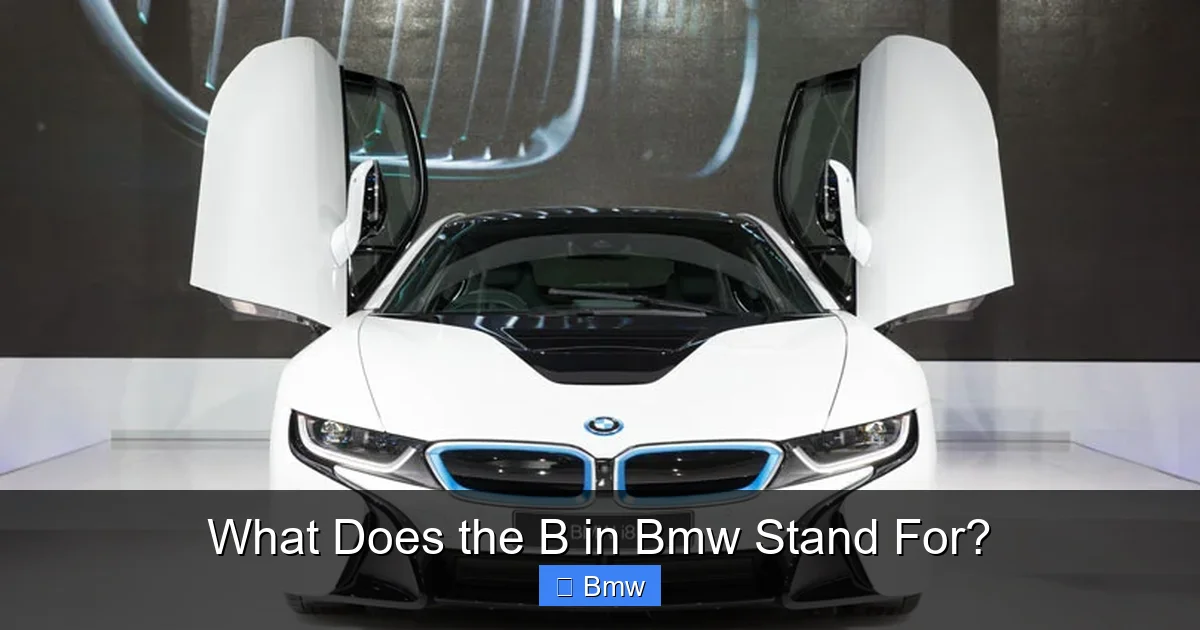
Visual guide about What Does the B in Bmw Stand For?
Image source: homeworkneeded.s3.amazonaws.com
This connection is not merely sentimental. It’s operational. BMW’s global headquarters remains in Munich, the capital of Bavaria. Its primary production plants, like the historic Dingolfing and the modern Leipzig factory, are in Bavaria. The company is one of the region’s largest employers and a pillar of its economy. The “B” in BMW is a permanent, unchangeable flag planted in Bavarian soil. It signifies that the brand’s values—precision, quality, and a certain engineering rigor—are intertwined with the region’s reputation for excellence in fields like optics (Zeiss), brewing (Beck’s, Paulaner), and of course, automotive engineering (Audi also has deep Bavarian roots in Ingolstadt).
For the global consumer, “Bayerische” adds an aura of authenticity. In a world of multinational corporations, BMW is unmistakably German, and more specifically, Bavarian. This isn’t just marketing; it’s a factual statement of origin protected by law. The name “Bayerische Motoren Werke” is a registered trademark that cannot be altered. This steadfast commitment to its roots is part of what makes BMW a “heritage brand.” When you buy a BMW, you’re buying a piece of that Bavarian legacy. It’s a promise that the engineering standards set in Munich are applied to every vehicle, whether built in Germany, the USA, China, or South Africa.
Practical Implication for the Modern Driver
What does this mean for you, the person behind the wheel? It means that the “B” is a guarantee of a certain pedigree. Service and parts are channeled through a network that traces back to that original Munich factory. The training for technicians, the specifications for components, and the corporate philosophy all flow from that central, Bavarian source. It’s why you might pay a premium for a genuine BMW part—it’s engineered to the standards of the “Bayerische Motoren Werke.” This contrasts with brands that have more decentralized or historically diluted identities. The “B” is a seal of authenticity.
Furthermore, understanding this helps you appreciate BMW’s occasional quirks. The brand’s insistence on driver-focused interiors, its historical reluctance toward front-wheel drive (until the UKL platform for MINI and some 1 Series), and its passion for inline-six engines all stem from an engineering culture rooted in making the best possible “Motoren.” The “B” reminds us that at its heart, BMW is an engine company that happens to make cars. This perspective makes models like the BMW M5 or the i8 hybrid supercar even more impressive—they are the culmination of over a century of engine-focused obsession.
The Persistent Myth of “Bavarian Motor Works”
So, if the accurate translation is “Bavarian Engine Works,” why does almost everyone, including many BMW owners, say “Bavarian Motor Works”? The myth is a classic case of linguistic simplification and powerful marketing. Over decades, the official English translation used by the company itself has been “Bavarian Motor Works.” It sounds smoother, more familiar to English speakers, and “Motor Works” has a nice, industrial ring to it. It’s not technically wrong—”Motoren” can be translated as “motors”—but it loses the specific, hard-nosed emphasis on “engines” that defined the company’s first 50 years.
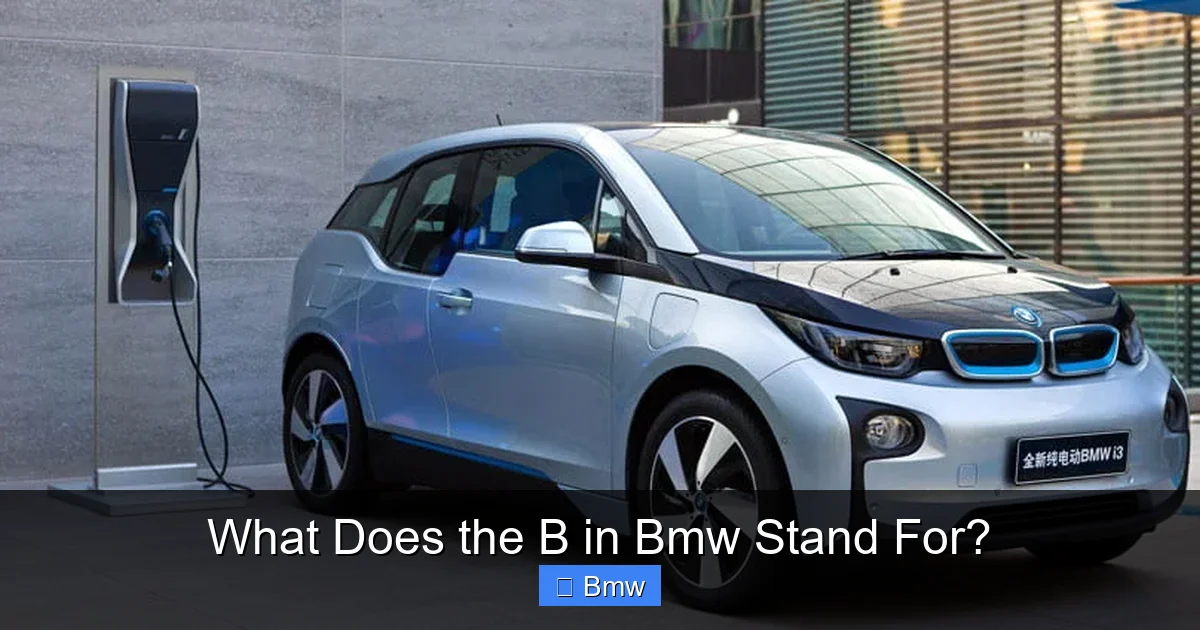
Visual guide about What Does the B in Bmw Stand For?
Image source: homeworkneeded.s3.amazonaws.com
The myth solidified in the English-speaking world through repetition. Automotive journalists, enthusiasts, and even BMW’s own early advertising in the US used “Bavarian Motor Works.” It became the de facto standard. People didn’t question it because it made intuitive sense: a German car company from Bavaria that makes motors (cars) for the world. The truth—that it was an *aircraft engine* company first—was a fascinating historical footnote that didn’t fit neatly on a badge or in a 30-second commercial. The simpler myth was easier to grasp and market.
This is a perfect example of how brand narratives evolve. The core truth (“Bayerische Motoren Werke”) is preserved in the official name and logo, but the popular understanding (“Bavarian Motor Works”) becomes a useful, if slightly inaccurate, shorthand. It’s similar to how many people think “AMG” stands for “Aufrecht, Melcher, Großaspach” (the founders’ names and hometown), which is true, but the brand now markets it as “AMG” as a performance sub-brand, detached from the literal meaning. The myth serves a purpose: it’s accessible. But for the true enthusiast, knowing the real story adds a layer of depth and respect for the brand’s unwavering focus on its foundational craft.
Why the Distinction Matters
Does it really matter if we say “Engine Works” or “Motor Works”? In casual conversation, probably not. But for historians, purists, and branding experts, the distinction is everything. It highlights the single most important fact about BMW: it was born from a passion for high-performance internal combustion. That DNA is why BMW was so quick to dominate in motorsport (Formula 1, touring cars, endurance racing) and why its street cars have always emphasized the driving experience—the connection between driver, engine, and road. A “Motor Works” could imply a broader, perhaps more diversified company. An “Engine Works” declares a singular, obsessive expertise.
This also explains BMW’s sometimes contentious design and engineering choices. The brand has famously resisted trends like CVT transmissions (until recently) and prioritized rear-wheel drive layouts for decades, even when front-wheel drive was more efficient. These decisions are the hallmarks of a company that sees the engine and drivetrain as a sacred unit to be optimized for feedback and performance, not just cost and space savings. The “B” in BMW, correctly understood as part of “Bayerische Motoren Werke,” is the ultimate explanation for this philosophy. It’s a reminder that every BMW, from a 3 Series to an iX, is ultimately a product of the “Bavarian Engine Works.”
The BMW Logo: A Visual Representation of the “B”
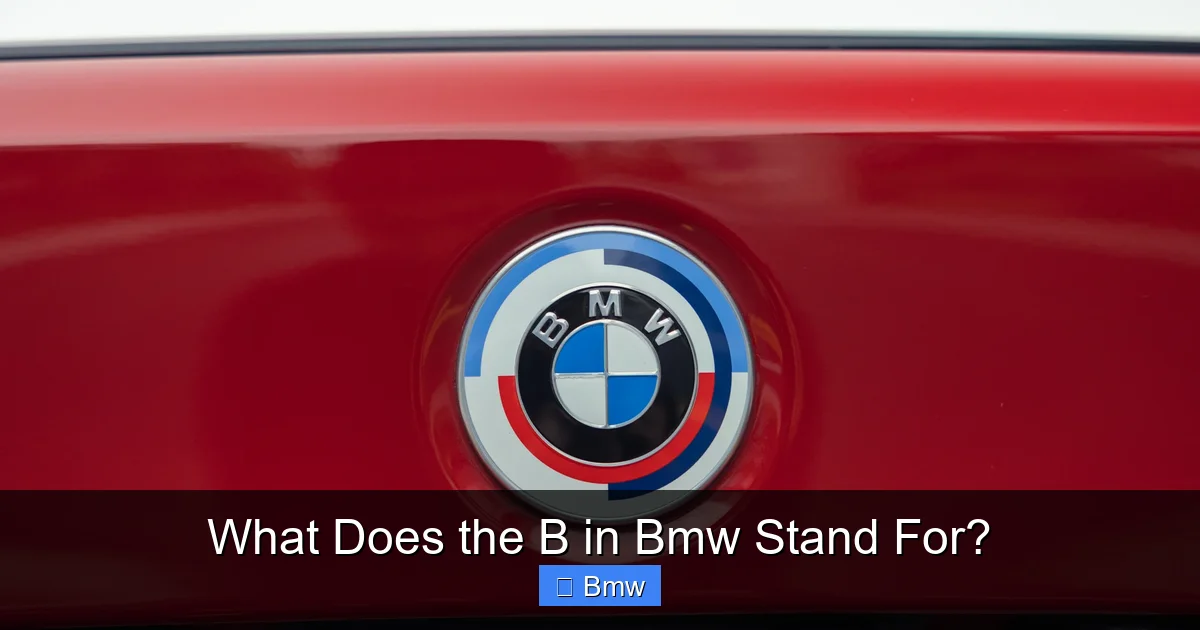
You cannot discuss the “B” in BMW without discussing the iconic roundel. The blue and white segmented circle is one of the most recognized logos in the world. And its design is a direct, visual echo of the “Bayerische” part of the name. The logo is a highly stylized representation of the Bavarian state flag, which features a blue and white lozenge (diamond) pattern.
Visual guide about What Does the B in Bmw Stand For?
Image source: motortrend.com
The story goes that the logo was designed in 1917, the same year the company was renamed. The intent was to create a symbol that proudly displayed the company’s regional origin. The blue and white colors are the official colors of Bavaria. The propeller-like interpretation—that the segments represent a spinning propeller against a blue sky—is a brilliant piece of post-facto mythology that BMW itself encouraged in the 1920s to highlight its aviation heritage. It’s a fantastic story, but it’s not the logo’s original meaning. The original meaning was simply, and powerfully, “We are from Bavaria.”
This visual link cements the “B.” Every time you see that roundel on the hood of a 5 Series or the center of an X5’s steering wheel, it’s flashing “Bayerische” in color and form. It’s a non-verbal declaration of heritage. Unlike car brands that use abstract shapes or animal symbols, BMW’s logo is a direct geographic reference. It says, “This machine was conceived and built by the Bayerische Motoren Werke.” The “B” isn’t just a letter in an acronym; it’s painted on the car itself in the national colors of its home state. This is a level of branding authenticity few companies achieve.
Evolution and Consistency
While the logo has been refined over the decades—becoming more modern, with cleaner lines and a flatter design in recent years—its core meaning has never been diluted. The 2020s “flat” logo, used primarily for digital and marketing purposes, still uses the exact blue and white color scheme and segmented pattern. Even the controversial, overly simplistic logo introduced for the i-series electric vehicles (a transparent ring with the letters BMW) sparked debate because it seemed to temporarily obscure the historic roundel. Critics argued it risked disconnecting the electric future from the mechanical past. The backlash was swift, and BMW quickly clarified that the classic roundel remains the primary brand symbol. This incident proves how fiercely the brand protects the visual link to its “Bayerische” roots. The logo is not just a badge; it’s a heirloom.
For owners, this means the logo carries weight. A vintage BMW with a worn but correct roundel tells a story of authenticity. A replica with incorrect colors or proportions is a fake, not just of a logo, but of a heritage. Understanding this helps you spot genuine articles and appreciate the care taken in even the smallest detail of the brand’s presentation. The next time you see that blue and white propeller, remember: first and foremost, it’s a flag. It’s the visual “B” in BMW, flying proudly for Bavaria.
BMW Today: The “B” in a Globalized World
In the 21st century, BMW is a global automotive giant. It produces vehicles on five continents, sells in nearly every country, and has expanded into motorcycles, financial services, and now, a major push into electric vehicles with the “i” sub-brand. With this scale, does the “B” in BMW still hold meaning? More than ever. In a homogenized global market, a clear, unassailable point of origin is a powerful differentiator.
The “B” signifies that despite its global footprint, the ultimate authority on what a BMW is, resides in Munich. Strategic decisions, design language (the “BMW design language” is famously directed from the Munich headquarters), and core engineering standards are set by the Bayerische Motoren Werke Aktiengesellschaft. A BMW built in Spartanburg, South Carolina (the X-series SUVs) is every bit a “Bayerische” product as one built in Munich. The production process, quality control, and component sourcing are governed by the same Bavarian standards. The “B” is the quality seal that transcends geography.
This is crucial as BMW navigates the electric transition. The new Neue Klasse platform, set to debut in the mid-2020s, is being developed in Munich. The goal is to create electric vehicles that are unmistakably BMW—with the same driving dynamics, premium feel, and brand ethos. The “B” in BMW is the anchor that ensures an electric BMW doesn’t become just another silent, efficient appliance. It must be a “Bavarian” electric machine: engaging, powerful, and beautifully engineered. The challenge is to make the “Engine Works” heritage translate into the era of electric motors and batteries. The “B” reminds the company that its reputation was built on mechanical mastery, and that legacy must inform the electric future.
Contrast with Other Brands
This contrasts interestingly with how other German brands handle their names. Mercedes-Benz is a portmanteau of two brands (Mercedes from Emil Jellinek’s daughter and Benz from Karl Benz) and doesn’t have a geographic anchor in its name. Audi’s name comes from the Latin translation of the founder’s surname (Horch, meaning “listen!”), and its four-ring logo represents the 1932 merger of four companies. Porsche is simply the founder’s name. BMW is unique among major German automakers for its explicit, permanent geographic and industrial descriptor. It’s not a person’s name or an abstract concept; it’s a statement of place and purpose: “We are the Bavarian Engine Works.” This gives it a somewhat utilitarian, no-nonsense character that aligns perfectly with its engineering-focused image. You don’t buy a BMW for a poetic name; you buy it for what the name represents: Bavarian-engineered performance.
This also provides a clear answer to questions about manufacturing location. A “Bayerische Motoren Werke” vehicle is a BMW, regardless of plant. But a vehicle built by a different company in Bavaria, like an Audi in Ingolstadt (also in Bavaria), is not a BMW. The “B” is proprietary. It’s a specific claim of identity. In an era of badge engineering and platform sharing, BMW has been relatively consistent. Even its front-wheel-drive UKL platform cars (like the current 1 Series) are fiercely defended as “true BMWs” by the company, because they are still engineered and calibrated by the Bayerische Motoren Werke to deliver the characteristic BMW driving feel. The “B” is the ultimate quality control.
Conclusion: The Enduring Power of the “B”
So, what does the B in BMW stand for? It stands for “Bayerische.” It stands for Bavaria, the land of beer, castles, and precision engineering. It stands for “Motoren Werke,” a declaration that engines are the soul of the company. The popular English translation, “Bavarian Motor Works,” is a useful but imperfect simplification that erases the critical word “Engine.” The true meaning, “Bavarian Engine Works,” is a direct link to a snowy airstrip in 1917 and the brilliant minds who built aircraft engines that helped shape history.
This three-letter prefix is more than a name; it’s a mission statement. It explains BMW’s century-long obsession with powertrain technology, its triumphs on the racetrack, its sometimes stubborn engineering choices, and its unwavering commitment to a driving experience that prioritizes engagement over everything else. The blue and white roundel on your car’s hood is a flag, a propeller, and a seal of origin all at once. It’s a reminder that every twist of the key (or push of the start button) engages a legacy that began with the roar of a piston-engined fighter plane.
In a world of fleeting trends and rebrands, the “B” in BMW is immutable. It cannot be changed, bought, or sold. It is the first and last word on the brand’s identity. The next time someone asks you what the “B” stands for, you can give them the simple answer (“Bavarian”) or you can give them the true answer. You can tell them about Rapp Motorenwerke, the BMW IIIa engine, the Treaty of Versailles, and the relentless pursuit of engine perfection that turned an aircraft parts supplier into one of the world’s most revered automotive brands. You can tell them it stands for “Bayerische Motoren Werke”—The Bavarian Engine Works—and that everything else is just commentary. That’s the power of a single letter. It holds a century of history, engineering, and pride.
Frequently Asked Questions
Is the common answer “Bavarian Motor Works” completely wrong?
It’s not completely wrong, but it’s an imprecise translation. The official German name is “Bayerische Motoren Werke.” “Bayerische” means Bavarian. “Motoren Werke” more accurately translates to “Engine Works.” So, “Bavarian Engine Works” is the most precise translation. “Bavarian Motor Works” is a widely accepted English approximation that simplifies “Motoren” to “Motor.”
Why does BMW use “Bavarian Motor Works” in its official English communications?
For marketing and linguistic simplicity. “Bavarian Motor Works” is a smoother, more familiar phrase in English than “Bavarian Engine Works.” It maintains the geographic connection (“Bavarian”) and uses the common term “Motor” for automotive contexts. The company preserves the exact German name “Bayerische Motoren Werke” for legal and official purposes, but uses the simplified translation for global consumer outreach.
Does the “B” ever stand for anything else, like “British” or “Berlin”?
No. The “B” has always and only stood for “Bayerische.” There is no historical basis for other interpretations. The company was founded in Munich, the capital of Bavaria, and has always identified with that state. Any other suggestion is a myth or a playful guess with no factual foundation.
How does knowing the true meaning of the “B” enhance my ownership experience?
It connects you to the brand’s engineering-first heritage. Understanding that BMW began as an “Engine Works” explains its focus on powertrain performance, driving dynamics, and motorsport success. It adds depth to the ownership experience, transforming the badge from a mere luxury symbol into a piece of industrial history. You’re driving a product of the “Bayerische Motoren Werke,” not just a “Bavarian car.”
Is BMW still a truly Bavarian company given its global manufacturing plants?
Yes. While BMW produces vehicles worldwide, the company’s corporate headquarters, central R&D, and ultimate corporate governance remain in Munich, Bavaria. The “Bayerische” in its name is a legal and cultural anchor. All global operations are governed by the standards, philosophies, and quality controls established by the Bayerische Motoren Werke Aktiengesellschaft in Munich.
What’s the connection between the “B” and the BMW logo?
The BMW logo is a direct visual representation of the “Bayerische” part of the name. It is a stylized version of the blue and white lozenge pattern of the Bavarian state flag. The logo was created in 1917 to prominently display the company’s regional origin. The propeller interpretation came later. So, the logo itself is a constant, graphic reminder of what the “B” stands for: Bavaria.