
What Does “no Bus” Mean on a Jeep Cherokee?

The “No Bus” message on a Jeep Cherokee indicates a complete failure of communication between the vehicle’s electronic control modules over the CAN bus network. This is not a minor issue; it means critical systems like engine control, transmission, and safety modules cannot talk to each other. Common causes include a faulty Body Control Module (BCM), damaged wiring harnesses, bad connections, or a failed Totally Integrated Power Module (TIPM). Immediate diagnosis is crucial as it can lead to stalling, loss of power steering/brakes, and erratic gauge behavior. Start by checking the battery and main grounds, then scan for codes before seeking professional help for complex module or wiring repairs.
Key Takeaways
- “No Bus” means total CAN network failure: The vehicle’s central communication highway (CAN bus) is down, preventing all electronic control modules from sharing data.
- It’s a serious safety-related warning: You may lose power steering, brake boost, accurate speedometer readings, and engine control, making the vehicle unsafe to drive.
- Common culprits are the BCM and TIPM: The Body Control Module and Totally Integrated Power Module are frequent failure points in Jeeps, especially in the 2014-2020 model years.
- Start diagnostics with simple checks: Always inspect battery terminals, main ground straps, and the under-hood fuse box for corrosion or loose connections before assuming a module is bad.
- A professional scan tool is essential: Generic OBD2 scanners often can’t read CAN network errors. You need a advanced scanner like a witech or Autel to see which module is offline.
- Ignoring it risks a breakdown: The problem will worsen, potentially leading to a no-start condition or complete electrical failure while driving.
- Repair costs vary widely: From a $50 ground strap fix to a $800+ module replacement, proper diagnosis is key to avoiding unnecessary parts replacement.
📑 Table of Contents
- Introduction: Your Cherokee’s “Nervous System” Has Shut Down
- Understanding the CAN Bus: Your Cherokee’s Electronic Nervous System
- Common Causes of “No Bus” in Jeep Cherokees (2014-2023)
- Diagnostic Roadmap: How to Find the “No Bus” Source
- Jeep Cherokee-Specific Failure Points: The KL Platform
- Repair Options and Cost Expectations
- Prevention and Long-Term Health for Your Cherokee’s Bus
- Conclusion: Don’t Ignore the “No Bus” SOS
Introduction: Your Cherokee’s “Nervous System” Has Shut Down
You’re driving your Jeep Cherokee, maybe enjoying the view, when a stark message appears on your instrument cluster: “NO BUS”. It’s not a gentle reminder like “Check Engine” or “Low Fuel.” It’s a blunt, alarming declaration that something fundamental is broken. Your first thought is likely, “What in the world does ‘No Bus’ mean on a Jeep Cherokee?”
Think of your modern vehicle as a living organism. Its brain is the network of dozens of computers (modules) that control everything from engine combustion to your radio volume. These modules constantly chatter with each other over a high-speed data line called the Controller Area Network (CAN bus). The “No Bus” message is the equivalent of your vehicle’s brain screaming, “I’VE LOST ALL CONTACT WITH MY BODY!” It means the primary communication pathway has catastrophically failed. No data is flowing. This isn’t a single-sensor problem; it’s a system-wide blackout of electronic communication.
This guide will demystify the “No Bus” error for your Jeep Cherokee. We’ll break down what the CAN bus is, why it’s so critical, the most common Cherokee-specific failures that cause this message, and a step-by-step diagnostic plan. We’ll also discuss whether it’s safe to drive and what realistic repairs look like. By the end, you’ll know more about this error than many dealership service advisors.
Understanding the CAN Bus: Your Cherokee’s Electronic Nervous System
What Exactly is a “Bus”?
In electronics, a “bus” is a shared communication pathway that multiple devices use to transfer data. Imagine a single, fast highway (the CAN bus wires) where all the city’s government buildings (the vehicle’s control modules) send and receive memos. Instead of needing a separate wire for every possible connection between every module, they all tap into this one high-speed network. This design saves massive amounts of wiring, reduces weight, and allows for complex system integration.
Visual guide about What Does “no Bus” Mean on a Jeep Cherokee?
Image source: fourwheeltrends.com
In your Jeep Cherokee, the CAN bus connects the Powertrain Control Module (PCM), Body Control Module (BCM), Transmission Control Module (TCM), Anti-lock Brake System (ABS) module, Steering Angle Sensor (SAS), and many others. They share information in real-time. For example, the PCM tells the TCM how much torque it’s making, and the TCM tells the instrument cluster what gear you’re in. The BCM might tell the PCM when you’ve turned on the headlights so it can adjust idle speed.
Why “No Bus” is a Critical Failure
When the instrument cluster (which is itself a module on the bus) cannot “see” any other module talking on the network for a set period, it triggers the “No Bus” message. This is a failsafe. Without communication, the vehicle’s computers are operating blind. The PCM doesn’t know the status of the ABS system. The HVAC system doesn’t know the cabin temperature. The instrument cluster doesn’t know your vehicle speed. This leads to a cascade of problems:
- Gauges go dead or erratic: Your speedometer, tachometer, and fuel gauge may freeze, drop to zero, or sweep erratically.
- Loss of power steering and brakes: Many modern vehicles, including Jeeps, use electric power steering (EPS) and brake boosters that rely on CAN communication. A “No Bus” condition can cause these to fail, making steering extremely heavy and braking require immense pedal force.
- Engine stalling or no-start: The PCM may shut down if it loses communication with critical sensors or modules, causing the engine to stall or refuse to start.
- Transmission issues: The TCM may lock into a single gear (fail-safe mode) or not shift at all.
- All warning lights illuminate: You may see the ABS, Traction Control, ESP, and ESP OFF lights all lit solidly on the dash.
It is strongly advised NOT to drive a vehicle with an active “No Bus” message. The loss of power steering and brakes alone makes it dangerously unpredictable. You are at significant risk of a collision or complete immobilization.
Common Causes of “No Bus” in Jeep Cherokees (2014-2023)
Jeep Cherokees, particularly the KL platform (2014-2023), are notorious for “No Bus” issues. The problem is almost always a hardware failure—a broken wire, a corroded connector, or a dead module—not a software glitch. Here are the primary suspects, in order of likelihood.
Visual guide about What Does “no Bus” Mean on a Jeep Cherokee?
Image source: koala.sh
1. Faulty Body Control Module (BCM)
The BCM is the command center for most of the vehicle’s body electronics: lights, wipers, door locks, and crucially, it often acts as a gateway or primary node on the CAN bus. In many Cherokee models, the BCM is a known weak point. Internal circuit board failures, solder cracks, or water intrusion (from a leaky windshield seal or cowl) can kill the BCM. When the BCM dies, it takes the entire bus down with it, triggering “No Bus.”
2. Failed Totally Integrated Power Module (TIPM)
The TIPM is essentially a giant, smart fuse box that also houses several relays and is a major module on the CAN bus. It distributes power and communicates with the BCM and PCM. TIPM failures are another classic Jeep ailment. Symptoms often include random electrical gremlins before the “No Bus” appears. A failed TIPM will not power up, breaking the bus circuit.
3. Damaged or Corroded Wiring Harnesses
The CAN bus relies on a twisted pair of wires (CAN High and CAN Low). These wires run throughout the vehicle, often in tight spaces near the engine, transmission, and along the firewall. Common damage points:
- Engine/Transmission Harness: Excessive vibration and heat can cause wires to rub, break, or short. A chafed wire touching the metal body can kill the bus signal.
- Ground Straps: The engine and transmission have critical ground straps. If a main ground strap corrodes or breaks, it can create a “ground loop” that disrupts the delicate CAN signal voltage. Always check the engine-to-chassis ground strap and the battery negative terminal connection first.
- Cowl Area: Water leaks around the windshield can corrode connectors in the cowl area where the BCM and other modules connect.
4. Bad or Loose Connectors
The connectors at the ends of the harnesses, especially those plugging into the BCM, TIPM, and PCM, can develop micro-corrosion, bent pins, or loose clips. A single pin in a CAN connector not making contact is enough to break the network. This is a very common and often overlooked fix.
5. Instrument Cluster Failure
Less common, but possible. The instrument cluster itself is a module on the bus. If its internal circuitry fails, it can’t “see” the bus, and it may report “No Bus” even if the rest of the network is fine. However, this usually presents with dead gauges first.
6. Aftermarket Accessories
Improperly installed aftermarket lighting, stereo systems, or alarm systems can tap into the CAN bus incorrectly or create electrical noise that disrupts the signal. If the “No Bus” appeared after an accessory install, that’s your prime suspect.
Diagnostic Roadmap: How to Find the “No Bus” Source
Diagnosing a “No Bus” is a systematic process of elimination. You need to find which part of the network is dead. Here is a logical, safe progression.
Visual guide about What Does “no Bus” Mean on a Jeep Cherokee?
Image source: shunauto.com
Step 1: The Free and Critical Visual/Basic Check
Before you buy any parts or scan tools, do this:
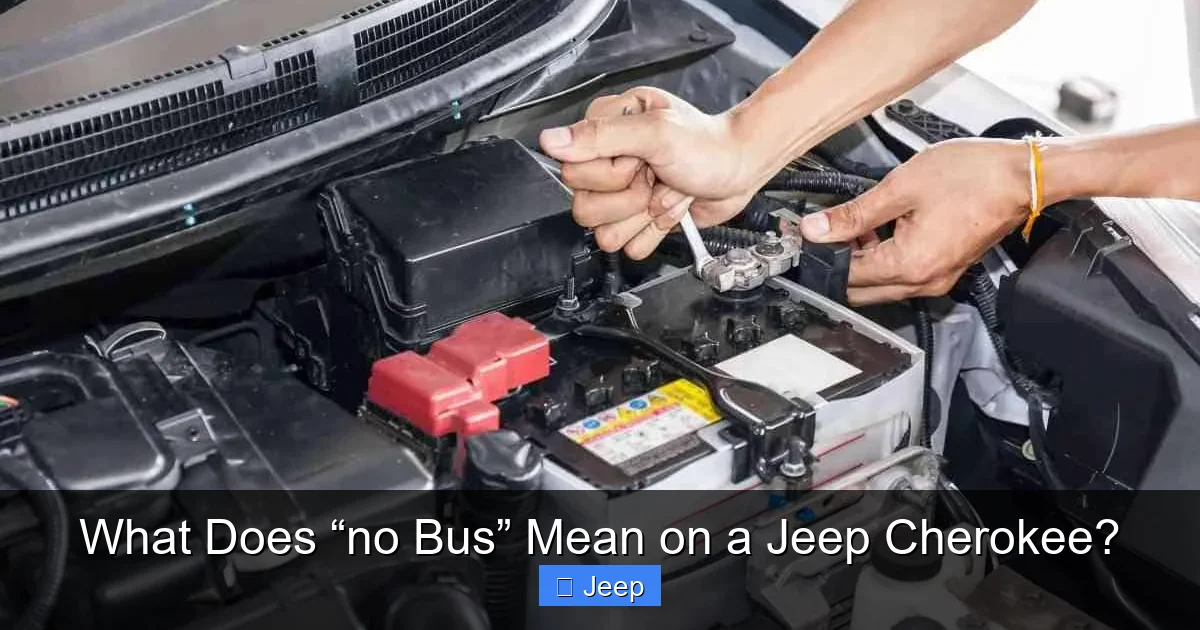
- Inspect the battery: Corroded or loose battery terminals can cause massive voltage drops that disrupt the entire electrical system, including the CAN bus. Clean terminals and tighten clamps.
- Check all major ground straps: Locate the engine-to-chassis ground strap (usually a thick black braided wire from the engine block to the firewall or frame). Check the battery negative cable connection to the frame/engine. Look for corrosion, fraying, or broken strands. Tighten or replace as needed.
- Inspect the TIPM/BCM area: Open the hood and locate the Totally Integrated Power Module (TIPM—the large black box with many fuses/relays, usually near the battery). Check the large main power and ground connectors on it for corrosion or looseness. Do the same for the Body Control Module (BCM), often found inside the vehicle under the dash on the passenger side or behind the glovebox.
- Look for water: Check for signs of water intrusion around the base of the windshield (cowl area), under the dash, and in the footwells. Water and electronics do not mix.
Many “No Bus” problems are solved right here with a $20 ground strap and some electrical cleaner.
Step 2: The Professional Scan Tool – Your Most Important Tool
A generic OBD2 code reader from the auto parts store is useless for this. It may show “No Communication” or “U” series network codes (like U0155 – Lost Communication with Instrument Cluster), but it cannot perform a deep CAN bus analysis.
You need an advanced scan tool that can actively communicate with modules. The gold standard for Chrysler/Jeep is the wiTech (official dealer tool), but expensive. Good alternatives are high-end Autel, Launch, or Snap-on tools with full Chrysler coverage, or even a JScan or ALC OBD2 adapter paired with a laptop/phone using proper software.
With the tool connected:
- Attempt to communicate with each module (PCM, BCM, TCM, ABS, etc.).
- The tool will show which modules it can “see” and which are offline.
- Often, if the BCM is dead, you won’t be able to communicate with it or many other modules that route through it.
- This pinpoints the failed module or the section of the network that’s down.
If you don’t have access to this tool, this is the point where you take it to a reputable shop that specializes in electrical diagnostics or Jeeps.
Step 3: Physical Inspection of Wiring and Connectors
If the scan points to a specific module (e.g., BCM), but you suspect wiring, you must perform a continuity test on the CAN bus wires. This requires a multimeter and some electrical knowledge.
- Locate the CAN High and CAN Low wires at two points (e.g., at the BCM connector and at the PCM connector).
- With the battery disconnected, check for continuity between the same wire color at both ends. There should be continuity (very low resistance).
- Check for shorts to ground or battery positive on each wire.
- Inspect the connectors at each module. Pull them apart and look for bent, corroded, or missing pins. Use contact cleaner and a small pick to clean pins gently.
CAN bus wires are twisted pairs. They must remain twisted as close to the connector as possible. A repair that untwists them for inches can cause signal reflection and failure.
Step 4: Module Swapping/Replacement
If diagnostics confirm a dead module (like a BCM), replacement is the fix. However, a new or used module often requires programming/proxy coding to the vehicle’s VIN. A used module from a donor vehicle may need to be “married” to your Cherokee’s systems. This usually requires the same professional scan tools (wiTech). Do not just plug in a new BCM from the parts store without programming; it will likely not work and may trigger security issues. For more on the complexities of module replacement in modern vehicles, understanding how manufacturers secure these components is key—similar issues are discussed in articles about Dodge Charger service shifter warnings, which also involve intricate electronic systems.
Jeep Cherokee-Specific Failure Points: The KL Platform
While the principles are the same for any CAN bus vehicle, certain parts on the Jeep Cherokee KL (2014-2023) have high failure rates.
The Infamous BCM in the Passenger Dash
In many Cherokee models, the BCM is located behind the glovebox, on the passenger side of the dash. This location can be prone to water intrusion if the cowl seal fails or a heater hose leaks. Water drips down onto the BCM, causing internal corrosion. Symptoms might start with intermittent issues like wipers failing or dash lights flickering before the full “No Bus” appears. Replacement involves removing the glovebox and potentially the dash panel.
TIPM Failures and Electrical Gremlins
The TIPM in the Cherokee houses dozens of circuits. Internal relays can weld shut or fail open. You might experience issues like:
- Random no-starts where the starter doesn’t crank.
- Inoperative fans or AC.
- Fuses that blow for no apparent reason.
- The “No Bus” error appearing after other electrical oddities.
Like the BCM, a failed TIPM requires a new, programmed unit. Aftermarket remanufactured TIPMs are available but quality varies.
Harness Chafing Near the Engine
Look carefully at the wiring harness that runs from the engine compartment, over the top of the engine, and down to the transmission. It is secured with plastic ties and clips. Over years of engine movement and heat cycles, these ties can break, allowing the harness to rub against the valve cover or transmission bellhousing. The insulation wears through, and the CAN wires inside can short or break open. This is a classic “mechanic’s find” that looks obvious once you see it.
Repair Options and Cost Expectations
Your repair path depends entirely on the diagnosis.
- Bad Ground/Corroded Connector: Cost: <$50. DIY job. Clean, tighten, replace strap.
- Single Wire Repair: Cost: $100-$300. A skilled technician can locate and repair a chafed wire or splice in a new section. This is the best-case scenario for a harness issue.
- BCM Replacement & Programming: Cost: $500 – $1,200+. The part itself is $300-$600 (new) or $150-$300 (used). The critical programming/proxy coding adds 1-2 hours of labor at a dealer or specialist.
- TIPM Replacement & Programming: Cost: $600 – $1,500+. Similar to the BCM—expensive part plus necessary programming.
- Instrument Cluster Failure: Cost: $400 – $1,000+ for repair or replacement.
Never, ever replace parts without diagnosis. Throwing a new BCM at a “No Bus” problem when the real issue is a $5 ground strap is a costly and frustrating mistake. The diagnostic fee (usually $100-$200 for a proper electrical diagnostic) is the best money you can spend.
Prevention and Long-Term Health for Your Cherokee’s Bus
While some failures are just age and wear, you can take steps to protect your Cherokee’s CAN network.
- Keep battery terminals impeccably clean and tight. A weak battery or poor connection causes voltage spikes and drops that can damage sensitive electronics.
- Address any water leaks immediately. If your carpets are damp, or you see water around the base of the windshield, have the cowl seals and heater core seals inspected. Water is the number one killer of BCMs and other dash-mounted modules.
- Be mindful during under-hood work. When working near the engine harness, don’t let tools rest on it. Ensure zip ties are intact. If you see a harness rubbing, add a protective sleeve or nylon tie to secure it.
- Use quality electrical components. If replacing a battery, get a good one with the correct CCA rating. A cheap, weak battery can cause all sorts of electronic ghosts.
- If installing aftermarket accessories, have them done professionally. Ensure they are properly fused and do not tap into CAN bus wires or create ground loops. For insights into how electrical modifications can trigger dashboard warnings, the issues seen with Nissan Rogue Auto Refuel errors highlight the sensitivity of modern vehicle networks to improper wiring.
Conclusion: Don’t Ignore the “No Bus” SOS
The “No Bus” message on your Jeep Cherokee is your vehicle’s most urgent electronic distress signal. It’s not a suggestion; it’s a declaration that the central nervous system has collapsed. Unlike a “Check Engine” light for a loose gas cap, this problem demands immediate, serious attention. The risks of driving with this condition—loss of power assist for steering and brakes—are too high to ignore.
Your action plan is clear: First, perform the free, basic checks of battery terminals and major ground straps. Second, invest in a proper professional diagnosis with an advanced scan tool. This will tell you if you need a $50 ground strap or a $1,000 module. Third, repair with quality parts and ensure any new modules are properly programmed to your vehicle’s VIN. Finally, address any underlying causes like water leaks to prevent a recurrence. By understanding the “why” behind the “No Bus,” you transform from a panicked driver into an informed owner who can navigate the repair process confidently and safely.
Frequently Asked Questions
Can I drive my Jeep Cherokee with the “No Bus” message on?
No. Driving with an active “No Bus” error is extremely dangerous. You can lose power steering and brake boost at any moment, making the vehicle difficult or impossible to control safely. It can also cause the engine to stall unexpectedly. Have the vehicle towed to a repair facility.
How much does it typically cost to fix a “No Bus” error on a Cherokee?
The cost ranges dramatically from $50 for a simple ground strap clean/repair to over $1,500 for a programmed BCM or TIPM replacement. The average repair falls between $300 and $800 for a common BCM or wiring issue. Proper diagnosis is essential to determine the exact cause and cost.
Will disconnecting the battery clear the “No Bus” code?
No. The “No Bus” message is a real-time status indicator, not just a stored code. As long as the communication failure exists, the message will return immediately after you reconnect the battery and start the vehicle. You must fix the underlying hardware problem.
Is the “No Bus” error specific to Jeep Cherokees?
No. The “No Bus” or “No Communication” message is a universal OBD2/CAN network error that can appear on many modern vehicles from Chrysler, Ford, GM, and others. However, Jeep Cherokees (especially 2014-2020 models) are particularly prone to these issues due to known BCM and TIPM failure points. Similar errors are also commonly reported in Dodge Ram 1500 trucks, which share many electrical components with Jeep.
What’s the first thing I should check if I see “No Bus”?
The first and safest thing is to check the battery terminals for corrosion and tightness, and inspect the main engine-to-chassis ground strap (the thick black braided wire). These are the most common simple fixes and can be done in minutes with basic tools.
Will a “No Bus” error cause my Cherokee to fail an emissions or safety inspection?
Yes. An active “No Bus” message indicates a critical system malfunction. During a state safety inspection, the inspector will fail the vehicle for illuminated warning lights, especially one indicating a loss of essential systems like braking or steering. It will also likely cause an emissions test failure as the PCM cannot communicate properly.
