
What Does Low Tire Pressure Light Look Like

If you’ve ever seen a strange dashboard warning and wondered, “What does low tire pressure light look like?”—you’re not alone. This guide breaks down the symbol, explains why it appears, and shows you exactly what to do when it lights up. Understanding this simple indicator can improve safety, save fuel, and extend tire life.
Key Takeaways
- Universal Symbol: The low tire pressure light typically looks like an exclamation mark inside a U-shaped tire symbol with parentheses on either side.
- Color Matters: It usually glows yellow or amber when activated, signaling a warning—not an immediate danger like red lights.
- TPMS Activation: Modern vehicles use a Tire Pressure Monitoring System (TPMS) to detect pressure drops and trigger the light.
- Check Immediately: When the light comes on, pull over safely and check tire pressure as soon as possible—don’t ignore it.
- Seasonal Changes: Cold weather can cause natural pressure drops, so the light may appear more often in winter months.
- Reset After Inflation: Once tires are properly inflated, the light should turn off automatically or after a reset procedure.
- Regular Maintenance: Even without the warning light, check tire pressure monthly to stay safe and efficient.
📑 Table of Contents
Understanding the Low Tire Pressure Warning Light
You’re driving down the highway, enjoying your favorite playlist, when suddenly—a yellow light pops up on your dashboard. It looks a bit like a flat tire with an exclamation mark inside. Your first thought might be, “What does low tire pressure light look like?” or “Is this serious?” Don’t panic. This is one of the most common dashboard warnings, and understanding it can save you from bigger problems down the road.
The low tire pressure warning light is part of your vehicle’s Tire Pressure Monitoring System (TPMS). Introduced in the U.S. after the TREAD Act of 2000, TPMS became mandatory on all new cars and light trucks starting in 2008. Its job is simple: alert you when one or more tires are significantly underinflated—typically 25% below the recommended pressure. This system helps prevent accidents, improves fuel efficiency, and extends the life of your tires.
But what does it actually look like? While designs can vary slightly between car brands, the symbol is remarkably consistent. It resembles a flat tire viewed from the side, shaped like a horseshoe or “U” with parentheses on both ends. Inside that U, you’ll usually see an exclamation point. The entire icon is often outlined in yellow or amber, and it may flash briefly when first activated before staying solid.
Knowing this symbol is crucial because ignoring it can lead to poor handling, reduced braking performance, increased stopping distance, and even tire blowouts—especially at high speeds. Plus, driving on underinflated tires burns more fuel and wears out tread unevenly. So, when that little light appears, it’s not just a suggestion—it’s a call to action.
Why the Symbol Is Designed This Way
Car manufacturers use intuitive symbols so drivers can understand warnings without reading a manual. The low tire pressure light mimics the shape of a tire cross-section, making it instantly recognizable. The exclamation mark adds urgency without causing alarm—yellow signals caution, not emergency (that’s reserved for red lights like engine or brake warnings).
Interestingly, some luxury or performance vehicles may display a more detailed graphic, such as a 3D tire icon or even a digital readout showing individual tire pressures. But even in those cases, the core symbol remains consistent. For example, a Toyota might show a simple yellow horseshoe with an exclamation mark, while a Tesla might overlay the icon on a touchscreen with real-time pressure data. Regardless of the interface, the meaning stays the same: one or more tires need attention.
How the Tire Pressure Monitoring System Works
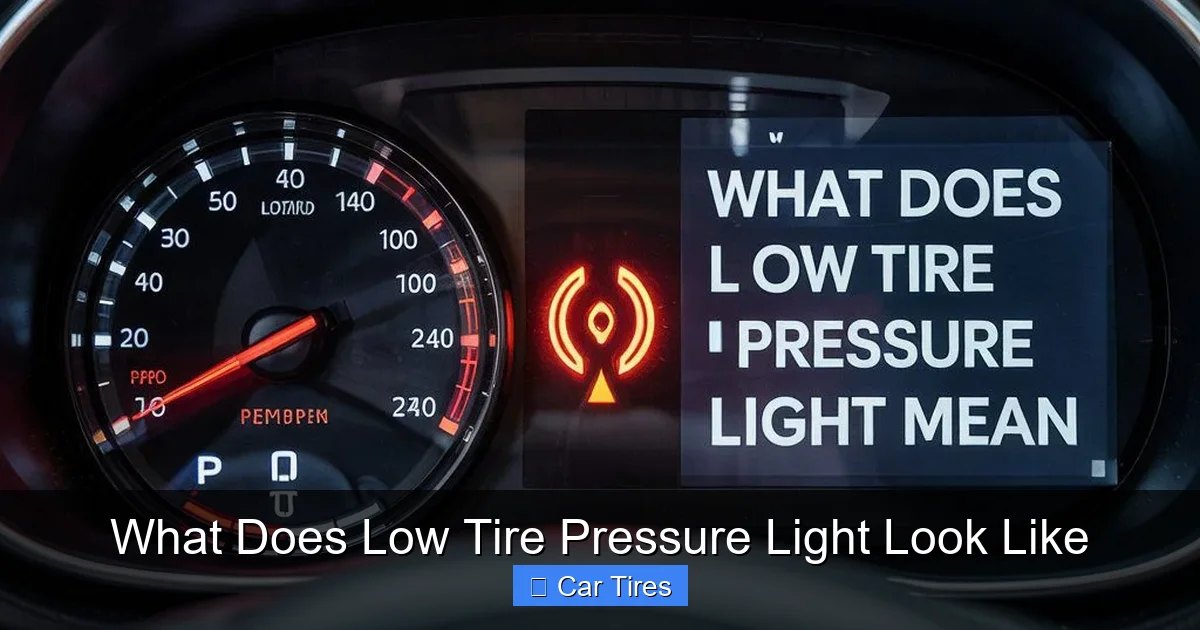
Visual guide about What Does Low Tire Pressure Light Look Like
Image source: fordfast.com
To truly grasp what the low tire pressure light means, it helps to understand how your car “knows” when tire pressure is low. The TPMS uses one of two main technologies: direct or indirect.
Direct TPMS is the more accurate and common method. Each tire contains a small sensor mounted inside the wheel (usually near the valve stem). These sensors measure actual air pressure—and sometimes temperature—and transmit that data wirelessly to your car’s computer. If pressure drops below a preset threshold (often around 25% under the recommended level), the system triggers the dashboard warning light.
Indirect TPMS, on the other hand, doesn’t measure pressure directly. Instead, it uses your car’s anti-lock braking system (ABS) wheel speed sensors. When a tire is underinflated, it has a smaller diameter and rotates faster than the others. The ABS system detects this difference and alerts the driver via the low tire pressure light. While less precise, indirect systems are cheaper to install and maintain—but they can’t tell you which tire is low or how much pressure is missing.
Most modern vehicles (especially those made after 2012) use direct TPMS because of its reliability and accuracy. However, even direct systems have limitations. Sensors run on small batteries that last 5–10 years, and they can fail due to corrosion, impact damage, or extreme temperatures. That’s why it’s still essential to manually check your tire pressure regularly—even if your dashboard light hasn’t come on.
When Does the Light Typically Appear?
The low tire pressure light doesn’t just appear randomly. It activates under specific conditions:
– **Cold Weather:** Tire pressure drops about 1 PSI for every 10°F decrease in temperature. So if you inflate your tires on a warm fall day and then face a cold snap, the light may come on overnight.
– **Slow Leaks:** A nail, puncture, or damaged valve stem can cause gradual air loss over days or weeks.
– **Seasonal Changes:** Many drivers notice the light in winter but not summer—and vice versa—due to natural pressure fluctuations.
– **After Tire Service:** If a tire was recently repaired or replaced, the sensor may need recalibration, or the technician might have forgotten to reset the system.
– **Sensor Malfunction:** Sometimes, the light comes on even when tires are fine—this could indicate a dead sensor battery or signal interference.
Understanding these triggers helps you respond appropriately. For instance, if the light comes on during a cold morning, it might just need a quick top-off at the nearest gas station. But if it appears suddenly on a warm day, you should inspect for punctures or leaks immediately.
What to Do When the Low Tire Pressure Light Comes On
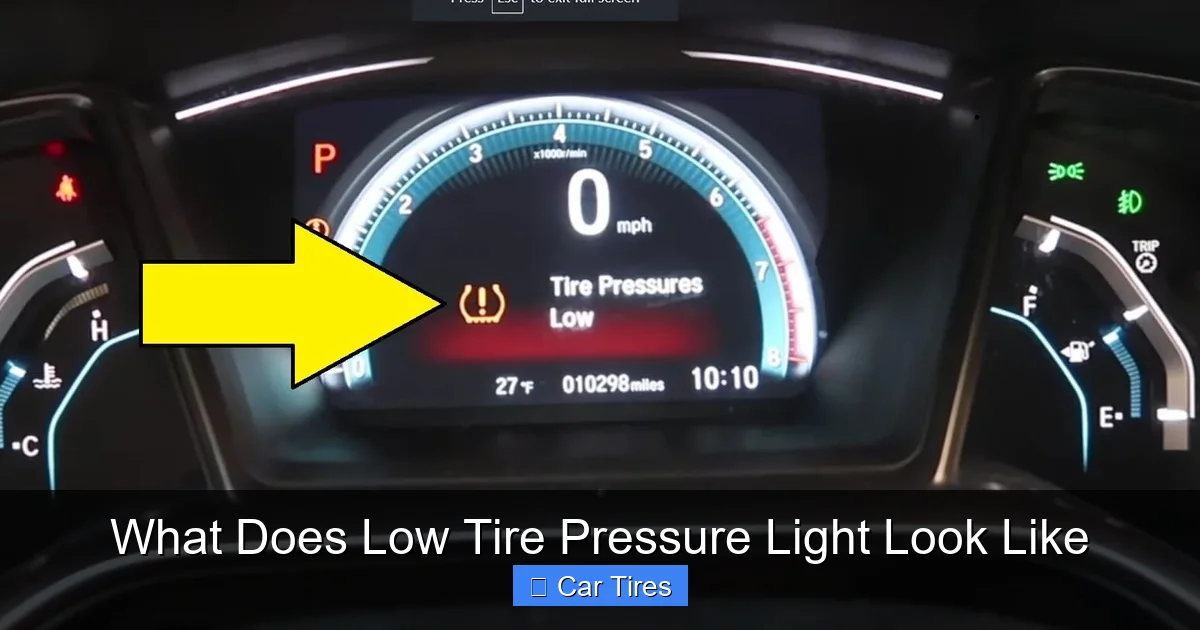
Visual guide about What Does Low Tire Pressure Light Look Like
Image source: erwinsalarda.com
Seeing that yellow icon can be unsettling, but don’t hit the panic button. Follow these steps to stay safe and get back on the road quickly.
First, **pull over safely** as soon as it’s convenient. You don’t need to stop immediately unless the car feels unstable or you hear a thumping noise (which could indicate a severely underinflated or damaged tire). Find a well-lit, level area like a gas station or parking lot.
Next, **visually inspect all four tires**. Look for obvious signs of damage: bulges, cuts, nails, or uneven wear. If one tire looks noticeably flatter than the others, that’s likely the culprit. But remember—sometimes a tire can lose pressure without looking flat, especially if it’s only slightly underinflated.
Then, **check the tire pressure** using a reliable gauge. Don’t rely on the gas station’s built-in compressor gauge—they’re often inaccurate. Use your own handheld gauge or ask an attendant for help. Compare your readings to the recommended PSI listed on your vehicle’s door jamb sticker (not the max pressure printed on the tire sidewall). For example, if your car recommends 32 PSI and your front left tire reads 24 PSI, that’s a significant drop.
If you find low pressure, **add air gradually** until you reach the correct level. Overinflating can be just as bad as underinflating—it reduces traction and causes center tread wear. Most gas stations have digital air pumps that let you set a target PSI, making this process easier.
After inflating, **drive for a few minutes**. In many vehicles, the TPMS will automatically reset once all tires are properly pressurized and the car reaches a certain speed (usually 15–20 mph for 10–15 minutes). If the light stays on, you may need to manually reset the system—check your owner’s manual for instructions.
When to Seek Professional Help
Sometimes, inflating the tires doesn’t solve the problem. If the light comes back on shortly after filling, you likely have a slow leak. Common causes include:
– A damaged or corroded valve stem
– A puncture from a nail, screw, or road debris
– A cracked wheel rim
– A faulty TPMS sensor
In these cases, visit a trusted tire shop or mechanic. They can perform a leak test (often using soapy water to spot bubbles) and repair or replace the affected component. Replacing a TPMS sensor typically costs $50–$150 per wheel, including labor and programming.
Also, if multiple tires are consistently low, it could indicate a systemic issue—like a faulty pressure sensor or a problem with the vehicle’s electrical system. Don’t ignore recurring warnings.
Common Misconceptions About the Low Tire Pressure Light
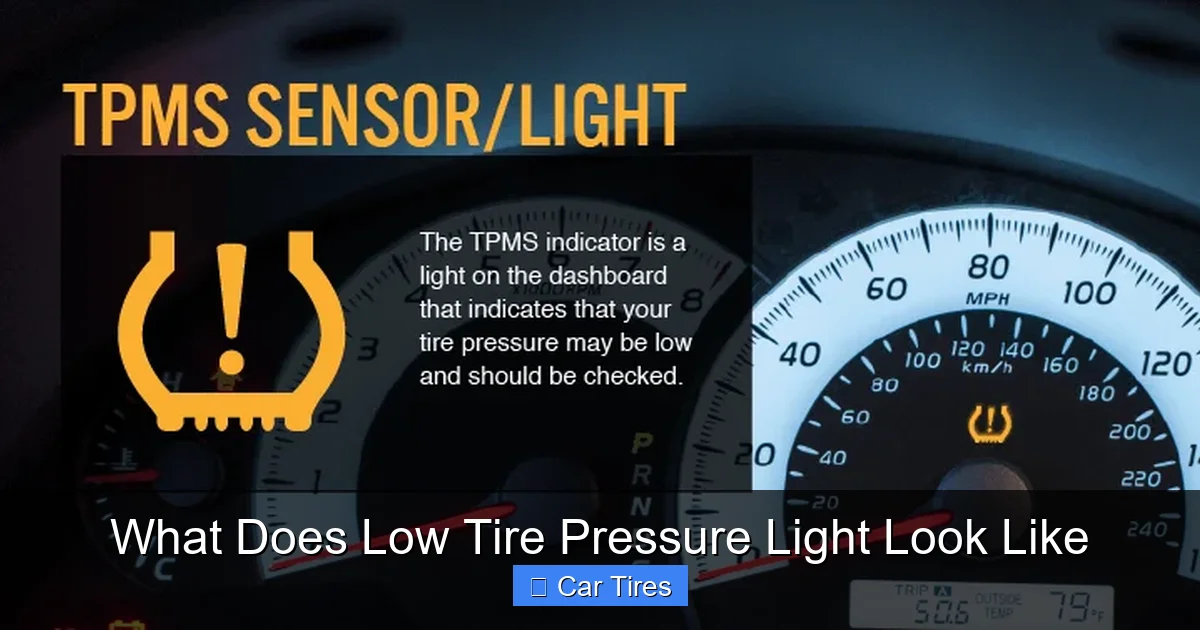
Visual guide about What Does Low Tire Pressure Light Look Like
Image source: shadetreegarage.com
Despite its simplicity, many myths surround the low tire pressure warning light. Let’s clear up some of the most common misunderstandings.
**Myth #1: “The light only comes on if a tire is completely flat.”**
False. The TPMS is designed to warn you *before* a tire becomes dangerously underinflated. Most systems trigger the light when pressure drops about 25% below the recommended level—far from a flat. By catching it early, you avoid serious damage.
**Myth #2: “I can just ignore it if the car drives fine.”**
Dangerous thinking. Even if your vehicle handles normally, underinflated tires increase rolling resistance, reduce fuel economy by up to 3%, and wear out faster. More importantly, they’re more prone to overheating and blowouts, especially during long trips or hot weather.
**Myth #3: “All cars have the same TPMS symbol.”**
Most do, but there are subtle variations. Some European brands (like BMW or Mercedes) may use a slightly different icon or include text like “Check Tire Pressure.” However, the core design—a tire shape with an exclamation mark—is nearly universal.
**Myth #4: “The light will turn off as soon as I add air.”**
Not always. While many systems auto-reset after driving, others require a manual reset procedure. This might involve holding a button on the dashboard, using the infotainment menu, or cycling the ignition. Always consult your owner’s manual.
**Myth #5: “TPMS means I never need to check tire pressure manually.”**
Absolutely not. Sensors can fail, batteries die, and the system only alerts you after pressure drops significantly. The National Highway Traffic Safety Administration (NHTSA) still recommends checking tire pressure monthly with a gauge.
Seasonal Tips and Preventive Maintenance
The low tire pressure light often appears during seasonal transitions—especially in fall and winter. As temperatures drop, so does tire pressure. This isn’t a defect; it’s basic physics (Charles’s Law: gas volume decreases with temperature). To minimize surprises:
– **Check pressure monthly**, ideally when tires are cold (driven less than 1 mile).
– **Inflate to the manufacturer’s recommended PSI**, found on the driver’s door jamb, glove box, or owner’s manual—not the tire sidewall.
– **Use a quality gauge**: Digital gauges are more accurate than stick-type ones.
– **Don’t forget the spare**: Many drivers overlook the spare tire, but it should also be properly inflated.
– **Consider nitrogen inflation**: Some argue nitrogen reduces pressure loss over time, though regular air works fine for most drivers.
During winter, check pressure weekly if possible. If you live in a region with harsh winters, consider investing in a portable tire inflator or a 12V air compressor for emergencies.
How to Reset the TPMS Light
After inflating your tires, the light should turn off automatically in many vehicles. But if it persists, here’s how to reset it:
1. **Turn the ignition to “ON”** (don’t start the engine).
2. **Locate the TPMS reset button**—often under the steering wheel or in the glove compartment.
3. **Press and hold the button** until the light blinks three times (about 3–5 seconds).
4. **Start the engine** and drive for 10–15 minutes at moderate speed.
Alternatively, some cars (like Honda, Toyota, or Ford) allow you to reset via the dashboard menu:
– Navigate to “Settings” > “Vehicle” > “Tire Pressure” > “Reset.”
If the light still won’t turn off, visit a service center—it may indicate a sensor issue.
The Importance of Proper Tire Inflation
Beyond avoiding the warning light, maintaining correct tire pressure offers real benefits:
– **Safety**: Properly inflated tires provide better grip, shorter stopping distances, and improved handling—especially in rain or snow.
– **Fuel Efficiency**: Underinflated tires increase rolling resistance, forcing your engine to work harder. The U.S. Department of Energy estimates you can improve gas mileage by up to 3% by keeping tires inflated.
– **Tire Longevity**: Even wear means your tires last longer. Underinflation causes shoulder wear; overinflation wears the center.
– **Environmental Impact**: Better fuel economy means fewer emissions.
Think of your tires as the only part of your car touching the road. Neglecting them compromises everything—from comfort to control.
Real-World Example: A Winter Morning Surprise
Imagine this: It’s a chilly December morning in Minnesota. You inflate your tires to 32 PSI the day before when it was 50°F. Overnight, the temperature drops to 15°F. By morning, each tire has lost about 3.5 PSI—now reading 28.5 PSI. That’s still within safe limits, right? Not quite. If your car’s TPMS threshold is set at 25% below 32 PSI (which is 24 PSI), you’re fine. But if the system is more sensitive—or if one tire has a minor leak—the light might come on.
This scenario plays out millions of times each winter. The solution? Check pressure weekly in cold months and top off as needed. A few minutes of prevention can save you from a roadside emergency.
Conclusion
So, what does low tire pressure light look like? It’s that unmistakable yellow horseshoe-shaped tire icon with an exclamation mark inside—simple, universal, and critically important. More than just a dashboard decoration, it’s your car’s way of saying, “Hey, one of your tires needs attention.”
Ignoring it risks safety, wastes fuel, and shortens tire life. But responding promptly—by checking pressure, adding air, and seeking repairs when needed—keeps you safe and saves money in the long run. Remember, TPMS is a helpful tool, not a replacement for regular maintenance. Make tire checks part of your monthly routine, especially during seasonal changes.
Your tires are your connection to the road. Treat them well, and they’ll carry you safely through every mile.
Frequently Asked Questions
What does the low tire pressure light look like on most cars?
The low tire pressure light typically appears as a yellow or amber symbol shaped like a flat tire viewed from the side—a U-shape with parentheses on both ends and an exclamation mark inside. This design is nearly universal across vehicle brands.
Can I drive with the low tire pressure light on?
You can drive short distances cautiously, but it’s not recommended. Underinflated tires reduce handling, increase stopping distance, and risk blowouts. Pull over safely and check pressure as soon as possible.
Why does my low tire pressure light come on in cold weather?
Cold temperatures cause air inside tires to contract, lowering pressure by about 1 PSI per 10°F drop. This natural phenomenon often triggers the warning light in winter, even if no leak exists.
How do I reset the low tire pressure light after adding air?
Many cars reset automatically after driving 10–15 minutes at moderate speed. If not, consult your owner’s manual for a manual reset procedure, which may involve a dashboard button or menu option.
Does the low tire pressure light indicate which tire is low?
Most basic TPMS systems only show that *one or more* tires are low, not which one. However, advanced systems (common in newer or luxury vehicles) display individual tire pressures on the dashboard or infotainment screen.
Can a faulty sensor cause the low tire pressure light to come on?
Yes. TPMS sensors have batteries that last 5–10 years and can fail due to corrosion, impact, or age. If the light comes on despite proper inflation, a sensor malfunction may be the cause—visit a mechanic for diagnosis.