What Color Is the Transmission Fluid in a Toyota Camry

Contents
- 1 Key Takeaways
- 2 📑 Table of Contents
- 3 Why Does Transmission Fluid Color Matter in Your Toyota Camry?
- 4 What Is the Normal Color for Toyota Camry Transmission Fluid?
- 5 What Do Different Transmission Fluid Colors Mean in Your Camry?
- 6 How to Check Transmission Fluid in a Toyota Camry
- 7 Transmission Fluid Maintenance Best Practices for Your Camry
- 8 When to Seek Professional Help for Your Camry’s Transmission
- 9 Conclusion
- 10 Frequently Asked Questions




The transmission fluid in a Toyota Camry is typically red or pink when new and in good condition. Over time, it can change to brown or black, signaling contamination or degradation. Regular checks using the dipstick (if equipped) are crucial for preventing transmission damage. Always use the specified Toyota fluid and follow recommended service intervals for optimal performance and longevity.
Hey there! Let’s pop the hood and talk about something super important for your Toyota Camry’s health: transmission fluid. You might not think about it much, but this colorful liquid is the lifeblood of your transmission. It lubricates gears, cools moving parts, and transmits hydraulic pressure for smooth shifts. And one of the quickest ways to gauge your transmission’s internal condition is by looking at its color. So, what color should the transmission fluid be in a Toyota Camry? And what do other colors mean? Buckle up; we’re diving deep into this essential maintenance topic.
First, a quick reality check: your Camry’s transmission is a complex, expensive piece of machinery. Rebuilding or replacing it can cost thousands. But with a little know-how and regular attention to its fluid, you can help it last the life of your car. Fluid color is a visual clue—a cry for help or a sign of contentment—coming straight from deep inside your transmission. Let’s decode that message together.
Key Takeaways
- Normal Color: Healthy Toyota Camry transmission fluid is bright red or pink when new, darkening slightly with age but remaining translucent.
- Problem Colors: Brown, dark brown, or black fluid indicates oxidation, contamination, or severe wear and requires immediate service.
- Check Regularly: Inspect fluid level and color every oil change using the dipstick (if your model has one) or during professional service.
- Correct Fluid Type: Always use Toyota WS (World Standard) fluid or an exact equivalent specified for your Camry’s model year and transmission type.
- Service Intervals: Change fluid every 60,000 miles under normal conditions; shorten to 30,000-60,000 miles for severe service (towing, hot climates, frequent short trips).
- Sealed Systems: Many newer Camrys have “sealed” transmissions without a dipstick; these still require fluid changes at specified intervals by a dealer using specialized equipment.
- Address Leaks Immediately: Low fluid levels from leaks cause rapid wear and overheating; never just “top off” without finding the source.
📑 Table of Contents
- Why Does Transmission Fluid Color Matter in Your Toyota Camry?
- What Is the Normal Color for Toyota Camry Transmission Fluid?
- What Do Different Transmission Fluid Colors Mean in Your Camry?
- How to Check Transmission Fluid in a Toyota Camry
- Transmission Fluid Maintenance Best Practices for Your Camry
- When to Seek Professional Help for Your Camry’s Transmission
- Conclusion
Why Does Transmission Fluid Color Matter in Your Toyota Camry?
Transmission fluid isn’t just a passive liquid; it’s an active participant in your Camry’s drivetrain. It performs several critical jobs:
- Lubrication: It coats countless gears, bearings, and clutch packs to minimize metal-on-metal wear.
- Cooling: It carries heat away from the transmission’s internal components to the cooler (often in the radiator).
- Hydraulic Function: It’s the medium that pressure moves through valves and passages to engage gears and shift patterns.
- Cleaning: It contains detergents and dispersants that suspend wear particles and sludge, keeping internal passages clear.
When fluid is new and clean, it performs these jobs flawlessly. But as it ages, gets contaminated, or overheats, its properties break down. The color change you see is a direct result of this chemical and physical degradation. Think of it like engine oil: fresh oil is amber and clear, while used oil turns dark brown or black from soot, acids, and oxidation. Transmission fluid behaves similarly, though its starting color is different.
For your Toyota Camry, paying attention to fluid color is a no-cost, high-reward diagnostic step. It can alert you to small problems (like a minor leak causing low fluid) before they become catastrophic failures. Ignoring a color change is like ignoring a check engine light—you’re rolling the dice with your transmission’s health.
What Is the Normal Color for Toyota Camry Transmission Fluid?
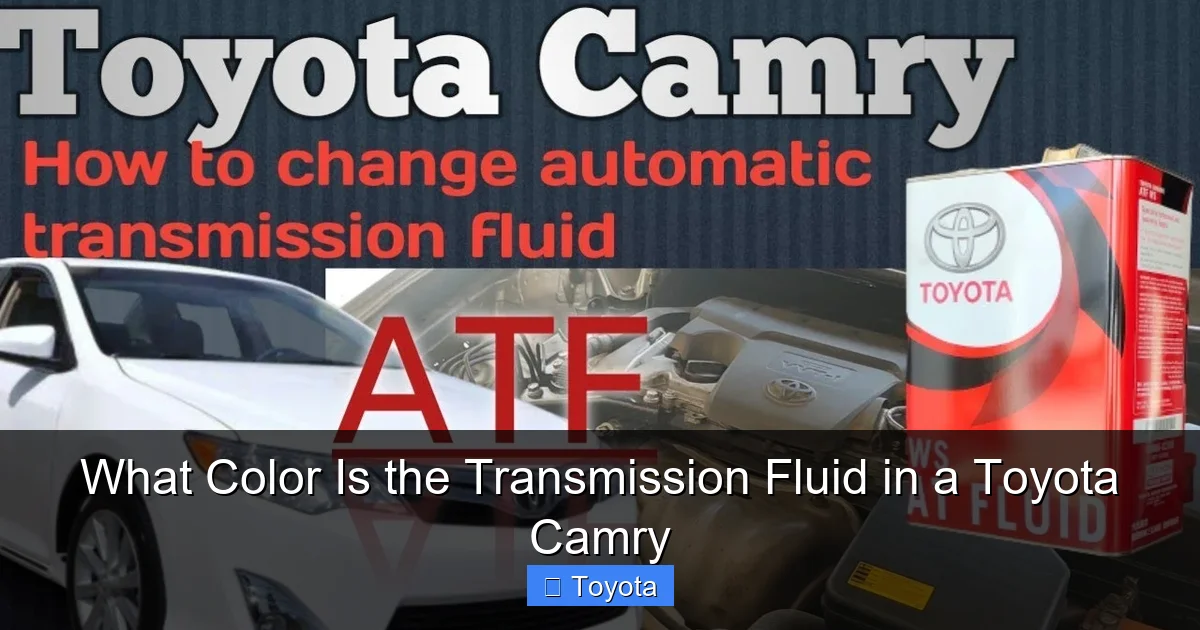
Here’s the straightforward answer: new, healthy transmission fluid in a Toyota Camry is typically a bright, translucent red or pink. That signature red dye is added by manufacturers (including Toyota) to make it easy to identify and distinguish from other fluids like engine oil or coolant. It should look almost like a cherry or strawberry syrup when you pull the dipstick and wipe it on a white rag.
Visual guide about What Color Is the Transmission Fluid in a Toyota Camry
Image source: i.ytimg.com
But “normal” has a few nuances depending on your Camry’s age, transmission type, and fluid brand:
Factory-Fill Fluid
When your Camry rolls off the assembly line, its transmission is filled with genuine Toyota WS (World Standard) fluid. This fluid is engineered specifically for Toyota’s automatic transmissions and starts out as a vibrant red. Even if you have a brand-new Camry, the fluid might appear slightly darker after a few thousand miles due to normal wear particles being suspended in it—this is usually nothing to worry about as long as it remains translucent and doesn’t smell burnt.
Aftermarket and Universal Fluids
If you’ve had your fluid changed at a shop that used an aftermarket brand (like Valvoline, Pennzoil, or a “universal” ATF), the color might differ. Some high-quality aftermarket fluids designed to meet Toyota WS specifications are also red, but others might be amber or even green. The color isn’t the primary concern; compatibility is. Always use a fluid that explicitly states it meets Toyota WS specifications. Using the wrong fluid can cause erratic shifting, slippage, and internal damage.
Age and Mild Darkening
As your Camry accumulates miles, the fluid will naturally darken from red to a deeper crimson or light brown. This is expected and doesn’t automatically mean it’s bad. A fluid that’s 30,000 miles old might look darker but should still be mostly transparent when held up to the light. The key indicators are translucency and smell. If it’s still see-through and doesn’t have a burnt, acrid odor, it’s likely still in the “okay” range, though it may be approaching time for a change based on mileage.
What Do Different Transmission Fluid Colors Mean in Your Camry?
Now, let’s play detective. When you pull that dipstick, what story is your fluid telling? Here’s a color-coded breakdown from best to worst:
Visual guide about What Color Is the Transmission Fluid in a Toyota Camry
Image source: images.saymedia-content.com
- Bright Red / Pink (Translucent): Status: Excellent. This is the ideal color for a well-maintained Camry transmission. It indicates fresh, uncontaminated fluid with full lubricating and hydraulic properties. If your fluid looks like this and you’re within the recommended service interval, you’re golden.
- Dark Red / Crimson (Still Translucent): Status: Good to Fair. This is typical for fluid that’s been in service for 20,000-40,000 miles. The dye is breaking down, and there’s a normal accumulation of microscopic wear particles. As long as it’s clear (not cloudy) and smells clean (like oil, not burnt), it’s still doing its job but is aging. Plan for a change at the next recommended interval.
- Amber or Light Brown (Translucent): Status: Caution. This signals that the fluid has oxidized and begun to lose its effectiveness. Oxidation happens from heat and oxygen exposure. The fluid’s lubricating qualities are diminishing, and it may be forming varnish on internal parts. If you see this color, check your mileage. If you’re past the 60,000-mile mark, schedule a fluid change soon.
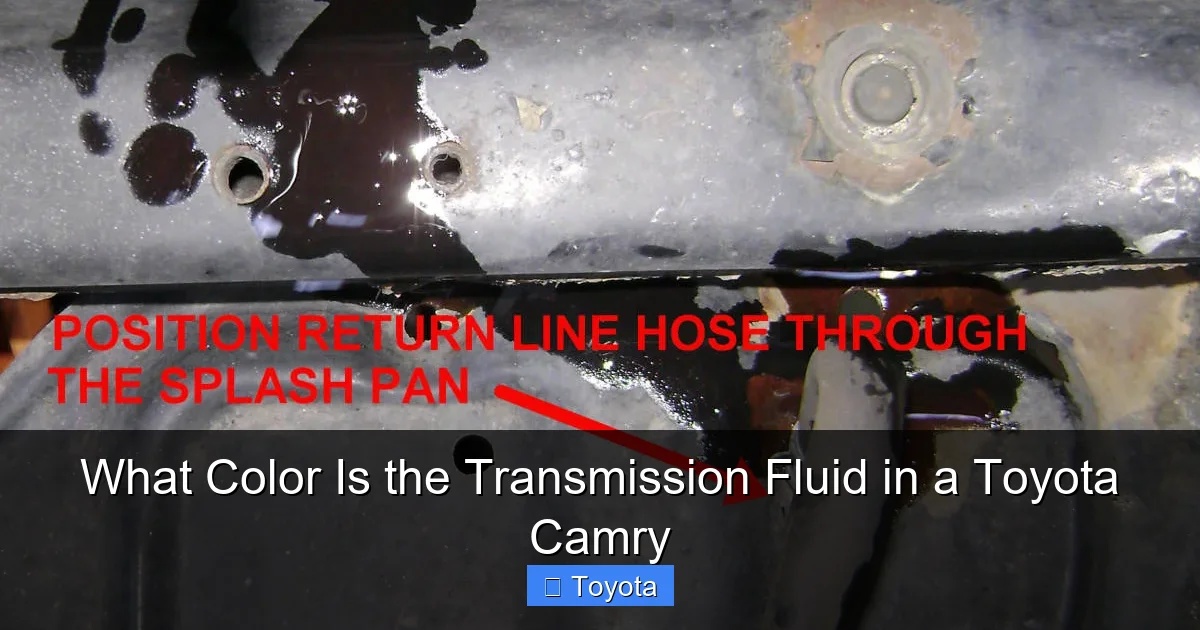
- Brown (Opaque, Cloudy): Status: Service Required Immediately. This is a red flag (pun intended). Brown, murky fluid means it’s heavily contaminated with clutch material, metal shavings, and sludge. It’s no longer providing proper lubrication or clean hydraulic flow. Your Camry may start to exhibit delayed shifts, harsh engagement, or slipping. Don’t delay—get the fluid and filter changed now.
- Dark Brown or Black (Opaque): Status: Severe Condition – Danger. This is the color of fluid that’s been neglected or is suffering from extreme overheating (maybe from towing heavy loads in hot weather, or a failing cooler). It’s saturated with debris and likely has a strong burnt smell. At this stage, internal damage may have already occurred. Change the fluid and filter immediately, and be prepared for potential transmission repairs if shifting problems persist.
- Milky or Pinkish-White (Foamy): Status: Critical – Coolant Contamination. This is a rare but serious issue. A milky, creamy appearance indicates that engine coolant is mixing with the transmission fluid. This usually happens due to a failed internal radiator transmission cooler (the part where transmission fluid and coolant flow in separate chambers). The mixture destroys the fluid’s properties and causes rapid transmission failure. Do not drive the car. Have it towed to a shop for diagnosis and repair.
Beyond color, always use your senses. Smell the fluid on the dipstick. A sweet, oily smell is normal. A sharp, burnt odor means overheating. Feel the texture between your fingers. It should be smooth, not gritty. Gritty particles indicate severe internal wear. If you see any of these warning signs, act fast.
The Dangers of Ignoring Fluid Color Changes
Let’s be clear: driving with degraded transmission fluid is a fast track to disaster. As the fluid breaks down:
- Lubrication fails, causing gears and bearings to wear prematurely.
- Varnish and sludge clog small hydraulic passages, leading to erratic or harsh shifting.
- The fluid loses its ability to cool, leading to overheating—the number one killer of transmissions.
- Clutch materials wear faster and contaminate the fluid further, creating a vicious cycle.
What starts as a $200-$300 fluid change can quickly turn into a $2,000-$4,000 transmission rebuild. That color on your dipstick is your early warning system. Heed it.
How to Check Transmission Fluid in a Toyota Camry
Good news: checking your Camry’s transmission fluid is a simple DIY task—if your model has a dipstick. Many newer Camrys (especially from the late 2010s onward) have “sealed” transmissions without a user-accessible dipstick, requiring a dealer scan tool for checking. But for models with a dipstick, here’s the step-by-step guide to doing it right.
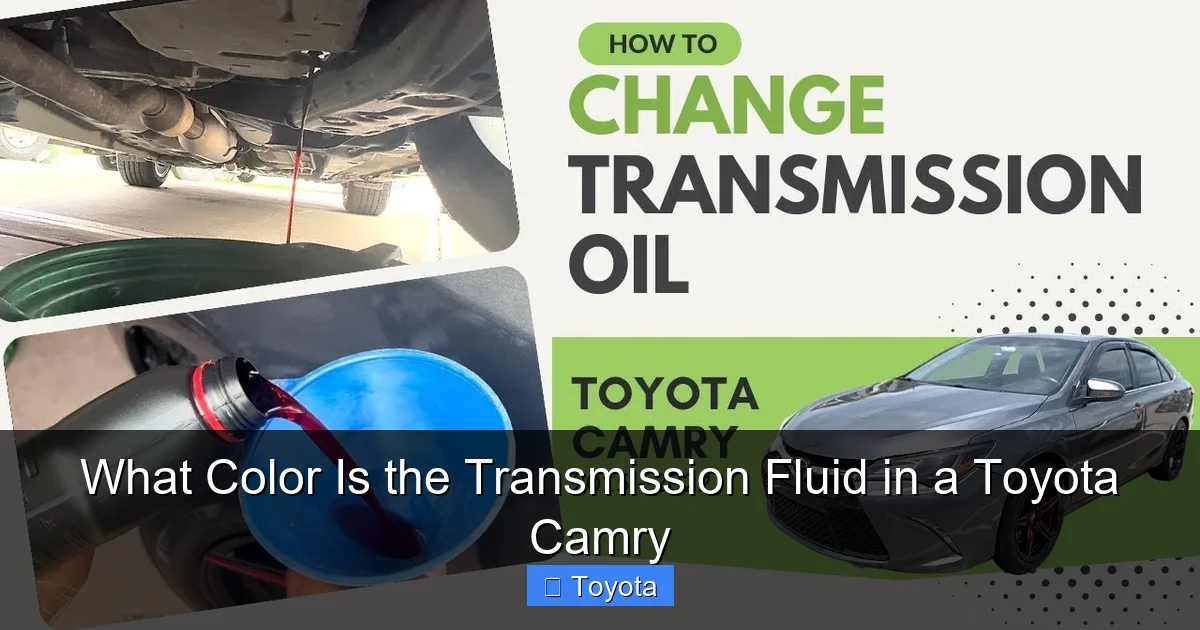
Visual guide about What Color Is the Transmission Fluid in a Toyota Camry
Image source: i.ytimg.com
Locating the Transmission Dipstick
First, find the dipstick. It’s usually a red-handled loop or tube sticking out of the back of the engine compartment, near the firewall (the wall between engine and cabin). It’s often labeled “Transmission” or has a transmission symbol. Important: It is NOT the engine oil dipstick (which is usually yellow or orange). If you’re unsure, consult your owner’s manual. For specific model year locations, our detailed article on where the transmission dipstick is on a 2010 Toyota Camry provides diagrams and photos for that generation. Dipstick placement can vary slightly between model years, so it’s worth a quick look if you can’t find it.
Proper Checking Procedure
Follow these steps for an accurate reading:
- Warm Up the Engine: Drive your Camry for at least 15-20 minutes to bring the transmission fluid to normal operating temperature (around 170-200°F). Cold fluid will give a falsely low reading.
- Park on Level Ground: Ensure the car is on a flat surface. Set the parking brake firmly.
- Idle in Park or Neutral: With the engine running, shift into Park (or Neutral for some models—check manual). Leave the engine running.
- Pull the Dipstick: Remove the dipstick, wipe it clean with a lint-free cloth.
- Reinsert Fully: Push the dipstick all the way back in, then pull it out again.
- Read the Level and Color: Look at both sides of the dipstick. There will be marks for “Full” and “Add” (or “Hot” marks). The fluid should be between these marks. Also, observe the color on the wiped section of the stick. Compare it to the color guide above.
- Check for Smell and Particles: Smell the fluid on the rag. Run your finger along the stick—feel for grit.
Do NOT overfill! Overfilling can cause aeration (foaming), leading to erratic shifting and internal damage. Add fluid in small increments if needed, rechecking each time.
What If My Camry Has No Dipstick?
If you can’t find a dipstick, your Camry likely has a sealed transmission. This is common on V6 models and newer four-cylinders. For these vehicles, fluid level and condition can only be checked by a dealer technician using a specialized scan tool that accesses a hidden service port. Do not attempt to create your own dipstick or check via the filler tube. Instead, rely on your maintenance schedule: have the fluid inspected and changed at the recommended intervals (usually every 60,000 miles) by a professional. Our article on the HOLD button in a Toyota Camry explains how transmission modes work, which is related to fluid health but doesn’t require a dipstick check.
Transmission Fluid Maintenance Best Practices for Your Camry
Preventive maintenance is far cheaper than repair. Here’s how to keep your Camry’s transmission—and its fluid—in top shape.
Follow the Correct Change Intervals
Toyota’s recommendations vary by model year and driving conditions. For many older Camrys (2007-2011), the interval was every 60,000 miles. For newer ones (2012+), Toyota often claims “lifetime” fluid, but independent mechanics and severe service conditions suggest changing it every 60,000-80,000 miles is wise. Severe service includes: frequent short trips (under 5 miles), extremely hot or cold climates, mountain driving, towing, or taxi/ride-share use. In these cases, shorten the interval to 30,000-50,000 miles. Always check your owner’s manual for the definitive schedule.
Use Only the Correct Fluid
This is non-negotiable. For most Camrys with automatic transmissions, Toyota specifies Toyota WS (World Standard) fluid. Using the wrong fluid (like Dexron, Mercon, or a generic “multivehicle” ATF) can cause poor shift quality, slippage, and damage. If you’re doing a DIY change, buy genuine Toyota WS from a dealer or a reputable online seller. If you’re having a shop do it, specify that you want Toyota WS fluid. Some high-quality aftermarket fluids (like Amsoil, Red Line, or certain Valvoline formulations) are also WS-compatible, but verify on the bottle.
Change the Filter Too
Most Camry transmissions have an internal filter that traps debris. When you do a fluid change, replace the filter as well. It’s usually accessible by removing the transmission pan. Don’t just “drain and fill”—that only replaces about 40-50% of the fluid. A proper “flush” or multiple drain-and-fill cycles (along with filter change) get more old fluid out. Discuss the best method with your mechanic.
Address Leaks Immediately
Transmission fluid doesn’t burn like oil; the level should stay relatively constant. If you notice a low dipstick reading, you have a leak. Common leak points: the pan gasket, input/output shaft seals, the cooler lines (especially in older Camrys), or the valve body gasket. Have leaks repaired before adding more fluid. Driving low on fluid causes rapid wear and overheating.
Don’t Mix Fluids
If you’re adding a quart to top off, make sure it’s the exact same type already in the transmission. Mixing different formulations can reduce effectiveness. If you’re unsure what’s in there, a complete fluid change is safer than mixing.
When to Seek Professional Help for Your Camry’s Transmission
Some situations are beyond DIY. Call a pro if:
- Fluid is dark brown/black with a burnt smell.
- You see particles or metal shavings in the fluid.
- Your Camry exhibits symptoms like slipping (engine revs but car doesn’t accelerate), harsh or delayed shifts, or shuddering.
- You have a sealed transmission and it’s due for service (based on mileage/time).
- You suspect a coolant leak (milky fluid).
- You’re uncomfortable performing the check or change yourself.
A professional can perform a more thorough analysis (like a “fluid spectrometer” test) to measure oxidation and contamination levels. They can also scan for transmission-related trouble codes and perform a road test to diagnose shifting issues. Remember, early intervention saves money.
Conclusion
So, what color is the transmission fluid in a Toyota Camry? In a healthy, well-maintained one, it’s a bright, clear red or pink. But the real takeaway is that color is your window into your transmission’s soul. By checking it regularly, using the correct fluid, and adhering to service intervals, you’re investing in the longevity and reliability of your Camry. Don’t wait for a breakdown—pop that hood, grab that dipstick (if you have one), and take a look. A simple glance today could save you from a costly repair tomorrow. Your Camry’s transmission will thank you with years of smooth, trouble-free shifting.
Frequently Asked Questions
What does red transmission fluid mean in a Toyota Camry?
Bright red or pink fluid is normal and indicates fresh, healthy transmission fluid. This is the standard color for new Toyota WS fluid and shows your transmission is properly lubricated and cooled.
Why is my Camry’s transmission fluid brown or dark?
Brown or dark fluid means the fluid has oxidized and become contaminated with wear particles and sludge. It’s losing its ability to lubricate and cool, and a fluid and filter change is needed immediately to prevent transmission damage.
How often should I change the transmission fluid in my Toyota Camry?
For most Camrys, change the fluid every 60,000 miles under normal driving conditions. If you drive in severe conditions (extreme heat, frequent short trips, towing), shorten this to every 30,000-50,000 miles. Check your owner’s manual for your specific model year.
Can I check the transmission fluid myself on my Camry?
Yes, if your Camry model has a transmission dipstick (common on older models and some base-trim newer ones). Follow the warm-engine, level-ground procedure. If your Camry has a sealed transmission (no dipstick), a dealer must check it with a scan tool during scheduled service.
What type of transmission fluid does a Toyota Camry use?
Almost all automatic Toyota Camrys require Toyota WS (World Standard) fluid. Always use genuine Toyota WS or an aftermarket fluid that explicitly states it meets Toyota WS specifications. Using the wrong fluid can cause shifting problems and damage.
What happens if I drive with bad transmission fluid?
Driving with degraded fluid leads to accelerated wear, overheating, varnish buildup, and eventual transmission failure. Symptoms include slipping, harsh shifts, shuddering, and ultimately, a complete breakdown that may require a costly rebuild or replacement.