
Vehicles Similar to the Nissan Rogue

If you’re eyeing the Nissan Rogue but want to explore your options, you’re in the right place. This guide breaks down the best vehicles similar to the Nissan Rogue—offering comparable space, tech, fuel efficiency, and value. Whether you prioritize safety, cargo room, or driving comfort, we’ve got the insights to help you choose wisely.
Key Takeaways
- Compact SUVs dominate the market: The Nissan Rogue sits in a highly competitive segment, with strong rivals like the Honda CR-V, Toyota RAV4, and Mazda CX-5 offering similar features and performance.
- Fuel efficiency is a major selling point: Most vehicles similar to the Nissan Rogue deliver 30+ MPG on the highway, making them ideal for daily commuting and long trips.
- Safety tech comes standard: Advanced driver-assistance systems (ADAS) like automatic emergency braking, lane-keeping assist, and adaptive cruise control are common across the board.
- Cargo space varies slightly: While most competitors offer 30–35 cubic feet behind the rear seats, some, like the Subaru Forester, provide a bit more room for gear and groceries.
- Infotainment and connectivity are key differentiators: Look for Apple CarPlay, Android Auto, and intuitive touchscreens—features that enhance daily usability.
- All-wheel drive is widely available: Whether you live in a snowy climate or just want extra confidence, AWD is an option on nearly every model in this category.
- Resale value matters: Brands like Toyota and Honda tend to hold their value better over time, which could impact long-term ownership costs.
📑 Table of Contents
- Why Consider Vehicles Similar to the Nissan Rogue?
- Top Competitors to the Nissan Rogue
- Performance and Fuel Economy Comparison
- Interior Space and Comfort
- Technology and Infotainment Features
- Safety Ratings and Driver-Assist Technology
- Pricing and Value Over Time
- Conclusion: Which SUV Is Right for You?
Why Consider Vehicles Similar to the Nissan Rogue?
Choosing the right compact SUV can feel overwhelming. With so many options on the market, it’s easy to get stuck comparing features, prices, and performance specs. The Nissan Rogue has long been a favorite for families and commuters alike—thanks to its comfortable ride, spacious interior, and impressive fuel economy. But is it the best fit for you? Or could one of the vehicles similar to the Nissan Rogue offer even more value, style, or capability?
Whether you’re upgrading from a sedan, downsizing from a larger SUV, or simply exploring your options, this guide will help you navigate the crowded compact SUV landscape. We’ll compare the Rogue’s closest competitors across key categories like performance, interior quality, technology, safety, and overall value. By the end, you’ll have a clear picture of which SUVs deserve a spot on your test-drive list—and which might just outshine the Rogue for your specific needs.
Top Competitors to the Nissan Rogue
The compact SUV segment is packed with strong contenders, each bringing something unique to the table. While the Nissan Rogue offers a balanced mix of comfort, efficiency, and affordability, several other models stand out as worthy alternatives. Let’s dive into the top vehicles similar to the Nissan Rogue and see how they stack up.
Honda CR-V: The Reliable All-Rounder
The Honda CR-V has been a benchmark in the compact SUV class for years—and for good reason. It’s known for its reliability, spacious cabin, and smooth ride. Like the Rogue, the CR-V offers excellent fuel economy, with the 2024 model achieving up to 28 MPG city and 34 MPG highway with front-wheel drive. The turbocharged 1.5-liter four-cylinder engine delivers 190 horsepower, giving it a slight edge in acceleration over the Rogue’s 2.5-liter naturally aspirated engine (181 hp).
Inside, the CR-V impresses with high-quality materials, intuitive controls, and generous rear legroom. Cargo space is slightly better than the Rogue’s, with 39.2 cubic feet behind the second row and 75.8 cubic feet with the seats folded. Honda’s infotainment system is user-friendly, and standard features include Apple CarPlay, Android Auto, and a 7-inch touchscreen. Safety is a strong suit, too—the CR-V earns top marks from the IIHS and comes with Honda Sensing, a suite of driver-assist features like collision mitigation braking and road departure mitigation.
Toyota RAV4: The Rugged Performer
If you’re looking for a compact SUV with a bolder stance and more off-road capability, the Toyota RAV4 is a top pick. The 2024 RAV4 offers a 2.5-liter four-cylinder engine with 203 horsepower (in the gas model), outperforming the Rogue in power. It also delivers strong fuel economy—up to 27 MPG city and 35 MPG highway—and comes standard with Toyota Safety Sense 2.0, including adaptive cruise control, lane tracing assist, and automatic high beams.
The RAV4’s interior is functional and durable, though some may find the materials less premium than the Rogue’s. Where it really shines is in available all-wheel drive and the TRD Off-Road and Adventure trims, which add enhanced suspension, all-terrain tires, and multi-terrain select. Cargo space is competitive at 37.5 cubic feet behind the rear seats. For tech lovers, the available 9-inch touchscreen and wireless smartphone integration are nice upgrades. Plus, Toyota’s reputation for long-term reliability makes the RAV4 a smart investment.
Mazda CX-5: The Driver’s SUV
For those who prioritize driving enjoyment, the Mazda CX-5 is one of the most engaging vehicles similar to the Nissan Rogue. It may not have the Rogue’s sheer cargo volume or fuel economy, but it makes up for it with a sportier feel, upscale interior, and responsive handling. The standard 2.5-liter four-cylinder engine produces 187 horsepower, and the available turbocharged version bumps that to 250 hp—perfect for highway merging or mountain driving.
The CX-5’s cabin feels more luxurious than most in its class, with soft-touch materials, minimalist design, and excellent noise insulation. The infotainment system uses a rotary controller instead of touch, which some prefer for reduced distraction. Standard safety features include blind-spot monitoring, rear cross-traffic alert, and automatic emergency braking. While cargo space is slightly smaller at 30.9 cubic feet, the CX-5 excels in ride comfort and cornering stability. It’s a great choice if you want a compact SUV that feels more like a premium car.
Subaru Forester: The Adventure-Ready Option
If you live in a region with harsh weather or love outdoor adventures, the Subaru Forester is a standout among vehicles similar to the Nissan Rogue. Standard all-wheel drive, high ground clearance (8.7 inches), and excellent visibility make it ideal for snow, rain, or light off-roading. The 2.5-liter four-cylinder engine delivers 182 horsepower and achieves up to 26 MPG city and 33 MPG highway—slightly less efficient than the Rogue but still respectable.
The Forester’s interior is practical and spacious, with best-in-class rear legroom and a massive panoramic sunroof (on higher trims). Cargo capacity is impressive at 35.4 cubic feet behind the rear seats and 76.1 cubic feet with the seats down—more than the Rogue. Subaru’s EyeSight driver-assist suite comes standard, including adaptive cruise control and lane-keep assist. The infotainment system is straightforward, though the screen size (6.5 or 8 inches) feels a bit dated compared to rivals. Still, the Forester’s rugged capability and safety reputation make it a top choice for active families.
Hyundai Tucson: The Feature-Packed Value
The Hyundai Tucson has undergone a major redesign in recent years, emerging as a stylish and tech-savvy alternative to the Nissan Rogue. With bold exterior styling, a futuristic interior, and a long list of standard features, the Tucson offers excellent value. The base 2.5-liter engine produces 187 horsepower, while a hybrid and plug-in hybrid version boost efficiency and power.
The Tucson shines in technology. Even the base model includes an 8-inch touchscreen, Apple CarPlay, Android Auto, and a digital gauge cluster. Higher trims add a 10.25-inch screen, wireless charging, and a panoramic sunroof. Safety features are comprehensive, with Hyundai SmartSense including forward collision avoidance, blind-spot monitoring, and driver attention warning. Cargo space is competitive at 38.7 cubic feet, and the rear seats fold flat for easy loading. With a 10-year/100,000-mile powertrain warranty, the Tucson is a low-risk, high-reward option.
Kia Sportage: The Stylish Sibling to the Tucson
Sharing a platform with the Hyundai Tucson, the Kia Sportage offers a similar feature set but with a more aggressive design and slightly different tuning. The 2024 Sportage comes with a 2.5-liter engine (187 hp) or available hybrid and plug-in hybrid powertrains. Fuel economy is strong, with the gas model achieving up to 25 MPG city and 32 MPG highway.
Inside, the Sportage impresses with a driver-focused cockpit, dual 12.3-inch curved screens (on higher trims), and premium materials. Standard tech includes wireless Apple CarPlay and Android Auto, while available features include a Bose audio system and ventilated seats. Safety is a priority, with Kia’s Drive Wise suite offering highway driving assist and remote smart parking assist. Cargo space is generous at 39.6 cubic feet, and the rear seats offer ample legroom. The Sportage is a great pick if you want style, tech, and practicality in one package.
Performance and Fuel Economy Comparison
When comparing vehicles similar to the Nissan Rogue, performance and fuel economy are often top priorities. Most compact SUVs in this segment prioritize efficiency without sacrificing everyday usability. The Rogue’s 2.5-liter four-cylinder engine delivers 181 horsepower and 181 lb-ft of torque, paired with a continuously variable transmission (CVT). It achieves an EPA-estimated 27 MPG city and 35 MPG highway with front-wheel drive—solid numbers for the class.
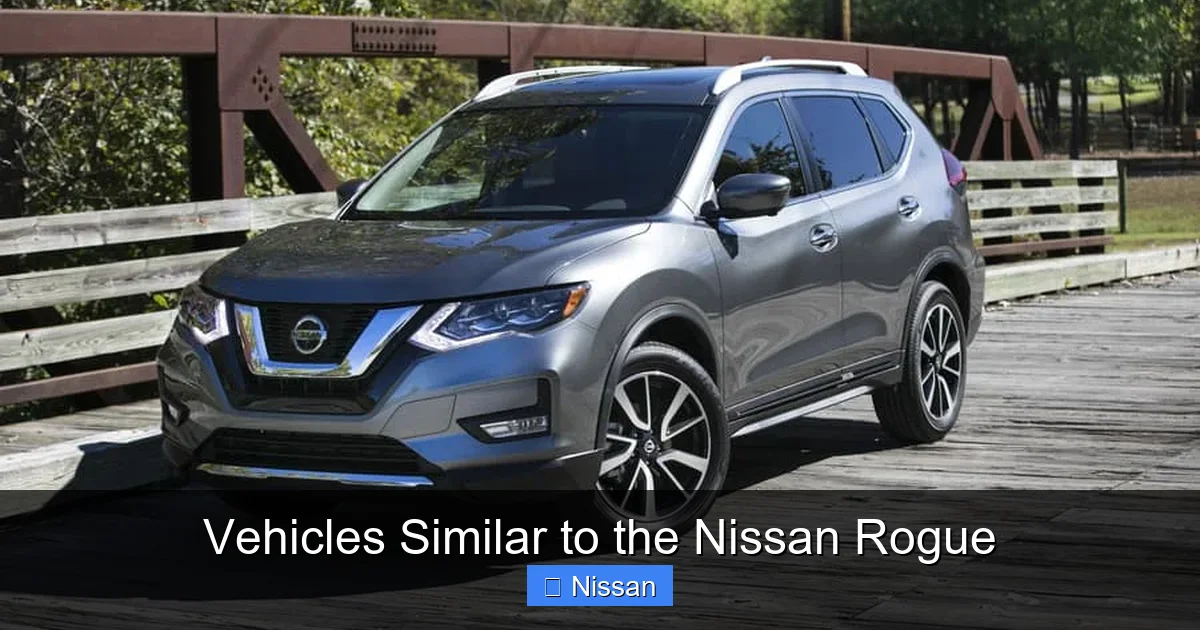
Visual guide about Vehicles Similar to the Nissan Rogue
Image source: whichcarisrightforme.com
The Honda CR-V and Toyota RAV4 edge out the Rogue in horsepower, while the Mazda CX-5 offers a more engaging driving experience. The Subaru Forester and Hyundai Tucson trade a bit of fuel efficiency for added capability and features. Hybrid versions of the RAV4, Tucson, and Sportage offer even better mileage—up to 40 MPG combined—making them ideal for eco-conscious buyers.
For most drivers, the difference in real-world performance will be subtle. The Rogue’s CVT provides smooth acceleration, though some may prefer the more direct feel of a traditional automatic or the responsiveness of a turbocharged engine. If you frequently drive in hilly areas or carry heavy loads, consider models with more torque or available turbo options.
Interior Space and Comfort
Interior space is a critical factor for families, road-trippers, and anyone who values comfort. The Nissan Rogue offers a roomy cabin with 41.2 inches of front headroom and 38.5 inches of rear legroom. Cargo capacity is 36.5 cubic feet behind the second row and 74.1 cubic feet with the seats folded—enough for groceries, luggage, or camping gear.
The Honda CR-V and Kia Sportage offer slightly more cargo space, while the Subaru Forester leads in rear legroom and overall visibility. The Mazda CX-5 feels more upscale but sacrifices a bit of practicality. All models provide comfortable seating for five, though taller passengers may find rear headroom tight in some vehicles.
Materials and build quality vary. The Rogue uses soft-touch plastics and available leather upholstery, while the CX-5 and Tucson offer more premium finishes. Noise insulation is generally good across the board, with the CX-5 and Forester standing out for quiet cabins.
Technology and Infotainment Features
Modern compact SUVs are packed with tech, and the vehicles similar to the Nissan Rogue are no exception. The Rogue comes standard with an 8-inch touchscreen, Apple CarPlay, Android Auto, and a six-speaker audio system. Higher trims add wireless connectivity, a Bose sound system, and a head-up display.
The Hyundai Tucson and Kia Sportage lead in screen size and digital integration, with available curved displays and over-the-air updates. The Toyota RAV4 offers a user-friendly interface, while the Mazda CX-5’s rotary controller reduces screen smudging. All models include standard safety tech, but some, like the CR-V and Forester, offer more advanced driver aids as standard.
When shopping, consider how you use your car. If you rely heavily on navigation and streaming, prioritize models with larger screens and wireless connectivity. For simpler needs, even base models offer solid functionality.
Safety Ratings and Driver-Assist Technology
Safety is a top concern for SUV buyers, and the vehicles similar to the Nissan Rogue excel in this area. The Rogue earns top marks from the IIHS and NHTSA, with standard Safety Shield 360 including automatic emergency braking, blind-spot warning, and rear cross-traffic alert.
The Honda CR-V, Toyota RAV4, and Subaru Forester also earn “Top Safety Pick+” ratings. The Mazda CX-5 and Hyundai Tucson are close behind. Most models now include adaptive cruise control, lane-keeping assist, and pedestrian detection as standard or available features.
For families, look for rear-seat reminders, child safety locks, and available 360-degree cameras. These small details can make a big difference in daily use.
Pricing and Value Over Time
The Nissan Rogue starts around $28,000, making it an affordable entry in the segment. The Honda CR-V and Toyota RAV4 are similarly priced, while the Mazda CX-5 and Hyundai Tucson offer more features for the money. The Subaru Forester and Kia Sportage fall in the same range, with strong warranties and resale value.
Long-term, Toyota and Honda models tend to hold their value best, followed by Subaru and Mazda. Hyundai and Kia offer longer warranties, which can offset depreciation. Consider total cost of ownership, including fuel, insurance, and maintenance, when making your decision.
Conclusion: Which SUV Is Right for You?
Choosing among vehicles similar to the Nissan Rogue depends on your priorities. If you value reliability and resale value, the Honda CR-V or Toyota RAV4 are excellent choices. For a more engaging drive, go with the Mazda CX-5. Need all-weather capability? The Subaru Forester is hard to beat. Want the most tech and style? The Hyundai Tucson or Kia Sportage deliver.
The Nissan Rogue remains a strong contender—especially for those who want a balanced, comfortable, and efficient SUV. But with so many great alternatives, it’s worth test-driving a few to see which one feels right. After all, the best SUV is the one that fits your life.
Frequently Asked Questions
What SUV is most similar to the Nissan Rogue?
The Honda CR-V is often considered the closest competitor to the Nissan Rogue, offering similar size, fuel economy, and features. Both are reliable, family-friendly, and well-equipped with modern safety tech.
Is the Toyota RAV4 better than the Nissan Rogue?
The Toyota RAV4 offers more horsepower and available off-road capability, while the Rogue focuses on comfort and fuel efficiency. The “better” choice depends on your needs—RAV4 for performance, Rogue for refinement.
Which compact SUV has the most cargo space?
The Subaru Forester and Kia Sportage offer the most cargo space in this segment, with over 76 and 75 cubic feet respectively when the rear seats are folded down.
Do any Rogue competitors offer hybrid options?
Yes. The Toyota RAV4, Hyundai Tucson, and Kia Sportage all offer hybrid and plug-in hybrid versions, delivering better fuel economy and lower emissions than the standard Rogue.
Are all these SUVs safe?
Yes. All vehicles similar to the Nissan Rogue earn high safety ratings from the IIHS and NHTSA, and come standard with advanced driver-assistance features like automatic braking and lane-keeping assist.
Which SUV holds its value best?
Toyota and Honda models, like the RAV4 and CR-V, typically have the highest resale values. Subaru and Mazda also perform well, while Hyundai and Kia offer strong warranties to offset depreciation.
