Using a Marine Battery in a Car
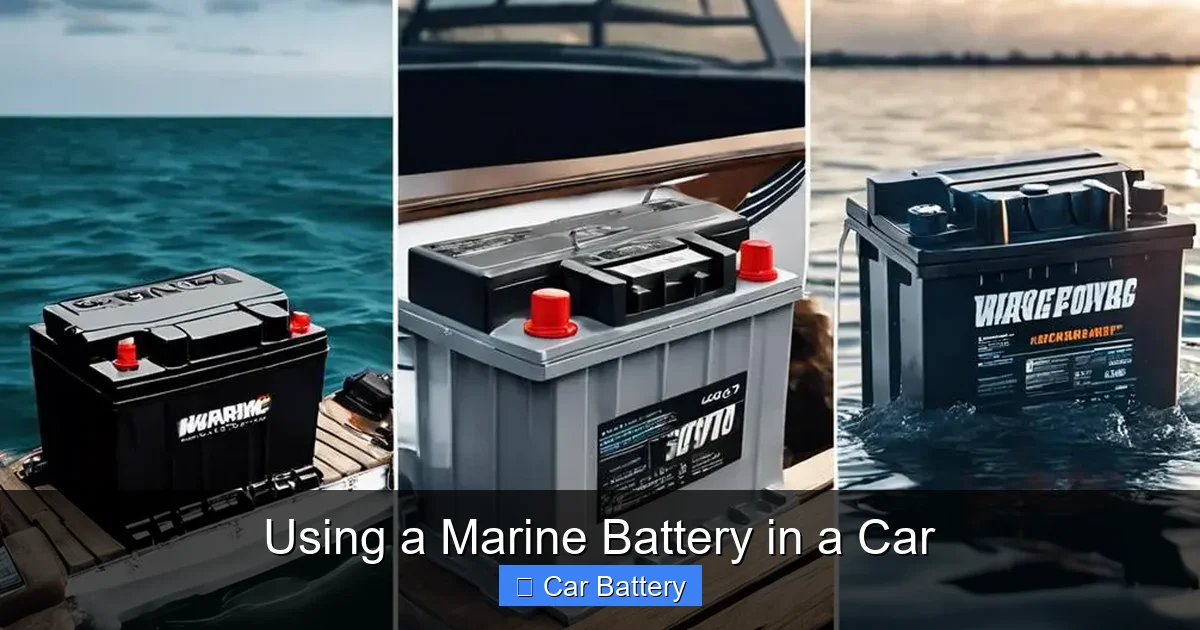
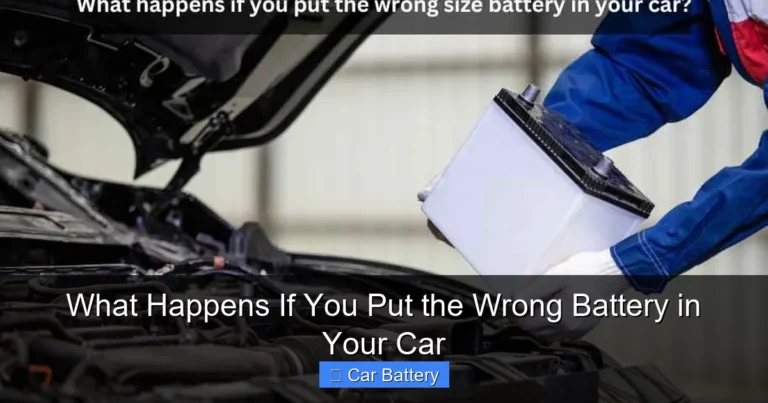
Using a marine battery in a car is possible but not ideal, as marine batteries are designed for deep-cycle applications and prolonged power delivery, unlike automotive batteries built for high-cranking bursts. While they can start an engine in a pinch, prolonged use may lead to reduced performance, shorter lifespan, and potential damage to your vehicle’s electrical system due to mismatched power delivery and charging requirements.
In This Article
- 1 Key Takeaways
- 2 📑 Table of Contents
- 3 Using a Marine Battery in a Car
- 4 What Is a Marine Battery?
- 5 How Car Batteries Differ from Marine Batteries
- 6 Can You Use a Marine Battery in a Car?
- 7 When It Makes Sense (and When It Doesn’t)
- 8 Practical Tips and Real-World Examples
- 9 Battery Comparison Table
- 10 Final Thoughts: Is It Worth It?
- 11 Frequently Asked Questions
- 11.1 Can you use a marine battery in a car?
- 11.2 What is the difference between a marine battery and a car battery?
- 11.3 Will a marine battery damage my car?
- 11.4 How long will a marine battery last in a car?
- 11.5 Can I use a deep-cycle marine battery to start my car?
- 11.6 What are the risks of using a marine battery in a car?
Key Takeaways
- Check compatibility: Ensure your car’s electrical system supports a marine battery’s voltage and size.
- Prioritize cranking power: Marine batteries offer high cranking amps, ideal for cold starts in cars.
- Expect shorter lifespan: Marine batteries aren’t designed for frequent deep cycling like car batteries.
- Secure proper ventilation: Prevent gas buildup by installing the battery in a well-ventilated area.
- Use a compatible charger: Charge with a marine or dual-purpose charger to maintain battery health.
- Consider dual-purpose batteries: They balance starting and deep-cycle needs for versatile performance.
📑 Table of Contents
Using a Marine Battery in a Car
Imagine this: you’re out on a weekend camping trip, miles from the nearest town, and your car won’t start. The engine cranks slowly—or worse, not at all. You pop the hood and realize your car battery is dead. But wait—you’ve got a marine battery in the back of your truck, left over from your boat. It’s fully charged, sturdy, and just sitting there. Could you use it to get your car running again?
This scenario isn’t as rare as you might think. Whether you’re an outdoors enthusiast, a DIY mechanic, or just someone who likes to be prepared, the idea of using a marine battery in a car might cross your mind. After all, both batteries power vehicles, right? They’re both 12-volt systems, and they both use lead-acid chemistry. So, is it really a bad idea—or could it actually work in a pinch? In this post, we’ll dive deep into what marine batteries are, how they differ from car batteries, and whether it’s safe—or even practical—to use one in your automobile. We’ll also share real-world tips, potential risks, and what to consider before making the swap.
What Is a Marine Battery?
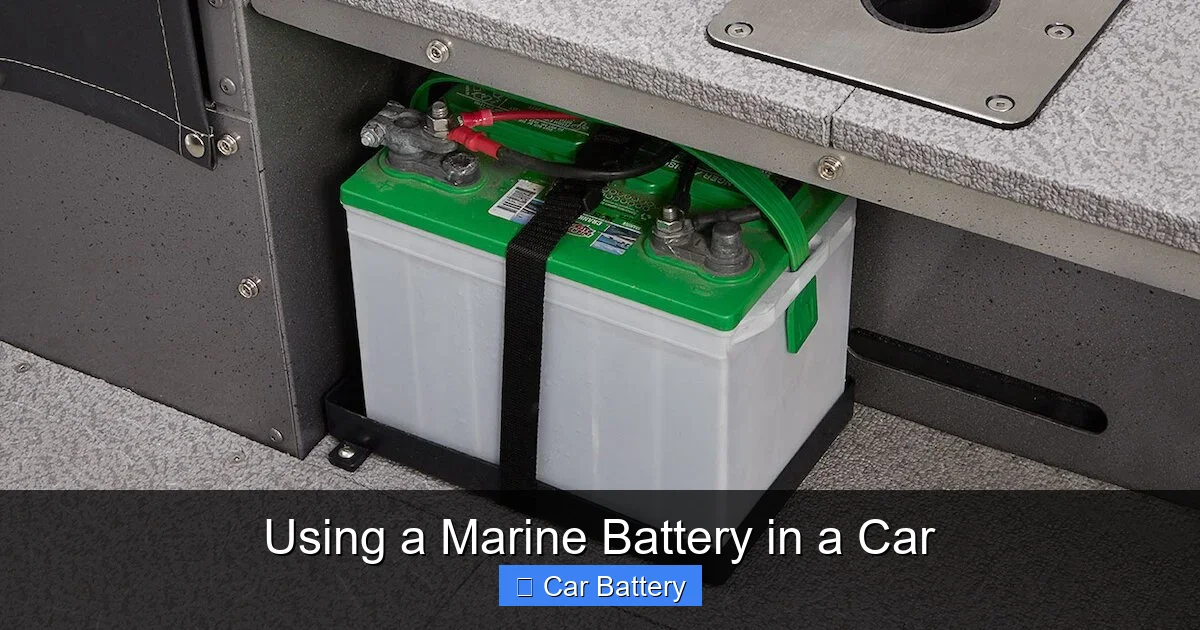
Before we get into whether a marine battery can power your car, let’s first understand what a marine battery actually is. At first glance, it might look like any other car battery—rectangular, heavy, with two terminals on top. But under the surface, marine batteries are built for a completely different kind of job.
Visual guide about Using a Marine Battery in a Car
Image source: ufinebattery.com
Designed for the Water
Marine batteries are engineered to handle the unique demands of boating. Unlike cars, which typically start their engines once per trip and then rely on the alternator for power, boats often need sustained energy over long periods. Think about it: you might run a trolling motor, fish finder, lights, radio, and bilge pump—all while the engine is off. That’s where marine batteries shine. They’re built to deliver steady power for extended durations, not just short bursts.
Types of Marine Batteries
There are three main types of marine batteries, each with its own strengths:
- Starting (Cranking) Marine Batteries: These are similar to car batteries in that they’re designed to deliver a high burst of power to start an engine. They have thinner plates and are optimized for quick energy release.
- Deep Cycle Marine Batteries: These are built to be discharged and recharged repeatedly. They have thicker plates and can provide consistent power over hours, making them ideal for running electronics when the engine is off.
- Dual-Purpose Marine Batteries: As the name suggests, these combine features of both starting and deep cycle batteries. They can start an engine and also handle moderate accessory loads, making them a popular choice for smaller boats.
Most marine batteries you’ll find in stores are deep cycle or dual-purpose. That’s important to remember when considering using one in a car, because cars rely heavily on starting power—something deep cycle batteries aren’t optimized for.
How Car Batteries Differ from Marine Batteries
Now that we know what marine batteries are built for, let’s compare them directly to car batteries. While they may look similar, their internal design and performance characteristics are quite different—and those differences matter when it comes to your car’s electrical system.
Visual guide about Using a Marine Battery in a Car
Image source: marinehowto.com
Plate Thickness and Construction
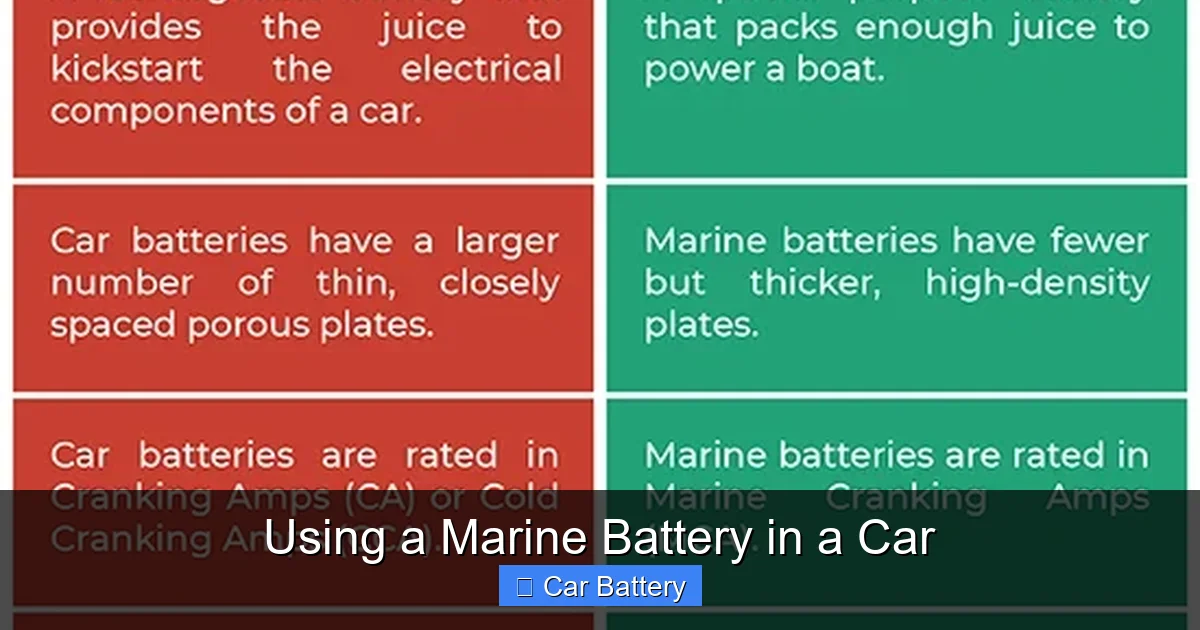
Car batteries are designed for short, high-current bursts. To achieve this, they use many thin lead plates with a large surface area. This allows them to deliver a lot of power quickly—perfect for turning over a cold engine on a winter morning. However, this design isn’t meant for deep discharges. If you drain a car battery too much, you risk damaging the plates and shortening its lifespan.
Marine batteries, especially deep cycle ones, use fewer but much thicker plates. These plates are built to withstand repeated charging and discharging cycles. They can’t deliver the same instant punch as a car battery, but they can keep powering devices for hours. This makes them great for boats, RVs, and solar systems—but not ideal for starting a car engine.
Cranking Amps vs. Marine Cranking Amps
You’ve probably seen terms like “Cold Cranking Amps” (CCA) on car batteries. This measures how much current a battery can deliver at 0°F for 30 seconds while maintaining a voltage above 7.2 volts. It’s a critical number for cold-weather starting.
Marine batteries use a similar rating called “Marine Cranking Amps” (MCA), but it’s measured at 32°F—warmer than CCA. Because of this, a marine battery might have a higher MCA than a car battery, but that doesn’t mean it performs better in cold conditions. In fact, a marine battery’s internal resistance is often higher, meaning it may struggle to deliver the same level of starting power in freezing temperatures.
Reserve Capacity
Another key difference is reserve capacity—the number of minutes a fully charged battery can deliver 25 amps before dropping below 10.5 volts. Marine batteries typically have a higher reserve capacity than car batteries because they’re expected to power accessories for long periods. For example, a typical marine deep cycle battery might have a reserve capacity of 120–180 minutes, while a car battery usually ranges from 90–120 minutes.
While this sounds like a benefit, it’s not always helpful in a car. Your car’s alternator is designed to recharge the battery quickly once the engine is running. If the battery is built for long discharges, it may not recharge efficiently under normal driving conditions.
Can You Use a Marine Battery in a Car?
So, back to the original question: can you use a marine battery in a car? The short answer is: yes, technically—but with important caveats. Let’s break it down.
Visual guide about Using a Marine Battery in a Car
Image source: discoverboating.com
It Might Work—But Not Optimally
In a pinch, especially if you’re stranded and have no other options, a marine battery can start a car. If it’s a dual-purpose or starting marine battery with a high MCA rating, it might even do the job reliably. I’ve heard stories from fellow road-trippers who used a marine battery to get their car started after a long weekend at the lake. One guy even drove 200 miles home on a marine battery before replacing it.
But here’s the catch: it’s not ideal. Most marine batteries—especially deep cycle ones—aren’t designed for the rapid charge-discharge cycles that cars demand. Your car’s electrical system expects a battery that can deliver a strong initial surge and then recharge quickly while driving. A deep cycle marine battery may not recharge efficiently, leading to a gradual loss of charge over time.
Size and Fit Matter
Another practical issue is physical compatibility. Marine batteries come in different sizes than car batteries. The most common car battery group sizes are 24, 24F, 34, 35, 47, 48, and 49. Marine batteries often use group sizes like 24M, 27, 29, 31, and 78. While some overlap exists (like group 24 and 24M), they’re not always interchangeable.
Even if the voltage matches, a marine battery might be taller, wider, or have terminals in the wrong position. Trying to force it into your car’s battery tray could damage the casing or wiring. And if the terminals are reversed (positive on the left instead of the right), you could cause a short circuit or damage your car’s electronics.
Charging and Maintenance Concerns
Cars rely on alternators to recharge the battery while driving. But alternators are designed to work with specific battery types. A marine deep cycle battery has different charging characteristics—it may require a slower, more controlled charge to avoid overheating or gassing. Your car’s alternator might not provide the right voltage profile, leading to undercharging or overcharging.
Over time, this mismatch can reduce the battery’s lifespan. You might find that your marine battery only lasts a few months in your car, even if it’s brand new. And if you’re using a flooded lead-acid marine battery (the most common type), you’ll also need to check and refill the water levels regularly—something most modern car owners aren’t used to doing.
When It Makes Sense (and When It Doesn’t)
Now that we’ve covered the technical side, let’s talk about real-world scenarios. When might using a marine battery in a car actually make sense—and when should you avoid it at all costs?
Emergency Use: A Temporary Fix
If you’re stuck in the middle of nowhere with a dead car battery and a fully charged marine battery in your truck, go ahead—use it. It’s better than being stranded. Just make sure the voltage matches (12V), the terminals are compatible, and you secure the battery properly to avoid movement or spills.
One tip: use jumper cables to connect the marine battery to your car’s terminals, then start the engine. Once the car is running, you can drive to the nearest auto shop to get a proper replacement. This is a temporary solution, not a long-term fix.
Off-Grid or RV Applications
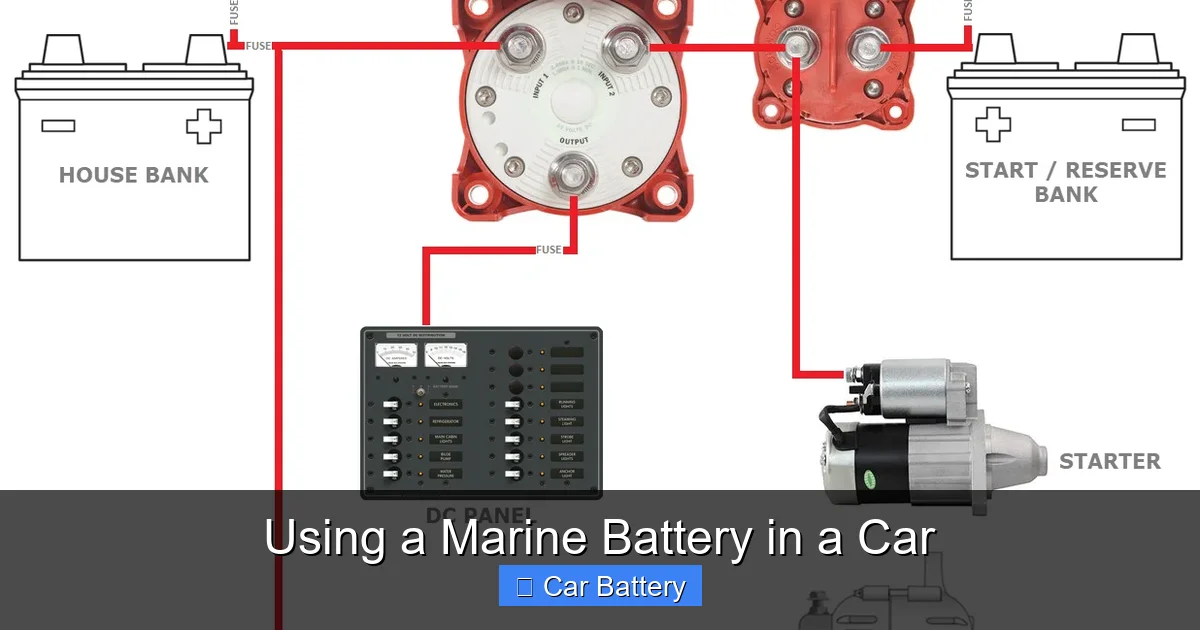
If you drive a camper van, RV, or overland vehicle, you might already have a dual-battery system. In these setups, a marine deep cycle battery is often used to power lights, refrigerators, and other accessories while the engine is off. The car’s starter battery remains dedicated to starting the engine.
In this context, using a marine battery makes perfect sense—it’s doing exactly what it was designed for. But even here, it’s important to use a battery isolator or DC-DC charger to prevent the marine battery from draining the starter battery.
When to Avoid It
There are several situations where using a marine battery in a car is a bad idea:
- Daily Driving: If you rely on your car for commuting or regular use, stick with a proper car battery. Marine batteries aren’t built for frequent starting and may fail prematurely.
- Cold Climates: In freezing temperatures, a marine battery’s lower CCA performance could leave you stranded. Car batteries are specifically rated for cold weather starting.
- Modern Vehicles with Advanced Electronics: Newer cars have complex electrical systems that require stable voltage and fast recharge rates. A mismatched battery can cause error codes, sensor malfunctions, or even damage the ECU.
- Lack of Maintenance Access: If your car doesn’t allow easy access to the battery (some are buried under seats or in trunks), maintaining a flooded marine battery becomes impractical.
Practical Tips and Real-World Examples
Let’s get practical. If you’re still considering using a marine battery in your car—even temporarily—here are some tips to help you do it safely and effectively.
Check the Specifications
Before swapping batteries, compare the specs. Look at:
- Voltage: Must be 12V.
- Group Size: Ensure it fits your battery tray.
- Terminal Type and Position: Match the positive and negative terminals to your car’s cables.
- CCA/MCA Rating: Higher is better for starting, but don’t rely solely on MCA.
- Reserve Capacity: Higher is good for accessories, but not critical for starting.
For example, if your car requires a group 35 battery with 650 CCA, a marine battery with similar group size and at least 600 MCA might work in a pinch—but it’s not ideal.
Secure the Battery Properly
Batteries can leak acid or cause shorts if they shift during driving. Use a battery hold-down clamp or strap to secure the marine battery in place. If it’s a different size, you may need to improvise with brackets or foam padding—just make sure it’s stable.
Monitor Performance
After installing a marine battery, keep an eye on how your car performs. Does it start quickly? Does the battery hold a charge after a short drive? If you notice slow cranking, dim lights, or a battery warning light on the dashboard, it’s time to replace it with a proper car battery.
Real Example: The Weekend Warrior
Take Jake, a friend of mine who lives in Colorado. He drives an old Jeep Wrangler and loves weekend camping trips. Last summer, he forgot to turn off his interior lights and came back to a dead battery. His spare? A group 27 marine deep cycle battery from his fishing boat.
He carefully connected it using jumper cables, made sure the terminals matched, and cranked the engine. It took a few tries, but the Jeep started. He drove 45 minutes back to town, where he replaced it with a proper car battery. “It worked,” he said, “but it felt sluggish. I wouldn’t do it again unless I had no other choice.”
Jake’s experience highlights a key point: marine batteries can work in emergencies, but they’re not a long-term solution.
Battery Comparison Table
| Feature | Car Battery | Marine Battery (Deep Cycle) | Marine Battery (Dual-Purpose) |
|---|---|---|---|
| Primary Use | Engine starting | Long-term power for accessories | Starting + moderate accessory use |
| Plate Design | Thin, many plates | Thick, fewer plates | Medium thickness, balanced design |
| Cranking Power (CCA) | High (500–800+ CCA) | Low to moderate | Moderate to high |
| Reserve Capacity | 90–120 minutes | 120–180+ minutes | 100–140 minutes |
| Recharge Speed | Fast (optimized for alternator) | Slow (requires careful charging) | Moderate |
| Lifespan in Car | 3–5 years | 6–18 months (if used regularly) | 1–3 years |
| Best For | Daily driving, cold climates | Boats, RVs, solar systems | Small boats, emergency use |
Final Thoughts: Is It Worth It?
So, should you use a marine battery in your car? The answer depends on your situation. If you’re in an emergency and have no other options, yes—go ahead. A marine battery, especially a dual-purpose one, can get you moving again. But if you’re thinking about making it a permanent swap, think twice.
Car batteries and marine batteries are designed for different jobs. Your car needs a battery that can deliver a strong, quick burst of power and recharge efficiently during short drives. Marine batteries, particularly deep cycle ones, are built for endurance, not speed. Using one in your car can lead to poor performance, reduced lifespan, and potential electrical issues.
That said, being prepared is always smart. If you frequently camp, boat, or drive in remote areas, consider carrying a portable jump starter or a dual-battery system in your vehicle. That way, you’ll have reliable power without compromising your car’s electrical health.
In the end, the best battery for your car is the one it was designed for. But if life throws you a curveball—and you’ve got a marine battery handy—don’t panic. With a little caution and the right approach, you might just make it home.
Frequently Asked Questions
Can you use a marine battery in a car?
Yes, you can use a marine battery in a car, but it’s not ideal for long-term use. Marine batteries are designed for deep-cycle applications and may not provide the high cranking amps needed for reliable car starts.
What is the difference between a marine battery and a car battery?
A car battery is built for short, high-current bursts to start the engine, while a marine battery combines starting power with deep-cycle capability for powering onboard electronics. Using a marine battery in a car may result in slower engine cranking and reduced performance.
Will a marine battery damage my car?
Using a marine battery in a car won’t typically damage the vehicle, but it may not meet the electrical demands of your car’s starter motor. Over time, this can lead to starting issues or strain on the charging system.
How long will a marine battery last in a car?
A marine battery used in a car may last a few months to a year, depending on usage and charging conditions. However, it’s not optimized for automotive use, so it will likely degrade faster than a standard car battery.
Can I use a deep-cycle marine battery to start my car?
While a deep-cycle marine battery can start a car in a pinch, it’s not recommended for regular use. These batteries deliver lower cranking amps, which may make starting difficult, especially in cold weather.
What are the risks of using a marine battery in a car?
The main risks include poor engine starting, reduced battery life, and potential strain on the alternator. Since marine batteries aren’t designed for the high-demand starting cycles of cars, performance and reliability may suffer.