Tire Pressure Cold or Hot

Checking tire pressure when tires are cold gives the most accurate reading. Hot tires after driving can show inflated pressure due to heat expansion, leading to underinflated tires if adjusted incorrectly. Always follow the manufacturer’s recommended PSI for optimal safety, fuel efficiency, and tire life.
In This Article
- 1 Key Takeaways
- 2 📑 Table of Contents
- 3 Why Tire Pressure Matters More Than You Think
- 4 Understanding Cold vs. Hot Tire Pressure
- 5 How to Check Tire Pressure the Right Way
- 6 The Risks of Incorrect Tire Pressure
- 7 Seasonal and Environmental Factors
- 8 Tips for Maintaining Proper Tire Pressure
- 9 Conclusion: Cold Is Best for Accurate Readings
- 10 Frequently Asked Questions
- 10.1 Should I check tire pressure when tires are cold or hot?
- 10.2 How much does tire pressure change with temperature?
- 10.3 Can I use the gas station air pump to check tire pressure?
- 10.4 What PSI should I use for my tires?
- 10.5 How often should I check tire pressure?
- 10.6 Will my car’s TPMS tell me if tire pressure is low?
Key Takeaways
- Check tire pressure when tires are cold: For the most accurate reading, measure pressure before driving or after the car has sat for at least 3 hours.
- Hot tires give false high readings: Friction and heat from driving increase air pressure, making it seem like tires are properly inflated when they may actually be underinflated.
- Use the manufacturer’s recommended PSI: Find this number on the driver’s door jamb sticker or in the owner’s manual—not the max PSI listed on the tire sidewall.
- Check pressure monthly and before long trips: Regular checks prevent uneven wear, poor fuel economy, and blowouts.
- Invest in a quality tire pressure gauge: Digital or analog gauges are inexpensive and more reliable than gas station air pumps.
- Adjust for temperature changes: Tire pressure drops about 1 PSI for every 10°F decrease in ambient temperature.
- Don’t rely on visual inspection: Underinflated tires often look normal, so always use a gauge to confirm pressure.
📑 Table of Contents
Why Tire Pressure Matters More Than You Think
You might not think about your tires until something goes wrong—like a flat or a blowout. But the truth is, tire pressure plays a huge role in your car’s safety, performance, and even your wallet. Properly inflated tires improve fuel efficiency, extend tire life, and give you better control on the road. On the flip side, underinflated or overinflated tires can lead to poor handling, increased stopping distances, and even dangerous blowouts—especially at high speeds.
One of the most common questions drivers ask is: “Should I check tire pressure when the tires are cold or hot?” It’s a simple question, but the answer can make a big difference in how well your tires perform. Many people assume it doesn’t matter, or they just check it whenever they remember—often after a long drive. But that’s exactly when the reading can be misleading. Understanding the difference between cold and hot tire pressure is key to maintaining your vehicle properly and staying safe on the road.
Understanding Cold vs. Hot Tire Pressure
Visual guide about Tire Pressure Cold or Hot
Image source: corwheels.com
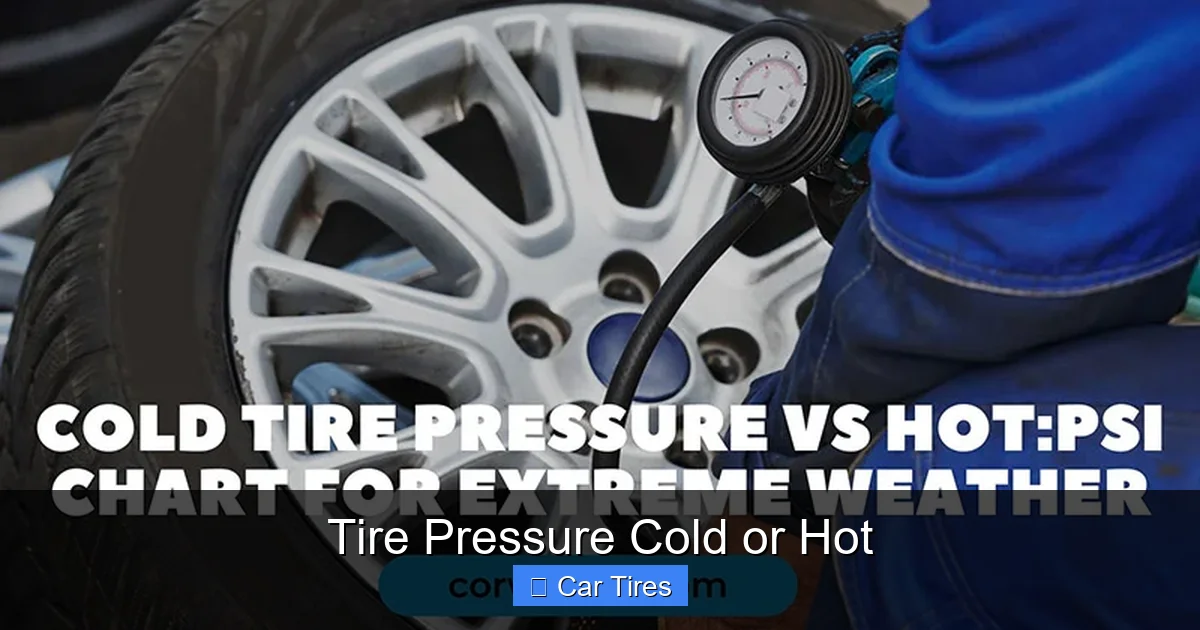
Let’s break it down: “Cold” tire pressure means checking your tires before you’ve driven more than a mile or two, or after your car has been parked for at least three hours. At this point, the tires haven’t built up heat from friction with the road, so the air inside is at ambient temperature. This gives you the most accurate baseline reading.
“Hot” tire pressure, on the other hand, is measured after you’ve been driving—especially at highway speeds or in warm weather. As your tires roll, the friction between the rubber and the road generates heat. That heat causes the air inside the tire to expand, increasing the pressure. This is a natural physical reaction known as thermal expansion. So if you check your tire pressure right after a 30-minute drive, the reading might be 3–5 PSI higher than it actually should be.
Here’s why this matters: If you see a higher pressure reading on hot tires and decide to let some air out to match the recommended PSI, you’re actually overcorrecting. Once the tires cool down, the pressure will drop below the ideal level. That means you’re driving on underinflated tires without even knowing it.
The Science Behind Tire Pressure and Temperature
To understand why cold readings are more reliable, it helps to know a little science. Air behaves predictably when heated or cooled. According to the ideal gas law, when air is heated, its molecules move faster and take up more space—this increases pressure. When air cools, the molecules slow down and take up less space, lowering pressure.
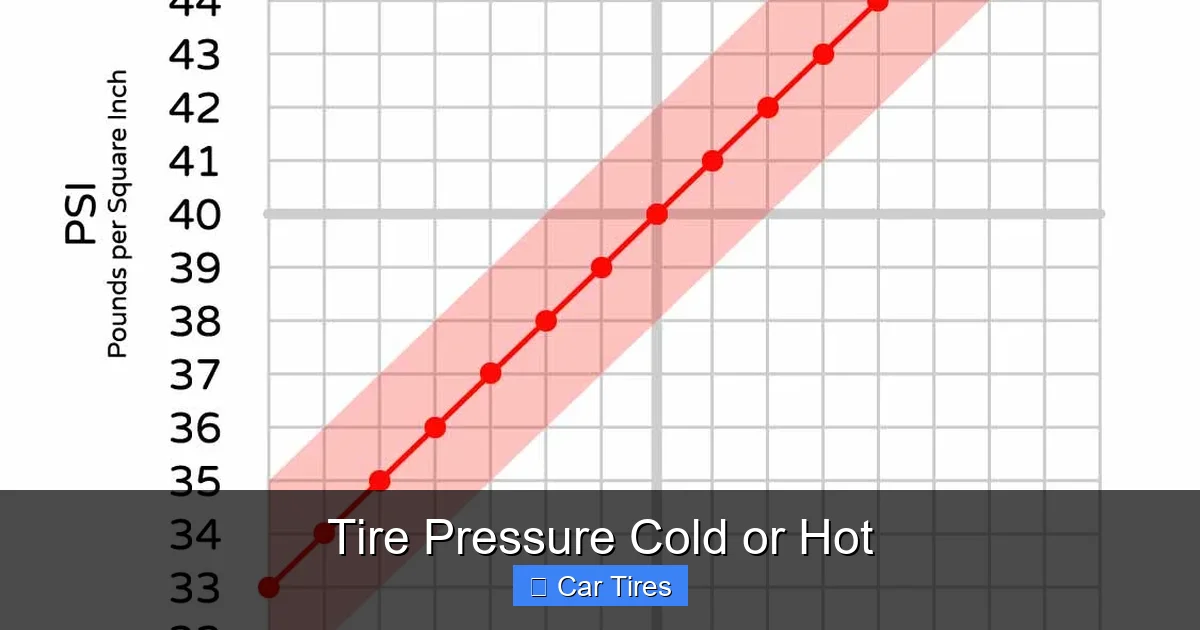
In practical terms, this means that for every 10°F change in temperature, your tire pressure changes by about 1 PSI. So if it’s 70°F in the morning and you check your tires, then it warms up to 90°F in the afternoon, your tire pressure could be 2 PSI higher—even if you haven’t driven anywhere. Conversely, in winter, when temperatures drop, your tire pressure can fall significantly overnight.
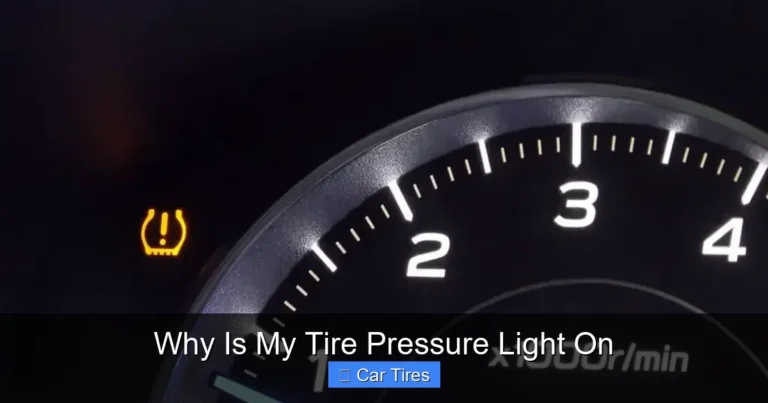
This is why many drivers notice their tire pressure warning light comes on during cold mornings, even if the tires were fine the day before. It’s not a malfunction—it’s physics.
Real-World Example: A Common Mistake
Imagine this scenario: You take a 45-minute drive to work on a warm day. When you arrive, you decide to check your tire pressure. You pull out your gauge and see that your front tires read 38 PSI. The sticker on your door jamb says the recommended pressure is 35 PSI. Thinking you’re being careful, you let out a little air to bring it down to 35 PSI.
But here’s the problem: Those tires are hot. The actual cold pressure was probably around 33 PSI. By adjusting them to 35 PSI while hot, you’ve now overinflated them. When they cool down overnight, the pressure might drop to 31 PSI—well below the recommended level. Now you’re driving on underinflated tires, which can cause uneven wear, reduced fuel economy, and increased risk of a blowout.
This kind of mistake happens all the time, especially at gas stations where people use the air pump’s built-in gauge. Those gauges are often inaccurate, and people rarely consider whether their tires are cold or hot.
How to Check Tire Pressure the Right Way
Visual guide about Tire Pressure Cold or Hot
Image source: corwheels.com
Now that you know why cold readings are best, let’s talk about how to do it correctly. It’s actually pretty simple—once you get into the habit.
Step 1: Wait for Cold Tires
The first and most important step is to check your tires when they’re cold. That means before you drive anywhere, or after your car has been parked for at least three hours. If you’ve only driven a short distance—say, less than a mile—you can usually still get a fairly accurate reading, but for the best results, wait until the tires have cooled completely.
Step 2: Use a Reliable Tire Pressure Gauge
Don’t rely on the gauge at the gas station air pump. Those are often worn out, poorly calibrated, or exposed to the elements, which can throw off the reading. Instead, invest in a good-quality tire pressure gauge. You can get a reliable analog or digital gauge for under $20 at most auto parts stores or online.
Digital gauges are easier to read and often more accurate, but analog (dial) gauges are durable and don’t require batteries. Either is fine as long as it’s well-made and you use it correctly.
Step 3: Check All Four Tires (Plus the Spare)
It’s easy to forget, but you should check all four tires—and don’t neglect the spare! A flat spare is no help in an emergency. Make it a habit to check all tires at the same time, ideally once a month.
Remove the valve cap, press the gauge firmly onto the valve stem, and read the pressure. If you’re using a digital gauge, it will display the number immediately. With an analog gauge, the needle will point to the PSI. Replace the valve cap tightly after checking.
Step 4: Compare to the Recommended PSI
Now, compare your reading to the recommended pressure. This is not the number printed on the tire sidewall—that’s the maximum pressure the tire can handle, not what your car needs. The correct PSI is listed on a sticker inside the driver’s door jamb or in your owner’s manual.
For example, your car might recommend 32 PSI for the front tires and 30 PSI for the rear. Some vehicles have different pressures for front and rear, so always check the label.
If your reading is too low, add air using a compressor (most gas stations have them). If it’s too high, press the center pin in the valve stem to release a little air, then recheck.
Step 5: Recheck After Adjusting
Always recheck the pressure after adding or releasing air. It’s easy to overcorrect, especially if you’re using a noisy gas station compressor. Take your time and make small adjustments.
The Risks of Incorrect Tire Pressure
Visual guide about Tire Pressure Cold or Hot
Image source: tiregrades.com
Driving with incorrect tire pressure—whether too low or too high—can have serious consequences. Let’s look at the risks.
Underinflated Tires: The Silent Danger
Underinflation is far more common than overinflation and can be dangerous. When tires don’t have enough air, the sidewalls flex more than they’re designed to. This creates excess heat, which can weaken the tire structure and lead to a blowout—especially at high speeds.
Underinflated tires also reduce fuel efficiency. The car has to work harder to move, which burns more gas. Studies show that driving with underinflated tires can reduce fuel economy by up to 0.2% for every 1 PSI drop in pressure across all four tires. Over time, that adds up.
Additionally, underinflated tires wear unevenly. The outer edges of the tread wear down faster than the center, shortening the tire’s lifespan. You’ll end up replacing tires sooner than necessary, which gets expensive.
Overinflated Tires: Less Common, But Still Risky
Overinflation is less common but still a problem. When tires have too much air, the center of the tread bulges outward, reducing the contact patch with the road. This leads to a harsher ride, less traction, and uneven wear in the center of the tire.
Overinflated tires are also more susceptible to damage from potholes or debris, since there’s less cushioning. And while they might slightly improve fuel economy, the trade-off in comfort and safety isn’t worth it.
Impact on Handling and Safety
Both underinflation and overinflation affect how your car handles. Underinflated tires make the steering feel sluggish and increase stopping distances. Overinflated tires can make the car feel twitchy and reduce grip, especially in wet or icy conditions.
In extreme cases, incorrect tire pressure can contribute to loss of control, especially during emergency maneuvers or high-speed driving. That’s why it’s so important to get it right.
Seasonal and Environmental Factors
Tire pressure isn’t a “set it and forget it” thing. It changes with the seasons and weather conditions, so you need to stay on top of it.
Winter: The Big Pressure Drop
Cold weather is the biggest culprit when it comes to dropping tire pressure. As mentioned earlier, tire pressure decreases by about 1 PSI for every 10°F drop in temperature. So if it’s 70°F in the fall and drops to 30°F in winter, your tire pressure could be 4 PSI lower—even if you haven’t driven anywhere.
This is why many cars have a tire pressure monitoring system (TPMS) that alerts you when pressure is low. But don’t wait for the light to come on. Make it a habit to check your tires monthly, especially in winter.
Summer: Heat and Highway Driving
In summer, the opposite happens. High temperatures and long drives can cause tire pressure to rise. If you’re taking a road trip, check your tires before you leave—when they’re cold. Don’t adjust them after driving unless you’re adding air due to a confirmed low reading.
Also, be cautious about overinflating tires in summer to “compensate” for heat. That’s unnecessary and can lead to overinflation once the tires cool down.
Altitude and Climate Variations
If you live in a mountainous area or travel between climates, altitude can also affect tire pressure. Higher altitudes have lower atmospheric pressure, which can make your tire pressure readings slightly lower. However, this effect is usually minor and doesn’t require major adjustments.
The key is consistency: always check pressure under the same conditions (cold, before driving) to get reliable comparisons.
Tips for Maintaining Proper Tire Pressure
Now that you understand the importance of checking tire pressure when cold, here are some practical tips to make it easier.
Make It a Monthly Habit
Set a reminder on your phone or calendar to check your tire pressure once a month. Pair it with another routine task, like checking your oil or washing your car, so it becomes second nature.
Keep a Gauge in Your Car
Store a tire pressure gauge in your glove compartment or center console. That way, you’ll always have it when you need it—whether you’re at home or on the road.
Use a Digital Tire Inflator with Gauge
If you want to go a step further, consider a portable tire inflator with a built-in gauge. These plug into your car’s 12V outlet and let you add air and check pressure without needing a gas station. Some even have preset PSI settings and auto-shutoff features.
Don’t Forget the Spare Tire
It’s easy to overlook, but your spare tire should also be checked regularly. A flat spare is useless in an emergency. Include it in your monthly check.
Check Before Long Trips
Always check your tire pressure before a long drive. Properly inflated tires improve safety, fuel economy, and comfort—especially on highways.
Monitor TPMS Warnings
If your car has a tire pressure monitoring system, pay attention to the warning light. But don’t rely on it alone. The TPMS usually only alerts you when pressure is significantly low (around 25% below recommended), so it’s not a substitute for regular checks.
Conclusion: Cold Is Best for Accurate Readings
So, should you check tire pressure cold or hot? The answer is clear: always check it when the tires are cold. This gives you the most accurate reading and ensures your tires are properly inflated for safe, efficient driving.
While it might seem like a small detail, getting tire pressure right has big benefits. It improves fuel economy, extends tire life, enhances handling, and reduces the risk of blowouts. And it only takes a few minutes once a month.
Remember: use a reliable gauge, check all four tires (plus the spare), and always refer to the manufacturer’s recommended PSI—not the max number on the tire. Adjust for seasonal temperature changes, and don’t wait for the warning light to come on.
By making cold tire pressure checks a regular part of your car maintenance routine, you’re not just taking care of your tires—you’re taking care of yourself, your passengers, and everyone else on the road.
Frequently Asked Questions
Should I check tire pressure when tires are cold or hot?
Always check tire pressure when tires are cold—before driving or after the car has sat for at least 3 hours. Hot tires give falsely high readings due to heat expansion, which can lead to underinflation once they cool.
How much does tire pressure change with temperature?
Tire pressure changes by about 1 PSI for every 10°F change in temperature. Cold weather causes pressure to drop, while hot weather increases it—especially after driving.
Can I use the gas station air pump to check tire pressure?
It’s not recommended. Gas station gauges are often inaccurate. Use a personal tire pressure gauge for reliable readings, and always check when tires are cold.
What PSI should I use for my tires?
Use the manufacturer’s recommended PSI, found on the driver’s door jamb sticker or in the owner’s manual. Do not use the max PSI listed on the tire sidewall.
How often should I check tire pressure?
Check tire pressure at least once a month and before long trips. Regular checks help maintain safety, fuel efficiency, and tire longevity.
Will my car’s TPMS tell me if tire pressure is low?
Yes, but TPMS usually only alerts you when pressure is significantly low (around 25% below recommended). It’s not a substitute for monthly manual checks with a gauge.