
How to Stop a Car Cover From Smelling: Causes and Easy Fixes
Quick Answer
To stop a car cover from smelling, remove the source of the odor, clean the fabric according to its manufacturer’s instructions, and let it dry completely before storing or reinstalling it. Musty smells usually point to trapped moisture or mildew, while sour or chemical odors may come from accumulated grime, detergent residue, or the cover’s material. Start with gentle cleaning and thorough air-drying rather than harsh chemicals.
Steps to Remove Car Cover Odors
- Identify the smell: Check for dampness, visible mildew, dirt, or a persistent chemical odor.
- Check care instructions: Confirm whether the cover permits hand-washing, machine-washing, or spot-cleaning.
- Clean gently: Use cool or lukewarm water and an approved mild cleaner.
- Rinse thoroughly: Remove detergent residue without damaging water-resistant coatings.
- Air-dry completely: Dry both sides in a well-ventilated area before folding the cover.
- Store it correctly: Keep the dry cover in a clean, cool, ventilated place.
Prevent the Smell From Returning
- Never pack away a damp cover or leave it folded while wet.
- Avoid bleach, fabric softener, strong fragrances, and machine drying unless the manufacturer specifically permits them.
- Check that the vehicle is clean and dry before putting the cover back on.
A car cover can protect your vehicle from dust, bird droppings, tree sap, and weather, but an unpleasant smell can make it difficult to use comfortably.
As a DIY-minded car enthusiast, I would start by finding the source of the odor rather than trying to mask it with fragrance. The right fix depends on whether the cover is damp, dirty, affected by mildew, or simply retaining its original material smell.
In This Guide
Why Does a Car Cover Smell Bad?
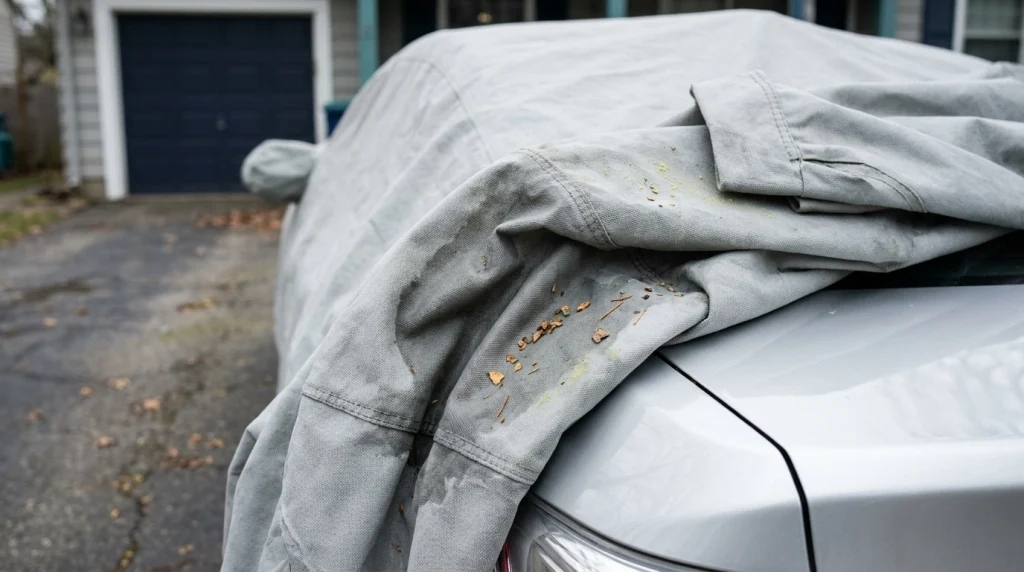
A car cover is a protective fabric layer designed to shield a vehicle from environmental debris and, depending on its construction, moisture and sunlight. Odors develop when moisture, dirt, organic material, cleaning residue, or the fabric itself produces an unpleasant smell.
The first step is to determine what kind of odor you are dealing with. That helps you choose an appropriate cleaning method and avoid damaging the cover.
1. Trapped moisture and mildew
A musty, basement-like smell often indicates that moisture has remained in the fabric long enough for mildew or other microbial growth to develop. This can happen after rain, washing, humid weather, or storage in a poorly ventilated space.
The problem becomes more likely when you fold a cover before it dries or leave it compressed in a storage bag. Moisture trapped between folded layers takes longer to escape.
2. Dirt, pollen, and organic debris
Outdoor car covers collect dust, pollen, leaves, bird droppings, and other contaminants. When debris combines with moisture, it can produce a stale or unpleasant odor.
Pay attention to the inside of the cover as well as the outside. The inner surface may collect dust and residue from the vehicle, particularly when the car is parked outdoors.
3. Detergent and cleaning-product residue
A cover that smells sour, perfumed, or unusually soapy after washing may still contain cleaning residue. Too much detergent or insufficient rinsing can leave material behind in the fabric.
Fabric softeners and fragranced laundry products are not suitable for every car cover. Some manufacturers warn that these products can affect water resistance or other fabric properties.
4. New-material or chemical odors
A recently purchased cover may have a noticeable rubbery, plastic-like, or synthetic smell. This can come from its materials, coatings, packaging, or manufacturing residues.
Allow a new cover to air out in a shaded, well-ventilated area if its care instructions permit it. If the odor is unusually strong, causes irritation, or persists despite airing, stop using it and contact the manufacturer for guidance.
| Smell or symptom | Possible cause | First step |
|---|---|---|
| Musty or damp | Trapped moisture or mildew | Inspect, clean as permitted, and dry fully. |
| Sour or stale | Damp storage, dirt, or residue | Check both surfaces and rinse thoroughly after approved cleaning. |
| Perfumed or soapy | Laundry product residue | Follow the manufacturer’s rinsing instructions. |
| Rubbery or plastic-like | Cover materials or coatings | Air out the cover and check for unusual changes or irritation. |
| Strong, persistent, or irritating | Unidentified residue, material degradation, or contamination | Stop using it until the cause is identified. |
Section takeaway: A musty smell calls for a moisture and mildew check, while a soapy or chemical odor needs a different approach. Identify the source before selecting a cleaner.
How Do You Clean a Smelly Car Cover?
The safest way to clean a smelly car cover is to follow its specific care instructions, use a compatible mild cleaner, rinse away residue, and dry the fabric completely. Not every cover can go in a washing machine, and some waterproof or multilayer designs require hand-washing.
Before starting, check the sewn-in label, instruction booklet, or manufacturer’s website. This matters because a method that works for a simple indoor dust cover may damage an outdoor cover with bonded layers or a protective coating.
Step 1: Remove loose dirt
Take the cover off the vehicle and move it to a clean area where you can inspect it. Shake off loose debris gently, taking care not to spread dust or mildew around your work area.
Use a soft-bristled brush for dry dirt if the fabric permits it. Avoid aggressive scrubbing, which can damage delicate material or push grit deeper into the fabric.
Step 2: Choose an approved cleaner
Use the mild detergent or specialized cover cleaner recommended for your particular fabric. Start with a small, inconspicuous spot if the manufacturer permits spot-testing.
- Indoor fabric covers: These may allow a gentle machine wash or hand-washing, depending on their construction.
- Outdoor weatherproof covers: These often need gentle hand-washing or surface cleaning to protect their layers and coatings.
- Stretch or specialty covers: Follow the specific care label, as some require special washing or professional cleaning.
For a practical example, Coverking’s car cover washing instructions recommend hand-washing its covers rather than machine-washing them, with an exception for a specified specialty material that requires dry cleaning.
Step 3: Wash gently
For a cover approved for hand-washing, use a large basin or another suitable clean area with the recommended water temperature. Work the cleaner through the fabric gently instead of twisting, stretching, or scrubbing it aggressively.
For surface cleaning, you may be able to leave the cover on the vehicle and clean it with a soft sponge, provided the manufacturer allows that method. Keep cleaning solution away from exposed electrical connections and other sensitive vehicle components.
Step 4: Rinse away all residue
Rinse the cover as thoroughly as its care instructions require. Leftover detergent can contribute to lingering smells, soapy patches, or unwanted residue.
Some manufacturers specifically recommend multiple rinses. For example, Covercraft’s cleaning instructions call for two water-only rinses after washing.
Step 5: Dry the cover completely
Spread the cover over a suitable drying rack or hang it where air can circulate around the material. Follow the label’s guidance about sunlight, shade, and heat because some fabrics tolerate different drying conditions.
Check the seams, elastic edges, folds, and thicker sections. These areas can retain moisture after the rest of the cover feels dry.
Practical tip
Don’t judge dryness by the outer surface alone. Check the folded layers and seams before putting the cover away, especially in humid weather.
Section takeaway: Gentle, material-appropriate cleaning removes odor sources without unnecessarily risking the cover’s protective properties. Thorough drying is just as important as washing.
How Do You Remove Mildew and Musty Odors From a Car Cover?
To remove mildew-related odors, clean the affected area using a method approved for the cover, rinse it properly, and allow it to dry completely. If the odor or visible growth returns, the fabric may need further assessment or replacement.
Mildew can leave discoloration even after cleaning removes the surface residue. A cover that looks stained is not necessarily still actively growing mildew, and a clean-looking cover is not automatically free of odor-causing contamination.
Inspect the cover before cleaning
Look for dark spots, patches, unusual discoloration, and areas that feel damp or sticky. Check the inner face, seams, hems, and folds where moisture can collect.
If you see extensive growth or suspect a substantial mold problem, avoid shaking the cover vigorously indoors. Wear suitable gloves, keep the area ventilated, and follow appropriate precautions for handling contaminated material.
Use a compatible cleaning method
Start with the manufacturer’s approved cleaner and the gentlest effective cleaning method. If the instructions permit mild detergent and water, work on the affected area without using an abrasive brush or soaking the cover unnecessarily.
Don’t automatically reach for household bleach, strong disinfectants, or concentrated vinegar. These substances may discolor the fabric, damage protective coatings, affect stitching, or conflict with the manufacturer’s instructions.
Never mix cleaning chemicals. In particular, mixing bleach with acids or ammonia-containing products can release dangerous gases.
Dry thoroughly and address the cause
Once cleaned and rinsed, spread the cover out in a well-ventilated location. Allow sufficient time for the entire cover to dry before folding it or putting it back on the vehicle.
Then look at the storage conditions that allowed the odor to develop. If you keep the cover in a humid garage, damp shed, or enclosed bag, simply washing it may not prevent the smell from returning.
- Keep the storage area clean and ventilated.
- Use a breathable storage bag if suitable for your cover.
- Avoid storing the cover while damp or tightly compressed.
- Check the cover after prolonged rain or humid weather.
If a strong musty odor remains after appropriate cleaning and complete drying, or if the material shows deterioration, contact the manufacturer. Replacement may be more practical than repeated cleaning when the cover is heavily contaminated or damaged.
Section takeaway: Treat the mildew source, not just the smell. If moisture keeps getting trapped, the odor can return even after a successful cleaning.
Which Cleaning Method Is Safest for a Car Cover?
The safest cleaning method depends on the cover’s fabric, construction, and care label. Hand-washing is a useful option for many covers, but it is not a universal requirement; some indoor covers are machine-washable, while others need special treatment.
Before washing, identify whether your cover is a lightweight indoor cover, a multilayer outdoor cover, a stretch-fit cover, or a specialty design. That distinction helps you avoid unnecessary heat, friction, or chemical exposure.
| Cleaning method | When it may work | Main precaution |
|---|---|---|
| Hand-washing | Many outdoor and specialty covers that permit wet cleaning | Use the approved cleaner and avoid stretching or harsh scrubbing. |
| Machine-washing | Covers explicitly labeled machine-washable | Check washer type, load capacity, cycle, and temperature. |
| Spot-cleaning | Small dirty patches or isolated odor sources | Avoid spreading contamination and rinse if the instructions require it. |
| Air-drying | Most covers that permit wet cleaning | Follow material-specific instructions for sunlight and heat. |
| Dry-cleaning | Only covers whose instructions specifically require or permit it | Solvents may damage coatings on other cover types. |
Should you use a washing machine?
Only use a washing machine when the cover manufacturer explicitly allows it. Some covers fit a commercial front-loading washer, while large vehicle covers may be too bulky for household machines.
A center agitator, excessive friction, or an unsuitable spin cycle can damage some fabrics, seams, elastic edges, and attached hardware. Follow the manufacturer’s exact instructions rather than assuming that every fabric cover can be washed like ordinary laundry.
Should you use a pressure washer?
A pressure washer is generally a poor choice for odor removal because its force may damage the fabric or protective layers. Use a gentle hose rinse instead when the manufacturer’s instructions permit water rinsing.
Can you use baking soda or vinegar?
Neither product is automatically safe for every car cover. Baking soda may leave residue if it is difficult to remove, while vinegar can affect some materials or finishes.
Before trying either one, check the cover’s care instructions. A compatible mild cleaner and thorough rinsing are a safer starting point than experimenting with household remedies.
What products should you avoid?
Unless the manufacturer specifically approves them, avoid bleach, fabric softener, harsh solvents, strong disinfectants, and fragranced sprays. These products can mask odors without removing their source and may damage the cover’s water resistance or fabric.
Also avoid high-heat drying unless the instructions explicitly permit it. Heat can shrink some materials or damage bonded layers and coatings.
Section takeaway: Choose cleaning methods based on the cover’s actual care requirements. Gentle handling and compatible products matter more than using a powerful cleaner.
How Can You Prevent Car Cover Odors From Returning?
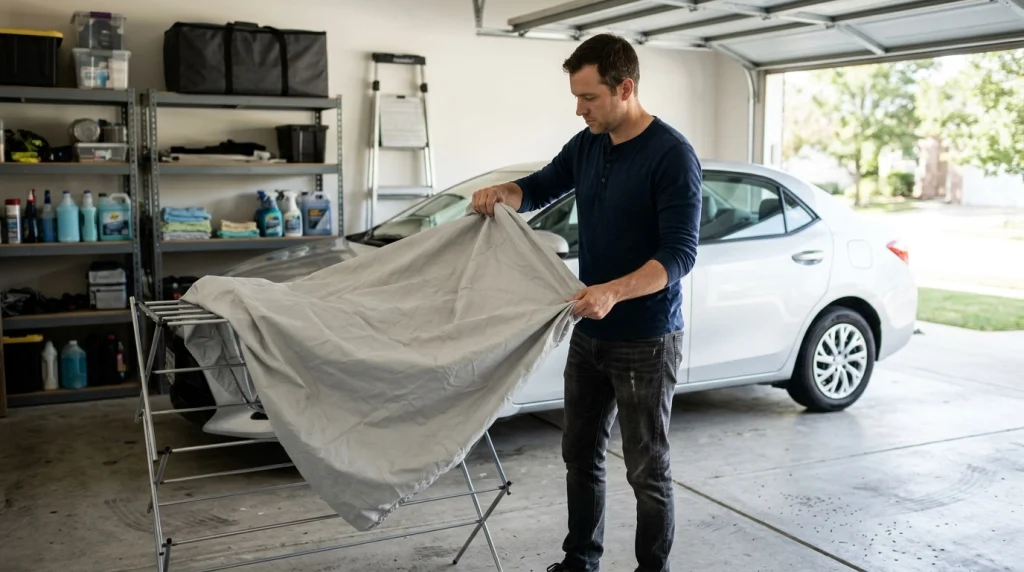
The most effective way to prevent car cover odors is to control moisture, keep the fabric reasonably clean, and store it only when fully dry. A consistent routine reduces the chance of musty smells developing between uses.
Make sure the car is ready to be covered
Check that the vehicle is reasonably clean and dry before installing the cover. Dirt trapped between the cover and paint can cause abrasion when the fabric moves, while trapped moisture may contribute to persistent dampness.
After rain or washing, give the vehicle time to dry, paying attention to mirrors, panel gaps, and other areas where water can remain. Follow the cover manufacturer’s guidance about covering a recently washed or wet vehicle.
Dry the cover after rain or washing
If your cover becomes wet, let it dry completely before packing it away. If it remains on the vehicle during wet weather, check the manufacturer’s advice about ventilation and prolonged moisture exposure.
After washing, spread the material out rather than leaving it in a heap. Good airflow helps moisture escape from seams, elastic hems, and folded sections.
Store it in a dry, ventilated location
A cool, dry storage area helps reduce moisture buildup. Avoid placing the cover in a damp basement, leaking shed, or enclosed container that traps moisture.
Fold the cover loosely once it is completely dry. Use the supplied storage bag if appropriate, but don’t assume that a sealed bag is suitable for a cover that has not dried fully.
Keep up with light cleaning
Remove loose leaves, dust, and other debris before they accumulate. Clean the cover when it becomes visibly dirty or develops an odor, following the care instructions rather than relying on a rigid schedule.
- Before use: Check for dirt, dampness, and debris on both the vehicle and cover.
- After wet weather: Inspect the cover and allow it to dry as needed.
- During storage: Keep the cover loosely folded in a clean, ventilated space.
- During routine checks: Look for stains, damaged seams, peeling layers, or recurring odors.
Consider your local climate
Humidity can make it harder for a wet cover to dry, especially when airflow is limited. In humid conditions, a covered car parked in a shaded or enclosed space may retain moisture longer than expected.
If you live in a humid region, allow extra drying time and check the cover before storage. A fan in a ventilated area may help move air around the fabric, provided the cover is used and dried according to its instructions.
Section takeaway: Good drying and storage habits prevent more odor problems than repeated washing. Focus on moisture control, ventilation, and regular inspections.
What If the Car Cover Smell Does Not Go Away?
If the odor persists after appropriate cleaning and complete drying, look for a deeper source instead of repeating the same cleaning process. Persistent smells can indicate embedded contamination, material degradation, or a problem with the storage environment.
Check for recurring dampness
If the smell disappears after cleaning but returns within a few days, inspect the storage area and the cover’s usual drying conditions. Look for damp floors, condensation, poor ventilation, or water collecting in folds.
Also check whether the vehicle itself has a persistent odor that transfers to the cover. Cleaning the cover alone will not solve a problem that originates from another source.
Inspect the material for damage
Look for peeling coatings, crumbling fabric, unusual discoloration, sticky patches, or weakened seams. Material deterioration can make a cover harder to clean and may affect its protective performance.
If the cover has a waterproof or water-resistant layer, don’t assume that repeated washing will restore it. Contact the manufacturer if the coating appears damaged or the odor changes unexpectedly.
Know when to replace the cover
Replacement may be sensible when the odor remains strong after suitable cleaning, contamination is extensive, or the fabric has deteriorated. It can also be the safer option when you cannot identify an irritating chemical smell.
Before buying another cover, review its care instructions and storage requirements. Choosing a material that suits your parking conditions can make future maintenance easier.
When to stop using the cover
Stop using a cover that produces a strong, unexplained chemical odor, causes irritation, or shows significant material deterioration. Keep it away from enclosed living spaces while seeking advice from the manufacturer.
Section takeaway: Recurring odors are a reason to investigate moisture, contamination, and material condition. If cleaning does not solve the problem, replacement may be more practical than further treatment.
Frequently Asked Questions
1. Why does my car cover smell musty after rain?
A musty smell after rain often develops when moisture remains trapped in the fabric, seams, or folded layers. Allow the cover to dry completely in a well-ventilated area, and check for mildew if the odor persists. Avoid storing or reinstalling it while damp.
2. Can I spray air freshener on a smelly car cover?
It’s better to identify and remove the odor source than to mask it with air freshener. Fragranced products may leave residue or conflict with the manufacturer’s care instructions. Clean the cover with a compatible product and dry it thoroughly before using it again.
3. Does sunlight remove bad smells from a car cover?
Fresh air and suitable drying conditions can help reduce damp odors, but sunlight alone won’t reliably remove embedded dirt or mildew. Some cover materials can also deteriorate under prolonged UV exposure. Follow the manufacturer’s guidance about drying in direct sunlight or shade.
4. Can I use bleach to remove mildew from a car cover?
Don’t use bleach unless the manufacturer specifically approves it for your cover. Bleach can damage fabric, stitching, and protective coatings. Choose an approved cleaner instead, and never mix bleach with vinegar, acids, ammonia, or other cleaning products.
5. How often should I clean a car cover to prevent odors?
There is no universal cleaning interval for every cover. Clean it when dirt accumulates, contamination occurs, or an odor develops, and follow the manufacturer’s maintenance schedule. Regularly removing loose debris and keeping the cover dry can reduce the need for intensive cleaning.
6. Can I store a car cover in its original bag?
Usually, if the manufacturer recommends that bag and the cover is completely dry. A bag can make storage convenient, but packing away damp fabric can trap moisture and encourage musty odors. Keep the storage area dry and ventilated, and check the cover before putting it away.
7. Why does my new car cover smell like plastic?
A new cover may have a temporary synthetic odor from its materials, coatings, or packaging. Let it air out in a well-ventilated area if the manufacturer’s instructions permit it. If the odor is unusually strong, causes irritation, or persists, contact the manufacturer before using the cover.
Final Takeaway: Keep Your Car Cover Clean, Dry, and Fresh
Learning how to stop a car cover from smelling starts with identifying the odor’s source. Trapped moisture, mildew, dirt, cleaning residue, and new-material odors require different approaches, so avoid treating every smell with the same product.
For most covers, the best starting point is simple: remove loose dirt, clean the material using an approved method, rinse thoroughly, and allow it to dry completely. Never assume that machine-washing, bleach, fabric softener, or high heat is safe for your particular cover.
Finally, pay attention to storage. A clean cover can develop the same musty smell again if you fold it while damp or keep it in a humid, poorly ventilated place. Consistent drying and sensible storage help keep your cover fresh and ready to protect your vehicle.