
How to Remove Stains From a Car Cover: Safe Step-by-Step Guide
Quick Answer
To remove stains from a car cover, shake off loose dirt, soften the stain with water, and gently dab it with a manufacturer-approved mild cleaner and a soft sponge. Rinse the area thoroughly and air-dry the cover completely before putting it back on your vehicle. Always test the cleaner on a hidden section first, especially if the cover has a waterproof or UV-resistant coating.
Quick stain-removal steps
- Identify the stain: Determine whether you’re dealing with bird droppings, tree sap, grease, pollen, mud, or mildew.
- Check the label: Confirm which cleaners, water temperatures, and washing methods the cover allows.
- Remove loose dirt: Shake the cover gently or brush away dry debris without grinding particles into the fabric.
- Pre-treat gently: Apply an approved cleaner and let it loosen the stain before wiping.
- Rinse thoroughly: Remove all cleaner residue from the fabric, seams, and lining.
- Dry completely: Allow both sides to air-dry before reinstalling or storing the cover.
One important precaution
- Avoid bleach, strong solvents, abrasive brushes, and pressure washers unless the manufacturer specifically approves them.
- Keep the dirty cover’s inner surface away from your car’s paint while cleaning it.
Car cover stains can come from bird droppings, tree sap, rainwater deposits, road grime, and everyday outdoor exposure. The challenge is removing those marks without weakening the fabric or damaging its protective finish.
My approach is to identify the stain first, start with the mildest suitable cleaning method, and avoid aggressive scrubbing. This guide explains how to remove common stains, choose an appropriate cleaner, and prevent the same problems from returning.
In This Guide
What Should You Do Before Removing Stains From a Car Cover?
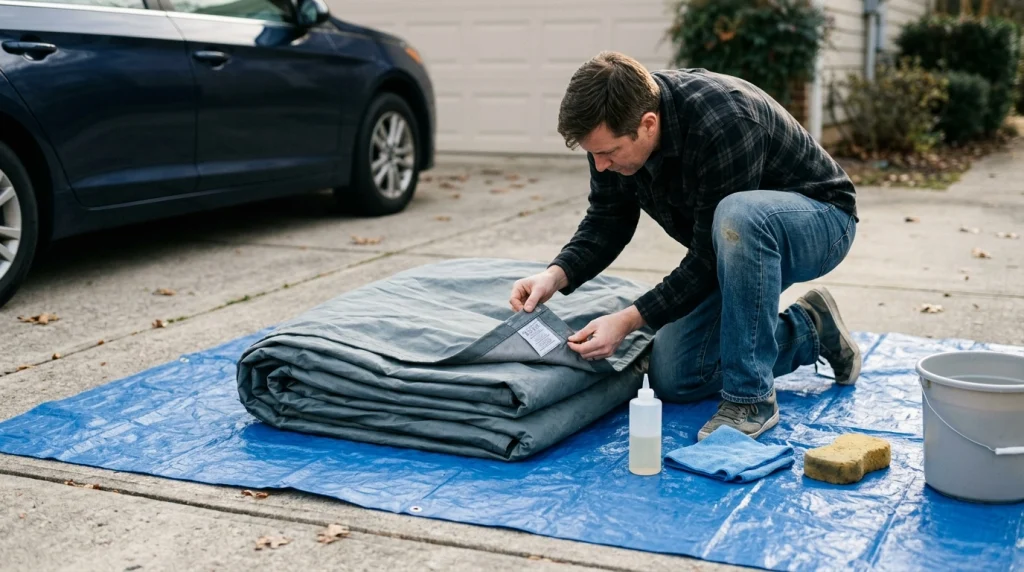
Before cleaning a car cover, identify its material, check the manufacturer’s care instructions, and inspect the stained area. These steps help you choose a cleaning method that removes contamination without damaging the fabric or its protective coating.
Identify the cover material
A car cover is a protective fabric or layered barrier designed to shield a parked vehicle from environmental contaminants and weather. Different covers use different materials, coatings, and seam constructions, so their cleaning requirements can vary.
- Lightweight indoor covers: These may tolerate gentle hand washing or approved machine washing, depending on their construction.
- Outdoor covers: These may include water-resistant or UV-resistant treatments that require careful cleaning.
- Multilayer covers: Their bonded layers and specialized construction may restrict certain detergents, washing machines, or drying methods.
- Custom-fitted covers: Check the care label rather than assuming that a particular fit or fabric appearance determines the washing method.
When the label is missing, consult the manufacturer’s website or customer support before using a strong stain remover. Don’t assume that a product safe for ordinary clothing is also safe for an automotive cover.
Gather the right cleaning supplies
Most basic spot-cleaning jobs require only a few household supplies, provided the cover manufacturer permits their use.
- A clean bucket and suitable water supply.
- A manufacturer-approved mild detergent or cleaner.
- A soft sponge or clean microfiber cloth.
- A soft-bristle brush for stains that need gentle agitation.
- A clean tarp or other suitable washing surface.
- Access to a well-ventilated drying area.
Test the cleaner on a small, inconspicuous area first. Check for discoloration, texture changes, or signs that the coating has been affected before treating the visible stain.
How Do You Remove Stains From a Car Cover?
The safest general method is to remove loose debris, pre-treat the stain with an approved cleaner, gently lift the residue, rinse the fabric, and let it dry completely. For a localized mark, spot cleaning is usually a sensible starting point.
Step 1: Remove the cover carefully
Take the cover off the vehicle when the manufacturer permits this cleaning approach. Fold or handle it carefully so the dirty exterior doesn’t rub against the paint or transfer grit onto the inner surface.
Choose a clean, spacious working area. A clean tarp can help keep the cover away from soil, gravel, oily driveways, and other sources of contamination.
Step 2: Remove loose dirt and debris
Shake the cover gently to dislodge loose dust, leaves, pollen, and other particles. Use a soft brush where needed, but avoid rubbing dry grit into the material.
This step matters because small abrasive particles can scratch a vehicle’s finish if they become trapped between the cover and the paint.
Step 3: Soften the stain
Dampen the stained section with clean water at the temperature allowed by the care instructions. Let dried mud, bird droppings, or other residue soften before attempting to remove it.
Don’t scrape a stubborn mark with a metal tool or a hard-edged object. If the residue remains firmly attached, repeat the gentle soaking process rather than increasing the pressure.
Step 4: Apply an approved cleaner
Prepare the cleaning solution according to the product label and the cover manufacturer’s instructions. Avoid mixing different household cleaners, as the combination may create hazardous fumes or damage the material.
Apply the solution to the affected area using a clean sponge or microfiber cloth. Follow the recommended contact time, and don’t allow the product to dry on the fabric unless its instructions explicitly permit that method.
Step 5: Lift the stain gently
Work from the outside of the mark toward its center to help prevent the residue from spreading. Use light, controlled strokes and switch to a clean part of the cloth as dirt transfers.
If the stain starts fading, continue gently instead of scrubbing harder. Stop if the fabric changes color, becomes rough, or shows signs of coating damage.
Step 6: Rinse and inspect
Rinse the treated area thoroughly with clean water, following the permitted washing method. Pay particular attention to seams, hems, folds, and the inner lining, where cleaning residue may remain.
Inspect the stain after rinsing. If a mark remains, repeat the approved spot treatment rather than immediately reaching for bleach or a strong solvent.
Step 7: Dry the cover completely
Air-dry the cover in a clean location with good airflow. Follow any restrictions on direct sunlight, hanging methods, or heat that appear in the manufacturer’s instructions.
Check both surfaces and the seams before reinstalling or storing it. A cover that feels dry on the outside can still retain moisture in folded sections.
Section takeaway: Start gently, treat only what needs attention, and rinse thoroughly. If a stain resists repeated approved treatments, contact the manufacturer before trying a stronger chemical.
How Do You Remove Different Types of Car Cover Stains?
The right treatment depends on what caused the mark. Bird droppings, sap, grease, mildew, and mineral deposits behave differently, so one cleaning solution won’t reliably remove every stain.
Use this comparison table as a starting point, then check the care instructions for your exact cover.
| Stain type | Recommended first step | Important caution |
|---|---|---|
| Bird droppings | Soften with water and dab with approved mild cleaner. | Don’t scrape dried residue aggressively. |
| Tree sap | Soften the deposit and try gentle spot cleaning. | Avoid alcohol or solvents unless explicitly approved. |
| Grease and oil | Blot excess residue and use an approved cleaner. | Strong degreasers can affect coatings. |
| Mud and road grime | Remove loose dirt, rinse, and wash gently. | Don’t grind dry grit into the fabric. |
| Pollen and dust | Shake off debris and rinse when necessary. | Keep particles away from the paint-contact side. |
| Mildew or musty marks | Use an approved cleaning method and dry completely. | Visible discoloration may remain after cleaning. |
| Water or mineral marks | Try a clean-water rinse and gentle approved washing. | Acidic descalers may damage fabric treatments. |
Bird droppings
Bird droppings can dry into a hard deposit that resists wiping. Wet the area first and allow the residue to soften before lifting it with a damp cloth.
Rinse the spot thoroughly after cleaning. If the cover has been stained for a long time, some discoloration may remain even when the residue has been removed.
Tree sap
Tree sap is sticky and can cling to fabric fibers. Start by softening the deposit and applying an approved cleaner, using gentle pressure to lift it gradually.
Rubbing alcohol, paint thinner, and other solvents may dissolve sap, but they can also damage certain coatings or synthetic materials. Don’t use them unless the cover manufacturer specifically confirms compatibility.
Grease and oil
For greasy marks, blot excess oil with a clean absorbent cloth without spreading it across a larger area. Follow with a cleaner approved for the cover’s material.
Repeat the treatment if necessary, rinsing between applications. Avoid automotive engine degreasers or strong workshop chemicals unless the manufacturer explicitly approves their use.
Mildew and musty stains
Mildew may develop when a cover remains damp in a poorly ventilated space. Check the manufacturer’s instructions and clean the affected material using an approved method.
Dry the cover thoroughly and address the moisture problem before using it again. If mildew is widespread, the fabric is deteriorating, or the odor persists, seek manufacturer guidance rather than combining bleach, vinegar, or other cleaning chemicals.
Water spots and road grime
For ordinary dirt and water marks, begin with a clean-water rinse and a suitable mild cleaner if needed. Mineral deposits that remain after rinsing may require specialized treatment, but only use a product confirmed safe for the cover.
Road grime can contain oil, brake dust, and other contaminants. Keep the inner surface clean, since any remaining particles may transfer onto the vehicle during installation.
Which Cleaners Are Safe for Car Covers?
A safe cleaner is one that the manufacturer approves for your cover’s specific material and protective finish. Mild soap or detergent is a common starting point, but it isn’t universally suitable for every fabric or coating.
For general background, consult the cleaning guidance from Simple Green’s car cover cleaning guide and compare it with the instructions supplied with your own cover.
| Cleaning product | General guidance |
|---|---|
| Approved mild detergent | Usually the first option to consider when permitted by the manufacturer. |
| Automotive fabric cleaner | Check that the formula is suitable for the cover, not just vehicle upholstery. |
| Bleach | Avoid unless the manufacturer explicitly permits a particular product and method. |
| Solvents and strong degreasers | Avoid unless specifically approved for the cover’s material and coating. |
| Fabric softener | Generally avoid because it may leave residue or affect protective performance. |
| Pressure washer | Avoid concentrated high-pressure spray unless expressly permitted. |
Should you use a washing machine?
Machine washing is appropriate only when the manufacturer allows it. Some covers require hand washing, while others permit a large front-loading machine, a gentle cycle, or particular detergent and rinse settings.
Never force a bulky cover into an undersized washer. Also, don’t assume that a machine-washable cover can safely go into a heated dryer.
For more details, see this guide to machine washing a car cover safely.
What Cleaning Mistakes Should You Avoid?
The biggest mistakes are using an incompatible chemical, scrubbing too aggressively, and reinstalling a damp or contaminated cover. These shortcuts can turn a small stain into a fabric problem or create avoidable risks for the vehicle’s paint.
- Scrubbing hard: Excessive friction can fray fibers, damage stitching, or change the fabric’s surface.
- Using unapproved chemicals: Bleach, solvents, and powerful degreasers may affect color or protective treatments.
- Skipping the rinse: Cleaner residue can remain in folds and attract additional dirt.
- Using excessive heat: High temperatures may shrink or damage some materials.
- Cleaning over a dirty car: Dirt and grit can move between the cover and the vehicle’s finish.
- Storing it wet: Trapped moisture encourages musty odors and mildew growth.
- Mixing cleaning products: Combining household chemicals can produce dangerous reactions.
It’s also important to avoid dragging the cover across a rough driveway. Even after cleaning, grit picked up from the ground can contaminate the surface that touches your vehicle.
Review the broader car cover maintenance mistakes guide if stains keep returning or the cover seems to be wearing prematurely.
Section takeaway: Gentle cleaning is not just about appearance. It also helps preserve the material and reduces the chance of transferring abrasive debris onto your car.
How Can You Prevent Future Car Cover Stains?
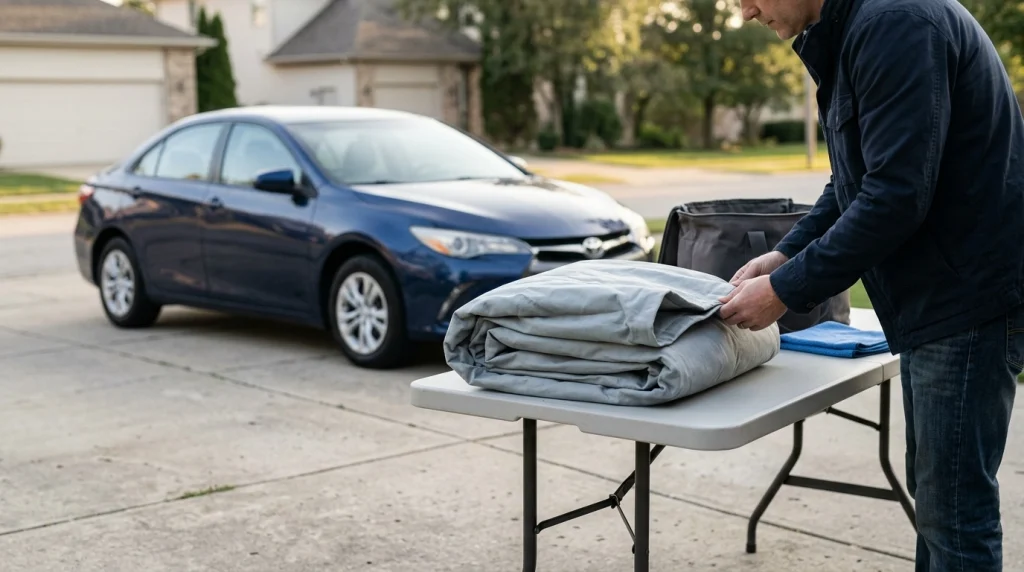
You can reduce recurring stains by choosing a clean parking location, removing contamination promptly, and storing the cover correctly. Regular inspection is often easier than trying to remove an old, deeply set mark.
Follow a simple maintenance routine
- Inspect regularly: Look for bird droppings, sap, pollen, road grime, and damp areas.
- Spot-clean promptly: Treat fresh stains before they dry or become difficult to lift.
- Keep the vehicle clean: Remove dust and grit before fitting the cover.
- Use the correct fit: A properly fitted cover is less likely to move excessively and collect debris in folds.
- Dry before storage: Make sure the cover is fully dry before folding it or placing it in a storage bag.
- Choose the parking location carefully: When possible, avoid areas directly beneath trees or places where birds regularly gather.
Clean and store the cover correctly
After cleaning, allow the cover to dry using the method recommended by its manufacturer. Keep it away from dirty floors, sharp objects, oils, and chemicals while it dries or waits for its next use.
If you notice persistent dampness or mildew, improve ventilation and investigate the storage conditions. Repeated washing won’t solve the problem if the cover continues to be stored while wet.
For additional maintenance advice, read the guide on extending your car cover’s lifespan.
If the cover develops widespread discoloration, peeling layers, brittle fabric, or damaged seams, cleaning may no longer be enough. Ask the manufacturer whether the cover remains suitable for use.
Frequently Asked Questions
Can I use dish soap to remove stains from a car cover?
Dish soap may work on some car covers, but it isn’t automatically safe for every fabric or protective coating. Check the manufacturer’s instructions, use only an approved dilution, and test a hidden section before treating the visible stain.
How do I remove dried bird droppings from a car cover?
Moisten the deposit with water at a permitted temperature and let it soften. Gently dab the area with an approved mild cleaner, then rinse thoroughly. Avoid scraping or aggressively rubbing the dried material into the fabric.
Can vinegar remove stains from a car cover?
Vinegar may help with certain mineral deposits on compatible surfaces, but its acidity can affect some fabrics and coatings. Use it only if the cover manufacturer approves the treatment, and never mix vinegar with bleach or other household cleaning products.
How do I remove tree sap from a car cover without damaging it?
Start by softening the sap and gently treating it with a manufacturer-approved cleaner. Avoid paint thinners, alcohol, and other solvents unless the manufacturer confirms they are safe for that specific cover. Persistent sap may require professional advice.
Can bleach remove mildew stains from a car cover?
Don’t use bleach unless the manufacturer explicitly approves the product and cleaning procedure. Bleach can discolor fabric or damage certain materials. Use an approved cleaning method, rinse thoroughly, and dry the cover completely to address the moisture that contributed to mildew.
Can I put a stained car cover in the washing machine?
Only if the manufacturer allows machine washing. Follow the specified washer type, cycle, temperature, and detergent instructions. If machine washing is prohibited or the care label is unavailable, ask the manufacturer before proceeding.
What should I do if a stain remains after cleaning?
First, confirm that the residue itself remains rather than a permanent discoloration. Repeat a compatible cleaning treatment if appropriate, but stop if the fabric or coating changes. Contact the manufacturer or a suitable cleaning professional before trying stronger chemicals.
Final Takeaway: Remove Stains Gently and Protect Your Car Cover
Removing stains from a car cover starts with identifying the contaminant and checking the material’s care instructions. Gentle spot cleaning, thorough rinsing, and complete drying are the safest general principles to follow.
Don’t risk damaging a useful cover just to remove a stubborn mark. If the stain resists approved treatment, ask the manufacturer for material-specific guidance before moving to a stronger cleaner.
Most importantly, keep both the cover and your vehicle clean before they come into contact. That simple habit helps prevent stains, limits abrasive dirt transfer, and supports the cover’s long-term protective performance.