Nissan Rogue Won’t Start: Causes and Fixes

Contents
- 1 Key Takeaways
- 2 📑 Table of Contents
- 3 Why Won’t My Nissan Rogue Start? A Complete Troubleshooting Guide
- 4 Common Causes When Your Nissan Rogue Won’t Start
- 5 How to Diagnose a Nissan Rogue That Won’t Start
- 6 DIY Fixes You Can Try at Home
- 7 When to Call a Professional
- 8 Preventing Future Starting Problems
- 9 Conclusion
- 10 Frequently Asked Questions



If your Nissan Rogue won’t start, don’t panic—there are several common causes and practical solutions. From a dead battery to faulty starters, this guide walks you through troubleshooting steps to diagnose and fix the issue quickly.
Key Takeaways
- Dead or weak battery: The most common reason a Nissan Rogue won’t start; check voltage and connections.
- Faulty starter motor: A clicking sound often signals a failing starter that needs replacement.
- Bad alternator: If the battery keeps dying, the alternator may not be charging it properly.
- Ignition switch issues: Worn or damaged switches can prevent the engine from cranking.
- Fuel system problems: Clogged fuel filters or failing fuel pumps can stop fuel delivery.
- Security system glitches: The Nissan Intelligent Key system may mistakenly block startup.
- Timing belt failure: A broken timing belt can cause catastrophic engine damage and prevent starting.
📑 Table of Contents
Why Won’t My Nissan Rogue Start? A Complete Troubleshooting Guide
You’re running late for work, you hop into your Nissan Rogue, turn the key—or press the start button—and… nothing. No engine turnover, no cranking, just silence. Or maybe you hear a faint click, but the engine refuses to fire up. It’s frustrating, stressful, and downright inconvenient. If your Nissan Rogue won’t start, you’re not alone. This issue affects thousands of Rogue owners every year, and while it can feel overwhelming, most causes are both identifiable and fixable.
The good news? You don’t need to be a mechanic to figure out what’s going on. With a little know-how and some basic tools, you can often diagnose the problem yourself—or at least know what to tell your technician. This guide will walk you through the most common reasons your Nissan Rogue won’t start, how to spot them, and what you can do about it. Whether you’re dealing with a dead battery, a faulty starter, or a high-tech security glitch, we’ve got you covered.
Common Causes When Your Nissan Rogue Won’t Start
There’s no single reason your Nissan Rogue won’t start—but there are a handful of culprits that show up again and again. Understanding these common issues is the first step toward getting your SUV back on the road.
1. Dead or Weak Battery
The battery is the heart of your vehicle’s electrical system. Without enough power, nothing happens—no lights, no dashboard, and definitely no engine start. In fact, a dead or weak battery is the number one reason a Nissan Rogue won’t start.
Visual guide about Nissan Rogue Won’t Start: Causes and Fixes
Image source: vehiclefreak.com
Batteries typically last 3 to 5 years, but extreme temperatures, frequent short trips, and leaving lights on can shorten their lifespan. If your Rogue has been sitting for a while—especially in cold weather—the battery may have drained below the voltage needed to crank the engine.
Signs of a weak battery include dim headlights, slow cranking, or no sound at all when you turn the key. You might also notice the dashboard lights flicker or behave erratically. If you hear a single loud click but the engine doesn’t turn over, that’s often a red flag for battery trouble.
To test it, use a multimeter to check the voltage. A healthy battery should read around 12.6 volts when the car is off. Anything below 12.2 volts means it’s likely too weak to start the engine. Jump-starting the car can help confirm this—if it starts with a jump and runs fine, the battery is probably the issue.
2. Faulty Starter Motor
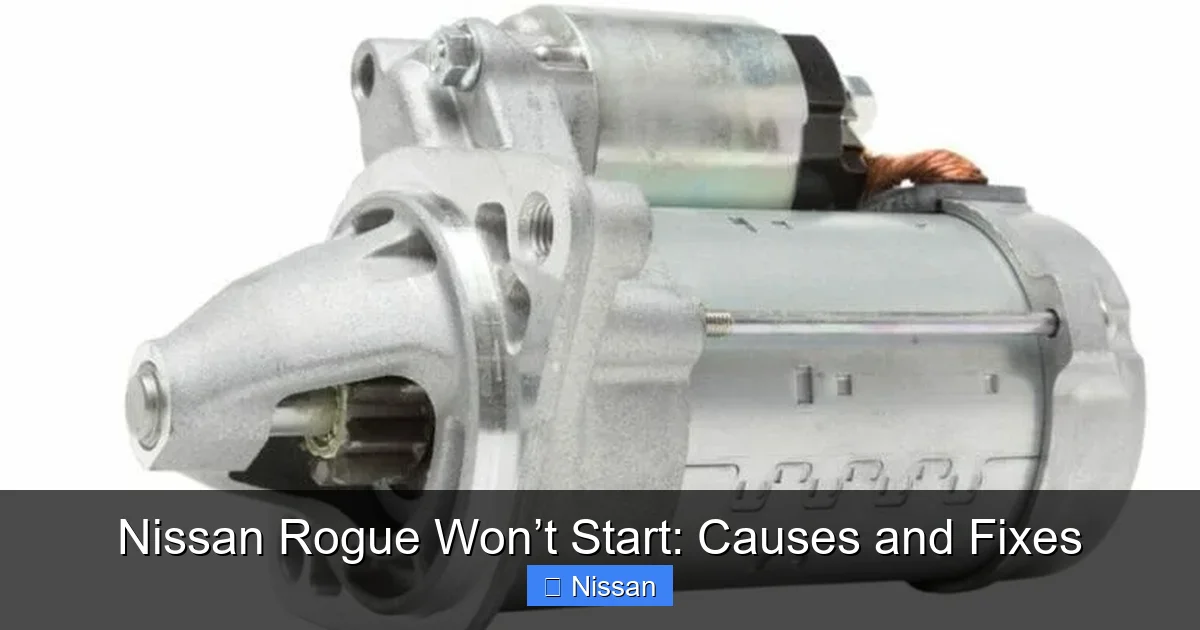
If the battery is fine but your Nissan Rogue still won’t start, the starter motor might be to blame. The starter is a small electric motor that turns the engine over when you turn the key or press the start button. If it fails, the engine won’t crank—even with a fully charged battery.
A common symptom is a rapid clicking sound when you try to start the car. This happens because the solenoid (part of the starter) is trying to engage, but the motor isn’t spinning. You might also hear a grinding noise, which could mean the starter gear is damaged or not meshing properly with the flywheel.
Starter motors can fail due to worn brushes, electrical issues, or mechanical wear. They’re usually located near the transmission and can be tricky to access, so replacement often requires professional help. However, if you’re handy with tools, it’s possible to replace it yourself—just make sure the battery is disconnected first for safety.
3. Bad Alternator
The alternator charges the battery while the engine is running. If it fails, the battery will eventually drain, and your Nissan Rogue won’t start—even if the battery was fine initially.
Unlike a dead battery, alternator failure often shows warning signs before complete failure. You might notice dimming headlights, a battery warning light on the dashboard, or electrical components acting up (like power windows moving slowly). If your car starts but then dies shortly after, especially at idle, the alternator could be the culprit.
To test the alternator, check the battery voltage with the engine running. It should read between 13.7 and 14.7 volts. If it’s lower, the alternator isn’t charging properly. A mechanic can perform a more thorough test using a load tester to confirm the diagnosis.
4. Ignition Switch Problems
The ignition switch sends power to the starter and other systems when you turn the key or press the start button. Over time, this switch can wear out, especially in older Rogues or those with high mileage.
Symptoms include intermittent starting issues—your car might start one day and not the next—or the engine cranking but not firing. You might also notice that accessories like the radio or lights don’t come on when you turn the key to the “on” position.
Ignition switch problems can be tricky to diagnose because they mimic other issues. If you suspect this is the cause, a technician can test the switch with a multimeter or scan tool to see if it’s sending the right signals.
5. Fuel System Issues
Even with a good battery and starter, your Nissan Rogue won’t start if fuel isn’t reaching the engine. Common fuel system problems include a clogged fuel filter, a failing fuel pump, or a faulty fuel pressure regulator.
A clogged fuel filter restricts fuel flow, especially under load or at startup. It’s usually replaced every 30,000 to 60,000 miles, but if you’ve skipped maintenance, it could be the issue. A failing fuel pump might make a whining noise from the gas tank or cause the engine to sputter before dying.
If the fuel pump isn’t working, you won’t hear the usual hum when you turn the key to the “on” position (before cranking). You can also check fuel pressure with a gauge—low pressure means the pump or filter needs attention.
6. Security System Glitches
Modern Nissan Rogues come equipped with the Nissan Intelligent Key system and an immobilizer that prevents the car from starting without the correct key fob. While this enhances security, it can also cause problems if the system malfunctions.
If your key fob battery is dead, the car might not recognize it, even if you’re holding it near the start button. Some Rogues have a backup method—like placing the fob in a special slot—but not all models do. You might see a flashing key icon on the dashboard, indicating a security issue.
Other times, the immobilizer system itself can glitch due to software bugs or sensor failures. In rare cases, water damage or electrical issues can cause the system to lock out the engine. A dealership or locksmith with Nissan-specific tools can usually reset or reprogram the system.
How to Diagnose a Nissan Rogue That Won’t Start
Diagnosing why your Nissan Rogue won’t start doesn’t require a degree in automotive engineering—just a logical approach and a few basic tools. Here’s a step-by-step method to help you pinpoint the problem.
Step 1: Listen and Observe
Before doing anything else, pay attention to what happens when you try to start the car. Do you hear any sounds? Are the lights on? Is the dashboard lit up?

Visual guide about Nissan Rogue Won’t Start: Causes and Fixes
Image source: motorverso.com
If nothing happens—no lights, no sound—the battery is likely dead or disconnected. If the lights come on but the engine doesn’t crank, it could be the starter or ignition switch. If the engine cranks but won’t start, the issue is likely fuel, spark, or air-related.
Step 2: Check the Battery
Pop the hood and inspect the battery terminals. Are they corroded? Loose? Clean and tighten them if needed. Then, use a multimeter to check the voltage. If it’s below 12.4 volts, charge or replace the battery.
If you don’t have a multimeter, try jump-starting the car. If it starts and runs fine, the battery was the issue. If it starts but dies soon after, suspect the alternator.
Step 3: Test the Starter
If the battery is good but the engine won’t crank, tap the starter motor gently with a hammer while someone tries to start the car. If it starts, the starter is likely failing and needs replacement.
You can also use a test light or multimeter to check if power is reaching the starter when you turn the key. No power? Check the ignition switch and fuses. Power but no cranking? The starter is probably bad.
Step 4: Listen for the Fuel Pump
Turn the key to the “on” position (without cranking) and listen near the fuel tank. You should hear a faint hum for a few seconds—that’s the fuel pump priming. No sound? The pump may be dead.
You can also check fuel pressure with a gauge. Low or no pressure means the pump, filter, or regulator needs attention.
Step 5: Scan for Error Codes
Even if the engine won’t start, a scan tool can often read diagnostic trouble codes (DTCs) from the ECU. These codes can point to issues like a failed crankshaft position sensor, camshaft sensor, or immobilizer problem.
Many auto parts stores offer free code scanning. If you get a code like P0335 (crankshaft sensor), that could explain why your Nissan Rogue won’t start.
DIY Fixes You Can Try at Home
Not every starting issue requires a trip to the mechanic. Here are some fixes you can try yourself—safely and effectively.
Jump-Start the Battery
If your Nissan Rogue won’t start due to a dead battery, a jump-start is often the quickest fix. Use jumper cables and another vehicle (or a portable jump starter) to give your battery a boost.

Visual guide about Nissan Rogue Won’t Start: Causes and Fixes
Image source: motorverso.com
Connect the red cable to the positive terminal on both batteries, then the black cable to the negative terminal on the donor battery and a grounded metal part on your Rogue (not the negative terminal). Start the donor car, let it run for a few minutes, then try starting your Rogue.
Once it’s running, drive for at least 30 minutes to allow the alternator to recharge the battery. If it dies again soon after, the battery or alternator may need replacement.
Replace the Key Fob Battery
If your key fob is unresponsive, the tiny battery inside may be dead. Most Nissan key fobs use a CR2032 coin cell battery, which is easy to replace.
Use a small flathead screwdriver to gently pry open the fob. Remove the old battery, insert the new one (positive side up), and snap the fob back together. Test it by holding it near the start button—many Rogues will start even with a weak signal if the fob is close enough.
Reset the Security System
If the immobilizer is blocking startup, try resetting it. Turn the key to the “on” position and wait 10 minutes. Then turn it off and try starting again. This can reset the system in some models.
You can also try disconnecting the battery for 10–15 minutes to reset the ECU and security module. Reconnect it and see if the car starts.
Check and Replace Fuses
A blown fuse can prevent the starter, fuel pump, or ignition system from working. Locate the fuse box (usually under the hood or dashboard) and check the fuses related to starting.
Use the diagram on the fuse box cover to identify the right fuses. Pull them out and inspect for a broken filament. Replace any blown fuses with ones of the same amperage.
When to Call a Professional
While many starting issues can be resolved at home, some problems require expert attention. Here’s when it’s time to visit a mechanic or dealership.
Timing Belt Failure
The timing belt synchronizes the engine’s valves and pistons. If it breaks, the engine can’t run—and in interference engines (like most Nissan Rogues), it can cause severe internal damage.
If your Rogue has high mileage (over 100,000 miles) and hasn’t had the timing belt replaced, this could be the cause. A broken belt often results in no compression, so the engine won’t start even if it cranks. This is a serious issue that requires immediate professional repair.
Internal Engine Damage
If the engine cranks but won’t start, and you’ve ruled out fuel, spark, and air issues, there could be internal damage—like a seized engine or broken components. This is rare but possible after overheating or lack of oil.
A mechanic can perform a compression test to check engine health. Low or no compression in one or more cylinders indicates serious problems.
Complex Electrical Issues
If you’ve tried everything and your Nissan Rogue still won’t start, the issue may be a wiring fault, ECU problem, or sensor failure. These require specialized tools and knowledge to diagnose and fix.
A professional scan tool can read live data and pinpoint issues like a failed crankshaft position sensor or faulty wiring harness. Don’t hesitate to seek help if you’re stuck.
Preventing Future Starting Problems
The best way to avoid a Nissan Rogue that won’t start is regular maintenance and proactive care.
Maintain the Battery
Check the battery terminals regularly and clean any corrosion. Consider replacing the battery every 4–5 years, even if it seems fine. In cold climates, a battery tender can help maintain charge during winter.
Replace the Timing Belt on Schedule
Most Nissan Rogues need a timing belt replacement every 90,000 to 105,000 miles. Check your owner’s manual and don’t skip this service—it could save your engine.
Use the Correct Fuel and Oil
Always use the recommended fuel grade and oil viscosity. Poor-quality fuel or dirty oil can lead to engine problems over time.
Keep the Key Fob Charged
Replace the key fob battery every 1–2 years. Keep a spare battery in your glove box so you’re never caught off guard.
Conclusion
When your Nissan Rogue won’t start, it’s easy to feel frustrated—but most causes are fixable with the right approach. Start by checking the battery, listening for sounds, and observing dashboard lights. From there, you can test the starter, fuel system, and security features. Many issues, like a dead battery or weak key fob, can be resolved at home with simple tools.
However, don’t ignore warning signs like a broken timing belt or internal engine damage. These require professional attention to avoid costly repairs. With regular maintenance and a little troubleshooting know-how, you can keep your Rogue running smoothly for years to come.
Remember: a car that won’t start is often just a temporary setback. With patience and the right steps, you’ll be back on the road in no time.
Frequently Asked Questions
Why won’t my Nissan Rogue start even with a new battery?
If your Nissan Rogue won’t start despite a new battery, the issue could be the starter motor, alternator, or ignition switch. A faulty starter often causes a clicking sound, while alternator failure may lead to repeated battery drain.
Can a bad key fob prevent my Rogue from starting?
Yes, a dead or malfunctioning key fob can prevent your Nissan Rogue from starting, especially if the immobilizer system doesn’t recognize it. Try replacing the fob battery or holding it near the start button as a workaround.
How do I know if my starter is bad?
A bad starter often produces a rapid clicking noise when you try to start the car, or the engine doesn’t crank at all. Tapping the starter lightly with a tool while someone turns the key can sometimes confirm the issue.
What should I do if my Rogue cranks but won’t start?
If your Nissan Rogue cranks but won’t start, check the fuel system (pump, filter), spark plugs, and sensors. A lack of fuel, spark, or air can prevent combustion even if the engine turns over.
Can cold weather cause my Rogue to not start?
Yes, cold weather can weaken the battery and thicken engine oil, making it harder to start. A weak battery may not have enough power to crank the engine in freezing temperatures.
How often should I replace the timing belt on my Nissan Rogue?
Most Nissan Rogues require a timing belt replacement every 90,000 to 105,000 miles. Check your owner’s manual for the exact interval, and don’t delay—failure can cause severe engine damage.