Louisiana Window Tint Law

Contents
- 1 Key Takeaways
- 2 📑 Table of Contents
- 3 Decoding the Jargon: What is VLT and Why It Matters
- 4 The Legal Breakdown: VLT Limits by Vehicle Type
- 5 Other Critical Louisiana Tint Regulations
- 6 Enforcement, Penalties, and What to Do If You Get a Ticket
- 7 Medical Exemptions and Special Considerations: The Louisiana Reality
- 8 Practical Tips for Louisiana Drivers: Get It Right the First Time
- 9 Conclusion: Stay Legal, Stay Cool
- 10 Frequently Asked Questions


Louisiana window tint law, governed by RS 32:361.1, sets specific Visible Light Transmission (VLT) limits for vehicle windows. For standard passenger cars, the front side windows must allow over 70% of light in, while the back side and rear windows can be darker. Multi-purpose vehicles (SUVs, vans) have different rules, allowing darker rear windows. Violations can result in fines and a mandatory fix-it ticket. Always verify your tint’s VLT percentage to ensure compliance with state regulations.
So, you’re cruising down I-10 in your BMW, the Louisiana sun beating down, and you’re thinking that darker window tint would be the perfect solution. It keeps the cabin cooler, adds privacy, and looks sleek. But before you head to the tint shop, you need to know the rules. The Louisiana window tint law is more than just a suggestion; it’s a legal requirement with specific measurements and penalties for non-compliance. Getting it wrong can mean a ticket, a fine, and the hassle of re-tinting your windows. This guide will break down everything you need to know about Louisiana’s tint regulations, from the exact VLT percentages to what happens if you’re pulled over.
Key Takeaways
- Front Side Windows (Passenger Vehicles): Must transmit more than 70% of light (VLT > 70%). This means very light tint only, often called “factory tint” level.
- Back Side & Rear Windows (Passenger Vehicles): Can be any darkness. There is no minimum VLT percentage requirement for these windows on standard passenger cars.
- SUV & Van Rules (Multi-Purpose Vehicles): The front side windows must still allow over 70% of light. However, the back side and rear windows can also be any darkness, similar to passenger vehicles.
- Windshield Tint: Non-reflective tint is permitted on the top 5 inches of the windshield, above the AS-1 line. Tint below this line is illegal.
- Reflective & Color Tint: Tint cannot be more than 20% reflective. No tint color is explicitly banned by statute, but extremely dark tints that impede vision may be cited under general safety regulations.
- Medical Exemptions: Louisiana does not have a formal, statewide medical exemption process for darker tint. Physician notes are generally not accepted as a defense for violating the VLT limits.
- Enforcement & Penalties: Law enforcement can use a VLT meter to check windows. First-time offenses typically result in a “fix-it” ticket with a small fine (often around $50-$100) and a deadline to remove or replace the illegal tint.
📑 Table of Contents
- Decoding the Jargon: What is VLT and Why It Matters
- The Legal Breakdown: VLT Limits by Vehicle Type
- Other Critical Louisiana Tint Regulations
- Enforcement, Penalties, and What to Do If You Get a Ticket
- Medical Exemptions and Special Considerations: The Louisiana Reality
- Practical Tips for Louisiana Drivers: Get It Right the First Time
- Conclusion: Stay Legal, Stay Cool
Decoding the Jargon: What is VLT and Why It Matters
Before we dive into the specific numbers, let’s clear up the most important term: VLT. VLT stands for Visible Light Transmission. It’s a percentage that tells you how much visible light can pass through your window tint and glass. A lower VLT number means darker tint (e.g., 5% VLT is limousine-black). A higher VLT number means lighter tint (e.g., 70% VLT is very light, almost clear). The Louisiana window tint law sets the minimum VLT allowed for different windows on your vehicle.
How VLT is Measured and Tested
Law enforcement officers in Louisiana use a handheld device called a VLT meter or tint meter. They place it on the inside of the window, and it shines a light through the glass and tint, giving an instant reading. It’s a scientific measurement, not an officer’s subjective opinion. This is why knowing the exact VLT percentage your installer applies is crucial. Reputable shops will provide a certificate of compliance stating the VLT of each window they tint.
Factory Tint vs. Aftermarket Tint
Many modern vehicles, including brands like BMW, come with a very light factory tint, often around 70-80% VLT on the rear windows. This is usually legal in Louisiana for the back. The problem arises when owners add aftermarket tint to the front side windows or apply a darker tint over the factory tint, pushing the total VLT below the legal limit. Always ask your installer what the final combined VLT will be.
The Legal Breakdown: VLT Limits by Vehicle Type
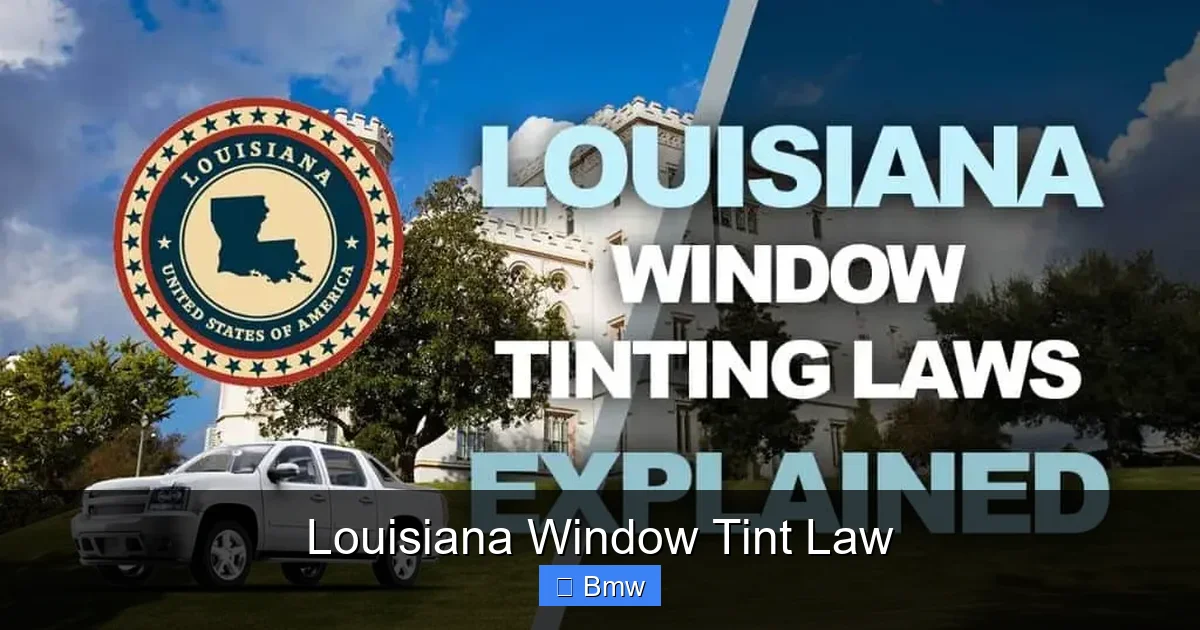
This is the core of the Louisiana window tint law. The rules differ slightly based on whether your vehicle is classified as a “passenger vehicle” or a “multi-purpose vehicle” (MPV). The state follows the federal classification system.
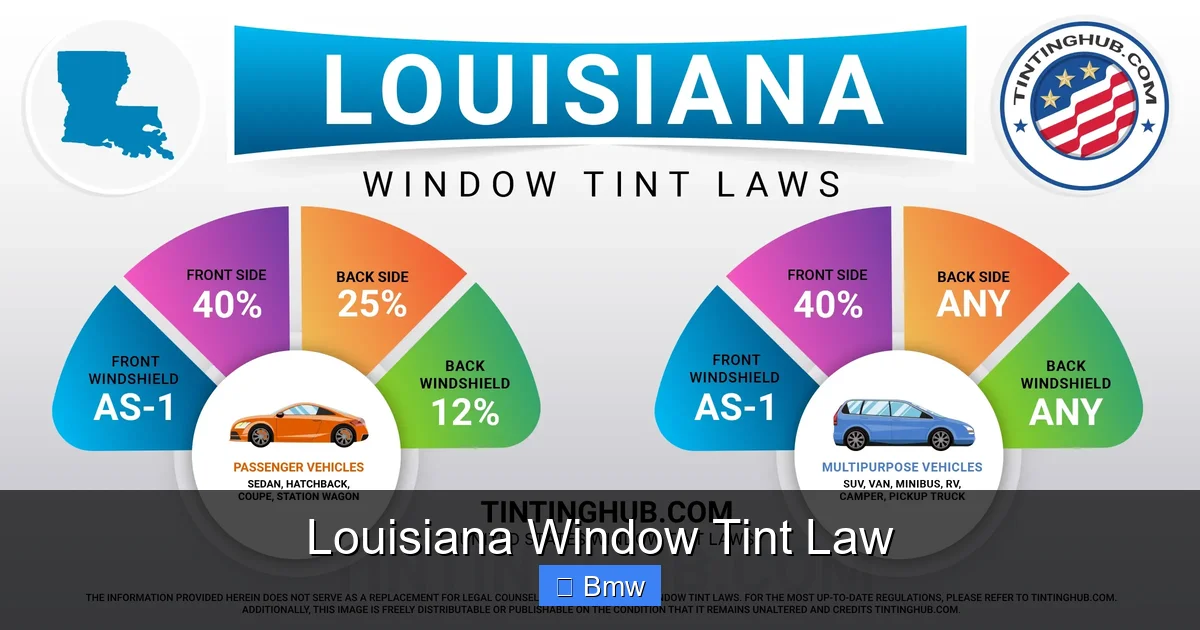
Visual guide about Louisiana Window Tint Law
Image source: tintinghub.com
Standard Passenger Vehicles (Cars, Sedans, Coupes)
For your typical BMW 3 Series, 5 Series, or any sedan:
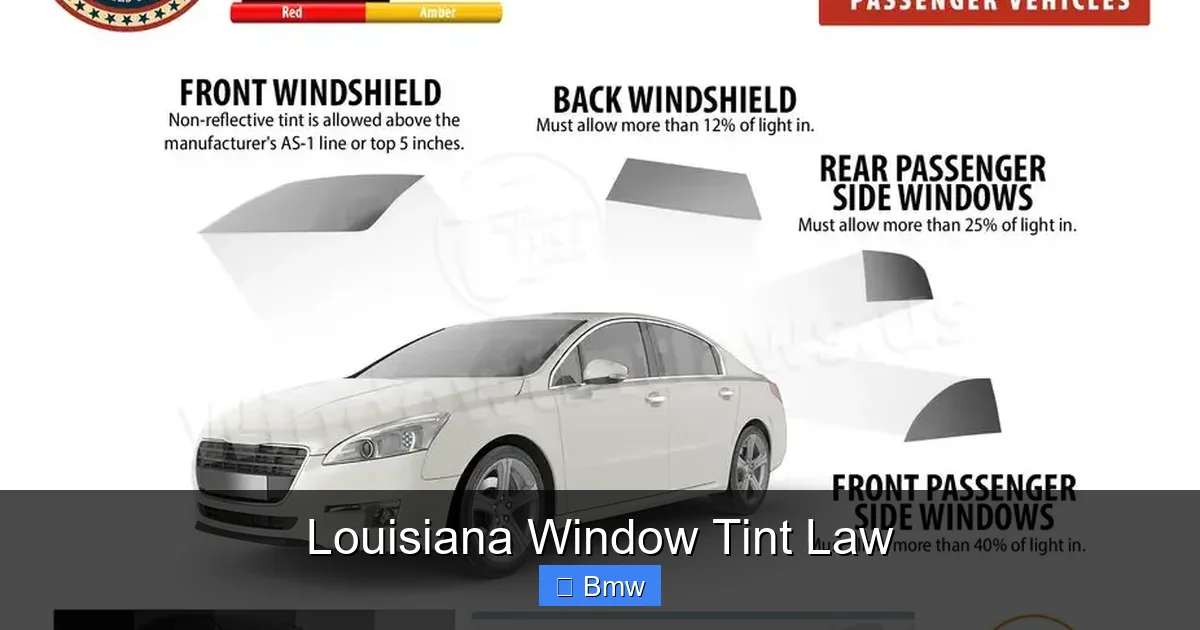
- Front Side Windows: Must allow MORE THAN 70% of light in. So, the tint must be 70% VLT or lighter. This is a strict requirement.
- Rear Side Windows: Any darkness is permitted. You can go as dark as you want here.
- Rear Window: Any darkness is permitted.
- Windshield: Non-reflective tint is allowed on the top 5 inches (the “eyebrow” area). It must not extend below the manufacturer’s AS-1 line, which is usually marked on the glass.
Multi-Purpose Vehicles (SUVs, Vans, Trucks)
For an BMW X5, X3, or any SUV, van, or pickup truck:
- Front Side Windows: Same as cars: must allow MORE THAN 70% of light in.
- Rear Side Windows: Any darkness is permitted. This is the key difference from some stricter states.
- Rear Window: Any darkness is permitted.
- Windshield: Same rule: non-reflective tint on the top 5 inches only.
Practical Tip: If you own an SUV like the BMW X5 and want maximum privacy and heat rejection, you can legally install a very dark tint (e.g., 5% or 15% VLT) on all rear windows. Just remember the front two doors must stay very light.
Other Critical Louisiana Tint Regulations
VLT isn’t the only rule. Louisiana also has laws about reflectivity and color.
Visual guide about Louisiana Window Tint Law
Image source: windowtintlaws.us
Window Tint Reflectivity Limits
Louisiana law prohibits window tint that is “more than 20% reflective.” This means the mirrored or metallic appearance of the tint cannot reflect more than 20% of light. This rule applies to both front and rear side windows. Metallic or “chrome” tints that create a high-gloss, mirror-like finish often exceed this limit and are illegal. Most standard dyed or carbon films have low reflectivity and comply.
Tint Color Restrictions
The statute does not explicitly ban specific colors like red, blue, or yellow. However, extremely dark tints that are effectively opaque (like 5% VLT) on the front side windows are illegal regardless of color. Some local jurisdictions or law enforcement might cite a tint that is an unusual color if they deem it a safety hazard or if it obstructs the driver’s view, but there is no statewide color ban. The primary enforcement tool remains the VLT meter.
Sticker and Certification Requirements
After a legal tint job, the installer must provide you with a signed certificate or sticker that includes:
- The vehicle’s VIN.
- The VLT percentage for each window.
- The installer’s name and business information.
- A statement that the tint complies with Louisiana law.
You should keep this in your vehicle. While you may not be asked for it during a routine stop, it’s your proof of compliance if you receive a ticket. It’s also required for vehicle inspections.
Enforcement, Penalties, and What to Do If You Get a Ticket
Understanding the consequences is part of being an informed vehicle owner.
Visual guide about Louisiana Window Tint Law
Image source: windowtintlaws.us
How and When You’ll Be Stopped
Any law enforcement officer in Louisiana can stop your vehicle if they suspect your window tint is darker than the legal limit. They often use a routine traffic stop as an opportunity to check. Police vehicles are equipped with VLT meters. It’s a primary offense, meaning you can be pulled over solely for suspected illegal tint.
The “Fix-It” Ticket Process
Louisiana generally uses a corrective, “fix-it” ticket system for first-time tint violations. You won’t typically get a large fine on the spot. Instead, you’ll be issued a citation that requires you to:
- Remove the illegal tint or have it replaced with compliant tint.
- Obtain a new certificate of compliance from the installer.
- Present proof of the correction to the court or issuing agency, usually within 30 days.
Once you show proof, the ticket is typically dismissed with little to no court cost. However, if you fail to correct it, the fine can increase, and you may face additional penalties.
Fines and Court Costs
While the fix-it ticket is the common outcome, the statutory fine for a window tint violation can be up to $50 for a first offense and up to $100 for subsequent offenses, plus court costs. The exact amount can vary by parish (county) and the discretion of the judge. The real cost is often the price of removing the old tint and installing new, compliant tint. For a detailed look at potential financial repercussions, you can research how much a window tint ticket cost in Louisiana and neighboring states.
Medical Exemptions and Special Considerations: The Louisiana Reality
Many drivers with medical conditions like lupus, melanoma, or severe photosensitivity ask about exemptions. Here’s the straight truth for Louisiana.
The Stance on Medical Exemptions
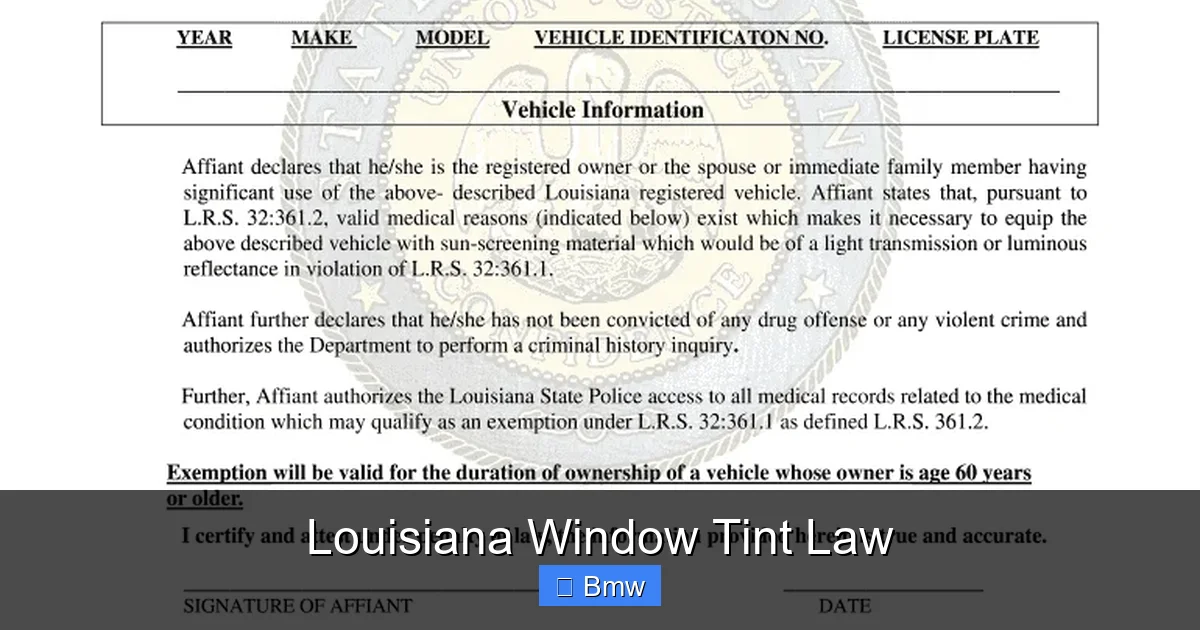
Louisiana does not have a statewide medical exemption provision for window tint laws. Unlike some states that have a formal application process through the DMV or a physician’s statement, Louisiana’s law does not include this exception. A doctor’s note is not a valid legal defense if your tint is measured below the VLT limit. Law enforcement officers are not required to accept medical documentation on the spot. This is a critical point for anyone with a legitimate health need for darker glass.
What About Vehicles with Factory Dark Tint?
Some vehicles, particularly luxury models like certain BMWs, may have factory-installed privacy glass on the rear windows that is darker than 70% VLT. This is legal because it was installed by the manufacturer before the vehicle was sold. The law applies to *aftermarket* modifications. However, if you own a used vehicle with dark factory rear glass and you add aftermarket tint to the front windows, you must ensure the front meets the >70% VLT rule. The factory rear tint is grandfathered in.
Practical Tips for Louisiana Drivers: Get It Right the First Time
Armed with the law, here’s how to navigate the tinting process smoothly.
Choose a Reputable, Knowledgeable Installer
This is the most important step. Do not go to a random shop. Find a tint shop in Louisiana that is familiar with state-specific laws. A good installer will:
- Know the exact VLT limits for your specific vehicle type (car vs. SUV).
- Use high-quality film with documented VLT ratings.
- Provide a clear, signed certificate of compliance with the final VLT for each window.
- Advise you on the best film for Louisiana’s hot, sunny climate (consider ceramic films for superior heat rejection).
Always Get a VLT Certificate
Never leave the shop without the official certificate. It should list your car’s VIN and the VLT for each window. Keep it in your glove compartment. It’s your first line of defense if you are questioned.
Use a Tint Meter Yourself (Optional but Reassuring)
You can purchase an inexpensive handheld tint meter online for $20-$50. After your tint is installed, test each window yourself. This gives you peace of mind and documented proof of compliance before you ever hit the road. It’s a small investment to avoid a major headache.
Understand the “Total VLT” Concept
If your car already has factory tint (e.g., 80% VLT on rear windows) and you add aftermarket tint (e.g., 20% VLT film), the combined darkness is NOT 20%. The two layers multiply. 80% VLT * 20% VLT = 16% total VLT. A professional installer will calculate this for you to ensure the final result on any window, especially if layering over factory tint, stays within legal limits. This is a common pitfall.
Special Note for BMW Owners
BMW vehicles often come with excellent factory glass, but the factory tint on rear windows of many models is around 70-75% VLT. If you want darker rear privacy on your BMW SUV, you can legally add a darker film. However, if you have a BMW sedan and want to tint the rear windows darker, you can do so since there’s no limit. Just remember the front doors must remain at >70% VLT. Some BMW models have advanced driver-assistance system (ADAS) cameras or sensors behind the windshield; always inform your installer to avoid interference with these systems.
Conclusion: Stay Legal, Stay Cool
Navigating the Louisiana window tint law doesn’t have to be complicated. The key takeaways are simple: for the front side windows of any vehicle, you must have very light tint (over 70% VLT). For all other windows on standard cars and SUVs, you have the freedom to choose any darkness you desire for privacy and heat rejection. Always work with a professional installer who provides a VLT certificate, and never assume your factory tint plus aftermarket film will be legal without a calculation. By following these guidelines, you can enjoy the benefits of window tint—reduced glare, cooler cabin temperatures, and enhanced aesthetics—without the risk of a ticket. Remember, when in doubt, check your certificate and keep it handy. For a broader perspective on how Louisiana’s rules compare, you can explore the comprehensive window tint laws by state updated 2026 to see where Pelican State regulations stand.
Frequently Asked Questions
What is the darkest legal tint for front windows in Louisiana?
For both passenger cars and SUVs, the front side windows must allow more than 70% of visible light to pass through (VLT > 70%). This is a very light tint, essentially at or near the factory tint level. Any darker is illegal.
Can I get a medical exemption for darker window tint in Louisiana?
No. Louisiana state law does not provide for medical exemptions for window tint. A doctor’s note is not a valid legal defense if your tint is measured below the statutory VLT limit. All vehicle owners are held to the same VLT standards.
What are the penalties for having illegal window tint in Louisiana?
First-time offenses typically result in a “fix-it” ticket. You will be given a deadline (often 30 days) to remove or replace the illegal tint and provide proof of correction to the court. Failure to comply can lead to increased fines (up to $100) and court costs.
Is reflective or mirrored window tint legal in Louisiana?
Reflective tint is legal as long as it does not exceed 20% reflectivity. Highly mirrored or chrome finishes that reflect more than 20% of light are prohibited on side windows. The law focuses on the amount of light reflected, not the color of the reflective layer.
How is window tint darkness measured by police in Louisiana?
Law enforcement officers use a handheld device called a VLT meter. It is placed on the inside of the window and emits a light that passes through the glass and tint. The meter calculates the percentage of light that makes it through, providing an objective measurement of the window’s Visible Light Transmission.
Do out-of-state vehicles with tint need to comply with Louisiana law while visiting?
Yes. When operating a vehicle in Louisiana, it must comply with Louisiana’s vehicle equipment laws, including window tint regulations. If your out-of-state vehicle has tint darker than Louisiana allows on the front side windows, you could be cited if stopped by law enforcement.