Kentucky Window Tint Law

Contents
- 1 Key Takeaways
- 2 📑 Table of Contents
- 3 Understanding the Language: What is VLT and Why Does It Matter?
- 4 Kentucky’s Specific VLT and Reflectivity Requirements
- 5 Special Considerations: Medical Exemptions and Factory Tint
- 6 Enforcement, Penalties, and What to Do If You Get a Ticket
- 7 Practical Tips for Kentucky Drivers: Getting Compliant Tint
- 8 Conclusion: Stay Cool, Stay Legal, Enjoy the Ride
- 9 Frequently Asked Questions

Car Hydraulic Jack
Wiper Blade Refills
Side Window Sunshade

Car Wireless Charger Mount
Kentucky’s window tint law is strict and specific, dictating exactly how dark your vehicle’s windows can be based on VLT (Visible Light Transmission) percentages. Different rules apply to front, back, and side windows for sedans versus SUVs/vans. Violations can lead to fines, mandatory tint removal, and even court appearances. Always verify your tint’s compliance with Kentucky’s exact regulations before installation to avoid costly penalties and ensure safety.
So, you’re thinking about tinting your car windows. Maybe you drive a sleek BMW 3 Series through the Bluegrass State and want to cut the Kentucky sun, add some privacy, or just give your ride a sharper look. That’s a great plan! But before you hand over your keys to any installer, you need to become an expert on one thing: Kentucky window tint law. Think of this guide as your friendly, no-nonsense roadmap to staying legal, avoiding tickets, and getting the tint you actually want. We’ll break down the confusing percentages, explain the rules for your specific vehicle type, and share real-world tips that save you time and money.
Let’s be clear: Kentucky doesn’t play around when it comes to window tint. The laws are specific, enforced by local police and state troopers, and the penalties for non-compliance are real. But here’s the good news—once you understand the rules, you can confidently choose a tint level that looks fantastic and keeps you on the right side of the law. Whether you’re a new driver or a seasoned car enthusiast, this article will walk you through everything from VLT numbers to what to do if you get pulled over. We’ll even touch on how these laws apply to popular vehicles like BMWs, which often have complex factory glass.
Key Takeaways
- VLT is the Key Metric: Kentucky law measures tint darkness by Visible Light Transmission (VLT) percentage. A lower percentage means darker tint. All windows except the front windshield must allow the legally mandated amount of light through.
- Front Side Windows Must Be Very Light: For both sedans and SUVs/vans, the front driver and passenger side windows must allow more than 35% of light in (VLT > 35%). This is a non-negotiable rule.
- Back Side & Rear Windows Have More Flexibility: Rear side windows and the rear window can be darker. For sedans, they must also allow over 35% light. For SUVs/vans, there is no minimum VLT requirement—these windows can be as dark as you want.
- Windshield Tinting is Highly Restricted: Non-reflective tint is only permitted on the top 5 inches of the windshield (the AS-1 line). Tinting below this line on the entire windshield is illegal.
- Reflectivity Limits Apply: Kentucky prohibits tints that are more than 25% reflective on any window. This prevents mirror-like finishes that can blind other drivers.
- Medical Exemptions are Possible but Limited: Certain medical conditions (like lupus or xeroderma pigmentosum) may qualify for an exemption, but you must carry a signed physician’s statement in your vehicle at all times. The front side window VLT limit of 35% still applies.
- Enforcement is Active & Penalties Add Up: Police use tint meters to check compliance. First offenses are typically a fine and a “fix-it” ticket to remove illegal tint. Repeat offenses can lead to higher fines and court costs.
📑 Table of Contents
- Understanding the Language: What is VLT and Why Does It Matter?
- Kentucky’s Specific VLT and Reflectivity Requirements
- Special Considerations: Medical Exemptions and Factory Tint
- Enforcement, Penalties, and What to Do If You Get a Ticket
- Practical Tips for Kentucky Drivers: Getting Compliant Tint
- Conclusion: Stay Cool, Stay Legal, Enjoy the Ride
Understanding the Language: What is VLT and Why Does It Matter?
Before we dive into the specific percentages, we need to decode the jargon. The single most important term in any window tint law is VLT, which stands for Visible Light Transmission. Simply put, VLT is the percentage of visible light that passes through your window glass and tint film combined. A VLT of 50% means half the outside light gets in, making it a medium-light tint. A VLT of 5% is a limo tint, where only 5% of light enters, making it extremely dark.
Kentucky, like most states, sets its laws based on this VLT number. The law doesn’t care about the brand of film or how many layers you use; it only cares about the final, installed VLT percentage. This is crucial because factory glass already has a slight tint. When you add aftermarket film, the total VLT is a combination of the factory glass VLT and the new film’s VLT. For example, if your BMW’s factory glass has a VLT of 80% (very light) and you add a 20% film, the total VLT isn’t 20%—it’s darker. You multiply the percentages (0.80 * 0.20 = 0.16), resulting in a combined VLT of about 16%. This math is why professional installation with a meter is so important. If you’re curious about what different percentages look like in real life, check out our detailed guide on window tint percentage examples.
The Critical Difference: Sedans vs. SUVs/Vans
This is where many people get tripped up. Kentucky law makes a clear distinction between passenger vehicles (sedans) and multi-purpose vehicles (SUVs, vans, and trucks). The rules for the rear windows are completely different. Why? The logic is that sedans have a trunk, so items in the back are generally not visible from the outside, but SUVs/vans often have cargo areas directly behind the rear seats, so lawmakers allow for darker rear privacy glass. You must know your vehicle’s classification to apply the correct rules.
Kentucky’s Specific VLT and Reflectivity Requirements
Now for the meat of the law. Here are the exact VLT and reflectivity rules for all windows on vehicles registered in Kentucky. Remember: these are minimum light transmission requirements (except where noted).
Visual guide about Kentucky Window Tint Law
Image source: static.wixstatic.com
Front Windshield
This is the most restricted window. Kentucky law is very clear: non-reflective tint is permitted only on the top 5 inches of the windshield. This is typically marked by the factory’s AS-1 line (a small etching near the top). Tint applied below this line on the entire windshield is a straight-up violation. You cannot tint the driver’s primary viewing area. Many people use a narrow “stripe” at the top to reduce glare, but that’s the absolute limit.
Front Side Windows (Driver & Passenger)
This rule is simple and applies to ALL vehicle types—sedans, SUVs, vans, everything. The combined VLT of the factory glass and aftermarket film must be greater than 35%. In other words, your front side windows must let in more than 35% of light. They cannot be 35% or darker; they must be lighter than 35%. A common legal choice is a 50% film on factory glass that’s around 70-80%, resulting in a legal 35-40% total VLT. If your front windows are too dark, you will be pulled over. Period.
Rear Side Windows & Rear Window
Here is where the vehicle type matters:
- For Sedans: The rear side windows and the rear window (back glass) must also allow more than 35% of light to pass through (VLT > 35%). You cannot have a “limo” tint on the entire rear of a sedan. This is a common mistake.
- For SUVs, Vans, and Trucks: There is NO minimum VLT requirement. The rear side windows and rear window can be any darkness you choose, including 5% limo tint. This is the big perk of owning an SUV in Kentucky.
Reflectivity Limits
Darkness isn’t the only factor. Kentucky also limits how reflective your tint can be. The law states that no window may have a luminous reflectance of more than 25% in the forward or backward direction. In practice, this means you cannot use a highly mirrored or “chrome” tint film that acts like a mirror. Most standard dyed or carbon films are well under this 25% threshold, but it’s something to confirm with your installer. Metallic films can sometimes have higher reflectivity.
Special Considerations: Medical Exemptions and Factory Tint
The law isn’t completely rigid. There are two important exceptions and considerations you should know about.
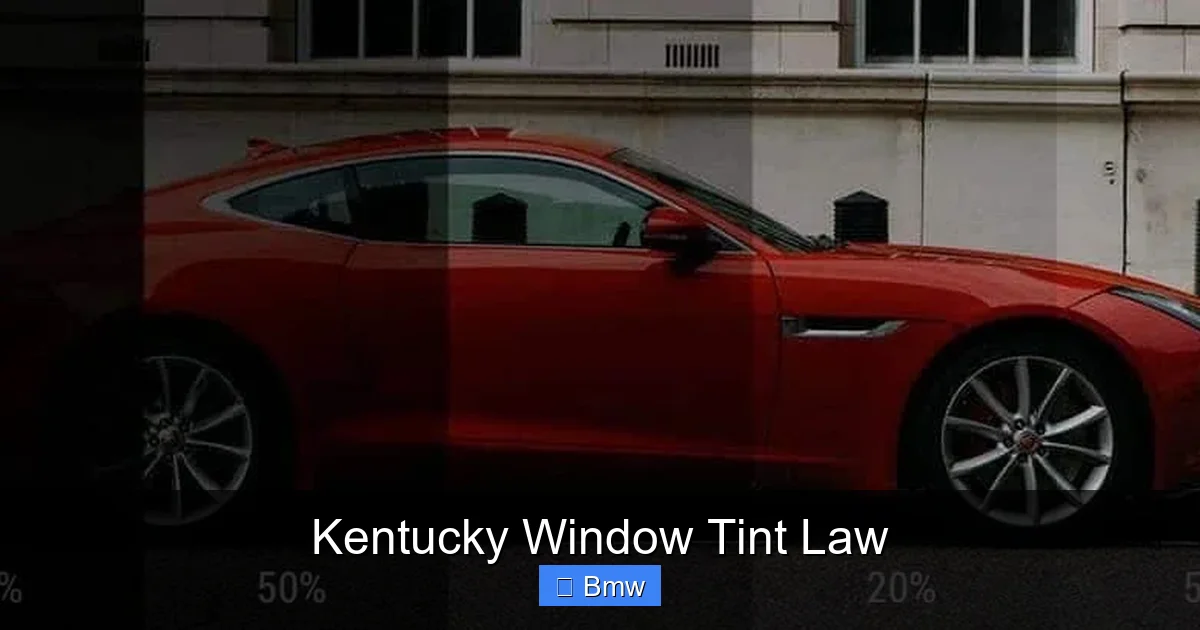
Visual guide about Kentucky Window Tint Law
Image source: low-offset.com
Medical Exemption Process
Kentucky recognizes that certain medical conditions require protection from sunlight. Conditions like systemic lupus erythematosus, xeroderma pigmentosum, porphyria, or severe photosensitivity may qualify for an exemption. To get one, you must:
- Obtain a signed statement from a licensed physician (MD or DO) on official letterhead.
- The statement must identify the medical condition and state that tint darker than the legal limit is medically necessary.
- You must carry this signed statement in your vehicle at all times.
- Important: Even with a medical exemption, the front side window VLT limit of 35% still applies. The exemption only applies to the rear windows. You cannot legally have darker than 35% VLT on your front driver/passenger windows, even with a doctor’s note.
Navigating Factory Tint (Privacy Glass)
Many modern vehicles, including many BMW models, come from the factory with a slight tint on the rear windows (and sometimes all around). This is called “privacy glass” and is baked into the glass during manufacturing. Kentucky law explicitly states that factory-installed tint does not have to meet the aftermarket VLT limits for rear windows on SUVs/vans. However, if you add aftermarket film over factory tint, the combined VLT must still meet the legal minimum for your vehicle type. For a sedan, even with factory 20% rear glass, adding a 20% film would likely make the total VLT too dark (around 4%), which is illegal. You must factor the factory tint into your film choice. A reputable installer will measure your factory glass VLT with a meter before recommending a film.
Enforcement, Penalties, and What to Do If You Get a Ticket
Kentucky State Police and local law enforcement actively enforce window tint laws. They use handheld devices called tint meters to measure the exact VLT of your windows during traffic stops. It’s not just a visual guess.

Visual guide about Kentucky Window Tint Law
Image source: low-offset.com
Typical Penalties for a First Offense
If your tint is found to be illegal, you will likely receive a citation. For a first offense, the common outcome is:
- A monetary fine (amount varies by county/city, often $50-$150).
- A “fix-it” ticket or court date where you must show proof that the illegal tint has been removed or replaced with compliant film.
- The officer may issue a “Notice to Appear” in court, where you’ll explain the situation to a judge.
The goal for the state is compliance, not just punishment. They want you to make the tint legal. However, ignoring the ticket or failing to correct the issue leads to bigger problems.
Repeat Offenses and Court Costs
If you are cited again for tint violations within a short period (e.g., a year), the fines typically increase. You may also face additional court costs and fees. In some cases, a judge could order you to pay for the removal of the tint. The biggest headache is the time and hassle of going to court. It’s far easier and cheaper to get it right the first time.
If you do get a ticket, don’t argue with the officer on the spot. Politely accept the citation. Your best move is to consult with a tint shop immediately. They can re-test your windows and, if the tint is indeed illegal, often offer to remove or replace it for a reduced rate to help you comply before your court date. Having a receipt from a professional shop showing the new, legal tint can go a long way with a judge. You can also read more about the potential costs of a window tint ticket to understand the full financial impact.
Practical Tips for Kentucky Drivers: Getting Compliant Tint
Knowledge is power, but action is everything. Here’s your step-by-step plan to get great-looking, legal window tint in Kentucky.
Step 1: Know Your Vehicle’s Classification
Is your BMW a sedan (like a 3 Series, 5 Series, 7 Series) or an SUV (X3, X5, X7)? This determines the rear window rules. If you’re unsure, your vehicle’s registration or a quick VIN decoder will tell you. This is your first and most critical check.
Step 2: Find a Reputable, Knowledgeable Installer
Do not go to a random shop or a cheap mobile tinter who doesn’t know state laws. Search for shops with excellent reviews that specifically mention “legal tint” or “state-compliant.” A professional shop in Kentucky should:
- Own a calibrated, professional-grade tint meter.
- Know the Kentucky Revised Statutes (KRS) on tint by heart.
- Be willing to measure your factory glass VLT first.
- Recommend a film percentage that will result in a total VLT over 35% for your front sides and, if you have a sedan, your rear windows.
- Offer a warranty on both the film and the installation.
Step 3: Get a Written Quote and Guarantee
Before any work starts, get a detailed quote. It should list the exact film percentage to be applied to each window. More importantly, ask for a written guarantee from the shop that the final installed VLT will meet Kentucky law. This protects you if they install the wrong film. The cost of professional tinting varies, but this guarantee is worth any price difference.
Step 4: After Installation, Get a Certificate of Compliance
A top-tier shop will provide you with a certificate or receipt that states the film used and its VLT rating. Some even have a meter reading sheet showing the VLT on each window after installation. Keep this document in your glove compartment. If you are ever pulled over, you can present this as proof that you had the tint installed by a professional who assured compliance. It won’t stop a meter test, but it shows good faith.
Remember, high-quality films from brands like 3M, Llumar, or SunTek not only last longer but also offer better UV protection, heat rejection, and clarity. Cheaper, unknown films can bubble, fade to purple, and peel, creating an eyesore and another violation. For how long a good tint lasts, see our article on tint longevity.
Conclusion: Stay Cool, Stay Legal, Enjoy the Ride
Kentucky window tint law isn’t a mystery; it’s a set of clear, measurable rules. The core principle is this: front side windows must be light (over 35% VLT) for everyone, and rear window darkness depends on whether you drive a sedan or an SUV. Avoid the mirrored look, skip the windshield below the AS-1 line, and consider a medical exemption only if you truly qualify and understand its limits.
The path forward is simple. Identify your vehicle type. Find a trusted, local installer who uses a meter and knows Kentucky law. Get a guarantee in writing. This small amount of upfront work saves you from the major headache of a traffic stop, a court date, and the cost of removing illegal tint. Your BMW or any other car deserves to look its best, and that best look is a legal one. So, do your homework, choose wisely, and enjoy the shade on Kentucky’s roads with complete peace of mind.
Frequently Asked Questions
Can I tint my entire windshield in Kentucky?
No. Kentucky law only allows non-reflective tint on the top 5 inches of the windshield, typically along the AS-1 line. Tinting any portion below this line is illegal.
What is the darkest legal tint I can put on my front windows in Kentucky?
The front driver and passenger side windows must allow more than 35% of light to pass through. You cannot use a 35% film or darker on these windows, as the combined VLT with your factory glass will be too low. Aim for a film that, when combined with your glass, results in a total VLT of 36% or higher.
I have an SUV. Can I make my rear windows completely black?
Yes. For SUVs, vans, and trucks classified as multi-purpose vehicles, Kentucky has no minimum VLT requirement for the rear side windows and rear window. You can legally install a 5% “limo” tint on all rear glass.
How does Kentucky law treat factory-tinted (privacy) glass?
Factory-installed tint is grandfathered in. However, if you add aftermarket film over it, the combined VLT of the factory glass plus the new film must meet the legal minimum for your vehicle type. For a sedan, the total rear VLT must still be over 35%.
What happens if I get pulled over for illegal tint in Kentucky?
An officer will use a tint meter to measure your windows. For a first offense, you will likely receive a citation with a fine and a “fix-it” order. You must then remove or replace the illegal tint and show proof of correction, often by a specified court date.
Are there any window colors or finishes that are illegal besides darkness?
Yes. Kentucky prohibits any window tint that has a luminous reflectance of more than 25%. This means highly reflective, mirror-like, or chrome-style films are illegal on any window. Stick to standard dyed, carbon, or ceramic films which are non-reflective.