
Is It Cheaper to Lease or Buy a Car?

Deciding whether to lease or buy a car depends on your budget, driving habits, and long-term goals. While leasing offers lower monthly payments and the latest models, buying builds equity and saves money over time—especially with luxury brands like Lexus.
[FEATURED_IMAGE_PLACEOLDER]
Key Takeaways
- Leasing offers lower monthly payments: Ideal for those who want a new Lexus every few years without a large upfront cost.
- Buying builds long-term value: Once the loan is paid off, you own the car and avoid ongoing payments.
- Mileage limits affect leasing: Most leases cap annual mileage (typically 10,000–15,000), with fees for excess use.
- Wear and tear matters in leasing: Excessive damage can result in additional charges at lease end.
- Lexus Certified Pre-Owned (CPO) programs: Offer a middle ground with lower prices and extended warranties.
- Tax and insurance differences: Leasing may offer tax benefits for business use; insurance costs vary by ownership type.
- Personal preference plays a role: Tech lovers may prefer leasing, while long-term planners often choose buying.
📑 Table of Contents
- Is It Cheaper to Lease or Buy a Car? A Complete Guide for Lexus Owners
- Understanding the Basics: Leasing vs. Buying
- Cost Breakdown: Monthly Payments, Fees, and Hidden Expenses
- Long-Term Financial Impact: Which Option Saves More?
- Driving Habits and Lifestyle: Which Option Fits You?
- Lexus-Specific Considerations: Why Brand Matters
- Real-Life Scenarios: Which Choice Makes Sense?
- Tips to Save Money Whether You Lease or Buy
- Conclusion: So, Is It Cheaper to Lease or Buy a Car?
Is It Cheaper to Lease or Buy a Car? A Complete Guide for Lexus Owners
So, you’ve decided it’s time for a new car—and not just any car, but a Lexus. You’re drawn to the smooth ride, premium interior, and reputation for reliability. But now comes the big question: should you lease or buy?
It’s a decision that affects your wallet, your lifestyle, and even your future car choices. And with Lexus offering everything from the compact UX to the luxurious LS sedan, the stakes feel even higher. The good news? You’re not alone in wondering whether leasing or buying is the smarter financial move.
This guide will walk you through everything you need to know—no jargon, no fluff. We’ll break down the real costs, hidden fees, and long-term implications of each option, all through the lens of owning or leasing a Lexus. Whether you’re eyeing a sleek ES Hybrid or a rugged RX SUV, this article will help you make a confident, informed decision.
Understanding the Basics: Leasing vs. Buying

Visual guide about Is It Cheaper to Lease or Buy a Car?
Image source: ppasanfrancisco.com
Before diving into numbers and models, let’s clarify what leasing and buying actually mean.
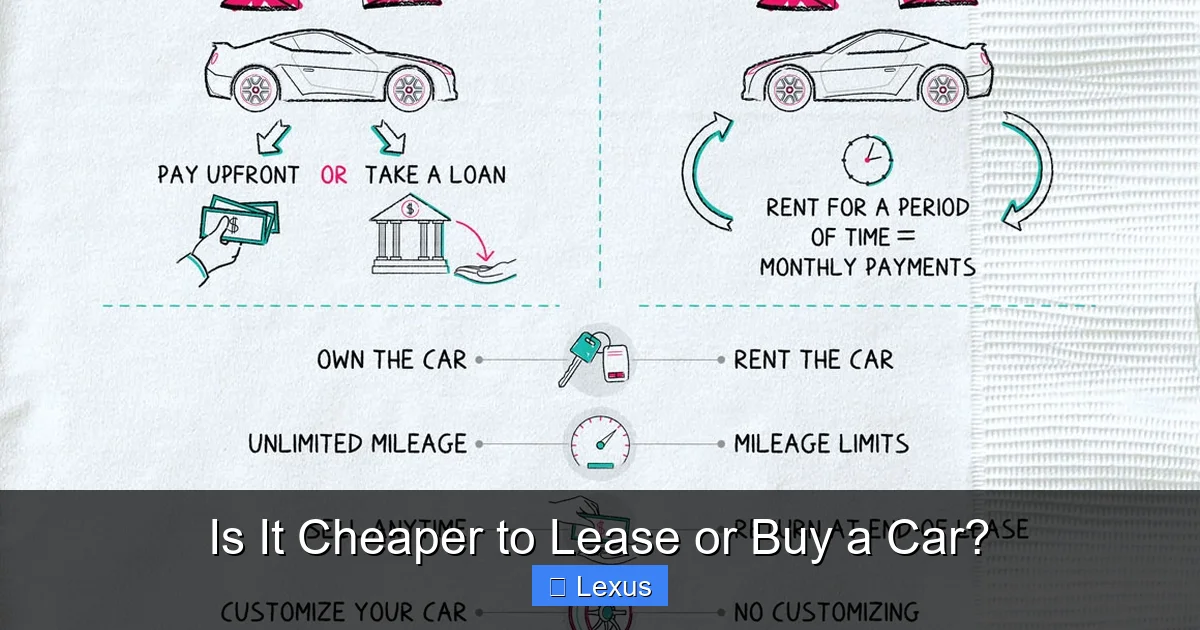
When you buy a car, you’re purchasing it outright—either with cash or through a loan. Over time, you pay off the vehicle’s full value plus interest. Once the loan is paid, the car is yours to keep, sell, or trade in. You’re responsible for maintenance, repairs, and depreciation, but you build equity in the vehicle.
When you lease a car, you’re essentially renting it for a fixed period—usually 24 to 36 months. You pay for the car’s depreciation during that time, plus fees and interest. At the end of the lease, you return the car (assuming you meet mileage and condition requirements) or have the option to buy it at a predetermined price.
For Lexus drivers, both options come with unique perks. Lexus vehicles are known for their durability and high resale value, which can influence whether leasing or buying makes more sense. But the “cheaper” choice isn’t always obvious. It depends on how you drive, how long you plan to keep the car, and what matters most to you—flexibility or ownership.
How Lexus Stacks Up in the Lease vs. Buy Debate
Lexus stands out in the luxury segment for several reasons that affect leasing and buying decisions:
– Strong Resale Value: Lexus vehicles typically hold their value better than many competitors. This means lower depreciation, which can make leasing more affordable.
– Reliability: With fewer mechanical issues over time, Lexus cars often require less maintenance, reducing long-term ownership costs.
– Lease Incentives: Lexus Financial Services frequently offers attractive lease deals, including low money factors (the lease equivalent of interest rates) and waived fees.
– Certified Pre-Owned Program: If you want to buy but save money, Lexus CPO vehicles come with extended warranties and rigorous inspections.
These factors tilt the scale in favor of both leasing and buying, depending on your priorities. But to truly understand which is cheaper, we need to look at the numbers.
Cost Breakdown: Monthly Payments, Fees, and Hidden Expenses
Visual guide about Is It Cheaper to Lease or Buy a Car?
Image source: napkinfinance.com
Let’s get into the nitty-gritty. What does it actually cost to lease or buy a Lexus?
Monthly Payments: The Most Obvious Difference
One of the biggest selling points of leasing is the lower monthly payment. Because you’re only paying for the car’s depreciation during the lease term—not the entire value—your monthly cost is typically 20% to 40% lower than a loan payment for the same model.
For example, a 2024 Lexus ES 350 has a starting MSRP of around $43,000. Here’s how the payments might compare:
– Lease (36 months, 12,000 miles/year): ~$450–$550/month
– Loan (60 months, 5.9% APR): ~$800–$900/month
That’s a difference of $300–$400 per month—money that could go toward savings, vacations, or other expenses.
But here’s the catch: once your lease ends, those payments stop… but then you’re back to square one. You don’t own the car, and you’ll need to lease or buy another vehicle. With a loan, those higher payments eventually lead to ownership.
Down Payments and Fees
Both leasing and buying require upfront costs, but they differ in structure.
When you lease, you’ll typically pay:
– A down payment (sometimes called a “cap cost reduction”)
– First month’s payment
– Security deposit (often refundable)
– Acquisition fee (around $700–$1,000)
– Title, registration, and taxes
Some dealers offer “sign-and-drive” leases with $0 down, but this usually means higher monthly payments.
When you buy, you’ll pay:
– Down payment (usually 10%–20% of the car’s value)
– Loan origination fees
– Title, registration, and taxes
– Possibly a documentation fee
Lexus Financial Services often runs promotions that reduce or waive certain fees, especially on leases. But it’s important to read the fine print—some “low payment” deals come with balloon payments or strict terms.
Hidden Costs: What They Don’t Always Tell You
Beyond the sticker price and monthly payments, there are other expenses to consider.
For lessees:
– Mileage overages: Most leases allow 10,000 to 15,000 miles per year. Exceeding that can cost $0.15 to $0.25 per mile. If you drive 18,000 miles in a year on a 12,000-mile lease, that’s 6,000 extra miles × $0.20 = $1,200 in fees.
– Wear and tear: Scratches, dents, or stained upholstery can trigger charges at lease return. While normal wear is expected, excessive damage isn’t.
– Disposition fee: When you return the car, you may pay a fee of $300–$500 to cover inspection and reconditioning.
For buyers:
– Depreciation: Even though you own the car, it loses value the moment you drive it off the lot. A $50,000 Lexus might be worth $35,000 after three years.
– Maintenance and repairs: While Lexus is reliable, older models will need more service. Out-of-warranty repairs can add up.
– Opportunity cost: The money tied up in a car loan could be invested elsewhere. If you put $10,000 down on a car, that’s $10,000 not earning interest in a savings account or stock market.
Long-Term Financial Impact: Which Option Saves More?

Visual guide about Is It Cheaper to Lease or Buy a Car?
Image source: paypant.com
Now let’s look beyond the monthly payment and consider the total cost over time.
Leasing Over 10 Years: The Cycle of Payments
Imagine you lease a Lexus every three years for a decade. Here’s a rough estimate:
– 3 leases × $500/month × 36 months = $54,000
– Plus fees, overages, and potential buyout costs
You’ll never own a car, and you’ll always have a car payment. But you’ll always drive a new model with the latest safety features, infotainment, and warranty coverage.
Buying and Keeping: The Path to Ownership
Now consider buying a Lexus and keeping it for 10 years:
– Purchase price: $50,000
– Loan: $900/month × 60 months = $54,000 (includes interest)
– After 5 years: You own the car outright
– Years 6–10: Only maintenance and insurance costs (~$1,500–$2,500/year)
Total cost over 10 years: ~$69,000–$74,000
But here’s the kicker: after 10 years, you still have a car worth something—maybe $10,000–$15,000 if it’s well-maintained. You can sell it or trade it in, recouping some of your investment.
So while the upfront cost is higher, buying can be cheaper in the long run—especially if you keep the car beyond the loan term.
The Break-Even Point
For many drivers, the break-even point between leasing and buying happens around years 5 to 7. Before that, leasing is often cheaper month-to-month. After that, owning becomes the better financial move.
But this depends on:
– How much you drive
– How well you maintain the car
– Whether you trade in or keep it long-term
– Interest rates and lease terms
Lexus’s strong resale value helps buyers recoup more at trade-in, tipping the scale slightly in favor of ownership for long-term drivers.
Driving Habits and Lifestyle: Which Option Fits You?
Money isn’t the only factor. Your lifestyle plays a huge role in whether leasing or buying makes sense.
High Mileage Drivers: Buy or Lease with Caution
If you drive more than 15,000 miles a year—maybe for work, road trips, or a long commute—leasing can get expensive fast. Those mileage overages add up, and you’ll pay for them whether you drive 16,000 or 20,000 miles.
Buying gives you freedom. No mileage limits, no penalties. And with Lexus’s reputation for longevity, many models can easily surpass 200,000 miles with proper care.
Tech Enthusiasts and Early Adopters
Love having the latest features? Leasing lets you upgrade every few years. You’ll always have the newest infotainment system, driver-assist tech, and design updates.
Lexus frequently refreshes its lineup, so leasing a 2024 RX this year could mean driving a 2027 model in three years—with better fuel efficiency, updated safety tech, and a fresh interior.
But if you’re happy with your car for 8–10 years, buying lets you enjoy it without the pressure to upgrade.
Business Use and Tax Implications
If you use your Lexus for business, leasing can offer tax advantages. In the U.S., you may be able to deduct a portion of lease payments as a business expense—especially if the car is used more than 50% for work.
Buying also offers deductions, but they’re more complex and often limited to depreciation schedules. Consult a tax professional, but leasing can be more straightforward for business use.
Emotional Factors: Pride of Ownership
Let’s be honest—owning a car feels different. You can customize it, keep it as long as you want, and feel a sense of accomplishment when the loan is paid off.
Leasing feels more transactional. You’re always “renting,” and there’s no emotional payoff at the end.
For some, that’s fine. For others, it’s a dealbreaker.
Lexus-Specific Considerations: Why Brand Matters
Not all cars are created equal when it comes to leasing vs. buying. Lexus has unique advantages that influence the decision.
Lexus Certified Pre-Owned (CPO) Program
If you want to buy but save money, Lexus CPO is a game-changer. These are late-model, low-mileage vehicles that have passed a 161-point inspection and come with:
– Up to 6 years/unlimited miles warranty (from original in-service date)
– 2 years of complimentary maintenance
– 24/7 roadside assistance
– CARFAX Vehicle History Report
A 2022 Lexus NX 350 CPO might cost $45,000—$10,000 less than new—with nearly the same warranty. That’s a sweet spot between leasing and buying new.
Lexus Financial Services Incentives
Lexus often runs special financing and lease offers, such as:
– 0.9% APR for 60 months on select models
– $1,000 loyalty bonus for returning lessees or owners
– Waived acquisition fees on leases
These can make leasing or buying more attractive depending on the promotion. Always check current offers before deciding.
Depreciation: Lexus Holds Its Value
According to industry data, Lexus vehicles retain about 55%–60% of their value after three years—better than the industry average of 45%–50%. This strong resale value means:
– Lower depreciation costs for lessees
– Higher trade-in or resale value for buyers
In practical terms, this makes leasing a Lexus more affordable and buying a smarter long-term investment.
Real-Life Scenarios: Which Choice Makes Sense?
Let’s look at three common situations to see how leasing and buying play out.
Scenario 1: The Urban Professional
Sarah, 32, lives in Chicago and drives 10,000 miles a year. She loves new tech and wants a reliable, stylish car for commuting and weekend trips.
– Best option: Lease a Lexus UX Hybrid
– Why: Low mileage fits lease limits. She’ll enjoy low payments, full warranty coverage, and can upgrade in three years. The hybrid saves on gas, and she avoids long-term maintenance.
Scenario 2: The Family Road-Tripper
Mike and Lisa have two kids and drive 18,000 miles a year for soccer games, vacations, and visits to grandparents.
– Best option: Buy a Lexus RX 350
– Why: High mileage would trigger lease overage fees. Buying lets them drive freely. The RX’s space and reliability make it ideal for family life. After 8 years, they can sell it for a good price.
Scenario 3: The Retiree on a Fixed Income
Robert, 68, drives 7,000 miles a year. He wants a comfortable, safe car but doesn’t want high monthly payments.
– Best option: Buy a used Lexus ES 350 CPO
– Why: Low mileage and fixed income make ownership ideal. No monthly payments after the loan is paid. The CPO warranty gives peace of mind. He can keep the car for 10+ years.
Tips to Save Money Whether You Lease or Buy
No matter which path you choose, these tips can help you save:
– Negotiate the capitalized cost: Whether leasing or buying, the price you pay for the car affects your payments. Negotiate the out-the-door price just like you would with a purchase.
– Put money down (but not too much): A larger down payment lowers monthly costs, but avoid putting so much that you’re “upside down” on the loan or lease.
– Choose the right term: Shorter leases (24 months) have higher monthly payments but lower total cost. Longer loans (72+ months) reduce payments but increase interest.
– Maintain your car: Regular oil changes, tire rotations, and detailing help avoid wear-and-tear charges and preserve resale value.
– Shop around: Compare offers from multiple Lexus dealers. Incentives vary by region and time of year.
Conclusion: So, Is It Cheaper to Lease or Buy a Car?
There’s no one-size-fits-all answer. Leasing is often cheaper in the short term, with lower monthly payments and the joy of driving a new Lexus every few years. It’s ideal for low-mileage drivers, tech lovers, and those who prefer predictable costs.
Buying is usually cheaper in the long run, especially if you keep the car beyond the loan term. You build equity, avoid mileage limits, and enjoy the freedom of ownership. With Lexus’s reliability and strong resale value, buying can be a smart financial move.
The best choice depends on your budget, driving habits, and personal preferences. If you’re unsure, consider a Lexus CPO—it offers the best of both worlds: lower price, full warranty, and no lease restrictions.
Ultimately, whether you lease or buy, driving a Lexus is a pleasure. Make the decision that fits your life—and enjoy the ride.
Frequently Asked Questions
Is it better to lease or buy a Lexus?
It depends on your needs. Leasing offers lower payments and new models every few years, while buying builds equity and saves money long-term. Lexus’s strong resale value makes both options viable.
How many miles can I drive on a Lexus lease?
Most Lexus leases allow 10,000 to 15,000 miles per year. Exceeding this limit results in fees of $0.15 to $0.25 per mile, so choose a mileage allowance that matches your driving habits.
Can I buy my leased Lexus at the end of the term?
Yes, you can purchase your leased Lexus at the end of the term for the predetermined residual value. This is often a good deal if the car is in great condition and you want to keep it.
Are Lexus lease payments tax-deductible?
If you use the car for business, you may deduct a portion of lease payments. The exact amount depends on business use percentage. Consult a tax advisor for specifics.
What happens if I return a leased Lexus with damage?
Normal wear is expected, but excessive damage (deep scratches, dents, interior stains) may result in charges. Regular maintenance and care can help avoid these fees.
Is a Lexus CPO a good alternative to leasing or buying new?
Yes. Lexus CPO vehicles offer lower prices, extended warranties, and rigorous inspections. They’re ideal for buyers who want reliability and value without the new-car price tag.
