Is It a Good Time to Buy a Car?

Contents
- 1 Key Takeaways
- 2 📑 Table of Contents
- 3 Understanding the Current Automotive Landscape
- 4 The Personal Finance Checkpoint: Are You Ready?
- 5 New vs. Used: Where Are the Deals Today?
- 6 Seasonal and Calendar Timing: Can You Game the System?
- 7 Negotiation and the Buying Process: Your Action Plan
- 8 Long-Term Thinking: Beyond the Purchase Price
- 9 Conclusion: Is It a Good Time for YOU?
- 10 Frequently Asked Questions


Deciding if it’s a good time to buy a car depends more on your personal financial situation and needs than on trying to time the market perfectly. While factors like inventory shortages and interest rates create challenges, a well-researched purchase can still be smart. Focus on your budget, credit score, and the total cost of ownership rather than waiting for a mythical “perfect” moment. Preparation and knowledge are your best tools for making a sound decision, regardless of external conditions.
Let’s be honest: the question “Is it a good time to buy a car?” feels more complicated than ever. You’ve heard about chip shortages, sky-high used car prices, and shifting interest rates. Dealerships have “sold out” signs on lots, and your friend got a deal two years ago that seems impossible today. It’s enough to make anyone throw their hands up and keep driving their clunker for another year.
But here’s the thing. While the macro market creates a backdrop, your personal financial health and specific needs are the stars of the show. Trying to perfectly time a volatile market is a fool’s errand. Instead, the smart approach is to understand the current forces at play, assess your own situation with clear eyes, and make a strategic move when you’re prepared. This article isn’t about predicting the future; it’s about giving you the framework to decide what’s right for you, right now.
Key Takeaways
- Your Need vs. Want is Primary: The best time to buy is when you truly need a reliable vehicle and have prepared financially, not when external market conditions seem ideal.
- Credit Score is Non-Negotiable: A higher credit score saves you thousands in interest. Check your score and improve it if needed before applying for a loan.
- Research is Your Superpower: Know the invoice price, fair market value, and specific model reliability ratings before stepping onto a lot.
- Total Cost Trumps Monthly Payment: Focus on the entire out-the-door price, including taxes, fees, insurance, and fuel, not just the monthly payment.
- Timing Still Matters (But Differently):strong> End-of-quarter/year and holiday sales events can yield discounts, but patience for the right used car deal is also key.
- Get Pre-Approved First: Secure financing from your bank or credit union before shopping. This gives you negotiating power and a clear budget.
- Consider All Ownership Costs: A cheaper car with poor fuel economy or high maintenance costs can be more expensive long-term than a pricier, efficient model.
📑 Table of Contents
- Understanding the Current Automotive Landscape
- The Personal Finance Checkpoint: Are You Ready?
- New vs. Used: Where Are the Deals Today?
- Seasonal and Calendar Timing: Can You Game the System?
- Negotiation and the Buying Process: Your Action Plan
- Long-Term Thinking: Beyond the Purchase Price
- Conclusion: Is It a Good Time for YOU?
Understanding the Current Automotive Landscape
To answer “Is it a good time to buy a car?” we first have to look at what’s happening in the industry. The last few years have been a wild ride, and the effects are still rippling through both new and used markets.
The Ripple Effect of the Chip Shortage and Supply Chain Issues
Remember the COVID-19 pandemic? It triggered a global semiconductor shortage that crippled car manufacturing. Factories couldn’t produce vehicles at normal rates. This had a direct, dramatic impact: inventory plummeted. When supply drops and demand stays steady (or increases), prices rise. That’s basic economics. This is the single biggest reason why, for a long time, dealers had little to no inventory and buyers had limited options. While production has ramped up significantly, the scar tissue remains. Some popular models still have waiting lists, and the overall supply is not back to pre-2020 levels. This means selection is better than it was at the peak of the crisis, but it’s not yet a buyer’s market of abundant choices.
The Used Car Market: From Record Highs to Cooling Off
When new car production stalled, people turned to the used market. With fewer new cars being sold, the pipeline of trade-ins and leases feeding used car inventories also dried up. This double squeeze sent used car prices into the stratosphere. At its peak in early 2022, the average used car price was over 40% higher than pre-pandemic levels. Since then, prices have been steadily cooling. We’re seeing a gradual decline month-over-month as more used inventory trickles back in. However, “cooling” doesn’t mean “cheap.” Prices are still significantly elevated compared to historical norms. So, while the trend is moving in a buyer’s favor, the absolute price point is still a hurdle.
Financing and Interest Rates: The Cost of Borrowing
This is a huge piece of the puzzle. The Federal Reserve has raised interest rates to combat inflation, and auto loan rates have followed. Where you could once find 0% or 2% financing on a new car from the manufacturer, the average new car loan rate is now hovering around 6-7% or higher for average credit. Used car rates are even steeper, often 8-10% or more. This dramatically changes the monthly payment and the total interest paid over the life of the loan. A 1% increase in interest on a $30,000 loan over 60 months can add hundreds to your total cost. For a deep dive into how your credit score directly impacts these rates, it’s worth reading our guide on whether a 700 credit score is good for buying a car. Bottom line: high rates mean your creditworthiness is more critical than ever for securing a decent APR.
The Personal Finance Checkpoint: Are You Ready?
Forget the national news for a moment. The most important “timing” factor is your own financial readiness. A great deal on a car you can’t afford is a terrible decision.

Visual guide about Is It a Good Time to Buy a Car?
Image source: assets.carpages.ca
Evaluating Your True Need
Start with a brutally honest question: Do I need a new car, or do I want one? “Need” means your current vehicle is unreliable, unsafe, or costing more in repairs than its value. “Want” means you’re tired of it, want a newer feature, or desire a different style. If it’s a want, waiting can almost always save you money. If it’s a need, your timeline is shorter, and you must balance urgency with smart shopping.
The Down Payment and Loan-to-Value Ratio
Gone are the days of $0 down and 84-month loans being a great idea. A healthy down payment (aim for at least 10-20% of the car’s value) is your first defense against being “upside down” on the loan—owing more than the car is worth. This is especially crucial in a market where depreciation can be unpredictable. Being upside down limits your options if you need to sell or trade the car unexpectedly. Calculate your loan-to-value (LTV) ratio. Lenders prefer it below 100%, and the lower, the better for your rates and financial safety.
Budgeting for the TOTAL Cost of Ownership
This is where most people mess up. The sticker price or monthly payment is just the beginning. You must budget for:
- Insurance: A new car, especially a sports model or SUV, will have higher premiums. Get quotes before you buy.
- Fuel: Check the EPA ratings. A jump from 25 MPG to 35 MPG saves hundreds annually at the pump.
- Maintenance & Repairs: Some brands and models have notoriously high repair costs. Research reliability ratings from sources like J.D. Power or Consumer Reports.
- Taxes & Fees: These vary wildly by state and county and can add thousands to the final “out-the-door” price.
Use an online total cost of ownership calculator to see the five-year picture. A car with a $300/month payment but $150/month in insurance and $100/month in premium fuel might be a worse financial choice than one with a $350 payment but $80 insurance and $60 fuel.
New vs. Used: Where Are the Deals Today?
The old rule of thumb—buy used to avoid the first-year depreciation hit—has been turned on its head. Let’s break down the current realities.

Visual guide about Is It a Good Time to Buy a Car?
Image source: goodmoneysense.com
The New Car Premium: Incentives Are Back (Sort Of)
Manufacturers are once again offering incentives, but they’re not the 0% financing bonanzas of yesteryear. They’re often targeted at specific models that have better inventory or are being phased out. You might see low-rate financing on certain sedans or electric vehicles, while high-demand trucks and SULs still carry minimal discounts. The key is to shop for the model, not just the brand. A popular trim of a high-demand truck will have little to no incentive, while a less popular body style or powertrain of the same brand might come with $2,000 in cash back or a low-rate loan. Always compare the effective price after incentives.
The Used Car Reality: Prices Are Normalizing
As mentioned, used car prices are falling. This is good news for buyers. The best deals are often found on vehicles that are 2-4 years old. They’ve already taken the biggest depreciation hit, are still under factory warranty, and are now becoming more affordable as the market corrects. Avoid the ultra-cheap, very high-mileage cars; the savings can be eaten by immediate repairs. For a used car, a pre-purchase inspection from an independent mechanic is a non-negotiable $150 investment that can save you thousands. Our article on whether Carmax is a good place to buy a car explores one specific retailer’s model, but the principles of inspection apply everywhere.
Certified Pre-Owned (CPO): The Middle Ground
A Certified Pre-Owned vehicle offers a compelling compromise. It’s a used car (usually 1-4 years old) that has been inspected, reconditioned, and certified by the manufacturer, coming with an extended warranty that often mirrors the original new car warranty. You pay a premium over a non-CPO used car, but you get significant peace of mind and a vehicle that’s typically in excellent condition. CPO programs are a strong option in today’s market, especially for luxury brands where the warranty extension is valuable.
Seasonal and Calendar Timing: Can You Game the System?
Yes, but with modern caveats. Traditional wisdom still holds some power.
Visual guide about Is It a Good Time to Buy a Car?
Image source: brilliantprice.com
End of Month, Quarter, and Year
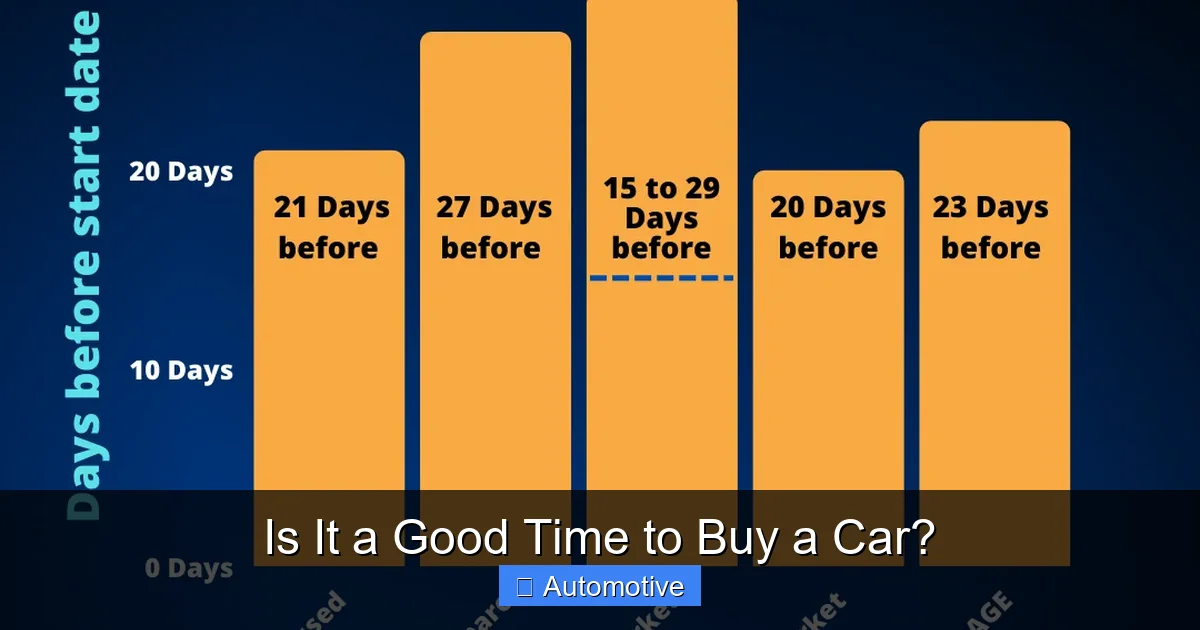
Dealerships and salespeople have quotas. The last few days of the month, especially the last day, are when managers may be willing to cut a deal to hit their numbers. The same is true for the end of a quarter (March, June, September, December). The end of the calendar year is the absolute peak time for dealer motivation. They need to clear current-year inventory to make room for next year’s models, and they are desperate to hit annual sales targets. This is when you’ll see the deepest discounts on the current model year vehicles. However, if a model is in extremely high demand (like a new Bronco or a Tacoma), even year-end discounts may be minimal.
Holiday Sales Events
Memorial Day, Fourth of July, Labor Day, and even Black Friday are often framed as major sales events. They can be good, but treat them with skepticism. Many “sale” prices were the price all along, and the advertised discount is against a fictional MSRP. Do your homework. Know the fair market value from sources like Kelley Blue Book (KBB) or Edmunds. If the “sale” price is at or below that value, it’s a real deal.
The Model Year Changeover
When new models arrive (usually in late summer/early fall for the next model year), dealers want to sell the old stock. This is your chance to get a deal on the previous model year vehicle that is virtually identical to the new one, save for maybe a minor feature tweak. The savings can be $1,000-$3,000 off a $30,000 car. The only catch is that you have a shorter warranty (e.g., a 2024 model bought in late 2024 has less warranty time remaining than a 2025 model bought in early 2025). For a deep dive on the absolute best calendar moments, our guide to when the best time to buy a car is details these strategies.
Negotiation and the Buying Process: Your Action Plan
Knowledge is leverage. Here’s how to wield it.
Start Online, Finish in Person (Maybe)
Use online tools to get firm, out-the-door price quotes from multiple dealerships for the exact same vehicle (same VIN if possible). Email or use the dealer’s web chat. This creates a paper trail and takes the initial pressure off you. You can often negotiate a better price via email before ever setting foot on the lot. Once you have 2-3 best offers, you can either take the best one or use it as a benchmark to see if your local dealer will match it.
Separate the Trade-In and Financing
Never negotiate the price of your new car and the value of your trade-in at the same time. They are two separate transactions. First, get the best possible purchase price on the new car. Then, discuss your trade-in.Knowing your trade-in’s true value (check KBB, Edmunds, and get a CarMax appraisal) beforehand prevents you from being low-balled. If the dealer gives you a low trade offer, you can simply say “no” and sell it privately for more, or use a competitive offer from another dealer as leverage.
Financing: Get Pre-Approved, Then Let the Dealer Compete
This is a critical step. Before you shop, apply for an auto loan pre-approval from your own bank or credit union. This gives you a locked-in interest rate and a clear budget. When you get to the dealer, they will try to finance you through their captive lender (e.g., Toyota Financial, BMW Financial). Let them. They often have access to subsidized rates or incentives you can’t get elsewhere. If their offer is better than your pre-approval, take it. If it’s worse, you have the power to say “I already have financing at X%, can you beat that?” They often will, or they might throw in a small accessory to make up the difference. This process ensures you get the best possible rate. For those with lower credit, understanding what the lowest credit score to buy a car is and how to prepare is essential.
Long-Term Thinking: Beyond the Purchase Price
The “good time” extends far beyond the day you drive off the lot.
Resale Value and Depreciation
Some cars hold their value like champions (Toyota Tacoma, Porsche 911, certain Jeeps). Others depreciate rapidly (many luxury sedans, some electric vehicles with older tech). Use the KBB 5-Year Cost to Own Awards or Edmunds True Cost to Own as a guide. A car that costs $5,000 more but depreciates $10,000 less over five years is the cheaper car in the long run. This is a key part of the total cost calculation.
Fuel Type: Gas, Hybrid, Plug-in, or EV?
The era of the pure gasoline car is waning. Consider your driving patterns. A hybrid can offer 40-50 MPG with no plug, saving you thousands in fuel over a standard SUV. A plug-in hybrid (PHEV) is great if you have a short commute and can charge at home, giving you electric-only days. A full EV has the lowest fuel and maintenance costs but requires home charging access and has a higher upfront price. Federal and state tax incentives can narrow that gap. The “good time” to buy an EV depends heavily on these personal factors and the potential for future incentives. For some, the long-term savings on fuel and maintenance make the higher initial cost worthwhile, even in today’s market.
Warranty and Maintenance Plans
Understand what the factory warranty covers (typically bumper-to-bumper for 3 years/36k miles and powertrain for 5 years/60k miles). An extended warranty (from the manufacturer or a third party) is a bet on future repairs. For a reliable brand with a strong powertrain warranty, you may not need one. For a complex European luxury car, it might provide peace of mind. Never buy an extended warranty at the moment of sale from the dealer with high pressure. You can usually purchase it later, often at a better price, and have time to research the vehicle’s actual reliability.
Conclusion: Is It a Good Time for YOU?
So, is it a good time to buy a car? The answer is a firm “it depends.” The market is neither the nightmare it was in 2021 nor the buyer’s paradise of 2019. It’s a transitional period with better inventory but high financing costs and still-elevated prices.
It is a good time to buy a car if: You have a genuine need, your credit score is solid (giving you loan options), you’ve done thorough research on pricing and total costs, and you’re willing to negotiate fiercely using pre-approvals and online price quotes. It’s also a good time if you’re looking at a slightly used (2-4 year old) vehicle, where prices are most actively cooling.
It might be wise to wait if: Your current car is running fine, your credit score needs work (improving it by 50 points can save you thousands), you have a very specific, high-demand vehicle in mind with no discounts, or you are not prepared with a down payment and a full budget that includes insurance and fuel.
Stop asking the internet for a universal “yes” or “no.” Start asking yourself the hard questions about your finances, your needs, and your willingness to do the work. The best time to buy a car is when you are the most prepared buyer in the dealership. That moment is entirely within your control. Arm yourself with knowledge, get your financial house in order, and you can make a smart purchase regardless of what the headlines say.
Frequently Asked Questions
Should I wait for a better deal if I need a car now?
If you have an urgent need, waiting is often not feasible. However, you can still be strategic by focusing on models with better inventory and incentives, using strong negotiating tactics, and securing the best possible financing. Waiting for a potential future market dip is speculative and could leave you without a reliable vehicle when you need it.
How much does my credit score really affect the car-buying process?
It affects everything. Your credit score directly determines your loan’s interest rate. A difference of 100 points can mean paying thousands more in interest over the life of a loan. It also impacts your approval odds and the lenders willing to work with you. Always check your credit and improve it before applying.
Is buying a new car smarter than used in today’s market?
It’s not about new vs. used universally. New cars offer the latest safety tech, full warranties, and sometimes manufacturer incentives. Used cars, especially 2-4 year old models, have already taken the biggest depreciation hit and can offer better value. The smartest choice depends on your budget, desired features, and how long you plan to keep the car.
Is leasing a good alternative right now with high interest rates?
Leasing payments are based on depreciation, not the full price, so they can be lower than loan payments. However, money factor (lease interest rate) has also increased with market rates. Leasing can be a good option if you want a new car every few years, drive under the mileage limit, and maintain the vehicle. For long-term ownership and no mileage restrictions, buying is usually better. A detailed analysis of whether it’s cheaper to lease or buy is essential for your specific case.
What’s the single most important factor to focus on when buying?
The total out-the-door price. Never, ever let a salesperson distract you with a low monthly payment. Negotiate the final purchase price of the vehicle, including all fees, taxes, and add-ons. Only then should you discuss financing or leasing terms. A longer loan term can make any monthly payment seem affordable while burying you in debt.
How long should the entire car-buying process take?
If you’re prepared, it can take as little as a few hours for a single dealership visit with a pre-negotiated price. If you’re starting from scratch—researching models, test-driving, getting quotes, arranging financing—expect to spend a weekend or several evenings over a week or two. Rushing leads to poor decisions. For a realistic timeline, see our piece on how long it takes to buy a car.