
Indoor Car Cover Problems: What Goes Wrong and How to Prevent It

Quick Answer
Indoor car cover problems usually come from trapped dust, dirt on the cover lining, moisture, poor fit, or dragging the fabric across the paint. A clean, dry, correctly fitted cover can protect a garage-stored car well, but both the vehicle and cover need to stay clean. Good car-cleaning practices reduce the abrasive dirt that causes many cover-related marks.
Common indoor car cover problems
- Fine paint scratches: Dust or grit can rub against the clear coat when the cover moves.
- Trapped moisture: A damp car or humid garage can leave moisture beneath the fabric.
- Dirty lining: A cover placed on the floor can transfer grit directly onto clean paint.
- Poor fit: Excessively loose fabric can shift, while an overly tight cover can strain mirrors and trim.
- Musty odors: Folding or using a damp cover can encourage unpleasant smells and mildew.
- Removal damage: Dragging rather than lifting the cover can pull contamination across the finish.
Safest routine
- Cover only a clean, cool, dry vehicle with a clean, dry cover designed for indoor storage.
I like indoor car covers because they solve a simple garage problem: dust settling on a vehicle that may sit for days or weeks. The trouble begins when owners assume any soft-looking cover is automatically safe.
A cover constantly touches some of the most visible surfaces on your car. This guide explains what can go wrong, how to identify the cause, and how I reduce the risk before covering a daily driver or stored vehicle.
In This Guide
- What Problems Can an Indoor Car Cover Cause?
- Can an Indoor Car Cover Scratch Car Paint?
- Why Does Moisture Build Up Under an Indoor Car Cover?
- Should an Indoor Car Cover Be Tight or Loose?
- How Do You Use an Indoor Car Cover Without Damaging Paint?
- When Should You Replace an Indoor Car Cover?
- Frequently Asked Questions
What Problems Can an Indoor Car Cover Cause?
An indoor car cover can cause scratches, trapped moisture, dirty-paint contact, pressure around trim, and mildew if it is used incorrectly. Most problems involve contamination or poor handling rather than the simple fact that fabric touches the vehicle.
Definition: An indoor car cover is a fabric barrier designed mainly to protect a vehicle stored inside a garage or enclosed building from dust, light contact, and minor contamination. It usually does not need the heavy weather resistance required for outdoor use.
The biggest mistake I see is treating a covered car as a maintenance-free car. Dust can still reach the garage, moisture can still develop, and the cover itself can become contaminated.
Here is how the most common indoor car cover problems compare.
| Problem | Likely Cause | What You May Notice | Best Response |
|---|---|---|---|
| Fine scratches | Grit plus fabric movement | Swirls or light marks | Clean car and cover |
| Damp surface | Wet car or garage humidity | Condensation or damp glass | Remove cover and dry both |
| Dust transfer | Dirty inner lining | New dirt after removal | Clean cover correctly |
| Mirror or trim stress | Cover is too tight | Fabric pulling at edges | Use correct size |
| Musty smell | Stored damp cover | Odor or spotting | Wash and fully dry |
Indoor covers are also lighter than many outdoor covers. That makes them pleasant to handle, but careless removal can still drag grit across paint.
As of 2026, I still use one simple test: I inspect both surfaces before they touch. If the car or cover feels gritty, I fix that first.
Can an Indoor Car Cover Scratch Car Paint?
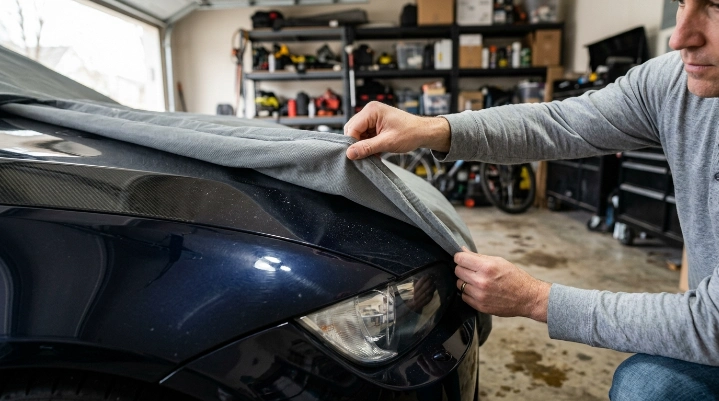
Yes, an indoor car cover can contribute to scratches when abrasive contamination becomes trapped between the fabric and paint. A soft cover reduces one risk, but it cannot make dirt harmless.
Think of dust as the missing part of the equation. Fabric pressing against clean paint is different from fabric pressing sand, road grit, or dried dirt against the clear coat.
Dust becomes abrasive when the cover moves
Even inside a garage, a vehicle can collect dust after a drive. Opening garage doors, walking through the space, woodworking, lawn equipment, and stored boxes can introduce more particles.
Once dirt sits between the cover and paint, movement matters.
- Installing the cover: Dragging fabric from one side to another can move particles.
- Removing the cover: Pulling it across the hood or roof creates more contact.
- Loose fabric: Air movement from doors or fans can shift oversized material.
- Dirty lining: Contamination embedded in the inside surface stays in direct contact with paint.
That is why proper washing matters before covering a dusty vehicle. Edmunds also emphasizes removing loose contaminants during paint care because gritty residue can contribute to scratching: see its washing and paint-care guidance.
Watch high-contact areas first
When I remove a cover, I inspect mirror caps, fender shoulders, roof edges, and bumper corners first. These areas often carry more fabric tension than broad flat panels.
- Look for fine lines under bright lighting.
- Check whether the cover feels rough inside.
- Look for trapped leaves, sand, or grit.
- Inspect seams touching painted surfaces.
- Check whether the cover shifts easily while installed.
A specialty finish deserves extra care. Matte paint, for example, has different maintenance requirements from conventional glossy paint, so follow the vehicle or paint manufacturer’s instructions rather than treating every finish alike; Kelley Blue Book provides a useful overview of matte-finish care.
Section Takeaway: A soft cover is not enough by itself. Clean paint, a clean lining, correct fit, and careful handling are what keep cover contact as safe as possible.
Why Does Moisture Build Up Under an Indoor Car Cover?
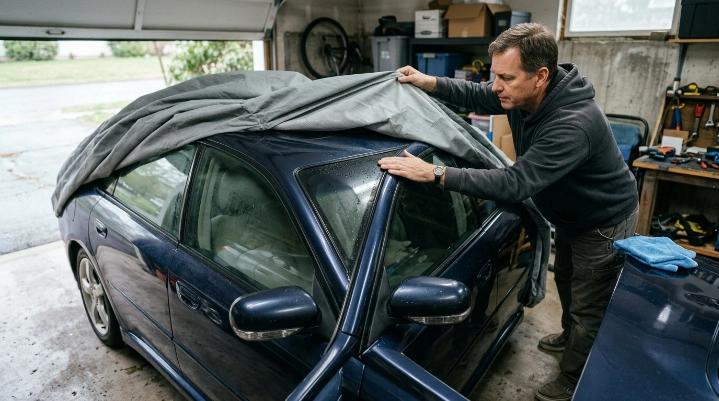
Moisture usually appears because the vehicle was covered while damp, the cover was damp, or humidity changed inside the garage. A cover cannot remove water that was already trapped underneath it.
I never cover a car immediately after washing unless every panel, seam, mirror housing, grille opening, and trim gap has had time to dry.
A garage can still be humid
Indoor storage protects the car from direct rain, but a garage is not automatically dry. Humid outdoor air can enter whenever the door opens.
Temperature changes can also leave cool vehicle surfaces feeling damp. That matters more when a vehicle sits for long periods without airflow around it.
- Wet paint: Water remains underneath immediately.
- Damp fabric: Moisture transfers from the cover to the car.
- High humidity: Drying can take longer in an enclosed space.
- Poor airflow: Moisture may remain around lower body areas and glass.
If you are storing a car for weeks or months, the cover is only one part of the storage plan. Kelley Blue Book’s long-term vehicle storage guide covers broader preparation such as cleaning, tires, batteries, and storage conditions.
What should you do if the car is wet underneath?
Remove the cover rather than hoping the moisture disappears on its own. Let both the vehicle and cover dry fully before putting them back together.
- Move the cover to a clean drying area.
- Check the underside for damp spots.
- Dry water trapped around trim and mirrors.
- Inspect the garage for leaks or persistent humidity.
- Do not fold the cover while it is still damp.
A musty smell is another warning sign. If the fabric smells damp after storage, clean it according to its manufacturer’s care instructions before reinstalling it.
Should an Indoor Car Cover Be Tight or Loose?
An indoor cover should fit securely without stretching hard across mirrors, spoilers, antennas, or body edges. It should not hang so loosely that large sections slide across the paint.
I prefer “fitted” over “tight.” Those words sound similar, but they describe different things.
Problems with a cover that is too loose
- Excess material can slide during installation.
- Air movement can shift fabric across the paint.
- Loose sections can catch on objects in the garage.
- The cover may partially slip off the vehicle.
Problems with a cover that is too tight
- Fabric can pull hard against mirror housings.
- Seams may sit under unnecessary tension.
- Sharp trim can stress or tear the material.
- Installation may require dragging and stretching.
A vehicle-specific cover often reduces excessive material, but a universal cover is not automatically unsafe. The important question is whether the actual size and shape work with your vehicle.
Accessories also matter. Roof racks, antennas, spoilers, hood ornaments, and aftermarket body parts can change how a cover sits.
How Do You Use an Indoor Car Cover Without Damaging Paint?
The safest routine is to start with a clean, cool, dry vehicle and a clean cover. Install and remove the fabric by folding and lifting it rather than dragging it across painted panels.
I use the same basic sequence every time because it prevents small shortcuts from becoming habits.
- Inspect the vehicle. Look for dust, sand, bird droppings, road grime, or damp areas.
- Check the cover lining. Make sure the inside surface is free of grit, leaves, and rough debris.
- Keep it off the floor. Concrete and garage floors can transfer abrasive dirt onto the fabric.
- Start from a controlled position. Follow the cover maker’s recommended installation method when provided.
- Lift instead of drag. Minimize sliding across the hood, roof, trunk, and quarter panels.
- Check the fit. Confirm mirrors, trim, and body corners are not under excessive tension.
- Store the cover dry. Fold or roll it with the clean inner surface protected from contamination.
Do not put the cover on a dirty car
This is the rule I would prioritize over every other tip. If I would not wipe the paint with a clean microfiber towel in its current condition, I do not want a cover moving over it.
You do not necessarily need a full detail before every installation. However, visible grit, road dirt, and gritty dust should be removed safely before prolonged cover contact.
Keep the inner surface clean
Many owners concentrate on washing the vehicle but forget the cover itself. That inside surface effectively becomes a giant contact material touching the whole car.
- Never throw it onto a dirty garage floor.
- Keep the clean side folded inward when practical.
- Follow the manufacturer’s washing instructions.
- Do not use unsuitable cleaners or high heat.
- Dry it completely before storage.
Be careful with a freshly detailed finish
Wax, sealant, ceramic coating, fresh paint, and other finish treatments can have different curing instructions. Follow the product maker or body shop’s directions before placing fabric over newly treated paint.
Do not guess at a universal waiting time. The correct interval depends on the product or paint system.
Section Takeaway: The safest indoor-cover routine is simple: clean car, clean cover, dry surfaces, correct fit, and as little sliding contact as possible.
When Should You Replace an Indoor Car Cover?
Replace an indoor car cover when cleaning can no longer restore a safe inner surface or when wear changes how the cover fits. Damage to seams, elastic, fabric, or lining can turn a once-good cover into a paint-contact problem.
I inspect older covers under good lighting instead of judging them only by age.
- Rough lining: The inside no longer feels smooth or clean.
- Embedded contamination: Grit remains after proper cleaning.
- Torn seams: Damaged stitching exposes rough edges.
- Weak elastic: The cover no longer stays positioned correctly.
- Permanent mildew: Odor or spotting returns after proper cleaning.
- Thinning fabric: Material has worn through at high-contact points.
- Changed fit: Stretched fabric now hangs or moves excessively.
A cosmetic stain alone does not always mean the cover is finished. I care more about cleanliness, fabric condition, seams, and fit.
If you repeatedly find fresh marks on the same parts of the vehicle, stop using the cover until you identify why. Continuing to reinstall it can repeat the same contact pattern.
Frequently Asked Questions
Are indoor car covers bad for paint?
No. A suitable indoor car cover is not automatically bad for paint, but dirt trapped between the cover and vehicle can create abrasion. Use the cover only when the car and the inner lining are clean, dry, and free of grit.
Can an indoor car cover cause swirl marks?
It can contribute to swirl-like marks if contaminated fabric moves across the clear coat. Dust, sand, poor fit, and dragging during installation or removal increase the chance of unwanted rubbing.
Should I cover a dusty car in the garage?
It is safer to remove abrasive dust and grit before covering the vehicle. Placing fabric over a dirty surface can trap contamination against the paint and move it during installation or removal.
Should an indoor car cover be breathable?
Some ability to manage moisture is useful, especially in garages where humidity changes. However, no fabric should be expected to compensate for covering a wet vehicle or storing a damp cover.
Can I put a car cover on immediately after washing?
Wait until the vehicle is fully dry. Check mirrors, emblems, trim gaps, grille areas, door handles, and other places where water can remain after the main panels appear dry.
How often should I wash an indoor car cover?
There is no universal schedule because garage conditions and cover materials vary. Clean it when the lining becomes dusty or contaminated, and always follow the cover manufacturer’s washing and drying instructions.
Is a custom-fit indoor cover better than a universal cover?
A well-designed custom-fit cover can reduce excess material and unwanted movement. A correctly sized universal cover can still work, so judge the actual fit rather than assuming one category is automatically safe or unsafe.
Final Takeaway: Indoor car cover problems are usually preventable. Keep the vehicle and cover clean, control moisture, choose the right fit, and never drag contaminated fabric across the paint.
If your current cover leaves grit, moves excessively, smells musty, or repeatedly marks the finish, stop using it until you correct the cause. A cover should protect your stored car, not become another source of paint damage.
