
How to Use Kia Sportmatic Shifting

Kia Sportmatic shifting lets you manually control gear changes in automatic Kia vehicles, offering greater control and driving engagement. This guide explains how it works, when to use it, and tips for smooth operation.
Key Takeaways
- What Is Sportmatic? Sportmatic is Kia’s manual shift mode in automatic transmissions, allowing drivers to shift gears without a clutch.
- How to Activate It: Move the gear selector from “D” to “M” or “S” (depending on model) to enter manual mode.
- When to Use Manual Mode: Ideal for uphill climbs, downhill descents, towing, or when you want more responsive acceleration.
- Upshifting and Downshifting: Push the lever forward to upshift (+) and backward to downshift (-); the dashboard shows the current gear.
- Safety Features: The system prevents engine damage by blocking shifts that could over-rev or lug the engine.
- Fuel Efficiency Tip: Use manual mode to keep RPMs low during highway cruising for better fuel economy.
- Practice Makes Perfect: Start in safe, low-traffic areas to get comfortable with timing and gear selection.
📑 Table of Contents
What Is Kia Sportmatic Shifting?
If you drive a Kia with an automatic transmission, chances are you’ve noticed a second gear gate marked with an “M” or “S” next to the standard “P-R-N-D” pattern. This isn’t just for show—it’s your gateway to Kia Sportmatic shifting, a feature that gives you manual control over your vehicle’s gears without needing a clutch pedal. Think of it as having the best of both worlds: the convenience of an automatic with the precision of a manual when you need it.
Sportmatic is Kia’s branded version of a manual shift mode, commonly found in many modern automatic and dual-clutch transmissions. It allows drivers to select gears manually by moving the gear lever or using paddle shifters (if equipped). This system is especially useful in situations where you want more control over your vehicle’s performance, such as driving on steep hills, towing a trailer, or simply enjoying a more engaging driving experience. Unlike a traditional manual transmission, you don’t need to worry about stalling or mastering clutch coordination—Sportmatic handles the clutch electronically, making it beginner-friendly while still offering advanced functionality.
How Sportmatic Differs from a Manual Transmission
At first glance, Sportmatic might seem similar to driving a manual car, but there are key differences. In a traditional manual, you use a clutch pedal to disengage the engine from the transmission before shifting gears. With Sportmatic, the car’s computer manages the clutch automatically, so all you do is tell it which gear you want. This means smoother shifts and less driver fatigue, especially in stop-and-go traffic.
Another advantage is safety. The transmission control unit (TCU) monitors engine speed, vehicle speed, and throttle input to prevent dangerous shifts. For example, if you try to downshift too aggressively at high speed, the system will block the shift to avoid engine damage. Similarly, it won’t let you upshift into a gear that would lug the engine. This built-in intelligence makes Sportmatic a smart choice for drivers who want control without the risk.
Which Kia Models Feature Sportmatic?
Most modern Kia vehicles with automatic transmissions come equipped with Sportmatic shifting. This includes popular models like the Kia Seltos, Kia Sportage, Kia Sorento, Kia Stinger, and Kia K5. Some trims may also include paddle shifters behind the steering wheel for even quicker gear changes. Always check your owner’s manual or the gear selector to confirm if your Kia has this feature.
It’s worth noting that the exact operation can vary slightly between models and model years. For instance, some vehicles use an “S” (Sport) mode that automatically adjusts shift points for performance, while others require you to move the lever into an “M” (Manual) gate to access manual shifting. Understanding your specific model’s setup is the first step to mastering Sportmatic.
How to Activate and Use Kia Sportmatic Shifting
Using Kia Sportmatic shifting is simpler than it sounds. The process is intuitive and designed to be accessible even to drivers with no manual transmission experience. Here’s a step-by-step guide to get you started.
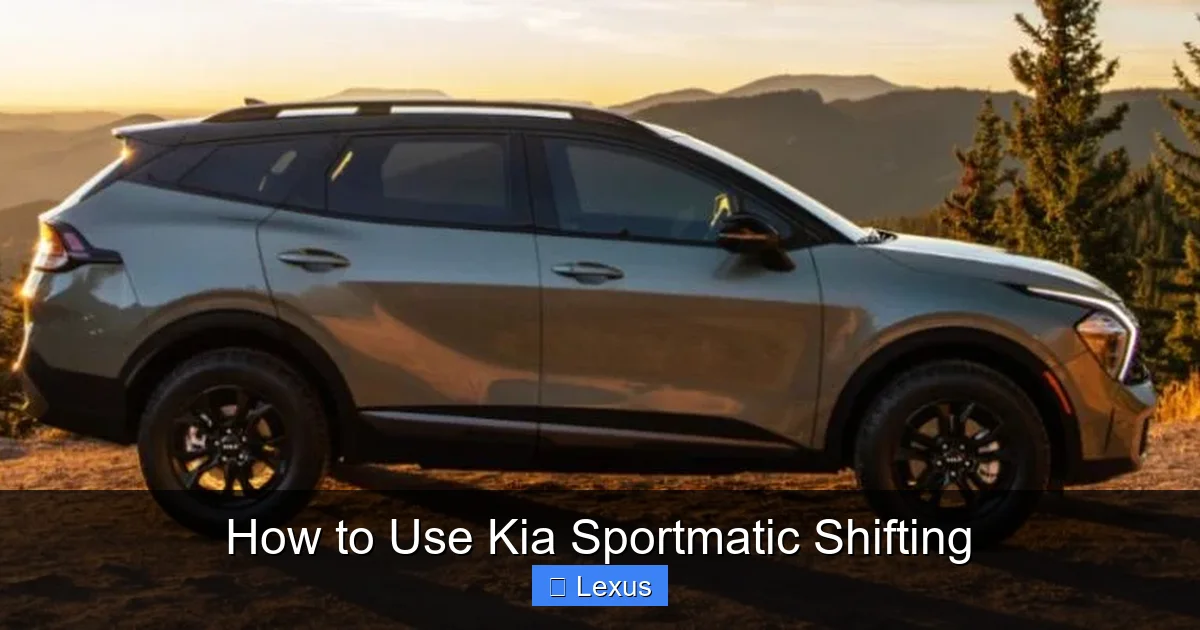
Visual guide about How to Use Kia Sportmatic Shifting
Image source: cdn-ds.com
Step 1: Start in Drive (D)
Begin by driving your Kia normally in “D” (Drive) mode. This is the standard automatic mode where the car selects gears based on speed, load, and throttle input. You’ll use this for everyday driving, highway cruising, and city commutes.
Step 2: Shift into Manual Mode
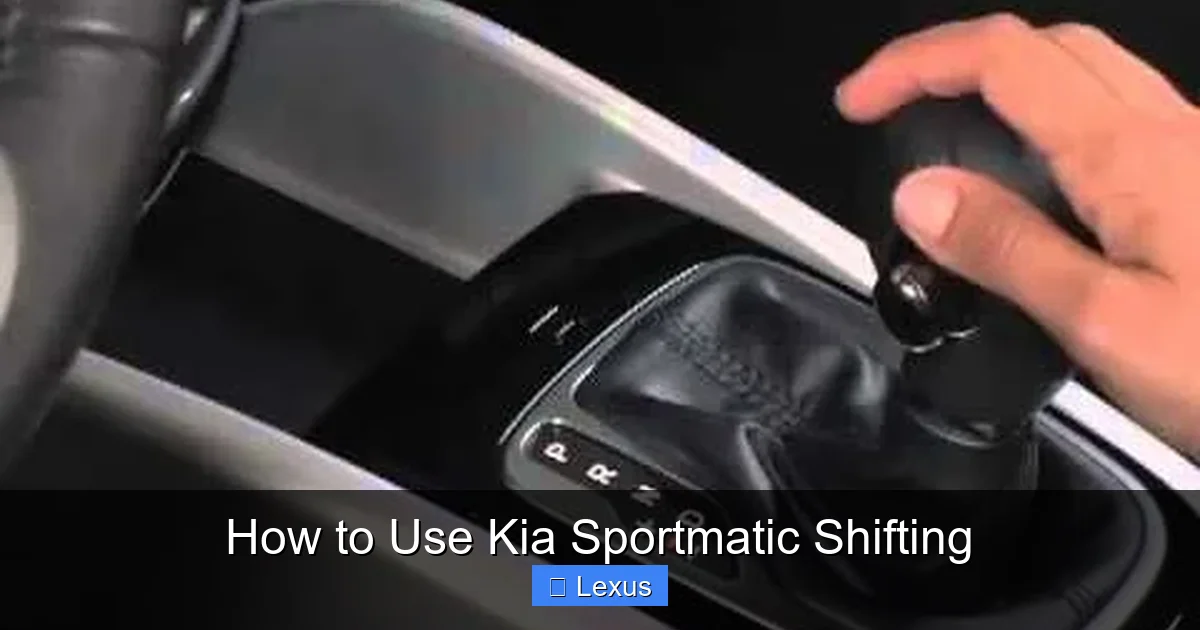
To activate Sportmatic, gently move the gear selector from “D” to the adjacent “M” or “S” position. On most Kia models, this is a side gate to the left or right of the main shifter path. You don’t need to press a button or stop the car—this shift can be done while driving.
Once you’ve moved the lever, you’ll notice a change on your instrument cluster. The display will show the current gear (e.g., “3” or “4”) instead of just “D.” This confirms you’re now in manual mode. Some models also illuminate a “M” or “S” indicator light.
Step 3: Shift Gears Manually
Now comes the fun part: shifting gears. To upshift (move to a higher gear), push the gear lever forward (toward the “+” symbol). To downshift (move to a lower gear), pull the lever backward (toward the “–” symbol). Each shift is confirmed by a change in the gear display and a slight sensation in the drivetrain.
If your Kia has paddle shifters—small levers behind the steering wheel—you can use those instead. The right paddle is typically for upshifts (+), and the left for downshifts (–). Paddle shifters offer quicker response and keep your hands on the wheel, which is great for spirited driving or winding roads.
Step 4: Return to Automatic Mode
To exit manual mode and return to full automatic operation, simply move the gear selector back to “D.” The car will resume normal shifting behavior, and the gear display will revert to “D.” You can switch between modes as often as you like—there’s no need to stop or restart the vehicle.
Practical Example: Using Sportmatic on a Hill
Imagine you’re driving up a steep mountain road. In automatic mode, your Kia might constantly shift up and down as it tries to find the right gear, which can feel jerky and reduce control. By switching to Sportmatic, you can manually select a lower gear (like 2nd or 3rd) to maintain engine power and avoid lugging. This gives you smoother acceleration and better traction.
On the descent, you can downshift to use engine braking instead of riding the brakes. This reduces brake wear and prevents overheating on long downhill stretches. Simply pull the lever or paddle to drop a gear, and the engine will slow the car naturally.
When Should You Use Kia Sportmatic Shifting?
While Sportmatic is always available, it’s not meant for constant use. Instead, it’s a tool for specific driving situations where manual control offers clear advantages. Here are the most common scenarios where Sportmatic shines.
Visual guide about How to Use Kia Sportmatic Shifting
Image source: i.pinimg.com
Driving on Steep Hills
Whether you’re climbing a mountain pass or navigating a steep driveway, hills can challenge an automatic transmission. The car may hunt for gears, causing hesitation or surging. By using Sportmatic, you can lock into a lower gear (like 2nd or 3rd) to maintain steady power and avoid unnecessary shifts.
For example, if you’re towing a trailer up a grade, staying in 3rd gear prevents the transmission from dropping to 2nd and then immediately upshifting again. This reduces strain on the engine and transmission, improving both performance and longevity.
Descending Long Downgrades
Engine braking is one of the most underrated benefits of manual shifting. Instead of riding your brakes down a long hill—which can cause them to overheat and fade—you can downshift to slow the car using engine resistance.
Say you’re driving down a 5-mile mountain road. In automatic mode, your Kia might stay in 5th or 6th gear, forcing you to brake frequently. With Sportmatic, drop to 3rd or 4th gear. The engine will do the work, keeping your speed in check and your brakes cool. This is safer and more efficient.
Towing and Hauling
If you’re towing a boat, camper, or trailer, extra weight demands more from your vehicle. Automatic transmissions can struggle with heavy loads, especially on inclines. Sportmatic lets you keep the engine in the optimal power band by selecting the right gear manually.
For instance, when starting from a stop with a trailer, you might begin in 2nd gear instead of 1st to reduce wheel spin and improve traction. On the highway, you can avoid high-RPM cruising by upshifting early, which also helps with fuel economy.
Performance Driving and Sporty Feel
Even if you’re not on a racetrack, some drivers enjoy the engagement of manual control. Sportmatic allows you to hold lower gears longer for quicker acceleration, which is great for passing on two-lane roads or merging onto highways.
You can also use it to simulate a “sport mode” experience. By keeping the engine in a higher RPM range, you get more responsive throttle input and a more connected driving feel. This is especially fun in sporty Kia models like the Stinger or K5 GT.
Improving Fuel Efficiency
Believe it or not, Sportmatic can help you save fuel—if used correctly. On flat highways, you can manually upshift early to keep engine RPMs low. For example, shifting into 6th gear at 45 mph instead of waiting for the automatic to do it at 55 mph can reduce fuel consumption.
However, this requires discipline. If you keep the engine in too low a gear at high speed, you’ll actually increase fuel use. The key is to match gear selection to speed and load, just like an experienced manual driver would.
Tips for Smooth and Safe Sportmatic Operation
Like any driving skill, mastering Sportmatic takes practice. Here are some practical tips to help you shift smoothly, avoid mistakes, and get the most out of the feature.
Visual guide about How to Use Kia Sportmatic Shifting
Image source: carsinvasion.com
Listen to Your Engine
Your engine’s sound is one of the best indicators of when to shift. If it’s revving too high (above 4,000–5,000 RPM in most Kias), it’s time to upshift. If it’s struggling or lugging (below 1,500 RPM under load), downshift to give it more power.
For example, if you hear a high-pitched whine while accelerating, don’t wait for the car to shift automatically—push the lever forward to go to the next gear. This keeps the engine in its sweet spot and improves responsiveness.
Avoid Over-Revving
While Sportmatic prevents dangerous shifts, it’s still possible to push the engine too hard. Avoid holding a low gear at very high speeds, as this can cause excessive RPMs and wear. Most Kias have a redline around 6,500–7,000 RPM—stay well below that.
If you accidentally miss a shift and the engine screams, don’t panic. Just upshift immediately. The system is designed to protect itself, but minimizing stress is always better.
Use Downshifting for Control, Not Speed
Downshifting is great for engine braking, but don’t use it to accelerate quickly from a stop. For fast launches, it’s better to stay in 1st gear and let the automatic handle the initial torque. Save downshifts for slowing down or maintaining speed on declines.
Also, avoid “granny shifting” (shifting too early) on steep hills. If you upshift too soon, the engine may not have enough power to maintain speed, causing you to slow down or stall.
Practice in Safe Conditions
If you’re new to manual shifting, find an empty parking lot or quiet road to practice. Try shifting up and down at different speeds, and get a feel for how the car responds. Pay attention to the gear display and engine sound.
Start with simple exercises: accelerate in 1st, upshift to 2nd at 20 mph, then to 3rd at 30 mph. Then try downshifting back to 2nd when slowing to a stop. This builds muscle memory and confidence.
Know When to Go Back to Automatic
Sportmatic is a tool, not a requirement. In heavy traffic, long commutes, or bad weather, it’s often easier and safer to let the automatic do the work. Switching back to “D” reduces driver workload and lets the car optimize shifts for comfort and efficiency.
Think of manual mode as a special mode for special situations—not something you need to use all the time.
Common Mistakes to Avoid with Sportmatic
Even experienced drivers can make errors when using manual shift modes. Here are some common pitfalls and how to avoid them.
Forgetting to Upshift
It’s easy to get caught up in the fun of manual control and forget to upshift. This can lead to high RPMs, increased noise, and reduced fuel economy. Make it a habit to monitor your speed and shift up as needed.
Tip: Use the tachometer or listen for engine strain. If the RPMs are climbing rapidly, it’s time to shift.
Downshifting Too Aggressively
Pulling the lever back too quickly can cause a jarring shift, especially at high speeds. This not only feels uncomfortable but can also stress the drivetrain. Downshift gradually, one gear at a time, and match engine speed to road speed.
For example, when slowing from 60 mph to 40 mph, drop from 5th to 4th, then to 3rd—don’t jump straight to 2nd.
Ignoring the Dashboard Display
The gear indicator is your best friend in manual mode. Always check it before and after shifting to confirm the change took effect. If the display doesn’t change, you may have missed the shift or the system may have blocked it for safety.
If a shift doesn’t happen, don’t force it. Wait a moment and try again, or check your speed and RPMs to see if the shift was appropriate.
Using Manual Mode in Snow or Ice
While Sportmatic can help with traction in slippery conditions, it requires skill. Downshifting too hard can cause the wheels to lock or skid. In snow or ice, it’s often safer to let the automatic transmission manage shifts, as it can modulate torque more smoothly.
If you do use manual mode, downshift gently and avoid sudden changes. Consider using winter tires and driving slowly for maximum control.
Sportmatic vs. Other Kia Driving Modes
Many Kia vehicles offer multiple driving modes, such as Eco, Normal, and Sport. It’s important to understand how Sportmatic fits into this ecosystem.
Sport Mode vs. Manual Mode
Sport mode (often labeled “S”) changes the car’s behavior by raising shift points, increasing throttle response, and sometimes firming up the suspension. It’s fully automatic—you don’t manually select gears.
Sportmatic, on the other hand, gives you manual control over gear selection. You can use them together: activate Sport mode for sharper response, then switch to manual mode to choose your own gears. This combo is ideal for performance driving.
Eco Mode and Manual Shifting
Eco mode prioritizes fuel efficiency by lowering shift points and reducing power output. If you’re trying to save fuel, using Sportmatic to upshift early can complement Eco mode. However, avoid holding low gears, as this defeats the purpose.
In general, Eco mode and manual shifting can work well together—just be mindful of your RPMs and driving style.
Conclusion: Mastering Kia Sportmatic Shifting
Kia Sportmatic shifting is more than just a gimmick—it’s a practical feature that enhances control, safety, and driving enjoyment. Whether you’re tackling mountain roads, towing a trailer, or just want a more engaging drive, manual mode puts you in command without the complexity of a traditional manual transmission.
By understanding how to activate it, when to use it, and how to shift smoothly, you can unlock the full potential of your Kia. Remember to practice in safe conditions, listen to your engine, and always prioritize safety. With a little experience, Sportmatic will feel like a natural extension of your driving style—giving you the confidence and control to handle any road with ease.
Frequently Asked Questions
What does Sportmatic mean in a Kia?
Sportmatic is Kia’s term for the manual shift mode available in automatic transmissions. It allows drivers to manually select gears using the gear lever or paddle shifters without a clutch pedal.
Can I use Sportmatic while driving?
Yes, you can switch to Sportmatic mode while the vehicle is in motion. Simply move the gear selector from “D” to “M” or “S”—no need to stop or press the brake.
Will using Sportmatic damage my Kia?
No, Sportmatic is designed to protect your engine and transmission. The system blocks unsafe shifts, such as over-revving or lugging, so normal use won’t cause damage.
Do all Kia models have Sportmatic?
Most modern Kia vehicles with automatic transmissions include Sportmatic, including the Sportage, Sorento, and K5. Check your owner’s manual or gear selector to confirm.
Can I improve fuel economy with Sportmatic?
Yes, by upshifting early on flat roads, you can keep engine RPMs low and improve fuel efficiency. However, avoid holding low gears at high speeds, as this increases fuel use.
What’s the difference between Sport mode and Sportmatic?
Sport mode adjusts shift points and throttle response automatically for performance. Sportmatic lets you manually select gears. You can use both together for maximum control.
