
How to Unlock the Passenger Door in a Tesla

Tesla’s innovative door systems can sometimes leave you stranded when electronics fail. This guide covers every method to unlock a passenger door—from your key fob and smartphone to the hidden manual override—for all Tesla models. We also diagnose common failures and provide model-specific tips to ensure you’re never locked out.
So, you’re standing outside your Tesla, and the passenger door just won’t open. Maybe your key fob is dead, your phone’s Bluetooth is acting up, or the car’s software had a hiccup. It’s a frustrating moment, especially if someone is inside needing to get out. But here’s the good news: Tesla built in failsafes. Unlocking a passenger door is usually straightforward, and even when electronics fail, there’s a reliable manual method. This guide will walk you through every single way to unlock that door, for every Tesla model on the road today. We’ll keep it simple, step-by-step, and include real-world tips from owners. Let’s get that door open.
Key Takeaways
- Multiple Unlock Methods: Use the key fob, Tesla app, or passive entry for standard operation.
- Manual Override Exists: Every Tesla has a hidden mechanical key slot for total power loss.
- 12V Battery is Critical: The small 12V battery powers locks; if it dies, only the manual key works.
- Key Fob Issues Are Common: A dead key fob battery often mimics larger system failures.
- Software Glitches Happen: A simple steering wheel button reset can fix unresponsive doors.
- Model Differences Matter: Model X falcon doors have a unique manual release; Model 3/Y use standard handles.
- Always Have a Backup: Keep the manual key accessible and your phone charged to prevent lockouts.
📑 Table of Contents
Understanding How Tesla Door Locking Works
Before we dive into the “how,” it helps to know the “why.” Tesla doors aren’t like old-school cars with simple mechanical locks. They’re part of a sophisticated electronic system. The car constantly talks to your key fob or phone via Bluetooth and NFC (near-field communication). When it recognizes your authenticated device, it unlocks automatically or with a button press. The actual lock mechanism is powered by the car’s 12-volt auxiliary battery, not the main high-voltage battery. This 12V battery is always on, ready to power the locks, lights, and computer. If this small battery dies, all electronic door functions fail. That’s why knowing the manual override is so important—it bypasses all the electronics.
The Role of the 12V Battery
Think of the 12V battery as the car’s nervous system. It’s separate from the big battery that drives the wheels. Its job is to keep the car’s computer, lights, and door locks alive even when the main battery is off. If this battery gets weak or dies, you’ll see warning lights on the screen, and door locks may not work electronically. The good news? The manual key doesn’t need this battery. It’s a pure mechanical solution. We’ll cover how to use it later. For now, know that a dead 12V battery is a common cause of electronic lock failure.
Key Fob vs. Phone Key: What’s the Difference?
Tesla gives you two primary keys: a physical key fob and the Tesla phone app (which uses Bluetooth). Both work similarly. The key fob has buttons: a top button for lock/unlock all doors, and a bottom button for the front trunk. For the passenger door specifically, pressing the top unlock button should open it. The phone app has a large “Unlock” button on the main screen when you’re near the car. There’s also “Passive Entry”—just walk up with your phone or key fob, touch the door handle, and it unlocks automatically. Which one you use is personal preference, but both rely on the 12V battery and the car’s software.
Standard Methods to Unlock the Passenger Door
Let’s start with the normal, everyday ways. These should work 99% of the time when your car’s systems are healthy.
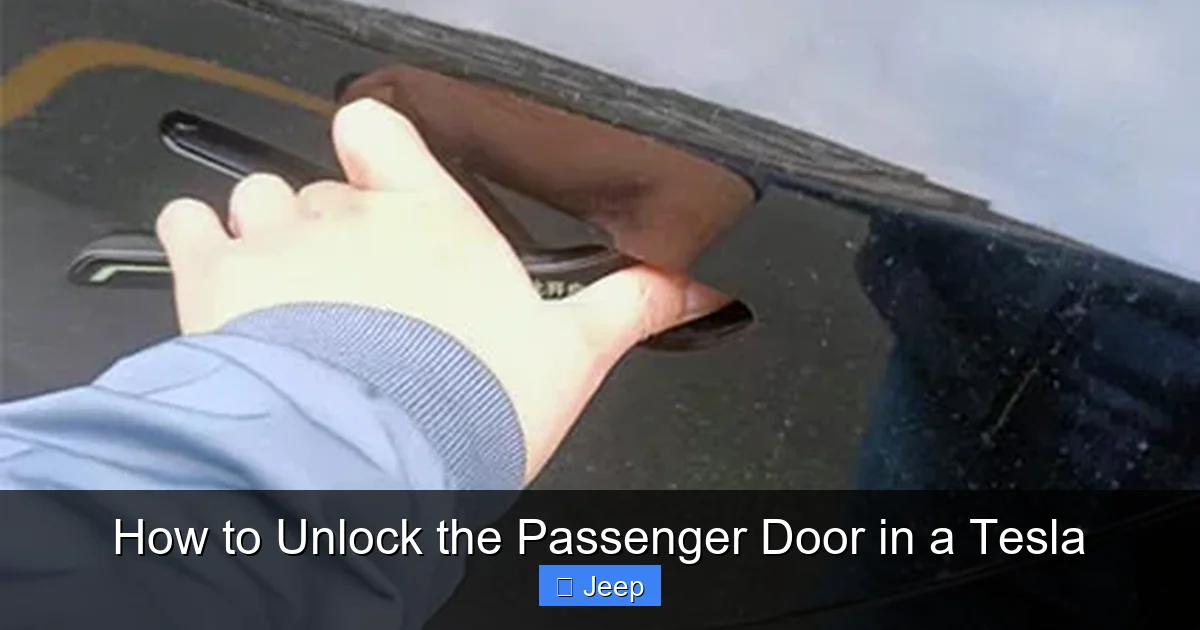
Visual guide about How to Unlock the Passenger Door in a Tesla
Image source: teslashooters.com
Method 1: Using the Key Fob
This is the most direct method. Simply press the unlock button (the one with the open padlock icon) on your Tesla key fob. You should hear a confirmation chirp and see the door handles pop out (on models with retractable handles) or the door unlock. If it doesn’t work, try these steps:
- Make sure you’re within range (about 30 feet).
- Check the key fob battery—a weak battery can cause intermittent failure. We’ll discuss replacing it later.
- Point the fob directly at the car, as some signals can be blocked by your body or other objects.
- If the car is asleep, you may need to press the fob button twice quickly.
Pro Tip: The key fob also has an emergency unlock function. If the car is completely dead, press and hold the bottom trunk button for 3-5 seconds. This can sometimes wake the car enough to unlock doors.
Method 2: Using the Tesla App
Your phone is a powerful key. Open the Tesla app, and when you’re within Bluetooth range (typically 30-50 feet), you’ll see a large “Unlock” button on the vehicle image. Tap it, and the passenger door should unlock. If the app shows “Connecting…” or fails:
- Ensure Bluetooth is on and the app is logged into your Tesla account.
- Restart the app or your phone’s Bluetooth.
- Make sure your phone’s location services are enabled for the app.
- If the car is in “Sentry Mode” or “Camp Mode,” unlocking still works normally.
Note: The app also works over cellular if you have Premium Connectivity, allowing remote unlock from anywhere. But for passenger door unlocking when you’re right next to the car, Bluetooth is the primary method.
Method 3: Passive Entry (Walk-Up Unlock)
This is the most convenient method. With your authenticated phone or key fob in your pocket or bag, simply approach the car. The door handles will automatically extend (on Model S/X with retractable handles) or the touch sensor will activate. Touch the flat surface of the front door handle (or rear handle on some models), and the door will unlock. If passive entry isn’t working:
- Check that “Passive Entry” is enabled in your car’s settings under Locks > Passive Entry.
- Ensure your phone’s Bluetooth is on and the Tesla app is installed and authorized.
- Remove any bulky cases from your phone that might block the signal.
- Try placing the phone directly on the door handle to force authentication.
Manual Override: When Electronics Fail
What if the key fob battery is dead, the 12V battery is drained, or the software is frozen? Don’t panic. Every Tesla has a manual key hidden inside the key fob. This is a physical key that inserts into a small slot on the door handle, bypassing all electronics. It works even if the car has zero power.
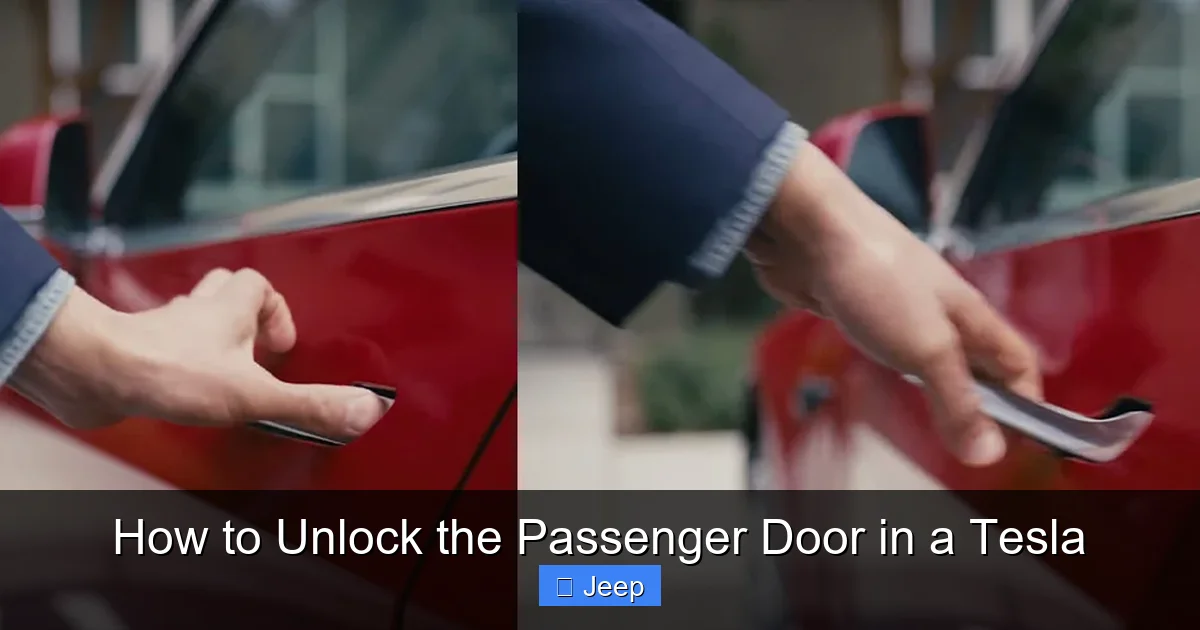
Visual guide about How to Unlock the Passenger Door in a Tesla
Image source: teslashooters.com
Locating the Mechanical Key Slot
The manual key is stored inside your key fob. On the side of the fob opposite the buttons, there’s a small cover. Pry this cover off using the built-in slot at the bottom of the fob or a fingernail. Inside, you’ll find a tiny metal key. Now, look at the front door handle (passenger side). Near the rear of the handle, there’s a small round or oval cover with a tiny slit. This is the manual key slot. On some models, like the Model 3 and Model Y, it’s more obvious; on others, it’s discreet.
Removing the Cover and Inserting the Key
Use the tip of the manual key or a flat tool to gently pry off the plastic cover on the door handle. It may require a bit of force, but be careful not to break it. Once the cover is off, you’ll see a keyhole. Insert the manual key and turn it clockwise (to the right). You should feel resistance, then a click, and the door will unlock. Pull the handle to open. This method works for both driver and passenger doors. On the Model X with falcon doors, the passenger door manual release is different—we’ll cover that in the model-specific section.
Important: After Unlocking Manually
Once you’ve manually unlocked the door, the car’s alarm may sound because it sees an unauthorized entry. Simply press the unlock button on your key fob or use the Tesla app to silence the alarm. Also, if the 12V battery is dead, you’ll likely see warnings on the screen. The car needs a jump start or a new 12V battery soon. Driving with a dead 12V battery can cause the car to shut down unexpectedly. If you’re unsure, call Tesla Roadside Assistance.
Troubleshooting Common Issues
Sometimes, the standard methods don’t work. Let’s diagnose why and how to fix it.
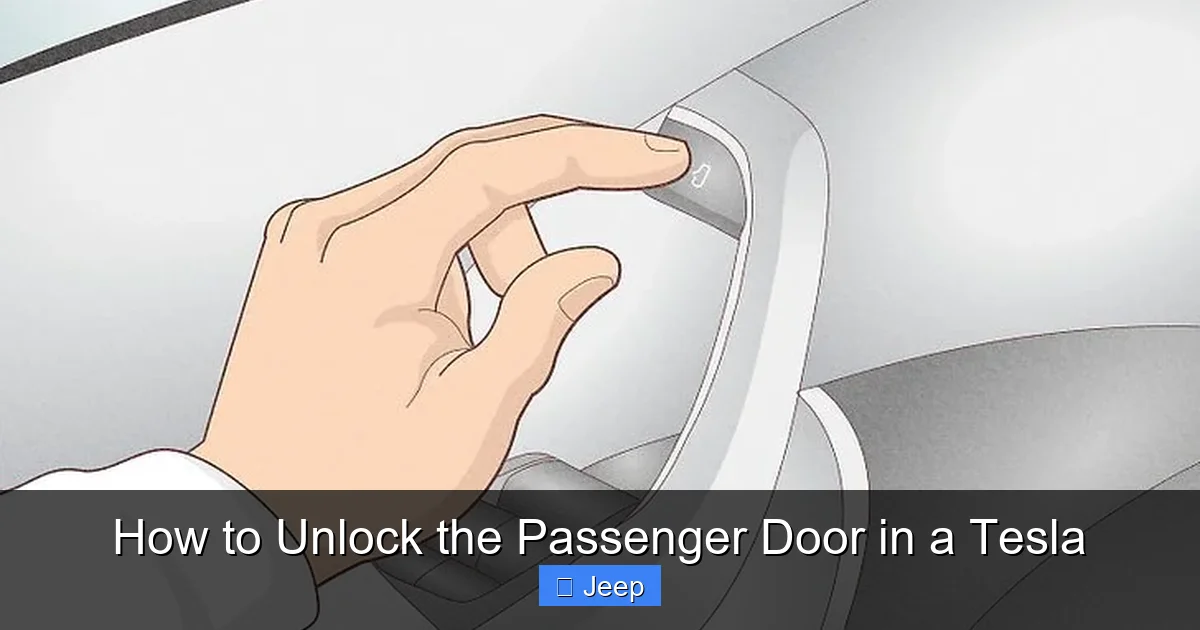
Visual guide about How to Unlock the Passenger Door in a Tesla
Image source: wikihow.com
Issue: Key Fob Not Responding
If pressing the unlock button does nothing, the key fob battery is likely dead. Tesla key fobs use a standard CR2032 coin cell battery. Replacing it is easy: pry open the fob (there’s a small slot), remove the old battery, insert the new one with the positive side up, and snap it shut. For a detailed walkthrough, check our guide on how to change the battery in a car key. After replacing, you may need to re-pair the fob by placing it near the center console and following on-screen prompts.
Issue: 12V Battery Dead
Signs of a dead 12V battery include: doors not unlocking, windows not working, warning lights on the screen, and the car not turning on. The manual key will still work, but you’ll need to jump-start the 12V battery. Locate the front trunk (frunk) release—there’s a manual cable inside the front bumper. Open the frunk, find the 12V battery (usually on the passenger side), and connect jumper cables to the positive (+) and negative (-) terminals (negative often grounded to the car body). Use another car or a portable jump starter. Once the car boots, the 12V battery will recharge, but it may need replacement soon. A healthy 12V battery should read about 12.6V when the car is off.
Issue: Software Glitch or Frozen Screen
If the car’s touchscreen is black or unresponsive, door locks may not work electronically. Perform a soft reset: hold down both scroll wheels on the steering wheel for about 10 seconds until the screen goes black and reboots. This restarts the car’s computer without losing data. If that fails, try a hard reset: put the car in Park, press and hold the brake, then press and hold both scroll wheels and the brake pedal for 10 seconds. The screen will reboot more deeply. For persistent issues, you may need to disconnect the 12V battery briefly, but that’s a last resort. In some vehicles, resetting the radio or infotainment system can solve electronic quirks; for example, resetting the radio in a Dodge Durango involves different steps, but the principle is similar—rebooting the system.
Issue: Bluetooth or App Connectivity Problems
If the Tesla app says “Connecting…” forever, try these:
- Toggle Bluetooth off and on in your phone settings.
- Restart your phone.
- Delete and re-add the car in the Tesla app (Settings > Security & Drivers > Remove Car, then add it again).
- Check for software updates for both the car and the app.
- Ensure no other Bluetooth devices are interfering.
Sometimes, simply walking away and returning with the phone in hand can re-establish the connection.
Model-Specific Considerations
While the basics are the same, Tesla models have subtle differences in door handles and manual releases.
Model S and Model X (2012-2020): Retractable Handles
These models have door handles that pop out when you approach. The manual key slot is behind a small rectangular cover on the handle’s front face. Pry it off with a fingernail or the key itself. Insert the key and turn clockwise. The handle may need to be fully extended for the key to work. On the Model X, the rear passenger door is a falcon wing (vertical opening). The manual release for falcon doors is inside the car, near the ceiling above the door—a small pull cord. You must pull that cord to open the falcon door manually from inside. For the front passenger door, it’s the same handle method as Model S.
Model 3 and Model Y: Flush Handles
These have a flush, non-moving handle. The manual key slot is on the rear edge of the handle, covered by a small round cap. Pry off the cap, insert the key, and turn. It’s straightforward. There’s no retractable mechanism. Also, note that the passenger door on the right-hand drive models (in some countries) is on the driver’s side in left-hand drive markets—but the manual key location is identical.
Newer Models (2021+): Slight Variations
Refreshed Model S and X have different handle designs, but the manual key slot is still on the handle, often under a small oval cover. The process is the same. Always consult your owner’s manual for exact diagrams, as Tesla occasionally tweaks designs. But the principle—pry cover, insert key, turn—remains constant across all models.
Safety and Security Best Practices
Knowing how to unlock the door is half the battle. The other half is preventing lockouts and handling emergencies safely.
Preventing Lockouts
The easiest way to avoid being stuck is to always have a backup:
- Keep the manual key accessible: Don’t leave it inside the car. Store it in your wallet or purse separately from the key fob.
- Charge your phone: A dead phone means no app unlock. Keep a charger in the car.
- Monitor 12V battery health: If your car is parked for long periods (weeks), the 12V battery can drain. Consider a trickle charger or drive the car periodically.
- Enable Passive Entry: This reduces the need to fumble with buttons.
- If you have a key fob, replace its battery proactively every 1-2 years.
What to Do in an Emergency
If someone is trapped inside the passenger seat (e.g., a child or pet), act quickly:
- First, try all electronic methods: key fob, app, passive entry.
- If none work, use the manual key immediately. It takes less than 30 seconds once you know where the slot is.
- If the manual key doesn’t work (rare, but possible if the lock mechanism is jammed), call Tesla Roadside Assistance. They have master keys and can help.
- In extreme cases (like a child locked in a hot car), call 911. Emergency services can often gain entry faster.
Remember, Teslas have excellent climate control, but leaving anyone inside a parked car is dangerous. Always double-check before walking away.
Security Implications of the Manual Key
The manual key is a mechanical backup, but it has a downside: it doesn’t disable the alarm. When you use it, the car’s alarm will sound because it detects a non-standard entry. That’s actually a good thing—it alerts you to a potential break-in. To silence it, simply press the unlock button on your key fob or use the app. Also, the manual key only unlocks the door; it doesn’t start the car. You still need your authenticated phone or key fob to drive. This prevents theft even if someone copies the manual key. Keep the manual key hidden in your home, not in the car, to avoid giving thieves an easy way in.
Unlocking your Tesla’s passenger door is usually a breeze with the key fob or phone. But knowing the manual override is like having a superpower—it gets you out of any jam. Practice finding the manual key slot in your driveway so you’re ready if the unexpected happens. And remember, a healthy 12V battery and charged phone go a long way. Stay prepared, and enjoy the ride.
Frequently Asked Questions
What should I do if my Tesla key fob battery is completely dead?
Replace the CR2032 battery inside the fob. Open the fob’s back cover, swap the battery, and re-pair it by placing it near the center console. The manual key will still work regardless of the fob battery.
How do I unlock the passenger door using the Tesla app if Bluetooth isn’t connecting?
Ensure Bluetooth is on, restart the app, and check that your phone is within 30 feet. If problems persist, delete and re-add the car in the app settings. You can also use Premium Connectivity for remote unlock over cellular.
Where exactly is the manual key slot on a Tesla Model 3?
On the rear edge of the front door handle (the side closest to the rear of the car). There’s a small round plastic cover; pry it off with a fingernail or the manual key, insert the key, and turn clockwise.
Can I unlock the passenger door if the 12V battery is completely dead?
Yes, using the manual key. The electronic locks won’t work, but the manual key is purely mechanical. However, you’ll need to jump-start the 12V battery soon to restore all functions and avoid warnings.
What’s the difference in unlocking a Model X falcon door versus a standard door?
Falcon doors (rear doors on Model X) have an interior manual pull cord near the ceiling. From outside, they unlock electronically like other doors. The front passenger door uses the same handle-based manual key as Model S.
Why does the alarm sound when I use the manual key, and how do I stop it?
The alarm sounds because the car detects a non-standard entry. Simply press the unlock button on your key fob or use the Tesla app to authenticate and silence the alarm. This is a security feature to alert you of potential unauthorized access.
