
How to Unlock a Hyundai Steering Wheel

Facing a locked Hyundai steering wheel is a common but frustrating issue, usually caused by the steering lock mechanism engaging when the key is removed or the car is turned off. The solution depends entirely on your Hyundai’s specific model and ignition type—traditional key or modern push-button start. This guide provides clear, model-specific instructions to diagnose and resolve the lock, from simple wiggle-and-turn techniques to more advanced procedures involving the ignition cylinder or shift lever. Always prioritize safety; if these methods fail, calling a professional locksmith or dealer is the safest, most cost-effective choice to prevent damage.
You’re all set to drive. You slide into the driver’s seat, insert the key (or press the start button), and… nothing. The steering wheel is solidly locked, and the engine won’t turn over. Your heart sinks. This incredibly common Hyundai issue can feel like a major, expensive problem, but in 99% of cases, it’s a simple security feature that’s just a little too enthusiastic. Think of it as your car’s way of saying, “Hold on, let me make sure I’m parked safely before I let you go anywhere.” Unlocking it is usually a straightforward process of working *with* that mechanism, not against it. This comprehensive guide will walk you through exactly how to unlock a Hyundai steering wheel, tailored to your specific vehicle’s technology.
We’ll break it down from the simplest “try this first” technique to more model-specific procedures for both traditional key ignitions and the newer push-button start systems found in models like the Sonata, Elantra, Tucson, and Santa Fe. We’ll cover why it happens, what tools you might need (spoiler: usually just your hands), and when it’s time to call a professional. By the end, you’ll have the confidence and knowledge to handle this minor inconvenience quickly and safely, getting you back behind the wheel without a costly visit to the dealer.
Key Takeaways
- Cause Identification: A locked steering wheel is almost always a security feature engaged when the car is off, not a mechanical failure. It happens when the wheel is turned while the key is out or the engine is stopped.
- Method Varies by Model: The exact steps to unlock it differ significantly between Hyundai models with a traditional key ignition and those with a push-button start system. Using the wrong method can cause damage.
- Gentle Pressure is Key: The universal first step is to apply gentle, steady pressure on the steering wheel in the direction it is locked (usually toward the driver’s door) while attempting to turn the key or press the start button.
- Ignition & Shift Lever Link: For many Hyundais, especially automatics, the steering lock is mechanically connected to the shift lever. Ensuring the shifter is firmly in “Park” (or “Neutral” for manuals) is a critical troubleshooting step.
- Professional Help is Smart: If simple techniques fail, forcing the wheel or key can break the ignition cylinder or steering column components. A locksmith or dealer has the tools to resolve it without damage.
- Prevention is Possible: Developing habits like straightening the wheel before turning off the engine and avoiding excessive force on the lock can prevent this issue from recurring.
📑 Table of Contents
- Understanding Your Hyundai’s Steering Lock Mechanism
- Unlocking a Hyundai with a Traditional Key Ignition
- Unlocking a Hyundai with a Push-Button Start (Smart Key)
- Model-Specific Considerations & Troubleshooting
- When to Call a Professional: Avoiding Costly Mistakes
- Preventing Future Steering Wheel Locks
- Conclusion: Knowledge is Your Best Tool
Understanding Your Hyundai’s Steering Lock Mechanism
Before we dive into solutions, let’s quickly understand the “why.” Hyundai, like all modern automakers, installs a steering wheel lock as a basic anti-theft measure. It’s a mechanical pin or latch inside the steering column that physically blocks the wheel from turning when the ignition is off. It’s designed to engage automatically when you remove the key or turn off the engine if the wheels are not perfectly straight. Sometimes, it can also engage if the car is jostled or if the ignition switch is worn.
The lock is spring-loaded. When you insert the key and turn it to the “ON” or “ACC” position (or press the brake and start button), an internal mechanism retracts that pin, freeing the wheel. The problem occurs when that pin is stuck due to pressure from the wheel itself. Your goal is to relieve that pressure so the pin can slide back easily. This is why the classic technique involves turning the wheel *while* operating the ignition. The system is interconnected with the transmission shifter as well; most automatics require the shifter to be firmly in “Park” for the ignition to work, and the lock can bind if the shifter isn’t fully seated.
The Role of the Ignition & Shift Interlock
Modern Hyundais have a safety interlock system. For automatic transmissions, the car won’t start (and often won’t even let you turn the key to “START”) unless the shift lever is in “Park” or “Neutral.” This same system is often mechanically linked to the steering lock. If your shifter feels loose or isn’t clicking firmly into “Park,” that could be the root cause. Always apply firm, downward pressure on the brake pedal (for push-start) or ensure the shifter is pushed all the way into “Park” (for key ignitions) before attempting to unlock the wheel.
Unlocking a Hyundai with a Traditional Key Ignition
This method applies to older Hyundai models and some current base trims (like certain Elantra or Accent models) that use a physical key. The process is simple but requires a specific motion.
Visual guide about How to Unlock a Hyundai Steering Wheel
Image source: hyundaimaintenance.com
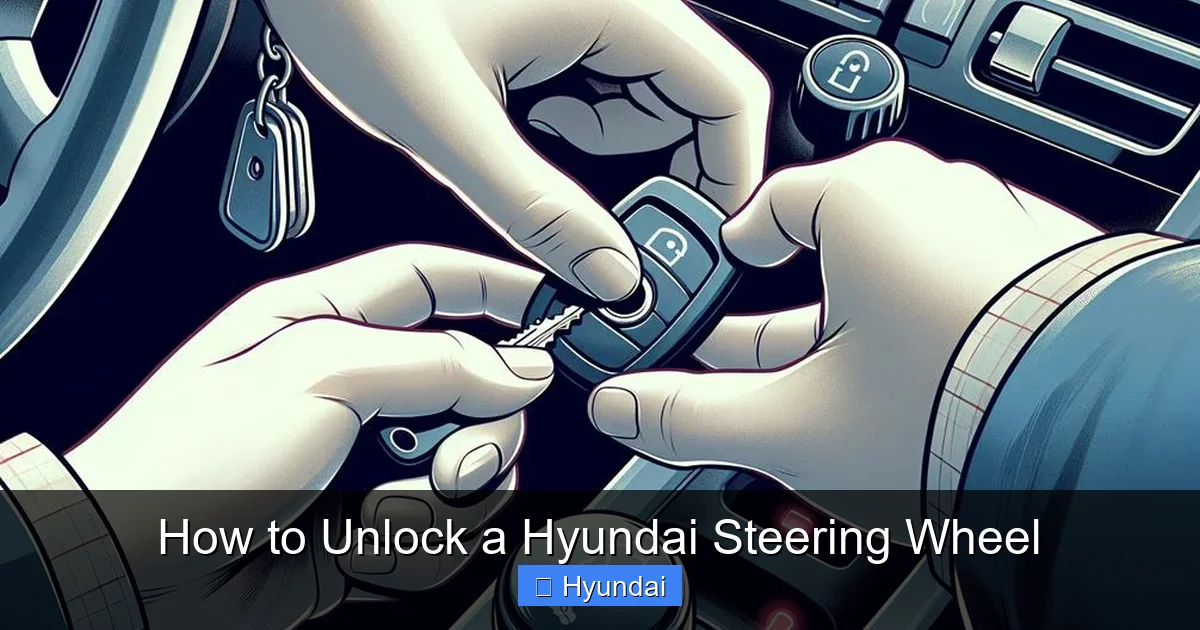
Step 1: Enter the Driver’s Seat. Insert the key into the ignition but do not turn it yet.
Step 2: Apply Gentle Pressure to the Wheel. Firmly grip the steering wheel. You will feel resistance in one direction—this is the locked position. Apply steady, moderate pressure turning the wheel *toward the direction it is locked*. For most Hyundais, if the wheel is locked to the left, you turn it slightly to the right, and vice-versa. You are not trying to force it hard; you are trying to take the tension off the lock pin.
Step 3: Turn the Key While Maintaining Pressure. While holding that gentle pressure on the wheel, turn the key in the ignition to the “ON” or “ACC” position. You should feel a slight give and hear a click as the lock disengages. Once the key turns, you can start the engine.
Critical Tip: If the key is worn or the ignition cylinder itself is dirty, it might not turn easily. Try gently jiggling the key back and forth in the ignition while maintaining wheel pressure. Do not use excessive force, as this can break the key off in the cylinder.
What If the Key Won’t Turn at All?
If you’ve applied wheel pressure and the key still won’t budge, the issue might be with the ignition lock cylinder itself. Try these steps:
- Wiggle the Steering Wheel: Sometimes the lock pin is stuck. Vigorously (but not violently) wiggle the wheel back and forth in both directions while attempting to turn the key.
- Check the Shifter: Ensure your automatic transmission is firmly in “Park.” For manuals, ensure it’s in neutral and the clutch is fully depressed. Sometimes the shifter linkage needs a firm push.
- Lubricate the Ignition: If the cylinder is stiff, a small amount of graphite lubricant (NOT oil or WD-40, which can attract dust) sprayed into the keyhole can help. Gently work the key in and out.
Unlocking a Hyundai with a Push-Button Start (Smart Key)
Models like the Hyundai Sonata, Tucson, Santa Fe, and Kona with the “Push-Button Start” system handle the steering lock electronically. The process is different but often simpler. The system is designed to unlock the steering when it detects the key fob inside the vehicle and the brake pedal is depressed.
Visual guide about How to Unlock a Hyundai Steering Wheel
Image source: hyundaimaintenance.com
Standard Procedure:
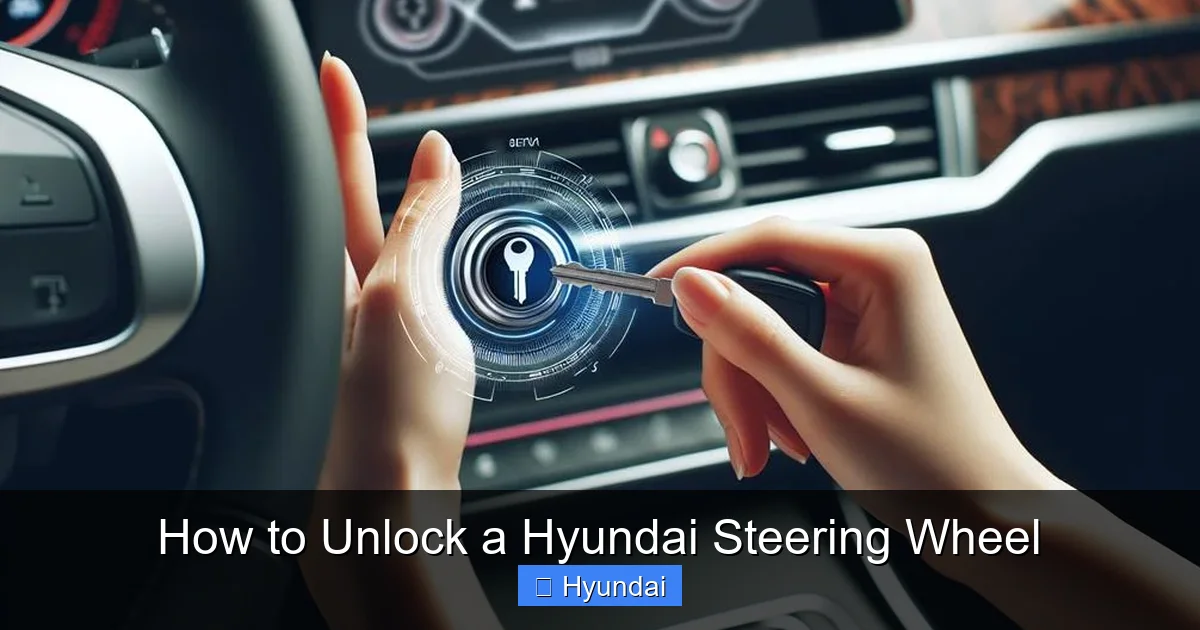
- Ensure the key fob is inside the vehicle with you.
- Sit in the driver’s seat and firmly press the brake pedal.
- While holding the brake, press the engine start/stop button once (do not press the brake for the initial “ACC” power). The steering lock should disengage with an audible click. You can then press the brake and start button again to start the engine.
If It’s Still Locked: The most common reason for failure here is that the system doesn’t detect the key fob. The key fob’s battery might be dead, or there could be interference. Try these steps:
- Use the Physical Key: Most Hyundai smart key fobs have a hidden mechanical key inside. Locate the release button on the fob, extract the physical key, and use it to unlock the driver’s door. Once inside, the physical key often won’t work in the ignition (there is none), but the car’s system should detect the fob when you press the brake and start button.
- Place the Fob on the Start Button: Some Hyundai models have a designated spot. consult your owner’s manual, but often placing the fob directly against the push-button start while pressing the brake can help the system detect it.
- Replace the Key Fob Battery: A simple CR2032 battery replacement in the fob is a common fix. Instructions are in your manual.
The “Steering Column Lock” Fault in Push-Start Hyundais
Sometimes, the electronic steering lock module itself can malfunction. If you’ve confirmed the key fob battery is good and it’s in the car, but the wheel remains locked and the start button just blinks or does nothing, this may be a fault code issue. The car’s computer may need to be scanned for a “Steering Column Lock” or “Immobilizer” error. This is a definite sign to call a dealer or a locksmith with advanced diagnostic tools, as it requires professional reprogramming or part replacement.
Model-Specific Considerations & Troubleshooting
While the core principles are universal, some Hyundai models have quirks.
Visual guide about How to Unlock a Hyundai Steering Wheel
Image source: hyundaimaintenance.com
- Hyundai Sonata & Elantra (Recent Models): These are almost universally push-button start. The brake pedal pressure is non-negotiable. If the wheel is locked, try gently rocking the wheel left and right *while* firmly pressing the brake and the start button.
- Hyundai Tucson & Santa Fe (SUVs): These can come with either key or push-start depending on the year and trim. For key models, the shifter must be pushed firmly into “Park.” Sometimes the parking pawl isn’t fully engaged. Try starting with the shifter in “Neutral” (with foot on brake) as a test. If it starts in neutral but not park, the “Park” position switch may be faulty.
- Hyundai Accent & Venue (Economy Models): These often retain the traditional key. The technique of wiggling the wheel while turning the key is paramount. If the key is worn, you may need a new key cut from the VIN by a dealer or locksmith.
- Hyundai Palisade & Genesis: These larger vehicles have robust electronic systems. The steering lock is very secure. If the electronic method fails, it is almost certainly a system fault requiring a dealer’s diagnostic computer to reset or repair.
When the Wheel is Locked and the Key is Inside
This is a classic lockout scenario. You’ve locked the doors with the key inside, and the steering wheel is locked. You cannot use the remote fob. Your options:
- Manual Key from Fob: Use the hidden manual key to unlock the driver’s door. Once inside, the process to unlock the steering (as described above) should work, as the fob is now inside the car with you.
- Roadside Assistance: If you don’t have the manual key accessible (e.g., fob is in trunk), you’ll need a locksmith to unlock the door. Once the door is open, the steering unlock procedure is the same.
When to Call a Professional: Avoiding Costly Mistakes
Your first instinct might be to use brute force. Don’t. Forcing a locked steering wheel can result in:
- A broken key stuck in the ignition.
- A damaged ignition cylinder requiring replacement.
- A sheared-off steering lock pin, leading to a non-functional lock or worse, a steering wheel that can lock *while driving*—a major safety hazard.
- Damaged steering column components.
Call a professional if:
- All gentle techniques have failed after 2-3 minutes of trying.
- The key is broken in the ignition.
- The steering wheel feels physically jammed or grinding when you apply pressure.
- The push-button start system blinks rapidly or shows a steering lock warning light on the dash after multiple attempts.
- You are uncomfortable with any step.
A certified automotive locksmith or your Hyundai dealership’s service department has specialized tools. For key ignitions, they might use a “jiggler” key or a lock pick set. For electronic systems, they use diagnostic scanners to communicate with the car’s computer and override the lock command. This is safer and often cheaper than replacing broken parts.
Preventing Future Steering Wheel Locks
Once you’ve freed your steering wheel, adopt these habits to avoid a repeat:
- Straighten the Wheel Before Shut-Off: The #1 cause is turning the wheel to park and then turning off the engine. Get in the habit of straightening the wheels as you come to a stop, *then* shifting to Park and turning off the ignition.
- Don’t Rely on the Lock: When parked, especially on a hill, use your parking brake. The steering lock is a backup, not your primary parking brake.
- Maintain Your Key Fob: For push-start models, replace the key fob battery proactively every 2-3 years. A weak signal is a common culprit.
- Gentle Handling: Avoid using the steering wheel as a lever when getting in or out of the car. This can put unintended pressure on the lock mechanism.
- Regular Check-ups: During routine service, mention any stiffness in the ignition or steering wheel to your mechanic. Early detection of a worn ignition cylinder is an easy fix.
Conclusion: Knowledge is Your Best Tool
A locked Hyundai steering wheel is a nuisance, not a catastrophe. It’s your car’s built-in security doing its job a little too well. The solution is never about overpowering the mechanism but about understanding it. By remembering the core technique—gentle pressure on the wheel in the direction of the lock while operating the ignition—you can solve the problem 95% of the time. Always start with the simplest method for your specific model year and ignition type. If that fails, resist the urge to force it. The cost of a service call from a locksmith is infinitely less than the cost of repairing a broken ignition or steering column. Keep this guide handy, share it with family members who drive your Hyundai, and turn a moment of frustration into a quick victory of automotive know-how. You’ve got this!
Frequently Asked Questions
Can I damage my Hyundai by forcing the locked steering wheel?
Yes, absolutely. Applying excessive force can break the key in the ignition, damage the lock cylinder, or shear the internal steering lock pin, leading to expensive repairs. Always use steady, gentle pressure and stop if you feel solid resistance.
My Hyundai has a push-button start and the steering wheel is locked. The key fob is in the car. What now?
First, ensure you are firmly pressing the brake pedal. Then, press the engine start/stop button once. If that fails, try placing the key fob directly against the start button while pressing the brake. If it still doesn’t unlock, the key fob battery may be dead, or there could be a fault with the electronic steering lock module.
Is a locked steering wheel the same as a dead battery?
No, they are different issues. A dead battery will usually allow the steering wheel to turn freely but won’t power the electronics or starter. A locked steering wheel is a mechanical/electronic security lock that physically prevents the wheel from turning, regardless of battery charge, though a very dead battery can sometimes cause electronic systems to behave erratically.
My automatic Hyundai won’t start and the steering wheel is locked. Could it be the shifter?
Yes, this is a very common connection. The car’s safety interlock requires the shifter to be firmly in “Park” (or “Neutral”) to allow the ignition to operate and unlock the steering. Apply firm downward pressure on the brake and push the shifter all the way into “Park” until you feel a solid click, then try the ignition again.
Will unlocking the steering wheel reset my Hyundai’s computer or radio?
No. The simple act of turning the key or pressing the start button to disengage the steering lock is part of the normal starting procedure and does not reset the Engine Control Unit (ECU) or require you to re-enter a radio code. Those resets typically only happen if the battery is disconnected.
If I unlock the steering wheel, does that mean my car’s security system is broken?
Not at all. It means the security system’s mechanical lock engaged as designed, but it’s stuck due to wheel pressure. It’s a normal function, not a malfunction. If the lock engages and disengages properly after following these steps, your system is working correctly.
