How to Unlock a Ford F-150 Without Keys

Contents
- 1 Key Takeaways
- 2 📑 Table of Contents
- 3 Why You’re Locked Out: The Common Culprits
- 4 Understanding Your F-150’s Locking System
- 5 Safe & Recommended Methods (For All Model Years)
- 6 Historical & DIY Methods (Use With Extreme Caution)
- 7 Why Modern F-150s Are Virtually Unlockable by DIY
- 8 When You Absolutely Must Call a Pro (The Smart Choice)
- 9 Conclusion: A Problem With a Clear Solution
- 10 Frequently Asked Questions

Car Tire Inflator

Rear View Camera

Car Wireless Charger Mount

Steering Wheel Cover
Getting locked out of your Ford F-150 is a frustrating but common problem. The safest and most effective solution is always to call a professional locksmith or use your vehicle’s built-in emergency key. DIY methods like Slim Jims or coat hangers carry a high risk of damaging your truck’s paint, door lock mechanism, or wiring, especially on newer models with complex security systems. Always prioritize methods that won’t void your warranty or cause costly repairs.
There you are, standing next to your trusty Ford F-150, groceries in hand, after a long day. You reach for your keys, and they’re not there. You pat your pockets, check the ground, and a sinking feeling hits—they’re locked inside. It happens to the best of us. But before you panic or grab a coat hanger, take a breath. Unlocking your Ford F-150 without keys is a solvable puzzle, but the solution depends heavily on your truck’s model year and your willingness to risk damage. This guide will walk you through every safe and unsafe method, so you can make the smart choice and get back on the road.
Key Takeaways
- Safety First: Your primary goal is to unlock the door without damaging the F-150’s paint, lock, or interior components. Improper tools can cause hundreds in damage.
- Know Your Model Year: Pre-2010 F-150s have simple mechanical locks often vulnerable to basic tools. 2010+ models have advanced security, making DIY unlocking very difficult and risky.
- The Emergency Key is Your Best Friend: Almost all F-150s have a hidden physical key inside the key fob. Locate it and the tiny keyhole (usually under a cover on the driver’s door handle) for a guaranteed, no-damage entry.
- Professional Help is Smart: A certified automotive locksmith has the specific tools and knowledge to unlock your F-150 quickly and safely, often for less than a dealership.
- Prevention is Key: Always keep a spare key in a secure but accessible place (like with a trusted neighbor or in a magnetic box on the underside of the truck). Consider a keypad entry system as an upgrade.
- DIY Risks Are Real: Methods like Slim Jims or wedges can bend door panels, break lock rods, trigger airbag sensors, or scratch paint, leading to expensive repairs that far exceed the cost of a locksmith.
- Roadside Assistance Can Help: If you have insurance or a service like OnStar/AAA, they often provide lockout services as a benefit, which is usually the most cost-effective option.
📑 Table of Contents
- Why You’re Locked Out: The Common Culprits
- Understanding Your F-150’s Locking System
- Safe & Recommended Methods (For All Model Years)
- Historical & DIY Methods (Use With Extreme Caution)
- Why Modern F-150s Are Virtually Unlockable by DIY
- When You Absolutely Must Call a Pro (The Smart Choice)
- Conclusion: A Problem With a Clear Solution
Why You’re Locked Out: The Common Culprits
Understanding why you’re locked out helps you prevent it next time. For Ford F-150 owners, the scenarios are usually predictable. The most common reason is simple human error: keys left in the ignition or on the seat, then the door manually locks or the auto-lock engages as you walk away. Another frequent cause is a dead key fob battery. Your F-150’s key fob is a sophisticated electronic device, and when its battery dies, the remote lock/unlock buttons won’t work. Many people don’t realize the fob still contains a physical emergency key. A third cause is a malfunctioning door lock actuator or a broken key fob, which requires professional diagnosis. Finally, it could be a genuine lost key situation, which is a different problem altogether and requires key replacement or programming.
The “Keys Inside” Scenario
This is the classic lockout. You’ve shut the door, and the keys are clearly visible on the seat. Modern F-150s (especially 2010 and newer) are designed to prevent this with features like “key in ignition” warnings and sometimes even preventing lock with key inside. However, older models or manual lock overrides can still trap your keys. The immediate thought is to get them out, but your approach must be methodical to avoid damage.
Dead Key Fob or Malfunction
If your key fob buttons do nothing, the first step is a battery replacement. But if a new battery doesn’t work, the fob’s internal electronics may be fried, or it may have lost its programming to the truck. This is not a door lock issue per se, but it leaves you unable to unlock the doors remotely. You must resort to the physical emergency key or professional help.
Understanding Your F-150’s Locking System
The Ford F-150 has evolved dramatically over the years. A 1995 F-150 and a 2023 F-150 Lightning are worlds apart in their door lock mechanisms. Knowing which category yours falls into is the first step to choosing the right unlocking method.

Visual guide about How to Unlock a Ford F-150 Without Keys
Image source: zopsoftware-asset.b-cdn.net
Pre-2010 (and Some 2010-2014) Models: The Mechanical Era
These trucks have traditional, all-mechanical door locks. The lock cylinder on the door is connected via rods and levers to the latch. This system, while durable, is vulnerable to tools like a Slim Jim or a simple coat hanger. There are no complex electronic sensors or security tags within the door. If you own one of these, your options for DIY are broader, but the risk of scratching the door panel or bending internal components is still very high.
2010-Present: The Electronic Security Era
Starting with the 12th generation (2009-2014) and certainly in the 13th (2015-2020) and 14th (2021+) generations, Ford integrated sophisticated theft-deterrent systems. The door locks are now operated by small electric motors (actuators) controlled by the Body Control Module (BCM). The key fob uses an encrypted signal. Furthermore, the door panels are packed with wiring for side-impact airbags, speakers, and window regulators. Inserting any tool between the window and weather stripping is extremely likely to tear the fragile vapor barrier, damage wiring, or trigger an airbag sensor code. For these models, DIY unlocking is almost always a bad idea. The presence of an emergency key slot becomes critically important.
Safe & Recommended Methods (For All Model Years)
Before considering any “hack,” exhaust these safe, manufacturer-approved options. They are guaranteed not to damage your vehicle.
Visual guide about How to Unlock a Ford F-150 Without Keys
Image source: i.ytimg.com
Method 1: The Hidden Emergency Key
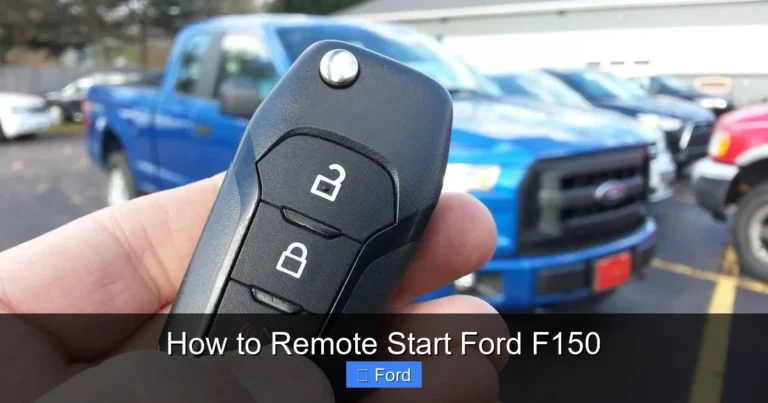
This is your golden ticket. Every Ford F-150 key fob since the early 2000s contains a physical, metal emergency key. It’s usually hidden inside the fob. Press the button on the fob (often a small button on the side or back) to release the plastic cover and pull out the metal key. Now, you need to find the tiny keyhole on your F-150’s door. For most models (2009-2020), it’s hidden behind a small, rectangular plastic cap on the *outside* of the driver’s door handle. Gently pry this cap off with a flathead screwdriver or even your fingernail. Insert the emergency key and turn it like a traditional key—it will mechanically unlock the door. For some newer models (2021+), the emergency key slot might be on the passenger door or in a different location; check your owner’s manual. This method is 100% safe and designed by Ford for this exact situation.
Method 2: Call a Professional Automotive Locksmith
This is the most reliable solution for any model year, especially newer ones. A certified automotive locksmith is not a residential locksmith; they specialize in vehicles. They carry a suite of tools like the “BigEasy” lockout tool (a long, flexible rod) and long, wedged inflatable bags. For your F-150, they will typically use the “wedge and rod” method. They insert a protective wedge (often a soft rubber or plastic air wedge) between the door and the frame at the top of the window. This creates a small gap. Then, they use a long, slender rod to reach through the gap, press the door lock button or pull the interior door handle. Reputable locksmiths are trained to do this without damaging the weather stripping or interior. Always verify they are insured and specialize in Ford trucks. You can find mobile locksmiths who will come to your location. This is often cheaper than a dealership tow.
Method 3: Use Roadside Assistance or OnStar
If you have a subscription to Ford’s OnStar service, you’re in luck. OnStar advisors can often remotely unlock your doors by sending a signal to your vehicle’s BCM, provided you have an active subscription and the vehicle has cellular service. This is the most high-tech, zero-effort solution. Similarly, check if your car insurance policy, credit card, or a service like AAA includes lockout assistance. They will either dispatch a locksmith or, in some cases, have their own proprietary unlocking tools. This is usually the most cost-effective path if you already have the service.
Historical & DIY Methods (Use With Extreme Caution)
The following techniques are documented for older vehicles and are presented for informational purposes only. We strongly advise against attempting them on a modern F-150. If you choose to proceed on an older, pre-2005 model, you do so at your own risk.

Visual guide about How to Unlock a Ford F-150 Without Keys
Image source: dz310nzuyimx0.cloudfront.net
The Slim Jim: A Tool of the Past
A Slim Jim is a thin, flexible strip of spring steel. The theory is to slide it between the window and weather stripping, catch the lock rod, and manipulate it to open the lock. This was somewhat effective on cars from the 1970s-1990s. However, modern vehicles like the F-150 have completely different internal door structures. The lock rods are often shielded, and there are dozens of other wires and components in the way. Attempting to use a Slim Jim on a 2010+ F-150 will almost certainly result in a torn vapor barrier (causing water leaks), broken wiring for the power windows or door locks, or damage to the door panel clips. Even on older models, it’s easy to scratch the paint or bend the rod inside, requiring expensive disassembly to fix. This method is largely obsolete and not recommended.
The Wedge and Coat Hanger/Rod
This is the classic “movie” method. You place a wedge (often a door stop or inflated plastic bag) at the top of the door frame to create a 1-2 inch gap. You then fashion a wire coat hanger into a long hook or use a rigid plastic rod to reach inside, pull the interior door handle, or press the unlock button. The risks here are immense. The wedge, if made of wood or metal, can dent the door frame or window. The tool you insert can easily snag and tear the delicate plastic vapor barrier behind the door panel, leading to chronic water leaks. It can also snag on wiring harnesses. If your F-150 has side-curtain airbags in the door, you risk damaging their deployment sensors or wiring, which is a major safety and expense issue. For a 2020 F-150, the cost to repair a torn vapor barrier and rewiring can easily exceed $1,000.
Using a “Lockout Kit” or Inflatable Bag
These are the “professional” tools sold to consumers. The inflatable bag (like the “DuraBag”) is placed between the door and frame and inflated with a hand pump to create a controlled, wider gap. A long plastic rod is then used. While this is *safer* than a wooden wedge and a coat hanger, it is still not a professional technique for a modern car. The gap created is larger, which increases the chance of the tool catching internal components. The rod can still damage the vapor barrier or wiring. These kits are more suited for older, simpler vehicles. For a complex modern F-150, the risk of damage remains unacceptably high.
Why Modern F-150s Are Virtually Unlockable by DIY
It’s important to understand why the old tricks don’t work anymore. Ford, like all manufacturers, has made significant strides in vehicle security and integrity.
Complex Door Construction
Peel back the interior door panel of a modern F-150, and you’ll see a maze of components: the power window regulator and motor, the door lock actuator, multiple wiring harnesses for speakers, door controls, and the side-impact airbag. The actual mechanical link between the outside key cylinder (if present) and the latch is often a series of plastic levers and rods, not a simple metal rod a Slim Jim can grab. There is no single, accessible “lock rod” to manipulate from the window channel.
Security Features & Sensors
The door lock actuator is part of the vehicle’s security system. The BCM monitors it. Unauthorized physical manipulation can sometimes trigger an alarm or a fault code. More critically, the area around the window is now home to wiring for the rain-sensing wipers, antennae for the keyless entry system, and the aforementioned airbag sensors. A simple scratch from a tool can compromise these systems.
The Role of the Transponder Key
Even if you could magically unlock the door, starting a modern F-150 without the correct key is a separate, nearly impossible hurdle. The key has a transponder chip programmed to your truck’s immobilizer system. Without the correct chip signal, the engine will not crank. So, unlocking is only the first step. This is why professional locksmiths often focus on *entry*—they assume you have the key inside or a spare to use once inside. If you’ve lost all keys, you need a dealership or a locksmith with key programming capabilities, which is a different, more expensive service.
When You Absolutely Must Call a Pro (The Smart Choice)
For any F-150 from 2010 onward, calling a professional is not a luxury; it’s the sensible choice. Here’s when and who to call.
Identifying a Qualified Automotive Locksmith
Do not call a residential locksmith who only does houses. Search for “automotive locksmith” or “car lockout service” in your area. Look for companies with:
- Clear pricing: Ask for a flat-rate service call fee plus any additional cost. Get a quote over the phone.
- Specialization: They should mention working on trucks, Fords, or specifically F-150s.
- Insurance and Licensing: A reputable business will have this readily available.
- Positive Reviews: Check Google and Yelp for experiences specific to truck lockouts.
A good locksmith will arrive with a toolkit that includes a long, flexible unlocking rod (often with a small, protected tip) and a soft, inflatable wedge. They will use a technique that minimizes pressure on the window and targets the interior door handle or lock button with precision.
Dealership vs. Independent Locksmith
You can call your Ford dealership. They will either dispatch a technician or recommend a preferred locksmith. The dealership’s primary advantage is their complete diagnostic software, which can be necessary if the lockout is due to a faulty BCM or key fob. However, for a simple lockout, they are often significantly more expensive and may have a longer response time. An independent automotive locksmith is almost always faster and cheaper for a standard lockout. The exception is if your F-150 is still under warranty and the lockout is due to a mechanical failure—then the dealership may cover the cost under warranty.
Conclusion: A Problem With a Clear Solution
Being locked out of your Ford F-150 is a major inconvenience, but it’s a temporary one. The path forward is clear: first, locate and use your emergency key. If that’s not possible, your next and best call is to a professional automotive locksmith. Avoid the temptation of the DIY hack, especially on any F-150 from the last 15 years. The potential for damage—costing you thousands in repairs—simply isn’t worth saving a service fee. Think of your F-150 as the workhorse it is. You wouldn’t perform your own transmission rebuild without training; treat its complex door and security systems with the same respect. By knowing your options and respecting the technology in your truck, you can turn a stressful lockout into a quick, affordable, and damage-free resolution. Keep that emergency key handy, and maybe stash a spare in your wallet. It’s the simplest insurance policy against this all-too-common situation.
Frequently Asked Questions
Can the police unlock my Ford F-150?
Generally, no. Police departments do not carry automotive lockout tools for public use, as they are not trained automotive locksmiths and using such tools could expose them to liability for damage. They may assist in an emergency (like a child or pet locked inside), but for a standard lockout, they will call a locksmith or tow truck for you, which you will pay for.
Will a Slim Jim work on my 2018 Ford F-150?
Almost certainly not, and attempting it will likely cause significant damage. The 2018 F-150 has a complex door with an electronic actuator and a shielded lock mechanism. A Slim Jim cannot access the necessary components and will almost certainly tear the vapor barrier or snag wiring, leading to costly repairs.
How much does a professional locksmith cost for an F-150 lockout?
Costs vary by region and time of day (after-hours surcharges apply), but you can expect a base service call fee of $50-$100 plus a labor fee of $50-$150 for a standard lockout. For a modern F-150, this is typically a 15-30 minute job for a pro. Always get a firm quote before they begin work. This is far cheaper than the $500-$1500+ it can cost to repair DIY damage.
What if my key fob is completely dead and I don’t have the emergency key?
First, check the driver’s door handle for the small hidden keyhole cap. If you cannot find it or the cap is missing, your owner’s manual will have the exact location. If you have truly lost the emergency key, you will need a locksmith to gain entry. If the key fob is dead, a locksmith can also cut a new key from your VIN if you have proof of ownership, but you will likely need to have it programmed by a dealer or a locksmith with programmer capabilities.
My F-150 has keypad entry (SecuriLock). Can I use that?
Yes! If your F-150 is equipped with the factory keypad entry system on the driver’s door (a numbered keypad), this is an excellent backup. Enter your factory-set 5-digit code to unlock the door. If you have never set a personal code, the factory code is located on a card in your owner’s manual pouch or can sometimes be retrieved by a dealer using your VIN. This is a foolproof, no-damage method if you know the code.
Is it safe to use a wedge and rod if I’m very careful?
Even with extreme care, the risk is unacceptably high on a modern F-150. The gap created by a wedge puts pressure on the window frame and can misalign the door. The rod must travel through a space filled with critical components. One accidental catch on the vapor barrier or a wire harness will cause damage that is not immediately visible but leads to leaks or electrical failures. The potential cost of repair makes “careful” DIY a false economy.