
What Is Ford F150 Warranty

The Ford F150 warranty is a multi-layered protection plan consisting of a limited bumper-to-bumper warranty, a longer powertrain warranty, and roadside assistance. Coverage lengths vary by model year and component, typically 3 years/36,000 miles for basic and 5 years/60,000 miles for the powertrain. Understanding exclusions and maintenance requirements is essential to keep your warranty valid and avoid unexpected repair costs.
Key Takeaways
- Three-Tier System: The warranty is split into Bumper-to-Bumper (comprehensive), Powertrain (engine/transmission), and Roadside Assistance.
- Time & Mileage Limits: Standard is 3 years/36,000 miles for basic coverage and 5 years/60,000 miles for powertrain, but check your specific model year.
- Transferability: The remaining warranty transfers to subsequent private owners, adding resale value to your F150.
- Maintenance is Mandatory: Following Ford’s recommended maintenance schedule in your owner’s manual is required to maintain warranty coverage.
- Exclusions Apply: Wear items (brake pads, wipers), cosmetic damage, and damage from misuse or lack of maintenance are not covered.
- Hybrid Models Differ: The F150 Hybrid has a unique, separate battery warranty that is often longer than the standard powertrain warranty.
- Roadside Assistance is Included: This covers towing, lockout service, and fuel delivery for the initial warranty period, typically 5 years/60,000 miles.
📑 Table of Contents
- Your Peace of Mind on the Road: An Introduction to the Ford F150 Warranty
- Decoding the Three-Tier Warranty Structure
- A Deep Dive into Bumper-to-Bumper Coverage and Its Limits
- The Powertrain Warranty: Guarding Your F150’s Heart and Soul
- Roadside Assistance and Other Valuable Perks
- How to Keep Your Warranty Valid: The Owner’s Responsibilities
- Special Considerations: Hybrids, Fleet Vehicles, and More
- Making the Most of Your Warranty: Practical Tips and Final Advice
Your Peace of Mind on the Road: An Introduction to the Ford F150 Warranty
You just drove your new Ford F150 off the lot. It’s a beast, a workhorse, your new best friend for everything from hauling a trailer to weekend adventures. That feeling of pride and excitement is real. But lurking in the back of your mind is a practical question: “If something breaks, what’s covered?” This is where your Ford F150 warranty becomes your financial safety net. It’s not just a booklet in your glove box; it’s a promise from Ford that stands between you and expensive, unexpected repairs.
Understanding this warranty is crucial for every F150 owner. It dictates your maintenance responsibilities, influences your long-term ownership costs, and even affects your truck’s resale value. This guide will break down the Ford F150 warranty from the ground up—no legalese, just clear explanations of what’s covered, for how long, and what you must do to keep that protection active. Think of this as your owner’s manual for the warranty itself.
Decoding the Three-Tier Warranty Structure
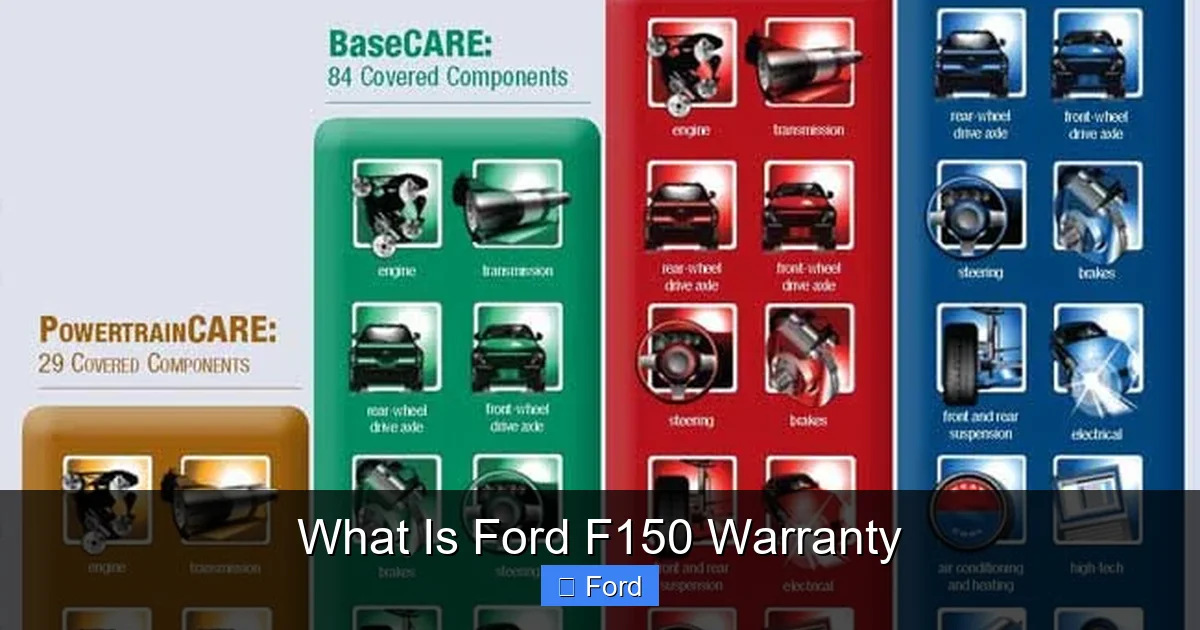
Ford doesn’t offer one single blanket warranty. Instead, your F150 is protected by a combination of several distinct warranties that work together. Think of it like a layered defense system. The primary layers are the New Vehicle Limited Warranty (often called “bumper-to-bumper”), the Powertrain Limited Warranty, and the Roadside Assistance Program. Each has its own time and mileage limits, and its own set of rules about what it covers.
Visual guide about What Is Ford F150 Warranty
Image source: lh5.googleusercontent.com
The Bumper-to-Bumper Warranty: Your First Line of Defense
This is the most comprehensive part of the package. As the name implies, it covers virtually every part and system on your truck from the front bumper to the rear bumper—hence “bumper-to-bumper.” This includes things like the infotainment system, power windows, HVAC, suspension components, and electrical systems. It’s designed to cover defects in materials or workmanship. However, it has the shortest duration. For recent model years, it lasts for either 3 years or 36,000 miles, whichever comes first. It’s your go-to coverage for most non-engine, non-transmission issues during the early years of ownership.
The Powertrain Limited Warranty: Protecting the Heart
This warranty covers the core components that make your F150 move: the engine, transmission, and drivetrain (including front and rear axles, driveshafts, and differentials). For most gasoline-powered F150s, this coverage extends to 5 years or 60,000 miles. For the F150 Hybrid, the hybrid-specific components, most notably the high-voltage battery, have their own separate warranty that often extends to 8 years or 100,000 miles. The powertrain warranty is the long-haul protector, covering the most expensive repairs long after the bumper-to-bumper warranty expires.
Roadside Assistance: Help When You’re Stranded
This is the peace-of-mind benefit. For the first 5 years or 60,000 miles (matching the powertrain warranty period), Ford provides 24/7 roadside assistance. This isn’t a repair warranty; it’s a service program. It covers towing to the nearest Ford dealer, lock-out service, fuel delivery (you pay for the fuel), jump-starts, and flat tire changes using your spare. It’s invaluable when you’re stuck on the side of the road.
A Deep Dive into Bumper-to-Bumper Coverage and Its Limits
While “bumper-to-bumper” sounds all-encompassing, it’s vital to understand its specific boundaries. This warranty covers repairs needed to correct defects in factory-supplied materials or workmanship. The key word is “defect.” If a part fails prematurely because it was poorly made or assembled, Ford fixes it. However, this warranty does not cover parts that wear out from normal use.
Visual guide about What Is Ford F150 Warranty
Image source: carglassadvisor.com
What’s NOT Covered: The Critical Exclusions
This is where many owners get confused. The following are almost always excluded from bumper-to-bumper coverage:
- Wear and Tear Items: Brake pads/rotors, wiper blades, tires, batteries (the 12V starting battery), and clutch discs are considered consumables. You replace these as part of regular maintenance.
- Maintenance Services: Oil changes, tire rotations, filter replacements, and other scheduled maintenance are your responsibility. These are outlined in your vehicle’s Owner’s Manual.
- Cosmetic Damage: Scratches, dings, paint chips, and fabric tears are not defects; they are cosmetic issues.
- Damage from External Causes: This includes accidents, collision damage, theft, vandalism, environmental damage (like hail or flood), and rust-through (corrosion has a separate, limited warranty).
- Damage from Misuse or Neglect: Overloading the truck beyond its GVWR, using the wrong fuel, or failing to address a known problem that then causes further damage will void coverage for related repairs.
Practical Example: A Real-World Bumper-to-Bumper Claim
Let’s say your 2022 F150’s power window regulator fails at 20,000 miles, and the window won’t go up. This is a defect in a component. A dealer diagnosis confirms the part is faulty. This repair is 100% covered under the bumper-to-bumper warranty—no cost to you. Now, let’s say at 35,000 miles, your brake pads are worn down to the metal and need replacement. This is normal wear, not a defect. You must pay for this service. Understanding this distinction saves you from surprise bills.
The Powertrain Warranty: Guarding Your F150’s Heart and Soul
The powertrain warranty is the long-term backbone of your protection. It covers the expensive core components that generate and deliver power to the wheels. The standard coverage for gasoline engines is 5 years/60,000 miles. But for the F150, there’s a crucial modern twist: the hybrid system.
Visual guide about What Is Ford F150 Warranty
Image source: m.media-amazon.com
What’s Covered Under the Powertrain Warranty?
For a standard gasoline F150, this includes:
- Engine: All internal lubricated parts, cylinder heads, engine block, manifolds, fuel pump, water pump, seals, and gaskets.
- Transmission: All internal parts, torque converter, seals, and gaskets for both automatic and manual transmissions.
- Drivetrain: Front and rear axles, differential cases and internals, driveshafts, U-joints, CV joints, and transfer case (4×4 models).
The F150 Hybrid: A Separate, Special Warranty
The F150 Hybrid (PowerBoost) introduces complexity. While the gasoline engine and 10-speed automatic transmission are covered under the standard 5-year/60,000-mile powertrain warranty, the hybrid-specific components have their own warranty. This includes the electric motor-generators, the power electronics (inverter), and the high-voltage battery pack. For the 2021-2023 model years, Ford warrants the hybrid battery for 8 years or 100,000 miles. This is a significant benefit and a key selling point for the hybrid model. You can learn more about the intricate IWE (Integrated Wheel End) technology that’s part of the F150’s advanced 4×4 system, which itself is covered under the powertrain warranty when defective.
Comparing to the Competition
It’s useful to benchmark. For context, many competitors like Nissan offer a similar 5-year/60,000-mile powertrain warranty on their trucks. However, Ford’s separate, longer hybrid battery warranty often surpasses the basic industry offering, providing extra confidence for hybrid adopters.
Roadside Assistance and Other Valuable Perks
Your warranty package includes more than just part replacements. The Ford Roadside Assistance program is a major component, active for 5 years or 60,000 miles. It’s a 24/7 hotline service that dispatches help.
What Does Ford Roadside Assistance Cover?
- Towing: Tow your F150 to the nearest Ford dealer (up to a specified distance, often 35 miles).
- Lock-Out Service: If you lock your keys inside, they’ll help you get in.
- Fuel Delivery: They’ll deliver a limited amount of fuel (you pay for the fuel) to get you to a station.
- Jump-Start: For a dead 12V battery.
- Flat Tire Change: Using your vehicle’s spare tire.
- Winching: Limited to getting you unstuck from a roadside location (often up to 50 feet from a road).
This service is tied to the VIN, not the owner, so it’s available to anyone driving the truck with a valid key.
Other Included Benefits
Some model years also include:
- Rental Car Reimbursement: If your warranty-related repair overnight, Ford may cover a rental car for a limited time/daily maximum.
- Trip Interruption Coverage: If a warranty breakdown occurs more than 100 miles from home, you may be reimbursed for meals, lodging, and alternate transportation.
Always check your specific Warranty Guide for exact details, limits, and eligibility, as these perks can vary slightly by model year.
How to Keep Your Warranty Valid: The Owner’s Responsibilities
A warranty is a two-way street. Ford promises to cover defects, but you must uphold your end of the bargain. Failure to do so can void your warranty coverage entirely. Here’s what you must do.
Follow the Recommended Maintenance Schedule
This is non-negotiable. Your Owner’s Manual contains a detailed maintenance schedule based on time and/or mileage. This includes oil changes, tire rotations, filter replacements, fluid checks, and inspections. Use genuine Ford parts and fluids where specified, or equivalent quality. Keep every single receipt and record, even for DIY work. A complete, dated service history is your best defense if a warranty dispute arises. Neglecting scheduled maintenance is the #1 reason for warranty claims being denied. For instance, skipping oil changes can lead to engine sludge, which is considered owner neglect, not a manufacturing defect.
Use Your Truck As It Was Intended
The warranty covers “normal use.” Don’t use your F150 as an off-road racing machine if it’s a stock XL trim. Don’t consistently exceed its Gross Vehicle Weight Rating (GVWR). Using the truck for severe commercial service (like daily heavy towing beyond its rated capacity in a personal-use truck) can be grounds for denying warranty coverage on related components. While occasional heavy use is fine, chronic abuse is not covered.
Address Problems Promptly
If you notice an unusual noise, leak, or warning light, get it checked by a Ford dealer immediately. Driving with a known problem can cause cascading damage to other parts. Ford can deny warranty coverage for the subsequent damage because you failed to mitigate the initial issue. For example, ignoring a coolant leak that eventually leads to engine overheating and a blown head gasket may result in you paying for the head gasket repair, as the core failure was the leak, which you ignored.
Special Considerations: Hybrids, Fleet Vehicles, and More
Not all F150 warranties are created equal. Certain situations and vehicle types have specific rules.
F150 Hybrid Warranty Nuances
As mentioned, the hybrid battery has a separate, longer warranty (typically 8 years/100,000 miles). The hybrid system’s electric motors and power electronics are also covered under this extended term. However, the 12V accessory battery (the one that starts the truck and powers accessories) is still covered under the standard bumper-to-bumper warranty as a wear item. Understanding this separation is key for hybrid owners concerned about long-term battery degradation costs.
Fleet and Commercial Use
If your F150 is purchased for fleet or commercial use (even if it’s a single vehicle used for business), the warranty terms may be different. Often, the bumper-to-bumper warranty is reduced to 3 years/36,000 miles, but the powertrain warranty may remain at 5 years/60,000 miles. The definition of “commercial use” can be broad. Check your warranty documents if you use your truck for work.
warranties for Previously Owned F150s
The Ford F150 warranty is fully transferable to subsequent private owners. If you sell your truck with 2 years and 20,000 miles left on the bumper-to-bumper warranty, the new owner gets that remaining coverage. This is a strong selling point. However, if the truck was originally sold as a “demonstrator” or “executive” vehicle, its warranty may have started on a different date (like the date it was first put into service by the dealer), so the remaining time may be less than a standard retail vehicle.
Making the Most of Your Warranty: Practical Tips and Final Advice
Your Ford F150 warranty is a valuable asset. To maximize its benefit, be proactive and organized.
- Know Your Dates and Miles: The very first thing you should do is locate your Warranty Guide (often in your owner’s manual kit or online) and note the exact start date (usually the day you first took delivery) and the mileage limits for each warranty component.
- Keep Meticulous Records: Create a digital or physical file for every single service visit, oil change, tire rotation, and repair—no matter how small. Include the date, mileage, dealer/shop name, and what was done. This is your evidence of proper maintenance.
- Communicate with the Dealer: When bringing your truck in for a warranty repair, be clear about the symptoms. Ask the service advisor to note the specific complaint on the repair order. Before any work begins, confirm that the repair will be covered under warranty and that you won’t be responsible for any “diagnostic fees” if the issue is a covered defect.
- Understand “Betterment”: If a warranty repair requires replacing a part that has wear on a related component, you might be charged a “betterment” fee. For example, if a warranty claim replaces a transmission but the clutch has 80% wear, you may be asked to pay a percentage of the clutch replacement cost since it was near the end of its life anyway.
- Consider Extended Warranty Options: Once your factory warranty expires, you can purchase an extended service plan (often called a Vehicle Service Contract) from Ford or third parties. This can cover powertrain or comprehensive components for an additional fee. Research these carefully, as coverage and cost vary widely. It’s an option for long-term keepers.
Ultimately, your Ford F150 warranty provides a strong foundation of protection for your significant investment. By understanding its layers, respecting its terms, and maintaining your truck diligently, you can drive with confidence, knowing that manufacturing defects are Ford’s responsibility to fix. This knowledge transforms the warranty from a confusing document into a powerful tool for smart ownership.
Frequently Asked Questions
Can I transfer my Ford F150 warranty to a new owner?
Yes, the remaining New Vehicle Limited Warranty (bumper-to-bumper) and Powertrain Limited Warranty automatically transfer to subsequent private owners. This is a valuable feature that enhances your truck’s resale value. You simply need to provide the new owner with the warranty information and vehicle history.
How does failing to follow the recommended maintenance schedule affect my warranty?
Failing to follow the maintenance schedule in your Owner’s Manual is one of the most common reasons for warranty claims to be denied. Ford can refuse to cover a repair if they determine that a lack of proper maintenance caused or contributed to the failure. Keeping detailed, dated service records is your best proof of compliance.
Does the F150 Hybrid have a different warranty for its battery?
Yes. The F150 Hybrid’s high-voltage traction battery is covered under a separate warranty that typically lasts 8 years or 100,000 miles, whichever comes first. This is longer than the standard 5-year/60,000-mile powertrain warranty that covers the gasoline engine and transmission. The 12V accessory battery is covered under the standard bumper-to-bumper warranty as a wear item.
What exactly does the 5-year/60,000-mile roadside assistance cover?
It covers 24/7 emergency services like towing to the nearest Ford dealer (within a mileage limit), jump-starts, flat tire changes with your spare, fuel delivery (you pay for fuel), and lock-out service. It does not cover the cost of the repaired or replaced part itself; it’s purely for roadside emergencies.
Is rust-through or corrosion covered under the Ford F150 warranty?
Yes, but with a separate, much shorter warranty. Ford provides a limited warranty against corrosion (rust-through) of body sheet metal for 5 years, with no mileage limit. This covers actual perforation of the metal from corrosion, not surface rust or chips. It does not cover corrosion caused by environmental factors like road salt if not properly cleaned, or damage from accidents.
What are the most common exclusions that void the bumper-to-bumper warranty?
The most common exclusions are damage from accidents, misuse (like overloading), neglect (failing to maintain), environmental damage (flood, hail), and wear-and-tear items (brake pads, tires, wiper blades). Modifications, especially to the engine, suspension, or electronics, can also void coverage for related systems. Always review your specific Warranty Guide for a complete list.
